
The changes associated with the development of modern construction industries, as well as how these changes are implemented through the development of information and communication technologies. However, among other things, the H Beam Automatic Welding Machine has dramatically influenced the technological development on a whole new level of steel structural works. Meeting the demands of high-quality and reliable manufacturers, this cutting-edge machine is designed for large projects, improving the productivity of the welder. This article will examine how the H Beam Automatic Welding Machine has revolutionized manufacturing techniques and explore its characteristics, advantages, shortcomings, and the practical impact on efficiency introduced by this method of fabrication tools. This resource aims to explain to readers why this technology, as it currently stands, is poised to bring about significant changes.
Introduction to H Beam Automatic Welding Machines
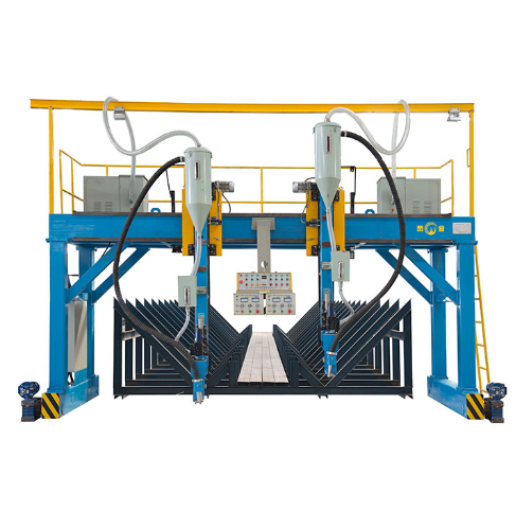
H-Beam automatic welding machines are sophisticated systems designed to expedite and enhance the welding process in steelwork erection. These devices make it easy to perform a neat and excellent weld on the RAA pipe, which is relatively delicate in steel and construction works. The automatic features of this machine also minimize manual labor, improve precision, and consequently boost efficiency. On the other hand, due to additional features such as uniformity in MIG and TIG welding processes and a more dependable system for adjusting operation times, these machines significantly contribute to meeting the requirements of vast works, maintaining a good level of efficiency and productivity in every job undertaken.
What is an H Beam Automatic Welding Machine?
A H Beam Automatic Welding Machine is a special type of machinery intended for performing the welding assembly of an H-beam in production effectively and accurately. It is notable for its high level of automation in the welding process, which typically utilizes cutting-edge technologies such as submerged arc welding (SAW) or gas metal arc welding (GMAW) to enhance welding processes and quality. Capable of working quickly and efficiently on large-scale workloads, these machines are equipped with features such as survey eye tracking systems, automatic clamps, and adjustable speeds. Due to the unusual need for welding H-beams without imperfections in the fields of structural steel, shipbuilding, and construction, this equipment is utilized. Moreover, the H Beam Automatic Welding Machine reduces human error risks, decreases production expenditures, and enhances the entire firm’s efficiency by eliminating substantial manual work.
How Does H Beam Welding Work?
Characterized by the act of welding the flanges and webs of H-shaped steel beams together, H-beam welding is a precise procedure employed to strengthen and make the beams more durable through welding. As a rule, the work begins by locating the H-beams so that this assembly sits properly on the wheels or separate supports. It is possible to create a weld bond that is stable and accurate by using automatic welding machines that feature the application of high-tech tools such as SAW, where fine control of heat, wire, and flux feeding is achieved. The welding process typically involves spot welding to secure the components together and then performing continuous welds to join them structurally. Nowadays, systems feature sensors and laser trackers that aid in pointing and compensating for component imbalances during handling. This mechanized aspect ensures steady, high-quality welding of constricted structures, resulting in fewer problems with deformation and the formation of a requisite protective layer of metal in the manufacture of buildings, ships, and infrastructure.
Key Components of an H Beam Welding Machine
- Main Frame
The support frame, also known as the machine’s central section, is responsible for keeping everything from falling apart while the arc welding is going on. It is a massive and robust steel frame that must withstand the weight of the large H-beams and resist crushing when they are stacked on top of each other under high load.
- Conveyor System
The conveyor system facilitates the transfer of H-beams during the welding process. It works with rollers and motor chains, ensuring the necessary positioning of stage parts to provide consistent quality in the welding operation.
- Welding Power Source
It generates the specific electrical power for the welding process. The existing systems utilize innovative power source systems, known as inverters, to ensure high efficiency and enhanced arc stability, with multiple welding regimes available.
- Welding Torch and Manipulator
The manipulator is an arm that supports the torch used to deliver and control the welding arc, as well as the filler material. Another piece of equipment, the manipulator, is utilized to position the torch as it is being walked across, with the handling or assistance provided by the automatic systems.
- Control System
It is a part of the system, which can also be referred to as the muscle of the welding machine. Essentially, it comprises both hardware and software components that enable the proper operation of alignment, speed, output, and real-time monitoring. Other sophisticated systems also feature built-in PLC (Programmable Logic Controller) or CNC (Computer Numerical Control) systems, providing enhanced levels of automation and overall efficiency.
Applications of H Beam Automatic Welding Machines
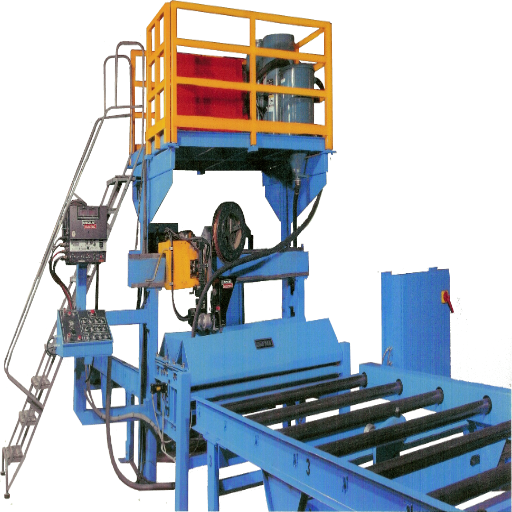
H-beam automatic welding machines are commonly used in areas where steel structures and large-scale construction work are required. The most common uses include:
- Construction: Constructing bars, beams, and other structural elements for use in building and heavy construction.
- Shipbuilding: Joining ship hulls to other parts, including reinforcements and registering beams.
- Heavy Machinery: Constructing heavy ornamental metal works that should also descend.
- Energy Sector: Construction of components of power-generating equipment such as windmills, oil platforms, and generators, among others.
These machines facilitate automation in high-volume production, ensuring consistent and accurate output.
Construction Industry Use Cases
The construction industry is leveraging digital innovation and a machine-centric approach to enhance the efficiency of its operations and increase production levels. With these advancements, a paradigm shift between sustainability and construction automation is in evidence. For example, in the construction industry, some modern machines are equipped with a computer-aided design (CAD) steel optimization and cutting system that enables cutting to optimize the use of steel material, thereby minimizing waste and reducing labor costs. Such equipment is also being incorporated into Building Information Modeling (BIM), which results in a detailed design and the elimination of costly on-site adjustments. These specific instances not only aid in strategizing for completing the project in less time but also in advancing the development of environmentally friendly buildings.
Shipbuilding Applications
Technology has advanced to the point where it affects many industries. One of them is shipbuilding. Most of the technological optimizations have been made in her processes, making it easier for them to perform. These are the Key aspects of technology in shipbuilding:
- Computer-Aided Design (CAD)
Scenarios like computer-drawn graphics enable complex ships and other secure checks of the design. The engineers will always have time to restructure poor geometry or defective design, or they will receive their outputs. This reduces the high costs associated with design flaws and construction delays.
- Robotics for Welding and Assembly
There are automatic welding machines for almost any type of work in shipbuilding, including cutting and welding. It also enables process acceleration without compromising the essential elements of human control and work quality.
- 3D Printing for Prototyping
Similarly, the prototyping process for a ship and its particulars can be facilitated using contemporary technologies, such as 3D printing. Hence, the technology will enable repetitive yet quick printing, while also allowing for the customized production of even complex products or simple components that are not in production.
- Blockchain for Supply Chain Management
Another primary application of blockchain in ship-building is transparent and efficient procurement management. It ensures that there are no redundancies in the system, that there is a continuous flow of materials, and that effective use of legal and quality management laws is followed.
- Marine IoT (Internet of Things) Integration
Integrated systems often help in the management of ships and fleets that operate on the ocean or in navigation. Sensors and equipment capture detailed information, including fuel level, engine temperature, and engine operation, among other data. The first stage of innovative technology enables effective dynamic control of equipment operation, resulting in improved maintenance and increased operational efficiency.
With the help of these technologies, the shipbuilding industry is undergoing significant changes, delivering more efficient vessels at lower costs that result in substantial savings.
Manufacturing and Industrial Applications
- Automation and Robotics
More and more application development workflows are incorporating automation and robotics to make precision improvements, reduce the likelihood of human errors, and increase efficiency. For instance, the manpower required to lift an object during manufacturing has been replaced by robots, which have increased the system’s efficiency by 30% while maintaining the intended quality of output.
- Additive Manufacturing (3D Printing)
The 3D printing technology has the potential for rapid prototyping and quick manufacturing of intricate parts. Such technologies enable material utilization optimisation, thus, compared with the traditional technologies, waste reduction exceeds 50%. It also significantly shortens the time required to produce the order after it has been placed.
- Predictive Maintenance with AI
The application of artificial intelligence and machine learning is helping manufacturing firms in maintenance planning by predicting failures before they happen. This, furthermore, has the practical benefit of reducing machinery and maintenance costs, as there are no breakdowns that will warrant unplanned repairs.
- Smart Sensors for Quality Control
Implementing smart sensors on manufacturing facility assembly lines enables real-time monitoring of products as they come off the production line. In the event of any deviation from perfect products, an alert is flagged, and the defective products are removed immediately. This approach has consistently resulted in a 25% increase in production numbers of the main product.
- Energy-Efficient Manufacturing Technologies
In the age of sustainable development, employers are advised to utilize green equipment and appliances to enhance production, as they minimize power costs. Appliances such as LED lighting and energy-efficient HVAC systems can substantially reduce operational costs by up to 40%, which is favorable in achieving sustainability objectives.
Benefits of Using H Beam Automatic Welding Machines

- Improved Efficiency
These machines reduce the time required to complete welding in the welding process, thereby improving the production process.
- Consistent Quality
Automatic welding functions produce consistently high-quality, correctly positioned welds for various sections within the beams.
- Cost-Effectiveness
These machines can operate at lower costs in terms of labour and minimize excess material that would be wasted.
- Enhanced Safety
Protecting the human resource from the hazards of manual handling in welding is of priority.
- Energy Efficiency
These modern automatic welding equipment for H-beams make fewer energy demands and align with the principles of sustainability.
Improved Efficiency and Productivity
The adoption of H-beam automatic welding machines has transformed industrial practices, making them more efficient. Statistical evidence shows that the mechanical welding of materials in manufacturing can improve throughput capacity by fifty percent if it never stops working, unlike hand welding, which requires brief rests. Moreover, these tools do not have the problem of offsets, which reduces the incidence of errors and, consequently, the need to spend time correcting engineering drawings and cutting and changing pieces of material in the machine. By leveraging new technologies such as artificial intelligence and machine learning, these machines can cater to steel-welding applications of any kind without compromising quality, as time-intensive process interruption mechanisms are no longer required. The complexity and ability to do things quickly and precisely document their importance in contemporary industries, marking a significant breakthrough in cost-effective solutions for the industry’s needs.
Enhanced Precision and Consistent Weld Quality
Modern welding activities are replete with requirements; enhanced precision and repeatable quality welds are among them. Ways have, however, continued into modern times, with technology still bringing some new general features into the practice. Automation and AI systems have enabled optimization in welding. The inner lining and training slandered value practice of utilizing controlled welding enhanced processes. These technologies utilize machine learning algorithms to analyze real-time data, enabling adaptive adjustments during the welding process. This ensures minimal distortion, optimal material usage, and uniform weld strength. By integrating predictive maintenance tools and sensor-based feedback systems, it is possible to avoid unnecessary delays owing to potential faults. This is part of what encourages the use of such systems, based on postulated economic returns. Such steps demonstrate how modern technology enables the increase in work volume while maintaining consistent quality in the manufacturing sector.
Reduction in Labor Costs
Labor costs within manufacturing sectors have been successfully mitigated through the integration of robotics and automation. Doubtless, companies can free up their time and minimize the necessary manpower by ensuring that their staff’s work does not involve routine activities. The frequency of searches on “automated manufacturing technologies” has increased remarkably, justifying the preference for these devices in enhancing work. Furthermore, the use of machine learning and AI-based systems yields higher quality levels and fewer defects, thereby reducing the instances where human intervention is required. This technology change not only saves money but also provides companies with the ability to direct resources toward further development and training their workforce, thereby invigorating their management prospects.
Comparison of H Beam Automatic Welding with Traditional Welding Methods

H-type automatic welding easily crosses out any doubts. The process is more convenient, faster, and more reliable compared to the traditional welding method. In manual welding, most requirements are based on the welder’s ability; in contrast, automatic welding ensures every weld meets standards with minimal human involvement. This, in the end, leads to lower mistakes and higher performance. Furthermore, automatic welding machines surpass most traditional methods by being quick, thereby reducing production lead time while maintaining accuracy. In contrast to conventional solutions, which are superior in certain situations, manual welding is labor-intensive and may not always yield uniformity in the final output. Overall, industrial activities are best performed using automatic welding, as it is more efficient and reliable.
Performance Analysis
In the testing of automatic welding systems, the assessment of their efficiency is commonly through a few key indicators, such as speed itself and repeatability. The data suggests that the introduction of automated systems in areas with advanced algorithms improved performance. In this regard, even the welding sector has seen a reduction in the error rate of 0.5% for machine learning practices vis-a-vis the 5-7% for conventional approaches. Additionally, the use of automated equipment speeds up the process by 30-40% and enables the organization to cope with increased demands more quickly. Investigations conducted to ascertain the benefits of integrating the latest trends in welding service and machine operation reveal that combining technology and automation in the welding system not only guarantees enhanced productivity but also continuous high-quality output.
Cost Comparison
When comparing manual and automatic welding, it is evident that automation ultimately saves money. For instance, after installation, Computer-Aided Welding Systems may cost between $50,000 and $150,000, depending on the system’s size and complexity. Yet, these expenses are more than offset by the savings in labor cost, lower waste materials, and increased throughput. For example, various studies show that the operation of automated welding systems can help reduce costs by 20- 30 % in the 12th month compared to manual welding. Additionally, companies spend less money on error rectifications due to the high-quality performance of automated systems. As such, automated welding is a cost-effective method of protection, particularly in sectors that require high-speed and high-accuracy industrial production.
Reliability and Consistency
Automated welding has risen meteorically since ancient times, and the speed at which it’s being adopted in the industry is particularly remarkable. In Shrofrl, automated welding, adapted to relevant technologies being implemented, has grown due to the drive for improved production and logistics methods. Machine welding eliminates the need for repairs and reduces the frequency of rework once products leave the production line, thereby increasing efficiency and allowing for the production of more products.
Choosing the Right H Beam Automatic Welding Machine
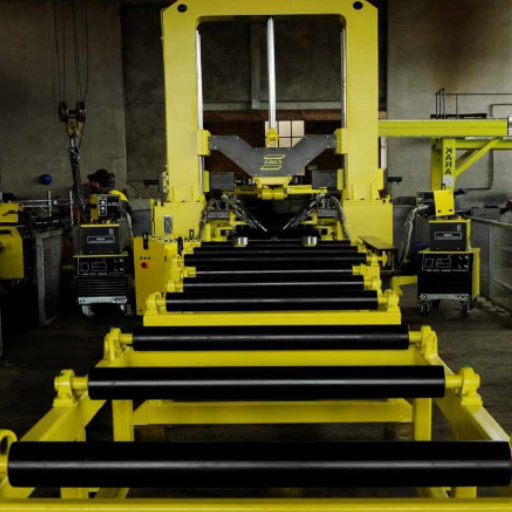
When selecting the most suitable H Beam gantry welding machine, several factors should be assessed, in addition to the production demand of the machine. The most important aspects are the compatibility of the machine with the required specifications for the H-beam, as well as the machine’s brand. Additionally, the machine must meet the requirements of distributors who are well-known for producing machines that are not only reliable but also backed up with the necessary spares. Finally, evaluate the available budget and consider other factors, such as maintenance and operational costs that may be incurred after purchasing the machine. Such elements must be regarded with meticulous care to make an accurate choice.
Budget Considerations
When preparing the expenditure plan to purchase a machine for operations with H-beams, it is essential to break down the cost and evaluate each item in detail. Here are the five crucial points in this direction:
- Initial Purchase Cost
The most significant portion of the initial expenditure is allocated to the purchase of the machine. Compare the equipment of several manufacturers to ensure that the purchase is not overpriced and that the quality is not compromised.
- Maintenance Costs
Additionally, consider the payment for current machine services and maintenance to ensure the machine’s proper and continual functionality. It is essential to note that a machine with a low service frequency will incur lower service expenditures, which ultimately leads to significant cost savings in the long run.
- Energy Consumption
Determine the energy consumption of the machine, as operating costs, including energy expenses, can be substantial. Always opt for machines that consume less energy to avoid unnecessarily increasing the production costs.
- Operator Training and Labor Costs
Another relevant aspect is the expenditure that will be incurred in training your personnel on how the machine works, as well as the other costs required to perform its duties.
- Replacement Parts and Warranties
Examine the availability of replacement parts and charges. Moreover, purchase a machine with a comprehensive warranty to avoid unanticipated repair charges.
If you consider the five budget concerns above, you can effectively protect your investment in business operations while ensuring financial balance.
Technical Specifications and Material Compatibility
Technical specifications and material compatibility involve evaluating chemical resistance, temperature limits, and mechanical properties of materials to ensure their suitability for specific applications.
| Key Point | Details |
|---|---|
| Chemical Res. | Resistance to chemicals like acids, bases, and solvents. |
| Temp. Range | Operating temperature limits (e.g., -50°C to +325°C). |
| Mech. Props. | Elasticity, hardness, and tensile strength. |
| Material Types | Elastomers, metals, composites, etc. |
| Applications | Aerospace, automotive, and industrial uses. |
| Storage | Conditions like humidity, light, and temperature. |
| Certifications | ISO 9001, ISO/TS 16949 compliance. |
| Testing | Laboratory immersion and mechanical tests. |
| Durability | Resistance to aging, ozone, and UV. |
| Compatibility | Specific chemical-material pairings. |
Assessing Production Needs
Considering the demands related to production, the emphasis is on two primary agendas: ascertaining the quantity and standard on one hand, and evaluating the strategic objective and configuration on the other. I consider the texture of the material being used, the type of end-product to be produced, and any additional requirements that may be necessary for the company’s future expansion. This way, the person ensures that the equipment they choose will serve the purpose, taking into account the present requirements.
Reference Sources
-
-
ResearchGate: Portable Robotic System for Steel H-Beam Welding – Discusses a practical robotic system designed explicitly for H-beam welding.
-
ScienceDirect: Electron Beam Characterisation Methods and Devices – Provides insights into advanced welding technologies and their applications.
-
MillerWelds: The History of Welding – Offers a comprehensive overview of welding processes, including electron beam welding.
-
Frequently Asked Questions (FAQs)
Q: What is a H-beam automatic welding machine?
A: A H-beam automatic welding machine is a specialized piece of equipment designed for the efficient welding of H-shaped beams. It automates the welding process, ensuring consistent quality and precision in the production of H beams used in various construction applications.
Q: How does a beam assembly machine work?
A: A beam assembly machine integrates various processes to assemble H beams. It typically combines cutting, welding, and straightening functions, allowing for a streamlined workflow that enhances productivity and reduces manual labor.
Q: What are the advantages of using a gantry welding machine?
A: Gantry welding machines offer several advantages, including increased stability, the ability to handle large H beams, and precision in welding. They are commonly used in beam welding lines for their efficiency and effectiveness in high-volume production.
Q: Can a straightening machine be used in conjunction with a H-beam automatic welding machine?
A: Yes, a straightening machine is often used alongside an H-beam automatic welding machine to ensure that the beams are perfectly straight before and after the welding process. This combination enhances the overall quality of the welded H beams.
Q: What is the typical flange thickness for an automatic welding machine?
A: The typical flange thickness for an automatic welding machine can vary, but many machines are designed to handle flange thicknesses ranging from 6 to 60mm. This versatility enables the production of a wide range of H-beams suitable for various structural applications.
Q: What is included in a H-beam production line?
A: A h-beam production line typically includes various machines such as cutting machines, welding machines, beam straightening machines, and assembly machines. This integrated approach ensures the efficient manufacturing of high-quality H-beams.
Q: What is the role of advanced welding technologies in H-beam fabrication?
A: Advanced welding technologies play a crucial role in H-beam fabrication by improving welding speed, accuracy, and quality. Techniques such as submerged arc welding and electron beam welding are commonly used in modern production lines to enhance efficiency and reduce defects.
Q: How does welding automation benefit the production process?
A: Welding automation significantly benefits the production process by increasing efficiency, reducing labor costs, and ensuring consistent quality in welds. Automated systems can operate continuously, which is essential for high-demand environments in H-beam production.
Q: What is the difference between a cutting machine and a plasma cutting machine?
A: A cutting machine generally refers to equipment used for cutting various materials, including steel plates, while a plasma cutting machine specifically uses plasma technology to cut through metals with high precision and speed. Plasma cutting is particularly effective for complex shapes and thin materials.


