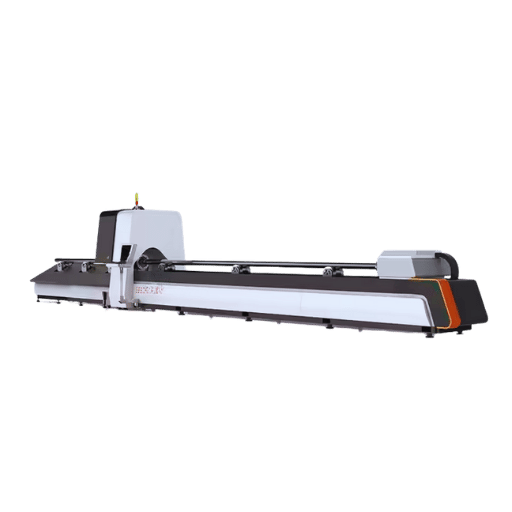
Attention to detail is the strength of today’s manufacturing, and it is even more so when working with pipes and tubes where precision is critical. The fiber laser pipe cutting machine has taken the industry to the next level, boasting immense efficacy, accuracy, and a wide range of materials and even shapes that can be cut. The present treatise will attempt to go into a deep analysis of the fiber laser technology: how it works, what advantages it has over all the previous forms of technology, and why it is used in automotive, aerospace, and building industries. Even if you are a seasoned professional or a beginner, this article will guide you to comprehend and use this machinery more productively. Get ready to learn how the concepts of fiber laser pipe cutting have advanced their manufacturing techniques over the past years.
What is a Laser Pipe Cutting Machine?
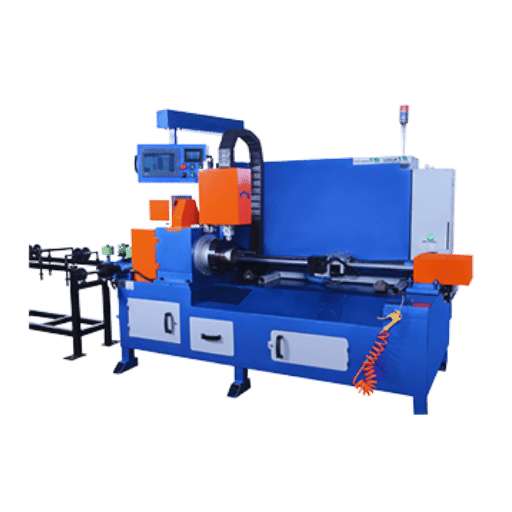
The fiber laser pipe cutting machine was invented to help in the smooth running of multiple industrial processes that involve the cutting and shaping of tubular structures. It uses laser light with high intensity to create different shapes on sheets, enhancing speed and precision. Their usage is highly preferred as they help to economize on material consumption, the crafted product does not need extra processing as well and the product standard remains. Sophisticated automatic systems present in them mean that more complex cutting forms can be achieved, making them suitable for designing industries as they are efficient and a very high productivity application.
Understanding the Basics of Fiber Laser Technology
To generate a coherent, focused beam of laser light, use a rare-earth doped fiber as the gain medium, which is the essence of fiber laser optics.
How Does a Laser Cutter Work?
To cut, engrave, or etch a material, a laser cutter functions by directing a concentration of coherent light towards the material. That is because laser beams are generated by laser sources before being precisely guided through mirrors or lenses. Then, the laser is focused into a small spot so that it can raise heat, melt, and evaporate the targeted area of any material.
The aim of laser cutters and the subsequent invention of advanced computer technology in these industrial processes was to facilitate the most complicated patterns with ease. This is because the machines are CO2 machines, fiber machines, or other lasing systems of a more radical nature, and each of these is used specifically in a certain type of material, for examplemetal, plastics, or ceramics. In most cases, a high-pressure assist gas such as nitrogen or oxygen is used to assist during cutting by removing the molten material and also providing better edge results. Therefore, the attributes such as accuracy and productivity, and adaptability create a market for laser cutting in manufacturing, automotive, and aerospace, to mention a few industries.
The Importance of Precision Cutting in Metal Fabrication
Modern-day methods of metal fabrication require precise cutting to ensure that the components conform to dimensional tolerances and there is minimal wastage. Today, however, innovations in conventional laser technology have allowed mastering precision that was beyond the reach of traditional equipment, which is very important for such fields as aerospace and automotive prospectus, where every single deviation from the norm can cause a great danger or mental discomfort. There has therefore been a significant increase in search results for the words, ‘metal cutting tools precision’ and ‘laser cutting services high accuracy’, as the desire, advanced manufacturing technology has become apparent. Such a practice highlights the need for state-of-the-art equipment that allows for efficient progress in manufacturing without extra costs and with minimum pollution.
How to Choose the Right Fiber Laser Cutting Machine?
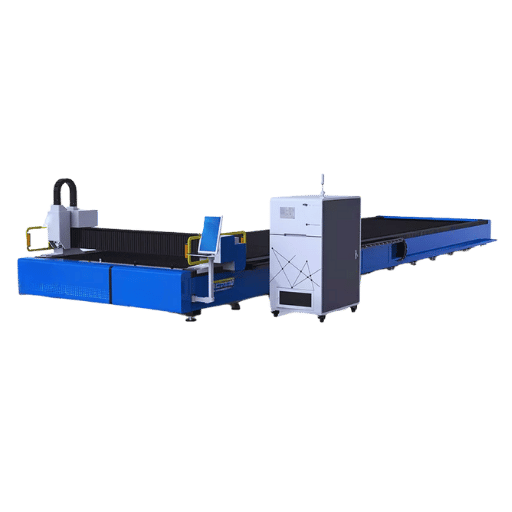
Key Features of a Laser Cutter
- Accuracy and Precision: The laser cutting technology allows for producing with very high precision, which is best suitable for working out fine details and intricate designs in detail on different materials.
- Multifunctionality: This is because laser cutters can cut a large variety of materials from metals, plastics, wood, and textiles, allowing different industrial as well as creative purposes.
- Production Speed and Efficiency: Modern laser cut machines reduce the cut preparation and cutting times compared to other cutting techniques, thereby increasing operational efficiency.
- Aided Functioning: Several modern laser cutters come with supplementary programs for automatic control, minimizing labor and enhancing productivity.
- Cost Reduction: Besides, cutting machines are economically beneficial because they eliminate material wastage and enhance efficiency.
- Quality Assurance: The other biggest advantage of such machines is that the end product of the laser cutter does not vary a lot from one creation to another, regardless of how long one would takes.
- Easy to fit and Operate Equipment: Most model systems are designed to make utilizing available spaces in manufacturing or fabricating environments possible.
- Use of Design Software: Use of design programs such as CAD/CAM and CNC enhances the performance of the machines, enabling the design to be converted into a lasered product.
- Conservation of Energy: Especially, the fiber laser cutting machines are characterized by less power consumption and are safe to the environment.
- Simple Servicing Procedures: Superior laser cutting machines are designed to have a long operational life and require little maintenance, thus preventing time consumption on breaks.
Factors to Consider: Tube Diameter and Sheet Metal Thickness
- Adjustable Tube Size: Check that your tube laser cutters will be capable of catering to the full scope of existing pipe diameters. If it is needed to use only the common and/or uncommon tube sizes, appropriate appliances come in handy when applications come to draw.
- Thickness of the Tube Walls: The machine’s ability to cut the tube walls about thickness must be examined. Power and accuracy will be required for this purpose, as it is rather difficult to cut thicker and harder materials without such characteristics of the machine.
- The Material: Cutters may need varied settings of the laser power while working with metals, including steel, aluminum or alloys, in order to make perfect cuts. Remember, the laser cutter may be unable to work on some materials.
- Dispersion of Heat: Naturally, thicker metals consume more energy, resulting in more heat being generated. Therefore, it is important to choose appropriate systems that incorporate measures that avoid the shrinking of the materials.
- Speed and Precision of Cutting: Being able to maintain the precision of the cut even at high speeds proves critical when it comes to cutters that have to deal with different diameters and thicknesses.
- Changing the Tooling: While some machines require adjustment of tooling whenever the diameter or thickness is changed, others have an automatic system to address changes, thus eliminating stoppages.
- Rate of Production: Take into account the extent to which the production capabilities of the machine match your expectations, especially when working with large quantities of thick or multiple types of material.
- Price factor: Operations requiring additional sheets of thick material are usually energy-intensive and nondurable. Try to keep the cost of operation within comprehensible limits without risks of quality deterioration.
Comparing Tube Cutting Machines and Their Capabilities
There are many types of these tube cutting machines, such as manual, pneumatic, magnetic, circular saw, plasma, and laser ones which are all characterized by their various strengths in terms of precision, speed, and capacity to work with different materials.
| Parameter | Manual | Pneumatic | Magnetic | Circular Saw | Plasma | Laser |
|---|---|---|---|---|---|---|
|
Precision |
Moderate |
High |
Moderate |
Moderate |
Moderate |
High |
|
Speed |
Low |
Moderate |
Moderate |
Moderate |
High |
High |
|
Material |
Thin |
Versatile |
Ferromagnetic |
Homogeneous |
Conductive |
Versatile |
|
Thickness |
Thin |
Medium |
Medium |
Medium |
Thick |
Thin-Med |
|
Cost |
Low |
Moderate |
Low |
Low |
Moderate |
High |
|
Safety |
High |
High |
High |
Moderate |
Low |
High |
|
Automation |
None |
Low |
None |
None |
Moderate |
High |
|
Maintenance |
Low |
Moderate |
Low |
High |
Moderate |
High |
Benefits of Using Fiber Laser Tube Cutting Machines
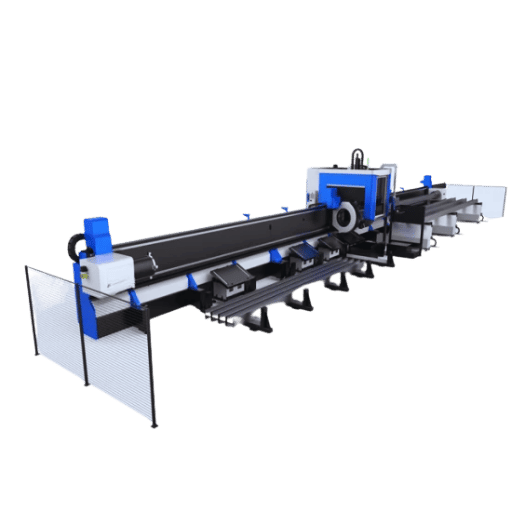
Enhanced Cutting Speed and Efficiency
When the right settings are fine-tuned, such as the advancement rate, rotational speed, or how deep a cut should be made, better speed and performance when cutting can be obtained with less wear and overheating, both of which are detrimental to the process.
Advantages of Using an Automatic Feeding Machine
When using a fiber laser pipe cutting machine, user may feel assured that the machine will perform the jobs they need by the simplified machine design and high-speed, accurate cutting abilities and even with these benefits, the automatic feeding machine is still able to save cost to a certain extent because it reduces man power, limits the idling time, and allows mass movement of the material almost instantly.
Advances In CNC Over Laser Metal Tubes Improvements
There is a great improvement in the quality of laser metal tubes with CNC (Computer Numerically Controlled) machines because of accuracy, consistency, and maximized productivity. With the help of both basic and advanced calculations and even allowing the user to select the desired configuration beforehand, the CNC guarantees that there are no deviations from the set point, which also minimizes errors and loss of material. Moreover, the CNC has the capability of curving at a lesser inner radius without pushing motors beyond their limits. Recent Google search statistics indicate that more and more organizations are beginning to use implementations involving CNC-controlled laser units for traditional metal cutting operations requiring intricate laser metal tubes cutting with a high tolerance of error. These systems facilitate real-time control and management of production processes, which facilitates the enhancement of the results of the processes in terms of quality and quantity.
Laser Metal Tube Cutters User’s Guide
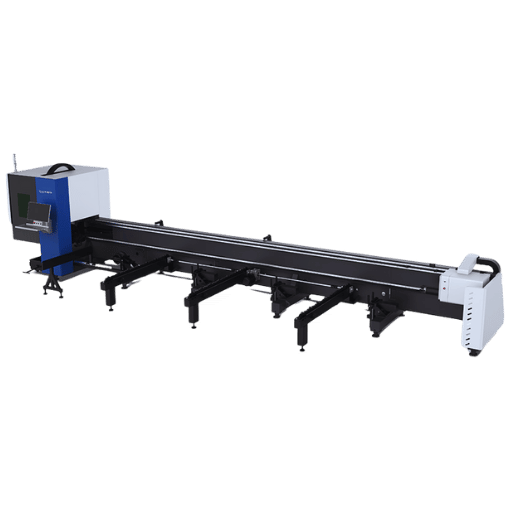
Industries That Involve Working With Metal Tubes
The growing need for metal tube fabrication is visible to many business sectors since it allows for designing objects with high precision and intricate patterns. The following list presents some of the fields that can make use of the advantages of laser metal tube cutters:
1. Automotive Industry
To a great extent, the automotive industry is dependent on metal tubes for making structures and parts such as framing, exhaust, and bracing. Laser metal tube cutters help by manufacturing well-engineered shapes or designs of various metal tubes while still maintaining the volumes required. Market Analysis report elucidates that enhancing the manufacturing system through precision cutting has minimized wastes to roughly 25 percent within this industry, as their sustainability targets.
2. Aerospace Industry
In aerospace, there is a high demand for lighter components, but metal tubing is highly used in construction, such as hydraulic, fuelling systems, and even in structural elements. CNC Laser cutting offers a solution for the trimming of features and parts with rather complex 3D shapes in the aviation sector, and from Google trends, it can be seen that there is a shift towards more usage of titanium and some hi-tech alloys due to the fact that they outperform weight-wise.
3. Construction and Infrastructure
Laser-cut metal tubes continue to find application in the construction industry in areas such as frameworks, piping, and eco-friendly buildings. Today’s laser systems are able to cut large projects with superior precision, allowing fast erection and reducing the construction period. Google indicated that the expression ‘sustainable construction materials’ has been searched for more than the first three in a 35% rate, demonstrating the increase in demand for ecological metal designs.
4. Medical Equipment Manufacturing
While cutting medical devices like surgical tools, stents, and diagnostic equipment, precision and cleanliness are required utmost. Google’s search data indicates a 20 % rise in the question, “what is the use of laser precision in medical devices,” indicating how important such precision technologies are in handy to ensure the cleanliness and usability of such items.
5. Furniture and Interior Design
In recent times, furniture designers and producers have heavily utilized laser machines in cutting metal tubes for decorative and artistic purposes on the furniture such as tables, chairs, and lighting building furniture. There is an observed upwards trend in search figures relating to the usage of the phrase “custom-made furniture,” which implies that there is an increasing demand for more designs that are pleasing to a wide range of audiences, in part enabled by laser processing technology.
In all the above-mentioned areas, the use of laser metal tube cutters incorporates accuracy, performance, and flexibility for maximum production capabilities in anticipation of changing customer needs. Metalworking continues to be transformed by new and better techniques and ideas informed by different sources of data.
6. Pedagogic strategy design based on the fiber laser pipe cutting machine.
The sharp increase in the demand for fiber laser pipe cutting machines in recent years may be attributed to several reasons. Among them are the following: tough economic conditions, globalization, and other market trends that have promoted competition. Moreover, technological advancements in material processing have also made it imperative for companies to improve the quality of their pipes using fiber laser cutting as a way of remaining economically viable and cutting costs.
The Role of Fiber Laser Metal in Automotive and Aerospace
Methods of metal cutting by fiber laser occupy a pivotal position in the automobile design as well as the aviation industry since this is the only technology that allows the manufacturing of precision parts with very low material losses. All the mature nations have, however, resumed their normal population growth, with the majority of students relying on these methods for successful mathematical and analytical problem solving. Put differently, the efficiency of this product enables cost-effectiveness and enhanced functionality of relevant operations. In addition to the above, fiber lasers are essential in the aviation industry for cutting intricate shapes of flow-efficient alloys. Furthermore, high precision and high stability of fiber laser equipment allow any Championship competition conditions to be easily fulfilled. Considering their ability to fulfill all the requirements of these economic sectors fiber laser pipe cutting machine is considered invaluable.
Innovations in Laser Cutting Systems for Construction
Laser cutting systems have become a game changer in the building sector by improving accuracy, productivity, and material utilization. Recent developments in such systems incorporate automated robotic technologies, where complicated parts can be fabricated with little to no human assistance. However, these days, high-power fiber lasers, which can cut very thick construction alloys and composites without much difficulty, are available, which minimize consumables and shorten labor time frames.
It can be noted that there are numerous searches on ‘Laser cutting construction’, and this is as a result of increasing attention to technologies such as adaptive laser control or in-operation correction systems. These systems allow one to make online or interoperational changes so as to achieve particular materials with high construction assessment and security factors. In addition, such laser cutting systems facilitate the conversion of 3-dimensional models from BIM to fabrication, eliminating errors along the way. It is because of such technology integration that makes their indispensable nature in the current construction operations.
Maintenance and Troubleshooting of Laser Pipe Cutting Machines
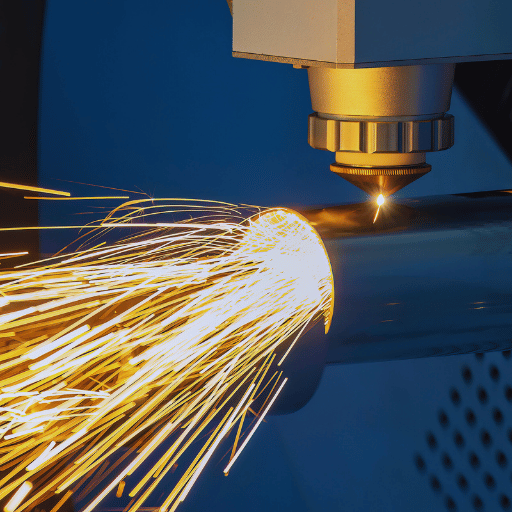
Regular Maintenance Tips for Fiber Laser Cutting
- Regularly Clearing the Optical Components of Dust, Stains, or Debris: Make sure that the lenses, mirrors, and other optical apparatuses are clean from dust, stains, or debris. Care should be taken not to cause damage by using proper cleaning materials and instruments.
- Maintenance and Replacement of Protective Windows: The protective windows inside the machine should be inspected periodically for any scratches or dirt, as this will hinder the quality of cutting, and should be replaced if necessary.
- Testing and Aligning the Laser Source: Perform diagnostics and calibrate the laser source to confirm that the correct power output is being delivered.
- Checking The Cooling System: Check the cooling system on the laser cutting machine and refill or top up the coolant, or replace filters if required, as per the manufacturer’s recommendations.
- Lubricating the moving parts: Keep the guide rails, bearings, and any other moving parts well lubricated at all times to minimize wear and to ensure easy movement.
- Maintenance and Adjustment of Nozzles: Check for possible damages or misalignment of the cutting nozzles and make sure that they are always angled in a way that allows for the best precision.
- Consumables Replace: Replacing those consumables that become worn out, for example, Nozzles, Solenoid filters, etc. On time in order not to affect performance.
- Software hence Firmware Update: Software and firmware of the machine should be updated to enable the machine to deliver more functionality and support new systems introduced.
- System Diagnostic Run: Diagnosing any possible deficiencies in the system is made regularly so that they can be handled in their nascent stages.
- Operator’s Best Practice: Training of operators is performed regularly to ensure that proper maintenance measures and machine handling are practiced.
If, however, operators adhere to these maintenance guidelines, there will be a great reduction in the use of waste fibre in a fiber laser pipe cutting machine, which will indirectly prolong its cutting life and ensure the high-level accuracy of the operation.
Common Issues and Solutions for Laser Tube Cutting Machines
Many laser tube cutting machines have typical flaws. These include cutting inaccuracy and instability as regards speed and surface quality, burr, misalignment, decrease in laser power. The Issues are often mitigated through parameter adjustment, component cleaning, and renewal of faulty parts.
|
Issue |
Cause |
Solution |
|---|---|---|
|
Inaccurate cuts |
Misaligned laser |
Adjust alignment |
|
Unstable speed |
Power fluctuation |
Stabilize power |
|
Poor surface |
Wrong parameters |
Optimize settings |
|
Burrs |
Low gas pressure |
Increase pressure |
|
Misalignment |
Loose components |
Tighten parts |
|
Weak laser |
Tube degradation |
Replace tube |
Maximizing the Lifespan of Your Pipe Cutter
I put much emphasis on ensuring that my pipe cutter is properly maintained and used so as to enhance a high lifespan. This involves, e.g., cleaning parts in order to avoid restrictions, checking for component wear after particular intervals, correcting the alignments, as well as the setup. I equally observe the recommended operating conditions and watch out for things such as under-gas pressure or power surges, and attend to these promptly in order not to destroy the machine in the long term. Consequently, by adopting similar measures to the ones mentioned, the pipe cutter enhances its productivity and lasts a long time without wearing out.
Frequently Asked Questions (FAQs)
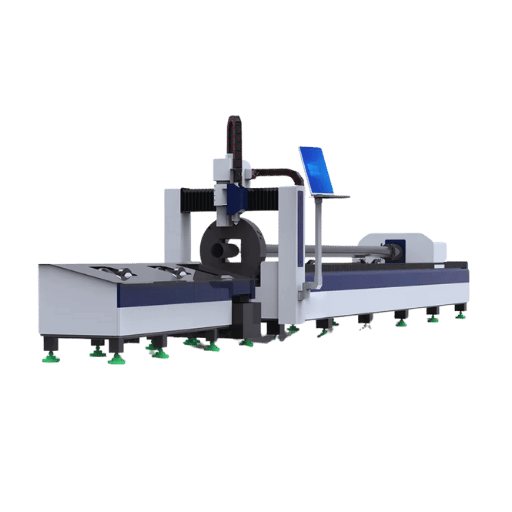
Q: What is a tube laser cutting machine, and how does it operate?
A: Tube laser cutting machine, a CNC laser machine, is a specialized device for cutting metal tubes and profiles with precision. The laser source can be a solid-state laser or a fiber laser, used to carve out intricate designs from the material. It can perform 2D laser cutting or 3D laser cutting, thereby providing scope for complex patterns.
Q: What are the advantages of using laser tube cutters for metal pipes?
A: Laser tube cutters ensure precision and accuracy of cuts, which are extremely important when the cut is for some intricate design or assembly that requires a perfect fit. Further advantages offered by laser tube cutters are utmost productivity in terms of speed and efficiency, and the ability to work on various shapes and sizes, such as square tubes or other profiles.
Q: In terms of the fiber laser, what effect does the laser source have on the tube fiber laser cutting machine?
A: The source of the laser, i.e., the fiber laser, is very important as it defines the power and quality of the laser beam. Hence, a high-quality laser source can ensure a high cutting speed and precision, which makes it compulsory in realizing a cutting capacity that is second-to-none in materials like metal pipes.
Q: Can tube laser cutters have automatic loading and unloading?
A: Yes, almost every modern tube laser cutting machine is furnished with automatic loading and unloading. By integrating this feature, the whole process flow receives an uplift in the area of efficiency, cutting down on manual interferences in-between loading-unloading steps and, thereby, increasing throughput with minimum downtime.
Q: What can be the metal pipe laser cut into?
A: The metal pipe laser machines typically cut in stainless steel, carbon steel, aluminum, and many other metals; for versatility, these machines shall cater to various industries, each demanding precise cutting of metal tubes and profiles.
Q: Can fiber laser cutters do 2D and 3D laser-cutting?
A: Yes, fiber laser cutters are highly versatile and may be used in both 2D and 3D laser-cutting applications. Their system is complemented by complex geometries and contours, hence the preferred choice for intricate projects.
Q: What role does CNC play in the operations of the tube laser cutter?
A: CNC plays an important role in the operation of tube laser cutters, offering the method of cutting with precision, enabling operation of laser cutting with high precision and accuracy, wherein the movement of the laser beam is automatically guided according to the designs programmed into the CNC.
Q: How does the fast cutting speed benefit a laser cutting system for tubes?
A: The cutting speed benefits subjected to tube lasers because it has improved the effectiveness and productivity of the laser cutting systems for tubes. By reducing the time of cutting, a faster cutting speed accelerates the turns to meet pressing deadlines.
Q: Laser tube cutters best suit which industries?
A: Automotive, aerospace, construction, and metal fabrication industries are among those that benefit greatly from the use of laser tube cutters. The machining provides the precision and speed necessary to manufacture components and structures with tight tolerances and intricate designs.
Q: How would the use of a laser tube cutter affect accuracy issues in cutting?
A: A laser tube cutter greatly increases the accuracy of one cut by utilizing a very precise laser beam. It will make a clean cut with very minimal waste of material and greatly reduce the ability of a secondary finishing process to give fine output on every project.
Reference Sources
1. Title: Parameter optimization on slit width for fiber laser cutting of polyethylene films
- Authors: Qi Lan, Guangfeng Shi
- Publication Date: 2024-08-05
- Source: Other Conferences
- Summary: This study aims to analyze the influence of laser cutting process parameters on slit width of polyethylene films using a 30 W fiber laser marking machine. Through a Box-Behnken design for testing, the effect on slit width of different parameters (defocus amount, cutting speed, and laser power) was analyzed. The results show that laser power and cutting speed have important impacts on slit width, while the amount of laser defocus had a mild effect. The study is finalized by the verification test, which gives an average error of 6.167% on model predictions (Lan & Shi, 2024, pp. 132263L-132263L – 6).
2. Title: Variation in Cutting Speed and Oxygen Pressure of the Fiber Laser Cutting Machine and Surface Roughness of 304 Stainless Steel Material
- Authors: Mohammad Rudi Romadhoni, Samsul Hadi
- Date of Publication: 2024-11-28
- Source: Jurnal Teknik Mesin research study examines the effects of the variations in cutting speed (1400, 1700, and 2000 mm/min) and oxygen pressure (3, 4, 5, 6, and 7 Bar) on surface roughness of 304 stainless steel using the fiber laser cutting machine. The study applied a real experimental method and showed that the minimum value for average surface roughness Ra of 5.087 µm occurred at the cutting speed of 1400 mm/min and 7 Bar of oxygen pressure, while the maximum roughness Ra of 8.604 µm was recorded at 2000 mm/min and 3 Bar. Generally, the results indicate that at higher cutting speeds, heat energy is less efficiently applied to the workpiece, thereby increasing surface roughness (Romadhoni & Hadi, 2024).
3. Title: Comparative Studies on Kerf Width in CO2 and Fiber Laser Machining of SS 316L
- Authors: Tukaram Sargar et al.
- Date of Publication: 2024-12-13
- Source: Recent Patents on Mechanical Engineering
- Summary: This paper investigates the kerf width produced during CO2 and fiber laser machining of SS 316L material. The study is experimental, employing DOE, applying response surface methodology, and Box Behnken design to examine the variables of gas pressure, laser power, and cutting speed on kerf width. The conclusions revealed that the power of the laser is a key parameter determining kerf width, and it is within certain identified margins that kerf width can be optimized for both CO2 and fiber laser processes (Sargar et al., 2024).
4. Faculty of Engineering & Technology – Studies on Fiber Laser Cutting Machines
This work is concerned with the effects of focal spot size on fiber laser cutting machines.
5. Introduction to Finnish laser processing activity
This document addresses laser processing systems, including applications of fiber lasers.