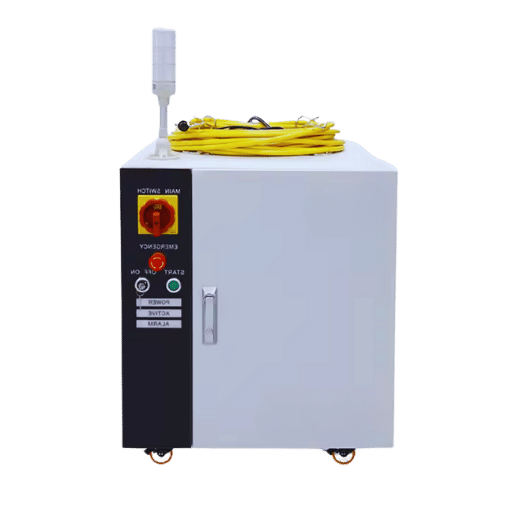
The creation of high-power fiber lasers has proven a real game changer in photonics; their creation has transformed all manner of manufacturing and communications operations. Marrying extraordinary precision with the highest levels of efficiency, these tools are paving a whole new road for the so-called cutting-edge processing of materials,” medical” meaning medical tech and defense applications.) Here we attempt to entice our readers with a glimpse into the vast world of high-power fiber lasers, paying special attention to their workings, benefits, and the brilliant possibilities they can offer technology for solving daunting technical problems. Perhaps you work right there in the industry, or maybe you just like technology; however, such an account will help to expound upon how fiber lasers are changing the face of present-day photonics.
What Is a High-Power Fiber Laser?
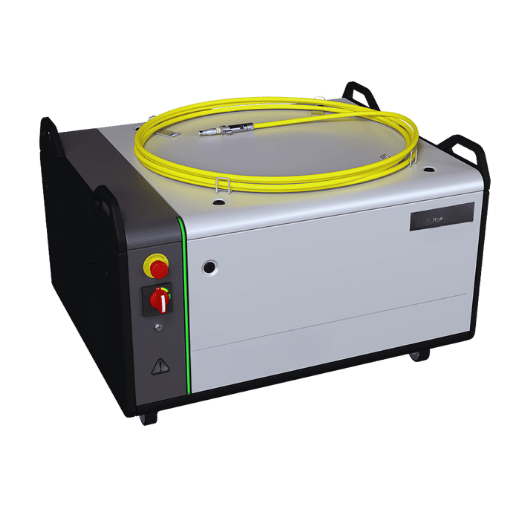
A high-power fiber laser is a laser that produces a high-intensity light beam via the use of an optical fiber as the gain medium. Optical fibers are doped with rare-earth elements sometimes, the two most popular being ytterbium and erbium, for amplifying the light. These laser systems score very highly on efficiency, compactness of design, precision delivery of high power output, and output beam quality. High-power fiber lasers are widely employed in industrial laser cutting, welding, and marking applications, while their uses also extend into scientific research and defense technologies. High-power fiber lasers are known for their reliability, scalability, and economical solutions for complex working environment requirements.
Fiber Laser Technology Explained
In fiber laser technology, an optical fiber doped with rare-earth elements amplifies light to produce a precise, high-efficiency laser beam for cutting, engraving, or marking applications.
How Do High-Power Fiber Lasers Work?
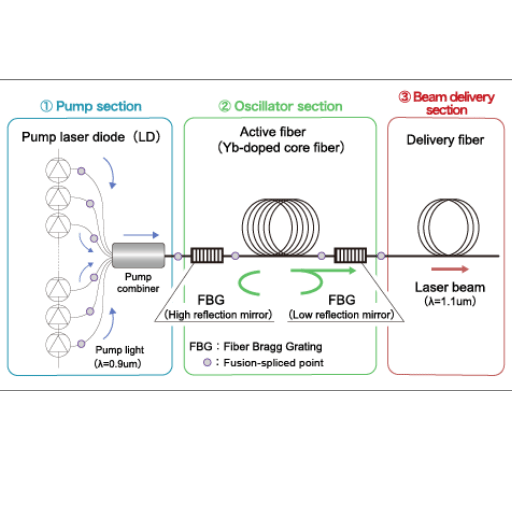
A high-power fiber laser works on the use of a specially constructed optical fiber, which is typically doped with rare-earth elements such as ytterbium or erbium. When these dopants receive energy, they amplify the light under a process termed stimulated emission. The laser process is started by a diode that pumps light into the core of the doped fiber. The fiber structure allows the energy to be transferred in such a way that the light bounces back and forth many times within the core, creating a very intense, coherent beam.
The newest designs of high-power fiber lasers are equipped with beam quality enhancement concepts and thermal management to ensure that the output power remains at a high level and does not degrade. They usually operate in single-mode or multi-mode beam configurations according to the requirements of the application for accuracy and high efficiency. Their small, robust design makes them suitable for industrial applications that require precision, like cutting, welding, drilling, and additive manufacturing, and they also come with low maintenance requirements. Further developments provide for greater beam stability and cleaner output and have opened new avenues for their applications in technical and scientific fields.
Key Components of a Fiber Laser System
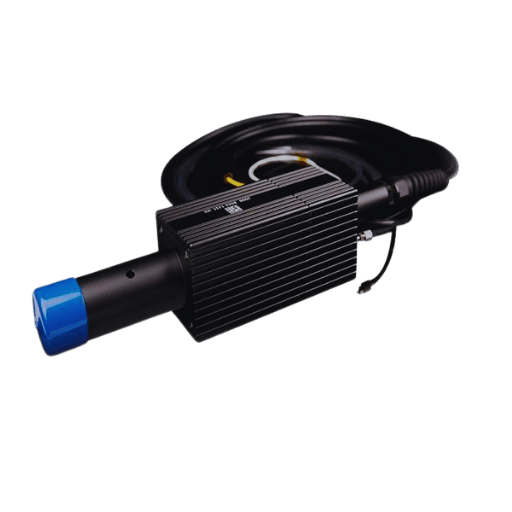
The key elements of a fiber laser setup comprise the fiber laser source, the laser head for cutting, the chiller for water, the water chiller, and the air cutting mechanism.
What Are the Applications of High-Power Fiber Lasers?
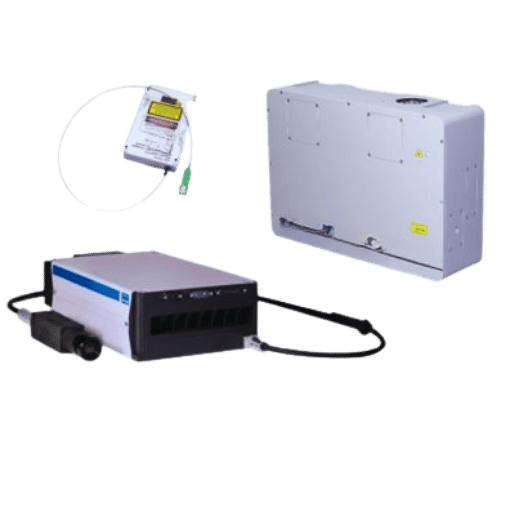
Industrial Uses: Laser Cutting and Welding
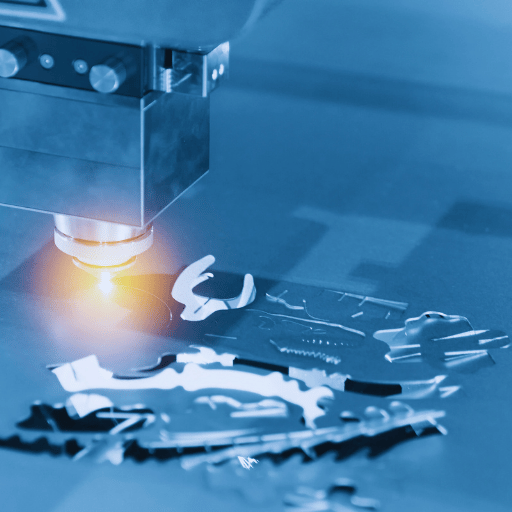
The further refinement of the high-power fiber laser has brought a revolution in applications of the laser in cutting and welding, offering extraordinary precision, speed, and efficiency. The processing capabilities of the laser extend to a gamut of materials, including metals such as stainless steel, aluminum, and titanium, and non-metals like plastics and composites.
Laser Cutting
By their narrow kerf widths and the little thermal distortion imparted, fiber lasers have usually been considered appropriate for laser cutting of the hardest of specifications. Until recently, these systems could cut sheet metal at a maximum speed of 60 m/min for thicknesses below 1 mm. For instance, in cutting 1-mm-thick carbon steel, edge accuracies as low as ±0.02 mm by high-power fiber lasers have been achieved, a parameter highly critical in aerospace, automotive, and electronics manufacturing industries. In addition to the cost savings, fiber lasers are far more energy efficient as compared to CO₂ lasers, with conversion efficiencies of over 40%.
Laser Welding
Fiber lasers achieve high-precision welds having higher penetration with smaller heat-affected zones (HAZ). These technically advanced systems with power outputs of as much as 30 kW can weld 2-mm-thick stainless steel at speeds of up to 50 mm/s, becoming immensely important for areas such as shipbuilding, fabrication, and medical device manufacturing, where strength and durability are critical concerns. Other advantages of laser welding include fading on contact—the effects of wear and tear on components translate to a longer system life span and overall efficient operations.
High-power fiber lasers being put into cutting and welding applications are considered a new measure of accuracy, productivity, and cost offered to the modern industrial processes.
Medical Applications of Fiber Lasers
Fiber lasers have been put to service in medicine for working precisely and with adaptability in the following fields:
- Surgical Interventions: Fiber laser constitutes a tool used in minimally invasive surgery for cutting tissues, ablation, and coagulation, with less bleeding and more expedient recovery times.
- Dental Treatments: Procedures such as teeth whitening and cavity preparation, along with the resolution of soft tissue conditions, are done with fiber lasers, which enhance precision and patient comfort.
- Dermatology: Fiber lasers find their applications in skin rejuvenation, scar removal, tattoo removal, and treatment of pigmented lesions.
- Ophthalmology: The lasers play a pivotal role in vision correction surgeries through LASIK and work on other eye treatments, such as cataracts.
- Cancer Treatments: Fiber lasers disintegrate cancer cells targeted while sparing the surrounding healthy tissue in photodynamic therapies.
- Endoscopic: In endoscopic surgery, the laser proficiently cuts and removes tissue with high precision and less invasiveness.
- Vascular Treatment: Effective in treating varicose veins and other vascular disorders by targeting individual blood vessels without harm to neighboring tissues.
- Medical Device Manufacturing: Fiber laser welding is applied in conjunction with fine and accurate welds for the manufacturing of surgical instruments and implants in the production of medical devices.
These applications consider the versatility and indispensability of fiber lasers in furthering modern medical techniques.
Role in Photonics and Optics
Due to their high efficiency, excellent beam quality, and precision, fiber lasers find a very important place in photonics and optics. They are, in turn, widely applied in optical communications systems to carry signals by their coherent, stable light source. Any fiber laser sensing procedure brings about precise measurement in different domains, such as environmental monitoring or industrial automation. Its compact design just makes the fiber laser amenable to different novel optical engineering applications.
How Does a Fiber Amplifier Enhance Laser Performance?
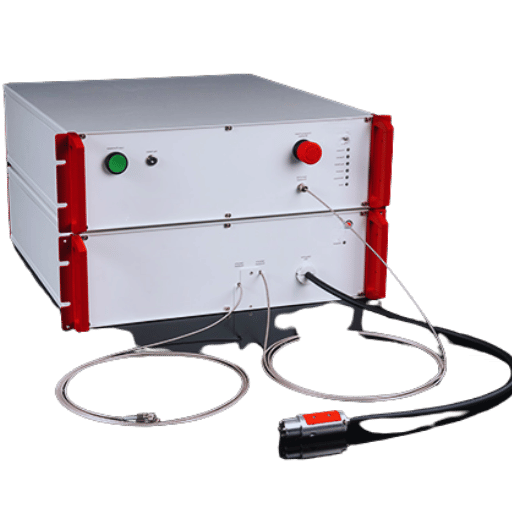
Working Principle of Fiber Amplifiers
Fiber amplifiers greatly improve laser performance by amplifying optical signals directly within an optical fiber, without first converting them into electrical signals. Stimulated emission is the main mechanism behind this. As the pump power comes from an external light source—usually a laser diode- optical pump-doped fiber is kept excited. The dopant atoms, then receptive to stimulation by an incoming weak signal, release a shower of photons coherent with the original one, causing colossal signal amplification that preserves its spectral properties.
Fiber amplifiers become integral to any modern optical communication system where high transmission efficiency over huge telescopic distances is sought: EDFA, particularly, has been widely used in systems based on dense wavelength-division multiplexing (DWDM), therefore, allowing amplification of many wavelength channels simultaneously with less degradation of the signal, having preponderance over noise, thus enhancing overall throughput of data. Over time, downstream technological developments have seen fiber amplifiers being more abundantly utilized in high-power laser systems, medical imaging, and remote sensing, thereby situating themselves as versatile key constructs to related advances in photonics.
Impact on Output Power and Beam Quality
Fiber amplifiers bear a great influence on output power and beam quality in optical systems. Improvements in doped-fiber design and pumping methods have brought limitless enhancements to the output power while at the same time ensuring the beam quality that has been down to the wire design for precise and efficient application. High-power fiber amplifiers employ advanced methods of mode-field adaptation and active thermal management to suppress distortions and maintain near-perfect beam characteristics for applications ranging from telecommunications to industrial lasers. Latest analysis supports that the advances allow scalable powers without trade-offs in beam coherence, heralding fiber amplifiers as the cornerstones in today’s photonic systems.
What Are the Advantages of Single-Mode Fiber Lasers?
Comparison with Multi-Mode Lasers
High-power fiber lasers are best for beam quality and precision of thin materials, while multi-mode lasers have to work with high powers and thick materials due to the variations in energy distribution and damage thresholds.
|
Parameter |
Fiber Laser |
Multi-Mode Laser |
|---|---|---|
|
Beam Quality |
High |
Moderate |
|
Energy Focus |
Concentrated |
Distributed |
|
Cut Speed |
Faster (thin) |
Faster (thick) |
|
Material Fit |
Thin |
Thick |
|
Power Range |
Low to Medium |
High |
|
Nonlinear Effects |
Higher |
Lower |
|
Damage Threshold |
Lower |
Higher |
|
Cost |
Higher |
Lower |
|
Applications |
Precision tasks |
Heavy-duty tasks |
Benefits of High Beam Quality
- Increased cutting and drilling precision.
- Capability for finer details and intricate designs.
- Reduction in heat-affected zones, thereby reducing the damage.
- Enhanced efficiency for processing thin materials.
- Great for applications demanding tight tolerance values and strict standards.
- Edge quality enhancement, resulting in a granularly smooth finish.
- Better performance in microfabrication and in handling fragile materials.
Applications in Precision Tasks
- Medical device manufacturing: stents and surgical tools.
- Microelectronics manufacturing: circuit board patterning and semiconductor fabrication.
- Aerospace technical processes require extreme material specifications.
- Automotive components manufacturing with tight tolerance.
- Watchmaking and fine mechanical works.
- Jewelry design and manufacturing for fine detailing.
- Scientific instruments require high-precision fabrication.
- Custom prototyping in advanced engineering.
- Engraving and marking industrial processes for intricate design work.
What Are the Challenges in Power Scaling of Fiber Lasers?
Addressing Thermal Management Issues
- Heat Dissipation: The efficient removal of heat becomes a matter of importance in the prevention of heat-induced damage that might affect the normal performance of the laser.
- Thermal Lensing: Temperature change leads to a change in the refractive index of various materials; beam distortions and poor output quality may result from these changes.
- Material Stress: Fiber materials may be mechanically stressed when subjected to thermal loads for long durations, and this could have potentially catastrophic implications in terms of cracking or failure.
- Cooling Systems: Problems arise in cooling system design and integration; e.g., active cooling, with chillers, or passive cooling, with thermal radiators.
- Efficiency Loss: Pumping efficiency may drop with an increase in temperature, resulting in lower energy conversion rates.
- Nonlinear Effects: Higher thermal loads could also imply more pronounced nonlinear effects like Stimulated Brillouin Scattering (SBS) or Stimulated Raman Scattering (SRS), thus hampering performance.
- Thermal Stability Cohesion: Thermal management of the system has to be so precise as to maintain stable operation of the laser over a range of different environmental conditions.
Role of High-Power Diodes for Scaling
High-power diodes are responsible for the delivery of required power and efficiency to advanced laser systems. According to me, they act as respected pump sources with which higher energy outputs are produced without sacrificing performance. High-power diodes are scalable with minimal thermal losses while maintaining strict wavelength stability; hence aiding scalability of applications, especially those that require high beam quality and higher power efficiencies.
Frequently Asked Questions (FAQs)
Q: What are high-power fiber lasers, and how are they generated?
A: High-power fiber lasers are types of lasers operating on an active optical fiber doped with rare-earth elements. The active fiber is pumped by a laser diode to generate the laser light. These lasers operate at higher power levels, high efficiency, and good beam quality, which makes them suitable for a variety of industrial applications.
Q: What makes high-power lasers distinct from other lasers?
A: High-power lasers, such as those in fiber lasers for industrial applications, provide a much higher laser output, measured in kilowatts (kW), with prime beam quality. A laser that operates with low power, such as a solid-state laser, can hardly sustain its operation at high power for a long time without deterioration in performance.
Q: What benefits do industrial applications enjoy by using high-performance fiber lasers?
A: High-power fiber lasers provide many advantages in industrial operations: better efficiency, low maintenance, compact size, and the capability to offer high power continuously. These lasers are usually employed in laser welding, cutting, and engraving, giving good results in precise and repeatable processes.
Q: How does IPG Photonics contribute to the evolution of high-power laser technology?
A: Being the leader in high-power fiber laser manufacturing, IPG has driven the advancement of the technology. Innovations created by IPG produce the highest performance fiber lasers, including CW and pulsed fiber lasers, which are used worldwide in industrial and scientific applications.
Q: What is the importance of single-mode operation for high-power fiber lasers?
A: Single-mode operation has to do with a high-power fiber laser producing the laser beam with a very narrow beam divergence and very good beam quality. This is of utmost importance in application fields that need precision, such as micromachining and high-resolution imaging, where the fundamental mode is the best.
Q: What instabilities of modes are implicated in high-power fiber lasers?
A: Mode instabilities affect the high-power fiber laser by instigating fluctuations in the laser output that affect the quality and stability of the beam. From a certain power threshold, it starts operating in multiple modes, which are undesirable. Understanding these instabilities and keeping them under control is essential to ensure good quality of the output.
Q: How does fiber length affect the high-power fiber laser?
A: Fiber length in high-power fiber lasers affects the gain and efficiency of the laser. Increased fiber length can provide higher gain, but at the possible expense of increased nonlinear effects that will degrade beam quality. The optimum fiber length will depend on the desired performance level for a given application.
Q: What does laser welding stand to gain from high-power fiber lasers?
A: Laser welding using high-power fiber lasers offers flexibility, deep penetration, and fast travel speed of welds for joining metals, metal alloys, and others. Clean and strong welds can be obtained from concentrated high power and superb beam quality, which necessitates less post-processing and improves production efficiency.
Q: What photonics news advancements are fueling demands for high-power fiber lasers?
A: Advances in photonics, such as improved fiber core technologies and new laser sources, have been boosting the demand for high-power fiber lasers. These developments have allowed the lasers to increase in power output, beam quality, and ruggedness of industrial applications, leading to the growth of high-power laser capabilities and markets.
Reference Sources
1. Title: Large-mode-area all-solid anti-resonant fiber with single-mode operation for high-power fiber lasers
- Authors: Zhen Xing et al.
- Journal: Optics Letters
- Publication Date: April 15, 2021
- Citation Token: (Xing et al., 2021, pp. 1908–1911)
Summary:
- This research paper is an extension of previous studies concerning AS-ARF to obtain an LMA and single-mode operation for high-power fiber laser applications. The authors propose a new AS-ARF design with nonuniform rods for improved single-mode properties and increased mode area. Numerical results show that the core diameter can be greatly expanded at many wavelength regions to guarantee fairly robust single-mode operation. The fiber also meets the bend conditions under heat load, rendering it a good candidate for high-power applications.
2. Title: Development status of high-power fiber lasers and their coherent beam combination
- Authors: Zejin Liu et al.
- Journal: Science China Information Sciences
- Date Published: February 27, 2019
- Citation Token: (Liu et al., 2019, pp. 1–32)
Summary:
- This paper reviews the present state of high-power fiber lasers, with a doubled scope aiming at narrow-linewidth and broadband fiber lasers, and those working at 2 μm. Coherent beam combination is studied since it is the technique by which the fiber laser output power and beam quality can be increased. Observation of the challenges and scope for advancement in this area leads to an insight into future development possibilities of high-power fiber laser technology.
3. Title: High-power fiber lasers based on tandem pumping
- Authors: P. Zhou et al.
- Journal: Journal of The Optical Society of America B-optical Physics
- Published Date: 1 March 2017
- Citation Token: (Zhou et al., 2017)
Summary:
- This review covers power scaling in fiber lasers, discussing difficulties such as the brightness of the pump sources and modal instability. A complete high-power fiber lasers overview is given, based on tandem pumping schemes, including operative requirements for different dopants and major accomplishments to date in the field. The paper also presents a discussion of underlying challenges for further power scaling as well as a 3.5 kW Yb-doped fiber amplifier.
4. Ultrafast and High Power Fiber Lasers- University of Michigan
This research group is concerned with advanced fiber laser technologies and their applications.
5. The Development of High Power Fiber Laser Technologies- OhioLINK
A thesis on the development and simulation of high-power fiber laser technologies.