
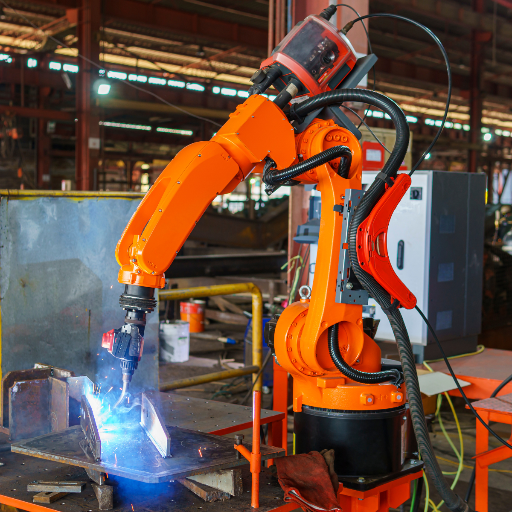
The rise of industrial robotics is revolutionizing business operations along with increasing agility, accuracy, and creative breakthroughs within espionage industries. These sophisticated machines now serve as the foundation of a new industrial revolution, not merely operating as automation tools. From logistics to manufacturing, this new batch of automation is undergoing relentless machine evolution. Intersting in how automation is changing production lines? Or perhaps looking to catch-up with recent developments in robotics? Regardless, this blog will show how these advanced robotics are aiding in modifying industrial challenges and modern opportunities.
What Are the Different Types of Industrial Robots?
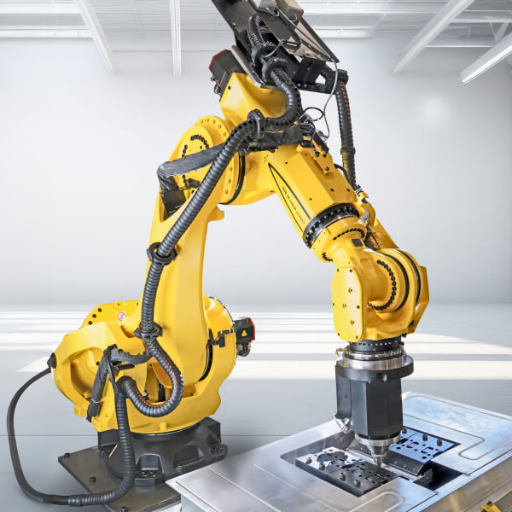
- Articulated Robots: These types of robots are equipped with rotary joints, which enables them to be used for a wide variety of different tasks such as welding, assembling, and material handling.
- SCARA Robots: These robots are the fastest and most accurate, and are mostly used for pick and place operations, assembly, and packing.
- Cartesian Robots: Known as linear robots, these perform along three straight axes and are suitable to 3D printing, CNC machining, and basic pick and place tasks.
- Delta Robots: These robots are lightweight and fast, so they are dominantly used in high speed food and pharmaceutical packaging and assembly.
- Collaborative Robots (Cobots): These types of robots are made to work with people, designed to accomplish tasks like basic assembly and quality control.
Industrial Application and Uses of Articulated Robots
Commonly known as jointed arm robots, articulated robots are one of the most flexible and popular types of robots used in industrial automation. These mostly rotary robots possess several joints which can move in various axes, giving them the ability to perform complicated and intricate tasks. Depending on the application, articulated robots may range from 2 to 10 or more joints (or axes) which enable them to carry out advanced processes such as welding, assembly, painting and material handling.
The global articulated robotic market stood at roughly $12 billion in 2022 and is predicted to reach more than 9% CAGR until 2030. Automation enhancements, high adoption rates in the automotive and electronics industries, and an increase in these industries utilizing robots for repetitive, dangerous tasks are all contributors to this growth.
Articulated robots stand out for their dexterity–the broad range of motion that matches human arm mobility which allows them to perform complicated tasks in tight spaces. They are extensively used in automative production to weld and assemble car parts with perfect precision. Articulated robots also operate in the electronics industry where they assemble microelectronics and solder circuit boards at a level far beyond any human’s ability to replicate.
Moreover, articulated robots are being combined with more sophisticated technologies like machine vision and artificial intelligence (AI). This allows them to carry out intelligent tasks such as adaptive error handling, object recognition, and quality control. For example, AI-driven articulated robots are now being deployed by companies to automate packaged goods in the supply chain processes as well as in sorting and inventory control.
Despite their numerous advantages, articulated robots do possess some limitations such as higher set up costs and intricate configuration when compared to simpler systems like cartesian or delta robots. Businesses considering these factors often find offsetting costs when combined with increased productivity, reduced error rates, and savings in operational expenses over time.
Adaptability, precision, and steadily increasing technological improvements confirm articulated robots will strongly influence the development of industrial automation in various fields.
How Do SCARA Robots Improve Business Operations?
SCARA Selective Compliance Assembly Robot Arms are known for their effectiveness, speed, accuracy, and overall helpfulness in automation of industrial processes. They serve particular purposes such as place-and-pick, assembly , and packaging processes which are common to electronic and pharmaceutical businesses. One of the things that improve productivity on SCARA arms is their cycle times; some models do more than two hundred cycles in a minute depending on how complex the task is.
Recent reports have shown that SCARA robots have caused a remarkable change in the reduction of the manual operation cycle time which was a boost to productivity while cutting costs. The miniaturized design allows fitment in space-constrained production lines while maintaining efficiency. Moreover, better integration of machine learning and SCARA sensors improve their adaptability in changing environments. With such capabilities, SCARA robots are productivity workhorses for many different kinds of applications.
The Role of Delta Robots in Automation
Delta robots play a vital role in automation by offering high-speed precision, compactness, and specialized applications in industries such as packaging, electronics, and pharmaceuticals.
| Key Point | Details |
|---|---|
| Speed | High |
| Precision | Excellent |
| Design | Compact |
| Applications | Packaging |
| Industries | Electronics |
| Use Cases | Pharmaceuticals |
| Maintenance | Low Effort |
| Efficiency | Optimized |
| Adaptability | High |
How Are Collaborative Robots Transforming Industries?
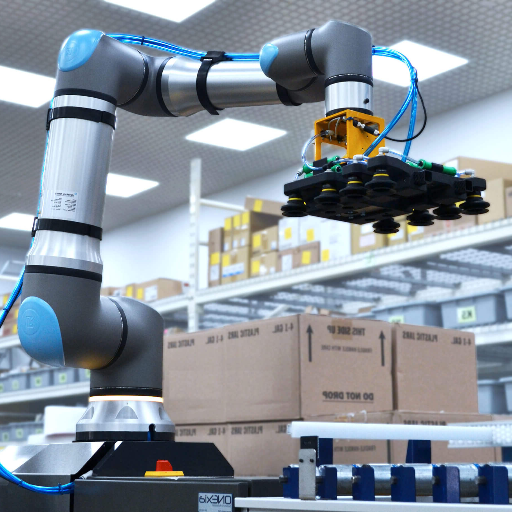
Collaborative robots—also known as cobots—are automating numerous sectors by augmenting human efforts to improve efficiency and safety. They are best-suited for monotonous and strenuous work that repetitive within a business, allowing staff to tackle more advanced issues that require creative thinking. Adaptable to many types of simple jobs and affordably priced, cobots can be programmed easily, which is why they can be utilized by any scale of business. The manufacturing, healthcare, logistics, and even agriculture sectors are primary adopters of cobots and are reaping immense benefits because of their accuracy and productivity. Their capacity to adapt to operational processes where human contact is necessary is profound, helping create a more agile and effective workforce.
Understanding Cobots and Their Applications
Working collaboratively with humans, they are called collaborative robots or cobots. Productivity increases and streamlining operative processes are purposes they serve in industries. Unlike traditional industrial robots that operate on their own, cobots are made to function alongside people. Market dynamics indicate a notable spike in cobots adoption. A recent MarketsandMarkets report confirmed the collaborative robot market is expected to expand from $1.2 billion in 2021 to $10.5 billion by 2027. That would mean a compound annual growth rate (CAGR) of 43.4%. This is all thanks to their numerous application fields, safe operation, non-intrusive cost, and lower integration costs compared to conventional robots.
Using cobots has become part of innovative approaches in industries. In manufacturing, for example, cobots are used in assembly, material handling, and quality inspection. Production accuracy significantly improves because these robots reduce the error rate in repetitive tasks by 90%. In logistics, cobots are used for sorting and packing, making the supply chains more efficient. In the healthcare field, cobots are assisting in surgery and other therapies, which helps patients.
In agriculture, farmers are noticing the advantages of cobots, especially with tasks requiring adaptability and precision like harvesting and monitoring crops. ABI Research published a report which estimates that more than 500,000 cobots will be working in agriculture by 2030. Cobots that can work alongside humans help share the workload to reduce strain while increasing efficiency.
The use of advanced technologies like AI and sensors have made it possible for cobots to function in changing situations and quickly learn new skills, increasing their capabilities. These robots, together with safety features like force-limiting technology, allow flawless collaboration between humans and machines. This drives innovation in different industries. The stunning potential of cobots goes beyond transforming business operations into creating new possibilities.
The Advantages of Collaborative Workspaces
Across diverse industries, the incorporation of collaborative workspaces alongside robotic technology (cobots) brings about remarkable advantages. The global market for collaborative robots is projected to grow at 32% CAGR from 2022 to 2030 owing to automation and AI advancements. These workspaces aid efficiency because both humans and robots are able to work simultaneously. For instance, automotive and electronics, and electronic manufacturing industries have seen up to 40% increase in workflow efficiency with the use of cobots.
Due to the advanced safety features of cobots, built-in sensors, and force-limiting mechanisms, workplace safety has also improved. Cobots have been shown to reduce workplace injuries by 25% when compared with traditional automated workplaces. In this way, human workers are able to concentrate on imaginative and planning work while carrying out tedious, heavy-duty jobs performed by cobots.
Moreover, collaborative workspaces harness real-time data analysis through machine learning features incorporated in cobots, thus yielding more innovative solutions to problems. Enhanced speed in problem resolution and increased customization coupled with superior product quality ensure businesses retain a competitive edge in a changing market.
Safety Measures For Cobot
I have the responsibility of ensuring safety when implementing collaborative robots. My focus is on the use of advanced sensors and force-muting technology to avoid injuries during interaction, as well as workspace design to reduce risks of injury. I also make sure that workspaces comply with safety standards like ISO 10218 and ISO/TS 15066. Everything requires periodic maintenance and updates. Training staff to confidently interact with cobots and performing regular drills is also important. With safety in place first, I strive for optimally intrusive environments that enable safe and effective robot and human collaboration.
What Are the Advantages of Industrial Robotics?
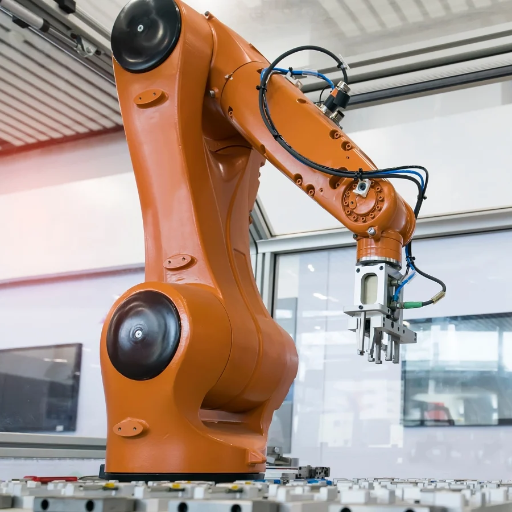
Robots deployed in an industrial setting have various benefits like improved precision and accuracy in job execution when comparing them with humans. They increase efficiency by speeding up routine monotonous tasks, reducing operational errors and waste material. Robots also mitigate manual workplace hazards, making the workplace safer. In addition, industrial robots do not need breaks, which enables them to work continuously without getting tired because they operate continuously. Their efficiency also drives heightened adoption of industrial robots as businesses look to enhance productivity while meeting sharpening growth targets.
Evolving Productivity with Robotic Systems
In the last decade, industries have been able to use advanced robotic systems to automate tasks that directly impact productivity and efficiency. The International Federation of Robotics (IFR) reported that around 517,000 industrial robots were installed globally in 2021 alone, signifying advancement and importance of robotics technology in manufacturing and other industries. These systems enable businesses to automate the witless functions of assembling, welding, and materials handling, making them seamless processes that require minimal human effort.
Robotic innovations are quickly adopted for their potential to reduce downtimes. For example, robots are capable of working round the clock with little to no supervision. This form of automation is beneficial to a company’s production because it does not require additional workforce hours. To meet the massive demand of its customers, Amazon brought into use more than 520,000 robotic systems in its warehoused to streamline logistics.
Incorporating business cutting-edge technologies like artificial intelligence (AI) along with machine learning improves robotic systems productivity significantly. These technologies allow autonomous robots to adapt to newly allocated tasks, detect system bottlenecks, as well as inefficiencies, and alter work processes on the fly. McKinsey & Company states that in the coming decade, robotic automation along with AI could increase the productivity growth rate globally by 0.8%- 1.4% each year.
Purchasing robotic systems leads to a surge in the production rate and leads to fewer errors and inconsistencies in the products which drastically improves the overall quality. Systems with these kinds of capabilities are especially beneficial for businesses operating in a fast changing market because they assist them in maintaining the competitive advantage.
Preventing Mistakes Through Automation
Through different fields, automation has demonstrated itself to be an important means of mitigating human error. Businesses adopting AI-powered systems have seen a decrease in operational blunders by 23%, according to an IBM study. Using automation helps deal with highly repetitive and tedious processes that incur lots of human errors. For instance, recent reports have noted that automated defect recognition systems in production are able to identify and correct flaws with 95% accuracy.
RPA tools applied in financial auditing also guarantee consistency in all the data, ensuring no adherence to rules is overlooked, which minimizes penalties and fines. The AI-enhanced decision-making tools of Google, AutoML, showcase how AI can handle tasks faster, make educated decisions, and get rid of significant amounts of error and delay. With these changes, automation will clearly not only be important for improving productivity but will also increase the expected standards of quality and reliability across all applications.
The Cost Effectiveness of Industrial Robots
Today, modern manufacturing robots play a crucial role in streamlined automation, providing significant cost-saving potentials in several sectors. Recent estimates indicate an impressive growth in the adoption of industrial robots, with the market being projected to reach USD 70.84 billion by 2028 growing at a CAGR of 10.5% from 2021. They are capable of undertaking repetitive tasks with training, improving speed, and decreasing errors.
Maintaining operational efficiency, one of the prominent cost-cutting benefits is their lack of need for breaks. Productivity can consistently be enhanced at all hours. This benefit was documented in one study which showed that some manufacturers are able to reduce their operational cost significantly, with a max observed reduction of 30%. Also, advances in AI seem to be teaching industrial machines how to perform new tasks, previously done by human workers, making them smart and more flexible. Other sources also state that investments in industrial robots accrue returns in under two years further affirming their financial soundness.
Controlling expenses, increasing productivity, improving quality, and eliminating waste all at once is only possible with the use of industrial robots. As their costs continue to decline with increased automation comes a sharper competitive edge in the international market. The continuous development of robotic technologies offer a greater return on investment which serves as a boon for industries all over the world.
How Do Vision Systems Enhance Robotic Performance?
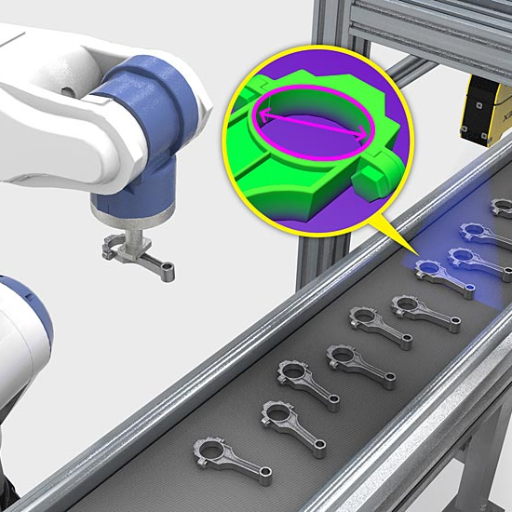
Imparting these systems onto robots enhances their performance by allowing them to see and interpret their surroundings. With the help of cameras and other sensors, robots are able to make real time decisions and recognize as well as locate objects based on situational changes. This augments the accuracy, efficiency, flexibility, and reliability of robots while performing complex tasks such as assembly, quality control, and material handling.
Advanced Sensor Technology with Robots
The use of advanced sensors such as LiDAR, ultrasonic, and infrared have revolutionized the operation of modern robots. These sensors are increasing in popularity due to enhanced perception and interaction with the environment. As an example, LiDAR sensors employ laser light to formulate precise three-dimensional maps assisting autonomous robots during navigation and obstacle avoidance. Recent reports also suggest that there is a rapidly growing market for robot sensors with a compound annual growth rate (CAGR) of 10.5% between 2023 and 2030 in response to the demand for automation in logistics, healthcare, and manufacturing.
Processed data can now be done in real-time due to the use of mobile and touch sensors, enabling higher intricate robotic tasks. For instance, force-torque sensors equipped robots are able to meticulously grasp easy to damage objects like electronic parts. Now, industrial robots are able to AI powered deep learning algorithms which improves their ability to recognize patterns, analyze anomalies, and refine processes which make operations more efficient and less expensive.
Moreover, there are robotic wearables like exoskeletons that helps the user by biosensing to track movement and biometrics that actively support and reduce the strain. The installation of these advanced sensing technologies devices robotics on new levels of functionality, thus broadening the scope for innovations across different sectors.
The Importance of Vision Systems in Robotics
Robotics vision systems have become an essential feature in robotics as they make it possible for robots to perceive and analyze their surroundings with great accuracy. They are made up of cameras, sensors, and AI technologies which makes it possible for a robot to receive and process pictures and to analyze them before any actions are made. For instance, the machine vision market is anticipated to grow from thirteen point twenty-three million US dollars in twenty twenty-three to twenty-seven point two million US dollars by twenty thirty, increasing with a compound annual growth rate of ten point eight percent.
In manufacturing, automated vision systems are aiding in automation by error detection, assembly guidance, and even ensuring Quality Control. In robotics, visually guided robots assist with surgical operations for better visualization and precision. Robotics technologists make use of LiDAR and camera vision systems to aid in avoiding obstructions, reading road signs, and ensuring the safety of the passengers while detecting and interpreting road signs.
Robotic vision is rapidly improving with the use of high resolution cameras, real time processing, and deep learning models. These automata can now be programmed to carry out functions with computer vision techniques such as edge detection and object recognition which were previously reserved for humans. This development is not only transforming robotics but also fueling productivity and innovation in several industries.
How Are Robots and AI Shaping the Future of Industrial Robotics?
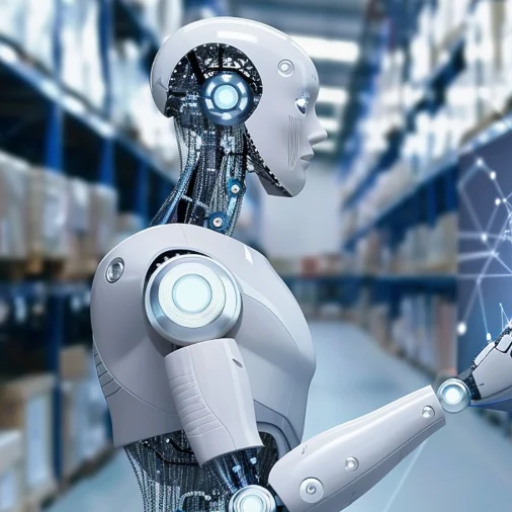
By improving precision, productivity, and flexibility, robotics and AI are reshaping industrial processes. With the help of AI, algorithms enable interpretation of complex data sets, recognition of evolving patterns, and progression through intricate tasks with minimal human involvement. They are assisting operational processes in the manufacturing, logistics, and healthcare sectors to provide greater efficiency and cost cutting. AI empowered collaborative robots, or cobots, are also enhancing safety by functioning with humans and managing monotonous or dangerous tasks. These developments are leading to more advanced solutions tailored for modern shifting markets.
The Rise of Autonomous Mobile Robots
AMRs are Autonomous Mobile Robots capable of navigating and executing tasks in various sectors without any human assistance. AMRs differ from Automated Guided Vehicles (AGVs) which follow set routes because they are equipped with sophisticated sensors, cameras, and AI that allows them to scan the environment and create a map in real time. In a recent market research, the global AMR market was recorded at $0.70 billion in 2023 and is expected to grow at a rate of 25.7% CAGR reaching $8.70 billion by 2030.
AMRs have remarkably improved productivity in sectors like e-commerce and manufacturing. For instance, Amazon uses AMRs in their warehouses to manage stock and complete orders more efficiently which improves productivity by as much as 30%. In hospitals, AMRs consistently deliver supplies, medications, and meals which helps the staff concentrate on the patients, improving the overall care. These multifunctional robots incorporate advanced LiDAR (Light Detection and Ranging) navigation and AI decision-making systems.
The development of AMRs shows much promise in overcoming a scarcity of workers, improving efficiency as well as workflows, and cutting expenses in numerous industries. Due to advances in machine learning, as well as in sensor technologies, there are increasing expectations for AMRs as they are poised to be faster, more intelligent, and adaptable automated solutions.
Artificial Intelligence Advances In The Robotic World
The innovations made artificial intelligence in robotics has allowed the working machines to do even more complex tasks with greater speed and accuracy. As per the available data, robotics powered by AI technologies are foreseen to have a worldwide investment of $42 billion by 2028 due to improvement in deep learning AI, as well as natural language processing. One of the most important changes is the implementation of the AI algorithms that robotics apps now have access to analyze and make real-time changes in their plans and adapt in improving their selective action and awareness of situations in the environment.
For example, the use of the AI vision systems give the opportunity to robots to detect as well as classify objects with greater degrees of accuracy even in active environments. These systems are very important in all factories where accuracy and dependability are indispensable factors. They also increase productivity in other areas such as technology, construction, and even medicine. Furthermore, swarm robotics powered by AI has seen impressive growth in logistics and supply chain management. A swam robotics is expected to grow at a compound annual growth rate (CAGR) of 37 percent through 2025 MarketsandMarkets demonstrates the importance swarm robotics for businesses in instrumentality scalability in performing advanced task orderly at speedy pace.
Another distinguishable trend is the advancement of reinforcement learning strategies that enable robots to ‘learn by attempting tasks.’ This strategy has already been implemented in s elf-driving delivery robots where AI has been used in energy-efficient route planning. Advancements made with AI are enabling robots to perform well in controlled and uncontrolled environments, such as factories and cities, respectively.
AI Robot Solutions Case Studies
An important case study of AI robotics is Amazon’s warehouse robots. Powered by sophisticated algorithms, these robots improve operational efficiency through automation of picking, packing, and inventory control. As stated by Amazon, the implementation of robotic systems has decreased processing times by 50% while accuracy has improved. Their technology uses AI with vision and machine learning to identify and move objects during fast operations with high precision.
Another important development is from Boston Dynamics with the robot Spot, which is used in increasingly difficult situations like construction sites and disaster zones. These spots are equipped with advanced AI with the ability to survey the surroundings using cameras and sensors to detect changes and collect data. This technology has been adopted in industries to make previously human risky jobs more efficient in data collecting.
Starship technologies is another company that utilized AI technologies with the deployment of small delivery robots. AI systems are now used for route optimization by steering clear of. and making real time decisions during delivery. These robots have become increasingly popular having concured 5 million deliveries by the year 2023 signifying growing trust in these machines. They are now equipped with the ability to adapt to traffic, pathways utilized by pedestrians, and deliver packages without the need for a human.
These examples and others show just how far AI can go into robotics and using them to gain convenience, safety, and ease in work that previously seemed impossibly.
Reference sources
- Efficient Industrial Robot Calibration via a Novel Unscented Kalman Filter-Incorporated Variable Step-Size Levenberg–Marquardt Algorithm (Li et al., 2023, pp. 1–12)
- Key Findings:
- Compared with state-of-the-art calibration algorithms, the calibration accuracy of the developed UKF-VSLM is 19.51% higher than that of the most accurate LM algorithm measured by the maximum error.
- Methodology:
- Developed a novel variable step-size Levenberg–Marquardt (VSLM) algorithm to address the local optimum issues encountered by a standard Levenberg–Marquardt (LM) algorithm.
- Incorporated an unscented Kalman filter (UKF) into the proposed VSLM algorithm to suppress the measurement noises during the calibration process.
- Evaluated the proposed UKF-VSLM algorithm on a HuShu Robotics JR680 industrial robot.
- Key Findings:
- Adaptive Manipulability-Based Path Planning Strategy for Industrial Robot Manipulators (Shen et al., 2023, pp. 1742–1753)
- Key Findings:
- A novel manipulability-based optimal rapidly exploring random tree (RRT*) path planning strategy is proposed that can significantly improve the success rate and efficiency of the planning without losing other performance.
- Methodology:
- Introduced regression mechanism to prevent over-searching configuration space.
- Adopted an adaptive expansion mechanism to continuously improve reachable spatial information by refining the boundary nodes in joint space.
- Avoided the unnecessary iteration of the robotic manipulator forward kinematics solution and its time-consuming collision detection in Cartesian space.
- Key Findings:
- Intelligent Fault Diagnosis for Bearings of Industrial Robot Joints Under Varying Working Conditions Based on Deep Adversarial Domain Adaptation (Xia et al., 2022, pp. 1–13)
- Key Findings:
- A novel deep perceptual adversarial domain adaptive (DPADA) method is proposed that can improve the stability of adversarial training and outperform CNN and CDAN-based methods in fault diagnosis of industrial robot bearings under varying conditions.
- Methodology:
- Proposed a novel perceptual loss to force the target domain and the source domain to have the same distribution, improving the stability of adversarial training.
- Developed a timestamp mapping-based vibration signal screening method to improve data preprocessing efficiency for fault diagnosis of industrial robots.
- Key Findings:
- Top Welding Robot Manufacturer and Supplier in China
Frequently Asked Questions (FAQs)
Q: What are the jobs of an industrial robot in a manufacturing site?
A: An industrial robot performs several manufacturing tasks like welding, palletizing, pick-and-place operations as well as assembly. It uses repetitive manufacturing processes to boost productivity and efficiency in a factory setting.
Q: In an automated environment, how does an industrial robot perform its duties?
A: An industrial robot operates in automation areas using a set of sensors, actuators, and a robot controller to complete a given task. It has a programmable structure and can be fitted with various automation applications with different end effectors.
Q: Describe a robotic industrial arm and its functions in industrial robotics.
A: A robotic arm is a manipulator that can be programmed to carry out movements and tasks with great precision. Robotic arms dominate industrial robotics for functions like welding, painting, and assembly, forming an integral part of the automation solutions.
Q: Which category of industrial robots does cylindrical robots belong to?
A: As a subclass of industrial robots, cylindrical robots are noted for having a cylindrical working envelope. They are more efficient in performing tasks that have a vertical lift motion and are one component of the industrial robotic systems.
Q: In what ways have robotics studies improved the applications of industrial robots?
A: Robotics research has focused on industrial robot applications and greatly improved their automation. Focus on accuracy, adaptability, and collaboration (working together with humans as cobots) has integrated more value to industrial robots.
Q: What factors contribute more often to the adoption of robots and cobots in industrial settings?
A: Use of robots in industry is increasing because of the automation machinery systems which can boost productivity while enhancing safety and lowering costs. They are especially useful in executing monotonous, hazardous, and highly accurate repetitive tasks with unwavering precision.
Q: What can be said of the first robots introduced in the industry automation field?
A: The first robots of industrial automation were the foundation for the modern automation solutions and showed the world what programmable machines could do in manufacturing and labor saving processes.
Q: In what ways do industrial robots manage loads and what are some of their common uses?
A: Industrial robots manage loads by lifting, moving, and even positioning objects using their robotic arms and end effectors. Common uses include material handling, assembly, and packaging, which require precision and repetition of tasks.
Q: What importance does simulation of robots have in the deployment of industrial robots?
A: Simulation of robotics systems assists engineers in designing, testing, and optimizing robotic systems within a virtual environment prior to implementation. This improves efficiency and addresses potential concerns, making it critical for the deployment of industrial robots.


