
Precision, efficiency, and consistency of welds are critical in attaining high-quality results. For welders and manufacturers, changing or customizing their workflow is a very delicate. Choosing the right tools, such as weld positioners or welding fixtures, can mean the difference between success and failure. But how do you determine which is most suitable for your specific requirements? Solutions lie in the differences, advantages, and applications of weld positioners and welding fixtures. Regardless of whether you aim to enhance weld precision, optimize production, or take on sophisticated tasks, knowing these tools will significantly impact your welding operations and automation. Read further to learn what the right options are for your next project.
What is a Welding Fixture?
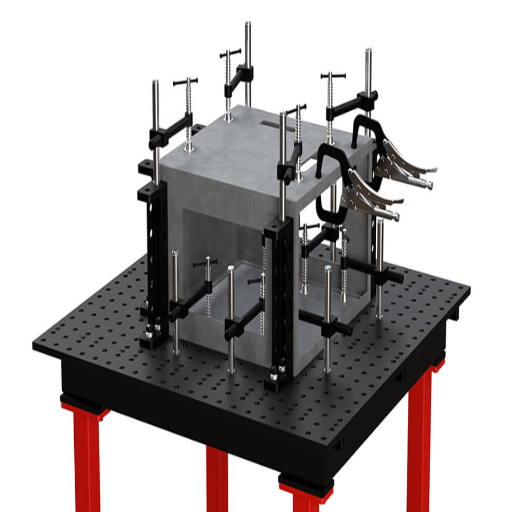
A welding fixture is tailored to snugly grasp and hold components in the required machining position. It guarantees that the pieces are placed accurately and will not move, so consistent and accurate welds can be done. Creating production fixtures aims to accomplish a better workflow in terms of time and the number of mistakes made. They are handy in repetitive or high-volume welding work where precision must be maintained.
What are the Functions of a Welding Fixture?
A welding fixture is integral to the welding process as it improves efficiency, accuracy, and safety. Primarily, the fixture holds and clamps workpieces properly to ensure they are correctly positioned and aligned before welding. The welding fixture may minimize movement or shifting of components, which can adversely affect the outcome, thereby improving quality standards. They also help maintain uniformity across repetitive welding processes, making them essential in mass production or assembly line operations.
Besides, welding fixtures enhance productivity by improving the workflow, reducing the time taken to set up and position the welds. They also eliminate manual positioning and allow the welder to concentrate on the welding. Numerous modern welding fixtures have new capabilities for accommodating complex geometry, enabling more precision and advanced welding techniques. In addition, the use of fixtures helps improve safety in the workplace as the materials are held securely, reducing the chances of accidents caused by unsupported parts.
How Does Fixture Design Impact Weld Quality?
Optimal design of fixtures customarily impacts the overall quality of welds due to the control it provides over weld reproducibility, accuracy, and machining stability. Ergonomics is a fundamental part of modern fixture design, as access to a workstation can be achieved with minimal effort, unharnessing fatigue optimally. Exact alignment, proper balancing, uniform pressure, and appropriate support are maintained by well-engineered effective clamps. Engineering fixtures while adhering to modern technologies and advanced materials improves reliability and versatility, thus making them functional for different types of welding. They are crucial in the machining processes as they assist in achieving the welds’ best possible visual and structural quality.
What are the Different Types of Welding Fixtures?
Hydraulic, Pneumatic, Modular, Dedicated, Manual.
| Parameter | Fixture Type | Key Feature |
|---|---|---|
|
Modular |
Flexible setup |
Aerospace, auto |
|
Dedicated |
Custom design |
Precision tasks |
|
Manual |
Hand alignment |
Repairs, heavy-duty |
|
Hydraulic |
Fluid pressure |
GTAW, GMAW |
|
Pneumatic |
Air pressure |
SMAW, FCAW |
What is a Welding Positioner?
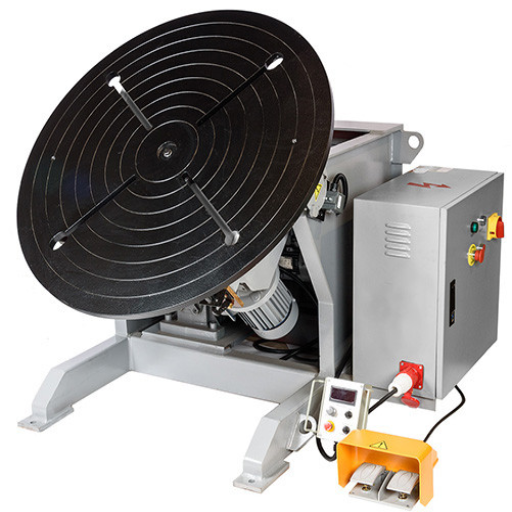
What is a welding positioner? A mechanical device clamps and rotates a work piece to a favorable angle so a welder can work on it. The welder can carry out the work without much operator-controlled repositioning being required. The device can aid in improving precision and efficiency during welding while relieving strain on the operator. It plays a critical role in ensuring that weld quality consistency is upheld. This device is standard in handling heavy or mechanically intricate-shaped work pieces. Positioners are used for complex or heavy standard rotators and are often regarded as angular positioners. A device like this might differ in dimensions and size, but the task of ease of welding will always be present.
How Do Weld Positioners Work?
Positioners allow welders to rotate and tilt the workpiece so that every angle is easily accessible, simplifying their work. Weld positioners usually come with clamps, chucks, or fixtures that act as a vice to hold the workpiece in place. As the weld is being done, the workpiece has to rotate to keep the welding torch on a desired path; this is done through a motorized or manual rotating mechanism. Modern weld positioners include tilt, speed control, and even programmable settings to fit tailored weld patterns for more advanced materials. Some advanced models can be incorporated with robotics for automated processes, increasing productivity levels alongside consistency. These features give weld positioners a key role in increasing operational efficiency and improving accuracy in the welding industry.
What are the Types of Welding Positioners?
Different types of work demand various welding positioners, making them unique based on use. The primary types include:
- Rotary Welding Positioners are designed for smooth circular movement of the workpiece, ensuring the weld is done evenly along the circumference. They are most commonly used for cylindrical components like pipes and tanks.
- Tilt and Turn Positioners combine rotating and tilting. The workpiece can be positioned at different angles. This is particularly useful for multi-welding complex works or when components are asymmetrical.
- Headstock and Tailstock Positioners support the length of the workpiece from both sides. They are used for larger and longer workpieces. The positioners allow for precise rotation of the workpiece while keeping it stable during welding.
- Elevating Welding Positioners offer vertical movement of the workpiece. They can range in size in various projects and allow for an ergonomic working position for the welder.
- Benchtop Positioners are small, portable, and easy to use for lighter and smaller workpieces. They are ideal when space is a constraint, such as in workshops.
Both automated and manual welding setups greatly benefit from these positioners due to the increase in welding efficiency, safety, and precision.
How Can Welding Positioners Improve Weld Quality?
Welding positioners enhance weld quality and accuracy of the workpiece due to consistent and stable holding throughout the weld process. A positioner makes the workpiece accessible, swiveling it into the position the welder needs. This way, any weld recalibrations that may require welding or cutting from other positions are easily achievable. Freed from the challenges posed by strenuous movements, less delicate and more effective machinery can be utilized, thus enhancing size and dimensional accuracy. This guarantees ideal conditions, such as minimizing temperature gradients at weld joints, while reducing material wastage and improving material joining. Positioners’ mechanical and ergonomic benefits lead to greater precision while enabling more unrestricted movement, thus reducing muscular efforts. As a collection, these impacts improve the weld prompts and strength while lowering the amount of decentral forces in welds, subsequently enhancing reliability.
How Do Fixtures and Positioners Affect Welding Operations?
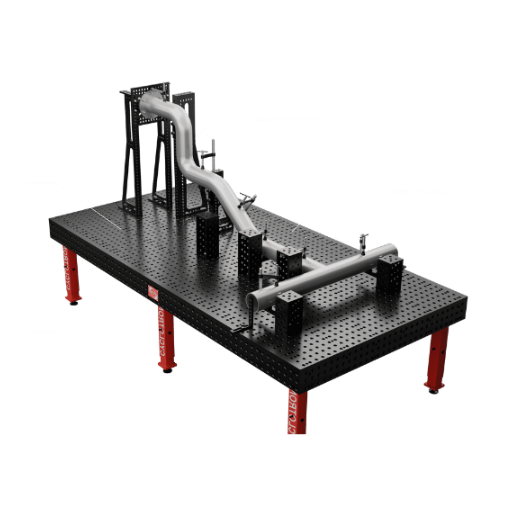
Welding fixtures and positioners enhance the accuracy and efficiency of welding operations. A fixture ensures no movement during welding by securely holding workpieces in a fixed position. On the other hand, positioners allow the workpiece to be placed in a position that enables welders to reach difficult-to-access angles and maintain consistent quality. These aids reduce the time spent on setups and the need to redo work, thus enhancing the productivity of the welding process as a whole. Moreover, these tools improve safety within the workplace by decreasing the amount of physical labor needed and the strain put on the welders.
What are the Key Differences Between Welding Fixtures and Positioners?
They help maintain the weld quality at the set parameters throughout the weld. Welding fixtures maintain the positional accuracy of the workpieces, while welding positioners adjust their position.
| Parameter | Fixture | Positioner |
|---|---|---|
|
Function |
Holds workpiece |
Rotates workpiece |
|
Movement |
Static |
Dynamic |
|
Flexibility |
Limited |
High |
|
Use Case |
Repetitive tasks |
Complex angles |
|
Efficiency |
Consistency |
Workflow speed |
What Role Do Fixtures and Positioners Play in Robotic Welding?
The use of robotic welding in modern manufacturing includes the use of fixtures and positioners that bolster precision, efficiency, and consistency throughout the procedure. Fixtures immobilize and align the workpiece with the robotic welder’s trajectory using pin registration, freeing the welding robot to follow the pre-defined programming. This ensures repetition of the robotic movements with minimal deviations, resulting in every weld within the established guidelines’ preset boundaries. Positioners, on the other hand, enhance the arm’s range of motion by changing the orientation of the workpiece to more easily reachable or highly angled weld seam intersections that would otherwise be too intricate or impossible to access. Optimal solutions do not exist, so the minimal time required to change tools and workflows is always accompanied by maximally precise automated welding. The integration of positioners and fixtures is simulated in applications with stringent requirements for precision alongside repeated pattern performances, such as automotive or aerospace industries, where speed is highly crucial.
How to Choose Between a Welding Fixture and a Welding Positioner?
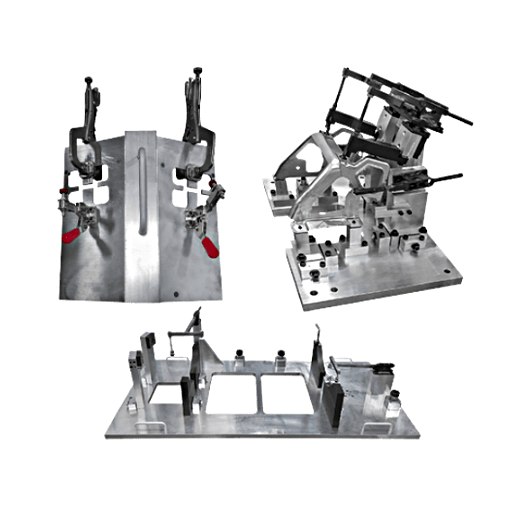
While deciding on a welding positioner or a fixture, consider what your project needs the most. A welding fixture is perfect when working on pieces that need to be held in place for better precision and consistency, especially during large-scale production. However, a positioner would be more suited if the project entails complex welding that requires changing angles frequently. Assess the size and weight of your piece, how frequent and intricate the welding will be, and how efficient you want the whole process to be in selecting the right tool.
What Factors Should You Consider When Choosing?
Some factors must be considered while selecting between welding positioners and turning rolls. To begin with, analyze the size and weight of your workpiece, since larger and heavier workpieces often require the support given by turning rolls. Also, think about the complexity of the welds. If the welds are simple, there is a higher chance that they will opt for turning rolls, but intricate or multi-angled welds usually prefer positioners. Additionally, think about how efficient you want the work to be. Turning rolls might improve efficiency in work with custom or smaller batches, while positioners do well with volume production. Other factors are the operator’s skill level, budget, workspace, and available space. Make sure that the equipment matches your needs, both in terms of processes and practical constraints.
How Do Workpieces Influence Your Decision?
The attributes of your workpieces affect the characteristics of welding equipment customization. Dimensions, contours, mass, and material make-up are decisive factors in choosing your welding equipment. For example, turning rolls would be suitable for large cylindrical or heavy workpieces to provide stability and even rotation during welding. On the other hand, more precise and smaller workpieces with angles like those of welding positioners may benefit more from welding positioners that provide better control and flexibility. With carefully crafted positioners and your particular welding objectives in mind, achieving desired outcomes in quality and efficiency is possible.
Reference Sources
-
Sino Welding – Difference Between a Welding Fixture and a Welding Positioner
This source differentiates functionality as well as welding fixtures and positioners.
-
Kinetic Technologies – Everything You Need to Know About Welding Positioners
A comprehensive overview of positioners and a comparison to fixtures is provided here.
- Top Welding Positioner Manufacturer And Supplier In China
Frequently Asked Questions (FAQs)
Q: What are welding positioners, and how do they assist in fabrication?
A: Welding positioners are specialized devices that help to position the workpiece at the correct angle and orientation during welding tasks. They play a crucial role in designing and fabricating various components by ensuring precise positioning, which leads to uniform welds and increased efficiency in welding operations.
Q: How do welding positioners automate the welding process?
A: Welding positioners automate the welding process by allowing the operator to adjust the position of the workpiece without manually moving it. This automation reduces the time spent on setup and improves the accuracy of the welds, making it easier to achieve consistent results across different welding applications.
Q: Can welding positioners be used with robotic welding systems?
A: Yes, welding positioners are commonly used in robotic welding operations. They work alongside robotic welding fixtures to enhance the efficiency of the welding procedure by providing optimal positioning of the workpieces throughout the welding process.
Q: What types of welding methods can benefit from using welding positioners?
A: Welding positioners can benefit various welding methods, including MIG, TIG, and arc welding. Positioning the workpiece correctly helps eliminate the need for manual adjustments, allowing for a more streamlined welding project.
Q: What are the advantages of using welding fixtures and positioners together?
A: Using welding fixtures and welding positioners together provides several advantages, such as improved stability of the workpiece, enhanced precision during the welding process, and increased productivity. Together, they ensure that the workpiece remains securely clamped and positioned correctly, essential for achieving high-quality welds.
Q: How do I choose the correct welding positioner for my application?
A: When choosing a welding positioner, consider the weight and size of your workpieces, the welding method used, and the degree of automation required. Positioners with adjustable speed and rotation features can also help optimize the welding process for various tasks.
Q: What role do welding positioners play in improving safety during welding operations?
A: Welding positioners enhance safety during welding operations by minimizing workers’ need to handle heavy workpieces manually. Securely positioning workpieces reduces the risk of accidents and injuries associated with lifting or holding materials in awkward positions.
Q: How do robotic welding fixtures differ from traditional welding fixtures?
A: Robotic welding fixtures are specifically designed to work with robotic welding systems, offering increased precision and repeatability compared to traditional welding fixtures. They are engineered to accommodate the speed and movement of robotic arms, making them essential for automated welding applications.
Q: What should I know about integrating welding positioners in a robotic welding cell?
A: When integrating welding positioners in a robotic welding cell, it’s essential to ensure that the positioner can accommodate the specific welding tasks and workpieces involved. Additionally, compatibility with the robotic system, ease of programming, and the ability to handle various welding methods are critical factors for optimal performance.


