
Achieving precision, efficiency, and maintaining a consistent quality of welds hinges on choosing the right welding system. Weld boom systems are setting the standard for versatility and reliability across numerous applications. From executing large-scale automated projects to extremely precise scales in challenging environments, these systems are tailored to your specifications. This blog will discuss how boom welding systems can revolutionize your welding operations by showcasing their major features, guiding you on the solutions for your projects, and showing you the best in craftsmanship.
How do I choose the right boom welding machine?
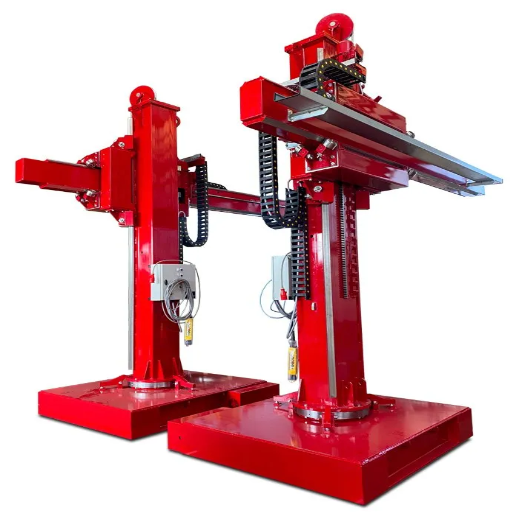
You need to look into the following factors before choosing the best boom welding machine for your needs:
- Project Requirements—Analyze the size and difficulty level of your projects to create customized solutions. Make sure the machine can manage the volume of welding required in terms of materials, thicknesses, and joint configurations.
- Reach and Flexibility—A wider reach and greater movement of the boom increase the level of precision while the operator positions the system within hard-to-reach areas.
- Weight Capacity – Assess the machine’s ability to carry the equipment and materials needed for welding without losing stability and performance.
- Automation—If you want efficiency and accuracy, look into high-end features such as automation welding controls and automation weld repetition.
- Durability and Reliability – Look for a machine made from quality components that consistently operate under rugged conditions.
- Ease of Maintenance—To reduce downtime, look for a machine that is easy to maintain and offers dependable customer service.
Considering these aspects, you can choose a boom welding machine that meets all of your requirements.
What are the key features of a boom welding system?
A boom welding system is built to improve implementation accuracy and efficiency in welding. The following list includes features that further exemplify the importance of their systems in industrial applications:
- Adjustable Boom Length—Most systems come with a boom that can be adjusted to tackle different workpiece shapes and reach hard-to-reach areas for welding. This guarantees compatibility with different scope projects.
- Precision Welding Control—Modern control algorithms allow for the precise setting of parameters, guaranteeing that the welds, regardless of material or thickness, are of acceptable quality and repeatable.
- Rotational Capability—All boom welding systems have heads or arms that rotate on a 360-degree axis, thus achieving easy welding of cylindrical or hard-to-describe welded components.
- Heavy-Duty Construction—Durable materials are used to construct the system, which can withstand severe strain when used in a demanding working environment. Increased durability and long service life are additional gains.
- Automated Seam Tracking—Some of the models are equipped with intelligent systems that enhance performance. Seam tracking devices are positioned to follow the weld seam without any misalignment and hence reduce errors associated with productivity.
The features mentioned above give boom welding systems a powerful advantage in achieving desirable results in welding operations.
How does the welding process affect my choice of equipment?
All welding techniques, including MIG, TIG, or stick welding, require power, precision, and materials, impacting the type of equipment best suited to perform the task. For instance, equipment used for MIG welding is more productive in heavier industrial applications because it supports high productivity for thicker materials. Still, TIG welding is better for precision work and thinner materials, requiring equipment with fine control settings. Furthermore, the equipment needs to fit the material being welded, too—for example, steel and aluminum versus stainless steel—some tools are better designed to be tailored to a specific material. Ensuring that all welding equipment selection steps are matched with appropriate welds guarantees the highest level of efficiency and consistent quality.
What types of welding applications are best suited for boom welding?
For processes with repetitive tasks in industrial settings, precision and considerable reach, boom welding is best suited for most applications. Boom welding is often utilized to construct significant structural components like storage tanks, pressure vessels, and pipelines. Because of the automated motion and sophisticated monitoring of boom welding systems, tasks demanding high consistency in weld quality over large areas or long seams are executed with great precision. Shipbuilding, oil and gas, and heavy machinery manufacturing industries all face challenging or large-scale welding tasks, which can be easily managed with the accuracy and efficiency of boom welding.
What is the difference between column boom welding and traditional welding?
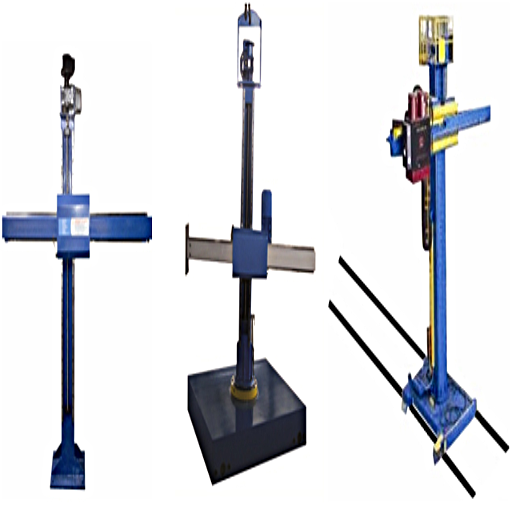
Compared to traditional welding, the primary difference in column boom welding is the automation of the boom and column systems. The welding in column boom systems is done automatically and fully mechanized as opposed to conventional welds, which are always manually done or semi-automated, commanding the skills of an operator and heavy reliance on precision from a skilled operator. The column boom system handles complex welds and is ideal for high-precision welds over long seams. Column boom welding is highly efficient, reduces human error, and maintains the quality of long, multi-step welds spanning large surfaces. Traditional welding suits smaller and intricate tasks, while column boom systems work best in heavy-duty industrial settings.
What are the advantages of using a column boom welding machine?
- Improved Accuracy and Uniformity
Column boom welding is fully automated, meaning welds along broad stretches or lengthy seams are uniform and accurate. This eliminates human error for precision work, even in complex assignments, guaranteeing high-quality outcomes.
- Increased Productivity and Efficiency
Column boom welding machines are built for continuous welding applications like many industrial machines. They support repetitive and endless workflows, which are finished faster than with non-automated machines, increasing overall productivity and dwell times.
- Support for Heavier Workpieces
These devices feature an adjustable boom and column. Thus, they can be used for welding large and heavy-duty structures like storage tanks, pressure vessels, and pipelines. This allows the welding of workpieces of several shapes and sizes.
- Reduced Manpower Cost
Production wonders such as automation drastically increase operational efficiency. With little manual oversight required, operational costs are cut while superior outputs are achieved. A single operator could remotely monitor multiple machines, lessening the required workforce even more.
- Advanced Safety Features
With the addition of remote controls and more sensors, column boom welding systems increase safety and decrease direct worker contact with the hazard zones, which are welding areas. This helps protect personnel and weld operators from dangers during work.
How do column and boom welding manipulators work?
As with any automation equipment, column and boom welding manipulators provide a stable and accurate working surface for performing automated and semi-automated welds. The column is a vertical structure that supports the boom, a horizontally extending arm capable of moving in different inclinations. This system allows the welding head or torch to be accurately positioned over the workpiece. Smooth and controlled horizontal, vertical, and rotational movements are usually provided through motorized controls. Programmable functions and advanced automated welding systems ensure uniformity and superior weld quality. These manipulators are standard for applications that have to do with great precision over larger areas or with heavy and complex components, illustrating their effectiveness and adaptability in industry.
In what scenarios is column boom welding preferable?
Column boom welding is advantageous for jobs requiring high precision, efficiency, and adjustable volume production. Its applicability extends to processes where workpieces are pretty large, such as storage tanks, pressure vessels, and even large pipes that would be too cumbersome to weld manually, as its automated features add precision and make manual welding inefficient. This technology is perfect for architectures that need repeatable welds over large and complex areas because it reduces the potential for error due to automation. Additionally, column boom welders are also used in industries with high-quality requirements like shipbuilding, energy, and aerospace due to these features. Its multifunctionality, which allows it to accommodate different welding techniques and interface with automated systems, increases its use in modern industrial applications.
What are the various types of boom welding systems available?
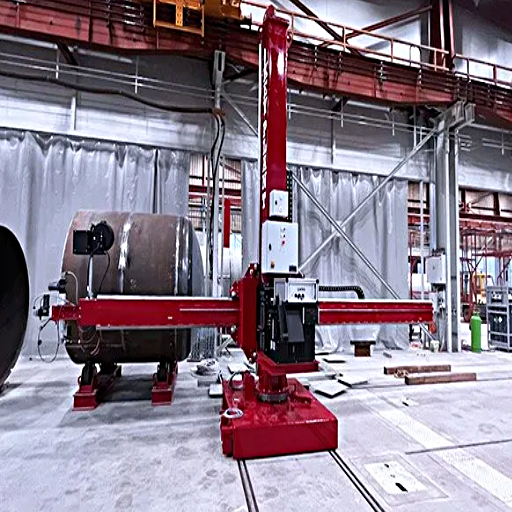
- Fixed Boom Welding Systems
for performing welding tasks in a specific location; these systems incorporate a stationary column and boom.
- Mobile Boom Welding Systems
these systems incorporate wheels or tracks to aid mobility. They are ideal for larger workpieces or pieces that have to shift location during welding.
- Telescopic Boom Welding Systems
These systems come with an extendable boom, which improves reach and enables adaptation to different sizes of workpieces and welding spots that are difficult to reach.
- Rotating Boom Welding Systems
These systems permit the boom’s rotation, increasing the range of angles or positions it can access without moving the whole setup.
What is a boom welding manipulator?
A boom welding manipulator increases productivity and precision of welding activities for large and intricate workpieces. This machine contains a vertical column a horizontal boom which holds a welding torch torch that can be extended, retracted, and rotated. This movement allows the boom welding manipulator to reach hard-to-access areas, ensuring welds are consistently achieved across various dimensions. This machine is mainly used in the construction, manufacturing, and shipbuilding industries, where productivity and precision are prioritized. Minimizing manual intervention enhances weld quality while reducing operator fatigue and error risk.
How does a boom welding machine differ from other welding equipment?
Similarly, column and boom systems, or boom welding machines, offer extended precision, reach, and automation unlike any other welding equipment for intricate or large structures.
|
Parameter |
Boom Welding |
Other Welding |
|---|---|---|
|
Reach |
Extended |
Limited |
|
Precision |
High |
Moderate |
|
Automation |
Yes |
Optional |
|
Applications |
Large/Complex |
General |
|
Flexibility |
High |
Moderate |
|
Safety |
Enhanced |
Standard |
|
Setup |
Fixed/Movable |
Portable |
Which boom welding systems offer automated welding features?
Many new boom welding systems now include automated welding features to improve precision and efficiency. Companies like Lincoln Electric, ESAB, and Fronius have developed sophisticated boom welding systems incorporating automation features. Such systems employ programmable logic controllers, controllable real-time camera systems, and robotics for reliable welding in repetitive operations, especially in large-scale or intricate structures. With these automation features, operator intervention is streamlined, human error is reduced, and productivity is significantly increased. Such benefits make the systems ideal for the heavy building, automotive, and heavy machinery industries.
How do I select the best welding process for my boom welding needs?
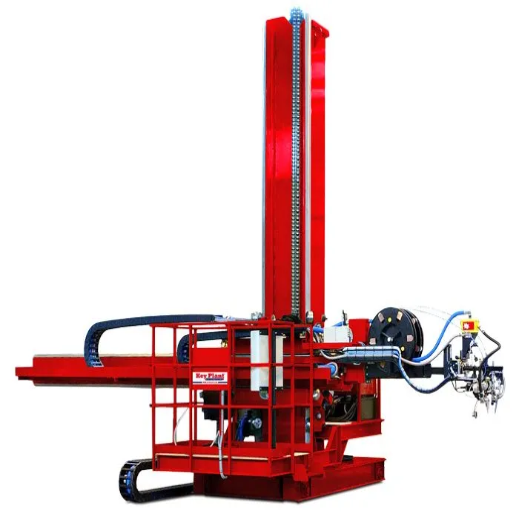
To effectively deal with the welding processes for a boom, the following parameters need to be addressed:
- Material Type: Determine the material you are working on, which can be steel, aluminum, or even alloys. Each material is bonded using a particular welding procedure.
- Project Requirements: Determine the scale and detail of your work. Submerged arc welding (SAW) can undertake huge and heavy projects, whereas Gas Metal Arc Welding (GMAW) is multipurpose and can be pretty handy for more delicate work.
- Volume of Production: Automated systems will increase efficiency in high-volume production, but smaller projects are better served by manual or semi-automated systems.
- Operational Costs: With every project, there is a budget that has to be met. To find the optimal welding method, evaluate dependables such as equipment, consumables, and labor.
- Quality of welds: In determining which method to use, think of the desired strength, durability, and quality of the welds.
Seek a welding professional for guidance, as they are well-versed with the procedures, standards, objectives, and other elements that might affect reliability and consistency.
What are the differences between MIG and TIG welding?
MIG welding is faster and easier and better suited for thicker materials, while TIG welding is more precise, stronger, and better for thinner materials.
|
Parameter |
MIG Welding |
TIG Welding |
|---|---|---|
|
Electrode |
Consumable |
Non-consumable |
|
Speed |
Fast |
Slow |
|
Precision |
Moderate |
High |
|
Strength |
Moderate |
High |
|
Materials |
Thick |
Thin |
|
Ease |
Easy |
Difficult |
|
Aesthetics |
Moderate |
Excellent |
|
Cost |
Low |
High |
Which welding technique is best for pipe welding?
According to the most recent industry updates, pipe welding is best accomplished with TIG (Tungsten Inert Gas) welding). With such excellent refinement and accuracy, welds in pipelines and other critical applications can easily be damaged. They are made with extreme care, utilizing TIG welding, making it suitable for mainframes. It is equally versatile in its application across metals like aluminum and stainless steel, making it viable for pipe welding in oil and gas, chemical, and nuclear power industries. Although requiring greater skill and labor-intensive, the beauty and exceptional standards are unrivaled, making TIG welding for abstract piping work favored by all professionals.
Reference Sources
1. Hybrid Offline Programming Method for Robotic Welding Systems
- Authors: Chen Zheng et al.
- Publication Date: February 1, 2022
- Journal: Robotics Comput. Integr. Manuf.
- Key Findings:
- The study presents a hybrid offline programming method that significantly improves robotic welding systems’ efficiency, accuracy, and flexibility.
- The method integrates simulation and real-time data to optimize the programming process for robotic welders.
- Methodology:
- Experimental results were obtained by integrating the method into a subassembly welding robotic system, demonstrating its effectiveness in practical applications(Zheng et al., 2022, p. 102238).
2. Towards Intelligent Welding Systems from a HCPS Perspective: A Technology Framework and Implementation Roadmap
- Authors: Baicun Wang et al.
- Publication Date: October 1, 2022
- Journal: Journal of Manufacturing Systems
- Key Findings:
- This paper discusses the transition towards intelligent welding systems, emphasizing the need for a technology framework incorporating human-centered production systems (HCPS).
- It outlines the implementation roadmap for developing intelligent welding systems adapting to various manufacturing needs.
- Methodology:
- The authors propose a framework based on existing technologies and methodologies, providing a structured approach to implementing intelligent welding systems(Wang et al., 2022).
3. A Fast Calibration of Laser Vision Robotic Welding Systems Using Automatic Path Planning
- Authors: Peiwen Yang et al.
- Publication Date: 2022
- Journal: IEEE Transactions on Instrumentation and Measurement
- Key Findings:
- The study introduces an automatic path planning method for calibrating laser vision robotic welding systems, enhancing calibration efficiency and robustness.
- The method ensures that the camera’s optical axis aligns with the calibration board, improving data collection for calibration.
- Methodology:
- The authors developed a calibration method that integrates optical constraints and motion selection strategies, validated through various weld measurement experiments(Yang et al., 2022, pp. 1–10).
4. Top Column and Boom Manufacturer and Supplier in China
Frequently Asked Questions (FAQs)
Q: What factors should I consider when choosing a welder?
A: When choosing a welder, consider the type of welding you will be doing, such as MIG, TIG, or flux-cored welding, the welding power sources available, the welding positioners you may need, and the quality of weld you expect from the machine.
Q: What are the different types of welding processes available?
A: There are various types of welding processes, including MIG welding, TIG welding, shielded metal arc welding, gas tungsten arc welding, and flux-cored arc welding, each suited for specific applications and welding projects.
Q: How do I choose the best welding machine for my needs?
A: To choose the best welding machine, assess your specific welding projects, the materials you will work with, the required welding positioners, and your budget. Research systems that offer high-quality welds and efficiency for your particular application.
Q: What is the role of welding positioners in the welding process?
A: Welding positioners are devices that help position the workpiece during welding. This can improve accessibility and result in high-quality welds by allowing for better angles and stability while you move the welding head.
Q: Can I use a welding manipulator for different welding processes?
A: Yes, using a welding manipulator allows for versatility in different welding processes, enabling you to automate tasks and improve the welding time and efficiency, particularly in industrial welding environments.
Q: What makes advanced welding systems better than traditional welding methods?
A: Advanced welding systems often incorporate automation and innovation, which can enhance precision, speed, and consistency in weld quality compared to traditional welding methods, making them ideal for large-scale projects.
Q: What are some common welding uses in the industry?
A: Welding is used extensively in the manufacturing and construction industries to assemble metal structures, repair equipment, and fabricate components, and in automotive and aerospace applications to create strong, durable joints.
Q: How does the choice of welding power sources affect the welding outcome?
A: The choice of welding power sources can significantly affect the welding outcome, including the heat applied, penetration depth, and the weld quality. Selecting the right power source is crucial for achieving desired results in your welding projects.
Q: What should I know about welding safety before starting a project?
A: Before starting a welding project, it’s essential to understand welding safety protocols, including proper protective gear, ventilation, and material handling. Always ensure a safe working environment to prevent accidents and injuries.
Q: How can I improve my welding efficiency on large projects?
A: To improve welding efficiency on large projects, consider using automated welding processes, high-quality welding machines, and efficient welding positioners. Training and practice can also enhance your skills, reducing welding time and improving output quality.


