
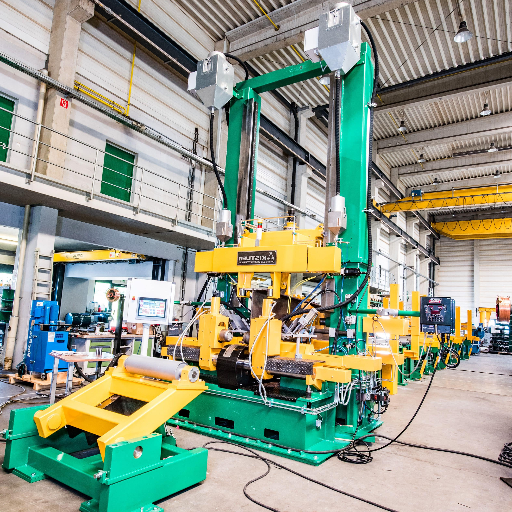
Welding is a key part in modern construction as it caters to the different buildings that shape our towns and industries. In any construction project, the H Beam Welding Machine is commonly used as it is busy in the midst of reinventing large-scale undertakings. What makes this equipment so crucial? In this post, we will look into details of H beam welding machines and understand how they increase construction process productivity, accuracy, and toughness. This post will highlight why new construction specialists searching for better options or those mounting on the widening waves of construction technological marvels, will find the industry being reshaped. These machines are transforming the industry by changing processes for better while enabling more advanced structures and increasing requisite responses.
What is an H Beam Welding Machine?
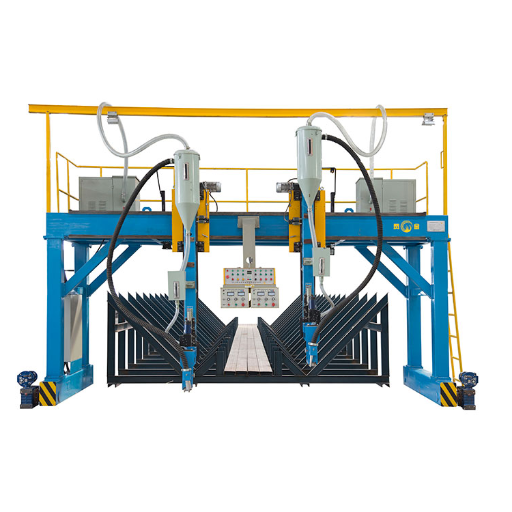
The H Beam Welding Machine is an industrial device used for the automated welding of H beams, enabling accurate and efficient welding of H shaped steel beams. This machine automates weld joining of steel parts, providing accuracy for strong and consistent welds. H beam welding machines find usages in construction and industrial frameworks where reliability, strength, and structural integrity are needed. They improve accuracy and productivity by reducing manual labor errors, making them reliable for large projects.
Knowing the H Beam Structure
Widely known as universal beams, H beams are one of the most commonly used beams in construction and engineering due to their strength and load bearing capabilities. The “H” shape of H beams gives them high structural integrity which enables them to support significant vertical and horizontal loads. An H beam is made from steel and is known for its strength, making them an ideal beam in frameworks, bridges, and highrise buildings.
Perhaps the most noticeable feature of H beams is their wider and thicker flanges, which distinguish them from I beams. The vertical section that connects the flanges, known as the web, is also thicker than that of I beams. This enhances the ability of the H beam to be impacted by bending forces and shear stress. Because of the H beam’s design, there is better stability and resistance to deformation which provides longevity in harsh working conditions.
Research indicates that H beams are meant to carry heavier loads when compared to traditional beams because of their geometrical efficiency. For example, an H beam with a height of 400 mm and a flange width of 200 mm can be loaded with over 50,000 psi, contingent on the steel grade used. Moreover, precise assembly from advanced welding technologies and subsequent durability improves H beams strengths in critical structures.
The Importance of Welding Machines in H-Beam Fabrication
Welding machines are pivotal in ensuring precision and efficiency during H-beam fabrication. Modern H-beam welding machines incorporate sophisticated features like Submerged Arc Welding (SAW). This method’s deeper penetration capabilities coupled with a higher deposition rate strengthen weld consistency. Many of these machines also include automated systems and CNC controls, which improve accuracy by minimizing human error and achieving close tolerance reproducibility.
Compared to traditional manual welding, a standard H-beam welding machine’s productivity is exceptional. Enhanced throughput accomplishes reduced manufacturing time and cost, optimizing efficiency in large construction projects. For instance, automated lines have been noted to produce 500 tons of H-beam structures a month, depending on operational capacity and design complexity.
The integration of sophisticated nondestructive testing (NDT) technologies fosters quality assurance by confirming that welds adhere to AWS D1.1 and ISO 3834 specifications. welds are up to par with industry standards. Innovations like these not only bolster the H-beam’s durability, but also enable it to withstand harsh environmental conditions and support heavy loads in bridges, high-rise buildings, and industrial structures.
Modern welding machines are revolutionizing H-beam fabrication by merging precise assembly with reliable automated welding, enhancing structural performance and large-scale production.
Key Features of an H Beam Welding Machine
- High Precision – Guarantees the correct alignment and welds of all parts for seamless assembly and uniform strength throughout the structure.
- Automated Operation – Lessens the amount of manual work needed to be done, while also boosting productivity.
- Versatility – Caters to different sizes and designs of H-beams to be constructed.
- Durability – Designed to sustain prolonged exposure to use within an industrial environment.
- Advanced Safety Features – Protect the operator while ensuring everything functions as intended.
How Does the H Beam Welding Process Work?
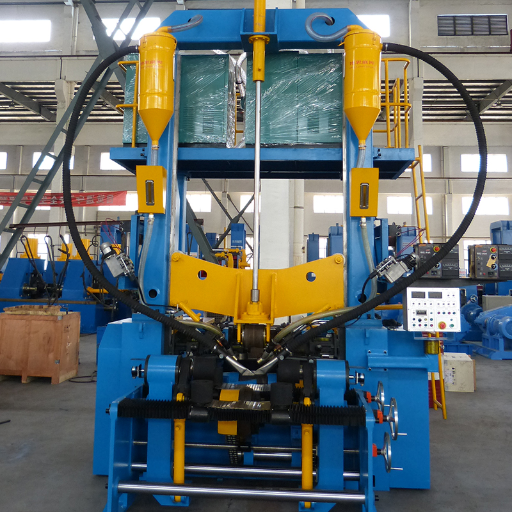
- Preparation: Make sure that the H-beam components are arranged accurately so that they are in the correct order for efficient alignment.
- Assembly: Use appropriate fixtures to fasten web and flange plates into H-beam configuration to form H-beam.
- Welding: The components are securely joined by the automatic welding equipment performing continuous welds along the seams.
- Cooling and Inspection: After the beam has been welded, the beam is cooled before conducting a rigorous inspection to check the welds and structure integrity.
Overview of the Welding Procedure
The process of welding is very important in the creation of H-beams since it not only provides strength, but also durability to the components. The distinction is often made between modern and old technologies. In the case of welding, modern technologies makes use of automated welding systems. Generally, the welding procedure used in H-beams is Submerged Arc Welding (SAW), primarily due to its massive deposition rate along with penetrating capabilities which is preferred when dealing with heavy steel fabrication.
Welding PPE and Fumes Safety
Most definitely, safety has a primary purpose of avoiding risks of accidents while working. Personally, my attention is captured by factors which relate directly to PPEs such as wearing a specific type welding helmet with the right shade, using gloves and garments that protect against fire, and providing the right PPEs for welding. I also avoid breathing poisonous gases by making sure the workplace is well ventilated. Like in any other professional job, equipment is also needed for this task and has to be inspected before use in terms of presence of any damages and defects. Other common safe measures like proper grounding of the workpiece and isolating fire prone materials are also observed. Given all the above factors, it enables enhancing the overall safety not only to oneself but surrounding users.
What are the Benefits of Using an Automatic Welding Machine?
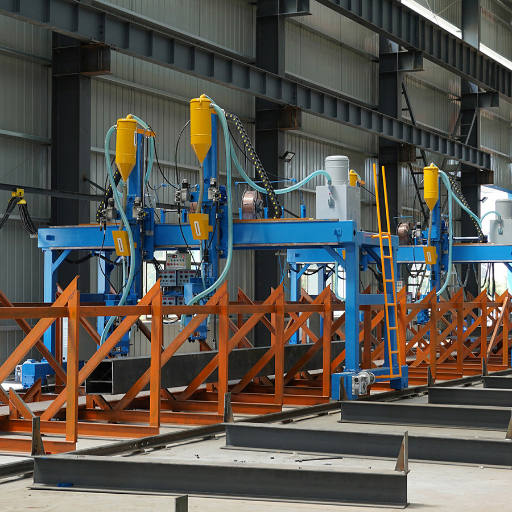
Automatic welding provides multiple benefits. It improves productivity by performing tasks rapidly and at a consistent level, minimizing human error. The precision automatic machines offer leads to stronger welds. These machines also reduce worker exposure to dangerous environments, which enhances safety. In the long run, automatic welding machines are cheaper as they lower labor costs and decrease material waste.
Efficiency and Speed in the Production Line
The implementation of automatic welding machines have greatly improved efficiency and speed in modern production lines. As per the latest reports, automated systems perform welding operations at a speed which is 4 times quicker than manual welding. This is crucial for businesses in industries like automotive or aerospace where stringent production deadlines are in place. For instance, certain advanced systems easily surpass the 30 joints per minute mark sometimes which is impossible with manual processes.
These devices are equipped with sophisticated automation along with programs and robots to make processes smooth and reduce downtimes. Lowering the requirement of human labor helps in uninterrupted production which achieves unvarying outcomes and improves throughput. Besides, automated systems perform quality verification during the welding operation to lower the rework rate while still achieving good quality. Automated welding technologies have become vital for businesses wishing to keep up in fast-evolving markets due to the combination of high production rate and increased efficiency.
H Beam Welding – Consistency and Quality
The automated H beam welding procedure aims to achieve remarkable quality and uniformity in order to fulfill requirements for structural manufacturing. Implementing modern solutions like precise robotic arms and advanced control systems helps these distinct solutions to control mistakes and deliver consistent welds on different beams. Recent studies show that automated welding systems can achieve ±0.1 mm accuracy which is far better than precision manual techniques.
Automatic monitoring systems, like laser tracking and ultrasonic testing, make sure every single weld is done according to the sharp industry benchmarks required. Studies show automated welding can reduce defects and rework costs by as much as 50%. This consistency is crucial during production of H beams since they are used in important infrastructure projects that require heavy reliance on strength and robust welds.
In addition, modern automated welding has expanded to other materials such as mild steels and high-strength alloys which now can be welded with consistent quality. This particular flexibility, along with increased efficiency, underscores the role of automation in producing H beam welds all the time and often surpass industry standards.
Cost-Cutting Benefits of Automatic Welding
The need to reduce labor costs, material waste, and speed up production makes the automatic welding systems extremely cost-effective. Reportedly, welding automation is capable of improving production efficiency by 30% in comparison to manual processes. This is due robotic systems providing precision and a consistent output, which slash the need for reworks and scrap.
Moreover, it has been noted that firms frequently attain ROI in automated welding technology within 12 to 18 months, depending on project size and scope. Advanced welding robotics have been adopted during large scale infrastructure projects and it was noted with great interest that welding expenses were reduced by almost 20% and lead times were shortened by as much as 25%.
Modern robotic welding systems equipped with AI capabilities have features that analyze deviations and predictive error autofocus which optimize welding parameters on the fly for intricate joint angles that may change, incurring fewer costs adjusting for errors. Achieving reduced costs while improving performance is the goal for industries and the blend of speed, precision, and flexibility guarantees enhanced profits with retained unmatched quality makes automatic welding an essential business tool.
How Does an H Beam Assembly Machine Enhance Production?
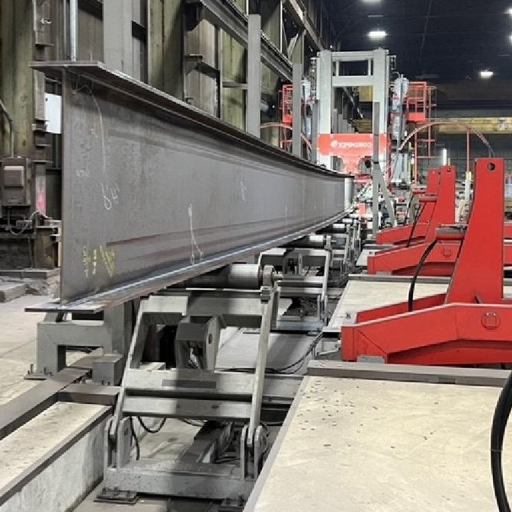
An H beam assembly machine increases productivity by automating the sequence of operations in the assembly line and maintaining alignment of the parts to be joined. Also, in addition to reducing manual labor, it reduces the time needed to complete the assembly of the structure, thus improving the productivity of the system. Also, it enhances consistency and quality of the end product. It is useful in improving structural quality which is essential in many different industries. Manufacturers who want to achieve higher productivity along with high quality standards and efficiency will find these machines valuable.
Assembling the H Beam Components
The H beam component assembly is one of the most important parts of the manufacturing steps which requires high accuracy and speed. Current H beam assembly machines perform automation operations such as alignment, tack welding, and component fixation with more advanced automation systems. For instance, modern machines are equipped with laser alignment systems which increase accuracy with respect to a margin of ±0.5 mm which significantly improves accuracy and helps reduce the error and wastage.
Typically, every H beam consists of two flanges and a web plate, which are further divided into three primary components. One flange is placed vertically on the beam, while the other serves as a horizontal supporter. Close attention is paid to the alignment of the flanges and web plate to ensure strong welding joint on the seams. Final welds are performed after the components are secured by automatic tack welders which are commonly integrated into the process.
Recent reports indicate that modern assembly systems have the capability of producing anywhere from 800-1200 H beams a month with the output varying based on the machine dimensions, as well as the size of the beams being processed. Manual labor not only increases the chances of fatigue but also introduces risk. Modern assembly machines integrate IT-enabled automation and assembly systems that facilitate real-time data analytics, thus enhancing productivity and performance decision-making for further optimization.
Integration with Beam Welding Machine
The integration of modern assembling machines and advanced beam welding technologies facilitates an efficient structural steel component production workflow. Beam welding machines specialize in high-velocity and precision welding, enhancing productivity. According to the latest studies, automated beam welding systems can weld at rates up to 1.5 meters per minute, which is far more efficient relative to speed when compared to manual welding methods.
Advanced features like laser-hybrid welding, which helps with minimized thermal distortion as well as greater joint strength, are available in newer machines. Furthermore, some newer models have A.I. driven control systems for adaptive real-time parameter changes based on weld configuration and thickness for materials.
Combining concepts of Industry 4.0 with beam welding allows for seamless data exchange between assembly systems and welders. This connectivity brings real-time actionable insights such as fault detection and predictive maintenance alerts. The manufacturing industry achieves up to 25% higher efficiency levels while cutting down on maintenance and reporting downtime by 30%. The fabrication processes in steel are undergoing a transformation, driven by new technologies to provide precision, speed, and cost-effectiveness.
Enhancing H Beam Production Line Efficiency
The H beam production line is now more precise and efficient than ever due to the integration of modern sophisticated technologies. Automation systems like CNC machines and robotics have made it possible for manufacturers to automate intricate fabrication processes. This, in turn, reduces human error and makes the output more reliable. Recent insights indicate that automated welding has accelerated production rates by 20 to 30% relative to older approaches, in addition to uniform weld seam enhancement.
Let’s look at the role of IoT and AI-enabled systems. 4.0 technologies are enhancing real-time production and line monitoring. Manufacturers can now monitor material accessories, machine, and site environmental Multimedia conditions through connected devices. This has shown to improve Overall Equipment Efficiency, OEE, by as much as 40%, thus minimizing waste and reducing the cost of business operations.
Advances in laser cutting also ranked among the top H beam production innovations. These systems are capable of doing laser cutting with such high precision that the minimal secondary processing is required. Studies indicate laser cutting improving edge quality by 35% and material efficiency by as high as 25%, actively guaranteeing raw material maximum utilization.
With the use of these modern technologies, manufacturers have increased their productivity, shortened their production timelines, and made their cost-efficiency soar while gaining a competitive edge in the steel fabrication biz. Additionally, they have been able to optimize their H beam production lines.
What are the Challenges in H Beam Welding?

- Precision and Alignment Measures: Failing to achieve accuracy in the sides alignment of the H beam parts to be welded will result in some structural weakness and defects.
- Heat Distribution: Some sections may experience very high temperatures, which may cause portions of the beams to be warped, thus changing their dimensions.
- Cross Sectional Area: In certain cases, it is imperative that complete fusion occurs at the joint, otherwise it would lead to some H beams merging in an incomplete manner.
- Inspection: Check marks for inspections of massive beams pose an enormous challenge, since the continuity of weld qualities is much difficult to achieve.
- Rate of Production: One of mass production’s greatest impediments to efficiency lies in the balancing act between rapid welding and constant calibration to equality.
Common Issues in H Beam Welding
Common issues in H beam welding include distortion, incomplete fusion, cracks, slag inclusions, porosity, and heat-affected zone (HAZ) problems.
| Issue | Description |
|---|---|
| Distortion | Beam warping |
| Fusion | Poor bonding |
| Cracks | Structural flaws |
| Slag Inclusion | Embedded slag |
| Porosity | Air pockets |
| HAZ Problems | Weak zones |
Solutions for Beam Welding Challenges
- Distortion: Use appropriate clamping methods and revise the welding order to mitigate warping.
- Incomplete Fusion: Employ correct heat parameters and check the angle of the electrode.
- Cracks: Apply preheating and stress-relieving post-weld heat treatment to decrease stress.
- Slag Inclusion: Between each appropriate weld pass, guarantee thorough cleaning is done to prevent slag entrapment.
- Porosity: Maintain proper shielding gas flow and use clean materials.
- HAZ Problems: Control the amount of heat and the cooling rates to maintain material strength to some extent captures the pre served value of the material properties.
The Future of H Beam Welding Technology
Automation, precision, and energy efficiency are propelling further evolution in H beam welding technology. Enhanced productivity and reduced human error is being seen with the adoption of robotic welding systems. Recent studies indicate the global robotic welding market is forecast to increase at a compound annual growth rate (CAGR) exceeding 8.6% from 2023 to 2030. This increase is anticipated due to needing faster production workflows and consistent quality in welds in construction and automotive manufacturing industries.
Also, LBW (Laser Beam Welding) is rapidly gaining popularity for H beam welding. Since LBW is more precise and has reduced heat-affected zones (HAZ), the welds are stronger and less distorted. Recent studies show that laser welding is 20-30% more efficient than traditional arc welding, which makes it very appealing for producing H beams.
The system has been changed through the implementation of industry 4.0 and IOT technologies, such as through the real time monitoring, predictive maintenance technology and advanced analytics processing systems that are capable of optimizing welds. Welding IoT improves H beam welds and operational efficiency while reducing idle time through advanced failure prediction.
Trends towards sustainability targets in this sector of construction demand stronger performance from welding and the use of green materials. Businesses are searching for low energy consuming welding process alternatives that get the job done within strict carbon emission quotas.
Reference sources
- Electron Beam Welding Beam Current on Microstructure and Mechanical Properties of AISI 316 Austenitic Stainless Steel
- Authors: Huaying Li et al.
- Published in: Archives of Civil and Mechanical Engineering, 2023
- Key Findings: This study investigates how varying beam currents during electron beam welding affect the microstructure and mechanical properties of AISI 316 stainless steel. The research highlights the relationship between beam current and the resulting weld quality, including hardness and tensile strength.
- Methodology: The authors conducted experiments by varying the beam current and analyzing the resultant microstructure using metallographic techniques and mechanical testing to evaluate the properties of the welded joints(Li et al., 2023).
- Software to Predict the Process Parameters of Electron Beam Welding
- Authors: V. Tynchenko et al.
- Published in: IEEE Access, 2021
- Key Findings: This paper presents a mathematical model that utilizes machine learning techniques to predict effective process parameters for electron beam welding. The study demonstrates that the proposed model can achieve a forecasting accuracy of at least 89%, which is beneficial for optimizing welding processes.
- Methodology: The research employed regression analysis algorithms, including ridge regression and random forest regressor, to develop the predictive model. Multi-objective optimization techniques were also applied to determine effective hyperparameters(Tynchenko et al., 2021, pp. 92483–92499).
- Real-Time Measurement of Seam Strength Using Optical Spectroscopy for Al–Li Alloy in Laser Beam Welding
- Authors: Zhifen Zhang et al.
- Published in: IEEE Transactions on Instrumentation and Measurement, 2021
- Key Findings: This study explores a real-time nondestructive measurement method for assessing seam strength in laser beam welding of Al–Li alloys. The findings indicate a strong correlation between optical spectrum signals and seam strength, providing a basis for real-time monitoring.
- Methodology: The authors established a linear relationship between seam strength and optical signals, employing a hybrid classification model based on independent component analysis and extremely randomized trees for data analysis(Zhang et al., 2021, pp. 1–10).
- Top Light-Duty H Beam Production Line Manufacturers and Suppliers in China
Frequently Asked Questions (FAQs)
Q: What is an H beam welding machine?
A: An H beam welding machine is a type of equipment specifically intended for the welding of construction and engineering steel beams, especially H beams. Automated systems make it possible to weld stronger and more precise joints quicker with the use of this machine.
Q: What specific features of a gantry welding machines set them apart from more conventional welding practices?
A: A gantry welding machine eliminates the need for manual operation in welding, making the process more accurate and uniform. Unlike conventional welding that is purely manual, a gantry welding machine can be used for large works which require a lot of accuracy and speed which minimizes mistakes.
Q: What does the h beam assembling machine do that assists in the welding stage of construction?
A: An h beam assembling machine fixes the position of the plates, thus aiding in the alignment of the plates to be welded. By ensuring that the pieces are fixed, this machine guarantees that high standards will be met in regards to quality and strength of the welds.
Q: What other features do h beam automatic welding machines have?
A: Using an h beam automatic welding machines increases the pace of production, the quality of the welds, and the reduce the cost of labor. It increases efficiency by automating the welding process which enables the completion of complex welds accurately.
Q: What is the role of beam straightening machines in an h beam welding line?
A: Beam straightening machines are used to remove any deformities in the welded beams. Post-welding, beams are prone to distortion such as warping or bending. The straightening machine makes necessary adjustments to align the beams to meet the prescribed standards for structural or load-bearing use.
Q: What is the function of a cutting machine within an h beam welding line?
A: Within an h beam welding line, a cutting machine is located at the initial area of the line sequence where it serves to cut the steel plates to the proper length and shape which is necessary prior to being welded. This allows for accurate fitting of all parts during assembly and welding processes.
Q: What is pull through welding, and how is it implemented in beam welding lines?
A: Pull through welding is a technique in which the beam passes through a fixed welding machine and is consequently welded continuously. This technique is implemented in beam welding lines to enhance productivity and ensure the weld quality is consistent over long sections of beams.
Q: Why is a flange straightening machine essential in the sequence of welding operations?
A: A flange straightening machine ensures that the H beams’ flanges are aligned and correctly straight after welding. This precess is critical to the beam’s structural integrity and aesthetic value.
Q: Are all h beam gantry welding machines interchangeable with other beam types?
A: Fortunately, an h beam gantry welding machine is more flexible than we give credit for. With proper design and capability, it can be altered to weld other beam types like I beams or T beams. This feature is invaluable in construction and engineering work.


