
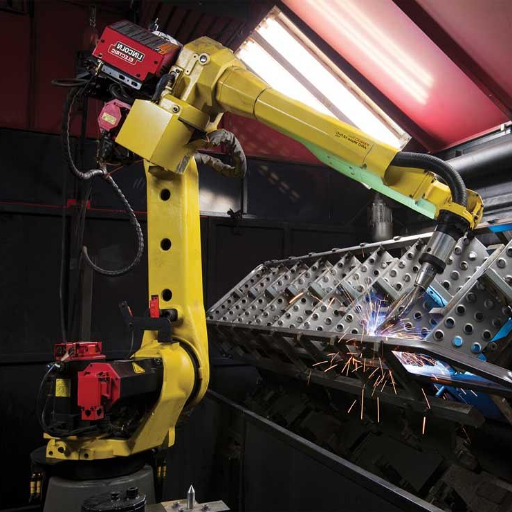
For quite some time now, welding has been an integral part of manufacturing and used in wide-ranging sectors like construction and automotive manufacturing. With the rapid advancement of technology, traditional welding is being replaced with robotic welding systems. This article seeks to explain how robotic welding systems are changing the fabrication process with unmatched precision, efficiency , and consistency. If you are interested in understanding how these technologies are transforming manufacturing or how corporations are using robotic welding to resolve labor shortages, this post will highlight critical features and consequences of robotic welding that every reader should be aware of.
What is Robotic Welding and How Does It Work?
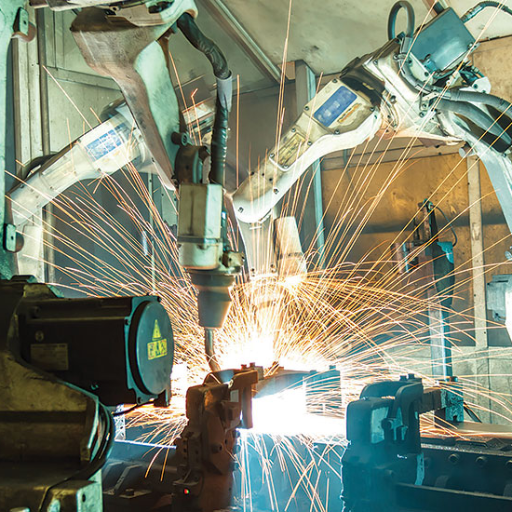
Robotic welding is a form of automation whereby a robot arm carries out welding operations. It combines motion and sensors along with software to control the welding tools to join materials with utmost precision. The robots are programmed to perform particular patterns and apply certain techniques, which ensures accuracy and proper welds in all applications. This method is reduces human error, increases productivity, and is highly beneficial in areas that require repetitive or high volume welding processes.
Understanding the Welding Process
Robotic welding incorporates sophisticated level technologies for achieving high-quality welding results in a shorter time. The process starts with programming the robot to set its movements, angles and other parameters using software, which does the needed calculations. The robotic arm has accurate sensors which guarantee real-time checking of the welding variables like temperature, speed and thickness of the materials to be joined, ensuring uniform consistency in the welds.
Modern robotic welding systems often rely on Machine Vision for accuracy enhancement. As such systems enable the robots to see flaws or misalignment on the parts. Recent statistics show that robotic welding systems could achieve an error margin as low as 0.2 mm, which is exceptional precision compared to traditional manual welding.
Moreover, robotic welding is critical in enhancing productivity. Industry studies reveal that automated welding systems operate 3 to 4 times faster than human welders, depending on the task’s complexity. This further shortens production cycles while also reducing operational costs.
An equally important part of this system is advanced types of welding-specific laser, MIG, or TIG welding. For example, the automotive industry uses robotic spot welding extensively, accounting for roughly 29% of the world’s robotic welding usage. These processes are designed to address the needs of some industries, including aerospace and construction.
How AI integrates with data analytics also changes the outlook for robotic welding. Predicting of possible failures, optimizing energy usage, and adjusting welding speed for precision all ensure reliable performance for years to come.
Parts of Robotic Welding Systems
- Robot Arm – The arm that carries out the welding tasks with accuracy and consistency grasps as a mechanical arm.
- Welding Power Source – Creates and sustains the welding arc, providing the necessary electrical energy.
- Controller – Controls the robotic movements and processes; serves as the system’s brain.
- Welding Torch – The instruments robotic arms use to apply the welding arc to the workpiece is called welding torch.
- Sensing and Tracking Systems – Real time adjustments within the welding workcell maintain accuracy while monitoring the welds and making adjustments.
- Safety Equipment – Protects the worker through the use of barriers, sensors, and systems that can be activated during emergency situations.
The Impact of Automation on Contemporary Welding
The impact of automation has been felt across the manufacturing sector. Welding automation has streamlined processes with faster production, better product quality, and lowered operational expenses. As per the latest research findings, the welding automation market is expected to reach nearly $8.5 billion by 2030, with a compound annual growth rate (CAGR) of 2.8% from 2023. This is fueled by the growing automotive, aerospace, and construction sectors which demand precision and scalability.
Continued refinement of the industry’s automation systems is achievable through the use of advanced technologies such as machine vision and collaborative robots (cobots). For example, cobots can assist human workers by performing precise repetitive operations that reduce the likelihood of mistakes. Machine vision can also monitor welding seams and perform quality assurance in real time.
Automation also reduces material waste through optimizing welding processes supporting sustainable manufacturing. A 30% increase in productivity while maintaining quality and industry standards is reported by companies that adopt automated welding systems. These statistics prove that there is great potential in automation on the modern approach of welding in all industries.
What are the Advantages of Robotic Welding?

The benefits of robotic welding include improved accuracy and productivity, consistent quality, and enhanced workplace safety. The automation of repetitive work-related tasks minimizes errors robotic processes are programmed for, thus weakening the chances of flaws during the welding operation. In addition, robotic systems make the workplace safer by reducing human involvement in dangerous areas. Portion controlled systems robotic processes use assist in lowering production costs in the long run by minimizing material waste and optimizing operational workflows. For industries looking to improve efficiency and dependability in their manufacturing processes, robotic welding proves helpful.
Improving Repeatability and Precision
Robotic Integrators have made significant advances in welding technology these past couple of decades. Most notable is the precision and repeatability these robotic systems provide. As one of the most pivotal areas in manufacturing, precision and repeatability in welding tasks are seamlessly ensured due to the implementation of sensors and computer numerical control (CNC) technologies. Research conducted shows that robotic welding can repeat tasks with astonishing repeatability of ±0.04 mm, ensuring optimal performance and productivity while lowering defects.
Modern robotic arms rely on precise programming as well as adaptive controls to uniform requirements of variable factors like the material’s thickness and even the articulation of the joints, enhancing precision even further. An industry report claims that robotics in welding improves accuracy of manufacturing processes by 25% when compared to manual welding. Such precise robotic automation eliminates unnecessary rework and product failure while providing accuracy and meeting industry standards.
Furthermore, robotics can now incorporate advanced technologies such as machine learning, allowing real-time monitoring, anomaly detection, and self-correcting capabilities. For instance, the International Federation of Robotics (IFR) conducted a study showcasing how AI-integrated vision welding robots boosted efficiency by over 30% in automotive and aerospace industries, which are highly dependent on precision.
With an added robotic arm, repeating actions with precision will assist manufacturers in meeting complex requirements of robotic welding while boosting cost-effectiveness. This versatility strengthens robotic welding as the backbone for contemporary industrial operations.
Filling the Gap in Welding Professionals
The welding shortage is an increasingly troubling problem within the manufacturing industry. The issue is worsened by the exiting older skilled workforce as well as the reduced entry of newcomers to the skilled trades. To make matters worse, there is expected to be a shortage of 375,000 welders in the US by the year 2026, as noted by the American Welding Society (AWS). This causes substantial challenges to skill-intensive sectors such as construction, automotive, and shipbuilding. It isn’t just the supply of jobs that this shortage is likely to impact; production rates in the country will greatly suffer if this continues, and even force a rise in operating costs as companies attempt to outbid each other to secure a dwindling number of skilled workers.
The challenge can be resolved using robotic welding systems, which replace the withdrawn human workforce. Modern welding robots with the ability to learn through new experiences and with sophisticated robots equipped with AI systems can handle strenuous manual work. As an example, highly skilled weldment robots with vision systems and the ability to adapt in real time can perform intricate welding tasks far more accurately and consistently than human workers. According to a report published by MarketsandMarkets, the global market for welding robots is expected to increase from $6.3 billion in 2023 to $9.7 billion by 2028, partly driven by the attempt to solve the workforce problem.
Manufacturers are able to maintain productivity levels while safeguarding against labor supply challenges. Adjustments of this kind also enable industries to transform trained welders into more complex and valuable positions, therefore achieving the ideal mix between automated precision and trained human workers.
Improvement of Productivity Efficiency in the Fabrication Process
The use of welding robots has had a positive impact on efficiency within the fabrication processes. By refinements in automation technology, there are estimates that from 2023 to 2028, the welding robotics market will increase with a compound growth rate of 10.8 percent a year. One of the key drivers for this finding is the automation of precise and consistent manufacture processes.
The benefits of robotic welders extend to AI sensor equipment which can lower defects in welding by 80 percent. Stale demand output can also be reached with the automation of robotic systems that do not suffer from fatigue. Depending on the production scale, this can amount to thousands more units that are welded every year which helps in giving a strong foothold to competitors.
Reduced material costs coupled with faster operations, less downtimes, and less materials wasted leads to robotic welding system users seeing a return on investment within 1-2 years. Robots that utilize data in real-time also allow for predictive maintenance that reduce costs associated with unplanned downtimes.
How Does Welding Automation Compare to Manual Welding?

With regards to automation vs manual welding, automation blast manual welding out of the water in regards to efficiency, precision, and consistency. Relying however on machines to do tasks automatically improves speed and error rates which means less effort in reworks needed. Materials will also be used more efficiently with less waste. Such systems will also improve safety by reducing risks associated with human presence in hazardous environments, unlike manual welding that often depend on the craft of the operator and may be inconsistent in quality. On the negative side, the long term effects teach us the upfront costs of automation is much higher. However, in scenarios where repetitive or large scale welding work is done, spending on automation cuts long term costs associated with labor and improves productivity.
Comparative Analysis of Welding Solutions
Automated welding, manual welding, laser welding, TIG welding, and MIG welding are the primary solutions to consider in a comparative analysis.
| Welding Type | Speed | Cost | Quality | Ease | Best Use |
|---|---|---|---|---|---|
| Automated Welding | High | High | Consistent | Moderate | Large-scale prod. |
| Manual Welding | Moderate | Low | Variable | High | Small-scale proj. |
| Laser Welding | Very High | Very High | Precise | Low | Precision work |
| TIG Welding | Low | High | High | Moderate | Specialized welds |
| MIG Welding | High | Moderate | Good | High | General purpose |
Safety Considerations for Human Welders
- Personal Protective Equipment (PPE): Always put on a welding hood with the appropriate shade, gloves that are flame resistant, along with apparel that shields from burns, sparks, and lethal ultraviolet radiation.
- Ventilation: The use of hazardous fumes and gases should be kept to a minimum, ensure proper ventilation is provided or make use of exhaust systems.
- Eye and Face: Intense light and debris can cause eye injuries, use specialized goggles and/or shields to protect the eyes.
- Overall Work Environment: Ensure that the workspace is clean and dry as well as free of flammable materials to reduce fire risks.
- Training: Compliance to safety protocols and proper training are important for safe welding practice.
Cost Implications of Robotic Automation
Robotic automation stands as one of the cornerstones of contemporary advancements in industries. The factors of importance cover both short and long term costs. Suffice it to say, initial robotic investments tend to be quite high given the average costs of $50,000 to $150,000 per robot. This however, is contingent on complexity and intended application. Regardless, when long term gains of lowered labor, boosting productivity, and fewer errors are taken into estimate, businesses stand to gain noticeable ROI.According to new information, robots maintained properly can work for up to 50,000 hours continuously—well beyond human workloads. This leads to optimized production and reduced downtime costs. Furthermore, automation can decrease operational costs by approximately 40% because of its higher speed and consistent quality compared to human workers.
Reduced spending on robotic automation comes alongside other expenses such as regular robotic maintenance, software maintenance, training personnel to interface alongside robotic systems, and staff to operate the robots. Still, the good news is that newer technologies are less expensive to implement, making automation robotic systems accessible for mid and small-sized enterprises.
Robotic automation can be successfully and competitively integrated into the global marketplace by small to mid-sized businesses strategically investing in these technologies while analyzing the potential costs and keeping pace with innovations.
What are Common Types of Robotic Welding?
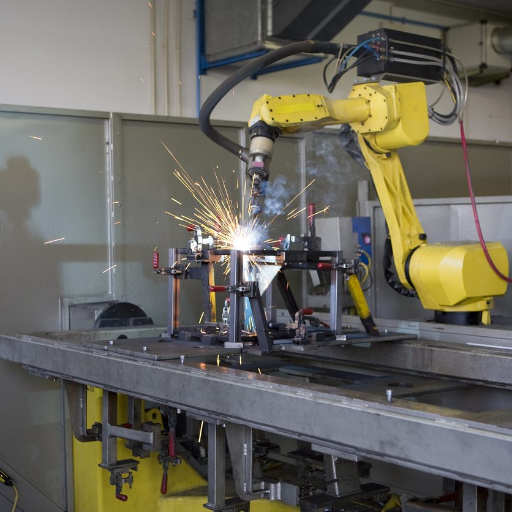
- Arc Welding- Used mainly in automotive and manufacturing industries, it uses an electric arc to weld metals.
- Spot Welding- Commonly used in industrial production, this technique focuses on seams of metal sheets, applying heat and pressure to weld specific areas.
- TIG Welding- This is appropriate for application needing precision as it deals with thin pieces. It produces very accurate and clean welds.
- MIG Welding- Uses wire electrode and provides constant feed making it well-suited for many industries due to its fast pace efficiency.
- Plasma Welding- Works like TIG welding but has tighter control which translates to more precision. It is used in more specialized fields.
Investigating Arc Welding Robots
As in all robotics applications, arc welding robots are designed to automate welding activities. In addition to achieving a high level of quality, automation provides consistency and reliability in a variety of applications performed with welds. Using modern techniques in programming and sensors, these robots can perform repetitive tasks with almost no errors. I believe that arc welding robots have the potential to transform any sector that requires rapid high-quality production. In addition, I think they become even more important in today’s manufacturing environments because they minimize human contact with dangerous work areas.
Overview of Spot Welding
Spot welding is an important process in the given industry and is understood to play a significant role in manufacturing processes like in the automotive and aerospace industries. This kind of welding uses electrical resistance to join metal layers at distinct locations to form a solid connection. Recent developments with modern spot welding machines now include servo controls as well as monitoring systems enabling proper management of pressure, heat, and even the time for each weld.
As research suggests, they are still the primary option when it comes to vehicle assembly with an average of above 4 thousand spot welds used for a single car. Automated robotic systems for spot welding have emerged and improved efficiency in addition to consistency which cuts down the time needed and reduced overall cost while keeping the quality high. Furthermore, studies show that new systems that adapt in real time to material changes, called adaptive welding systems, have added up to 30 percent effectiveness. These advancements show the ongoing development of spot welding throughout modern manufacturing.
The Role Of Collaborative Robots In Welding
Collaborative robots or Cobot welders are revolutionizing production with automation, while also enabling greater operator interaction in the welding sector. They work side-by-side with human operators and assist in carrying out welding operations that require precision and repeatability. Recent studies indicate that the implementation of cobots in welding has nearly 25%-30% productivity gain for a large number of manufacturers. Equipped with sophisticated sensors and real-time adaptive programming, cobots make everything from minor to major adjustments mid-process during the welding operation.
As noted in a recent report, Grand View Research has predicted that the collaborative robots market will see growth reaching 8.5 billion dollars by 2030 due to their adoption in the automotive, electronics, and aerospace industries. Removing the need for human operators in dangerous repetitive tasks, cobots improve workplace safety. In addition, their small and simple design allows them to be easily integrated into the production lines of small and medium-sized businesses, widening the availability of advanced welding automation. It is quite clear that Cobots are able to accelerate the process of innovation in technology and practical use in modern manufacturing.
How to Implement Robotic Welding in Your Facility?

- Assess Your Needs – Analyze your business processes to determine which welding activities, specifically the repetitive or hazardous ones, are suitable for automation.
- Choose the Right Equipment – Make sure that the collaborative robot (Cobot) you choose matches your welding requirements in precision, volume, and ease of use for operation.
- Train Your Team – Train and prepare your personnel to manage the robotic welding system operations and maintenance effectively.
- Start with a Pilot Program – Evaluate the system on a smaller scale to gain information and refine the system before wider deployment.
- Plan for Regular Maintenance – Set proactive goals to maintain and enhance the functioning of the robots on a continuous basis.
Selecting Your Welding Machine According to Your Needs
Choosing the best welding machine for your MIG, TIG, or stick welder depends on the materials you are welding and their thickness. Lighter duties and beginner workflows benefit with the ease and versatility offered by MIG welders. TIG welders specialize in high-quality aluminum or stainless steel welds on thin sheets. Stick welders work best on heavy metals especially outdoors since they can cope with dirt and rust. Spend some time assessing your project requirements and budget against your skill level to get the best. Also, user reviews and specifications shouldn’t be neglected in order to ascertain reliability.
Welding Robot Programming and Operation
Precision tools and modern tech make the programming and operation of robots for welding quite challenging. The use of AI and machine learning in welding robots for precision and smart work has been on the rise. Within the 2023 to 2030 timeline, the global market for welding robots is estimated to grow at a rate of 7.6% annually. The growing trend of automation across manufacturing and automotive, aerospace, and construction industries is the main driver of this projection.
Welding robot programmers often rely on two distinct methods: online programming and offline programming. Online programming involves the use of a teach pendant where the robot is moved and a specific path is recorded, step by step. Offline programming for robotics makes use of specialized applications that simulate welding in a virtual environment to minimize idle time. Welding Robot Programmer Productivity.
Welding robots of today come with advanced sensors and vision systems, which enable them to detect joint discrepancies and make the required adjustments to the weld in real time. For instance, laser sensors offer accurate measurements which allow robots to adapt to seam positions with pinpoint precision. Furthermore, industrial robots equipped with data connectivity can enable monitoring of KPIs, predictive maintenance, and optimization of industrial processes.
Common considerations when deploying a welding robot include the MIG or TIG or spot welding parameters such as weldments, payload capacity, reach, and compatibility of rotary welding fixtures. Operator training, active user maintenance, and system safety also hinge on consistent machinery performance without decline.
Robotic Welding Systems: Maintenance And Troubleshooting
For robotic welding systems, having a clearly defined maintenance schedule and effective troubleshooting techniques helps ensure optimal performance and long-term reliability. An industry study noted that equipment preventative maintenance improved downtime by 20% while productivity increased. Regular inspections of the welding torches, adjustment of sensors, and lubricating joints of the robots should be done to avoid damage from wear and tear.
As for troubleshooting, certain generic issues, commonplace across robotic systems, include electrical issues, robotic arms being out of alignment, and programming mistakes. Data connectivity is crucial here since a large portion of modern robotic systems enabled with Internet of Things (IoT) technology allow dashboards for real-time visibility and push alerts when parameters cross thresholds. Something like an inconsistent weld or excessive spatter can trigger detection, and diagnostics can be run to find root causes such as incorrect voltage or contamination at the welding joints.
Additionally, some more progressive systems incorporate machine learning that analyzes historical data to identify patterns and anticipate several steps ahead. Predictive maintenance driven by AI has been shown to reduce maintenance costs by 12% and unplanned downtimes by almost 30%. These and many more such advancements can improve efficiency and reliability of robotic operations in welding.
Reference sources
- LSFP-Tracker: An Autonomous Laser Stripe Feature Point Extraction Algorithm Based on Siamese Network for Robotic Welding Seam Tracking
- Authors: Runquan Xiao et al.
- Journal: IEEE Transactions on Industrial Electronics
- Publication Date: January 1, 2024
- Citation: (Xiao et al., 2024, pp. 1037–1048)
- Summary:
- This study presents the LSFP-tracker, a novel algorithm designed for laser vision-based welding seam tracking. The algorithm utilizes a Siamese network to enhance the flexibility and accuracy of feature point extraction from welding seams.
- Key Findings: The LSFP-tracker demonstrated robust performance across various seam types (butt, V-groove, multi-pass) and maintained tracking accuracy even in the presence of welding noise.
- Methodology: The authors constructed a lightweight feature extraction network to generate high-resolution feature maps, incorporating a feature refinement module to improve tracking stability. The algorithm also introduced curvature detection and preset templates for adaptive feature point detection.
- Progress, challenges and trends on vision sensing technologies in automatic/intelligent robotic welding: State-of-the-art review
- Authors: Q. Guo et al.
- Journal: Robotics Comput. Integr. Manuf.
- Publication Year: 2024
- Citation: (Guo et al., 2024, p. 102767)
- Summary:
- This review article discusses the advancements and challenges in vision sensing technologies for robotic welding. It highlights the importance of integrating vision systems to enhance the automation and intelligence of welding processes.
- Key Findings: The review identifies key trends in vision sensing technologies, including the integration of machine learning and artificial intelligence to improve seam tracking and defect detection.
- Methodology: The authors conducted a comprehensive literature review, analyzing various vision sensing technologies and their applications in robotic welding, while also discussing future research directions.
- Recent developments in computer vision and artificial intelligence aided intelligent robotic welding applications
- Authors: B. Eren et al.
- Journal: The International Journal of Advanced Manufacturing Technology
- Publication Date: May 3, 2023
- Citation: (Eren et al., 2023, pp. 1–47)
- Summary:
- This paper reviews the latest advancements in computer vision and AI technologies applied to robotic welding. It examines the effectiveness of various machine learning methods in enhancing welding applications.
- Key Findings: The study highlights the comparative performance of different machine learning techniques in tasks such as detection, tracking, and classification within welding applications.
- Methodology: The authors performed a comparative analysis of various machine learning methods, focusing on their application in intelligent robotic welding systems.
Frequently Asked Questions (FAQs)
Q: What is robotic welding and its importance in manufacturing operations?
A: The automation of welding processes through robotic technologies is called robotic welding. It helps manufacturing operations by improving precision, efficiency, and minimizing waste, particularly in automotive and contract manufacturing sectors.
Q: How is the robotic welding process carried out?
A: The welding process performed by robots is referred to as robotic welding. It requires specialized robots capable of executing precise welding operations due to their ability to be programmed and follow specific coordinates and parameters. Techniques such as gas metal arc welding (GMAW) and robotic arc welding are incorporated in this process.
Q: Are collaborative robots applicable in welding activities?
A: Welding tasks can indeed be performed by collaborative robots or cobots. These robots are made to work with human welders, so they provide safety and versatility where men and machines share roles, for example, in handling and welding operations.
Q: What are some common applications of robotic welding in the automotive industry?
A: In the automotive industry, robotic welding is applied in rapid and precise chassis development, assembly of body panels, as well as other diplomatic welding exercises. Robotics aids in streamlining operations and enhancing the quality of work in this industry.
Q: How does the use of robotic welders address the lack of skilled welders?
A: The shortage of skilled welders is solved by using robotic welders because routine and intricate welding processes can easily be done by robots. This helps sustain production targets without heavy dependence on manual welders, thus overcoming workforce gaps.
Q: What is the significance of through-arm technology in robotic welding?
A: Through-arm technology is the practice of passing the welding cables through the robotic arm, which diminishes the wear and tear of the cables while also improving the robot’s freedom of movement. This technology augments the strength and maneuverability of the robotic welder, thus enhancing productivity in the manufacturing processes.
Q: In what ways does seam tracking improve the robotic welding procedure?
A: Seam tracking improves the robotic welding process by enabling the robot to modify its course, correcting it tangentially as it moves to the seam. This feature minimizes lapses and ensures a baseline weld standard regardless of the workpiece geometry or situational factors.
Q: What features of universal robots enhance robotic welding?
A: Features such as simple programming, versatility, and collaborative operation distance make universal robots advantageous. These attributes allow for a broad range of welding tasks, from miniature fabrication projects all the way through to massive industrial manufacturing endeavors.
Q: In what ways does robotic welding aid additive manufacturing?
A: Robotic welding aids additive manufacturing by exercising control over the material deposition processes, empowering the system to also construct complex shapes and structures in a sequential manner. This greatly aids additive manufacturing in producing sophisticated and quality systems and components.


