
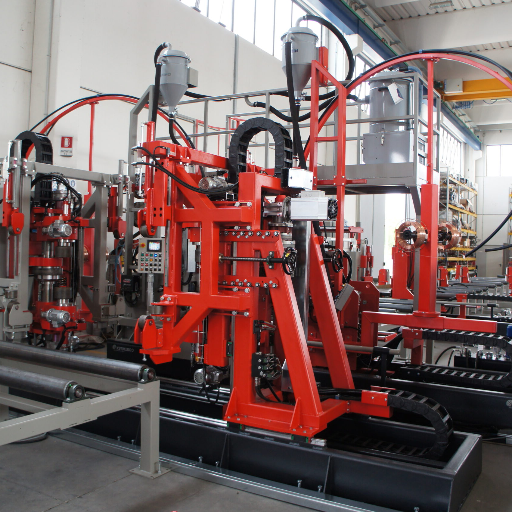
In industrial fabrication, achieving both precision and efficiency is indispensable in delivering results of the highest quality. Straightening machines for H-beams have prominent applications in steel construction projects for maintaining structural fidelity and precision. These machines rectify deformations on H-beams due to stress in their metallurgy which is a prerequisite for manufacturing components that will be used in bridges and skyscrapers. In this article, I will explain the functions, significance, and benefits of H beam straightening machines. This guide will benefit construction specialists trying to enhance operational efficiency and people interested in modern infrastructural development.
What is a straightening machine and How Does it Work?
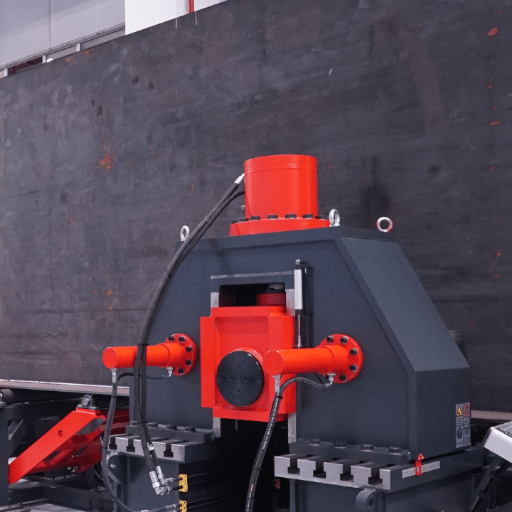
A straightening machine works to rectify the irregularities of H-beams and other metal pieces to ensure their proper indexed frame requirements. It applies mechanical force through rollers or hydraulic systems to strighten the material. This ensures that the beam meets all criteria and will function as it needs in the construction or industrial scenarios.
Understanding Components of a Straightening Machine
A straightening machine applies mechanical forces through rollers or hydraulic presses on metal beams, plates, or sheets. It has flexibility to deal with several types of deformation like bending, warping, or twisting. It is especially useful in construction and shipbuilding. Such a machine may use a manual or an automated system depending on how refined the work is. Equipped with modern high speed systems, a straightening machine works with a lot of precision and greater efficiency.
Recent advancements in straightening technology indicate modern machines can handle materials from 1 mm to several inches in thickness. Multi-roller straightening machines, for example, are better suited for thinner materials, while heavy-duty hydraulic straightening systems can process beams and plates up to 500 mm thick. Output from high-precision straightening machines is seldom greater than 0.1 mm which is crucial in meeting industry benchmarks.
Often, more advanced straightening machines have monitoring technologies such as optical sensors or laser measuring systems. With these tools, operators can monitor material straightness during processing, allowing for real-time quality control. The introduction of fully automated straightening machines that can be set to programmable parameters has improved efficiency by 40 percent, which is advantageous for mass production.
Choosing a straightening machine depends on material type, thickness, precision requirements, and other factors. Integrating advanced technology with sturdy design continues to strengthen the reliability of straightening machines in metal works across various industries.
How Do Beam Straightening Machines Operate?
With the application of tension or pressure, a beam straightening machine deforms and reshapes materials to fit a specific requirement. These machines usually have hydraulic, mechanical or servo motors that apply force onto beams or metal parts. In most cases, a beam is guided into the machine and the rollers, clamps or dies located inside the machine apply force onto the beam to correct changes and imperfections. These operations are done very accurately so as to preserve the dimensional and structural integrity of the beam.
The efficiency of beam straightening has always been a challenge, but new technology has emerged that tackles these concerns head-on. Industry reports state that modern beam bottom straightening machines are capable of achieving tolerances of ±0.1 mm, making them very useful in construction, automotive, and aerospace sectors. In addition, automated systems have incorporated real-time monitoring and feedback systems that can detect and compensate for straighening errors as they happen. Such technologies have been proven to reduce production waste by 30% and operational time by 25%.
Some of the newly manufactured machines run on self-learning algorithms that study past behaviors of materials to fine-tune parameters for straightening processes. The sophisticated requirements of contemporary applications are one of the drives for continuous development of beam straightening machines.
The Role of Hydraulic Systems in Beam Straightening
Hydraulic systems in beam straightening provide precise force application, adjustable control, enhanced consistency, and compatibility with high-strength materials.
| Key Point | Description |
|---|---|
| Precision | Accurate force for even straightening. |
| Control | Adjustable pressure for various needs. |
| Consistency | Uniform results in repeated operations. |
| Compatibility | Handles high-strength material. |
Why Use an H Beam Straightening Machine?
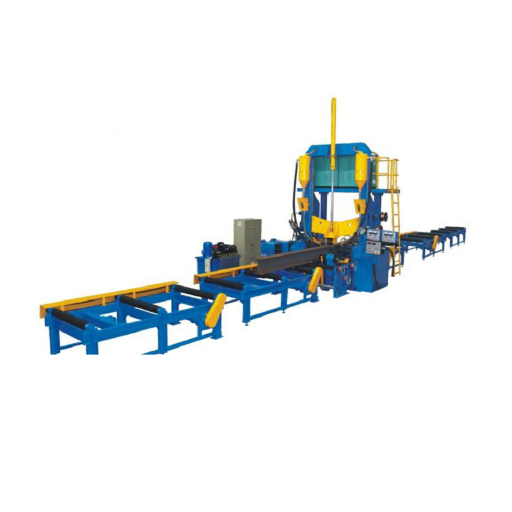
An H beam straightening machine restores H beams to their correct geometric shape. It enhances beam quality and performance while minimizing manual labor and production time by automating the straightening process. This helps in the precise alignment of beams during construction and manufacturing, making them invaluable in these industries.
Benefits of Using H Beam Straightening Machines
- Preserves the geometric and physical stability of H beams by minimizing errors during the straightening process.
- Adjusts for the diminishing returns of manual labor, streamlining the production process attributed to time saved.
- Guarantees uniformity in quality across all beams through consistent performance.
- Extends the effective lifespan of beams by correcting distortions.
- Reduces operational costs through enhanced efficiency and diminished inaccuracies during production.
Improving Production Efficiency with H Beam Machines
With innovation becoming a staple in the structural steel sector, H beam machines have provided optimal solutions. Adding automated H beam straightening machines can increase productivity by approximately 30% without the interruptions of manual work, making them highly cost-effective. These machines are equipped with advanced technologies such as hydraulic power systems and digital controls which allow for faster and more accurate changes.
One notable advantage is the lessened material waste. Traditional approaches can be imprecise, leading to rejection or reworking of beams which results in the waste of materials up to 15% in some manufacturing plants. The straightening machines for H beams reduce the errors with the machines and bring savings in materials to the average of 10-12% as stated in various industry expert studies.
Quality Assurance in Beam Straightening
Quality assurance in the beam straightening processes of an H beam is a critical production concern for technology manufacturers as it determines the precision and safety of the crafted goods. Straightening control systems of modern H beam machines incorporate advanced technology, including precision sensors combined with automated calibration, to guarantee the machine accuracy within the admissible limits of ±0.5 mm. Such precision reduces stress of materials and ensures performance consistency, even in mass-produced large volumes.
With more advanced straightening technologies, companies report lower defect rates and non-quality related complaints by almost 30%. These claims are backed with increased operational cost reductions and a boost in the satisfaction levels of the customers. Non-destructive testing methods such as ultrasonic testing and laser scanning are increasingly supplementing the straightening process by checking for micro deformations or internal deformations that would damage the beam’s efficiency.
The rigorous demands of an ISO certification, especially the ISO 9001, pushes manufacturers to utilize a strict quality management system. Enhanced beam integrity claimed with real-time monitoring along with resulted SPC adaptable quality control system ensures compliance to pre-set industry standards and mandatory safety regulations. Modern advances in algorithms powered by machine learning have enabled some straightening equipment to utilize predictive deviations, removing reliability concerns.
The customer’s focus in the production of steel fabrications is addressed through trust interventions. Steel fabrication manufacturers are doing everything possible to maintain competitiveness by adopting advanced technologies and meeting safety and operational benchmarks.
How to Choose the Right H-Beam Flange Straightening Machine?
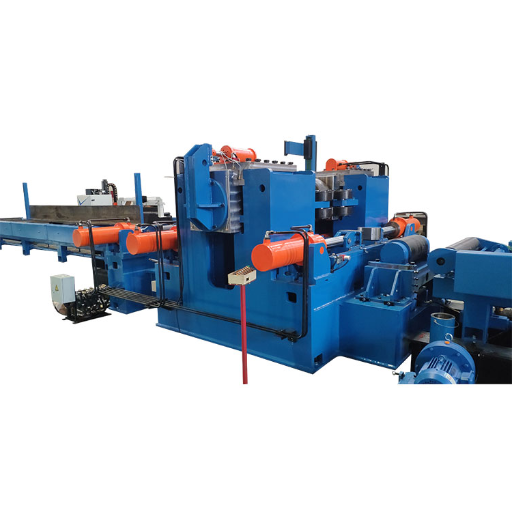
- Material and Size Compatibility: With regard to the H-beams you work on, make sure the machine can handle the type and size of material. Evaluate whether it can accommodate varying degrees of flange thickness.
- Performance and Precision: Make sure the machine has high-performance metrics, including straightening accuracy and repeated-operational dependability.
- Durability and Build Quality: Seek out machines that incorporate heavy duty materials to enhance the construction quality and prolong their reliability when subjected to rigorous use.
- Operational Efficiency: Simplify training sessions by selecting a machine that offers intuitive controls and autopilots, streamlining guiding features and instruction interface.
- Supplier Reputation: Choose reputable brands or specific suppliers known to provide high quality services and products as well as dependable after sales services.
Key Features to Look for in a Flange Straightening Machine
- Precision: Check straightening accuracy to confirm it is within acceptable parameters.
- Adjustability: Focus on models that are able to accommodate different shapes and sizes of flanges.
- Efficiency: Pick a machine which does not compromise speed or eradicate producing quality work.
- Safety: Protect operators actively engaging with machines by prioritizing quad-rotor devices that rotary-safety embedded protections that are triggered when armed.
- Reliability: Equipment proven to be dependable with very low maintenance needs, or extensive servicing, is best for enduring operation.
Comparing Different Machine Manufacturers
- Reputation: Choose suppliers that have good reviews and tested and verified history for high-quality equipment.
- Product Range: Focus on looking for suppliers with different models for varying applications and requirements.
- Customer Support: Select those noted for good parts accessibility and customer care, including technical help and part accessibility.
- Warranty: Manufacturers with long warranty periods should be selected as they guarantee reliability and protection of investment.
Assessing Supplier Options and After Sales Care
While reviewing the option of suppliers for industrial tools, recent trends and analytics brought the focus onto innovative and sustainable aligned manufacturers. A 2023 IBISWorld report states that sustainable manufacturing enhances customer retention, grouped at an average of 15 percent rising from prior numbers. Adopting IoT (Internet of Things) in equipment has proven to be a major changes differentiator and over 60 percent of dominant suppliers are integrating smart functionalities to better meet operational efficiency.
The after-sales service still matters. In 2023, Statista found that 78% of respondents value timely customer relations support when selecting a provider. Moreover, AI-driven predictive maintenance solutions that reduce downtime by 40% are becoming more commonplace. Such advancements foster customer loyalty and lower costs for companies over time, enhancing profitability.
Taking into account granular details enables buyers to make well-informed and tactical decisions, choosing a supplier that meets both the present benchmarks of the industry as well as the future requirements.
Understanding the Process of H Beam Welding and Its Challenges
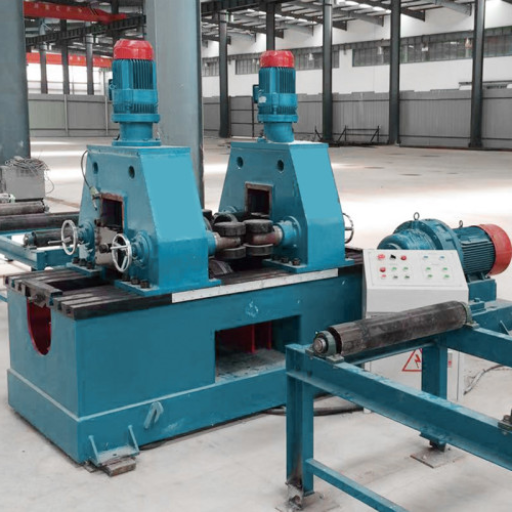
H beam welding entails attaching steel beams for them to serve structural purposes. The work gives rise to challenges that need to be fully addressed for successful execution. Aligned joints, weld joint penetration and deformations caused by heat are some of the more common issues faced within this field. Steps that can be taken in improving precision and reducing structural problems would be strict adherence to controls on the welding techniques employed, use of proper fixtures, and pre-heating relevant parts of the structure.
Steps In Beam Welding
- Preparation: Cleaning beams entails getting rid of rust, dirt, and oil. Preparation plays a vital role in ensuring strong welds are achieved.
- Alignment: Ensure the beams are fixed into position utilizing supports or fixtures designed to sustain the required shape.
- Welding: Maintain the configuration using supports or fixtures. Do not distort the shape using the appropriate MIG, TIG, or arc welding techniques.
- Inspection: The work requires evaluation post and pre welding to enable verification of joint strength, uniformity and dependability.
Common Problems Encountered in Welding Straightening
Rectification of welded distortions involves a sequence of operations that have to be executed with utmost precision. All processes have different phases that require special consideration, whose challenges need to be resolved first. One such challenge is heat contouring. Heat contouring is the kind of distortion that part faces when undergoing excessive heating. There are some materials such as aluminum alloys and stainless steels that undergo deformation due to overheating, because of their heating susceptibility, In estimations, this would impact greatly the accuracy of the project.
Also notable is the fact that contours of a welded part receive a large amount of residual stress after the completion of the welding process. This discrepancy is almost always overlooked which can lead to serious consequences, as recent data suggests that residual stresses are capable of decreasing the weld’s fatigue life by about thirty percent. Stresses experienced during straightening operations need to be considered. For reasons such as these, there is a need for methodologies poised to minimize these residual stresses, and some include post-weld heat treatment and controlled cooling.
Uniform results can be achieved with greater difficulty due to material inconsistencies like width, impurities, or rough textural features. Enhanced materials preparation and quality checks are necessary to mitigate such issues. In real-time monitoring and optimizing during welding straightening, advanced technologies such as laser sensors and thermographic imaging are used and are becoming more common due to their ability to reduce inefficiencies and improve accuracy. Production precision can be increased by up to 25% with these technologies according to 2023 research.
Managing Deform Problems
In my experience, a combination of advanced technology, precise planning, and constant quality checks solves most deform problems. To avoid inconsistency issues, I make sure to check materials beforehand during the welding and straightening process. During processes like welding where changes can occur, laser sensors for real-time monitoring assist in ensuring his changes are made on the spot. Stringent control over heating and cooling rates is also something I emphasize since these elements have a large impact on the end result. Using these strategies have made it easier for me to tackle deform problems.
Integrating H-Beam Straightening Machines in Beam Production Line
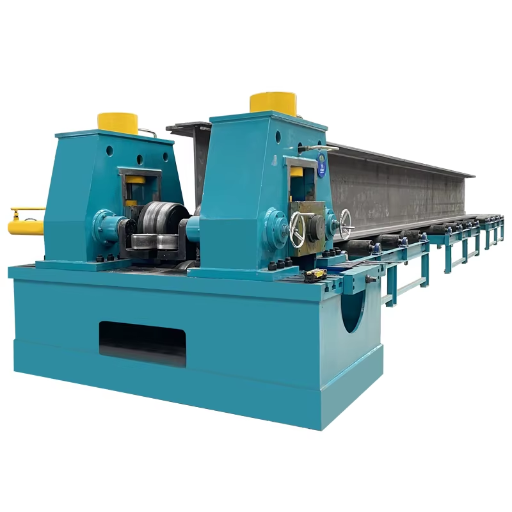
The incorporation of H-beam straightening machines into a beam production line increases both productivity and precision. The machines focus on ensuring consistent weld integrity and shape fidelity by removing any deformation that occurs during the cooling phase. Straightening H-beams automatically improves manual labor, production hold-ups, and the precision of the end product, all of which makes these machines crucial for modern beam manufacturing.
Optimization of The Beam Production Workflow
Optimization of the beam production level involves the application of different cutting edge technologies along with beam production systems in order to improve the efficiency of a generated product. Increased automation accompanied with the implementation of robotics is a large benefit in beam production as it minimizes manual errors as well as the overall cost of labor. For example, automated welding systems are capable of as much as 30 percent improved production without undermining quality benchmarks. In addition to these, CNC machines are instrumental in the accurate cutting and shaping of beams which helps in conserving other materials by nearly twenty percent.
Real time monitoring systems which leverage Internet of Things (IoT) technology to track temperature, alignment, and pressure, serve as crucial optimization aids to the production line. Such systems ensure that these parameters are conservatively maintained within ideal thresholds during the critical manufacturing. Predictive maintenance alerts issued by smart monitoring systems enable manufacturers to reduce equipment downtime by 25-40%.
On the other hand, the application of lean manufacturing improves operational efficiency by eliminating non-value adding processes and alleviating identified bottlenecks within a given production sequence. Operations are enhanced and throughput improved by value stream mapping as well as work-cell optimization. The introduction of tools, machines and other technologies, such as H-beam straightening machines, along with these strategies fosters a desirable production setting capable of satisfying the ever-increasing demand for high-quality structural beams.
Improving The Workflow Of Assembly Welding Through Straightening
A focus on innovation and efficiency is crucial for optimizing the assembly welding and straightening workflows. Efforts within modern industries, semi-automated robotic welding, alongside intelligent straightening technology systems, work towards quality assurance and productivity maximization, streamlining precision in welding and straightening subprocesses. With intelligent straightening systems, application of real-time laser measurement devices helps achieve straightening tolerances essential for maintaining structural integrity. Their performance is further enhanced through Precision Laser Straightening, achieving optimally straight components within specified tolerances.
Application of Lean Manufacturing strategies like Six Sigma and Kaizen can be implemented for continuous improvement of the flow. For instance, an adaptation of the Six Sigma method measures increase in process variability. In a study conducted on the application of Six Sigma into the manufacturing sector, results showed enhanced productivity by an annual 12% to 18%. Through Advanced Planning Software, high scheduling precision works towards allocating resources and minimizing downtime throughout the welding and straightening sequences.
Adoption of Construction 4.0 practices, per data collected in 2023, indicates that AI-enabled systems are being utilized for surveillance, resulting in a 30% increase in productivity for companies. These systems allows for predictive maintenance, meaning they can greatly reduce equipment downtimes of assembly welding and straightening machines by 40%. Output is maximized while maintaining agility in workflows. Incorporating all this enables engineers and construction managers to quickly adapt to changes in modern engineering tasks and their dynamic nature.
Improving Cost-Effectiveness
Focus of many manufacturers has been directed towards improving production lines and overall output. Adopting new technologies such as automation, AI applications, and IIoT is their solution. The McKinsey report mentioned earlier noted the implementation of quality inspection systems to be automated, with AI already reporting up to 90% in the rate of identification and pinpointing defects when compared to manual inspections. This helps in realism and construction of the highest order.
Furthermore, the use of data analytics in realtime along the assembly lines permits proactive decision-making, as earlier noted. As an illustration, embedded IoT sensors can track critical KPI benchmarks and notify operators during performance threshold windows, enabling proactive maintenance. Predictive analytics and IoT solutions can enhance asset utilization by 15–20% and reduce maintenance costs by 20–30%, according to Deloitte.
Workflow optimization software together with value stream mapping tools reinforces lean manufacturing principles and augments overall productivity. Certain companies, like Toyota, have reported up to 40% reductions in lead times using solely lean techniques, enhanced further by digital twin technology for continuous process refinement to better satisfy demand. With these new approaches and technologies, the production process is transformed, giving manufacturers the ability to outmaneuver competitors in the ever-evolving global marketplace.
Reference sources
- Multi-objective optimisation model of H-beam straightening
- Authors: Jing Yin
- Publication Date: July 1, 2018
- Journal: Ironmaking & Steelmaking, Volume 47, Pages 124 – 129
- Key Findings:
- The study presents a multi-objective optimization model aimed at improving the flatness of H-beams while simultaneously reducing residual stress after the straightening process.
- The model establishes a new reduction rule that is automatically predicted based on the initial reduction rule, enhancing the straightening process’s efficiency.
- Methodology:
- The research utilized Matlab programming to calculate deformations and forces under the new reduction rule, verifying the model’s effectiveness through field experiments(Yin, 2018, pp. 124–129).
- Stress-inheriting behavior of H-beam during roller straightening process
- Authors: B. Guan et al.
- Publication Date: June 1, 2017
- Journal: Journal of Materials Processing Technology, Volume 244, Pages 253-272
- Key Findings:
- This paper investigates the stress-inheriting behavior of H-beams during the roller straightening process, providing insights into how residual stresses develop and affect the structural integrity of the beams.
- The findings suggest that understanding these stress patterns is crucial for optimizing the straightening process and ensuring the quality of the final product.
- Methodology:
- The study involved experimental setups to measure stress distribution and deformation in H-beams during the straightening process, supported by finite element analysis to model the behavior under various conditions(Guan et al., 2017, pp. 253–272).
- Research on plastic deformation linear decrease straightening theory based on large deformation theory
- Authors: Niu Qiang
- Publication Date: 2013
- Journal: Heavy Machinery
- Key Findings:
- The research focuses on the theory of plastic deformation in the context of straightening H-beams, proposing a linear decrease model for the straightening process.
- It emphasizes the importance of precise regulation settings to achieve effective straightening outcomes.
- Methodology:
- The study employed computational methods to simulate the straightening process, analyzing the effects of various parameters on the deformation behavior of H-beams(Qiang, 2013).
- Top Heavy-Duty H Beam Production Line Manufacturers and Suppliers in China
Frequently Asked Questions (FAQs)
Q: Why is there a need to straighten H beams?
A: H beams are straightened because they undergo deformation during welding and fabrication. They are critical components in any construction, which makes them difficult to manufacture. Beams are subjected to a lot of stress, thus very precise calibration is necessary in order for them to function optimally.
Q: In what other areas is beam straightening applied?
A: Apart from industrial domains such as fabrication shops, construction sites, manufacturing plants and welding shops, beam straightening can also be applied in machine shops and educational institutions as a form of technology and engineering teaching aid.
Q: Who can design and manufacture these types of machines?
A: Design and manufacture an H beam straightening machine fabrication experts or welding machine engineers. Educational institutions capable of teaching machine design, welding or mechanical engineering are also able to come up with a prototype.
Q: Is it possible to apply a steel straightening machine to light steel structures?
A: A light steel structure can indeed be processed with a steel straightening machine. Such machines are designed to provide correction to steel beams, regardless of their size or weight, and therefore, even lighter structures receive precise straightening to ensure proper assembly and integrity.
Q: In what ways does beam assembly modify the application of an H beam straightening machine?
A: Beam assembly, as typically performed, contains welding and other processes that may distort the beams. An H beam straightening machine corrects these deformations and helps the assembled beams to function as designed with the integrated steel structure, maintaining its stability.
Q: How are beam welding lines important in relation to straightening operations?
A: In straightening procedures, beam welding lines of concern are significant because of their potential distortion due to welding. Recognizing these lines facilitates estimation in focus areas and enhancements in straightening actions, thus precision and quality of the structure improves significantly.
Q: Can you name some top manufacturers of the cutting machines designed to work with straightening machines?
A: Some top manufacturers are Jinfeng which focus on manufacturing cutting machines that are designed for which straightening operations. These machines serve an important purpose for beams before assembling and straightening as they ensure correct angle and position.
Q: Why is the steel flange important concerning the H beam straightening machine?
A: The steel flange is an important part of an H beam. Also, its positioning and being straight is critical for the integrity of a steel structure. An H beam straightening machine makes sure that the flange is straightened adequately which eliminates weaknesses on the structure.


