
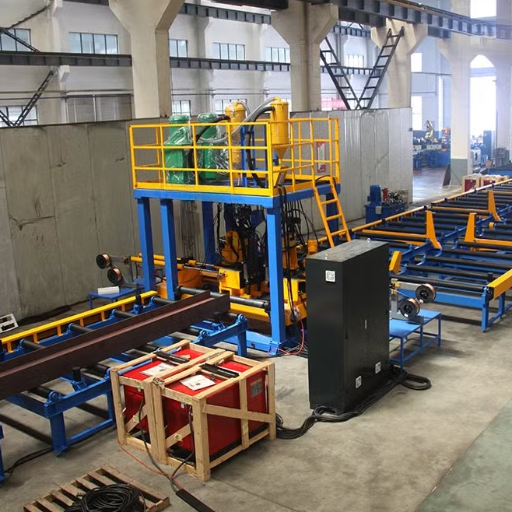
Streamlined efficiency is the heartbeat of contemporary industry, and nowhere is this more prominent than in the production of H beams. These essential structural elements are increasingly in demand and are critical components across multiple sectors including construction and shipbuilding. Optimizing the manufacturing process to ensure high productivity while maintaining quality standards is quite a conundrum. This article uncovers the intricacies of H beam horizontal production lines with a focus on boosting productivity while providing in-depth expert insights and actionable recommendations to enhance operations. Whether you are an industry veteran aiming to polish your production line or an enthusiast interested in cutting-edge industrial technology, this piece has the information you need to gain an edge in modern competition.
What is an H Beam Horizontal Production Line?
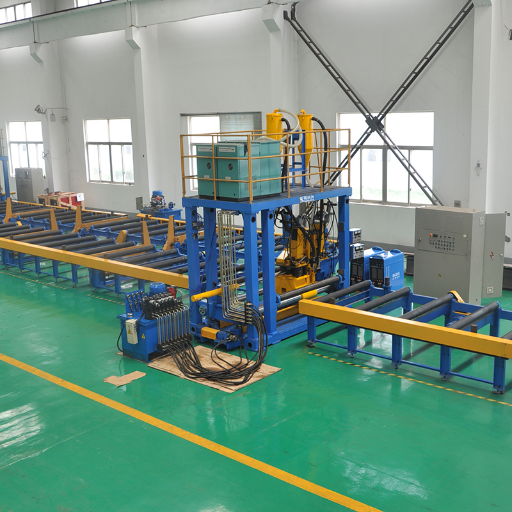
An H beam horizontal production line is categorized as a modern industrial technology created for the efficient production of H Beams. Automated production lines with horizontal arrangement and a separate workstation for assembly, welding, straightening and finishing work enhance accuracy, speed and reduce manual work.
An Overview of H Beam Production Line
H Beam horizontal production line is an advanced protected system that focuses on elaborating critical parts of construction such as H shaped beams, which are often used in building bridges, buildings and other substantial infrastructure. The system also revolves around incorporating important aspects such as high speed welding, automatic assembly and automatic straightening as part of the major steps in production.
CNC controlled beam production lines feature automation enabling computer precision in the dimensions and even change the size of the beam depending on the beam project. Numerous modern production line updates have resulted in over 1.2 meters per minute welding speeds. Advanced GMAW (Gas Metal Arc Welding) adopted as part of the newest lines improve the weld quality and defect rate.
According to industry reports an optimized H beam production line can slash labor costs by as much as 30% and enhance overall productivity by as much as 50% relative to traditional methods. For example, an automated production line typically yields between 30 and 50 tons of H beams daily, contingent upon the machinery used and its arrangement.
The growing need in H beam lines is attributed to rapid infrastructure development globally. These systems are quickly becoming critical components in large scale steel the steel fabrication owing to their ensured quality, faster turnaround time, increased levels of precision engineering, automation, and enhanced speed.
The Contribution of Automation in H Beams Production
The steel fabrication sector has experienced a complete facelift owing to automation, and its effects on the H beam production are noteworthy. Enhanced production efficiency stems from the incorporation of new technologies like robotics and CNC systems along with real time systems. Due to automation, modern facilities now have the ability to operate at a staggering capacity of over 100 tons a day. This is a substantial leap from older techniques.
The adoption of automation in H beam production greatly increases precision, thereby reducing waste. Advanced planning software aids in cutting and welding to optimize for resource use. Moreover, the enhanced precision trimming of automated systems reduces unnecessary spending on manufacturing processes while simultaneously aligning towards eco-friendly methodologies in construction.
On top of reduced costs and eco-sensitive trims, human error is reduced via automation, improving output quality consistency. Uniformed output in thousands of units per batch is maintained as component welding is done by sensor-equipped robotic arms. Moreover, operators can modulate production speed, temperature, and alignment in real time providing enhanced oversight to analytics on prep work tuning.
Automation aided construction and enhancement in processes have already been widely adopted and documented by top tier steel manufacturers. For instance, a leading global steel production company documented a 30% increase in throughput and a 25% decrease in production costs post switching to an automated H beam production line. Post-installation of automation systems, companies benefit from built-in features bringing down workplace incidents alongside improving employee safety.
Automation will further improve as technology develops. The incorporation of AI and machine learning will enhance operations, maintenance, and production scheduling. These innovations guarantee that automated H beam production lines are continually maintained and are capable of industrial advancements for increasing global infrastructure project needs.
Key Components of a Horizontal Production Line
A horizontal production line typically includes conveyors, rollers, welding systems, cutting tools, control systems, material feeders, and inspection units.
| Key Point | Parameter |
|---|---|
| Conveyors | Transport |
| Rollers | Support |
| Welding System | Joining |
| Cutting Tools | Shaping |
| Control Systems | Automation |
| Material Feeders | Supply |
| Inspection Unit | Quality |
How Does the H Beam Welding Process Work?
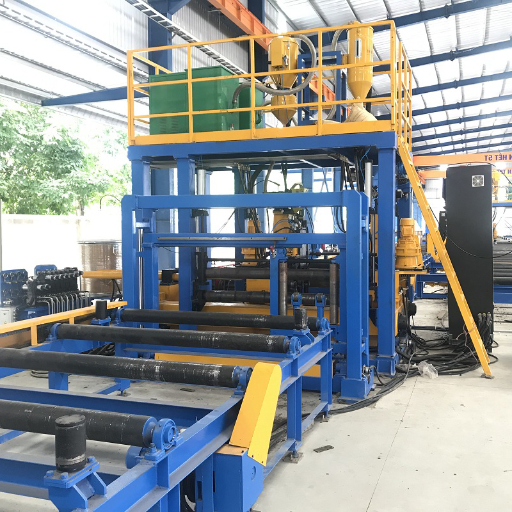
- Material Prepared: Steel plates are fabricated, and their edges are cut to the necessary shape and measurements.
- Assembly: Using bolts and guides, the plates are arranged into an H-shape as with an accurately aligned jigsaw puzzle.
- Welding: The plates are welded along their edges with robotic welding equipment to ensure that the welds are both strong and reliable.
- Inspection: The welds undergo a quality control process and any changes required are performed.
- Finishing: The structure is cleaned and set aside until it is needed or to be shipped.
Features of a Welding Machine for H Beams
- High Precision: Align and weld H beam parts geometrically without any deviation.
- Robust Structure: Strong enough to support the large dimensions and weight of H beams.
- Automatic Operation: Less human intervention during the welding process which saves time and labor.
- Adjustable Welding Speed: Beam dimensions, as well as the specific requirements of the project, can dictate speed.
- Reliable Cooling System: Serves to sustain consistent operation without overheating.
- Quality Assurance Mechanisms: Providing additional control through inspection of strong and defect free welds guarantees the quality.
Significance of Beam Welding Techniques
In the construction or automotive industries, beam welding is one of the most advanced techniques used in structural engineering and fabrication. With the advancements made within beam welding, large and heavy materials can now be joined precisely which was not possible before. Automated beam welding machines are much more efficient as they can achieve welding speeds of 400 inches per minute which is significantly faster compared to traditional methods enabling productivity in construction, automotive, or shipbuilding.
Moreover, improves the integrity of the materials involved by reducing residual stresses and distortions. The American Welding Society has reported that employing beam welding techniques enhances structural strength by over 30 percent. This helps improve the results of construction projects while increasing the long-term durability and safety of infrastructure such as bridges and skyscrapers, or even heavy machinery. This technology aids in consistency and precision which ensures that strict quality benchmarks can be sustained, making it useful across multiple applications.
What Are the Advantages of a Horizontal H Beam Production Line?
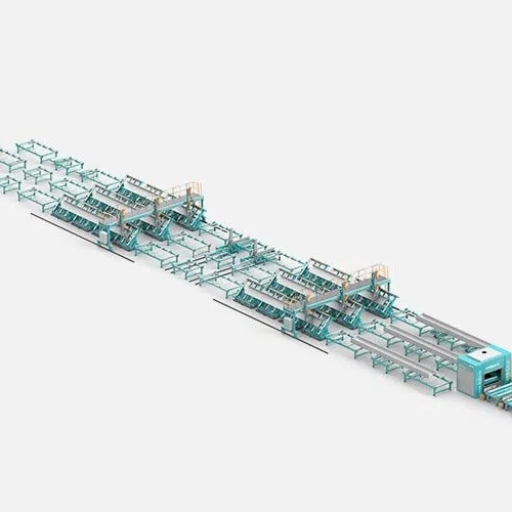
- Productivity: It increases the rate of output by allocating a shorter period of time to production processes.
- Accuracy: The beams have the required measurements and the automated process provides repeatability and uniformity in all beams.
- Labor Costs: Less labor is needed to work on the construction project, which lowers the overall cost.
- Flexibility: Can make different shapes and sizes of H beams for a wide array of construction purposes.
- Maintained Production Standards: Quality benchmarks are established and gaps are nonconformities that undergo corrective action throughout the production process.
Improving Operational Efficiency
Operational efficiency is the most pertinent component that impacts competitiveness in the manufacturing sector. Modern automation systems together with structured monitoring systems and redesigned workflows enable manufacturers to increase output while simultaneously reducing waste and operational costs. Enhanced accuracy and consistent product quality is achieved during H beam automating when modern H beam production lines are employed. Real time data assessment tools identify inefficiencies and help implement prompt corrective actions, thus ensuring all processes are optimized. Regular training sessions for personnel paired with maintenance undertaken for machinery also greatly aid in improving and sustaining production outcomes.
Minimizing Steel Structures Deformation
Deformation as an issue in steel structures can be mitigated with high-end modern engineering technologies. Structural modifications such as upgrading welding procedures and incorporating high-strength steel optimizes deformation risks. Additionally, studies show that critical component pre-stressing improves load distribution and reducing significant load concentration that leads to warping deformation.
The design phase with integrated FEA software allows for predicting deformation with varying loads which improves accuracy. Certain structural simulations show that optimizing beam configurations improves deflection rates by as much as 30% lowering deformation greatly. Furthermore, thermal control methods that maintain consistent temperatures during welding reduce weld-induced residual stresses significantly.
Other large-scale infrastructure projects include skyscrapers and bridges where advanced deformation techniques are implemented for improved durability and stability. With the integration of modern technologies and data-driven insights steel structures performance and resiliency is further enhanced.
Boosting the Speed and Accuracy of Welding
The construction of steel structures has seen improvements in the speed and accuracy of welding operations due to advances in technology. Adoption of laser welding techniques, for instance, is reported to have increased the rate of welding to almost double when compared to arc welding practices. This technology increases the welding speed as well as reduces the excess heat affected zones, thus minimizing distortion of the materials and reinforcing the weld.
Automated systems and AI-powered robotic welders have also improved accuracy and precision. Accuracy of robotic systems is said to be within ±0.1 mm and thus, can perform precision welding with consistent quality. As an illustration, in robotic large-scale manufacturing, these systems boosted output by almost 30% while minimizing errors by operators.
Monitoring technologies such as infrared thermography and real-time laser scanning have become commonplace. Providing instant feedback regarding the quality of welds and real time detection of defects enables these systems to provide instant corrections. Industries are now adopting measures to improve reliability as even a combination of speed, precision, and effective monitoring hinges these objectives.
How Does Welding Automation Improve Productivity?
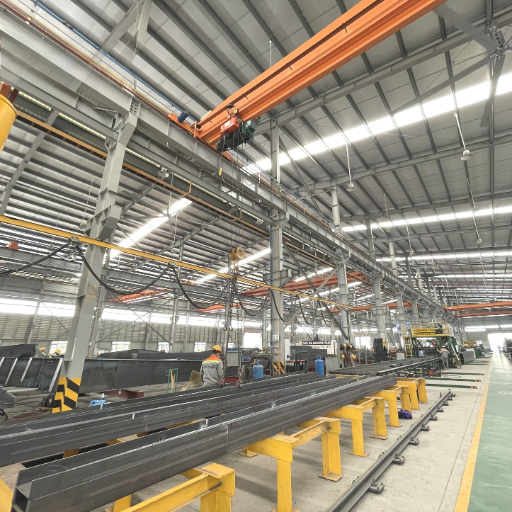
Automation enhances productivity by streamlining the welding process, improving both speed and consistency when compared to manual processes. Unlike humans, automated processes excel at completing repetitive tasks. Automated systems work faster and achieve consistent quality outcomes. This has a positive impact on reducing errors and completing projects faster. Moreover, automation shifts the focus of workers to more intricate tasks, which optimizes the workflow and overall efficiency.
Advantages of Automation in Beam Welding
Welding automation regarding beam welding offers a multitude of benefits which have been documented and tracked over time. Automated welding systems are estimated to increase productivity by 300% than manual processes. This is caused by the high-speed operation, low or no downtime, and low need for human intervention along with the ability to run non-stop. Automated beam welding also provides accuracy which results in a reduction of defect rates by 25-30% ensuring high-quality consistent welds.
One more essential advantage is the reduction of costs. While the initial investment in automation technology may be costly, the long-term savings garnered from decreased labor expenses, less material waste, and lower rework requirements. According to the American Welding Society (AWS), businesses are able to save nearly 50% operational costs after implementing automation in welding processes. Moreover, advanced technology such as realtime monitoring and adaptive welding systems can make adjustments during the processes, which enhances performance even in complicated beam welding.
Additionally, automation enhances safety in the workplace. To a significant degree, it lowers manual welding done in dangerous locations that subjects workers to heat, fumes, and other risk factors. Collectively, these benefits make automation an essential investment for industries seeking beam welding productivity and quality improvements.
Integrating CNC and Hydraulic Systems
The “turning on-and-off” hydraulic beam welding seems to leverage advancements in precision with CNC-Computer Numerically Controlled systems due to the sheer automation precision and efficiency. With CNC, the control provided is unparalleled as it allows the operator to program and execute the beam welding with great accuracy. As per report, the entire CNC machinery market is expected to reach a whopping 117.65 billion by 2030 growing at a CAGR of 5.5% from 2023 to 2030. This tells about how more and more sectors are adopting the usage of CNC technologies and it’s a matter of time the welding sectors catch on too.
Moreover, the advanced hydraulic systems augment the efficiency of beam welding to a whole new level. Heavy materials require extreme automation to handle them. These systems offer controlled movement and force which smoothens the handling of heavy materials during the welding process. For instance, modern hydraulic mechanisms apply precise clamping forces which help prevent warping while ensuring weld uniformity. Industry data suggests hydraulic equipment market is growing consistently, boasting it’s manufactured and construction applications.
The combination of CNC and hydraulic systems automates processes and eliminates mistakes, manages resources more efficiently, and enhances productivity within industrial environments. These systems assist industries in coping with the demand for superior-grade welding capabilities in the automotive, aerospace, and infrastructure sectors that prioritize exactness and reliability.
Impact on Production Line Efficiency
Both CNC and hydraulic technologies worked together to improve the production line in a positive way. A recent study showed that with the use of CNC systems, productivity could be boosted by 25-30% in certain manufacturing areas. Moreover, new hydraulic systems that include energy-saving features are said to decrease energy use by 20% in construction and heavy machinery industries.
As noted in Year 2023 reports from Market Research Future, the CAD/CAM furniture industry saw wide acceptance, with the CNC machinery market expected to expand at a Compound Annual Growth Rate (CAGR) of 5.5% until 2030. In another grace projection, the hydraulic equipment market is expected to increase to over $50 billion by 2027 which showcases the growing adoption in construction and manufacturing sectors. Such technologies are indispensable for manufacturers striving for upkeep in modern industrial competition because they lower downtime, enhance safety in the workplace, and enable scaling.
What Equipment is Essential for an H Beam Welding Line?
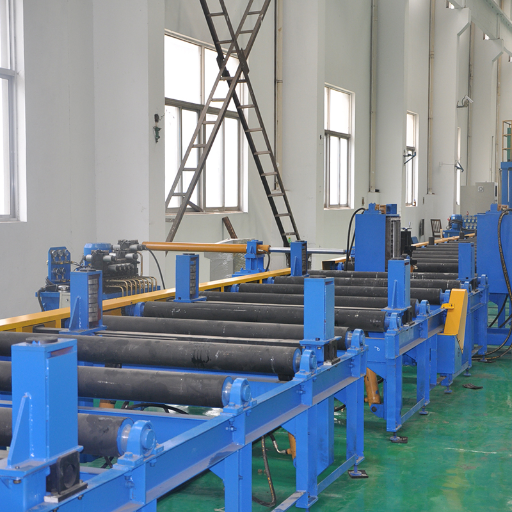
- H Beam Assembly Machine – Carefully aligns and tacks the parts of the H beam together.
- Welding Machine – It automatically welds both sides of the H beam to enhance efficiency and consistency.
- Straightening Machine – Removes the H beam’s distortions that were welded in so as to keep its geometry as close to the intended form.
- Conveyor System – Moves the materials from one workstation to another in the welding line without any interruptions.
- Control System – Oversees the automation of all processes along the entire line and integrates them into a coordinated system.
The Role of the Assembly Machine
Moderate assembly machines are usually equipped with advanced hydraulic systems with precise control devices. Such machines take different sizes of beams and adjust to configurations with minimal manual effort, thus maximizing productivity. In recent times, such machines have been developed with greater features to conform to modern industrial automation technology. They also hold accuracy in alignment to within ±0.5mm. This increases the welding quality and lowers the waste of materials significantly.Moreover, smart sensors and real-time monitoring systems have been incorporated into assembly machines, giving operators the ability to monitor alignment, speed, and error rates. Such advanced assembly machines can enhance production efficiency by 20 percent while maintaining quality standards, as noted in industry report studies. High precision and automation guarantees that all aspects of the welding sequence are flawlessly executed, satisfying the requirements of mass production environments.
The Advantages of a CNC Cutting Machine
With a CNC cutting machine, I am able to achieve extremely high levels of accuracy and consistency in fabrication tasks. Due to its programmable features, complicated designs and accurate cuts can be done faster, cutting down on material costs and time. Even during busy schedules, it streamlines difficult tasks, allowing for quickly produced high-quality work that meets strict deadlines.
Roles of the Beam Welding Machine
The beam welding machine is among the most advanced tools in the manufacturing system which involves precise and rapid joining of materials, especially with metals. It incorporates a laser or an electron beam that focuses energy to get deep welds and strong joints even in intricate units. From the last studies, it is seen that substances used in automotive and aerospace beams and lasers can achieve welding speeds of 20 meters per minute for thin parts. Furthermore, electron beam welding is known for its great depth of penetration by being able to weld 150 mm thick steel with little distortion.
These machines have dissimilar material and complex geometric capability which increases adaptability with production and design. Current sophisticated beam welding units come with real-time quality control systems and AI-powered changes for weld monitoring that guarantee proper quality and minimal rework. Adopting this technology helps manufacturers to greatly increase productivity while decreasing costs at the same time sustaining high-level precision.
Reference sources
- Product Line Feature Typing: Identifying Complexity and Assisting Product Line Development – This document discusses product line features and their complexities, which may provide insights into production line methodologies.
- Moly99 Production Facility: Report on Beamline Components, Requirements, Costs – This report covers beamline components and design considerations, including horizontal and vertical dimensions for production facilities.
- Beamline Design for High Power Radioisotope Production Facility – This paper details beamline design for production facilities, focusing on control and monitoring of beam parameters.
- Top H Beam Production Line Manufacturer and Supplier in China
Frequently Asked Questions (FAQs)
Q: What is an H-beam production line?
A: An H-beam production line is a technology that integrates various operations for the formation of H-beams, which includes welding and assembling components like flanges and beams. With the help of many processes and machines, H-beams are produced in required shapes and sizes.
Q: How does a horizontal H-beam welding line work?
A: Horizontal H-beam welding lines have horizontal positioned H-beams during the welding processes. Complementarily to reduce deformation of beams due to welding heat, horizontal positioning H-beams during the welding aids in enhanced well formed welding seams improving the quality of beams.
Q: What is the purpose of the assembling machine in an H-beam production line?
A: The purpose of setting up the assembling machine in H-beam production line is to automate the assembly and welding of different parts of the H-beam such as flange and web. This is important since the machine ensures proper alignment of all components before welding in order to enhance the structural reliability of the component.
Q: Why is spot welding important in the H-beam production process?
A: Spot welding is critical in the H-beam production process as it aids in temporarily fastening parts like the flange to the center peg before complete welding takes place. This method is necessary so that spot welding can be done to achieve accuracy and hold tight during the finish welding.
Q: What role does the overturning machine play in the production line?
A: The overturning machine in the production line of H-beams is employed in turning the beams over during the welding operation. This equipment facilitates work from different sides of the beam which is important for even welding and minimizing the welding deformation.
Q: How can an automatic H-beam production line improve efficiency?
A: An automatic H-beam production line improves efficiency by doing multiple work functions such as welding, assembling, and even material handling of the completed work pieces which enhances the productivity. Such automation improves the speeding rate of the weld, eliminates manual work and mistakes done by an operator, and ensures continuity in production.
Q: In the H-beam production line what does the blasting machine do?
A: The surface cleaning of the beams by blasting machines removes rust and impurities on the beams in an H beam production line. This step in removing rust and grime enhances the subsequent painting or coating application by ensuring optimal surface adhesion for protective layers that will be added later.
Q: Can you explain the role of the front welding machine It the H-beam production process?
A: The primary responsibility of the front weld machine in the H-beam production line is to perform the first weld on the beam parts like flange and web. This machine guarantees the quality of the weld seams and the integrity of the basic beam structure.
Q: What is done in H-beam production to prevent excessive welding heat from causing distortion?
A: Within H-beam production, prevention of distortion due to welding heat is addressed with horizontal welding, careful control of weld and feed speeds, as well as the use of overturning machines. All of these techniques contribute to preserving the shape and balance of the beam.
Q: Why is the beam end important in the process of producing H-beams?
A: The ends of the beam are especially critical in the H-beam manufacturing process because they require precise shaping during the welding procedure to maintain the structural rigidity and integrity of the construction within the whole building. To avoid possible weak points in the H-beam, sufficient care is provided to the assembly and welding sequences of the beam ends.


