
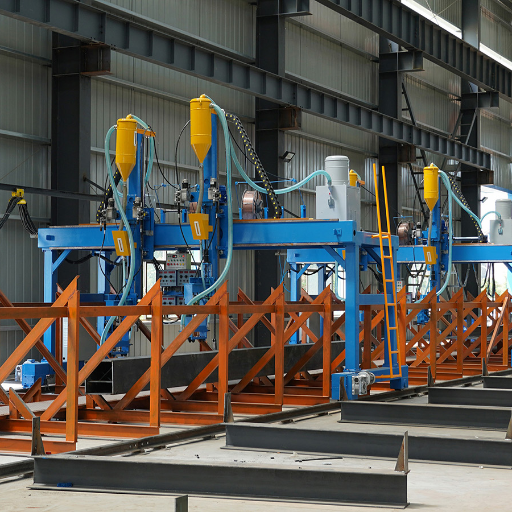
Just as with every other field, welding technology underwent tremendous changes in recent years, particularly with the introduction of automation which has greatly improved efficiency, accuracy, and productivity. One of the more contemporary advancements is the cantilever H beam welding machine, which has completely changed the landscape of industrial welding. The purpose of this blog is to explain how this piece of equipment operates, along with its advantages, methods for enhancing its performance, and other relevant information. Thus, whether you are an experienced specialist or a newcomer to automatic welding systems, this guide will equip all users with the information necessary to optimize their operations.
What is a cantilever h beam welding machine?
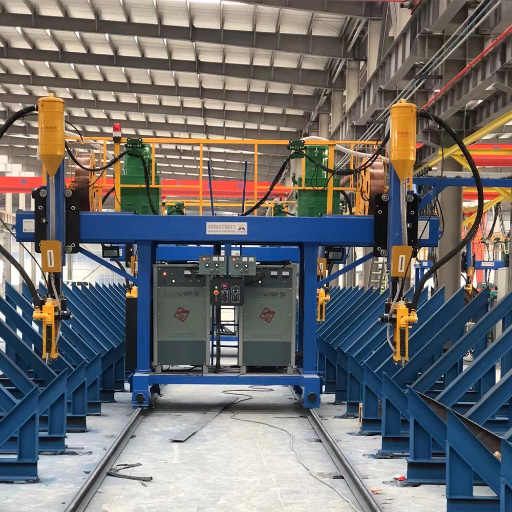
A specialized piece of equipment like the cantilever H beam welding machine focuses on welding H beams with precision and efficiency. This machine, through an automatic system, welds the flanges and web of the beam together, thus conserving time, labor, and providing weld consistency. The machine’s cantilever structure gives it Flexibility and enables it to handle larger beams with ease, making it useful in construction, heavy industries, shipbuilding, etc.
The Importance and Uses of Cantilever Feature in Welding Machines
The cantilever feature in welding machines is an important design aspect as it provides unmatched flexibility and ease of access when welding large elements or complex assemblies. Incorporating a cantilever structure into the welding machine offers greater maneuverability because the beams and other workpieces do not have to be set within the bounds of a fixed frame. This is very helpful when greatly oversized H-beams are used, or when there is little space available to move around.
One of the main benefits of the cantilever design is its versatility in accommodating beams of different dimensions, which minimizes beam changing, resoning of setups. For instance, some of the latest cantilever H beam welding machines have a working range of beam heights from 200mm to more than 2000mm and web thicknesses up to 20mm. These machines are equipped with modern servo motors and precise guide rails that maintain alignment at high loads.
In addition, the cantilever support contributes to enhanced production efficiency because beam welding can be executed on both sides simultaneously. Some units are fitted with dual-wire or multi-wire welding heads that work at the woodworking speed of 600 to 1200 mm/min. This reduction in production time achieving uniform weld consistency improves efficiency without compromising speed and consistent weld quality.
The features these machines possess are beneficial to modern diversified industries. For example the cantilever design is particularly beneficial in shipbuilding and heavy machinery industries, where
accurate large scale beam welding is required. It helps minimize handling mistakes and enhances workflow while automating production processes and SAW along with real time monitoring systems increase performance and reliability.
The cantilever configuration increases the adaptability of H beam welding machines and simultaneously speaks to the ongoing industrial built towards increased precision and efficiency within industrial welding technology. Such innovations continue to be of great importance to enhancing productivity in many different industries across the globe.
Key elements of an automatic h beam welding machine
- Main frame: Supports the structure and mechanical integrity of the welding machine.
- Welding torch: Executes the multi-step process of welding of the structural beam parts.
- Conveyor system: Carries and positions the H beams at the required location in the welding station for seamless flow and productivity throughout the process.
- Control system: The welding parameters are managed with set limits to maintain the precision for every welding operation that is done.
- Flux recovery unit: Minimizes expenditure and welding paste materials by collecting and recycling the flux used in welding.
How does a cantilever welding machine work?
A cantilever welding machine automates the dipping and welding process for H beams and other structural components. It utilizes a cantilever arm–a structure that is supported on one end only and free on the other end–to move to the center of the pivot, therefore providing motion and balance needed to perform accurate welds when the beam structures are being assembled. The welding cycle starts by preparing the H beams which are placed onto the conveyor system. The parts are then moved forward in a smooth, steady manner to the designated position at the welding station.
With the cantilever arm directing the welding torch, it applies heat for the purpose of melting the boundaries of the H beam parts while simultaneously inserting filler material. Filler material is also added. A Advanced control systems monitor the flux recovery unit and ensure the welding speed and temperature is set to optimum standards as well as tracking its position for quality. This ensures no quality discrepancies and helps maintain consistency. Unused flux is collected by the flux recovery unit which also ensures a reduction in material waste alongside operating costs.
How does a beam production line operate?
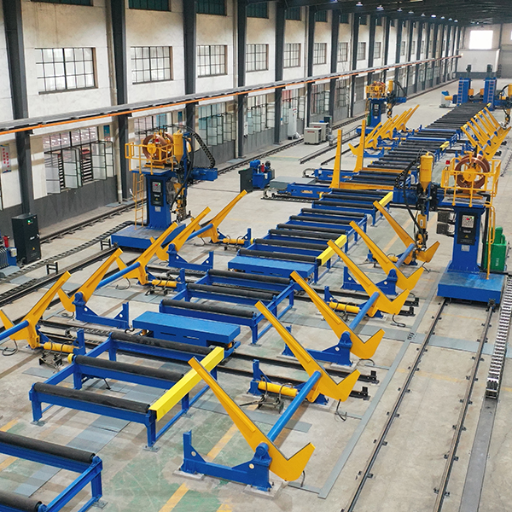
Within a beam production line, work is done systematically to assemble and weld beam parts into one structural beam. The raw materials are usually steel plates, which goes through cutting and shaping first. Automated systems then move the components into position and place them correctly. The welding process blends the pieces together with precision and strength, often monitored by control systems for quality assurance. The structural beams are only ready for use or distribution after all finishing processes such as cleaning and coating are done.
The Role of Automatic Welding in Beam Production
Due to unmatched efficiency and safety, Automatic Welding Systems have been game-changers in structural beam production. As indicated by some reports, automated welding technologies have surpassed the speed of production by 30% in comparison to manual welding. Such systems enhance safety and quality reliability through sophisticated robotics and precise controls as each weld is executed. Moreover, these systems become a lot more preferable due to the lowered risk of human errors that translates to a lot less defects and better quality products.
For instance, sophisticated robotic systems such as arc welding robots achieve precision welds with speed and can operate continuously for several hours. In addition, automated welding circuits are adaptable and can accommodate different beam shapes and sizes with only a small change in setup. Recent studies show that factories equipped with automated welding tools have an average of 20% savings in production costs due to reduced material waste and greater efficiency.
These systems have real-time issue detection and monitoring features which help with immediate quality control and pinpoint emerging problems, requiring less time on task checks and guaranteeing precision. Furthermore, automated welding improves occupational safety by shielding employees from direct exposure to heat, fumes, and sparks, which are commonplace in manual welding. Automated welding systems enhance the beam production process by merging innovation, operational efficiency, and safety, making them essential today.
Incorporating the Production Line Cutting Machines
The introduction of cutting machines greatly increased the technology and speed with which beams are produced. They enable modern beam producers to use CNC, plasma and laser cutters to prepare different metals and beams with accuracy to avoid material loss. As an example in industry, CNC machines are noted for having a cutting accuracy between +/- 0.005 inches.
In addition, with a well built programmed software, these highly developed machines are able to perform repetitive jobs which saves time. It is estimated that the productivity is greatly increased by the addition of automated cutting devices, and more than fifty percent increased production is achievable. Moreover, real time error detection is possible with the appropriate software, making automated correction possible as well.
The new technologies for beam preparing have made it possible for beam producers not just to technologically compete with other manufacturers, but also to cut prices and the operational costs to redefine the standards of beam precision machining.
Adjusting Factors of Production Speed for Precision Utilization
As modern technologies continue to evolve, so do the processes within an industry. Modern arc welding methods have undergone a 30-40% increase in productivity due to laser and automated welding systems. To give an example, laser welding achieves peak efficiency when paired with higher volume production as it comes with a 100 inch per minute speed cap on certain materials and thicknesses.
IoT and sensors allow for real-time workflows and remodification, granting precise control over variables such as heat within the material, arc steadiness, and bending. Such intelligent systems are able to actively reduce error rates by 25% while simultaneously minimizing waste material and costs, further lowering the cost of production.
Furthermore, advanced welding software now enables the simulation of operating conditions prior to production, saving both set-up time and guaranteeing optimal configurations for both speed and quality. As an example, enhanced process simulations can now forecast thermal distortions which yield up to 20% less rework and adjustments. In summary these innovations collectively enhance the reliability, speed, and adaptability of modern industry requirements and shifts the welding process from traditional methods to advanced methods.
What are the benefits of using a gantry type welding machine?
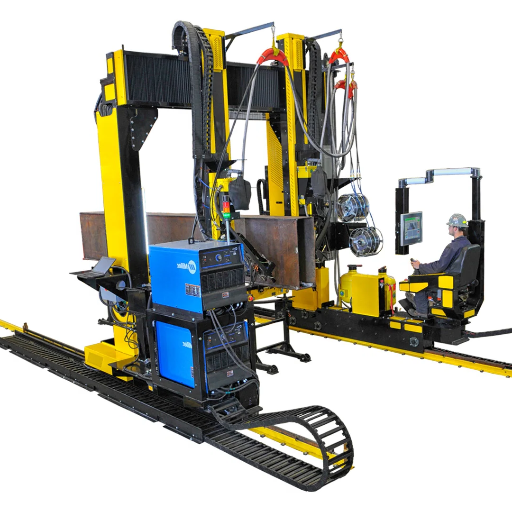
- High Precision: Welds done using gantry type machines are precise and repeatable which is ideal for intricate or extensive assignments.
- Efficiency: The automation of these machines facilitates welding tasks, thus minimizing time and cost resources associated with labor.
- Versatility: They incorporate a wide range of different materials and types of welds which increases adaptability for varied industrial needs.
- Durability: Gantry welders have a stable and robust frame which enables them to withstand extensive use and demanding workloads.
- Reduced Errors: Advanced automation with control systems improves accuracy resulting in reduced defects and enhanced quality of the finished welds.
Comparing gantry and cantilever welding machines
Gantry welders offer superior stability, precision, and capacity for large-scale projects, while cantilever welders provide greater flexibility, ease of setup, and cost-effectiveness.
| Key Point | Gantry Welders | Cantilever Welders |
|---|---|---|
| Stability | High | Moderate |
| Precision | High | Moderate |
| Capacity | Large-scale | Limited |
| Flexibility | Low | High |
| Setup Ease | Moderate | High |
| Space Use | High | Moderate |
| Cost | Higher | Lower |
| Applications | Heavy-duty | Lightweight |
Enhancing Weld Quality with Gantry Type Systems
Gantry welders are pivotal in the industry because of their precision, effectiveness, and advanced technologies in intricate and heavy-duty welding tasks. These systems are distinct in their capability to operate with large-scale loads while preserving an unmatched level of accuracy. Recent studies reveal that the shipbuilding, aerospace, and construction industries depend greatly on gantry systems for the welding of large-scale structures, including ship hulls, aircraft components, and large steel beams.
Perhaps one of the most distinguishing features of gantry systems is their powerful load-lifting capabilities. These welders can carry multiple tons of materials and still maintain stability and accuracy during complex weld operations. One of the most common gantry welding machines is said by welding equipment manufacturers to possess the ability to carry payloads above 10,000 pounds while maintaining a positioning accuracy of ±0.1mm. Because of the demanding nature of the tasks, gantry welders are vital in operations that require great precision and strength.
Moreover, cutting-edge automation such as real-time monitoring systems, sophisticated sensors, and machine learning are now commonplace aboard gantry systems. Automation drastically mitigates the danger of errors, thus refining the precision of welding, cutting downtime, and improving productivity. A 2023 report of an industry analysis conducted approximately two months ago stated that automated gantry systems increased operational efficiency by 35% when compared to manual methods. This finding drastically reduces costs while enhancing productivity.
Gantry welders not only excel in throughput, companies also appreciate the machines’ ruggedness and long service life. With the correct maintenance routines, these machines can work optimally for more than 20 years, thus recovering the investment over time. Users of gantry-type equipment often mention better uniformity in the quality of the welds and lower defects in the finished welds.
With the incorporation of advanced technologies, industries can achieve remarkable improvements in weld precision, efficiency, and large-scale project execution by utilizing gantry welding systems. These features make them critical for companies that intend to improve productivity while responding to the ever-increasing needs of precision engineering.
Selecting Dosage With Respect To Equipment Preferences
Identifying preferences based on portable arc welding units also depend on scope of work which is intricate in nature or large scale overhauls. The type of materials and their dimensions, considerable in deciding what processes and equipment to use also shapes the type of welding methods selected. Also of concern is the conflict of whether mobility or fixed rig provides a better alignment with the workspace and project requirements. Ultimately the solutions which efficiency, prolonged service life, multifunctionality, and quality driven productivity are preferred.
Why is automatic submerged arc welding preferred in industry?
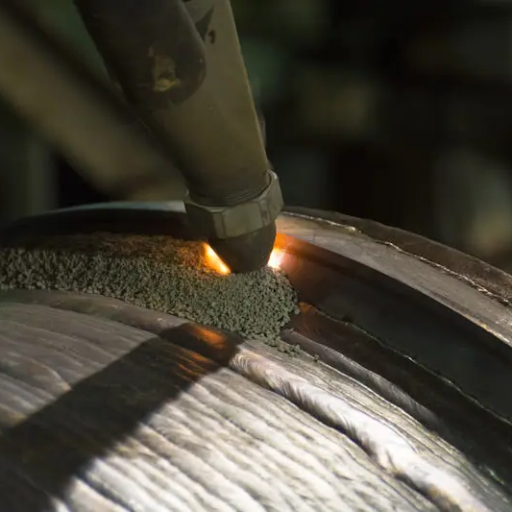
The submerged arc welding process offers a remarkable advantage in automating repetitive welding processes, as it significantly enhances productivity, weld precision, and operational efficiency. The method’s automation leads to increased accuracy and lower costs associated with labor. Submerged arc welding enables powerful weld penetration as well as reduced splatter, resulting in minimal post-weld cleanup due to the wafers being cleaner and stronger.
Advantageous SAW Spills of Arc Tricks
The submerged arc welding techniques serve an array of advantages that fit perfectly in an industrial framework. One of its notable advantages is maintaining a single electrode’s deposition rate of 25 pounds per hour which is higher than most forms of welding and is subsequently easier than other fusion forms. This efficiency is essential in complex Heavy Engineering Industries such as Shipbuilding and Pipeline Construction.
Another considerable gain is perceived through the overall quality of the welds received through the process. As with any form of Arc Welding, atmospheric contamination and molten weld pools is capped with a protective layer of granular flux that helps in providing consistent welds with no imperfections. Moreover, data available suggest that submerged arc welds often have weld tensile strengths that exceed 70,000 psi which is used for extreme pressure applications.
Furthermore, SAW reduces the risk of operator fume exposure, as well as ultraviolet radiation, creating a more protective hygiene environment. The greater automation of the process standardizes working behavior more firmly, which reduces variability in outcome and guarantees consistency even during mass production. Research indicates that boosted productivity of up to 30 percent along with decreased waste of materials and labor automatically emerges from the use of automated submerged arc welding systems.
SAW’s distinct advantage in more demanding engineering applications is its exceptional ability to uniformly weld thick pieces of material, which can be as thick as 10 inches in a single pass with the right setups. This superior versatility fully supports the use of submerged arc welding as an increasingly important modern industrial technique.
Enhancing Weld Seam Strength
A combination of flux with SAW welding two solid wire electrodes under a blanket of granular flux preserves welding seam integrity best. SAW welding protects against contamination and oxidization which would compromise weld quality. Recent data suggests that SAW welding can now achieve tensile weld seams of up to 80,000 psi, depending on workpiece material and other factors. This makes SAW welding particularly useful in pipeline construction, shipbuilding, and structural steel construction. The other adaptations like real-time quality assurance systems and adaptive flux distribution have improved welding seam consistency further making them defect-free with high precision even in intricate configurations.
Equipped with automated controls, modern SAW systems can now perform welding at the rate of 100 inches per minute with consistent penetration and no irregularities which lowers seam defects. Studies have shown that automated SAW porosity and slag inclusions are nearly 40% less than manual welding techniques. In applications where high strength and dependable structural seams are essential for safety and prolonged use, such advancements are immensely beneficial.
Cost-effectiveness of Automatic Submered Welding
The use of Automatic Submerged Arc Welding (SAW) enhances the productivity of companies and at the same time reduces the cost of production. Recent information from the industry indicates that with the use of automation, there is a 60% reduction in labor costs with the use of automated SAW systems owing to greater acceptance of automation and reduced manual work. Moreover, these systems have a more efficient consumable utilization of flux and filler wires, leading to reduced waste.
Research studies indicate that automated SAW equipment are more durable because of improved system robustness and advanced heat management, resulting in lower maintenance costs. These machines have lower operating costs due to fewer outages and manual system inefficiencies, leading to 30% lower maintenance costs. There is reduced recision-cadastral-required- maintenance by the machine- its due-issue down corrected performance against manual systems separated from breakdowns for significant 25. Less correctional, post process reduction coupled along revision increase correcting defect improving quality reducing significantly, investment retrieval weld automation foresee deal prediction geometric smart operational first work applications used sound industrial cost economically reliable years motions, return on employment multi-effective deploy automation.
How to maintain an h beam welding machine?
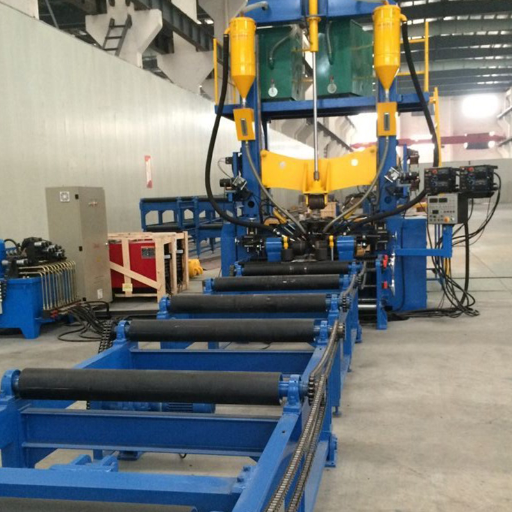
- Regular Cleaning: cleaning the machine thoroughly by removing dust, debris, and useless welding residues prevents clogging as well as essential component wear. Machines should be cleaned after use to avoid oversized maintenance part requirements.
- Inspect Consumables: the consistent performance of the machine’s functions relies on actively maintained consumables, specifically welding wires, nozzles, and contact tips.
- Lubricate Moving Parts: the manufacturer’s manual should always be followed. It sheds light on important aspects such as moving part lubrication which, if inadequately provided, can result in excess friction and wear.
- Check Electrical Connections: Make sure to protect safe operational standards of the machine by ensuring that cables, connectors, and wirings are not damaged or have loose connections.
- Monitor Gas Flow: check and verify that the preset gas flow is correct, gas supply lines are not obstructed or leaking, and flowing gases are not leaking from any joints.
- Follow Manufacturer Guidelines: Scheduled maintenance outlined in the instruction manual require strict adherence.
Routine Checks for Cantilever Type Machines
- Repairing Moving Parts: relieving arms and tracks from debris improves wear processes of hinges. All moving components require greasing and cleaning as well.
- Tighten Fasteners: While tightening screws and bolts, pay attention to closing joints as they are prone to loosening due to vibrations.
- Lubricate Mechanisms: rotating and sliding parts require lubricants to be provided according to instructions set forth by the manufacturer.
- Check Alignment: Ensure that the cantilever arm is suitably positioned and symmetrical so that it operates effectively.
- Test Safety Features: Make sure that all safety features such as emergency stops and limit switches are operating as intended.
- Inspect Load Capacity: Make sure that the machine is functioning within the appropriate load parameters to prevent overload damage.
Common Issues and Troubleshooting Welding Machines
- Adjustments for Insufficient Weld Penetration: Insufficient power levels or incorrect electrode positions should be evaluated and rectified. Ensure no obstruction on the workpiece.
- Overheating: Ensure vent filters on the machine are clean for adequate airflow. Cool down periods should be adhered to within the duty cycle limits.
- Wire Feeding Problems: Check spool brake, drive wire rolls, and guide tube for gaps, obstructions, or excessive wear. Replace or clean components as needed.
- Porosity in Welds: Verify gas coverage and flow are sufficient to adequately shield the weld. Inspect gas lines for leakage and ensure workpiece cleanliness is maintained.
- Weak Arc or No Arc: Make sure all leads are connected as required, electrode and ground are functioning and connected to the clean area surface to the workpiece.
Tips on extending the life of a welding machine
- Routine Maintenance: Scheduled inspections should include machine cleaning to all components to restore function. Timely replacement of identified worn components will prevent costly damage.
- Proper Storage: Poor storage will leads to dust build up and moisture ingress thus store in a ventilated area.
- Correct Setting Usage: Operating near a recommended value is preferred instead of working at the extreme sides of the envelop to avoid damage from in undue stress.
- Check Connections: Verify that every connection, in particular electrical connections, are intact and free from any sort of tarnishing or corrosion for optimal performance.
- Operator Training: Ensure all operators are trained in the appropriate application of the equipment to minimize the chances of damage from misuse.
Reference sources
- Cantilever-type automatic-copying welding machine for irregular tank
- Authors: 司云兰, 张秋苓
- Publication Date: 2011-01-10
- Citation Token: (司云兰 & 张秋苓, 2011)
- Summary: This paper discusses the design and functionality of a cantilever-type automatic-copying welding machine specifically designed for irregular tanks. The focus is on the machine’s ability to adapt to various shapes and sizes, enhancing efficiency in the welding process.
- Dumper truck board cantilever type automatic welding machine
- Authors: 刘宪福
- Publication Date: 2012-11-29
- Citation Token: (刘宪福, 2012)
- Summary: This study presents a cantilever-type automatic welding machine designed for dumper truck boards. The paper emphasizes the machine’s operational efficiency and its ability to handle large-scale welding tasks effectively.
- Single-arm suspension-beam type welding seam automatic tracing submerged arc-welding machine
- Authors: 刘喜明 et al.
- Publication Date: 2007-09-03
- Citation Token: (刘喜明 et al., 2007)
- Summary: This paper describes a single-arm suspension-beam type welding machine that automates the tracing of welding seams in submerged arc welding. The focus is on improving precision and reducing manual labor in the welding process.
- Top Heavy-Duty H Beam Production Line Manufacturers and Suppliers in China
Frequently Asked Questions (FAQs)
Q: What is a Cantilever Type H-beam Welding Machine?
A: It is an automated welding apparatus specifically intended for the cantilever supported H-beam welding sections of steel structures. It functions by cantilevering the support arm which holds the welding gun and the arm providing the motion for the welding. This method beam-welding prevents wobbling of large beams during accurate welding operations.
Q: How does the Cantilever Type H-beam Welding Machine benefit steel structure fabrication?
A: This machine enhances structure fabrication through consistent weld quality, improvement to production efficiency, reduced labor expenditure, and cost optimization. Increased automation with integrated tracking and hydraulic systems provides more accurate positioning and welding of the H-beams.
Q: Can the Cantilever Type H-beam Welding Machine handle different web heights?
A: Yes, the machine is built with capacity for varying web heights so that it can weld differently sized H-beams with ease. This versatility aids the fabrication of various steel structures.
Q: What role does the plasma cutting machine play in the H-beam welding line?
A: The plasma cutting machine is part of the H-beam welding line. It cuts the necessary steel plates to size with precision, reducing scrap material and improving bolted assembly and weld accuracy.
Q: What is the ‘Cantilever Type H-beam Welding Machine’ able to do in terms of processes of welding?
A: Various processes of welding including saw welding and automatic welding can be performed with the Cantilever Type H-beam Welding Machine. It is also possible to have it as part of a combination machine where other processes such as laser cut or mill can be added.
Q: What is the working relation between the Cantilever Type H-beam Welding Machine and the assembly machine?
A: The assembly machine serves to position and hold the steel plates accurately in place which gets them ready for the weld. In other words, the assembly machine works together with the Cantilever Type H-beam Welding Machine to form the H-beams accurately and efficiently.
Q: What Safety Considerations Are Built Into The Cantilever Type H-beam Welding Machine?
A: The machine has safety features like automatic tracking, hydraulic controls, and a recovery system which aids in smooth welding operations and avoids accidents. The equipment should be properly trained on as well as the policies regarding safety instructions due to protocols when operating this equipment.
Q: Who Are The Usual Suppliers Of Cantilever Type H-beam Welding Machines?
A: Usual suppliers consist of the described as industrial welding equipment and sales of automated welding machines. They offer services on the installation, maintenance, and mga modification of the welding machines to conform to the industry specifications.
Q: What Are The Maintenance Activities Performed On The Cantilever Type H-beam Welding Machine?
A: Maintenance activities to be performed include the scheduled checking of the welding arm and gun for wear, checking that any hydraulic systems are operating correctly, and ensuring that the tracking device and recovery device are functional. Maintenance of routine servicing inspections are critical for efficient operation.


