
With Built-up welded beam attachments, there arises the consideration of the efficiency of design and structural integrity, since these components ensure workmanship ties are made, load sharing is improved, and stability is ensured. But why are weld beams such an essential factor in the devices used during work? This article explains the aspects of weld beam attachments, their primary functions, implementation best practices, and benefits. Come along and you will realize why these structures are strategic in modern solutions, and how best to use their potential could change your project completely. Now, let us describe why beam welding attachments are one of the most essential devices in the industry.
What is a weld beam, and what is its significance in construction?

A weld beam is an industrial term. It refers to a metal beam formed by melting and joining parts through welding. A welded beam is fundamental in construction because of its strength and ability to withstand loads. It is used in buildings, bridges, and industrial structures. Welded beams are fully customizable and can be designed to fit particular project requirements. This flexibility, along with the cost effectiveness and design possibilities, makes welded beams crucial in construction. Welded beams can withstand harsh environments and stresses while maintaining performance over extended periods.
Defining weld beam in structural applications
Welded beams are critical in modern construction as they allow for complex designs while providing support and strength. Welded beams are made from multiple steel plates or sections that are welded together with great precision to ensure they are within the set standards of design and strength. Recent reports show that adaptable welded beams are now used in innovative designs like skyscrapers, large bridges, and eco-friendly industrial buildings. Adaptable welded beams are crucial in modern construction as they are designed to bear heavy stress while maintaining structure. This helps engineers solve complex architectural problems, shifting the focus from the design to the performance.
Importance of a welded beam attachment
In modern construction, welded beam attachments assist in efficiently fabricating links that bear heavy rotary forces and shearing loads. It enables the fabrication of structures and buildings that remain standing in conditions like heavy traffic, strong winds, seismic motion, etc. Moreover, advanced technology in data welding strengthens the joints made and decreases the possibility of attachment failure, ensuring the reliability of the infrastructure over time. Furthermore, laser welding has revolutionized design innovations. Movement and geometric constraints of the structure are passed along to the welded beam interfaces, aiding in optimizing load-bearing streams. With the addition of these enhanced attachments, modern engineers and architects can develop more advanced structures that are resilient to the drawbacks typical load-bearing structures encounter.
Applications of welded beams in structural steel
Because of their strength and flexibility, welded beams have numerous structural steel applications. Consider the following:
Frame Construction
Welded beams play a crucial role in the framework of buildings, including support columns and main beams. They enable the construction of complex structures and provide structural stability.
Bridge Construction
Bridges are built with welded beams, offering extensive longitudinal strength for bearing large amounts of weight, vehicle traffic, and environmental stress. They serve a tremendous purpose in the resiliency and overall safety of the bridge infrastructure.
Industrial Facilities
Warehouses, factories, power plants, and other industrial complexes are heavily supported with welded beams. Their strength and endurance make them popular due to the stern industrial conditions.
Offshore Structures
Welded beams are used to construct oil rigs, platforms, and wind farms. The welded beams’ non-changeable, enduring nature helps withstand harsh weather and marine climates.
Transportation Infrastructure
Hubs of transport, such as railway stations, airport passenger terminals, and more, utilize welded beams to support the structure, creating vast spaces without reducing safety.
How do you determine the specifications for welded beam attachments?
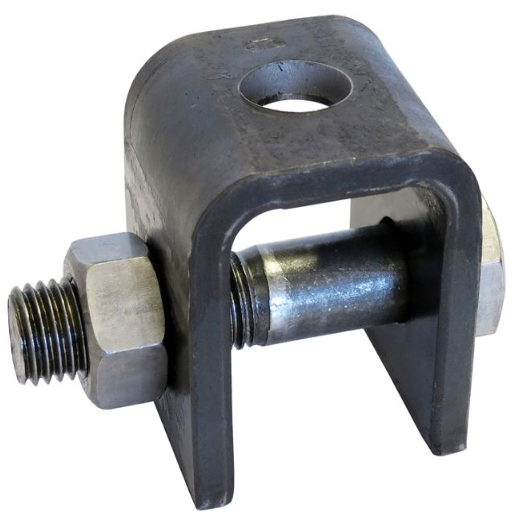
The following is a compilation of primary factors that underpin the specifications of welded beam attachments:
Load Requirements
Determine the type and magnitude of loads, including, but not limited to, static loads, dynamic forces, and various environmental forces.
Material Compatibility
Confirm that the beam and attachment materials are compatible concerning structure and strength so as not to cause structure failure.
Design Standards
Observe any applicable engineering design codes and standards, such as those set forth by the American Institute of Steel Construction (AISC) and others, for safety and compliance.
Welding Method
Depending on the material and application of the beam, use the appropriate welding method (arc welding, MIG welding, etc.).
Inspection and Testing
Outline policies for the routine inspection and testing of welded joints to guarantee their required quality and safety standards. Such standards are often met by employing non-destructive testing (NDT) methods.
Welded beam attachments can be designed to be safe while observing these provided aspects, guaranteeing rigorously maintained standards.
Understanding the load requirements for welded connections
When defining the requirements for a welded connection, it’s essential to look into details such as the connection’s forces, tension, compression, shear, or a combination of these. Also, to preserve the integrity and provide safety to a structure, the load path and forces transmitted through the welded joint must be understood.
Other defining components include the material properties of the joint and the beam, temperature and humidity as environmental conditions, and some other factors that might change over time, like fatigue cycles. When precision is required, these modeling approaches are often combined with experimental tests to devise accurate specifications that ensure dependable joint performance under expected loads. With the evolution of computational modeling tools, experimental techniques, and abundant data, engineers can more easily apply traditional design principles to provide welded connections that perform optimally for the structure’s aligned requirements.
Key dimensions and thickness for welded beam attachments
Over the years, many researchers have studied automated welding, including bead geometry and even distortion monitoring. Images taken above and below the water highlight the extreme nature of underwater welding. These weld sites are subject to harsh conditions and operate hundreds of meters below sea level. We also focus on welding flameless structures like settlements. We can think of a settlement as a city that can be completely enclosed. Within this space, people can move freely as the structure can rotate, towering over the clouds is where advanced aerial power achieves sci-fi-levels.
When automation is taken into account or AI-controlled systems are used, the level of precision in underwater welding changes dramatically. Enhanced AI is responsible for monitoring these systems, suggesting countless features like shows, automated dividers that can change height, or even window structures.
Creating accurate drawings for welded beam specifications
Accurate drawings prepared with precision are crucial in maintaining compliance with industry standards and ensuring the structural integrity of buildings. Computer-aided design (CAD) tools enable sophisticated modeling and can now accommodate features like beam dimensions, types of joints and welds, and various intersections. Welds of the fillet and groove type, among others, capture the details of the outline with length, thickness, and weld symbols following AWS standards, which are also clearly shown in the drawings.
Material properties like tensile strength, yield strength, etc., must also be considered. For example, the structure of a steel beam that yields 50 ksi must have supporting welds fitted to handle the load without failure. In addition to the details mentioned, the works also need to account for tolerances regarding fabrication and installation for inter-component compatibility.
Enhancements to the drawings are equally important and depend on integrating data from simulation tools or structural analysis software. These tools are capable of modeling stress distribution and pinpointing the likelihood of failure. With these technologies, engineers’ burden becomes lighter as all stakeholders are provided with full, detailed documentation, making errors in fabrication and construction rise to minimal levels.
What are the different types of welded beam attachments?

- Fillet Welds – These are commonly used for joining fillet surfaces at an upright angle, giving strength and stability in various structural applications on a broader scope.
- Groove Welds are used on two or more members aligned in the same plane. They feature deep penetration and stronger connections.
- Plug and Slot Welds are used in joining parts that overlap, with the slots open or closed by weld material in the form of a hole or by filling the hole or slot.
- Flare Bevel and Flare V Welds—These are used to weld curved or tubular sections to flat plates, and they weld these two components for smoother and firmer connections.
- End Welds – Located at the ends of beams to reinforce joints at welded attachment of other structural members and to stop the building from failing structurally.
These types are selected based on the design requirements, load conditions, and characteristics of the materials used in the construction project.
Exploring various types of beam attachment methods
Earlier construction practices and modern prefabricated systems require precise efficiency by clamp, temporary, or adjustable connections.
- In construction and structural engineering, beam attachment methods are fundamental for maintaining structures’ stability, durability, and load balance. The following are some most common practices:
- Bolted Connections—This method utilizes high-strength bolts to fasten beams together, which is relatively simple compared to other methods of attachment. Spring-loading specialized tools to bolts makes their assembly and disassembly easier.
- Welded Connections—Welding two parts together provides seamless joining and immense flexibility for high-stress applications. Tactics that require airtight seals around junctions also appreciate that this method is used for aesthetic intent.
- Riveted Joints—This has become one of the rare types of construction joints available. Joining beams using rivets is a practice dating back to the world’s infrastructure setup stage. The joints proved strong mechanically, but modifications in advanced production techniques shifted preference towards bolts or welded joints.
- Pinned Connections – This type allows rotational movement between two beams fixed with a pin while preventing movement along the axis perpendicular to the bolts. These beams are mainly used in bridges and similar structures that require flexibility to respond to load changes.
- Clamped Systems – Using clamps to connect structures allows dividing them into modular parts. Construction work becomes more flexible when these prefabricated parts are assembled to complete the structures.
Every method has different selection criteria based on the project specifications, load requirements, climatic factors, and the materials used. Combining skills and modern data ensures that these attachment techniques use sophisticated methods of meeting contemporary structural challenges.
Fully welded vs. bolt connections in beam attachments
Though fully welded connections allow for greater strength and a seamless aesthetic finish, they are more difficult to alter and expensive, as opposed to bolted connections, which are more affordable, easier to install, and allow for disassembly without any complex tools.
|
Parameter |
Fully Welded |
Bolted |
|---|---|---|
|
Strength |
High |
Moderate |
|
Cost |
High |
Low |
|
Aesthetics |
Seamless |
Visible bolts |
|
Flexibility |
Low |
High |
|
Installation |
Complex |
Simple |
|
Inspection |
Difficult |
Easier |
|
Modification |
Hard |
Easy |
|
Durability |
High |
Moderate |
|
Skill Need |
High |
Low |
|
Time |
Long |
Short |
Comparing the 66 weld beam attachment with other methods
Other methods, such as bolted or clamped connections, may provide easier installation and modification. Still, the 66 welded beam attachment offers excellent versatility and vertical adjustment for heavy loads and large rod sizes.
|
Parameter |
66 Welded Beam |
Bolted |
Clamped |
|---|---|---|---|
|
Load |
Very heavy |
Moderate |
Light |
|
Rod Size |
Large |
Medium |
Small |
|
Flexibility |
High |
Moderate |
Low |
|
Adjustment |
Vertical |
Limited |
None |
|
Installation |
Complex |
Simple |
Easiest |
|
Durability |
High |
Moderate |
Low |
|
Cost |
High |
Moderate |
Low |
|
Skill Need |
High |
Low |
Low |
|
Time |
Long |
Short |
Shortest |
|
Aesthetics |
Seamless |
Visible bolts |
Visible clamps |
How can proper support for welded beams be ensured?

Key practices that ensure support for welded beams include:
- Material needs to be suitable for welded beams, avoiding dissimilar materials that may lead to weakening the structure over time.
- Incorporation of aligned building codes.
- Adequate assessment of the dynamic and static loads the beam will support to ensure the system is appropriate.
- Effective planning, design, and installation by a qualified contractor to limit mistakes.
- Regularly examine welds for fractures, imperfections, or lack of energy sustaining to retain structural integrity.
Identifying support requirements for heavy loads
Every support structure is meant to carry a specific load, hence the calculating placement of supports for structures designed to carry heavy weight is a complex task requiring assessment of precise parameters. Misjudgment in precision calculations might lead to the structure failing to take the intended load, culminating in structural collapse and loss of life. In overcoming loss due to imprecise calculations, precision engineering needs to be adhered to, which is based on advanced engineered calculation systems and validated through methods like stress analysis, which guarantees structural integrity.
Likewise, when placing architecture support systems, the structural, mechanical, and thermal stresses faced need consideration; these include materials ranging from steel, fiber reinforced composite, and concrete. When engineers look to incorporate or flex composites and use dynamic forces like vibrations, they often pose problems leading to structures with oscillating masses, requiring the support to be designed flexibly to vibration, thus incorporating forces. Finally, to ensure all other plans outlined above render a structure compatible with required temperature ranges, the entire structure should be reinforced using contoured armor, guaranteeing it against moisture, creating everlasting protection against harmful and corrosive components.
Utilizing hanger rods for adequate beam support
Hanger rods help support loads and provide stability to beams in building structures, making them very important in construction. Transferring compressive loads to upper supporting structures via beams reduces stress on the framework. Material science developments guarantee sufficient strength and corrosion resistance for modern hanger rods, allowing use in diverse settings. Their durability is maximized through proper installation, accurate load estimation, and adherence to engineering instructions. Moreover, considering future maintenance and inspection, a thoughtful integration of hanger rods in designs enhances dependable longevity. These features make hanger rods a vital component in contemporary construction projects.
Reference Sources
- Numerical investigation of asymmetric weld fusion geometry in laser welding of aluminium alloy with beam oscillation (Chen et al., 2022, pp. 595–605)
- Key Findings:
- The asymmetry of local heat input along the beam travelling path and the fluid flow pattern in the molten pool are the main factors that result in the asymmetric weld fusion geometry in oscillating laser beam welding (OLBW).
- We calculated and analyzed the weld fusion geometry, temperature fields, and fluid flow behaviours for four commonly used oscillation modes (line, circle, eight, and infinity).
- Methodology:
- A multi-physics heat transfer and fluid flow model of OLBW was developed and validated with experimental results.
- Key Findings:
- Numerical simulation of transport phenomena and its effect on the weld profile and solute distribution during laser welding of dissimilar aluminium alloys with and without beam oscillation (Mohan et al., 2022, pp. 3311–3325)
- Key Findings:
- Beam oscillation introduces a churning action that increases mixing and material flow rate in the molten pool.
- An increase in oscillation amplitude leads to wider welds and decreased penetration depth.
- An increase in oscillation frequency leads to a rise in the flow rate of the molten metal.
- Methodology:
- A transient three-dimensional Finite Element (FE)- based Multiphysics model was developed and validated through experiments to investigate the underlying physics during welding and the influence of beam oscillation on heat transfer, fluid flow, and material mixing.
- Key Findings:
- Effects of sinusoidal oscillating laser beam on weld formation, melt flow, and grain structure during aluminum alloys lap welding (Chen et al., 2021, p. 117314)
- Key Findings:
- Sinusoidal beam oscillation leads to a wider weld bead, more uniform grain structure, and improved weld quality compared to stationary beam welding.
- Beam oscillation introduces additional vortices in the molten pool, enhancing material mixing and grain refinement.
- Methodology:
- Experimental lap welding of aluminum alloys was performed using a sinusoidally oscillating laser beam.
- Weld bead geometry, melt flow patterns, and grain structure were analyzed and compared to stationary beam welding.
- Key Findings:
- Top Box Beam Production Line Manufacturer And Supplier In China
Frequently Asked Questions (FAQs)
Q: What is a Structural 66 Weld Beam Attachment?
A: A Structural 66 Weld Beam Attachment is a specialized connection designed to attach hanger rods to the bottom flange of steel beams, ensuring secure support for piping and other loads.
Q: How does the weld beam attachment work with pipe hangers?
A: The weld beam attachment is designed to provide a secure connection point for pipe hangers, allowing for the efficient support of pipes and other utilities from the bottom flange of steel beams.
Q: What materials are typically used to construct a weld beam attachment?
A: Weld beam attachments are typically made from steel, ensuring durability and strength to handle heavy loads and large hanger rod sizes required for industrial applications.
Q: Why is weld access necessary for the installation of structural attachments?
A: Weld access is critical because it allows proper welding techniques to be applied to the bottom flange and ensures that the structural attachments are securely and safely connected.
Q: Can the weld beam attachment be used on secondary beam webs?
A: Yes, the weld beam attachment can be utilized on secondary beam webs. However, careful consideration must be given to ensure that the attachment meets the load requirements and structural integrity.
Q: What are the typical hanger rod sizes that can be used with a weld beam attachment?
A: The attachment is designed to accommodate large hanger rod sizes, which may vary based on the specific load requirements and the diameter of the supported pipe.
Q: How is the attachment of hanger rods to the bottom flange achieved?
A: Hanger rods are attached to the bottom flange by welding them to the bottom flange of steel beams, providing a secure and stable support point for piping systems.
Q: Are there any limitations to using weld beam attachments on steel beams?
A: Limitations may include the beam’s load capacity, the size of the hanger rods, and the available weld access, which all need to be assessed to ensure safe and effective use.
Q: How does the design of the weld beam attachment handle heavy loads?
A: The weld beam attachment is engineered specifically for attaching heavy loads and large hanger rod sizes, ensuring that it can support the required weight without compromising structural integrity.


