
No matter the industry, whether it be manufacturing or construction, precision and efficiency are key to success, with welding being one of the most vital processes. The welding manipulator is a remarkable piece of equipment tailored to automate and streamline welding operations, improve safety, and deliver consistently high-quality results. If you are exploring new ways to optimize your workshop, look no further. Welding manipulators are the ideal pieces of equipment for professionals at any level. This guide outlines all relevant information about manipulators and will serve as a roadmap to staying ahead in a competitive industry. From key features and benefits to best practices, the information conveyed here will enhance overall productivity and give professionals a new, transformative perspective on weld manipulators.
What is a Weld Manipulator?
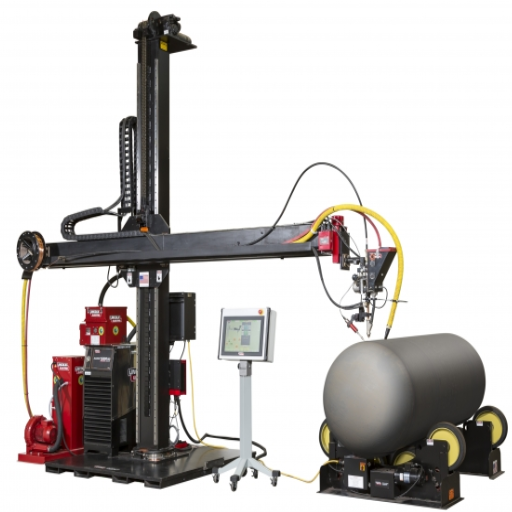
A weld manipulator is a device used to position and support welding tools. It enables precision control, which ensures weld quality. Weld manipulators comprise a robust base, a rotation platform, a column, a boom, and an enabled set of tool holds. They are essential to handling large, complex structures industrially, as they enhance overall precision while improving efficiency and reducing labor.
Understanding the Functionality of a Weld Manipulator
A weld manipulator is a specialized piece of equipment that automates an industrial robotic arm used for welding and assists in welding by positioning the workpiece and torch on a lathe machine. In modern weld manipulators, more advanced forms of automation are featured. They can be interfaced with control systems, programmable logic controllers (PLCs), and sensors for more accurate positioning. These systems offer various welding methods, such as MIG, TIG, or submerged arc welding, while sustaining a certain level of welding quality. Less human involvement in welding enhances safety and decreases error, increasing production efficiency. This manipulator class is crucial in the shipbuilding, aerospace, and structural fabrication industries.
Key Features of Welding Manipulators
- Surgical Precision and Control
Welding manipulators have advanced control systems and associated measuring instruments (sensors) that ensure consistent and accurate welds. Even for the most challenging jobs, welding precision is unparalleled because of the fine adjustments to positioning and movement that can be made.
- Welding Methods
The systems are flexible for use in different manufacturing industries because they are compatible with many types of welding, such as MIG, TIG, and submerged arc welding.
- Safety Improvements
The great automation of vital welding processes by manipulators eliminates many of the dangerous manual welding tasks, significantly improving safety.
- Productivity Scalability
From small to large production environments, welding manipulators fit every scenario. Their automatic regulation of manual intervention in welding processes, alongside high-quality results, aids in speeding up welding processes.
- Increased Usability
Modern manipulators come with touchscreens that can be set up or programmed easily, which can help operators change settings quickly and users optimize workflows efficiently.
- High load-bearing capacity
The machines, manufactured with heavy parts and components, are used in shipbuilding, construction, and aerospace industries, where bulky and heavy materials are commonplace.
With all these functions, welding manipulators are necessary for harsh industrial work environments. They enable businesses to boost productivity while preserving quality and reducing operational risks.
Benefits of Using a Weld Manipulator in Welding Operations
- Enhanced Precision in Welding
Weld manipulators enhance welders’ control, guaranteeing uniform results while minimizing errors. They achieve improved quality on welds and fewer defects.
- Improved Safety Measures for Employees
Weld manipulators automate processes and reduce manual contact, reducing the chances of workplace injuries, especially those involving large and heavy parts in high-heat situations.
- Higher Output Rates
The weld manipulators’ ability to continuously sustain welding operations without breaks increases output rates. Their ability to perform multifaceted welding operations with minimal delays further improves efficiency.
- Operational Cost Efficiency
Weld manipulators improve the precision and quality of the welds, decreasing material wastage and rework costs. Furthermore, their sustained efficiency over time reduces labor expenditures and improves resource allocation.
- Application Versatility
These machines can seamlessly switch between welding methods, performing MIG, TIG, and even submerged arc welding. This makes them practical for industries that require adaptability to various welding processes.
Thanks to the advantages stated above, weld manipulators are essential components in attaining safe, high-standard, and efficient welding procedures.
Types of Welding Manipulators
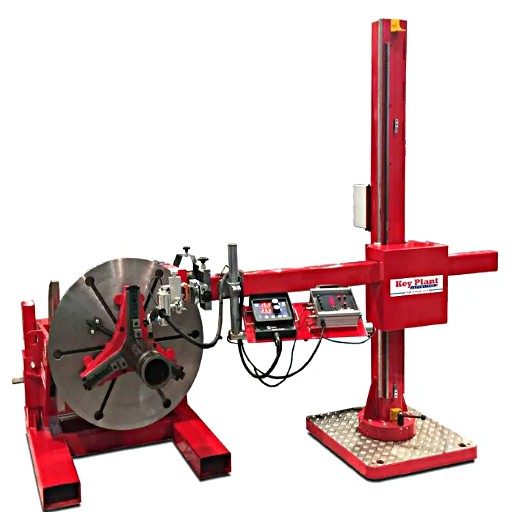
- Column and Boom Manipulators
These are used for any welding operation that requires a large visual field and excellent stability. They allow the welding head to be moved for precise horizontal and vertical movements.
- Fixed Base Manipulators
These are best for continuously completing the same welding operation. Such manipulators do not change position and are fixed to a bench, yet they are readily available for setups demanding constant and solid performance.
- Portable Manipulators
As their name suggests, such manipulators are light and easy to use in flexible robotic welding applications and can be transferred from arm-reached job locations.
- Rotating Manipulators
These can either be provided with turning arms or rotating bases. With these, robotic welding of cylindrical or curved surfaces can be performed while the workpiece is held in a fixed position.
Selecting the correct type of manipulator to perform its particular application tasks can consistently achieve an optimised value.
Column and Boom Welding Manipulators Explained
Column and Boom Welding Manipulators have the Column and Boom welding rotary type as one of the common types. They are built to provide accuracy and flexibility in the welding process. It consists of two parts, the vertical column and the horizontal boom. Both can move and position the welding head exactly where it’s needed. Its applications are greatly seen in shipbuilding, construction, and fabrication, where there is a need for consistent quality of welds in large-scale projects.
Column and Boom welding manipulators are specialized machines programmed to weld in specific patterns. Unlike traditional machines, which require gears and pulleys for movement, these machines can be programmed and even automated to reduce manual effort. They also offer greater flexibility and, with features like motorized travel, need less control and are easier to operate. With their unique design, Column and Boom welding manipulators are suitable for performing tasks that require different levels of precision and are highly suitable for precise welding across applications.
Different Types of Welding Positioners
Welding Positioners include rotary indexers, multi-axis positioners, 2-axis and 3-axis positioners, horizontal turntables, skyhooks, and headstock-tailstock. They encompass a broad scope of functionalities tailored for specific tasks and accentuate efficiency.
| Type | Key Use | Feature | Benefit |
|---|---|---|---|
|
2-Axis |
Tilt & rotate |
Flexibility |
Efficiency |
|
3-Axis |
Lift, tilt, rotate |
Precision |
Versatility |
|
Skyhook |
Complex tasks |
Accuracy |
Adaptability |
|
Horizontal Turntable |
Rotate heavy loads |
Stability |
Safety |
|
Headstock-Tailstock |
Long items |
Support |
Productivity |
|
Rotary Indexer |
Round objects |
Speed control |
Precision |
|
Multi-Axis |
Full access |
Multi-movement |
Quality |
Automatic Welding Manipulators vs. Manual Manipulators
While automatic manipulators are more precise and efficient, manual manipulators allow flexibility and cost savings by relying on a human operator’s control.
| Aspect | Automatic | Manual |
|---|---|---|
|
Control |
Computerized |
Human-operated |
|
Precision |
High |
Moderate |
|
Flexibility |
Limited |
High |
|
Cost |
High initial |
Low initial |
|
Efficiency |
High |
Moderate |
|
Maintenance |
Complex |
Simple |
|
Skill Need |
Low |
High |
|
Output |
Consistent |
Variable |
Welding Processes and Their Relation to Manipulators
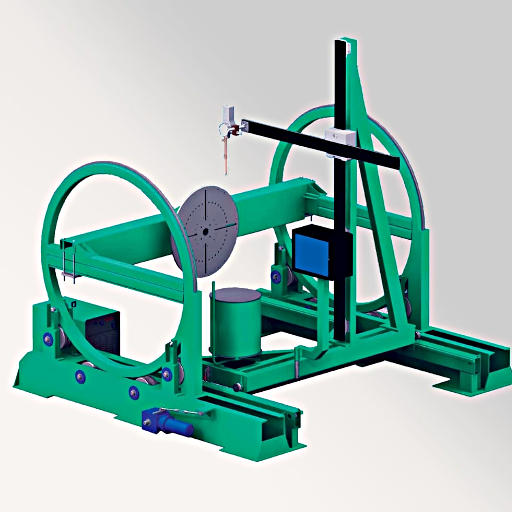
Welding manipulators are essential in improving many welding methods because of their accuracy and dependability. For TIG, MIG, and submerged arc welding, manipulators offer accurate stabilization, enabling the operator to follow a preset welding trajectory, which minimizes errors. Welders find them especially useful for performing repetitive tasks or welding large, heavy structures where the manual effort needed to position the weld is unreasonable. By automating movements and maintaining constant positional alignment, manipulators reduce the quality problems associated with welds and improve production efficiency.
Types of Welding Processes Compatible with Manipulators
Manipulators are integrated into various welding techniques to offer greater versatility for capitalistic applications. Below are some of the welding techniques that can be performed with manipulators:
- Gas Metal Arc Welding (GMAW/MIG): This type of placement welding is best performed by a robotic apparatus due to the enhanced control manipulators that provide over-weld bead integrity.
- Gas Tungsten Arc Welding (GTAW/TIG): With the aid of manipulators, the precision required of TIG welds—often complex and delicate, especially in high-quality procedures—is performed more easily.
- Submerged Arc Welding (SAW) is advantageous when welding thicker materials; manipulators can help ensure a specified path, greater uniformity in material deposition rate, and high SAW productivity rates.
- Plasma Arc Welding (PAW): It is better suited for manipulators due to its pinpointing capabilities at perpendicular angles when high detail is required.
- Flux-Cored Arc Welding (FCAW) is highly demanded in most tough jobs. During FCAW, manipulators are required to have accuracy and manipulative hold.
- Resistance Welding: It is employed for spot or seam welding. Manipulators maintain low variability with operator fatigue in highly repetitive tasks.
Implementing manipulators in these processes enables manufacturers to increase productivity and repeatability and greatly enhance weld quality across diverse industrial applications.
How Weld Quality is Affected by Using a Manipulator
Using a manipulator improves weld quality by improving precision, stability, and consistency. Restrainable handpieces, or manipulators, as the name implies, provide a firm and steady table or platform, thereby removing extraneous human factors like unsteady hands, wrong torch posturing, or misgripping the torch. This degree of control guarantees that all the welds are done with a high degree of uniformity and quality conformance. Furthermore, manipulators facilitate the precise placement and alignment of the welding tools, thus controlling defects like porosity, spatter, and uneven penetration. Moreover, manipulators are helpful even for complex welding parameters and advanced automation systems. They can set appropriate settings for every task and achieve the best results. Overall, automated manipulators reduce error and rework, significantly improving the welded joints’ stiffness and strength.
Automated Welding: Enhancing Efficiency with Manipulators
Automated systems with manipulators are commonplace in various industries, from automotive production to aerospace, shipbuilding, and construction. These systems are designed to optimize production workflows and monitoring of quality parameters. Complex geometries that pose significant challenges for manual welding techniques can be readily welded using manipulators. Even more sophisticated systems incorporate machine learning and real-time data analytics, enabling them to improve performance by continuously studying welding patterns, material behaviors, and process variables. The evolution of automated welding systems in modern diversified manufacturing is characterized by implementing sophisticated technologies alongside manipulators, improving precision and adaptability significantly.
Choosing the Right Welding Equipment
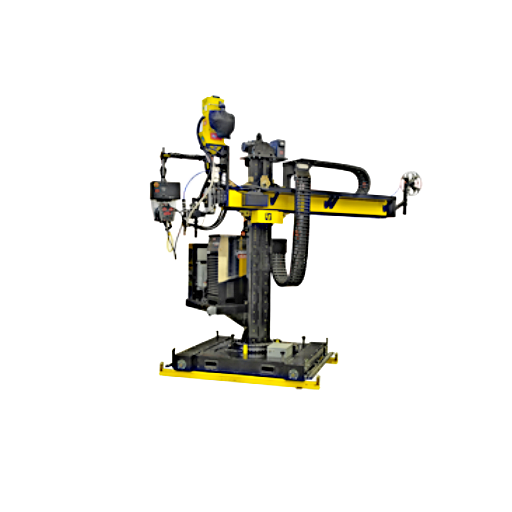
The following little factors can help you choose the appropriate welding equipment. Each should be evaluated based on the project at hand and include, but not be limited to, the following.
- Material Type—Every project involves some material, such as steel, stainless steel, aluminum, or any alloy. This is one of the first considerations before proceeding with anything, since the welding process is compatible with particular materials.
- Welding Process – Identify the welding process to be carried out, whether MIG, TIG, or stick enabled. The methods differ regarding the expertise required, time taken, and precision.
- Power requirements—Examine the available power source. Consider whether a supply of voltage and amperage meets the work and equipment power requirements.
- Project scale—Determine if the equipment lifetime would sustain the exceeding scope and size of projects ranging from light work, such as repairs, to industrial work.
- Portability—If worksites constantly change, looking for lightweight and easy-to-move models is best.
- Hardware budget and durability – Identify the budget and balance overspending with cost without compromising quality, durability, and long-lasting value.
Simply shifting focus on these factors will help the welding equipment appropriately and efficiently serve your needs.
Factors to Consider When Selecting a Welding Manipulator
- Load Capacity—Pay attention to the weight of the parts you assemble. A manipulator with insufficient load capacity may damage equipment or cause inefficiencies. Always remember that the manipulator needs to lift the maximum weight you intend to project.
- Precision and Control—Accuracy matters unquestionably for superior-quality welding work. Ensure the welding manipulator has dynamic control systems for movement and positioning so that there is superlative precision at the operation level and in the welds.
- Safety Features—Welding operations always involve inherent risks. A manipulator with inbuilt safety components such as emergency cutout switches, overload guards, and sturdy construction for the work environment would go a long way toward ensuring the operators’ safety.
- Automation Capabilities—If you are trying to increase productivity, check for manipulators that can be automated. Seamless integration with PLCs, programmable logic controllers, and welding robots tends to improve workflows.
- Maintenance Requirements—Look for a welding manipulator that requires little maintenance work. Smooth servicing results in lower downtime and reduces operational costs in the long run.
Considering all these points will help you make the right decision about selecting a welding manipulator that best meets your operational requirements and long-term goals.
Comparing Different Types of Welding Machines
Different types of machines, such as MIG, TIG, Stick, Flux-Cored, Plasma, and Submerged Arc welding machines, exist according to the precision needed, the application, and the materials used.
| Type | Key Use | Material | Skill | Portability | Cost |
|---|---|---|---|---|---|
|
MIG |
Versatile welds |
Steel, Alu. |
Beginner |
Moderate |
Moderate |
|
TIG |
Precision welds |
Thin metals |
Expert |
High |
High |
|
Stick |
Heavy-duty welds |
Thick metals |
Moderate |
High |
Low |
|
Flux-Cored |
Outdoor welds |
Rusty metals |
Beginner |
High |
Moderate |
|
Plasma |
Metal cutting |
All metals |
Beginner |
High |
High |
|
Submerged Arc |
Automated welds |
Steel alloys |
Low |
Low |
High |
Essential Welding Tools for Optimal Performance
Welding tools are segmented into different functions to yield an effective, high-quality result. A few of the most basic and essential tools for a welder’s toolkit are as follows:
- Welding helmet: One essential piece of clothing is a welding helmet, which should be reliable while also offering features like auto-darkening. This ensures that eyes and face are safe from the very harmful UV and IR rays and allows for precision welding, thus allowing for better outcomes.
- Welding gloves are another crucial part of a welder’s armor. They must be heat-resistant and vital in keeping hands safe from burns, sparks, and molten metal.
- Welding jacket: Fire-resistant materials make durable welding jackets. Since these protect the body against heat, sparks, and flying debris, they allow users to perform actions more clearly.
- Angle grinder: Compared to other tools, angle grinders serve a wider range of functions, such as cutting, preparing materials for welding, grinding, and so on. This ensures high accuracy and smoothness in welding surfaces.
- Clamps and Magnets: Together, clamps and magnets make a very potent duo in maintaining the placement of pieces and supporting them perfectly so that everything is aligned correctly during welding.
- Wire brush: Perhaps the most vital tool for ensuring the quality of the weld, wire brushes clean the metal surface completely of rust, paint, and any contaminants that might corrupt the weld.
- Measuring tools: Squares, levels, and tape measures are incredibly beneficial for measuring alignment, obtaining accuracy, determining precise distances, and setting up working setups before the welding process begins.
With the right combination of strategies, investing in these essential tools and implementing proper maintenance will drastically improve your welding efficiency and performance.
Reference Sources
1. Justification of the use of multifunctional assembly and welding manipulators at shipyards
- Authors: A. E. Burmistrova, O. A. Shchegoleva, Evenly G. Burmistrov, Tatiana A. Mikheeva
- Publication Date: March 14, 2023
- Journal: Russian Journal of Water Transport
- Key Findings:
- The article substantiates the potential for increasing mechanization in shipyard assembly and welding production through multifunctional manipulators.
- It argues that manipulators with initially limited functionality can be gradually upgraded, enhancing production flexibility and leading to full robotization.
- Methodology:
- The authors conducted a theoretical analysis of multifunctional manipulators’ capabilities and impact on production efficiency, emphasizing adaptability and modernization.
2. Prospects for replacing production lines in the shipyards workshops with multifunctional assembly and welding manipulators
- Authors: E. G. Burmistrov, O. A. Shchegoleva, A. E. Burmistrova
- Publication Date: July 27, 2023
- Journal: Vestnik Gosudarstvennogo universiteta morskogo i rechnogo flota imeni admirala S. O. Makarova
- Key Findings:
- The paper discusses the inefficiencies of existing mechanized production lines in shipyards and proposes multifunctional manipulators as a flexible alternative.
- It highlights the need for a reconfigurable production system to enhance shipbuilding enterprises’ technical level and flexibility.
- Methodology:
- The authors analyzed the current state of shipyard production lines and proposed a framework for integrating multifunctional manipulators, supported by a review of existing technologies and their applications.
3. Digital tools as part of a robotic system for adaptive manipulation and welding of objects
- Authors: Zuzana Kovaríková et al.
- Publication Date: August 19, 2022
- Journal: ACTA IMEKO
- Key Findings:
- This article describes the design and verification of digital tools that facilitate information sharing within robotic systems for manipulation and welding tasks.
- It emphasizes the importance of integrating intelligent sensors and control systems to enhance the adaptability of welding manipulators.
- Methodology:
- The authors conducted simulations and prototype testing to verify the functionality of the proposed digital tools, focusing on their application in robotic welding environments.
4. Top Column and Boom Manufacturer and Supplier in China
Frequently Asked Questions (FAQs)
Q: What are the applications of welding manipulators?
A: Welding manipulators enhance efficiency and precision in various welding projects, such as pipe welding, automotive manufacturing, and structural fabrication. They are commonly used to automate different welding processes, such as MIG and arc welding.
Q: How do I choose the welding positioner for my project?
A: When choosing the welding positioner, consider the type of welding power source you will use, the weight and size of the components to be welded, and the specific welding positions required for your welding applications. Consulting with a welding manipulator manufacturer can also provide valuable insights.
Q: What is the difference between manual welding and robotic welding?
A: Manual welding involves a human welder operating the torch and equipment, while robotic welding utilizes automated systems with a welding boom and other manipulators. Robotic welding often improves efficiency and consistency in high-volume production environments.
Q: What is the role of a welding boom in welding projects?
A: A welding boom is designed to extend the reach of a welding torch or head, allowing better accessibility to hard-to-reach areas during welding. This is particularly useful in welding manipulator applications requiring precision and flexibility.
Q: Can you explain what a 3-axis welding manipulator is?
A: A 3-axis welding manipulator is a device that allows movement along three different axes (X, Y, and Z), enabling precise control over the welding torch or weld head. This flexibility is essential in welding applications that require accurate positioning for complex welds.
Q: How do welding positioners help improve welding efficiency?
A: Welding positioners, especially rotary welding positioners, help improve welding efficiency by allowing the workpiece to be rotated and tilted into the optimal position for welding. This minimizes the need for manual adjustments and reduces the time spent on each weld.
Q: What are the benefits of using welding manipulators in industrial settings?
A: The benefits of using welding manipulators include increased precision in welds, enhanced safety for operators, improved productivity through automation, and the ability to handle complex welding tasks that may be difficult or impossible with manual weld manipulators.
Q: What types of welding processes can be automated with manipulators?
A: Manipulators can automate various welding processes, including MIG, TIG, and arc welding. This helps achieve consistent results across multiple welding applications.
Q: What should I consider when selecting a welding power source for my manipulator?
A: When selecting a welding power source for your manipulator, consider the type of welding process you will be using, the material thickness, and the overall power requirements. It’s crucial to ensure compatibility with the welding manipulator to maximize efficiency and performance.


