
Meeting the standards of precision, efficiency, and exemplary quality in Industrial Welding column and boom welding machines is at the peak of technological advancement. These machines have vast applications in industries such as shipbuilding or heavy machinery, owing to the versatility and strength of these tools to automate welding processes. But how do they operate, and how do they impact your business?
This blog post aims to equip you with everything you need about column and boom welding machines. It will help you understand their core features and benefits, delve into their applications, and provide an overview of essential maintenance guides throughout the post. So, whether you are a welder at a facility, a facility manager, or a tech enthusiast, this guide will highlight how these machines can improve processes within a facility, productivity, and the quality of welds.
What is a column and boom welding machine?
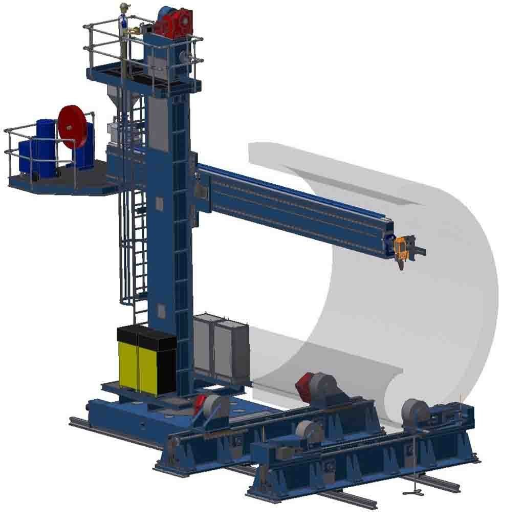
Welding is fully automated and receives a high level of customization due to a column and boom welding machine, consisting of a vertical column connected to a horizontal arm called a boom, and a weld head capable of moving in several axes, enabling precise positioning. These machines are mainly used for welding heavy and complicated parts to ensure that the welds are consistent and of high quality. It is very beneficial in the manufacturing, construction, and shipbuilding industries. Reliance on human work is reduced, which improves efficiency, safety, and accuracy for the welds made to the column and boom welding machines.
Understanding the components of a column and boom welding machine
Social responsibility is perceived as a social challenge for business. Many reports of companies that maintain certain brands highlight reasonably broad and deep social policies. Businesses tend to associate CSR primarily with philanthropy activities, social investments, donations, and sponsorship of educational institutions.
This is just the surface level of social responsibility regarding public relations. First of all, there has been a need to outline CSR goals and objectives which eliminate or optimize the consequences generated following business activities on public resources. Building a sophisticated image concerning the purchase, use, and disposal of products the corporation produces sometimes leaves much to be desired.
As a result, we observe CSR actions formulated superficially, without profound attention to the consequences created while undertaking business activities. Distinctive responsibility measures of social leave unobtrusive guidance to attention lies in considering broader aspects that accompany work undertaken.
How does a column and boom welding machine work?
As with other machines, a column and boom welding machine is part of a coordinated system that automates welding processes. In principle, the machine comprises a vertical column and a horizontal pivoting boom, which moves the welding head into the correct vertical and horizontal position above the workpiece. The column allows vertical movement by raising and lowering the welding head to the proper height, and the boom allows horizontal movement to reach large or complex workpieces.
Greater automation is achieved with programmable controls that drive the welding head’s and the workpiece’s movement to guarantee predetermined paths and relative movement. With these controls, the quality of welds is maintained at prescribed standards, and human intervention is further reduced. Moreover, additional automation is facilitated by installing servo motors and linear guides on many column and boom welding machines, improving stability and increasing resistance to vibration during machining processes. Coupled with accessories such as rotating tables or roller beds, the machine can easily perform welding operations on cylindrical objects like pipes, tanks, or vessels. This makes them indispensable in heavy-duty industries like shipbuilding, construction, and manufacturing, where high precision and efficient work are crucial.
The advantages of using column and boom welding
Improved Precision and Accuracy
The use of Column and Boom welding Systems controls manual errors and assures the quality of each weld, offering unmatched precision. Achieving accuracy in welding is possible due to servo motors and linear guides, which enable smooth motion of the welding head.
Automating welding actions and limiting interruptions translates to consistent operations at the top level. Due to shortened production timelines, the construction and shipbuilding industries are the primary beneficiaries of enhanced productivity.
Designed to manage oversized components, Column and boom systems can accommodate tanks, vessels, and pipes. Additional features, such as roller beds, facilitate large-scale welding operations with simple modifications.
In addition to lowering operational costs, automated processes reduce the manual intervention needed, resulting in fewer employees in the long run. Welding operations are controlled from a safe distance to avoid dangerous environments, lowering the risk of harmful exposure.
Column and boom welders make it easy to apply any welding process. They are designed to support a number of techniques, including MIG, TIG, and Submerged Arc Welding (SAW). Such flexibility makes the welders beneficial for many sectors.
What are the main features of boom welding machines?
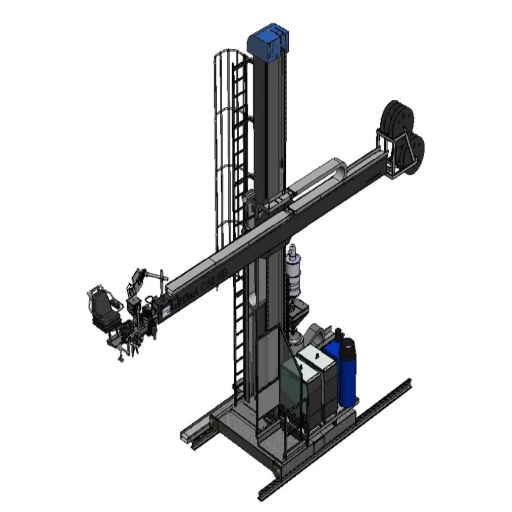
The highlights of boom welding machines are as follows:
- Adjustable Boom and Column.
The trimming and column are adjustable, enabling accurate welding placement on the shafts at various levels and angles.
- Sturdy Construction.
These machines are made using strong materials that are manufactured to withstand considerable wear and tear during extended periods of welding work.
- Automated Controls.
They have automated systems that increase the uniformity of welding performed and diminish manual effort.
- Support for Multiple Welding Techniques.
Boom welding machines are flexible, and they can use different welding techniques, such as MIG, TIG, and SAW.
- High Load Capacity.
They can withstand great stress on boom welding machines and are designed for large-scale industrial work.
- User-Friendly Interface.
Many models have intuitive controls and displays that make operating and monitoring the machine effortless.
Key specifications of boom welding manipulators
- Dynamic characteristics of boom reach
With adjustable boom lengths, operators working with varying sizes of workpieces have pinpoint control and manipulation accuracy with precision boom welding manipulators.
- Load-bearing capabilities
Depending on the model, these manipulators are designed to have a load capacity of 500 to 2000 lbs or even more due to the heavy industry welding heads and other necessary equipment per the operational model, which requires a specific workload.
- Range of rotation
For advanced and complex, extensive industrial workings, most models provide complete rotation of the boom arm, giving the users a full 360 degrees of rotation.
- Vertical and horizontal adjustments
The possibility of adjusting the boom height makes it easier for the operator to set the boom to the optimal height for other applications. Motors or hydraulics can be used to do this.
- Modification of welding speed
Weld spin speed is changed on advanced manipulators equipped with adaptable spin magnetism control, which is required for different materials and scales of welding.
- Control systems
A non-analog but electronic or programmable control feature modern units feature allows the operator to set and adjust the parameters during real-time monitoring.
- Durability and stability
The main feature of the boom welding manipulators is that they are constructed using high-strength materials, which allows them to withstand harsh industrial conditions. They are designed for long-term use and consistent stability even in these environments.
Due to an expansive range of farming and mechanized agriculture needing dependability and a high precision level coordinated welding systems, these specifications turn manipulators for boom welding manipulators into an indispensable tool.
Automation features in boom welding machines
Boom welding machines incorporate automation that improves productivity, accuracy, and ease of use. These automation features enhance the quality of the weld and ensure uniform output reliability. This document will cover five significant automation features.
- Programmable Controls
Operators can preset various welding parameters, including speed, voltage, and wire feed rate, using computerized programmable controls that guarantee set accuracy and repeatability.
- Seam Tracking Technology
Exceptional Weld Tracking Systems, including cameras and advanced sensors, enable the machine to track and reposition on the weld seam to maintain correct alignment with the weld throughout the entire operation.
- Auto Welding Speed Adjustment
Operations such as precision auto welding have pre-set speed constraints, and the system automatically adjusts welding speed to the set constraints to maintain absolute consistency with fluctuations in material thickness or joint geometry.
- Remote Operation Capability
Machines can be controlled from another location, enabling operators to track the process and make adjustments without physically being in the machine’s vicinity, which increases convenience and safety.
- Data logging and analysis
Self-contained systems monitor and record set parameters and process data, which can help evaluate performance and have invaluable prospects in quality improvement.
Different types of boom machinesare available
- Column and Boom Welders
Column and boom welders perform heavy-duty welding work, such as that encountered in shipbuilding, power generation, oil, and gas. These machines provide great precision, can withstand large workpieces, and are equipped with adjustable columns and booms for optimal workpiece positioning.
- Portable Boom Welders
As the name suggests, portable boom machines are lightweight, mobile, and designed for cramped locations or areas requiring flexibility. They are perfect for small-scale projects or portable work environments.
- Rotating Boom Welders
The addition of a rotating boom allows for 360-degree access for welding purposes. Such machines are ideal for applications that require a multidirectional range of motion. Eliminating the need to reposition manually also increases efficiency.
- Customizable Boom Systems
These custom systems are designed to integrate with specialized robotics or automated systems for advanced robotics, task-specific handling, or specialized automation for advanced tasks requiring custom-designed systems. They blend specific requirements with custom processes to yield a specialized production process.
- Automated Boom Welders
This type of machine aids in precision by incorporating off-the-shelf robotic components with automatic control functions. Used in volume production lines, they offer the benefits of consistency and unmatched precision.
Selecting the right boom machine for your welding operations is crucial, as they are all designed to meet unique industrial requirements.
How do you choose the right welding manipulator for your needs?
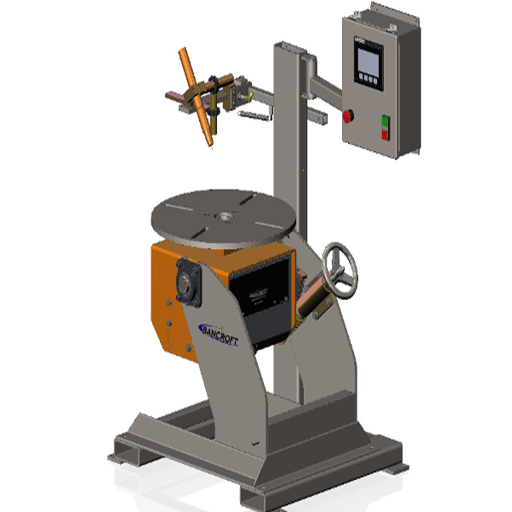
In case you need a welding manipulator for your operations, especially if for maximizing efficiency, productivity, and precision, take note of the following:
- Recommended Parameters: These deal with alignment between automation processes and the welding manipulator’s capabilities. Ideally, you would like a manipulator that sequentially matches objective outputs through various levels of equipment capabilities.
- Load Capacity: Check that the size and weight of the components to be welded fit within the bounds of precision achievable by the manipulator.
- Range of Motion: Check the range of working angles beyond vertical and horizontal that the manipulator can reach and work on. It should be able to position itself where your project parts need to be placed.
- Workspace Compatibility: Ensure the equipment can be ergonomically integrated into the current workspace. The manipulator’s design and dimensions should not obstruct the current workflow and production line.
- Level of Automation: Determine how much control you want to maintain for order and operational consistency. You can choose complete automation, semiautomation, or even manual control of the manipulator.
- Budget and Maintenance: Consider expenses not just from the purchase angle but also from a maintenance and affordability viewpoint.
Such parameters help in making the optimum decision regarding the choice of equipment.
Factors to consider when selecting a welding manipulator
Remaining up to date on advances in automation with AI, addressing industry manipulators’ needs, and custom-tailoring solutions, recommends that welders pay attention to factors like adaptability and precision, which are highly important when selecting a welding manipulator. Other researchers recently reported increased automated welding processes with AI heuristics incorporated for amoured adaptability and precision.
Moreover, the industry is becoming more concerned with ‘eco models’ that are energy efficient, not just because they are socially responsible but also because eco-friendly designs have a positive impact on business image and enhance bottom-line performance.
Also, considering efficiency and effectiveness, ergonomics impact productivity substantially, thus enabling real-time data tracking, foreseeing failure maintenance, innovative collaboration, and precision monitoring are critical in integrating with Industry 4.0 technologies. User interfaces are becoming more friendly and adaptable to the customers’ specific preferences for shapes and sizes. Implementing appropriate innovations alongside practical design encourages the development of strategies for making well-informed decisions that, in turn, maximize business-optimized operational efficiency, enabling operational long-term success.
Comparing column boom welding machines versus other welding equipment
Compared to other welding tools, Column boom welding machines provide automation, accuracy, and an extensive range of reach for complex structures. Other tools lack flexibility, scope, and precision.
|
Parameter |
Column Boom |
Other Welding |
|---|---|---|
|
Reach |
Extended |
Limited |
|
Precision |
High |
Moderate |
|
Automation |
Yes |
Optional |
|
Flexibility |
High |
Moderate |
|
Applications |
Large/Complex |
General |
|
Safety |
Enhanced |
Standard |
|
Setup |
Fixed/Movable |
Portable |
Typical applications for different welding manipulators
As seen, welding manipulators influence industries by increasing the precision and efficiency while enhancing safety in the working space.
| Industry | Key Use | Benefit | Feature |
|---|---|---|---|
| Automotive | Frame assembly | Precision | Automation |
| Aerospace | Airframe welds | High-quality | Accuracy |
| Shipbuilding | Hull welding | Speed | Reach |
| Oil & Gas | Pipeline welds | Durability | Safety |
| Heavy Machinery | Component welds | Efficiency | Versatility |
| Medical Devices | Equipment welds | Consistency | Precision |
| Tank Fabrication | Seam welding | Uniformity | Accessibility |
| Railroad | Track welding | Productivity | Safety |
| Power Plants | Reactor welds | Reliability | Precision |
How can a column and boom welding machine be operated safely?
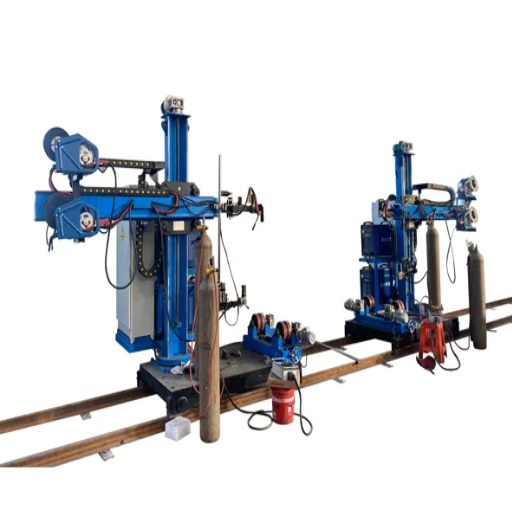
- Conduct a Pre–Operation Inspection
Inspect the machine and each of its parts to determine whether there is any visible damage or wear. Confirm the functionality of all cables, connections, and safety devices.
- Wear Appropriate Personal Protective Equipment (PPE)
Personal protective equipment such as welding helmets, gloves, protective clothing, and safety glasses must be worn to guard the operator from heat, sparks, and harmful UV rays.
- Secure the Workpiece
Confirm that the material that requires welding is in the correct position and firmly fastened so it does not move during the welding process.
- Set Machine Parameters Correctly
Change the machine’s welding speed, voltage, and amperage according to the welding procedure specifications for the material and design.
- Confirm Area Clearance
Establish that the working area is free of clutter, hindrances, flammable items, or unsanctioned individuals within a workspace.
- Monitor the Operation Constantly
Watching the welding process enables observation of irregularities or possible hazards and the stopping of the machine in case something goes wrong.
- Follow Shutdown Procedures
After welding, the machine should be turned off, followed by a safe disconnection of power sources, a cooling period for maintenance activities, and adequate maintenance.
Minimizing personnel and equipment risks, ensuring safe operational procedures, and performing steps assist the weld process while improving efficiency.
Safety precautions during welding operations
Welding is a violent operation if not properly monitored for safety risks, so protecting the people involved should be a top priority in welding operations. Here are some of the best procedures to follow when plugging in those welding machines:
- Use Proper Welding PPE
Legally, in the industry, it is mandatory to wear welding gloves, a flame-resistant full-sleeved overcoat, a welding helmet with adequate visor and cover shields, and safety glasses, which are recommended for protection against thermal burns, UV radiation, and heat.
- Proper Positioning and PPE When Welding
Fumes and toxic gases are a common by-product of welding and can harm the user’s health. Ensure the area or region is ventilated, or use localized ventilated exhaust systems for suppressive exposure to toxins.
- Maintain Regular Checks and Equipment Maintenance
When welding, always check for wear and tear on the welding machines, cables, and even the attachments plugging into the welding machine for a microwave oven.
- Routinely Maintain Fire Equipment
Routinely remove combustibles from the work area and make the fire extinguisher accessible, free of anything concealing its view.
- Limitations of Electric Shock Prevention
Proper grounding of the welding machine prevented electric shocks from causing damage to the metal part of the electrode holder when the machine was on.
- Protective Measures Against Falling Accidents
The above measures should only be implemented by trained personnel who have been cleared to operate the welding machines within the provided policies and procedures. Always follow operational and safety frameworks, including being vigilant to environmental conditions and any risks.
Taking these safety measures and remaining aware of the most current safety standards allows welding professionals to mitigate risks and ensure a safer workplace.
Proper maintenance of welding equipment
Regular maintenance of weld equipment is essential in acheiving optimal functionality, enhancing durability and safety in the work environment. Some of the critical practices of maintenance include the following:
- Cleaning and Inspecting the Equipment
As part of routine maintenance, ensure that weld machines and accessories are cleaned appropriately and free from foreign materials like dirt, dust, and debris that can hinder functionality. Also, make sure that cables, connectors, and torches are free from damage and wear, like frayed wires or loose connections. Change the components whenever necessary.
- Changing and Checking of The Useful Parts
Consumables such as contact tips, nozzles, and electrode holders are essential for achieving quality welds. Weld efficiency can be decreased if worn or burnt consumables are not replaced. Ensure that these consumables are replaced promptly to prevent compromising weld integrity.
- Loss of Calibration Accuracy
Weld machines need to be calibrated periodically to maintain voltage, amperage, and other critical parameters. The proper settings of these machines are very important in achieving consistent, reliable, and high-quality results.
- Lubrication of Part Movable
Use the right type of lubricant on cubicle wheels and hinges, which will mitigate degradation and promote proper, sustained operation over time.
- Testing Of Features Beyond Safety
Check if subjects like thermal overload protection and circuit breakers work as they should. Regularly examining these features helps shield operators and equipment from unforeseen threats, thus protecting them.
These maintenance strategies enable welding professionals to streamline operational downtime effectively, enhance safety measures, and ensure optimal equipment reliability over an extended period.
Training requirements for using welding manipulators
Proper training is crucial for the safe and effective operation of welding manipulators. Operators should know the fundamentals of welding, including MIG, TIG, and arc welding, as these are crucial when working with manipulators. Moreover, training should cover the hands-on steps to set up, operate, and troubleshoot the equipment. This also includes the ability to achieve defined parameters like speed, angle, automation, and precision in the welding.
As for the specific training needs, the employees also need to know safety training with particular attention to hazard recognition, PPE, emergency protocol, and more. Besides that, operators are also required to perform basic manipulator maintenance and adhere to the preventative maintenance procedures to enhance the lifespan of the equipment. The proper up-to-date manuals from the manufacturer themselves, along with certification documents if needed, ensure appropriate use and compliance with industry standards for safe amd thorough use of welding manipulators.
Reference Sources
1. Conceptual Design and Control of a Robotic System for Welding
- Authors: K. Miatliuk et al.
- Publication Date: June 12, 2023
- Journal: 2023 24th International Carpathian Control Conference (ICCC)
- Key Findings:
- The paper uses a hierarchical systems method to discuss the design and control of a robotic welding system.
- It emphasizes the integration of mechatronic subsystems for effective motion planning and control.
- Methodology:
- The authors created a conceptual model integrating various subsystems and described control processes using simulation tools.
2. Virtual Commissioning of the Trajectory Tracking Control of a Sensor-Guided, Kinematically Redundant Robotic Welding System on a PLC
- Authors: Stefan Schütz et al.
- Publication Date: April 25, 2022
- Journal: 2022 IEEE International Systems Conference (SysCon)
- Key Findings:
- This study presents a methodical procedure for model-based systems engineering and virtual commissioning of robotic welding systems.
- It highlights the integration of sensor technology for real-time seam detection and optimization of welding processes.
- Methodology:
- The authors developed simulation models for virtual commissioning and tested the system’s performance in real-time scenarios.
3. Robotic Friction Stir Welding – Seam-Tracking Control, Force Control and Process Supervision
- Authors: M. Karlsson et al.
- Publication Date: February 14, 2023
- Journal: Industrial Robot
- Key Findings:
- The study focuses on enabling robotic friction stir welding through advanced control systems for seam tracking and force control.
- It demonstrates the feasibility of using robots for high-precision welding applications.
- Methodology:
- A closed-loop control system was developed and experimentally verified to ensure accurate seam tracking during welding.
4. Top Column and Boom Manufacturer and Supplier in China
Frequently Asked Questions (FAQs)
Q: What is a column and boom welding manipulator?
A: A column and boom welding manipulator is a type of welding equipment designed to support the welding process by precisely moving the welding torch or head. It consists of a vertical column and a horizontal boom that can be adjusted to accommodate various welding positions and workpieces.
Q: How does a welding manipulator work?
A: A welding manipulator allows the welder to position the welding torch at the optimum angle and distance from the workpiece. It can be controlled manually or automatically, making it suitable for both manual and automated welding processes.
Q: When should I use a welding manipulator?
A: You should use a welding manipulator to enhance precision in your welding operations, especially for large or heavy workpieces. It is particularly beneficial in applications such as column welding and pipe welding, where maintaining a consistent welding position is crucial.
Q: How do I choose the right column and boom welding manipulator?
A: To choose the right column and boom welding manipulator, consider factors such as the size and weight of your workpieces, the types of welding processes you will use (like MIG welding or automatic welding), and the specific welding applications you have in mind. Ensure that the manipulator can accommodate your welding position requirements.
Q: What are the different types of welding manipulators?
A: There are several types of welding manipulators, including manual column manipulators, automatic welding manipulators, and boom manipulators. Each type is designed for specific welding applications and can vary in terms of functionality and control mechanisms.
Q: What are the benefits of using a welding positioner in conjunction with a welding manipulator?
A: Using a welding positioner with a welding manipulator enhances the efficiency and quality of the welding process. The positioner allows for better control of the workpiece position, reducing the need for manual adjustments and improving weld consistency and quality.
Q: Can I automate welding processes with a column and boom welding manipulator?
A: Yes, column and boom welding manipulators are designed to support automated welding processes. By integrating them with robotic systems or advanced welding technology, you can achieve high levels of automation, increasing production rates and ensuring consistent weld quality.
Q: What should I look for in quality welding manipulators?
A: When searching for quality welding manipulators, consider factors such as build quality, range of motion, ease of use, compatibility with different welding processes, and the reliability of the control system. Ensure that the manipulator meets the specific needs of your welding projects.
Q: How do I maintain a welding manipulator for optimal performance?
A: To maintain a welding manipulator, regularly inspect moving parts for wear and tear, keep the equipment clean, and ensure that all electrical components function properly. Following the manufacturer’s maintenance guidelines and scheduling routine checks will help prolong the manipulator’s life and performance.


