
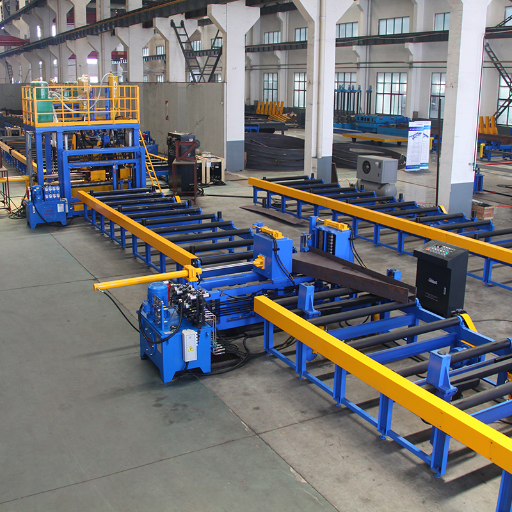
Transformations within the construction industry stem from relentless pursuits—efficiency, sustainability, precision, and environmentally sustainable practices. Most notable, these technologies center on innovative methods of fabrication and assembly. One example is the newly developed H-beams factory—which uniquely combines high production rates with unparalleled structural quality. This article elaborates more on the matter and examines its repercussions on construction projects as well as revealing the way it simplifies processes while preserving exceptional standards of quality. Illustration: The efficiency with which component parts are fabricated and the design sophistication are realized through cell structures where the number of operation steps performed between two fabrication steps is minimized further down the line.
What is an H Beam Production Line?
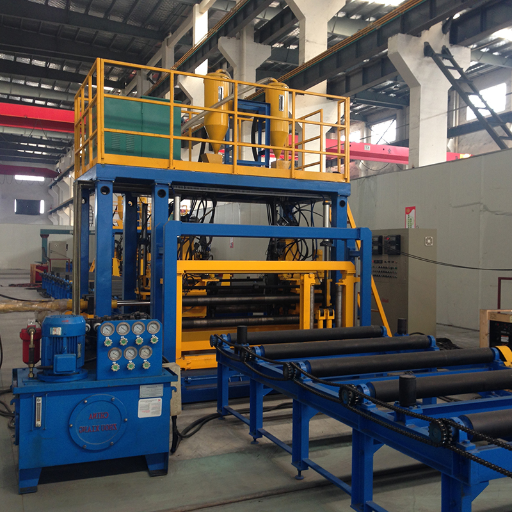
An H beam production line системs are focused on the efficient and precise production of H-shaped steel beams, automating crucial operations such as cutting, welding, and assembly to enhance accuracy and streamline processes. Due to their strength and durability, H-shaped steel beams are widely utilized in engineering and construction projects. Advanced technologies and automation have allowed a decrease in material waste and an increase in construction speed, solidifying its value in modern construction.
Understanding the Basics of H Beam Production Lines
H beam production lines incorporate modern technology and automation as well as advanced tools to facilitate the processes involving H-shaped steel beam fabrication. Like any other production system, the production line has multiple stages, all required for the completion of the final product while ensuring the quality, precision, and effectiveness of all processes and components. In most cases, the process starts at raw material feeding, which in this case entails loading steel plates or awaiting processed billets into the system. Subsequently, automated systems perform accurate cutting, beveling, and assembly followed by welding.
The most recent advances in H beam production lines integrate with CNC (Computer Numerical Control) cutting to the accuracy of millimeters. Moreover, advanced welding systems, for example, SAW (Submerged Arc Welding), performs deep uniform welds. Modern H beam production lines are reported by equipment manufacturers to have a beam production rate of 800-1200 tons per month, based on configuration and workforce supply. Some systems integrating IoT (Internet of Things) sensors also allow for real-time monitoring of metrics like performance, enabling operators to address bottlenecks, improve processes, and enhance overall efficiency.
There are clear benefits derived from merging precision technology with automation, including slashing operational costs while also leading to a significant reduction of material waste. Steel is a costly material. Automated production lines not only save costs but are also able to enhance precision as they reduce the amount of wasted steel in comparison to manual methods. As environmental concerns grow, the technologically advanced H beam lines are indispensable to meeting heightened expectations for green construction materials.
Core Building Blocks of a Beam Fabrication System
- Conveyor System – Circulating raw materials and completed beams in the surrounding industrial area for fast retrieval.
- Cutting Machine – Processes raw steel in precise and delineated manners.
- Welding Equipment – Sews the steel member parts conclusively to create a final beam workpiece.
- Drilling Machine – Performs beam perforation operations for bolts or other hardware insertion as necessary.
- Assembly Line – Provides the required configuration and orientation of the beam parts for efficient sequential operations.
- Control System – Fully supervises and controls the whole production process for automation, precision, and efficiency.
The Importance of Automation in the Contemporary Production of H-Beams
In contemporary H-beam production lines, Automation is indispensable in optimizing operational efficiency, precision, and productivity. The integration of robotics, sophisticated sensors, and AI-based control mechanisms greatly enhances production efficiency. A good example is automated cutting machines with laser or plasma systems that provide component tolerances of up to ±0.1mm.
Furthermore, machine vision systems equipped welding robots not only enhance the speed of assembly but also bolster the quality of the welds. Thus, the defect rate can be lowered by 30 percent. With algorithms, modern assembly lines can dynamically position H-beam components to reduce human error during alignment.Given the information, fully automated H-beam production lines enable H-beam production factories to achieve up to 40% savings in labor costs and around a 50% reduction in production time as compared to traditional manual systems without compromising on the quality of the end product. In addition, these systems allow for monitoring in real time and enable predictive maintenance which improves equipment uptime by almost 20% thus improving the total equipment efficiency (T.E.E) and reducing both downtime as well as operational costs.
With automation, the competitive advantage in terms of efficiency and innovation is sustained as H-beam production adapts to the surge in global construction and infrastructure projects. Automation allows for seamless scaling, ensuring that increasing production requirements are readily met.
How Does the Welding Process Work in an H-Beam Production Line?
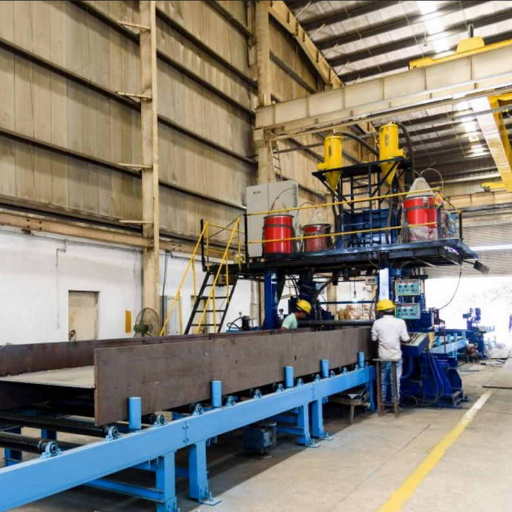
The welding operation in an H-beam manufacturing line is concerned with attaching steel plates to construct a beam’s particular cross-section. The flange and web are first set and aligned. Then, robotic arms perform continuous welding on each of the parts to mechanized welding machines stitch the parts along their interfaces with spot welding, which ensures strong and even welds. Maintaining efficiency and accuracy as well as the structural integrity of the beam components demands a steady state of control during the beam assembly.
Looking into the Beam Welding Methods
Other beam welding methods have been developed to increase their precision, efficiency, and robustness. Beam welding methods are numerous with each having its own advantages tailored around the needs of the project:
- Submerged Arc Welding (SAW): The H-beam production order cannot be fulfilled without SAW due to its high productivity and proven to meet desired quality standards. The method works by supplying a continuous wire electrode into the welding arc and at the same time a layer of granular flux covers the weld. As a result, the weld is protected from atmosphere’s pollutants. Recent researches show that SAW accomplishes a deposition rate of over 20 pounds per hour, and this makes it one of the most productive techniques used in structural applications.
- Tandem Arc Welding: The application of two or more welding wires. It increases the speed of welding while lessening distortion especially for thick steel components. More recently, it has been reported that tandem arc welding is capable of accelerating welding speed by 30%–50% relative to single-wire methods without detriment to the quality of the weld.
- Laser Beam Welding (LBW): LBW is becoming more popular because of its accuracy and the narrow deep welds it makes, especially with high strength steel. As far as laser beam welding is concerned, some studies suggest that it can create welds of 25 mm depth in steel without necessitating filler materials which significantly reduces the heat-affected zone as well as providing a good surface finish.
- Hybrid Laser Arc Welding (HLAW): As with other tandem techniques, HLAW applies the flexibility of laser beam welding and the deep penetration capabilities of arc welding. The method is known for its ability to operate at high speeds and provides deep weld penetration. This method has been reported to reduce the time spent on welding by 50% compared to traditional methods while still preserving the welded structure.
Every single one of these approaches is essential in streamlining H-beam production with regard to the specific project requirements, material thickness, and scale of production. The correct application of a welding technique improves the flow of the production line as well as the strength and safety of the construction parts to be assembled.
Importance of Submerged Arc Welding in H-Beam Production
Submerged Arc Welding (SAW) is among the fastest and most dependable methods for producing H-beams. SAW was developed to give consistent and high-quality welds, which is critical for mass production. More recent studies indicate that SAW has a deposition rate of up to 45 pounds per hour outperforming all other conventional methods of welding. This makes it ideal for the high productivity requirements of H-beam manufacturing.
SAW is particularly advantageous in providing H-beams deep weld penetration, which enhances their strength. In addition, during SAW, the flux’s protective layer reduces atmospheric exposure and contamination, therefore, decreasing defects like porosity in the weld. There are fewer welding defects using SAW than with manual or semi-automatic methods. Researchers estimate that this technique reduces welding defects by over thirty percent.
In addition, SAW systems can be combined with other sophisticated technologies, such as robotic arms and real-time monitoring systems, for enhanced efficiency and accuracy. According to industry reports, automated SAW installations have the capabilities of enhancing production rates by 25%, in addition to reducing materials waste and operational costs. Such advancements in speed and cost efficiency emphasize the value SAW technology offers to modern construction and infrastructure demands.
Submerged arc welding (SAW) technology coupled with continuous innovations enables manufacturers to consistently produce H-beams economically while maintaining high reliability. This adaptability ensures the structural performance required for enduring and sustainable construction worldwide.
Boosting Welding Speed with New Welding Equipment
The introduction of new equipment has transformed the steel fabrication industry by bolstering advancements in precision, efficiency, and speed. Modern SAW equipment makes use of automation; hence, operators are able to weld at a higher rate than before. As per the latest findings, automated SAW welding machines are capable of achieving 0.2 to 2.0 inches per second with adjustments made to material thickness and settings, far outpacing manual processes.
In addition, the use of real-time monitoring systems and adaptive control mechanisms qualifies as advanced features of the technology. Some modern machines have multi-head configurations which enable simultaneous seam welding from multiple angles. This enhances productivity while reducing costs and the duration of the associated labor and projects. Pre-programming complex paths for digital interface-controlled welding, for example, has been implemented increasing accuracy and decreasing associated error margins.
Research within the industry indicates the efficiency gained with the combination of SAW and high-strength steel due to its demanding precise heat input requirements. Innovations of this nature can enable as much as a 40% reduction in production time, making it essential for large-scale construction projects like bridges, skyscrapers, and industrial plants. With these technological advancements, contractors and manufacturers are able to meet the ever-increasing infrastructure demands without compromising on the quality standards needed.
What Role Do Cutting Machines Play in H-Beam Fabrication?

In H-beam fabrication, cutting machines are of great importance because they focus on the accuracy and efficiency of shaping the beams. With the use of machines, the H-beams are hydro-cut to the correct measurements with high accuracy which is very critical for the structural integrity of the H- Beam. The H-beam cutting machines automates the processes to increase production speed, consistency in projects, and materials wastage.
Benefits of CNC Cutting Machines in Beam Production
CNC cutting machines have proven to be useful in beam production due to their ability to perform accurate and efficient work. They operate using modern computer programming to control the cutting operations which ensures high-level accuracy and precision due to lower margin of error e.g less than 0.1 mm. This level of precision becomes handy in large scale H Beam projects.
Recent market intelligence suggests that production efficiency can increase significantly by 40% with the use of CNC cutting machines compared to traditional methods. With less manual work during the overseeing process, CNC machines reduce costs by requiring less skilled personnel to monitor particular jobs. Moreover, sophisticated software results in more advanced operations which translates to optimal material utilization and potential reduction of wastage by 20-30%.
Versatile in beam fabrication, modern CNC machines are capable of adapting to various cutting techniques such as, plasma, laser, and flame cutting. Furthermore, modern H-beams are custom fabricated to fit the specific requirements of the structures which they will be used in. This explains why these machines, along with other beam-forming devices, serve as the cornerstone of today’s H-beam fabrication.
Comparing Plasma Cutting and CNC Flame Techniques
Plasma cutting and CNC flame techniques differ in precision, material compatibility, cutting speed, cost, and thickness capacity.
| Key Point | Plasma | CNC Flame |
|---|---|---|
| Precision | High | Moderate |
| Materials | Conductive | Broad |
| Speed | Faster | Slower |
| Cost | Higher | Lower |
| Thickness | Thinner | Thicker |
Why is Shot Blasting Crucial in H Beam Steel Production?

In the production of H-beam steel, shot blasting is important because it enhances the durability of the steel by removing impurities like rust, scale, and dirt. All of these factors not only improve the quality of the steel but also augments the aesthetic value of the steel.
Advantages of Using a Shot Blasting Machine
- Improved Surface Preparation: The process restores the steel surface by eliminating rust, scale, and other surface contaminants, providing good adhesion for the coatings or paints.
- Enhanced Durability: Additional strength against wear is provided during shot blasting – a feature noted as enhanced eco-durability.
- Higher Product Quality: The processes bring about enhanced uniformity to the steel product thereby changing their outward look and performance.
- Cost-Efficiency: Maintenance expenses are reduced because of proper surface finishing such as shot blasting. The service life of the product is increased.
Integrating Shot Blasting in the Production Method
While discussing method integration, I would like to focus on shipping shot blasting, which I would incorporate as the main surface preparation step prior to coating application or painting. This procedure guarantees that the steel surfaces are clean, smooth, and free of contaminants that will enhance better adhesion and finish quality. Moreover, using shot blasting improves product durability and increases the economic efficiency of the production process by reducing maintenance costs in the long run.
How to Choose the Right Supplier for H-Beam Production Lines?

- Experience and Reputation: Make sure the supplier has a documented history with other clients in the industry and has received positive reviews.
- More experienced suppliers are preferable, as they are more likely to provide dependable solutions.
- Product Quality: Check if the production lines are designed for high quality, long lasting, and built to last. Do they have applicable industry certificates?
- Customization Options: Select a supplier that can fully customize their production lines to best fit your needs and ensure greater operational efficiency.
- After Sales Support: Make selection among suppliers that provide comprehensive after sales services, such as, but not limited to: technical support, training, and maintenance.
- Pricing and Cost Effectiveness: Evaluate and make comparisons between the different providers prices and revisit your evaluation in the long run factoring in the cost of the production lines, their expected durability, energy consumption, and running costs.
Primary Deciding Factors When Choosing a Supplier
Choosing a vendor, a crucial strategic choice, will shape the optimization and the bottom line of your company . Here are a few of the most relevant details, including data and expert commentary to assist your decision-making:
- Supplier Dependability and Verification: 85% of businesses cited supplier reliability as the core factor in making procurement decisions, according to research conducted a few years ago. Track record appraisal by evaluation through reviews, testimonials and case studies also helps assess reliability in pertinent business relationships. A dependable partner provides consistency in delivery, meets timelines, and the products meet quality expectations.
- Technological Advancement: Suppliers who stay ahead with the latest technological advancements can provide production lines equipped with cutting edge features. For instance, as noted in Deloitte’s 2023 survey, 70% of businesses claimed to put heavy focus on innovation, automation, or require it during supplier evaluation due to its impact on operational efficiency and productive work-cycle automation.
- Adoption of Environmental Sustainability Practices: More emphasis is being placed on environmental practices, and for good reason. To cite one example, according to McKinsey, Companies adopting sustainable suppliers witness a 20 percentage point increase in brand perception and customer trust . Look for suppliers who implement eco-friendly practices such as energy saving machines or exhaust materials which meet international standards of sustainability.
- Geographical Proximity and Lead Time: Businesses with localized suppliers, per a 2022 report by Supply Chain Insights, experience reduced shipping delays by an average of 35%. Local Suppliers provide faster lead times and reduce logistical costs resulting in greater operational efficiency.
- Customizability of solutions: Tailoring an offer to a client’s specific needs enhances business value. Clients with powerful R&D departments can modify the equipment or parts of the production lines to meet your objectives. 60% of manufacturers claim rated give it flexibility as the most important factor in supply chain optimization.
- Financial stability and long term viability: Risk of supply chain disruption is lowered when working with a financially healthy supplier. Assess them through credit reports and 3rd party evaluators to estimate their stability. Reduced risk from the supplier tends to lead to more reliable support for the business during the provided time.
Combining the qualitative and quantitative data available allows for thorough analysis from which the best supplier may be picked to meet the operational requirements while simultaneously enabling optimization for sustained growth.
Assessing Supplier Proficiency In H Beam Welding Technology
With regard to H Beam welding, distinct aspects of a supplier’s expertise must be evaluated together with industrial benchmarks. Construction and infrastructure projects demand precision H Beam welding. It embodies an example of advanced technological skills and equipment in the construction industry.
It is now evident that recent advancements in automation are significantly impacting H Beam welding technology. Automated welding systems, as noted in an industry report, raise productivity as much as 50% over manual processes and they do far fewer errors and defects as compared to hand welding. CNC-controlled welding systems are able to accurately execute complicated tasks having regard to rigorous standards of precision.
Compliance with international standards of welding, ISO 3834-2 and AWS D1.1 are equally important as the materials used in the welding process. A trustworthy supplier surely will document proving adherence to these requirements guaranteeing stringent quality and durability of the welded structures.
Evaluating the experience of a supplier with large scope projects is equally important. To illustrate, a supplier who has performed welding on infrastructure projects over 10,000 tons of steel annually showcases his capacity and reliability. Analysis of past projects and referrals from previous customers help appreciate the performance and technical capabilities of the supplier.
Using this information along with your business needs enables you to easily pinpoint a supplier that specializes in H Beam welding, guaranteeing quality results and successful completion of the project.
Reference sources
- Laser based diagnostics for measuring H-beam parameters – This document discusses the mechanism of laser-based diagnostics for H-beam parameters.
- Production of magnetized electron beam from a DC high voltage photogun – This paper describes the production of magnetized electron beams and includes insights into beamline diagnostics.
- PhD Thesis: Improved beam extraction for a negative hydrogen ion source for the LHC injector chain upgrade, Linac4 – A detailed dissertation focusing on H− ion sources and beam extraction systems.
- Top H Beam Production Line Manufacturer and Supplier in China
Frequently Asked Questions (FAQs)
Q: What is an H Beam Production Line?
A: An H Beam Production Line comprises a set of work centers that processes raw materials to fabricate H-beams for use in various iron and steel constructions. It is composed of cutting machines for the steel plates, beam assembling machines, and welding, straightening, and inspection equipment.
Q: What role does a steel plate play in the production line?
A: Steel plates are classified as the primary product in an H-beam production line. They undergo cutting, assembly, and welding to constitute the H-beam’s web and flanges, following which they are further refined within the production line.
Q: How does a flange straightening machine function?
A: Flange straightening machines eliminate any distortions on the flanges of H-beams that arise during the welding of parts. It helps to maintain specification limits for steel structure fabrication.
Q: What is the purpose of a beam welding line?
A: Beam welding lines are fitted with welding machines for I-beams and H-beams, designed specifically for these types of welds. The mechanization of the beam assembly welding process greatly increases the reliability and uniformity of the welds produced along the assembly as well as the operational productivity and quality of the H-beam.
Q: What specific tasks does an assembled machine perform within the H Beam Production Line?
A: An assembly machine integrates and repairs the steel plates to构成 the web and flanges of the H-beam. It is one of the key processes performed during the beam assembly, and it is critical that the alignment is correct prior to the welding phase.
Q: In what ways does a gantry system contribute to beam production?
A: A gantry system is utilized for the movement of bulk steel parts within the production line. It also assists in the material handling such as loading and offloading, thus automating the manual work in the production process.
Q: How does a plasma cutting machine assist in the production line?
A: A plasma cutting machinef serves to shred the steel plates into shapes and sizes needed for H-beams using high velocity jets of ionized gases capable of penetrating steel.
Q: Automatic control has been highlighted as an important feature of an H Beam Production Line. Why?
A: As discussed earlier, production line automation offers advantages such as a reduction in time taken and enhanced precision to the processes such as slicing and welding, due to the coordination of multiple machines working in tandem, with the only requirement of hands free settings.
Q: What is the significance of inspection in the H Beam Production Line?
A: Inspection is important in verifying both the quality and compliance of H-beams with industry standards. It incorporates measuring the beams’ dimensions, assessing the welds, evaluating their straightness, and verifying their fitness for usage in steel structures.
Q: How does a hydraulic system benefit the H Beam Production Line?
A: A hydraulic system benefits the production line by supplying operational force to specific machines, for example, the assembling and flange straightening machines. It also enhances overall efficiency during operation including high-pressure tasks.


