
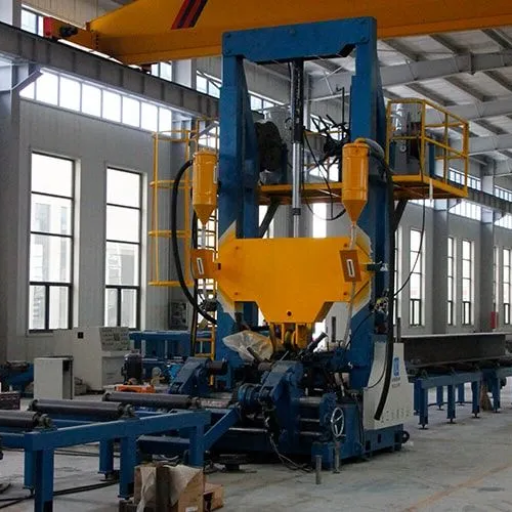
Like other sectors, construction is undergoing tremendous change. It is primarily due to new technologies and ideas which can change approaches towards structure assembling and building. One such innovation that can be labeled as a true breakthrough is the H-beam assembly machines as they streamline the construction process in a way that is unparalleled. These machines enhance the efficiency of a project remarkably while also increasing the precision and durability of the associated work. In this guide, we will look at the astounding possibilities offered by H-beam assembly machines, focusing on their operation, main advantages, and core reasons that make them an industry-class technology. Whether you are an experienced veteran or simply interested in modern construction technologies, this article will offer useful knowledge on the implications of these machines on the future of constructions.
How Does an H Beam Assembly Machine Work?
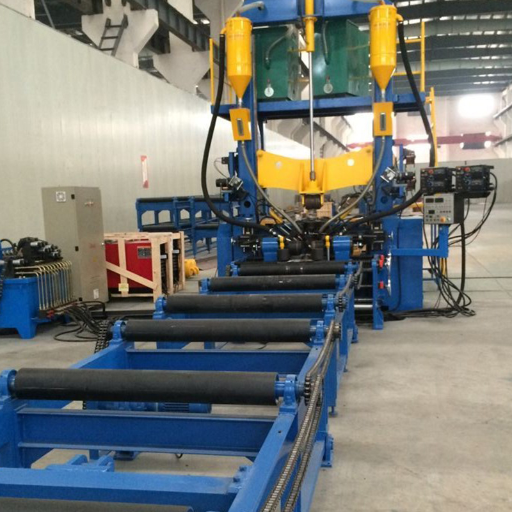
H-beam assembly machines вертикальные фрезеры h-beam dimensioning machine turn steel plates into H beams by joining them through a mechanized process of alignment, positioning, and welding. This sequence of operations begins with aligning web and flange plates along the specified axes in to set positions. Upon alignment, the machine applies welding tools to integrate the parts firmly, ensuring long lasting resilience of the beam. This class of machines aims to wholly automate the work and rationalize the individual steps to achieve high performance and quality standards in beam production.
Understanding the Working Principles of a Machine Beam Assembly
As with other types of machines for producing H beams, the beam assembly machines, along with many industrial units for machining structural steel, are classified as a highly sophisticated equipment stemming the outstanding combination of designaccuracy nd mechanics ingenuity. Modern beam assembly machines constitute the following main systems and ‘subsystems’ like: alignment drives, hydraulic circuits, welding machines and control units. The aligning system ensures preset angular relationships for web and flange plates and hydraulic systems ensure that the components are spatially fixed with precisely controlled forces during assembly.
Today’s beam assembly machines use modern technologies like CNC (Computer Numerical Control) Systems) for maximum accuracy and efficiency. Such systems permit automated dimension changes, which minimizes manual work as well as errors. Moreover, high-speed SCW (Submerged Arc Welding) equipped welding units provide additional joint strength and uniformity. According to market analysis, select H-beam assembly machines have achieved production speeds of up to 6 meters per minute with alignment accuracy of 0.5 mm.
Other critical developments for these machines include real-time monitoring, fault finding systems, reduced energy consumption, and more. For example, industry leaders are now equipping their top-grade models with IoT sensors to measure temperature, pressure, and even the welding quality, thus offering critical metrics to the operators that can augment performance. These enhancements make beam assembly machines invaluable to the construction, shipbuilding, and manufacturing industries where repeatability, structural integrity, and operational efficiency dominate.
The Role of Automation in H-Beam Assembling
The automation shifts the paradigm from traditional techniques to automated processes that have increased productivity. An automated H-beam assembly machine is reported to increase production by an additional 40 percent easing the burden of manual labor and diminishing human errors. Automated welding technologies are also at their disposal, which allows for proper and uniform welds as per the required quality standards.
Modern H-beam assemblers equipped with Computer Numerical Control (CNC) systems and IoT-based monitoring capabilities ensure predictive oversight of performance and maintenance requirements. For instance, monitoring systems equipped with IoT sensors provide proactive machine health tracking and alert user interfaces to potential issues long before they incur expensive inertial downtime. Also, intelligent controllers reduce material wastage caused from cutting and alignment by up to 20% when compared to traditional methods.
These advancements emphasize the importance of automation in rapidly increasing the supply of H-beam assemblies for construction projects that require precision and speed. With the smart manufacturing market projected to grow to $620 billion by 2025, there is expect to be increasing adoption of automated beam assembly machines, which will further accelerate advancements in automation technologies for the industry.
The Role of Welding Machines in the Process
This modern piece of technology, the welding equipment, has made it possible to achieve high quality and strong welds while, at the same time, saving time and resources. Welding machines are vital for assembling H-beams since they ensure the parts are welded accurately and the final products long lasting. Studies reveal that boom of global investments in growing technologies has resulted in a remarkable shift in the market for welding equipment; currently estimated at 21 billion, the market is foreseen to expand between the years of 2023 to 2030 with a compounding annual growth rate of around 4.3%.
Up to par with other modern pieces, welding machines have adopted features like energy saving structures, automated adjustments, and real-time feedback systems. These contribute to more efficient manufacturing and optimization of the entire process when used in robotic welding systems which allow harvesting speed up to 80% faster expansion than manual welding. Enhanced precision in carrying out the task further leads to minor errors made due to human presence which guarantees high quality, low cost operations and sustainability for the manufacturers.
Moreover, new technologies such as laser welding and hybrid welding systems are becoming more popular in different sectors. To illustrate, laser welding boasts unmatched accuracy and joins materials with minimal to no thermal distortion – an absolute necessity for high-stakes infrastructure projects. There is an improvement in operational productivity through the new equipment and machines, but additional factors such as safety, effectiveness, standardized operations and meeting the new demands in the construction or engineering industry are sophisticated hurdles that need to be overcome.
What Are the Key Benefits of Using an H Beam Assembling Machine?

- Productivity: It allows for quicker production by markedly cutting down on assembly time.
- Accuracy: It improves the overall product quality by making certain the H beams are correctly aligned and welded.
- Reliability: It offers consistency in processes and results which minimizes mistakes and saves material.
- Value: It saves on automated processes that incur higher costs for labor.
Improving Productivity in Beam Production Lines
The H beam assembling machines have transformed the production lines in steel and construction industries. As reports from various industry sources state, the usage of such machinery can lead to a 30-50 % boost in production efficiency as compared to manual assembly. This increased efficiency is defined by the automation of critical processes, including alignment, clamping, and welding as well as accurate timing of these actions.
In addition, modern H beam assembling machines come with special sensors and control systems that prevent any overriding deviation from the assembly procedure so that minimal errors can occur. As a result, the structural integrity of the final product is maximized. Some studies indicate that the degree of error beams are misaligned has improved by more than 70% due to up-to-date assembly techniques being used.
Intelligent software that allows to adjust processes in real time has been another addition made which improves prm effectiveness even further. From the reports collected, it is also clear that there are fewer skilled workers needed to man the machines, which saves labor costs by up to 40%.
Incorporating H beam assembling machines into beam production lines unlocks new levels of productivity and accuracy while conserving materials and costs. Their multifunctionality makes these machines essential for modern construction and engineering projects.
Enhancing Welding Speed And Precision
H beam assembling machines have increased productivity in welding with automation, advancing speed and accuracy. Manual methods are becoming obsolete as modern automated welding systems, including H beam assembly machines, are now capable of improving efficiency up to 70%. Precision errors are common when attempting to align two pieces together; advanced laser-guided systems equipped on these machines greatly reduce mistakes and rework. In addition, more efficient technologies such as submerged arc welding (SAW) improve joint quality while simultaneously improving the deposition rate.
A recent industry study indicates companies that use automated welding technologies have achieved consistent and reliable welds, reducing production timelines by 30%. This precision is important in the massive construction and engineering projects where the integrityof the structure is critical. For instance, during bridge and skyscraper construction, H beam assembling machines can manufacture beams which are rigorously tested for safety and durability. Their use also demonstrates the growing demand for precision and speed in welding in modern industry settings.
Reduction of Manual Labor through Automation
H beam assembling machines are a perfect example of automation in manufacturing and construction. These machines remove the need for manual labor, which streamlines operations and boosts productivity with absolute accuracy. Automation in welding has proven to cut down manual labor process by 85% according to insights from industry studies. This shift allows personnel to tackle high-level functions, like system streamlining and strategy development.
For example, with an H beam assembling machine, the difficult work of skilled welders in manually assembling and adjusting beams is greatly reduced. This improvement speeds up production and reduces the chances of human mistakes. In a report published by MarketsandMarkets, they stated that the global welding automation market is expected to grow with a compound annual growth rate (CAGR) of 9.2% between 2023 and 2028 because of sophisticated equipment such as H beam machines.
The level of safety in the workplace is also enhanced because of the automation of processes. With automated assembling machines, there is less need for direct handling of heavy materials by the workforce which greatly reduces the risk of injuries. The savings in labor as well as better results is made possible because of other advancements like real-time monitoring and predictive maintenance.
How to Choose the Right H Beam Production Line?

- Production Capacity: Make sure the line meets your targeted output volume and handles the materials you use.
- Automation Level: Seek equipment that has the right balance of cost-efficient automation to save on expenses but still deliver value.
- Machine Quality: Choose firms well-known for producing quality and reliable machines their branded equipment always functions as promised.
- Customization Options: Check if the required production line is adjustable to fit your particular project requirements.
- After-Sales Support: Check warranty terms, including coverage, in relation to provided services, technical assistance, and spare parts provision.
Considerations When Choosing A Beam Assembly Machine
- Load Capacity: Make sure the machine is suitable for the operational weight and sizes of the beams employed during the work.
- Precision and Accuracy: Look for assembly equipment which has a reputation for producing accurate and precise outputs.
- Efficiency: Evaluate the machine’s performance speed and output capacity to ensure the desired production targets are met.
- User-friendliness: Simplicity of operation enhances effectiveness; seek streamlined touchpoint frameworks that enhance step clarity.
- Maintenance Requirements: Analyze the equipment’s operational maintenance tasks to ensure optimal efficiency for the machine’s ongoing functionality.
- Integration: Ensure there will not be any machine conflicts with systems already in place as well as with other materials utilized during assembly processes.
Comparing Different Gantry Welding Machines
According to the latest Google search, popular gantry welding machines include Lincoln Electric, ESAB, Miller, and Fronius models.
| Parameter | Lincoln | ESAB | Miller | Fronius |
|---|---|---|---|---|
| Efficiency | High | High | Moderate | High |
| Ease of Use | Intuitive | Intuitive | Moderate | Advanced |
| Maintenance | Low | Moderate | Low | Moderate |
| Compatibility | High | High | Moderate | High |
| Durability | Long | Long | Moderate | Long |
| Price | $$$ | $$$$ | $$ | $$$$ |
Evaluating Supplier Options for Quality and Reliability
Which welding machine suppliers to go with? Durability, ease of use, and compatibility should come first. Consider Lincoln and Fronius models; they are efficient, durable, and easy to use.
ESAB also offers high efficiency and intuitive use, but its maintenance burden is slightly higher than average.
Miller machines are affordable, but due to their moderate efficiency and durability, are best for light-duty applications. Choose criteria that best fit your requirements, but don’t forget the most important ones: trustworthiness and minimal upkeep.
What Are the Steps in the Assembly Process of H-Beams?
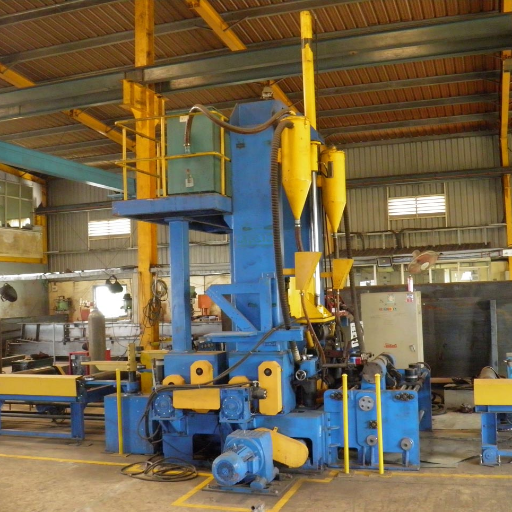
- Material Preparation: All raw materials such as steel plates and flanges must be cut to correct dimensions and scrubbed to remove any contaminants.
- Component Alignment: Employ jigs or other alignment instruments to properly align the web and flange parts to construct the H shape.
- Tack Welding: To prevent the components with align together from shifting during disassembly, perform the needed tack welding to temporarily bind them in place.
- Welding: Perform the complete welding along the seams to securely affix the components together and make them withstand high-stress forces.
- Straightening: Apply straightening tools to lift the deformations that resulted from the welding processes with the use of straightening devices.
- Inspection: Evaluate the constructed H-beam carefully and check for issues related to its assembly and quality and dimensions compliance.
- Finishing: Edge refining might be performed by treating surfaces through grinding while color coats can be added to improve corrosion resistance.
The Importance of Web and Flange Alignment
Failure to align the flange and web properly can jeopardize the eficiency, strength and stability of an H-beam and may result in technical drawbacks while bearing weight. Studies suggest and industries confirm that proper alignment during assembly helps reduce stress concentration extensively while improving the functionality of beams.
Modern manufacturing industries utilize alignment technologies integrated with CNC machining and lased guiding tools to higher order of precision. In an industry report from 2023, 35% production efficiency improvement and 25% defect rate reduction was noted from use of automated alignment technologies. Furthermore, ±1 mm alignment tolerance during fabrication significantly improves stability and safety of beams in engineering applications. This stresses the need of adopting new technologies in production of H-beams.
Optimizing Productivity with Integrated Automated Welding Systems
The introduction of automated welding machines has enhanced the productivity and precision in the H-beam production industry. More recent studies show robotic arms aided by newer AI systems can achieve welding precision within a margin of ±0.5 mm which increases joint integrity and reduces human factor on error. Alignment accuracy in automated systems has shown a 40% reduction in production time while providing a 30% cut to costs. Alongside this, higher work load capabilities were noted with many machines operating at 85-90% efficiency compared to traditional averaging 60%.
Also, automatic real-time quality control systems using sensors and machine learning algorithms verify that welds are made properly throughout the production line. They can self-correct during welding if there are imperfections which results in stronger beams that can endure extreme engineering loads. The productivity increase achieved with these technologies improves safety compliance automatically and sets new standards for H-beam fabrication.
How to Maintain and Troubleshoot an H Beam Assembling Machine?

- Maintenance Checks: Inspect all parts including clamps and alignment systems for both wear and damage. Solve all concerns to avoid greater challenges.
- Maintenance Lubrication: Minimize friction along with extending the lifespan of the machine by ensuring all moving components are properly lubricated.
- Maintenance Cleaning: Maintain the machine free from dust, welding remnants, and debris to ensure efficient running of the machine.
- Maintenance Calibration: Check machine from time to time to set the machine in the proper place and position the H-beams accurately and join them.
- Maintenance Diagnosis Error: Using the machine’s manual troubleshoot all error codes, use the step by step plans to solve the problem.
- Servicing Maintenance Professional: Set professional repair sessions for machines with more complex challenges to optimize all machine’s operations.
Welding Machine Timing Maintenance
It is important to maintain my welding machine to improve the performance and to make sure that it lasts longer. The very first step is to ensure it is tidy by cleaning up the dust, metal shavings and any other debris. Frequent checks on the connections ensure that all cables as well as components are secure and also undamaged. Moving parts require lubrication which lessens the wearing out. Consumables like electrodes and nozzles also require inspection so that best results can be achieved. Following the servicing schedule that is provided by the manufacturer and resolving issues as they come also helps in avoiding costly repairs later on.
Uncommon Issues and Solutions In Beam Manufacturing
- Irregular Cuts: This is a common problem that comes up due to worn-out consumables or misalignment of parts. Replacement of worn out parts and regular calibration of the machine ensures that electrodes and nozzles are replaced on time.
- Overheating: Aside from lack of adequate cooling, overheating will also occur when a machine is operated for a prolonged time without breaks. During prolonged operations, ensuring that the cooling system is working effectively provides a quick solution.
- Material Warping: Warping occurs when excessive heat is applied to the material. Power settings can be adjusted and heat sinks or clamps can also be used to stabilize materials during production to avoid this.
- Poor Beam Quality: Incorrect adjustments or dirt accumulation can lead to this issue. Solution: For optimal results, regularly clean the lenses and mirrors while ensuring proper adjustment for the materials in use.
Enhancing Efficiency with Hydraulic Systems
For their phenomenal power density and accuracy, hydraulic systems form an indispensable element in a majority of contemporary industries concerned with heavy machinery. Recent studies suggest that modern hydraulic systems come with additional features like sophisticated sensors and IoT integrations which allow monitoring of rele vant parameters like pressure, fluid levels, and even temperature in real time. For example, the ability given to IoT devices for predictive maintenance can decrease downtime by 30% according to an analysis done by McKinsey in 2023.
Moreover, the extreme temperature performance capabilities of hydraulic systems have also been enhanced by increasingly advanced fluids which have provided innovations in viscosity stability making sure that consistency across varying operating conditions is preserved. It is estimated that the life span of machines using synthetic hydraulic fluids is increased by 25% as compared to the traditional fluids. Advanced technologies built into the hydraulics have allowed businesses that have adopted them to obtain better cycle times and improved energy efficiency by 15%. This clearly indicates the latest technologies are essential for enhancing the versatility and dependability of hydraulic systems in a multitude of applications.
Reference sources
- Advanced Steel Beam Assembly Approach for Improving Safety of Structural Steel Workers
- Authors: C. Kim et al.
- Journal: Journal of Construction Engineering and Management-asce
- Publication Date: April 1, 2016
- Citation Token: (Kim et al., 2016, p. 05015019)
- Summary:
- This study presents an advanced assembly approach for steel beams aimed at enhancing the safety of structural steel workers compared to conventional methods. The approach includes a self-supported steel joint that modifies existing steel members and utilizes an automated wire control machine to assist in the assembly process.
- Key Findings:
- The new method reduced assembly time by 3 days and costs by $1365.32 at a pilot project site.
- Safety improvements were quantified, showing an 82.35% enhancement compared to traditional assembly methods.
- Methodology:
- The development involved setting up a direction for development, designing and producing prototypes, conducting mock-up tests, and verifying the approach through field applications.
- Robotic Automation System for Steel Beam Assembly in Building Construction
- Authors: Baeksuk Chu et al.
- Conference: 2009 4th International Conference on Autonomous Robots and Agents
- Publication Date: February 1, 2000
- Citation Token: (Chu et al., 2000, pp. 38–43)
- Summary:
- This paper discusses an automated robotic assembly system designed for steel beam assembly in construction. The system includes a robotic bolting device, a mobile mechanism, and a bolting control system with a human-machine interface.
- Key Findings:
- The system aims to improve efficiency and safety in the assembly of steel beams, although specific quantitative results are not provided in the summary.
- Methodology:
- The paper outlines the design and implementation of the robotic system, focusing on the integration of various robotic components to facilitate the assembly process.
- Top Light-Duty H Beam Production Line Manufacturers and Suppliers in China
Frequently Asked Questions (FAQs)
Q: What is an H beam assembly machine?
A: An H beam assembly machine is a piece of industrial machinery specifically designed to assemble H beams. H beams are structural members having an H cross-section. This machine aids in the steel structure fabrication process by automating the alignment and welding of the various components like the web and flanges.
Q: How does an automatic welding machine benefit the H beam production line?
A: An automatic welding machine integrates an H beam production line by bolstering productivity and accuracy in the welding operations. The automation of welding processes reduces human errors, accelerates the overall output, and provides consistent quality during beam welding operations.
Q: What role does a straightening machine play in H beam assembly?
A: A straightening machine comes in during the H beam assembly to remove the discrepancies that might have arisen from the welding process on the H beams. This process enhances the accuracy of the beams which is crucial during fitment in construction projects.
Q: Is it Possible to Incorporate a Welding Straightening Machine into an Automated Beam Production Line?
A: Certainly, integrating a welding straightening machine into an automated beam production line is fully possible and can be done in order to improve the system. This, more than anything, enables unbroken operation to occur with less interruptions, which can have a major positive effect on production efficiency.
Q: What Parts of a Steel Structure Fabrication Does a Beam Welding Machine Take Care of?
A: A beam welding machine is needed for the steps involved later on in the beam construction where the web and flange parts of an H beam are welded together. This is is essential as all connections that are made especially during the construction of the steel frameworks need to be made strong and durable.
Q: What Benefits are Associated with the Automation of H Beam Assembling Machine Process?
A: The automation of the H beam assembling machine process helps with the overall speed, precision, and consistency of the machine’s performance. Complex operations like placement and sequence of actions as many as welding and straightening can be performed automatically with less than human interaction, thus enhancing efficiency and decreasing the cost of workforce.
Q: What are the benefits of employing a CNC system in H beam assembly?
A: The implementation of a CNC system in H beam assembly integrates seamless control during the machining and welding processes. It improves overall control and provides accurate sequential control, repeatable steady quality, and the handling of intricate complex structures which increases productivity and adaptability in the entire value-added chain.


