
From auto repairs to heavy construction, welding is done in various sectors. Each welding process requires different methods to achieve specific strengths and accomplish the goals of that weld. TIG (Tungsten Inert Gas) and MIG (Metal Inert Gas) are two very famous welding techniques across the industry, each with pros and cons. One of our customers’ main concerns is which method needs to be used for their projects. In this blog post, we share the pros and cons of both TIG and MIG, as well as their limitations, so our readers can understand where these methods shine most. With the information provided, no matter if you’re a beginner or an expert welder, you will have a better perspective to make better welding decisions.
What is MIG Welding?
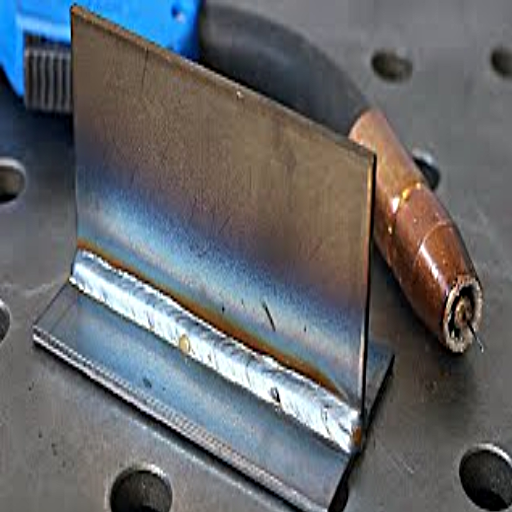
MIG welding is short for Metal Inert Gas. It is a form of welding that utilizes a continuously supplied wire electrode and inert gas to join two pieces of metal together. The electrode wire melts to form the weld, while the inert gas protects the weld area from atmospheric contamination. MIG welding’s speed, efficiency, and simplicity of use work to its advantage, making it appealing for professionals and hobbyists alike. It is particularly effective for welding thicker metals and is frequently employed in the automotive and construction industries.
How does the MIG welding process work?
A continuous solid wire electrode is inserted into a welding gun at the start of the MIG welding process, or Gas Metal Arc Welding GMAW. An inert or semi-inert shielding gas, carbon dioxide or argon, is released to guard the weld from commonly found gases. Once the trigger on the gun is set, plasma is created between the electrode and the base material, where both surfaces are heated until melting fusing them into a single unit. Widespread use is the norm for MIG in other industries because of its versatility. Since there are no disruptions due to constant welding enabled by automatic wire feed, this process is highly commendable in terms of efficiency. By changing variables like voltage, gas flow, and wire feed speed, operators can achieve high-quality welds with precision. This adaptability makes MIG welding a remarkable option in numerous sectors, from manufacturing to repair.
What are typical MIG welding applications?
The notable benefits of MIG welding, including its flexibility and efficiency, have made it essential in both large and small-scale manufacturing projects and repair jobs. Its role in construction is evident through the welding of columns, beams, and numerous structural components. It’s also prevalent in assembling car frames, body panel repair, and exhaust fabrication within the automotive sector. Beyond that, MIG welding is extensively used in manufacturing storage tanks, metal appliances, and furniture. The aerospace and shipbuilding industries use MIG welding since the process enables strong, precise welds on lightweight materials such as aluminum.
What equipment is needed for MIG welding?
To complete MIG welding, several critical pieces of equipment are needed. These include:
- MIG Welder Machine: This machine vitally provides electrical current, ensuring that the electrode is melted and the metals are successfully fused together.
- Wire Feeder: This moves the electrode into the welding area at a predetermined speed, and the consumable metal wire is also fed.
- Shielding Gas and Gas Regulator – strips of gas, like Argon and mixtures of Argon and carbon dioxide, work as shielding gas. They protect the weld area from contamination. Additionally, the gas regulator is responsible for controlling the gas flow rate.
- Welding Gun or Torch: This device transmits the electrode wire, shielding gas, and electrical current to the weld joint.
- Welding Power Supply—Every MIG welder needs a power source. It is best if it provides a constant voltage. This helps maintain a steady Arc, which is crucial when running the welder.
- Welding Helmet: The welder’s face and eyes are protected with a safety helmet and shaded lenses to block sparks, UV rays, and blaring light.
- Protective Gear—Along with a flame-resistant suit, these shoes act as a shield against heat, sparks, and even molten metal.
- Ground Clamp – The workpiece is connected to the welder through a ground clamp, providing the circuit needed for welding.
- Spool of Consumable Wire – Welding projects differ based on the materials used (aluminum, steel, etc.) and thus require specific types and sizes of wires.
- Work Surface or Welding Table—Safeguarding the welder’s precision requires an accurate, durable surface that can withstand heat.
Achieving strong and consistent welds while ensuring safety during MIG welding operations comes from high-quality equipment that is regularly maintained.
What is TIG Welding?
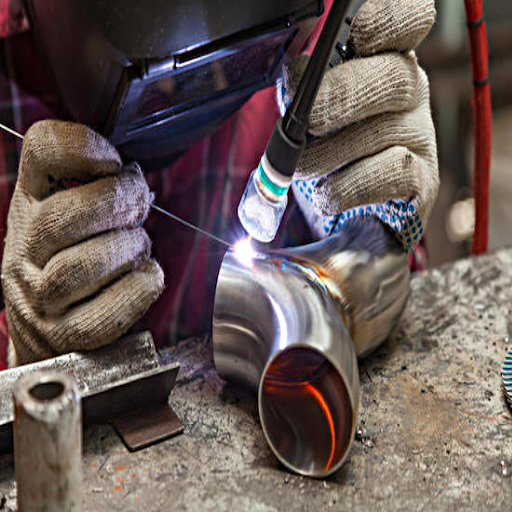
Tungsten Inert Gas (TIG) welding utilizes intense heat to combine two metals, like all welding techniques. In this technique, gases such as argon that don’t take part in a reaction and act as a protector are employed. It uses advanced non-consumable tungsten current. Because thin metals like stainless steel, aluminum, and magnesium need to be welded without a trace of imperfection, high-grade welds are tactfully performed using TIG welding. Due to the meticulous skill required to undertake TIG welding, only the most skilled welders with vast experience can effectively use tungsten inert gas welding.
How does the TIG welding process work?
The TIG welding process begins with the joining of two materials. The Tungsten electrode must first be attached to the torch and further sharpened for better arc control and ease of welding clean titanium. The power source also plays a vital part: the coax for lithium and magnesium. Further, select AC or DC for other types of stainless steel or carbon steel.
After assembling equipment, it is vital to set the protective inert gas, usually a pure argon or an argon-helium blend, to shield the weld pool from being polluted by the atmosphere. The welder starts an arc by momentarily contacting the workpiece with the tungsten electrode, which is then slightly withdrawn to create a base metal melting heat. A filler rod can be added to the molten pool according to specific joint needs. While controlling heat input and electrode motion, the welder changes position to ensure precision. This forms a strong and beautiful weld with minimal spatter, essential for clean and precise workmanship projects.
What are the benefits of using TIG welding?
- Seam Quality
TIG welding yields very neat and accurate welds because the joint completeness and accuracy are low, and fabric distortion is low. This welding type is preferred for intricate workpieces with demanding aesthetic requirements. Its finish is no worse than that of the welds used in the aerospace and automotive industries.
- Applicable to Many Kinds of Materials
TIG welding can handle many types of metal joints, such as steel, aluminum, bronze, copper, magnesium, and exotic titanium alloys. It can be employed in many sectors and in many tasks.
- Greater Control and Accuracy
Due to the high level of filler material and heat control, precise welding can be achieved. Such extensive control allows the welder to work on very delicate structures, thin slabs of material or achieve very sophisticated shapes.
- No Need for Cleaning after Welding
The TIG welding technique does not require the application of flux, eliminating the need to clean after welding. With inert gas placed over the zone of welding, the area is kept unspoiled, guaranteeing work is done quickly and efficiently.
- Reliable TIG Welding
Due to its accuracy in executing intricate welds, TIG welding can produce highly strong and durable welds. It possesses excellent structural integrity, which is incredibly important for applications where reliability and strength are critical, like pressure vessels and pipelines.
What equipment is required for TIG welding?
Several items need to be acquired to execute effective and efficient TIG welding. Some items include:
- TIG Welding Machine: Modern machines often have changes in settings for current and polarity, which are required to adjust the power source to generate the arc needed for the welding.
- Tungsten Electrode: Non-consumable tungsten electrodes are made out of tungsten due to the aforementioned durability and conductivity.
- Filler Rods: Depending on the project, filler materials can optionally be supplied with the rod when materials are required to be added around or within the weld joint.
- Shielding Gas: Argon or argon-helium gas is the two most commonly used gases to prevent atmosphere contamination.
- Torch with Gas Hose: A handheld torch that carries an electrode of tungsten to supply the gas to the area required to weld.
- Foot Pedal or Hand Control: This allows the operator to set an exceedingly accurate welding current to be applied during the process.
- Protective Gear: Workers should wear helmets with auto-darkening filters, heat-resistant gloves, and flame-retardant coverings while welding to protect themselves from dangerous attacks.
- Ground Clamp: Proper grounding should be ensured to finish the circuit necessary for the welding process, thus the need for the clamp.
- Cooling System (if applicable): Extensively working with some setups of TIG requires the cooling system, thus needing an apparatus to lessen heating during the prolonged welding.
All parts are collaboratively assembled throughout the TIG welding process to assess accuracy, safety, and focus on
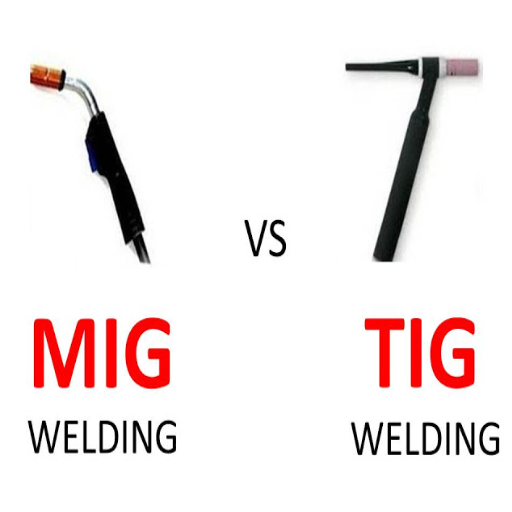
weld quality. This guarantees seamless welds.
What are the key differences between MIG and TIG Welding?
- Process:
MIG welding features a continuously feeding wire electrode that melts into the weld.
TIG welding uses a non-consumable tungsten electrode and often requires a separate filler rod, which is non-consumable.
- Skill Level:
MIG welding is easy to learn and the most appropriate choice for beginners.
TIG welding takes a skilled hand and more precision, so experienced welders mostly employ it for intricate detailing.
- Speed:
MIG welding is faster and more appropriate for large-scale projects.
TIG welding is generally slower than MIG welding, but results in much more accurate work.
- Materials:
MIG welding is more effective with thicker materials such as steel or aluminum.
TIG welding is more effective for thinner metals or delicate materials.
- Finish:
MIG welding typically produces extra spatter, which needs to be cleaned up.
TIG welding produces little spatter, yielding a cleaner finish than MIG welding.
Knowing the differences will help you choose the most productive welding method appropriate for your project’s needs.
What is the difference between MIG and TIG in terms of technique?
MIG welding is considered easier and quicker due to using a consumable wire electrode, compared to TIG welding, which utilizes a non-consumable tungsten electrode that provides precision and finer details.
|
Parameter |
MIG Welding |
TIG Welding |
|---|---|---|
|
Electrode |
Consumable |
Non-consumable |
|
Speed |
Fast |
Slow |
|
Precision |
Low |
High |
|
Ease |
Easy |
Difficult |
|
Aesthetics |
Moderate |
Excellent |
|
Materials |
Thick |
Thin |
|
Cost |
Low |
High |
|
Skill Level |
Beginner |
Expert |
Which type of weld is better for stainless steel?
With stainless steel, TIG welding is continually the go-to choice because of the clean and precise welds it provides. TIG welding is the best option to maintain stainless steel’s clean and corrosion-resistant qualities due to the minimal spatter and controlled heat. It also works best with the thinner stainless steel materials. Although MIG welding works with stainless steel, it performs best in projects requiring faster welding speeds or dealing with thicker materials. TIG welding is always the answer when looking for precision, durability, and fine details.
How do welding speeds compare between MIG and TIG?
TIG welding is slower than MIG welding due to the automated wire feed and simplified technique used in MIG welding.
|
Parameter |
MIG Welding |
TIG Welding |
|---|---|---|
|
Speed |
Fast |
Slow |
|
Wire Feed |
Automatic |
Manual |
|
Setup Time |
Short |
Long |
|
Run Time |
Long |
Short |
|
Efficiency |
High |
Moderate |
|
Control |
Moderate |
High |
What projects are best suited for MIG welding?
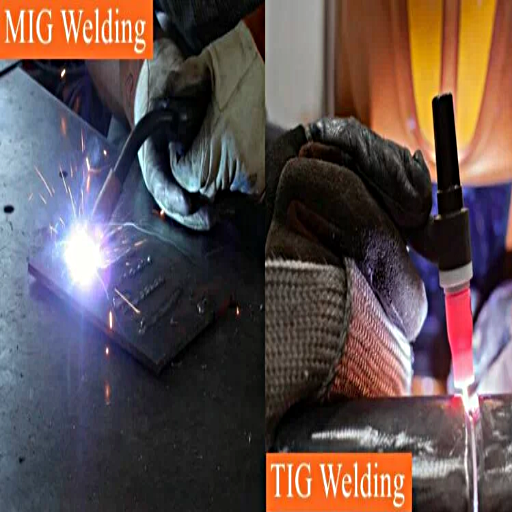
MIG welding is often used on projects with thick materials that need to be done quickly. It is also used in structural work, fixing cars, making heavy equipment, and large-scale fabrication. In these applications, speed is prioritized over precision, and MIG welding is preferred due to its effectiveness in making strong joints.
When should MIG welding be used vs TIG welding?
Unlike MIG welding, which is best suited for thick materials, speed, and ease, TIG welding is best for precision, aesthetics, and thin materials.
|
Parameter |
MIG Welding |
TIG Welding |
|---|---|---|
|
Material |
Thick |
Thin |
|
Precision |
Low |
High |
|
Aesthetics |
Moderate |
Excellent |
|
Speed |
Fast |
Slow |
|
Skill Level |
Beginner |
Expert |
|
Cost |
Low |
High |
|
Applications |
Structural |
Decorative |
When should you consider using TIG welding?
Due to its precision and technique control over the weld, TIG welding is ideal for projects requiring clean welds and highly detailed work. It is prominently used with thin non-ferrous metals like stainless steel and aluminum, which require strong accuracy. Some industries that incorporate these are aerospace, artistic metalworking, and the production of complex parts. JIG welding is especially well-suited for elements with stringent requirements for visual quality and limited post-weld cleanup required. Furthermore, these welds are advantageous for structures sensitive to heat, for their excellent strength and sensitive internal components that could be damaged through warping or delicate materials that could be damaged through heat.
What are the advantages of using MIG welding?
- Ease of Use
MIG welding methods are easy to learn and can be quickly mastered with little or no formal training. It is especially beneficial for hobbyists and professionals, as users can achieve consistent results without training.
- High Welding Speed
Due to higher deposition rates, welders can complete projects faster than with other welding processes. These time savings make MIG welding an excellent option for time-sensitive large-scale productions.
- Versatility
MIG welding uses carbon steel, corrosion-resistant stainless steel, and aluminum. It is also helpful in welding various material thicknesses, ranging from thin sheets to heavier skeletal structures.
- Continuous Welds
Because of the continuous tuna fish wire feed, the MIG welding technique can be used to make long, uninterrupted welds on all sorts of metals. This also improves the overall quality of the weld.
- Reduced Clean-Up Time
Since MIG welding produces less spatter than most other processes, less cleanup is required after the job is done. This will help save time and keep the operations in diverse applications efficient and functional.
Reference Sources
1. Tungsten Inert Gas (TIG) and Metal Inert Gas (MIG) Welding Applications – Critical Review
- Authors: S. L. Lawal et al.
- Publication Date: 2023
- Journal: E3S Web of Conferences
- Key Findings:
- This review critically examines the operational differences between TIG and MIG welding processes, highlighting their applications in various aerospace, automotive, and food packaging industries.
- The study discusses the advantages and disadvantages of each method, particularly focusing on issues like porosity and plastic deformation due to frictional heat.
- It suggests that while MIG welding is generally faster and more efficient for thicker materials, TIG welding provides better control and quality for thinner materials.
- Methodology:
- The authors conducted a comprehensive literature review, analyzing various studies and reports on TIG and MIG welding processes to summarize their findings and implications for industry practices(Lawal et al., 2023).
- Authors: C. Abima et al.
- Publication Date: 2022
- Journal: Scientific African
- Key Findings:
- This study compares the mechanical properties and structural integrity of joints made using TIG, MIG, and a hybrid TIG-MIG process.
- It was found that the hybrid process offered superior mechanical properties compared to standalone MIG and TIG welding, particularly in terms of tensile strength and ductility.
- The research highlights the differences in heat input and cooling rates between the processes, which significantly affect the microstructure and mechanical properties of the welded joints.
- Methodology:
- The authors used all three methods to experimentally weld 1008 steel joints and conducted mechanical testing (tensile tests, hardness tests) to evaluate the performance of each welding technique(Abima et al., 2022).
- Authors: S. L. Lawal, S. A. Afolalu
- Publication Date: 2024
- Journal: IOP Conference Series: Earth and Environment
- Key Findings:
- This review discusses how different welding parameters affect the mechanical properties of welds produced by TIG and MIG processes in high-strength steel (HSS) X65 pipes.
- It emphasizes the importance of parameter optimization to achieve high-quality welds, noting that MIG welding generally provides faster deposition rates. In contrast, TIG welding offers better control over the weld pool.
- Methodology:
- The authors reviewed existing literature on welding parameters and their effects on weld quality, summarizing findings from various studies to provide insights into best practices for welding HSS(Lawal & Afolalu, 2024).
4. Top Column and Boom Manufacturer and Supplier in China
Frequently Asked Questions (FAQs)
Q: What is the main difference between MIG vs TIG welding?
A: The main difference between MIG vs TIG welding lies in the process. MIG welding, also known as gas metal arc welding, uses a consumable electrode and is generally easier and faster than TIG welding, which is known as gas tungsten arc welding and requires more skill and control over the welding process.
Q: Which welding technique is better for thin metal, MIG or TIG?
A: TIG welding is often the better choice for thin metal because it provides greater control over the heat and allows for more precise welds. However, MIG welding can also be used effectively, especially for quicker projects.
Q: Is it easier to learn MIG welding or TIG welding?
A: MIG welding is generally easier to learn compared to TIG welding. The MIG process uses a welding machine that automatically feeds the wire electrode, making it more user-friendly for beginners.
Q: When should I use a TIG welder instead of a MIG welder?
A: You should use a TIG welder when you need to weld non-ferrous metals, require high precision, or work on projects that demand clean, high-quality welds, such as in aerospace or automotive applications.
Q: What type of welding equipment is needed for MIG vs TIG welding?
A: MIG welding requires a welder, which includes a welding machine that feeds wire and a welding torch. TIG welding requires a welder, which includes a TIG torch and often additional gas equipment for shielding.
Q: What are some typical applications for MIG welding and TIG welding?
A: MIG welding is commonly used for automotive repairs and fabrication, while TIG welding is often used in industries requiring high-quality welds, such as aerospace, medical devices, and high-end fabrication.
Q: Can I use a MIG welder for all types of welding?
A: While MIG welding is versatile and can be used for many types of metal, it is not ideal for every application. For instance, TIG welding is better for welding stainless steel and aluminum, where precision is critical.
Q: How does the welding process differ between MIG and TIG?
A: The welding process differs primarily in the electrode used; MIG welding uses a consumable electrode that is automatically fed, while TIG welding uses a non-consumable tungsten electrode and requires the welder to feed filler metal into the weld pool manually.
Q: What are the advantages of using a TIG welder?
A: Advantages of using a TIG welder include the ability to weld a wider variety of metals, better control over the welding process, and the capability to produce cleaner and more aesthetically pleasing welds.


