
Welding serves numerous industries, including construction, manufacturing, aerospace, and automotive. Quality welds demand precision, safety, efficiency, and time management from the welders, which is where the weld positioners are helpful.
In this ultimate guide, you will learn about the types and benefits of welding positioners and how to choose the most appropriate one. Whether you are just starting or a professional, you will walk away with the information that will significantly improve your craft with the help of this blog. Read until the end and learn how to tackle welding projects with weld positioners.
What are the different types of welding positioners?
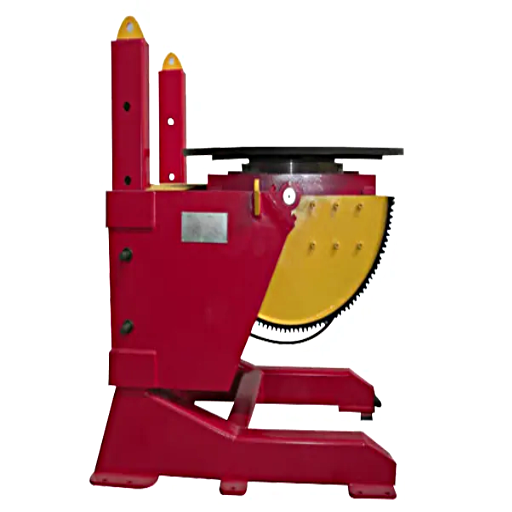
Here are some types of welding positioners, each serving to address specific project requirements:
- Rotary Table Positioners—This includes a transforming table that holds and moves the workpiece relative to the welding robot, allowing for precise placement during welding.
- Tilt-rotate Positioners—These allow both tilting and rotating actions, enabling the welder to position the workpiece at the desired position for complex welds.
- Headstock and Tailstock Positioners—These are for long and cylindrical workpieces. They offer stability coupled with smooth rotation for easy manipulation.
- Pipe Rollers—They are used for welds on pipes and other cylindrical parts and are designed to form the required rollers that move the workpiece.
- Manual Positioners—These are ergonomic as they are lightweight, hence easier to use. They need adjustment by hand, making them suitable for smaller or less sophisticated jobs.
Every type improves efficiency, precision, and safety while welding.
Understanding rotary welding positioners
Like other tools and machines, the rotary welding positioner has its roots in the vast field of technology. Its functions are simple yet of extreme use: it rotates and holds workpieces to allow welders to reach all areas of the piece with ease. These devices have become increasingly valuable for automotive, heavy machinery, construction, aerospace, and other advanced technological industries.
- Advantages of Using Rotary Positioners for Welding Automation
Improved Efficiency of Welding Procedures: With rotary positioners in place, less time is wasted manually adjusting the position of heavy workpieces. At high-volume operations, this streamlined workflow significantly raises productivity.
Enhanced Quality of Welding: In most operations, welders are required to control numerous variables simultaneously which increases the chances of human error. With optimal position control, the chances of defects such as porosity or incomplete fusion is significantly lower thereby increasing the efficiency of the operation.
Decreased Risk and Fatigue: Positioners reduce manual work, awkward posture, and handling, which significantly decreases the welder’s physical burden and the possibility of accidents.
Consistency and Accuracy: Due to the advanced computational technology being incorporated into welding machines, specific parameters such as rotation, oscillation, positioning speeds, and control execution allow for precision and consistency for the welds, increasing accuracy for even the most complicated cylindrical pieces.
- Data and Market Insights:
According to the latest reports, there seems to be an increase in demand for global welding positioners. From 2023 to 2030, the rotary welding positioner market is set to expand at a CAGR of 4.5%. Industries are adopting them because some advanced models can handle workpieces in excess of 100 tons, which demonstrates their versatility and scalability for projects of all kinds.
- Latest Innovations:
Automation Integration: The latest rotary welding positioners include automation features that permit integration with robotic arms and welded automation cells with little effort.
These advancements have also benefited robotic and CNC welders. Now, controllers have precision settings, which allow weld operators to create workflows by setting predefined rotation speeds and tilt angles and automating start/stop functions.
Specific newer units are reported to have capacities over 250K pounds. This benefits users in the shipbuilding and wind energy industries with substantial components.
Rotary welding positioners are still improving the way welding tasks are done by streamlining processes, improving safety, and efficiency for both manual and robotic workflows. Strategic investments in equipment, specially tailored for particular projects, make a noticeable impact on production quality alongside cost efficiency.
Exploring tailstock welding positioners
Weld tailstocks aid in the support and rotation of workpieces along with a headstock, as well as spatial alignment during welding to a fixed axis. Utilization of tailstock positioners in heavy material works increases stability while significantly decreasing the physical exertion required by the operator. Tailstock machines are significant for the aerospace and construction industries, requiring effortless work with cylindrical and bulky pieces.
Manual vs. automated welding positioners
Welders can choose between manual positioners, which allow physical control, or programmed automated positioners, which advance work through optimized timelines and set efficiency control systems.
| Parameter | Manual | Automated |
|---|---|---|
|
Control |
Operator-driven |
Programmed |
|
Efficiency |
Moderate |
High |
|
Precision |
Limited |
Superior |
|
Cost |
Lower |
Higher |
|
Use Case |
Simple tasks |
Complex, repetitive |
How do welding positioners automate the welding process?
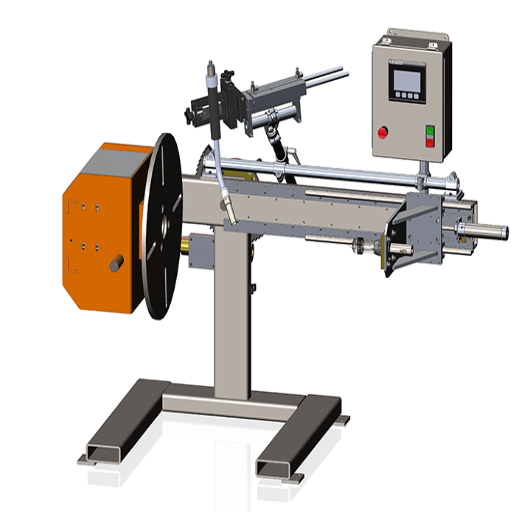
Using positioners makes welding automation possible by rotating, positioning, and tilting the workpiece around its axes (X, Y, Z) for optimal welding angles. The welder or robotic arm can seamlessly perform welds. Advanced programmable controls allow for sophisticated automated welding to adjust movement and speed, ensuring precise and repeatable results. This lowers the need for manual intervention, improving productivity and quality of the welds by zeroing in on inaccuracies.
Benefits of automating welding operations
- Better Productivity and Efficiency
Uninterrupted workflow cycles are a characteristic feature of automated welding systems, which boost production rates dramatically. Industry data states that productivity can be boosted by 50% as a result of automation compared with manual welding.
- Improved Weld Quality
Defect ratios and product reliability are enhanced by the consistent and flawless execution of welds, which are controlled precisely over the input speed, angle, and heat using automation technology.
- Reduced Operational Costs
Substantial operational costs are incurred with the initial investment in automation, but savings in labor costs, material waste, and potential error repairs add up over time.
- Enhanced Worker Safety
Automation eliminates employees from dangerous settings where they can be exposed to hazardous fumes, high heat, and arc radiation. This makes the workplace safer and reduces injuries.
- Flexibility Along With Scalability
Modern automated welding systems can be reprogrammed to accommodate new schematics, materials, or even higher production volumes, effortlessly making automatic changes in response to evolving market conditions.
How positioners improve productivity in fabrication
Welding positioners are crucial in enhancing productivity, accuracy, and safety while helping to automate the fabrication process. They assist in holding, tilting, or rotating workpieces so that welders or automated systems can access the ideal angles needed for welding. With the assistance of positioners, the operators’ physical strain is reduced substantially, and the minimal time lost due to rep
Positioning during the welding process is offset.
1. Reduction in Cycle Time and Enhanced Efficiency
By automating workpiece movements, positioners make it easier to achieve consistent welds, which improves turnaround time. Industry reports suggest that productivity is enhanced by almost 40% owing to less time spent manipulating components with positioners. In addition, these advancements in automation allow for significant reductions in operational costs and overall improvements in efficiency in mass production.
2. Weld Quality Improvements
Because the workpiece is held in a position, welding can be performed at specific angles and coordinates more accurately. Forging defects sometimes caused by irregular paths, like porosity or misalignment, will no longer be an issue. According to research, highly accurate positioners increase weld precision by 30%, which is extremely important for the aerospace, automotive, and energy industries.
3. Safety Enhancements
Welders face many safety risks when it comes to etching heavy workpieces, including ergonomic injuries and accidents on the floor due to the manual handling of workpieces. Welding positioners significantly reduce these risks by automating the workpiece’s motions, making the environment inherently better. In addition, using positioners allows operators to assume non-strained postures that reduce fatigue and error rate, which would have been caused by strain.
4. Scalability and Versatility
Positioners do not require operator interventions for workpieces within various ranges of weights, from a couple of pounds to a ton. Advanced models are outfitted with programmed controls and thus can be assimilated into automated frameworks. With modern technology comes adaptability to various materials, shapes, and components of various sizes. As such, positioners are vital tools for both finite jobs and larger industrial tasks.
5. Cost Savings in the Long Term
The long-term benefits of positioners surpass their initial costs in welding work. Reducing material wastes, reworks, and throughput boost positions, which are productivity-enhanced tools vital to achieving a company’s ultimate aim of a healthier bottom line. Research indicates a period of 12 to 18 months following a company’s enhanced productivity and reduction of labor costs using positioners to maximize productivity, enabling claimable ROI.
With these combined productivity benefits, welding positioners have become vital assets for contemporary fabrication. They allow companies to streamline processes and uphold optimal levels of quality and safety.
Applications of automated welding systems
The applications of automated welding extend to a myriad of industries. Below are five noteworthy key applications of automated welding:
The careless and systematic approach to split welding in the automotive industry propels the use of sophisticated technologies in vehicle production. Automated welding is paramount in exhaust system and engine component weldments. Due to its repetitive nature, incorporating automation into car frame welding is critical.
The process of automated welding facilitates the manufacture of different pieces of the aircraft, including, but not limited to, the Fuselage, engine, and wings. The use of automation guarantees enhanced accuracy of parts, which ensures considerable compliance with safety regulations and highly regulated quality control policies.
Automated welding plays a major role in the construction industry, primarily in steel structure, bridge, and pipeline construction and fabrication. The welders’ ability to carry out complicated welds at scale, the precision accuracy marks on the geometry of the steel components, and the intersection of structure edges considerably improved safety and project timelines.
The applications of automated systems in engineering are particularly prominent in pipeline welding in the oil and gas industry. Such systems have been proven to provide effective and reliable welds in hostile environments, thus reducing downtimes and increasing productivity.
In electronics manufacturing, automated welding is critical to guaranteeing precision in the assembly of small and complex components like microprocessors and circuit boards.
These applications and their range in different industries showcase the versatility and importance of automated welding systems. As businesses focus more on efficiency, accuracy, and savings, the systems continue to gain popularity.
What is the role of welding positioners in improving weld quality?
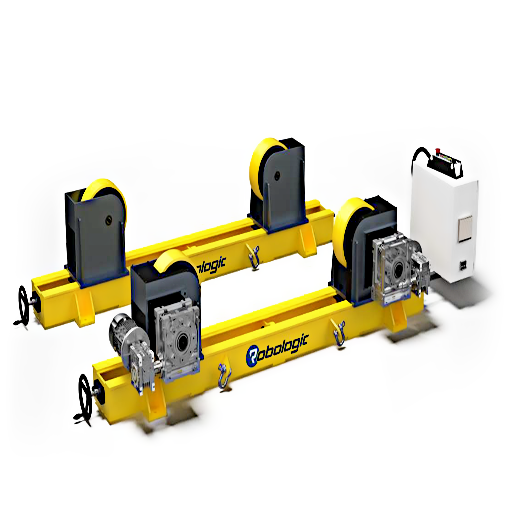
By enabling precise workpiece positioning, welding positioners greatly enhance the quality of welds. They firmly grip components and rotate them to the appropriate angle and alignment for welding, thereby minimizing mistakes and inconsistencies. This improves precision and consistency in welding while also reducing the number of defects. Welding positioners allow welders to maintain ergonomic working postures, which improves efficiency and reduces fatigue, thus enhancing aesthetics further.
How positioners affect the weld pool
Positioners are vital in controlling the features and behavior of the weld pool. The exact movement and control positioners ensure the weld pool is steady and consistent, enabling high-quality welds. This is critical because if there is an unsteady weld pool, defects such as porosity, cracking, or incomplete penetration tend to occur.
Positioners allow the welder’s relative movement to regulate heat input, ensuring a constant travel speed, along with appropriate distance from the arc to the workpiece. There are industry claims that achieving a definite position and angle can lower HAZ affected zone fluctuations by thirty percent, thus making the welds stronger. Also, position aids in reducing sagged or bead-shaped profile welds since gravity can be used to shape the molten material and sculpt the pool in an even manner.
Positioners control the torch angle, ensuring a spatter-free weld. Controlling gravity and the molten material is difficult for vertical or overhead welding, but positioners enable moving the workpiece to a convenient angle, reducing spatter and greatly improving the quality of the weld.
The most recent developments in automated positioners also include tilt and rotation synchronization, allowing even more precise changes to the workpiece angle. Research suggests that the productivity of welding operations can improve by more than 40% with automated systems, as positioners enable welders to concentrate on accuracy and refinement instead of changing the component’s position by hand, which is needed in the middle of the operation. All of these aspects help explain why welding positioners are essential for control of the weld pool and overall weld quality.
Ensuring optimal weld position during operations
Understanding the approaches that enhance working conditions and lead to the creation of welds of superior quality is essential. The automation of the weld fabrication trade is a perfect example of how cutting-edge weld positioning technologies dramatically improve productivity and precision. Advanced welding positioners are known to reduce the time operators spend setting parts in position, minimizing costly manual handling errors, while fully taking advantage of the automated welding cycle. Furthermore, industry estimates suggest that these systems can increase productivity by over fifty percent, lower component downtimes by twenty percent, and significantly reduce idle time due to smoother part transitions.
To achieve optimal weld positioning, multi-axis positioners that allow for 360-degree rotation and tilt are necessary. An ergonomic torso provides welders with even greater means to maintain challenging postures and tackle dangerous seams without sophisticated or repetitive risk of injury tools. Research indicates that using these tools contributes to alleviating operator fatigue by 35 percent while improving accuracy in the welds made by these operators by as much as twenty-five percent.
Moreover, integrating real-time monitoring systems and sensors into welding setups has been crucial in preserving appropriate weld pools and heat inputs. Forward-looking quality assurance is now possible with advanced analytics, thanks to intelligent data solutions that detect likely defects ahead of time. Weld accuracy improves, and industry expectations are met when automated systems, monitoring devices, and proficient operators are synergized.
Impact on different types of welding processes
Applying automated technologies and sophisticated monitoring systems has specific impacts on different welding processes. For example, in gas metal arc welding (GMAW), automation improves arc stability and reduces spatter. This results in cleaner welds and increased production rates. In TIG welding, the modern systems’ precise control of heat and current ensures that weld quality is maintained, even for thinner materials, which is crucial for sensitive operations. Modern systems have also positively affected resistance welding. The process monitoring systems that check the delivery of pressure and heat to the weld nuggets offer uniformity, which is essential for consistent nuggets. Overall, these new systems and technologies in one way or another have lessened the human influences and errors in welding, increased their repeatability, and improved their welding efficiency with different techniques. This is a significant improvement towards industrial manufacturing.
What are the best welding positioners on the market?
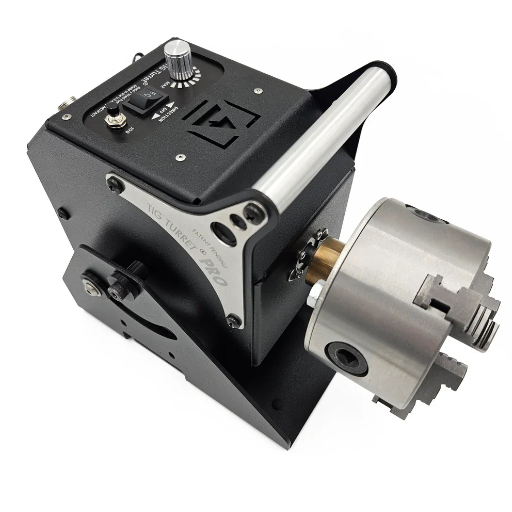
With regards to the quality, reliability, and performance of welding positioners, the following few stand out:
- Baileigh WP-450
This unit is easy to operate and sturdy, making it ideal for medium—and small-sized projects.
- Miller Electric Turntable Weld Positioner
This option guarantees stability and precision and is best suited for detailed welding work on various materials.
- Lincoln Electric Weld Positioners
Excellent for heavy-duty industrial applications, these positioners from Lincoln are well known for their durability and versatility.
- AC Precision Mini Welding Positioner
Very affordable and compact, this unit is best suited for small tasks or the hobbyist welder.
- Koike Aronson RB-500
Designed for complex, large-scale operations, this model guarantees efficiency and is tailored for high-capacity welding.
These precision welding positioners, designed and manufactured by the best in the industry, have made the daunting task of welding robotic.
Top-rated rotary welding positioners
Each assignment comes equipped with a unique set of requirements, which translates into the choice of equipment needed. For instance, if design precision and complicated maneuvers are the primary concerns, it would be best to go with the Koike Aronson RB-500, as its high efficiency and capacity function best in demanding industrial settings. However, due to its convenience and low cost, the AC Precision Mini Welding Positioner is perfect for small-scale or beginner work. Most of these systems come outfitted with features that allow for rotation, allowing for easier work. Still, each has specified welding functions such as 2-axis or 3-axis, headstock-tailstock, and rotary cutout designs.
Comparative analysis of different types of welding positioners
Like most other electric devices, robotics and manipulative motors can track user input commands, stemming from the control console mounted on an ergonomic frame, which is adjustable for user comfort.
| Type | Key Feature | Application |
|---|---|---|
|
2-Axis |
Tilts, rotates |
General welding |
|
3-Axis |
Adds height adjustment |
Complex geometries |
|
Rotary |
Rotates a single axis |
Pipes, tanks |
|
Skyhook |
Suspends workpiece |
Heavy machinery |
|
Turntable |
Horizontal rotation |
Circular welds |
|
Headstock-Tailstock |
Dual support |
Long components |
|
Tilting |
Adjustable angles |
Varied shapes |
Customer reviews and experiences with welding positioners
Listening to customers shows that welding positioners should be easy to use and adaptable. Many users appreciate models such as the Aronson RB-500 because they are durable and have a great load capacity for industrial-scale work. Welders usually look for positioners that rotate smoothly, maintain speed, have precise control, and consistently perform well in the long term.
For small workshops, users recommend compact models designed for light-duty work due to their lower cost and space savings. One common aspect appreciated in reviews is the user-friendly design of controls and quick setup instructions that minimize downtime, which improves productivity substantially. Customers find value in after-sales services and the availability of spare parts, which greatly affects their overall satisfaction.
Versatility, reliability, and ease of use make a great welding positioner, and these factors have been prioritized the most. Using these features alongside cost considerations can help welders get the positioner tailored to their specific needs.
Reference Sources
-
Capitol Iron Works – Essential Guide to Welding Positioners
This source covers thoroughly positioners, their types, and applications.
-
Cyclotron Automation – Welding Positioners: A Complete Guide
A detailed guide focusing on the functionality and significance of welding positioners in the industry.
-
Red-D-Arc – The Beginner’s Guide to Welding Positioners
An exposition for the novice on welding positioners, their applications, and advantages.
-
Kinetic Technologies – Everything You Need to Know About Welding Positioners
Most insightful in discussing the benefits and selection of welding positioners.
-
WRS Robotics – How to Choose the Right Welding Positioner
An expert’s guide on selecting a welding positioner is focused on particular manufacturing requirements.
- Top Welding Positioner Manufacturer And Supplier In China
Frequently Asked Questions (FAQs)
Q: What are welding positioners, and how do they work?
A: Welding positioners are specialized equipment that hold and manipulate workpieces during welding. They are designed to position and move weldments into the optimal orientation for different welding applications, enhancing precision and efficiency in the welding process. Positioners utilize various axes of movement to achieve the desired angles and positions for welders or robotic welding systems.
Q: How do I choose the correct welding positioner for my needs?
A: To choose the correct welding positioner, consider factors such as the size and weight of your workpieces, the type of welding applications you will perform, and whether you require manual or robotic welding capabilities. Evaluating these factors will help you select a positioner that enhances your welding productivity and meets your specific welding needs.
Q: What are the applications of welding positioners?
A: Welding positioners are used in various applications within the welding industry, including pipe welding, assembly work, and complex structural welding. They benefit both manual and robotic welding systems, allowing for precise welding in vertical and horizontal positions, thereby improving the quality of welds and reducing operator fatigue.
Q: Can I use welding positioners for robotic welding?
A: Yes, welding positioners are highly compatible with robotic welding systems. They allow for the precise positioning of workpieces, enabling robotic welders to perform accurate and efficient welds. This synergy between positioners and robotics enhances productivity in welding shops and production facilities.
Q: What should I know about multi-axis welding positioners?
A: Multi-axis welding positioners offer greater flexibility and control in positioning workpieces for welding. They can rotate and tilt workpieces in multiple directions, making them ideal for complex geometries and diverse welding applications. Understanding the capabilities of multi-axis positioners can help you optimize your welding processes.
Q: How do welding positioners enhance welding productivity?
A: Welding positioners enhance productivity by allowing welders to work more efficiently and comfortably. They reduce the need for manual handling of heavy workpieces, enable quicker adjustments to welding positions, and improve welds’ overall speed and quality, which is particularly beneficial in high-volume production environments.
Q: What is included in a complete guide to using welding positioners?
A: A complete guide to using welding positioners typically includes information on selecting the correct welding positioner, setup and calibration procedures, safety considerations, and best practices for operation. It may also cover tips for maintenance and troubleshooting common issues, ensuring optimal performance of your welding equipment.
Q: How do positioners help in manual welding?
A: In manual welding, positioners assist welders by securely holding workpieces in the desired orientation. This reduces strain on the welder and allows for more precise welds. This capability is especially useful for vertical positions or when working on complex shapes, ultimately leading to higher-quality welds and reduced fatigue.
Q: What factors should I consider when evaluating welding positioners?
A: When evaluating welding positioners, consider the load capacity, range of motion, control options, and compatibility with your welding equipment. Additionally, assess the types of welding applications you will be conducting and how the positioner can accommodate those needs, ensuring that you select a positioner that aligns with your project requirements.


