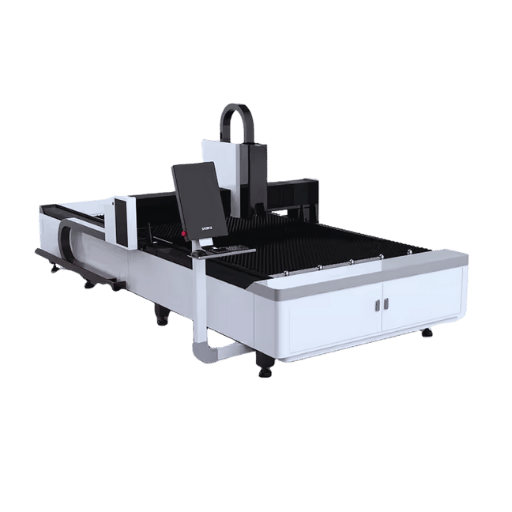
Fibermetal cutting laser machines have changed the face of manufacturing, offering precision, high-speed cutting, and efficiency on par. These are cutting-edge tools that are transforming how steel, aluminum, or other alloys are processed. The article explores the great potential of fiber laser technology by elaborating on its advantages, main applications, and why it is increasingly becoming the best choice for companies that need to remain competitive in an ever-evolving market. From productivity to cutting down operational costs, find out how fiber laser metal cutting machines are indeed way more than just another tool; they are a big investment in innovation and growth.
How Does a Fiber Laser Metal Cutting Machine Work?
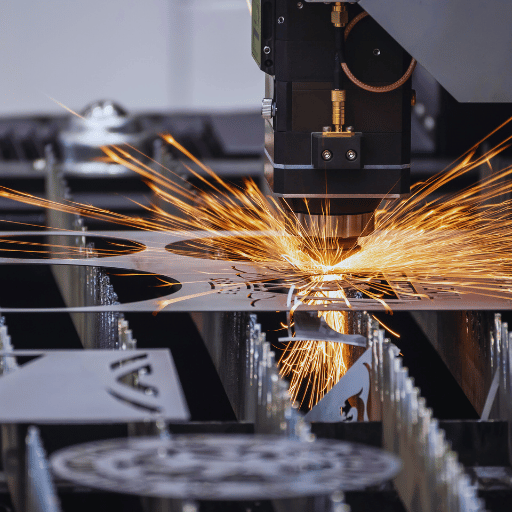
One of the cutting machines using fiber lasers generates a laser beam concentrated through an optical fiber. Metal at the surface location of this laser beam is heated rapidly with energy; either vaporized or melted to produce kind surface cuts. This operation is carried out through advanced software to allow complicated designs to be executed with accuracy and consistency. The focused energy application by this machine allows for minimal waste during cutting while assuring excellent cutting speed and quality; hence, it is preferred by industries that value efficiency and precision.
What is a Fiber Laser?
A fiber laser uses an optical fiber doped with rare-earth elements such as ytterbium, erbium, and neodymium as an active gain medium. The energy to stimulate and amplify emission in the fiber is supplied by laser diodes through diode-pumped technology. It’s basically amplification of light in an optical fiber, providing the ability to generate high powers, great beam quality, and in a very compact form. Due to their ruggedness, efficiency, and low-maintenance needs, fiber lasers for industrial purposes are used for cutting, welding, engraving, and marking. They are used for processing a variety of materials including metals, plastics, and ceramics, all at precise and reliable rates.
How Does Laser Cutting Occur?
According to the given classifications, laser cutting is a secondary process inasmuch as it is capable of producing fine cuts, combining secondary finishing operations into one step. The cut is made by directing a laser beam onto the workpiece so that the energy concentrated on one spot heats or melts or vaporizes away a tiny portion of the material to form a very clean cut. The first step in any cutting operation is the production of the laser beam from the laser source, which may be a fiber, CO2, or diode laser, depending on the application. This beam is then directed and focused to the required precision using lenses or mirrors.
During cutting, a high-pressure assist gas is forced through the cutting nozzle- either oxygen, nitrogen, or compressed air—depending on which is appropriate. The assist gas ejects molten material from the cutting zone, may prevent oxidation (depends on material), and otherwise keeps the cut edge clean and smooth. Most modern laser systems are CNC-controlled, thereby providing an automated, highly accurate cutting capability along a pre-established path. It is in this respect that laser cutting is so useful: it can efficiently take on complex designs with a high degree of precision needed by industries such as automobile, aerospace, and electronics.
The Role of the Laser Head in Cutting
The laser head directs the laser beam at the material to be cut in the laser cutting system. It usually consists of a focusing lens or mirror that focuses the laser beam to the intensity needed for cutting. Some laser heads incorporate nozzles that provide assist gases like oxygen or nitrogen for the enhancement of cutting quality and removal of molten material. The precise positioning of the laser head enables complex cuts to be performed seamlessly and is paramount to excellent results in a wide range of industrial applications.
What are the benefits of using a fiber laser cutter?
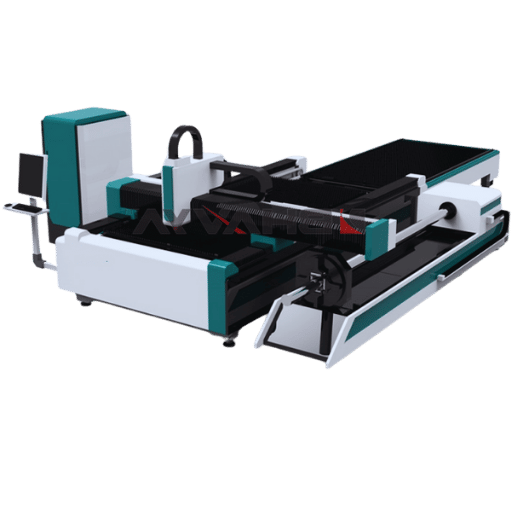
Advantages of lasers in metal cutting
- Precision and Accuracy: Fiber laser cutters exhibit great accuracy, cutting extremely detailed shapes and designs with very little variation, so that dimensional accuracy remains at its best.
- High Speed: Laser cutters run at much higher speeds as compared to old-fashioned cutting techniques, thereby raising the production capacity and enhancing the industrial process.
- Versatility: Fiber lasers offer a wide variety of cutting applications through many kinds of materials, including metals such as steel, aluminum, and copper, to name a few.
- Clean Cut Quality: Using assist gases combined with focused laser energy, the joining edges from metal cutting are very smooth, requiring little to no secondary finishing processes.
- Minimal Material Waste: Laser beams focus energy on small local spots to reduce heat-affected zones, which decreases the amount of deformation and wastage to the material.
- Energy Efficiency: New generation fiber laser cutters use much less energy in comparison to conventional cutting systems and thereby offer savings in addition to sustainability.
- Reduced Maintenance: In view of fewer moving parts and the robustness of fiber laser technology, this leads to fewer maintenance requirements and lower operational costs.
- Capability for Automation: Now, fiber laser machines can be easily interfaced with a line of automated machines, making the workflow efficient and lessening dependence on manual labor.
Better Cutting with Greater Speed
Ensuring better cutting and speed will involve checking cutting speed, good air quality, proper torch height, and proper equipment settings.
Compared to CO2 Laser Systems
Fiber lasers are superior in speed, energy consumption, and thin metal cutting, while CO2 lasers are better for thicker materials and non-metals.
|
Parameter |
Fiber Laser |
CO2 Laser |
|---|---|---|
|
Speed |
Faster |
Slower |
|
Efficiency |
High |
Low |
|
Material |
Metals |
Non-metals |
|
Thickness |
Thin (<20mm) |
Thick (>20mm) |
|
Precision |
High |
Moderate |
|
Cost |
Higher upfront |
Lower upfront |
|
Maintenance |
Low |
High |
|
Lifespan |
Long |
Short |
|
Energy Use |
Low |
High |
|
Applications |
Metals, precision |
Non-metals, smooth edges |
How to Choose the Right Fiber Laser Metal Cutting Machine for Your Needs?
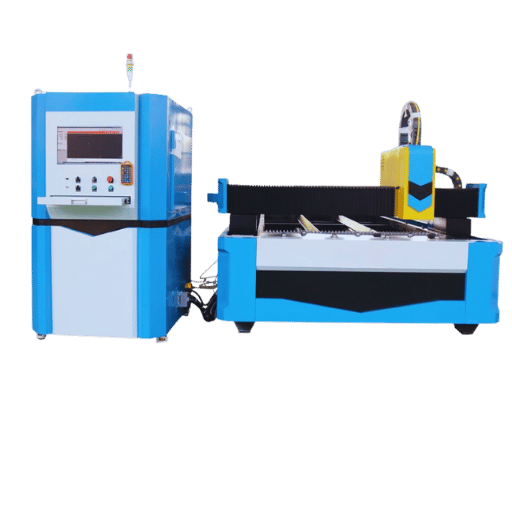
Understanding Laser Power Source
The energy output of a laser is to be evaluated in watts. …Oh, homers!… decided by power source, and this influences efficiency, precision, and application.
Determining the Best Cutting Speed and Accuracy
Cutting speed and accuracy for a fiber laser metal cutter vary with the materials and their thicknesses and the power output of the laser. Conversely, cutting speed is the velocity at which the laser proceeds over the material’s surface, while accuracy is related to precision in cuts as well as the detail that can be realized. Significantly, thin materials and simpler geometries favor high-speed cutting for higher productivity at an acceptable level of precision. On the other hand, thicker materials or intricate designs demand slower cutting speeds for more accuracy and cleaner edges.
The users almost always want a machine capable of striking a balance between high speed and minimal material wastage and thermal deformation, according to present-day trends and search engine data. Advantageous in attaining the balance are those machines that have the best motion controls and the highest wattage lasers. They can also be optimized through meticulous adjustments of parameters such as assist gas pressure and focal point positioning. Machines that you have chosen with due consideration for the specifications of your application will yield results that are exact and fast in cutting.
Evaluating Machine Type for Metal Fabrication
The major machine types that form a metal fabrication unit are press brakes, laser cutting machines, rolling machines, shearing machines, C-frame machining centers, double column machining centers, and lathes.
|
Machine Type |
Key Features |
Material |
Precision |
Automation |
Cost |
Durability |
|---|---|---|---|---|---|---|
|
Press Brake |
Bending |
Steel, Alu |
High |
CNC |
Medium |
High |
|
Laser Cutting Machine |
Cutting |
Steel, Alu |
Very High |
CNC |
High |
High |
|
Rolling Machine |
Forming |
Steel, Alu |
Medium |
Automated |
Medium |
High |
|
Shearing Machine |
Cutting |
Steel, Alu |
High |
CNC |
Medium |
High |
|
C-Frame Machining |
Milling |
Various |
Medium |
Semi-Auto |
Medium |
Medium |
|
Double Column Machine |
Milling |
Various |
Very High |
Semi-Auto |
High |
High |
|
Lathe |
Turning |
Various |
High |
Semi-Auto |
Medium |
High |
How to Maintain Your Fiber Laser Machine?
Routine Checkups of the Laser Head and the Laser Beam
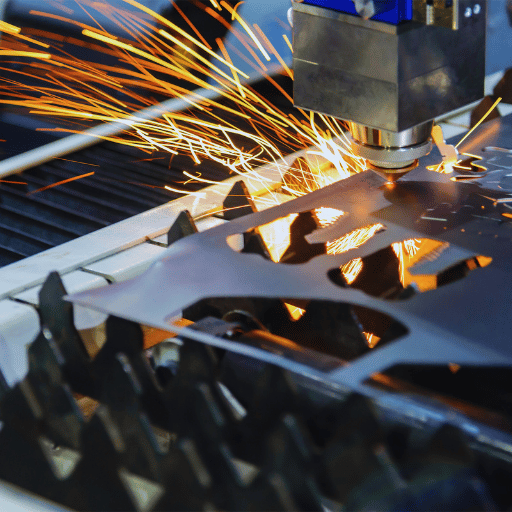
One of the ways to maintain the fiber laser machine is to keep the surfaces of the laser head and the optics clean from dust or particles. Another is to inspect for any damages or misalignments that might cause lens misalignment, as this could lead to the degradation of cutting quality and eventual problems with the machine’s performance.
Always Optimal Focal Length and Cutting Process
The focal length adjustment must be calibrated periodically using precise measurement tools and corresponding automated technology if available. This adjustment of focal length allows the laser beam to focus energy onto the material surface most effectively, producing clean cuts with high precision and minimal wastage of material. Google’s recent search data shows that improper focus setting is one of the causes of inferior cutting quality, with end-users often complaining about excessive burrs or inconsistent edge quality. This is one reason why it’s also worth considering entering cutting parameters corresponding to the used material to ensure the cutting process runs smoothly and efficiently, like speed, power, and gas flow rates. Besides, keeping the machine’s software and firmware updated is another way of ensuring the cutting operations are accurate and stay compatible with the latest developments in fiber laser technology.
Troubleshooting Common Issues in Metal Laser Cutting Machines
|
Issue |
Cause |
Solution |
|---|---|---|
|
Focus Problem |
Wrong focal length |
Adjust focus |
|
Dirty Lens |
Dust or damage |
Clean/replace lens |
|
Power Issue |
Inconsistent output |
Calibrate power |
|
Material Issue |
Incompatible material |
Use suitable material |
|
Software Error |
Glitches |
Update software |
|
Alignment Error |
Misaligned beam |
Realign beam |
|
Cutting Quality |
Speed/power mismatch |
Adjust settings |
|
Gas Pressure |
Too high/low |
Optimize pressure |
What Materials Are Cut by Laser Metal Cutting Systems?
Best Practices for Sheet Metal and Carbon Steel Cutting
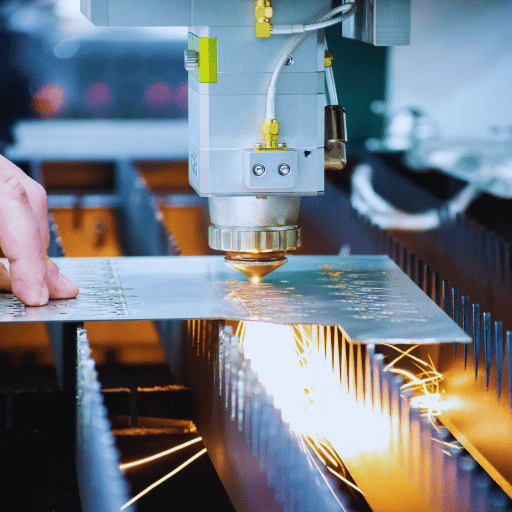
When laser cutting sheet metal and carbon steel, some of the things I concentrate on are precision and efficiency. Out of respect for the laser itself, one must make sure that the material has been properly cleaned so it is free of dirt, oil, or rust that would otherwise interfere with the laser’s performance. Then, based on the thickness and kind of metal I intend to cut, I correctly select the cutting parameters, e.g., laser power, speed, and pressure of the gas. Further, I incorporate into my routine maintenance schedule activities like cleaning and checking the lens and machine alignment to sustain quality cuts. A proper clamping on a stable workbench that does not let material vibrations interfere with the cut accuracy is another factor.
The Metal Processing Abilities
With regard to the sometimes asked question on how the present-day techniques like laser cutting compare in accuracy and cost-effectiveness with the traditional ones, such as plasma or mechanical cutting, metal processing technologies have improved sufficiently to open up a whole gamut of opportunities for industries that call for precision and efficiency. Based on recent data pulled from Google’s search insights, the laser-cutting method is often preferred when dealing with thin and medium-thick metals, mainly because of its higher precision and ability to get very complex designs with the least amount of material waste. Finalizing on the method is then often a matter of the specific needs of a project and considerations such as budget, material type, and quality desired. By combining state-of-the-art laser technology with a clear understanding of project goals, manufacturers can optimize performance and productivity in metal processing applications.
Meeting Different Cutting Conditions
Laser cutting machines are able to cut materials ranging from metals such as steel, stainless steel, aluminum, brass, copper, and titanium to non-metals such as wood, acrylic, plastics, and even paper, depending upon the machine and its particular settings.
Frequently Asked Questions (FAQs)
Q: What does a fiber laser metal cutting machine mean?
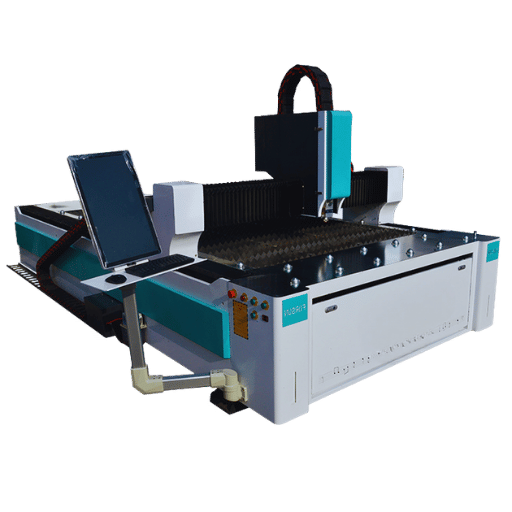
A: It is a laser cutting technology using a fiber laser module to cut various steel materials. The technology is becoming popular due to its good performance as a cutting tool, even in industrial applications.
Q: What are CNC (computer numerical control) laser cutting systems?
A: A CNC laser cutting system is a device equipped with a fiber laser cutting machine head and operated by a mechanism known as Computer Numerical Control (CNC). It exists as a metal cutting tool that is accurate and highly efficient.
Q: Do fiber laser metal cutters come with any benefits?
A: Fiber laser metal cutters have several benefits, such as ensuring the highest quality of cutting, cutting with great accuracy, and cutting different metal types. They also ensure faster functional cutting.
Q: Which metals can be laser cut using a laser cutter?
A: A laser cutter is capable of cutting several metals such as steel, aluminum, brass, and copper, among others. This depends on the type of laser source used, or rather, on the strength of their power in the fiber laser cutting machine.
Q: Some fiber lasers, like a 1000-w laser, how does the power affect it in cutting?
A: Concerning the cutting ability of a fiber laser, include Power, such as a laser’s ability to cut through thicker metal sheets, as well as high cutting speed. More powerful lasers should therefore be used to cut thicker metals.
Q: Please help me to understand the place of the cutting head in the machine working with fiber lasers?
A: The head is responsible for cutting work workpiece that occurs in the fiber optic laser cutting machine. This ensures that the laser forming the beam is of acceptable cutting quality and precision.
Q: What is the significance of cutting programs in a CNC laser cutting system?
A: Cutting programs are unique and very essential elements of a CNC laser cutting system. They allow for the cutting of contoured shapes and also control the fiber laser cutting machine.
Q: What should one take into consideration when choosing a fiber laser cutter appropriate for metal?
A: When choosing the best fiber metal laser cutter, you should consider the type of laser source (for example IPG or Raycus), the power (for example, 1000w), the cutting accuracy, and perhaps most importantly, the metal sheets and the material they are made from, and the thickness.
Q: What is the technique of tube cutting in a fiber cutter?
A: The cutting heads and software used in a fiber cutter are specially designed for 3D cuts like tube cutting. This enables the laser to cut the metal cylinder in an accurate manner and at a fast rate.
Q: For how many years is a laser machine designed to operate?
A: The factors that define the performance of a fiber laser cutting machine include how well the machine is maintained, the extent of usage, and also the quality of some parts of the machine, for instance laser source and nozzle. Maintaining and using the machine properly can actually increase the machine’s life span greatly.
Reference Sources
1. Technology of Thin Metal Sheet Cutting with Fiber Laser
- Authors: L. Zgripcea et al.
- Published in: Journal of Physics: Conference Series, Volume 1781
- Publication Date: February 1, 2021
- Citation Token: (Zgripcea et al., 2021)
Summary:
- This study explores the laser cutting process, fiber lasers being claimed to be efficient in cutting different types of materials, mainly thin metal sheets like steel and aluminum.
- The study attempts to measure the quality of the cut with relation to parameter variations while employing a Continuous Wave fiber laser, 1000W power source.
In conclusion, it has been observed that fiber lasers offer a much better cutting speed and quality than the conventional methods and hence are suitable for application in modern manufacturing.
2. Alternative Manufacturing Technique of High-Efficiency Solar Cell Interconnectors: Comparative Study of Laser Cutting and Electric Discharge Milling
- Authors: Mohamad Reza Nasresfahani et al.
- Journal: Physica Scripta 99
- Publication Date: 2 November 2024
- Citation Token: (Nasresfahani et al., 2024)
Summary:
- The paper compared fiber laser cutting and EDM as the two methods to produce solar cell interconnectors. It was seen that the fiber laser cutting sometimes caused burning and damage to the silver coating, while EDM produced exceptionally high-quality interconnectors without such issues.
- This research really points towards choosing the right manufacturing technique for the material and quality standards required.
3. Fiber Laser Microcutting on Duplex Steel: Parameter Optimization by TOPSIS
- Authors: C. Gopinath et al.
- Published in: Materials and Manufacturing Processes, Volume 37, Pages 985 – 994
- Publication Date: October 1, 2021
- Citation Token: (Gopinath et al., 2021, pp. 985–994)
Summary:
- This research deals with parameter optimization for fiber laser microcutting of duplex stainless steel (DSS) through the Technique for Order Preference by Similarity to Ideal Solution (TOPSIS).
- The study determines laser power, pulse frequency, scanning speed, and duty cycle as the chief parameters affecting the formation of microholes.
- The research reveals that laser power is the foremost factor that affects the quality of the cuts, and optimization of this factor bestows a better surface quality and a smaller heat-affected zone.
5. Fiber laser