
Having precision and efficiency in performing welds is critical. This is where new technology comes into play with the 3-Axis positioner. This tool allows welders to have versatile control of workpieces that require meticulous placement, complete with complex flexibility and fine tuning. Such control level allows definite improvement in safety, weld quality, production times, and overall workplace safety. There are many advantages that the device possesses, which we will delve further into, showcasing how seamless welding operations can be achieved with the device.
What is a 3 Axis Positioner?
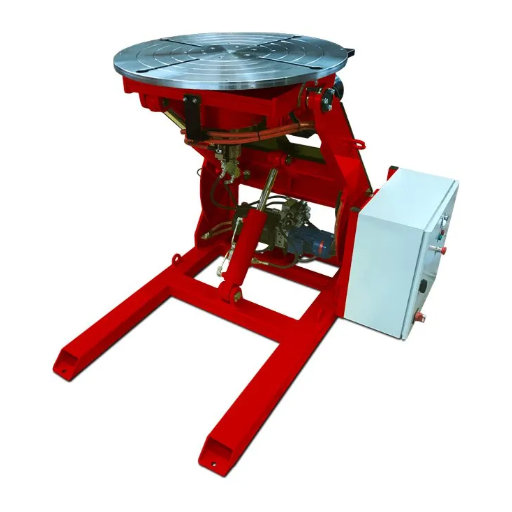
Welders, fabricators, or any personnel performing skilled work require devices that offer precision when it comes to holding, rotating, or any lateral form of manipulation needed to position the workpieces. A 3-axis positioner is one such device since it does all these actions with great precision, particularly with three different axes of rotation. Any skill like welding, assembly, or fabrication that requires you to operate on the side of the object is made simpler due to the positioner’s added control. Being able to handle heavy or oddly shaped materials is yet another advantage the position offers. As a result, stable alignment and support are now possible.
Understanding the Basics of a Positioner
Positioners are especially useful in manufacturing as they improve precision and efficiency by skillfully manipulating and holding a workpiece in the optimal position specific to the task at hand. For welding, assembly, and fabrication tasks, positioners enable access to every face of the object, employing rotational and angular movements, ensuring complete accessibility. Further developments in engineering technology and automation have led to the invention of modern positioners, which are frequently used in robotic systems, facilitating greater operational efficiency, consistency, productivity, and streamlined workflows. Depending on the industrial requirements, positioners are made in a wide range of designs, including but not limited to headstock-tailstock, turntables, and tilt rotators.
How Does a 3-Axis System Work?
A 3-Axis System allows movement along the three primary directions (horizontal, vertical, and depth), which correspond to the X, Y, and Z axes. Such a configuration enables accurate maneuvering and positioning of objects in three-dimensional space, essential in manufacturing, robotics, CNC machining, etc. Usually, the X-axis is responsible for movement to the left or right, and the injection of an elongated cuboid lies along the Y-axis, managing forward and backward movement. At the same time, the Z-axis enables up and downward movements. Along with these basic elements, sophisticated 3-Axis Systems often feature computer or software control, allowing for high accuracy and repeatability levels. Coupled with modern technologies like feedback sensors and real-time monitoring, these systems provide automated, tailored solutions to complex operational needs.
Key Features of a 3-Axis Welding Positioner
- Precision Control
The integration of advanced software facilitates the control of movement across all three axes, ensuring precision and leading to accurate and unwavering quality in welding.
- High Load Capacity
3-axis positioners are used for welding in industries because they handle large work pieces. Their load capacity ranges from a few hundred pounds to several tons.
- User-Friendly Interface
Alter positioners are equipped with user-friendly, intuitive control interfaces and programmable functions, which facilitate ease of use and minimize training times.
- Enhanced Safety Mechanisms
Fitted safety features, such as the emergency stop buttons and other secure clamp safety features, help instructors ensure operator safety while protecting the equipment.
- Strategic Rotating Possibilities
Workpieces can be tilted and rotated at different angles, enhancing accessibility to complex areas. This strategic maneuverability aids productivity and efficiency while welding.
Advantages of Using a 3-Axis Hydraulic Positioner
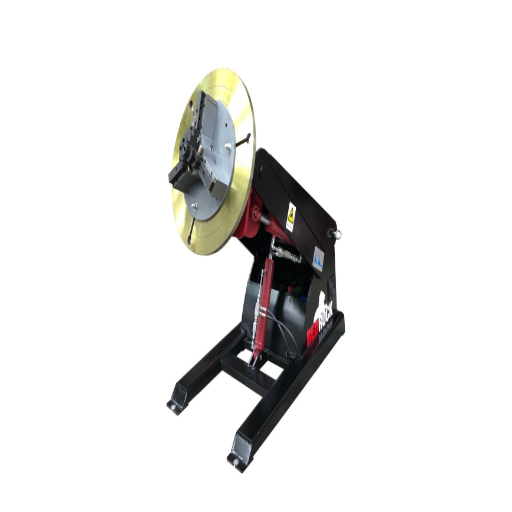
- Refined Precision And Control
With the 3-axis hydraulic positioner, accurate placement of workpieces is possible, resulting in consistency and quality in welds because of its close precision.
- Improved Productivity
Because all sides of a workpiece are readily accessible, repositioning reduces time wastage and increases project completion pace.
- Simplicity For Advanced Procedures
The capability to tilt, rotate, and adjust the workpieces makes it easier to perform sophisticated and more difficult welding tasks.
- Safeguarding The User
There are fewer risks, which makes the working environment safer due to the ergonomic movement and integrated safety mechanisms.
- Works With Anything
It promotes flexibility across various applications because it can deal with different sizes and shapes while reducing the requirement for extra equipment.
What Are the Key Benefits for Welders?
Using specialized tools and equipment enhances welders’ productivity and the precision and quality of their output. Improved ergonomic aspects diminish strain from welding for long periods, enabling greater comfort and increased productivity. Errors in repetitive or complex tasks are reduced through modern automated welding systems, positioners, and other advanced technologies. Modern welding tools also incorporate various safety elements that significantly mitigate the potential risks of burns, dangerous fumes, and other occupational hazards. Such developments in tools and equipment aid in the welding process and create healthier and safer conditions for staff.
How Does the Design Enhance Flexibility?
Flexibility is a significant consideration when designing modern welding equipment as it needs to cater to an extensive range of projects. Welders can customize the equipment through adjustable power options, multi-process capabilities, and modular parts tailored to specific techniques and materials. These designs make switching between MIG, TIG, and stick welding easy, enabling welders to keep pace with diverse applications. Portability is also key; compact and lightweight machines allow welders to work at different locations without compromising productivity. In addition to advanced touchscreen controls and presets, these adaptable systems help professionals easily achieve complex, precise results, regardless of the project’s intricacy.
Comparing Traditional and Hydraulic Positioners
While hydraulic positioners are expensive, they offer exceptional precision, load capacity, and automation. On the other hand, traditional positioners are easy and inexpensive but lack precise control.
| Aspect | Traditional | Hydraulic |
|---|---|---|
|
Precision |
Moderate |
High |
|
Load Capacity |
Low |
High |
|
Automation |
Limited |
Advanced |
|
Cost |
Low |
High |
|
Maintenance |
Simple |
Complex |
|
Durability |
Moderate |
High |
|
Flexibility |
High |
Moderate |
|
Skill Need |
Moderate |
Low |
Applications of 3-Axis Positioning Systems
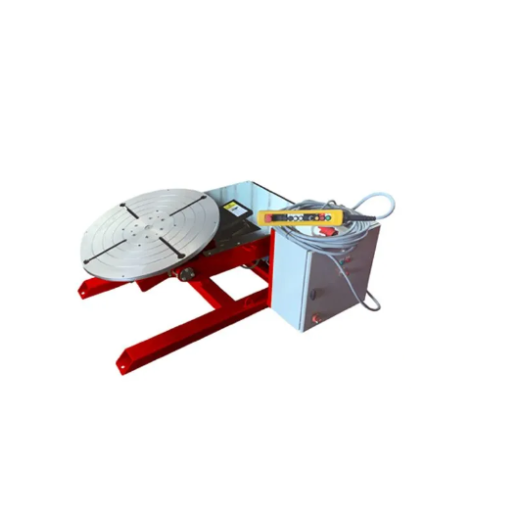
Systems that employ 3-axis positioning techniques are standard in industries where precise alignment and movement control relative to multiple reference axes are necessary. Other applications include:
- Manufacturing and Assembly: Used for welding, cutting, or assembling parts with high accuracy, ensuring consistent results across production lines.
- Robotics: Fundamental for the automation system’s robotic arms operating in three-dimensional space.
- Medical Equipment: Used in imaging and surgical systems for alignment and operation about a particular axis of rotation.
- Research and Development: accompanies experiments involving material testing or prototyping, requiring precise multi-axis control.
These systems significantly boost efficiency and precision across various professional fields.
Where Are They Commonly Used?
Multi-axis systems assist manufacturing, healthcare, aerospace, and automotive production industries. The most recent information from Google’s search engine suggests their use is particularly prevalent in CNC machining with complex components due to the precision of multi-axis systems. They are also employed in robotic surgery and imaging diagnostic devices for precision and control in healthcare. The aerospace industry employs these systems for the detailed design of prototypes, while the automotive industry uses them for assembling intricate components and conducting endurance testing. Their adaptability to various tasks significantly contributes to their use in advanced applications.
Integrating with Welding and Assembly Processes
Incorporating automated systems with welding and assembly tasks has greatly improved manufacturing productivity. Computerized systems make accurate and repetitive movements, resulting in minimum material wastage and production errors. Task coordination is automated through advanced robotics, equipped with sensors, smoothens workflows and rapid cycles. The chances of accidents in the workplace due to high temperature environments and chemical vapors are reduced as humans do not need to be in the area during operation, which increases safety. Although humans are removed from operations, implementing real-time monitoring and data analytics allows issues to be addressed proactively by optimizing system performance and meeting stringent quality benchmarks. Change and improvement to business processes and technologies is constant and seamless.
Specialized Applications for Sideros Positioners
Sideros positioners are well-known across the industry for their reliability due to their use for advanced automation and robotics. These systems are specially designed for individual and specific manufacturing processes to improve precision and efficiency in many settings. Here is five specialized tasks where Sideros positioners are used most effectively:
- Welding and Fabrication
Positioners from Sideros enable full rotation and vertical turning of workpieces in welding and fabrication for effective joins while diminishing seam recutting. Ergonomic positioners make operating less strenuous, hence increasing productivity.
- Painting and Coating
Due to their ability to turn components along axes, these positioners apply paint and coating consistently, improving the finishing while reducing material wastage.
- Inspection and Quality Control
While using Sideros positioners, users can rotate and access an important workpiece area during inspection, guaranteeing that all surfaces and components are checked thoroughly and meet the required quality standards.
- Assembly of Complex Structures
Accuracy is needed when aligning heavy and intricate parts in the air and space parts manufacturing, automotive, and construction industries. These positioners enable experts to scaffold while framing heavy parts.
- Heat Treatment Processes
During processes that require heating components, positioners from Sideros are ideal because they can maintain high temperatures while rotating or holding parts, guaranteeing even exposure to heat for metallurgical properties.
These applications underscore the versatility and importance of Sideros positioners in improving industrial activities in different industries.
How to Choose the Right 3-Axis Welding Positioner?
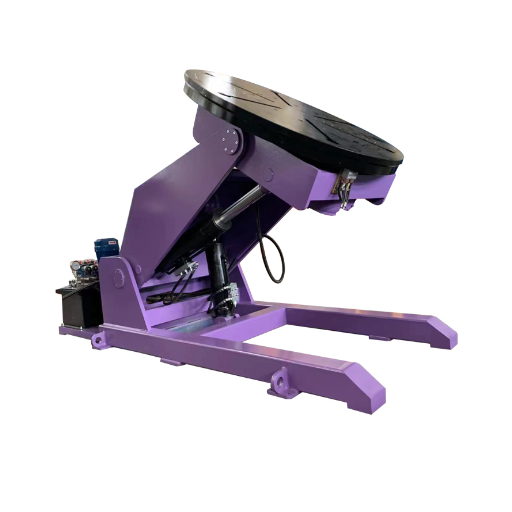
Considering the following primary concerns will assist you in choosing the appropriate 3-axis welding positioner.
- Load Capacity—Consider the approximate weight of the components you will use as a starting point. Also, check if the positioner can safely and efficiently lift and maneuver those loads.
- Size and Dimensions—Ensure that the welding positioner’s proportional size correlates with the components to be rotated and positioned.
- Speed and Precision—Determine the accuracy level required for various tasks, such as the fine adjustment precision needed during welding tasks and the rotation and tilt speed requirements. Make sure that the positioner allows accurate and smooth movements.
- Adjustability – Some positioners allow for versatility, which makes them adaptable to complex welding angles and different workpieces.
- Durability and Build Quality—Check the positioner’s construction. It should be made of strong materials, as it is intended for heavy-duty use in industrial arms.
- Automation Integration – Check the applicability of robotics or automated welding systems if your workflow contains automation components.
- Safety Features – Check for overload protection and safe closure of clamps for basic safety mechanisms.
Focusing on these factors will help you choose the optimal 3-axis welding positioner, boosting your operational efficiency, accuracy, and productivity.
What Capacity Should You Consider?
Some key factors should be considered while estimating a 3-axis welding positioner’s pose configuration. The maximum weight capacity of the positioner should be a primary consideration. Ensure the welding positioner can bear the heaviest workpieces in our operation without overloading it. Positioners are compromised when working under load. Furthermore, tackle issues regarding the size and dimensions of the work pieces because these issues will affect the ability of the work positioner to rotate and tilt.
An oversight of these factors will render significant losses. Another noticeable component is the welding speed and precision. The overall performance exceeds expectations. The model is guaranteed to remain stable when performing complex welding activities, resulting in high-accuracy welding. Make sure to consider future scalability— any investments such as these will ward off costly upgrades, so positioners with additional capacity are recommended. As always, double-check the space allocated to the devices so the workflow isn’t hindered.
Evaluating the Motion and Rotation Features
While analyzing the motion and rotation characteristics of a welding positioner, both accuracy and multi-functionality need to be evaluated simultaneously. For example, the rotation speed must be adjustable to meet different welding requirements to produce uniform welds. The tilt angle range also has to be considered since it dictates how ergonomic the workpiece position will be regarding visibility and access. Advanced positioners have rotary motion control, which allows presetting of angle and speed for repetitive movements, leading to higher productivity and better welding accuracy. A setup with accurate and flexible motion control systems can adapt to different tasks while maintaining excellent precision and optimal efficiency.
Reference Sources
1. Dynamic modelling and analysis of 3-axis motion-compensated offshore cranes
- Authors: Shenghai Wang, Yuqing Sun, Haiquan Chen, Jia-Du Lu
- Publication Date: April 3, 2018
- Journal: Ships and Offshore Structures
- Key Findings:
- This paper presents a dynamic model for 3-axis motion-compensated offshore cranes, focusing on the effects of environmental disturbances on crane performance.
- The study highlights the importance of compensating for motion in all three axes to improve operational efficiency and safety.
- Methodology:
- The authors developed a mathematical model to simulate the crane’s dynamic behavior under various loading conditions and environmental factors, which they validated through numerical simulations.
2. Analysis and experimental test on the dynamic characteristics of the 3-axis positioner system
- Authors: Ke Ying-lin
- Publication Date: 2009 (Note: This paper is older than 5 years but is included for context)
- Journal: Computer Integrated Manufacturing Systems
- Key Findings:
- The study investigates the dynamic characteristics of a 3-axis positioner system, focusing on its performance in manufacturing applications.
- It provides insights into the factors affecting the accuracy and stability of the positioner.
- Methodology:
- The research involved analytical modeling and experimental testing to evaluate the positioner system’s dynamic response under different operational conditions.
3. F-111 Positional Error Analysis when Mounted on 3 Axis Positioner at RADC Newport Test Annex
- Authors: W. Bocchi, R. Perkins
- Publication Date: October 1, 1977 (Note: This paper is also older than 5 years)
- Key Findings:
- This paper analyzes positional errors associated with the F-111 aircraft when mounted on a 3-axis positioner, providing insights into the accuracy of positioning systems in aerospace applications.
- Methodology:
- The authors conducted a series of tests to measure positional errors and analyzed the data to identify sources of inaccuracies in the positioning system.
4. Top Head And Tail Positioner Manufacturers and Suppliers in China
Frequently Asked Questions (FAQs)
Q: What is the Sideros 3 Axis Hydraulic Positioner?
A: The Sideros 3 Axis Hydraulic Positioner is a hydraulic positioner and handler specifically designed for assembling and welding operations. It allows for the precise positioning of workpieces in three dimensions, enhancing the efficiency of welding tasks.
Q: How does the 3-axis positioner improve welding efficiency?
A: The 3-axis positioner improves welding efficiency by allowing operators to tilt and rotate the workpiece as needed, thus reducing manual adjustments and ensuring optimal weld angles.
Q: What is the payload capacity of the Sideros 3 Axis Hydraulic Positioner?
A: The payload capacity of the Sideros 3 Axis Hydraulic Positioner varies depending on the model, but it is designed to handle substantial weights, making it suitable for various welding applications.
Q: Can the 3-axis positioner be used with traditional lifting systems?
A: While the 3-axis positioner is a modern solution, it can complement traditional lifting systems. However, the Sideros 3 Axis Hydraulic Positioner is more efficient than conventional lifting equipment at moving workpieces during welding.
Q: What types of workpieces can the Sideros 3 Axis Hydraulic Positioner handle?
A: The Sideros 3 Axis Hydraulic Positioner can handle a variety of workpieces, including plates and other components used in assembling and welding operations, making it versatile for different industries.
Q: How does the Rotolift feature enhance the functionality of the positioner?
A: The Rotolift feature enhances the positioner’s functionality by providing an ergonomic solution that allows for easy lifting and lowering of the workpiece, reducing operator strain and increasing productivity.
Q: Is the Sideros 3 Axis Hydraulic Positioner suitable for robotic applications?
A: Yes, the Sideros 3 Axis Hydraulic Positioner can be integrated with robots, allowing for automated welding processes that require precise positioning and movement of the workpieces.
Q: What are the advantages of using a hydraulic positioner over traditional lifting methods?
A: The advantages of using a hydraulic positioner include greater precision in positioning, reduced manual labor, improved safety, and the ability to easily move and adjust heavy workpieces with less effort than traditional lifting methods.
Q: How does the measurement system work in the Sideros 3 Axis Hydraulic Positioner?
A: The measurement system in the Sideros 3 Axis Hydraulic Positioner allows for accurate positioning of workpieces by providing feedback on the current position, enabling operators to make precise adjustments during the welding process.


