
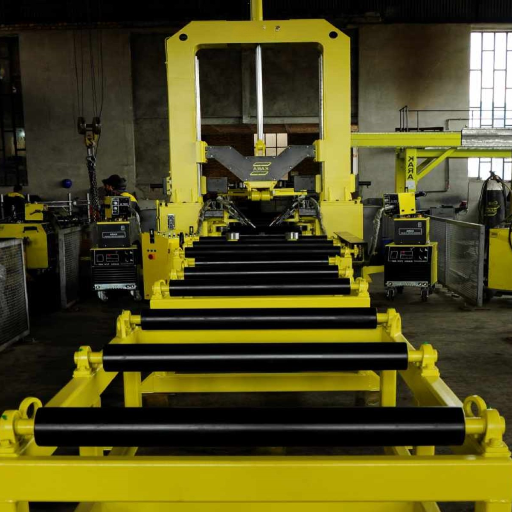
Speed, accuracy, and versatility make heavy-duty H beam assembling machines the backbone of contemporary steel fabrication. Operating and mastering these machines can transform your work in construction, shipbuilding, or industrial manufacturing. Understanding how to operate and optimizing these machines will change the game for you. In this detailed guide, you will learn everything you need to know on heavy-duty H beam assembling machines ranging from their key parts, further best operation practices, recent machine upgrading techniques, to the important essentials you need to know, with further insights which will help to enrich your skills and sharpen your fabrication processes. Now, get ready to harness your skills into actions with unparalleled precision and effectiveness.
What is an H Beam Assembling Machine and How Does it Work?
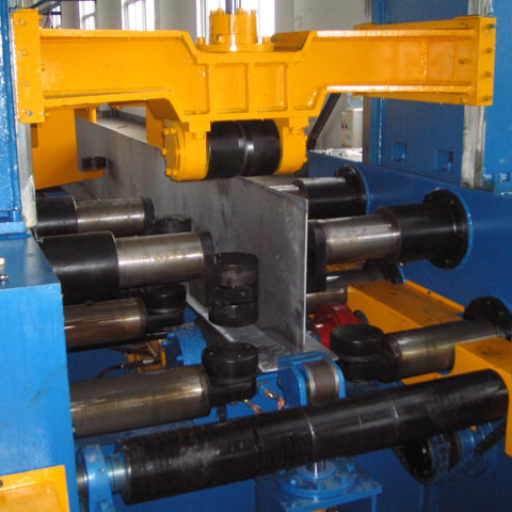
An H beam assembling machine is a type of equipment that holds parts of beams in position with clamps and joins the flanges and web of an H beam by using hydraulic or mechanical systems so that it can be welded afterwards. The machine works by using fixtures to hold the components in position and applying hydraulic or mechanical systems to focus alignment as the flanges and the web are joined. Throughout the construction and steel fabrication industries, machines of these kinds are a necessity due to their ability to ensure accuracy of structural integrity.
Understanding the Basics of H Beam Assembly
H beam assembly involves series of steps which, if followed accurately, will yield a structure of high quality. For production processes, the existing H beam assembling machines function as core components to achieving efficiency and streamlined accuracy.
The first step is to obtain the corresponding web and flange high grade steel components. These parts are loaded into the assembly machine, which uses hydraulic and mechanical clamps to hold them into position. The machine aligns the web with the flanges at proper angles which are ordinarily set to a tolerance of ±0.5mm. Accuracy while working on these adjustments is paramount since structural misalignments are bound to reduce the whole load bearing strength of the structure.
The contemporary H beam assembly machinery comes equipped with automated sensors and digital controls. These modern technologies provide real time monitoring of the assembly process to ensure that every beam is within tolerance. Certain machines are equipped with systems that automatically compensate for differences in material thickness and other customizable modifications.
Industry reports estimate that implementation of automated H beam assembling machines could increase the efficiency of production by nearly 30%, while material waste could decrease by about 15%-20%. These improvements are especially useful for large scale construction, shipbuilding, and infrastructural projects, which require a high level of uniformity and speed.
With the application of advanced technology, H beam assembly achieves the fabrication of sophisticated steel pieces that serve as the primary support of modern industrial and architectural structures.
Key Components of an H Beam Assembling Machine
- Mainframe Structure: Gives stability and support for the machine during operation.
- Conveyor System: Moves steel parts to the assembling area without delays.
- Positioning Device: Guarantees the correct flange and web part are aligned for assembly.
- Welding Unit: Completes the beam by securely joining the parts.
- Control System: Handles the operations of the machine and maintain accuracy for every step.
How Machines Assist in Welding Work
The assembly of steel beams has improved with welding machines because they allow efficiency and consistency with little error. With modern technology, welding accuracy is even monitored in real-time. Global industry reports suggest that with automated welding machines, production speed will increase by 50%, while manual processes will increase error rates by 30%.
AI control systems assist the workflow, so these machines are even smarter. These controllers optimize the welding and scanning parameters, identifying in the process, any flaws that need rectifying even in the raw materials, yielding maximum efficiency. The originating manufacturers save more because of less material wastage. Smart welding machines make operations more sustainable by consuming less material (10-20%). Environmentally, smart machines can improve green performance. Safety is even better since human exposure to danger zones where automation is employed has dropped significantly.
Innovation assists and encourages development in modern welding machines used in steel assembly, meeting the construction project-precision-engineered structures demand in every part of the world.
Why Choose a Heavy Duty H Beam Assembling Machine?
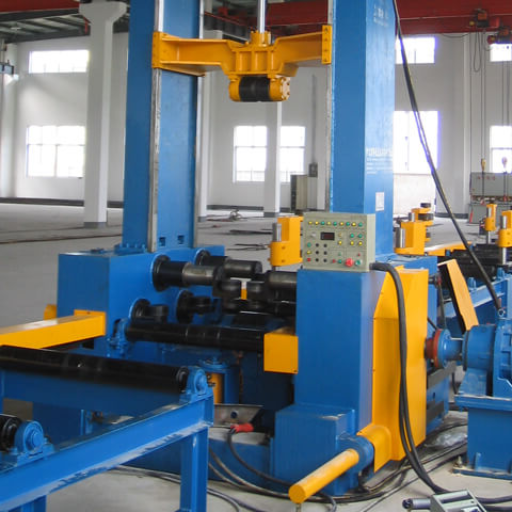
An industrial-grade H beam assembly machine is pivotal for any business that requires accuracy and consistency when merging components in a steel structure. It guarantees proper positioning of H beams which minimizes check processes while maximizing throughput. It is also built to last in tough industrial settings, enhancing its economic value in massive projects.
Benefits of Heavy Duty Assembly Machines
- Accuracy: Improved final assembly results due to accurate alignment of H beams.
- Productivity: Mandated labor is less increased while production is faster.
- Reliability: Effective in rugged industrial environments for decades to come.
- Value For Money: Enhanced productivity with aligned components lowers total project expenditure.
Comparing H Beam Production Line Options
When comparing H Beam production line options, key types include straightening machines, welding systems, edge milling machines, cutting equipment, and assembly lines.
| Key Point | Straightening | Welding | Edge Milling | Cutting | Assembly |
|---|---|---|---|---|---|
| Purpose | Align beams | Join beams | Smooth edges | Cut beams | Align & prep |
| Efficiency | High | Very high | Moderate | High | Very high |
| Durability | Robust | Durable | Strong build | Heavy duty | Highly robust |
| Cost | Moderate | High | Moderate | Low | High |
| Output | Smooth finish | Strong welds | Clean edges | Precision | Full prep |
Long-term Benefits of High Efficiency Assembly
The world of industry has been transformed by high-efficiency assembly processes. They are shifting the paradigm of production, minimizing costs, and further enhancing productivity. In the example of automation, tools for beam alignment and welding streamline processes to signpost precision, sharply alleviating human error and, thus, saving an average of 15% in labor costs annually. As advanced as they are, high-efficiency assembly techniques do not compromise on quality—rather, they maintain it. To that end, companies adopting such techniques witness a boost in productivity of nearly 40%!
High-efficiency assembly techniques also incorporate precision robotic application cutting, ensuring robustness. As per the McKinsey report, factories adopting these technologies also achieved a marked decrease in material waste by 25%, actively contributing towards sustainability. Additionally, smart monitoring systems grant real-time feedback, enabling interval adjustments during the procedure. This not only improves efficiency but also augments t30% the lifespan of machinery.
Such changes catalyze financial savings, allowing producers to meet increasing demand without intervention of operational or environmental standards. Therefore, this optimizes wide-ranging industrial functionality. These upgrades further sustainably balance operational efficiency and establish enduring benefits across the industry.
How to Operate an H Beam Welding Machine Safely?
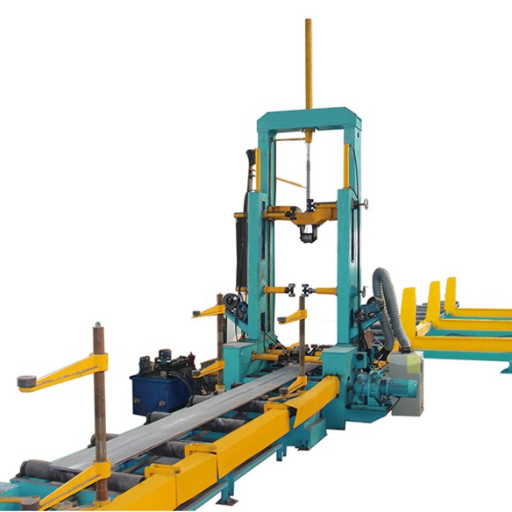
- Inspect The Equipment: Prior to using the machine, check for parts that could be damaged or worn out. Ensure the welding torch and cable are functional alongside the other components.
- Put On The Correct Protective Gear: Protective gear such as a welding helmet with visor, flame resistant clothes, gloves, and boots should be worn to minimize hazards and safety risks.
- Follow The Provided Operation Guides: Ensure all necessary checks for the controls and settings are done as per the recommendations before commencing with operation. Refer to the instruction manual for the machine setup.
- Guarantee Proper Item Ventilation: To prevent concentration of harmful fumes, the welding machine should only be operated in places with proper ventilation.
- Clamp The Workpiece In Place: To prevent unwanted movement during the welding process, the H beam needs to be stabilized firmly.
- Observe The Operation Of The Machine: The machine should be monitored constantly to notice any deviations from normal operation and rectify immediately.
- Power Down Safely: While operating the inspection and maintenance of the machine, it should be left powered down and away from any power source when not in use.
Safety Measures During Beam Welding
- Use Protective Welding Equipment: It is important to wear protective deploying equipment like helmets, gloves, safety spectacles and clothing which withstands burning flames and other frazzles so injuries like burns, damage to eyes and harmful ultra violet light exposure is avoided.
- Conduct Regular Inspections: Examine each detail of the welding apparatus physically before using them to ensure there are no frayed cables, broken connectors or defective parts.
- Ensure Sufficient Airflow: Perform the activity in the area with sufficient fresh air or use special systems for extracting fumes and other poisonous gases to reduce inhalation of toxic welding fumes and gases.
- Remove Any Combustible Items: Ensure the area set for welding is clear of flammable liquids, flammable gases, other burning items and materials to greatly reduce fire risks.
- Ensure Electrical Safety: Check all electric connections are functioning normally while avoiding contact with live wires or wet surfaces to eliminate the risk of electric shocks.
Best Practices in H Beam Welding
While performing H beam welding, I make sure to be always safe and precise. To start, I check that the beams are correctly aligned, mounted, and clamped so no movement occurs during the welding. Proper functionality of equipment should be verified and ready. Submerged arc welding or flux-cored arc welding could be used pre-heating material too, especially thicker beams. This minimizes risks of cracking. These maintain slow welding speeds and a thorough inspection of the welds afterward guarantees structural compliance.
What to Look for in a Supplier of H Beam Assembling Machines?

- Quality and Reliability: Check that the machines are within the warranty period and ensure that they meet the specific industry benchmarks for durability and functionality.
- Technical Support: Multilateral suppliers who specialize in customer training, maintenance programs, and after-sale support should be prioritized.
- Customization Options: Tailored solutions are the absolute preferred as they offer customization in accordance to the project specification.
- Reputation and References: Evaluate client feedback for the selected supplier in conjunction with the provided references to verify the market reputation of the supplier.
- Cost and Value: A value proposition with features at no additional cost should not compromise on essential functionalities or quality.
Guidelines to Choosing a Quality H Beam Assembling Machine
Efficient and accurate steel structure fabrication requires adequate selection of H beam assembling machines. The following outlined guidelines should assist in your decision-making process.
- Construction and materials: A quality H beam assembling machine should be built of long lasting materials such as heavy duty steel to withstand harsh working conditions. Equipment that is reinforced tends to last longer and work more reliably with greater operational stability.
- Control and automation systems: Prioritize machines integrated with cutting edge automation tools like CNC (Computer Numerical Control) Systems). These technologies boost accuracy as well as precision, minimizing human touch. For instance, CNC-controlled systems reliably outperform manual systems; production efficiency is documented to rise by as much as 30%.
- Production Capacity: Take into account the rate of assembly of the machine and the size of H beam that it can handle. For example, top of the line models can assemble beams with heights from 200mm to 1500mm and 800mm in width. This ensures beam height and width versatility for any beam fabrication project.
- Energy Efficiency: The H beam assembling machines are powered with modern features that guarantee optimal performance, while concurrently conserving energy. A study of recent industrial innovations showcased more energy-efficient models capable of lowering operational costs by twenty percent.
- Ease of Maintenance: Maintenance, repair, and downtime are greatly improved with machines possessing an intuitive design, along with having guidelines and operational handbooks provided to the user. These documents help suppliers explain clearly the steps to follow for proper maintenance.
- Safety Features: Integrated safety features in these machines are more beneficial as they have protective barriers with emergency stop functionalities. Moreover, compliance with safety regulations promotes safe working environments, reducing incidents of injuries.
- Supplier Support and Warranty: Choose a respondent customer care and warranty offering supplier. Other key pointers such reliable suppliers excel in offering installation, operator training, and ongoing tech support toward ensuring appliance usage.
Carefully weighing all these factors will ensure fabrication processes increase productivity while optimally employing an H beam assembler of the highest long-term value.
Effective Techniques To Maintain The Quality Of H Beam Assembly
Good quality H beam assembling improves when there is emphasis on accuracy, equipment used, and material quality. First, ensure precision using appropriate raw materials for H beams to ensure their structure’s strength. Pay attention to measurement and alignment because accuracy is important during assembly and affects the quality in total. Consider investing in a dependable machine for H beam assembling with features including automatic alignment, robust clamps, precision welding, and others. Consistent performance and error-free operations call for regular maintenance of the machine too. Along these lines, enable properly trained operators to follow standard steps and protocols to greatly reduce human error to improve assembly quality. Following the aforementioned recommendations conforming to set H beam assembling procedures strengthen manufacturing standards.
Exploring the H Beam Production Line
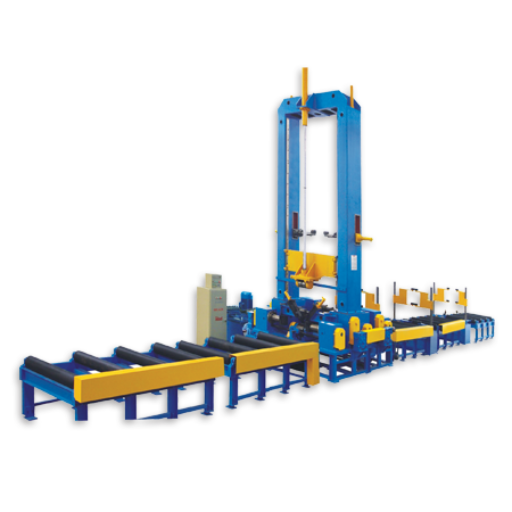
The H Beam production line is a type of production line that is used solely for the H beam production. The H beams are widely used in construction and industrial projects. The production line consists of: a cutting, assembling, welding, and straightening machine which individually fabricate precise beams. The production process is crucial for raw materials that need refinement before construction 실텍 and trimming, in addition to other steps and should be done carefully for meeting set industry benchmarks.
Modern Fabrication Processes Beam Construction Technology
Having automated systems enhances a company’s ability to meet preset numbes. Such systems have enabled automakers’s agility since welding is one of the most time consuming work processes. It has also managed to help weld equipment used today as they provide robots which with control over soldering, equipping them with updated technology which facilitates soldering of predetermined parts. CNC (Computer Numeric Control) enables the beams accurate trimming less than 0.1mm in each measure.
Market research shows that automated beam production lines increase efficiency by 30% relative to traditional production methods. In addition, more intelligent software, such as ERP (Enterprise Resource Planning) systems, enables real-time adaptive resource management, reducing overall consumption metrics. The ISO 9001 compliance is a quality management standard checklist that can be very easily met with automation at this level. Advanced Production lines are in high demand globally and as per the recent reports, the construction activities in developing nations will drive this demand, giving it a CAGR of 8% until 2030.
Spending on maintenance, along with Predictive Maintenance and AI-powered diagnostics enhanced the dependability and sustainability of these production systems. Even with less time, they were able to deliver from almost any location during the year due to automating the entire process of delivery from predictive shipping algorithms.
Integrating Automatic H Beam Processes
The integration of automatic H beam production processes is a recent development in the construction and manufacturing industries. The adoption of robotic welding, CNC cutting, and other automated peripheral systems alongside H beam cutting has brought about transformations in productivity, automation, precision, and efficiency. In the last five years, the automated production line for H beams has seen an increase by 15% annually as there is greater need for high strength steel H beams for use in bridges, skyscrapers, heavy machinery, and other structures.
These systems rely on machine learning and artificial intelligence for real-time error tracking, reducing the chances of mistakes while enhancing productivity. A good example is the detection of weld irregularities by IoT systems which instantaneously allow for prompt detection of issues and diminishes material waste by up to 30%. Adding IoT sensors also streamlines the automated systems with predictive maintenance thus guaranteeing system uptime and minimal spending costs.
Significantly, organizations utilizing automated H beam milling have experienced an increase of 20-25% in total productivity along with greatly reduced lead times. These systems are especially useful in emerging markets that are experiencing rapid shifts in infrastructure development. The importance of automated H beam processes in modern construction necessitates them for the evolving H beam automation technologies in industrial quadrants.
Enhancing Efficiency of Beam Welding Line Operations
To achieve the desired output with optimum efficiency and minimal costs, upholding beam-welding operation standards is essential. The industry has seen modern changes with the emergence of beam welding automation and artificial intelligence. In any business, productivity is a key performance indicator, and as highlighted in numerous research papers, automation increases efficiency by more than 30% by reducing manual error.
Advanced systems for beam welding also include real-time monitoring sensors along with feedback mechanisms that enable adjustments in the course of welding. Automated systems can monitor each stage of a process and adjust it in real-time according to multifunctional requirements, which increases operational effectiveness and profit by lowering flaws. Major producers integrated multiple-criteria energy-efficient controls alongside automatic monitoring and reporting, resulting in a decrease of around 20% energy usage. Alongside making operations budget-friendly, this shift advances eco-conscious corporate mandates.
Also, the use of 4.0 technologies improves the integration of welding with other operations. With IoT, centralized control and monitoring allows predictive maintenance which reduces stagnation by as much as 25%. These systems are being adopted by emerging economies that are investing heavily in large-scale infrastructure projects due to the optimized construction schedules and quality control.
Manufacturers that meet today’s construction and fabrication timelines can remain competitive by adopting the continuous improvement model and the changes in technology.
Reference sources
- Title: The important role of titanium microalloying in refining austenite grain of heavy‐duty H‐beam steel during rough rolling produced by a new technology
Authors: Y. Wang et al.
Publication Date: July 1, 2021
Citation Token: (Wang et al., 2021)
Summary:
This study investigates a new technology for refining austenite grain in heavy-duty hot-rolled H-beam steels. It emphasizes the significance of titanium microalloying in enhancing the mechanical properties of the steel. The research shows that titanium can significantly refine the prior austenite grain size, which is crucial for improving the performance of heavy-duty H-beams.
Methodology:
The authors conducted experiments to compare the effects of titanium and niobium on the austenite grain size during simulated rough rolling. They analyzed the thermodynamic stability of titanium nitride particles and their role in impeding grain growth at high temperatures. - Title: Reliability analysis of dynamic accuracy for the heavy-duty machine tool segmented beam
Authors: Yang Tian et al.
Publication Date: November 10, 2022
Citation Token: (Tian et al., 2022, pp. 4563–4574)
Summary:
This paper presents a reliability analysis focused on the dynamic accuracy of segmented beams used in heavy-duty machine tools. The study highlights the importance of ensuring high precision in the manufacturing process, particularly for large and complex components like H-beams.
Methodology:
The authors employed statistical methods to analyze the dynamic performance of segmented beams under various loading conditions. They utilized finite element analysis (FEA) to simulate the behavior of the beams and assess their reliability. - Title: A detachable design method of large-sized structure for heavy duty machine tool based on joint surface dynamics characteristic analysis
Authors: Qiang Cheng et al.
Publication Date: January 21, 2019
Citation Token: (Cheng et al., 2019, pp. 4476–4489)
Summary:
This research proposes a method for designing large-sized structures of heavy-duty machine tools, focusing on making them detachable for easier transport and assembly. The study addresses the challenges of manufacturing and transporting heavy components, such as H-beams, which can weigh over 100 tons.
Methodology:
The authors developed a three-dimensional fractal contact model to analyze the dynamics of joint surfaces. They used particle swarm optimization to optimize the design of detachable sections, ensuring structural integrity and performance during operation. - Top Heavy-Duty H Beam Production Line Manufacturers and Suppliers in China
Frequently Asked Questions (FAQs)
Q: What is a heavy-duty h beam assembly machine?
A: Heavy-duty h beam assembly machines align and tack weld steel plates and webs together to assemble h-beams. They are used extensively in the h beam fabrication production line.
Q: How does an h beam straightening machine work?
A: An h beam straightening machine uses an internal system that exerts force on the h-beam to straighten its bent or misshaped areas. It ensures that the h-beam is mechanically sound and exact in dimensions.
Q: What is the role of gantry welding machine in the production of h beams?
A: In h beam production, the gantry welding machine is used to carry out longitudinal welding of the beams. It supports high accuracy welding and is vital to the h beam assembly process balance in terms of productivity and quality.
Q: Detail the procedure for assembly welding straightening h-beams.
A: A sequence includes assembling the parts of the beam, performing the weld, and straightening the welded beam which ensures its specifications are within tolerable limits. In today’s modern production lines, this process is automated.
Q: What is the impact of adopting automatic h beam assembling machine on production?
A: There are numerous advantages that come with using an automatic h beam assembling machine which include improving overall operational efficiency, lowering labor costs, enhancing quality consistency, and dealing with large amounts of work accurately and effortlessly.
Q: How does a beam assembling machine with flipping work?
A: A beam assembling machine with flipping features integrated rotatory mechanisms for flipping or rotating the h-beam for more efficient assembly and thorough welding. This technology improves ergonomic concerns during assembly.
Q: What is the significance of tack welding in the context of h beam assembly?
A: In the context of h beam assembly, tack welding’s significance is that it helps maintain order while the components are being fixed, ensuring the proper structure is utilized while final welding is performed.
Q: Where can I buy an h beam assembling machine?
A: An h beam assembling machine can be found at vendors that specialize in selling machines for fabrication of steel structures. Make sure to seek a well-known vendor business to guarantee strong products and reliable service afterward.


