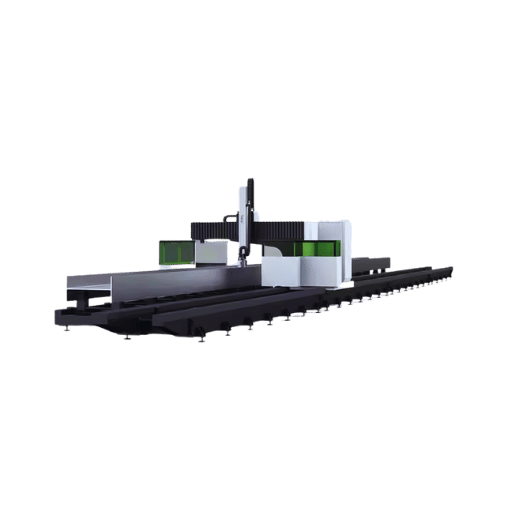
Efficient and precise cutting of H-beams is an important process in construction, shipbuilding, and manufacturing. Due to technological advancements, H-beam cutting machines are indispensable equipment, providing accuracy, cost-effectiveness, and higher productivity. This guide will discuss the critical factors of the H beam cutting machines: technological advancements, the advantages they offer to operations, and how to evaluate competing suppliers and choose the best one. Whether it is that you want to upgrade your machinery and facilities to enhance your processes or get an overview of the latest trends, this overview is an essential tool to aid in making educated decisions. Continue reading to learn how the H-beam cutting machines can change your projects and ensure operational success.
What is an H Beam Cutting Machine?
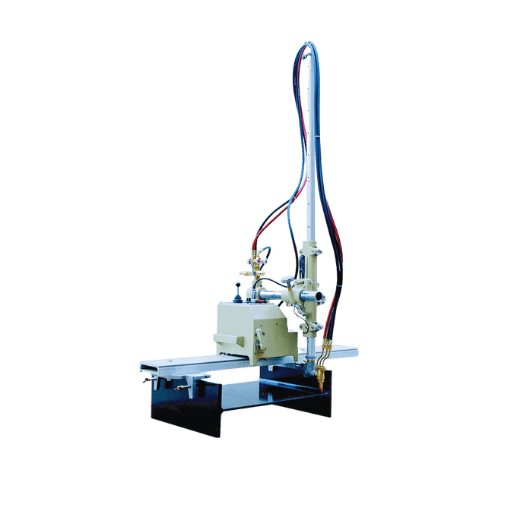
H Beam Cutting Machines are very specialized machinery mainly for the precision cutting of H-shaped steel beams. They employ various cutting technologies, such as plasma, laser, or flame cutting, to cut beams for industrial applications in construction and manufacturing. They are valued for accurate cutting, faster production, and waste reduction, thereby becoming an essential tool when dealing with structural steel fabrication.
Understanding the cutting machine and its components
There are key components in a cutter, such as the cutting head, control system, laser or blade, and the machine bed, with each being important for precision and functionality.
How does a laser cutting machine work?
A laser cutting machine functions by focusing an intense light beam on a material’s surface to cut it with precision. The very initiation of cutting begins from the control system of the machine-that is parallelly programmed with the design or pattern. The control system then guides the cutting head to follow the desired path. With that, the cutting head emits a laser beam generated by stimulated emission using gas mixtures like CO₂ or fiber optic technology.
It is focused onto a minute area by a lens or a mirror and is made very small to gain high energy density. This energy concentrates on melting, heating, or vaporizing that particular spot on the material. To assist the cutting, an assist gas of oxygen, nitrogen, or air is used through a nozzle placed near where the cutting is taking place; it blows out particles and gases created during the actual cutting. Modern laser cutting machinery further combines the latest technologies, such as auto-correction and spurious monitoring systems, to accomplish manufacturing requirements with utmost accuracy and minimal wastage. As such, it serves as the mainstay method of laser cutting employed in industries such as automotive manufacturing, aerospace, and electronics that require high precision.
Applications of H-beam technology in construction
- Structural Support: Due to the extraordinary capability to bear loads and the longer life span, initially, buildings, bridges, and large frameworks use H-beams as their primary structural elements.
- Reinforcement in Foundations: Often used in foundation construction to distribute the weight on the plane and stabilize the large structures.
- Roof and Floor Beams: An H beam is used in the roof and floor construction to give stability and long-term performance.
In the factories: It is used in the construction of warehouses, factories, and storage facilities to accommodate heavy machinery and large spaces. - Skyscraper Frameworks: H beams form an essential part of all high-rise buildings that are required to have strength and flexibility to resist all kinds of stresses.
- Shipbuilding: In shipbuilding, the H-beam-utmost concept is applied in hull and deck reinforcement for structural integrity.
Infrastructure Projects: Bridges, flyovers, and tunnels primarily use H beams for structural frameworks-cum-resilience and longevity. - Custom Fabrications: Used in special architectural designs and custom industrial applications requiring precision in dimensions and strength.
How Does a Laser Cutting Machine Enhance H Beam Processing?
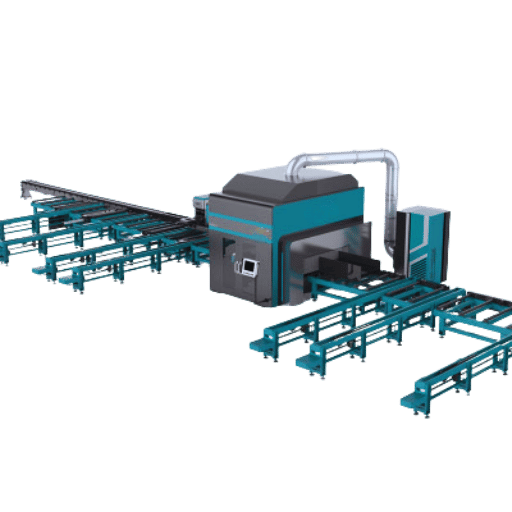
Benefits of using fiber laser technology
- High Precision Cutting: High precision cutting is what fiber laser technology renders, for it can make the intricate and complex cuts within nimble tolerances.
- Improved Efficiency: Faster processing speeds by way of fiber lasers yield higher throughput times, thus lessening the time spent on production.
- Improved Quality: The clean cutting edge offered by fiber lasers can obviate the need for a second finishing process, thereby providing a better surface quality.
- Reduced Material Waste: Because fiber lasers provide a high degree of precision, less material is wasted during use.
- Energy Efficiency: Fiber lasers cut down the cost while conserving energy, in contrast to the conventional way of cutting.
- Versatility: A myriad of materials varying in thickness and composition can be fabricated by fiber lasers, which opens the floodgates to all sorts of applications.
- Low Maintenance: Fiber lasers have minimal maintenance requirements due to their minimal moving parts and solid-state design, resulting in lowered operational costs.
- Automation Compatibility: Fiber lasers can be integrated into automated systems to provide better automation of the production processes.
Comparing CNC and manual cutting methods
While CNC cutting methods offer high precision, high automation, and high efficiency, manual cutting methods provide flexibility, low initial costs, and are suitable for small-scale jobs or one-off projects.
|
Parameter |
CNC |
Manual |
|---|---|---|
|
Precision |
High |
Operator-based |
|
Complexity |
Handles complex |
Limited |
|
Speed |
Fast |
Slower |
|
Skill Need |
Programming |
Manual dexterity |
|
Cost |
High upfront |
Lower upfront |
|
Volume |
High |
Low |
|
Flexibility |
Limited |
High |
|
Automation |
Yes |
No |
|
Waste |
Minimal |
More |
|
Safety |
High |
Moderate |
Role of the laser cutter in improving cutting accuracy
Laser cutters finish cuts with utmost accuracy, producing fine cuts with the least distortion possible. Using focused laser beams, cuts can be produced with the utmost precision and perfection even for intricate or detailed patterns. Human error is minimized to an extent due to the automated nature of the process that maintains uniformity across multiple cuts. Non-contact processes also won’t cause mechanical deformation, thus further enhancing accuracy. For any task that demands precision on a repeatable basis, laser cutters are, therefore, a must-have tool.
Choosing the Right H Beam Laser Cutting Machine
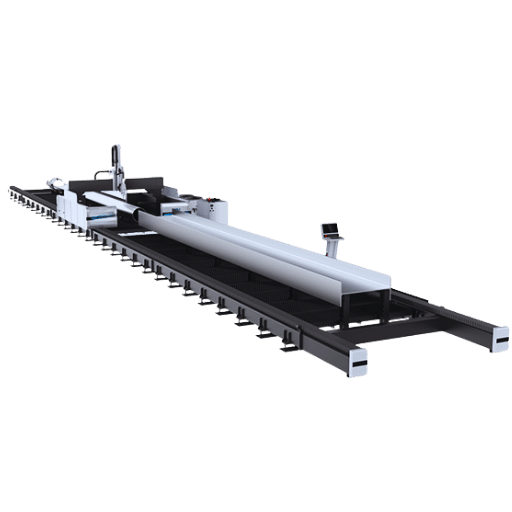
Factors affecting the laser cutting machine price
- Laser Power – Machines with more wattage, which can cut through thicker materials, are generally priced higher due to their enhanced capabilities and performance.
- Type of Laser Source – Opting for either a fiber laser, a CO2 laser, or others would entail pricing differences, with fiber lasers being typically pricier, but offering better efficiency and lower cost of maintenance.
- Cutting Bed Size – Larger cutting beds usually cost more due to their ability to hold larger workpieces or high volumes of materials.
- Precision and Accuracy – The more precise a laser cutter is, with state-of-the-art optics and sensors that make it capable of producing finer details and having repeatability, the higher its price.
- Automation Features – Any machine with automated systems for handling materials, software integration, and capabilities of real-time monitoring sees an elevation in price as they add more ease and efficiency.
- Brand and Manufacturer- Brands that are well established generally demand a premium for their machines due to their reputation, warranties, and support to customers.
- Material Compatibility- A machine capable of cutting through a variety of materials or that handles very specialized materials is generally priced higher.
- Support and Maintenance Packages- Service contracts, warranties, and the ease of sourcing replacement parts impact the going price of the machine.
- Technological Advancements- Usually, the very latest machines equipped with technologies such as AI-assisted operation and energy efficiency are more pricey.
- Customizations and Optional Features- Additional pain-in-the-neck features, like special lenses, dual-head configurations, or safety enclosures, don’t come cheap.
- Geographic Location and Import Costs- Depending on import duties, local taxation, and shipping costs in the buyer’s location, prices are subject to fluctuations.
A sound understanding of these factors can help businesses make judicious decisions while investing in a laser cutting machine.
Key features to look for in laser equipment
In laser equipment, some key features considered include wavelength, cooling, pulse duration, fluence, system type, size, application, speed, cost, lifespan, and maintenance.
|
Key Point |
Description |
|---|---|
|
Wavelength |
Determines depth and type of treatment. |
|
Cooling |
Protects skin and enhances comfort. |
|
Pulse |
Controls energy delivery duration. |
|
Fluence |
Measures energy concentration per area. |
|
System |
Single or multi-laser systems for versatility. |
|
Size |
Compact or large systems based on space and needs. |
|
Application |
Material compatibility and intended use. |
|
Speed |
Affects productivity and treatment time. |
|
Cost |
Includes initial price, maintenance, and ROI. |
|
Lifespan |
Durability and long-term usability. |
|
Maintenance |
Ease of upkeep and availability of support. |
Top laser cutting machine suppliers and manufacturers
When researching for the best laser cutting machine supplier and manufacturer, a few world leaders stand atop advanced technology, reliability, and customer support. Below is a list of top-rated suppliers based on recent data:
1. TRUMPF
TRUMPF is one of the leading industrial laser cutting technology manufacturers in the world. Their machines feature precision that is used in versatile and durable applications in automotive, aerospace, and medical equipment manufacturing.
2. Bystronic
Bystronic is focused on laser cutting and automation solutions of a top caliber. They design efficient laser-cutting systems with features such as intuitive control interfaces and green technologies.
3. Amada
Amada is well-known for the manufacturing of machines that are quite robust and technologically advanced. They provide various laser cutting solutions that are capable of high-speed and accurate performance, with sustainability as a major concern.
4. Mazak Optonics
Mazak Optonics provides productivity-oriented and user-friendly laser systems, which are commonly deployed in metal-fabrication industries with support from dependable clientele.
5. Han’s Laser
As one of the largest laser cutting system manufacturers in China, Han’s Laser offers cheap yet efficient solutions that cater to smaller setups as much as large manufacturing operations.
6. Trotec Laser
Trotec is known for designing compact and professional-grade lasers for various applications such as signage, engraving, and fine-cutting tasks. They stress the importance of being user-friendly and multi-application.
7. Cincinnati Incorporated
An American manufacturer of a laser cutting system, Cincinnati Incorporated prides itself on the features and attributes of its laser cutting systems, imbued within their robust build quality, acidity mucus load, and high industrial requirements.
Each of these companies has a well-known name in the industry, offering different types of systems to fulfill various operational requirements and budgets. End-users should forecast material costs, costs regarding the system, and after-sales support in selecting the right supplier. Comprising detailed comparisons and reviews would also benefit the end-users in making a more informed decision.
What is the Importance of Bevel Cutting in H Beam Fabrication?
Understanding the bevel cutting process
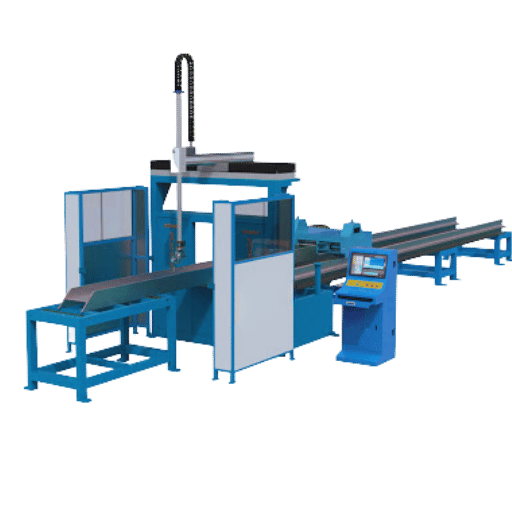
Bevel cutting is a process through which an angled edge on a material is created for the sake of certain operational activities, such as welding preparation, through a cutting or grinding angle not equal to 90°.
Advantages of H-beam laser cutting machine for precision
- High Accuracy: Laser cutting technology ensures clean, sharp, and consistent cuts, minimizing material wastage and producing impeccable results.
- Smooth Edges: Smooth edges are produced by the process, and the parts can be assembled directly without any further treatment.
- Minimal Distortion: Laser cutting limits the extent of heat-affected zones in the structure and thus does not impair the strength of the H-beam.
- Complex Designs: It admits complex cutting patterns that traditional methods tend to find hard or even impossible to achieve.
- Efficiency: Fast cutting speed and the ability to process large quantities of work result in laser cutting machines being very efficient on large production scales.
- Versatility: Laser cutting can operate on various materials and thicknesses, providing more options in fabrication works.
- Cost-Effectiveness: All these are quite a few reasons laser cutting can be considered cost-effective, including reducing material waste, lowering labor costs, and requiring less maintenance.
Common challenges in H-beam cutting
The H-beam cutting process has several problems: pinching, bundle cutting, teeth selection, material positioning, blade break-in, band saw speed, coolant, and maintenance.
|
Key Point |
Description |
|---|---|
|
Pinching |
Blade pinches, breaks |
|
Bundle Cut |
Loose/spinning parts |
|
Tooth Select |
Wrong tooth size |
|
Positioning |
Poor material angle |
|
Break-in |
Premature tooth wear |
|
Saw Speed |
Incorrect blade speed |
|
Coolant |
Poor lubrication |
|
Maintenance |
Lack of upkeep |
How to Maintain an H Beam Cutting Machine for Longevity?
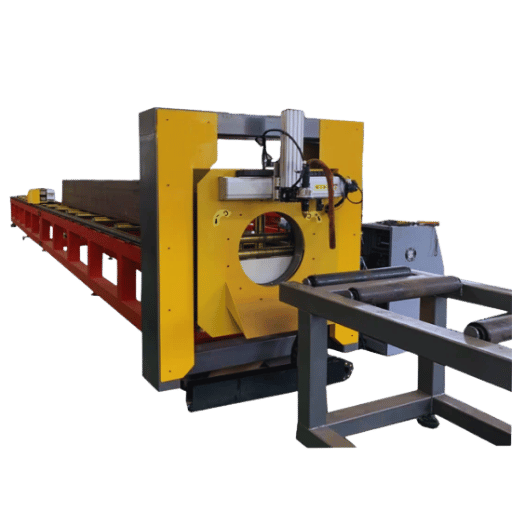
Regular maintenance tips for CNC laser systems
1. Clean Optics Regularly
Wipe all lenses and mirrors periodically, as any debris or residue buildup will hamper the performance of the laser.
2. Inspect and Replace Filters
The air and dust filters should be checked or replaced as needed by the manufacturer in order to retain proper airflow and to reduce contamination within the system.
3. Check the Alignment of the Laser Beam
Frequently checking that the laser beam is correctly aligned will help prevent inaccuracies in cutting and, ultimately, prevent damage to the machine.
4. Monitor Cooling Systems
Coolant is to be kept at the appropriate level while the entire cooling system is maintained to work efficiently to ensure that the laser source is not overheated.
5. Lubricate Moving Components
Lubricate guide rails, bearings, and all other moving parts with suitable lubricant to reduce friction and wear.
6. Calibrate the Machine Consistently
Maintain cutting accuracy through regular calibration, which will tune the accuracy of the machine for all operations.
7. Inspect Electrical Connections
Regularly inspect all electrical connections, looking for those that show signs of wear, become loose, or are corroded, as these could lead to operational interruptions.
8. Keep Software and Firmware Updated
Always update the software and firmware of the operating system to the latest versions to maintain compatibility and enhancements for performance.
9. Clean the Work Area and Machine Surface
Dust, dirt, and cut material residues should be removed from the working area and machine surface, maintaining a clean environment in order to reduce contamination risks.
10. Perform Routine System Diagnostics
Initiate diagnostic operations using either built-in or third-party diagnostic tools to find and resolve potential issues before they develop further.
Identifying and resolving common cutting head issues
Often experienced by cutting heads are inconsistent cutting quality, misalignment, overheating, bending of the material, and wear of parts. A brief table encapsulating the characteristics and remedies is presented below:
|
Issue |
Cause |
Solution |
|---|---|---|
|
Inconsistent |
Misalignment |
Realign the laser beam |
|
Overheating |
Poor cooling |
Maintain system |
|
Warping |
Excess heat |
Adjust power/speed |
|
Worn Blade |
Usage wear |
Replace blade |
|
Dirty Lens |
Contamination |
Clean lens |
|
Power Drop |
Voltage issues |
Stabilize supply |
|
Gas Flow |
Blockage |
Check valves |
|
Focus Error |
Miscalibration |
Adjust focus |
Ensuring optimal operation with automatic loading systems
Regular maintenance and regular calibrations are performed under conditions set by an automatic loading system. I check for wear in any of the system components, particularly misalignment, and matters are attended to immediately; cleaning sensors or verifying configurations may be some of these matters. Monitoring is done for operational parameters to keep the system working at given performance levels, with adjustments made where deviations arise, thus ensuring precision and efficiency. Regular checks are done, and manufacturer guidelines are followed so that downtime gets minimized and system reliability gets maximized.
Frequently Asked Questions (FAQs)
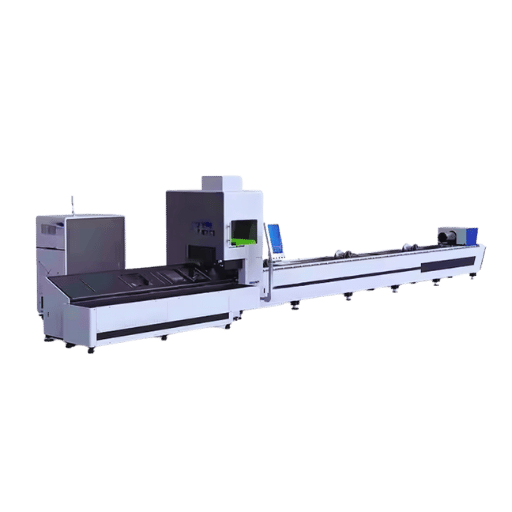
Q: What exactly is an H Beam Cutting Machine, and how is it used in processing lines?
A: An H Beam Cutting Machine is tailor-made for the precision cutting of structural H-beam steel and other steel elements. It is usually placed in processing lines to perform tasks pertaining to cutting, beveling, and profiling H-shaped steel required during welding and assembly on construction and manufacturing sites.
Q: How does tube fiber laser cutting ensure high efficiency in steel cutting?
A: The tube fiber laser cutting machine affords high efficiency in cutting due to its ability to provide precise cuts while producing near-zero wastage of materials. With the laser beam, it swiftly cuts H-beam steel and other material shapes, considerably accelerating the pace of production.
Q: How does a laser cutting machine manufacturer intervene in the actual development of cutting systems?
A: A laser cutting machine manufacturer is engaged in both the manufacture and development of advanced cutting systems by offering innovative technology, providing high-precision equipment, and offering technical assistance. They ensure that the steel laser-cutting machine incorporates the latest features geared to achieve the wants of the industry in terms of efficiency and accuracy.
Q: In what ways does CNC technology benefit the cutting of H-beams and section steel?
A: CNC technology benefits cutting H-beams and section steel by the automated, accurate control of the cutting process. Operators using CNC machines have the potential to program complex cutting patterns, hence making sure that the results are always constant and controlled from human errors and tastes.
Q: What are the advantages of using an 8-axis plasma cutting robot for steel structures?
A: Such a robot allows cutting operations on steel structures to be very flexible, precise, and efficient, considering it must handle a vast variety of angles and positions; it is most suitable for steel cutting with a high level of difficulty, including beveling and profile cutting, with little manual intervention.
Q: Why is choosing the right laser power important in metal laser cutting?
A: Choosing the right laser power in metal laser cutting is important for the following reasons: it will provide optimum cut performance and produce more accurate cut lines with minimum material wastage. Efficient working usually results from such a choice, especially when the thickness varies in h-beam steel and other materials.
Q: How does the process of laser cutting stainless steel differ from cutting carbon steel?
A: The laser cutting process for stainless and carbon steel is different due to the very nature of the materials. Stainless steel cutting needs more laser power and should be handled with special techniques so as to achieve a clean cut while not compromising the material’s structural integrity.
Q: What are the common challenges faced when cutting angle steel and channel steel with CNC cutting?
A: Some problems commonly faced when using the CNC cutting machine for angle steel and channel steel include ensuring correct alignment of the steels, handling variations in material thickness, and preventing thermal distortion. “);
Q: What features must be considered in the cutting equipment for H-beam steel?
A: The features to consider on a cutting equipment for h-beam steel include: high precision, high durability, loading and unloading preferably automatic, and a system that can adapt to plasma cutting or laser cutting. All these features are purely for the purpose of dependable working for so many years and requiring little maintenance.
Q: How does having an integrated profile cutting system help in the production of steel beams?
A: Integrating a profile cutting system into the production of steel beams very much streamlines the cutting activities, allowing the cutting of complex shapes and angles with precision. Production is thereby made faster, and material wastage is cut down while the overall quality of the final product is enhanced.
Reference Sources
1. The development of online media for design prototyping with a laser cutter – An MIT resource on laser cutting in design prototyping.
2. Beam Engine powered circular sawing machine – Investigations into the use of a beam engine to operate a circular saw for cutting purposes.
3. Welding
6. Machine