
Few design elements combine versatility and rustic charm like box beams, and their sleek sophistication allows for both business and home properties. Contrasted with traditional wood beams, box beams are a modern, practical, and cost-effective means to add character and depth to any space. This article will explore the numerous benefits of box beams, how one can modify their interiors, and the various forms of creativity that can be implemented to transform the design. Stay prepared to rethink how such spaces can be ergonomically aesthetic!
What Are Box Beams and How Are They Used?
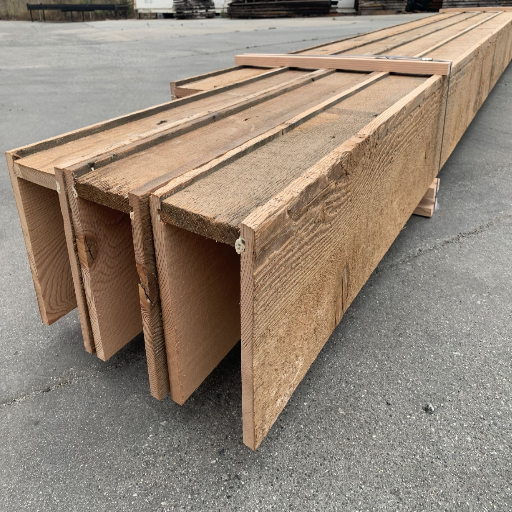
Unlike box beams, which are hollow, lightweight structures intended to create the impression of solid wood beams, traditional wood beams are much denser. Offordably and comparatively lighter than conventional wood beams, box beams are far easier to install, making them a better pick for renovation projects, new builds, or any other type of planks.
They are customarily applied to improve the architectural value of a ceiling or to incorporate an element of charm, whether rustic or modern, according to the finish. Their range of application permits them to be used in regions that require style, achieving both aesthetics and practical use in spaces.
Applications of Box Beams in Interior Design
- Adding Aesthetic Appeal with Ceiling Beams
Box beams can enhance the aesthetic appeal of a flat ceiling’s design. They can be used stylistically in the form of grids, coffered patterns, or even single linear beams placed at the center of living rooms, dining rooms, or bedrooms to serve as a focal point.
- Creating Faux Load-Bearing Beams
Box beams are an ideal substitute when no structural renovations are necessary, yet the appearance of traditional load-bearing beams is needed. These beams can imitate the look of timber framing characteristic of rustic or industrial-style interiors.
- Obscuring Wires And Ducts
Box beams can conceal electrical wires, plumbing pipes, and ducts. This is particularly handy when renovations require a pleasing disguise for the exposed systems.
- Dividing Spacious Open Floor Plans
In small apartments or houses, they can help split the sitting and dining areas without actual walls encroaching. The beams preserve the floor plan’s openness and flexibility while quietly creating a boundary.
- Emphasizing Design Details
Besides offering enhancements and aesthetic appeal to timber-framed walls, box beams accentuate already existing architectural features like vaulted ceilings, archways, and others. Strategic beam placement can either draw attention upwards or surround the focal points of detailed design regarding the room’s structural features.
Benefits of Using Box Beams in Your Home
- Aesthetic Appeal
Box beams add charm and elegance to every room. They can also be customized, as they come in a variety of materials and finishes. Thus, box beams transform ordinary ceilings into extraordinary ones.
- Cost-Effectiveness
Box beams are a more affordable option than solid wood beams. They cost significantly less while still providing the same aesthetic value. With the addition of box beams, homeowners can stay within budget while still getting that luxurious feel.
- Lightweight and Easy Installation
Box beams are much lighter than solid beams, making installation much easier and less costly. Their lack of additional structural support means that they can be installed on almost any ceiling.
- Versatility in Design
Whether a rustic farmhouse design or a modern minimalist design is being pursued, box beams are an excellent option tailored to fit a variety of architectural styles.
- Functional Uses
Beyond mere aesthetics, box beams serve multiple functions. They can hide ductwork, wiring, or structural flaws to achieve a polished yet practical look.
How to Install Box Beams Effectively?
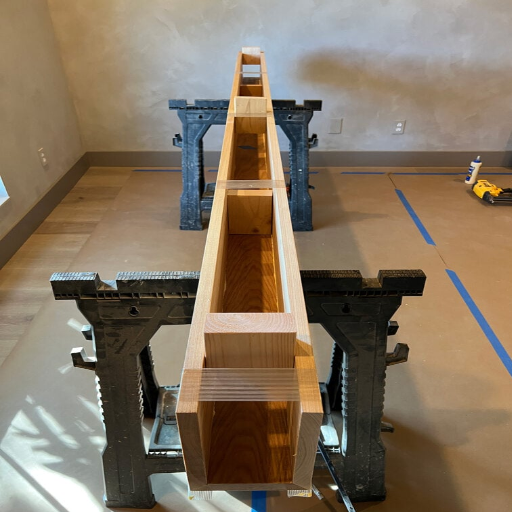
- Layout, Precise Pla and Measure
Begin by measuring the area earmarked for the installation of box beams. Meticulously outline the placement on the ceiling or walls.
- Basic Surface Preparation
Remove any debris, dust, or dirt from the installation area and clean thoroughly. Check for a level surface at the mounting location and for utmost clearance.
- Wood Blocks Installation
Fix wood mounting blocks or cleats to the intended surface, as these will support the beams. Ensure the wooden blocks are fixed with adequate spacing for better stabilization.
- Adjusting the Fit of Box Beams
Align the rigid box beams with the cleats positioned under them and slide them into a fixed position until they rest on the cleats. Make certain that they do not interfere with the marked indicators.
- Seaming
Apply nails, screws or other mechanical fasteners to fix the beams in relation with the mounting block without letting them dangle loosely. Make sure that the beams cannot slide, move, or droop.
- Finishing
With sanded edges, apply paint or stain and wood filler to conceal any visible gaps and seams, achieving a relatively polished look and restoring the overall appearance.
By taking on these measures, aesthetic beauty, functionality, and structure will be achieved collectively seamlessly and uncomplicatedly.
Step-by-Step Guide to Install Box Beams
Indeed, installing box beams on vaulted or sloped ceilings is possible, but additional measures must be taken to ensure their proper placement and safety. First, provide all the angles and cuts are meticulous; they must be exact along the sloped edge. To support the box beams, it may be necessary to design custom mounting blocks to rest at the correct angle to the ceiling. Also, levels that utilize lasers to mark lines can help to ensure the proper alignment of the beams, both in level and spacing. While patience and effort may be required to install angled ceilings, the result will look professionally done.
Common Mistakes to Avoid When Installing Box Beams
- Improper Measurement—Improper measurements that are not estimated accurately may result in beams that do not fit properly, creating gaps or uneven spaces. Confirm all your dimensions before proceeding to cut any materials.
- Misuse of Ceiling Irregularities—Ceilings are not perfect; if they are ignored, complications may arise during installation. Incorporate a laser level and remember to account for any changes on the face of the ceiling.
- Skipping Finishing Stains—Installing beams is often tedious. To prevent a mess and achieve cleanliness, it is best to stain or paint the beams before bolting them into place.
- Under-Estimating Support—Beams can sag or become dislodged over time if proper mounting blocks or other securing mechanisms are not installed. Always ensure that the beams rest on a well-supported and structurally sound base.
- Installation Timelines—There shouldn’t be any notable lapses in the installation process, and all steps should be in precise order. Everything will be perfectly aligned as long as each beam is placed carefully without rushing the spacing.
What Wood Species are Best for Box Beams?
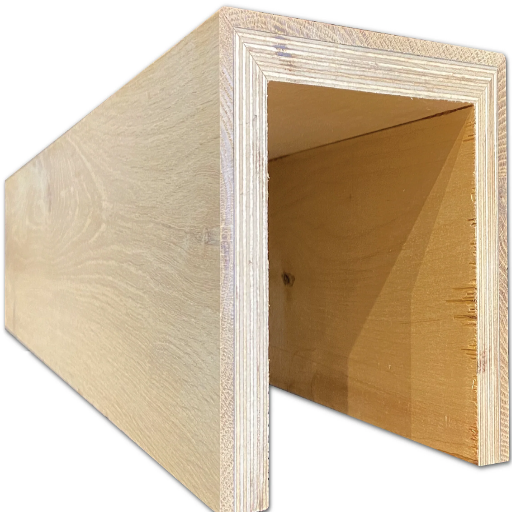
Many box beams can be made using wood species that are durable, aesthetically pleasing, and convenient to work with. The following are some popular selections:
- Cedar—As a moisture—and decay-resistant wood, cedar is ideal for incorporating box beams in areas with high humidity.
- Douglas Fir – Well-known for its warm, natural tones, Douglas fir is also highly durable. It’s often used for modern and rustic designs.
- Oak—With an enduring grain pattern, oak is recognized for its strength. It makes a timeless addition that needs structural support.
- Pine—An easily adjustable softwood, lightweight pine is quite economical and ideal for staining or painting.
- Poplar – With a smooth surface, poplar is affordable and perfect for designs incorporating paint.
Each wood species has distinct attributes, meaning the ideal selection varies according to your project’s design aesthetics, budget, and additional needs.
Comparing Different Wood Species for Box Beams
Douglas Fir, Cedar, and Pine are popular wood species for box beams because they are light in weight, strong, inexpensive, and rot-resistant. Each offers unique benefits.
|
Parameter |
Douglas Fir |
Cedar |
Pine |
|---|---|---|---|
|
Strength |
High |
Moderate |
Low |
|
Durability |
High |
High |
Moderate |
|
Cost |
Moderate |
High |
Low |
|
Appearance |
Grainy |
Smooth |
Knotty |
|
Weight |
Heavy |
Light |
Light |
|
Rot Resistance |
Moderate |
High |
Low |
|
Ease of Staining |
Moderate |
High |
Low |
|
Applications |
Structural |
Decorative |
Decorative |
Characteristics of Douglas Fir vs. White Oak
White Oak has greater rot resistance while adding a distinctive aesthetic and stronger appeal, whereas Douglas fir benefits from costing less, checking less, and being lighter in weight.
|
Parameter |
Douglas Fir |
White Oak |
|---|---|---|
|
Strength |
High |
High |
|
Weight |
Light |
Heavy |
|
Durability |
Moderate |
High |
|
Rot Resistance |
Low |
Moderate |
|
Cost |
Moderate |
High |
|
Grain |
Straight |
Subtle |
|
Color |
Reddish |
Cream/Brown |
|
Checking |
Minimal |
Moderate |
|
Applications |
Structural |
Decorative |
Choosing the Right Wood for Your Box Beams
However, balancing aesthetics and spending alongside durability remains a challenge, especially when selecting the ideal wood for box beams. Recently, two of the most popular choices have dominated the market. Douglas Fir’s weight-to-strength ratio and subtle grain suited modern and traditional designs. As for White Oak, it was an equally popular choice, but for its unparalleled resistance against moisture and hardness, it is ideal for high-traffic indoor areas or warmer climates. Poplar also exists as an alternative for those looking to cut costs without compromising quality, boasting a smooth surface perfect for painting. In the end, having patience while reviewing the environmental conditions of your space and prioritizing the style alongside budget will guide you best in making decisions on design materials.
What is the Pricing for Box Beams?
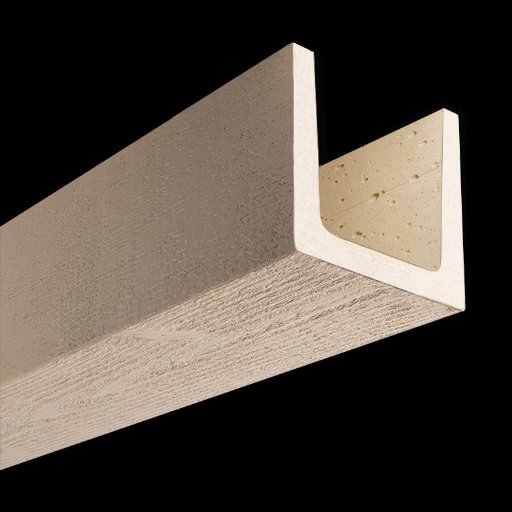
50 for each linear foot. Box beams crafted from custom materials, such as those with distressed finishes or specialty woods, can exceed the price of $100 per linear foot. It is best to contact suppliers or manufacturers directly to get accurate pricing based on the details of your specific project.
Factors Affecting the Pricing of Box Beams
The following aspects will significantly impact the pricing of box beams:
- Material Selection: The material used, whether reclaimed wood, oak, pine, or even polyurethane polyester alternatives, will impact cost significantly. The price goes up with the use of rarer or higher-quality woods.
- Beam Dimensions: The size of box beams impacts the amount of materials and labor required, increasing the cost per linear foot. Box beams with larger length, width, and thickness require more resources.
- Customization Options: Fulfilling special requests such as hand-hewn textures, disturb finishes, and specialty coating adds beauty and increases costs.
- Manufacturing Complexity: Creating custom angles, unique shapes, and detailed designs requires extra time and expertise, which increases labor expenses.
- Supplier and Location: The price will also change depending on the region from which the box beams are sourced locally. Shipping fees may add to the total expenses if a non-local supplier is used.
- Depending on the complexity of the installation process, professional assistance may be required, which could increase the budget even further.
These considerations, paired with understanding quotes tailored to consumers’ projects, allow for easier decision-making when budgeting.
Average Cost of Different Wood Box Beams
The price of wood box beams can change dramatically based on the type of wood, size, and finish. For instance, a box beam made of basic pine might only set you back $20 to $40 per linear foot, which is quite affordable; whereas hardwoods like oak or walnut tend to average around $40 to $70 per linear foot because of their strength and stunning look. Furthermore, custom finishes, reclaimed wood, or other complex detailing can cost above $100 per linear foot. Knowing these prices will assist you in choosing the most appropriate beam type that fits your project’s needs and budget.
Reference Sources
- “Experimental and Numerical Dynamic Behavior of Bending-Torsion Coupled Box-Beam” (Patuelli et al., 2022, pp. 3451–3463) (2022): This study investigated the dynamic behavior of stiffened box beams, focusing on bending-torsion coupling. Methodology involved experimental testing using a laser Doppler vibrometer (LDV) and Finite Element Method (FEM) simulations using solid elements and an equivalent single-layer approach. Key findings showed good correlation between experimental and numerical natural frequencies and modal shapes.
- “In-plane and out-of-plane free vibration analysis of thin-walled box beams based on one-dimensional higher-order beam theory” (Tan et al., 2023, pp. 5638–5652) (2023): This paper analyzed the free vibration characteristics of thin-walled box beams using a one-dimensional higher-order beam theory. The methodology involved developing a kinematic model incorporating various deformation modes and deriving analytical solutions for free vibration modes under different boundary conditions. Key findings highlighted the significant role of warping, distortion, and shear deformation in the vibration characteristics. Results were validated against finite element simulations (ANSYS).
- “Improved Analytical Method to Investigate the Dynamic Characteristics of Composite Box Beam with Corrugated Webs” (Feng et al., 2020, pp. 194–206) (2020): This research developed an improved analytical method to study the dynamic characteristics of composite box beams with corrugated webs. The methodology involved developing an analytical model and comparing the results with experimental data. Key findings provided insights into the dynamic behavior of this specific type of box beam.
- Top Box Beam Production Line Manufacturers and Suppliers in China
Frequently Asked Questions (FAQs)
Q: What are real wood box beams, and how are they designed?
A: Real wood box beams are hollow structures made from solid timber that mimic the look and feel of traditional wood beams. They are designed to add architectural interest to ceilings and can be customized to fit various styles, including Tudor and Craftsman designs.
Q: What types of wood are commonly used for box beams?
A: Common types of wood used for box beams include western red cedar and spruce. These woods are chosen for their aesthetic qualities, durability, and the unique grain patterns they offer.
Q: How do I install wood ceiling beams in my home?
A: Wood ceiling beams are easy to install and can be done as a DIY project. To attach them, you will typically need to secure the beams to the ceiling using screws or glue, ensuring they are flush against the surface. Consider using a lock miter joint for any corners for a professional finish.
Q: Can I customize the texture and finish of my box beams?
A: Yes, you can customize the texture and finish of your box beams. Many builders offer options for staining and distressing the wood to achieve the desired look, allowing for variations in grain and color that suit your home’s decor.
Q: Are faux beams a good alternative to real wood beams?
A: Faux beams can be a cost-effective alternative to real wood beams, especially if you’re looking for a lightweight, easy installation option. However, real wood beams provide a more authentic look and feel, with the added benefit of natural wood grain and texture variations.
Q: What is the best way to maintain the appearance of my wood beams?
A: To maintain the appearance of your wood beams, regularly dust them and consider applying a fresh coat of stain or sealant every few years to protect against moisture and fading. Avoid using harsh chemicals that could damage the wood.
Q: How do I choose the right size for my box beams?
A: When choosing the size of your box beams, consider the room’s scale and the ceiling’s height. Larger beams can make a statement in a spacious room, while smaller beams may be more appropriate for lower ceilings. Custom sizes can be ordered to meet your specific needs.
Q: What styles of homes benefit from wood ceiling beams?
A: Wood ceiling beams can enhance various architectural styles, including Tudor, Craftsman, and even modern designs. They add warmth and character to any space, making them suitable for traditional and contemporary homes.
Q: Can I use wood beams outdoors?
A: While real wood beams can be used outdoors, it’s essential to choose a high-quality wood that can withstand the elements, such as western red cedar. For exterior applications, ensure the beams are correctly sealed and maintained to prevent damage from moisture and pests.


