
Welding requires exactness, effectiveness, and repetition, all within welding’s intelligent craftsmanship. Welding positioners are a must-have for professionals and companies seeking to streamline processes and maximize weld integrity at every stage. These adaptable tools boost productivity, alleviate operator strain, and guarantee accuracy of the welds in complex applications, including multi-axis robotic systems. However, what are welding positioners, and why are they so important in contemporary workplaces?
This blog post explains the entire scope of welding positioners, including their functions, primary advantages, and transformative potential for your welding workflows or processes. Moreover, it doesn’t matter if you are entirely new to welding or a long-time professional trying to streamline your operations. This article will provide essential insights on how these positioners help achieve better welds while minimizing the time and effort spent. Continue reading with us to learn everything about these innovative tools.
What are the Different Types of Welding Positioners?
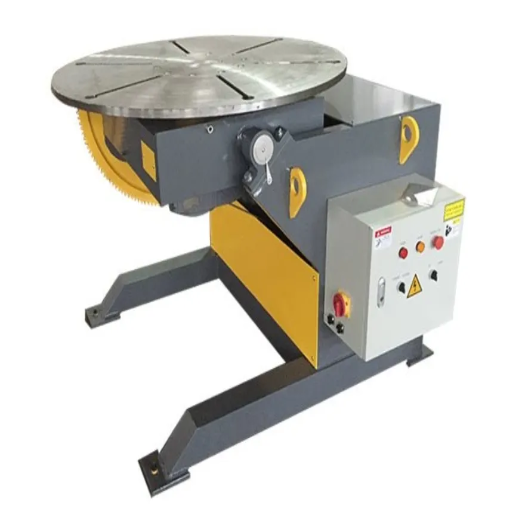
In classifying welding positioners, each type has a specific feature that caters to certain requirements in the welding processes. The most common types are:
- Rotary Welding Positioners: These positioners turn the workpiece so the welder can assume the most suitable posture for each step. They work best for circular welding processes, such as for pipes and flanges.
- Tilt and Turn Positioners allow both tilting and bending, making movement for complex weld joints easier.
- Headstock and Tailstock Positioners: These types are appropriate for longer workpieces since they support both ends of the piece to prevent unwanted movements while welding.
- Turntables: These are simple and flexible. They can be used for smaller or lighter workpieces because they can be easily turned.
Each form helps adjust weld accuracy, efficacy, and ergonomics, leading to better welding results.
Understanding Weld Positioners
Positioners are essential in contemporary manufacturing as they make welding easier and enhance quality control. These devices securely grip workpieces and rotate them into optimal positions so that welders can access difficult areas for welding while sitting or standing in comfortable positions. In addition to increasing efficiency, weld positioners reduce manual handling and positioning fatigue, boosting safety on the shop floor. Moreover, automation in modern manufacturing has allowed robotic systems to be integrated with weld positioners, greatly enhancing productivity and accuracy. It is crucial to know the different types and uses of weld positioners for other industries to optimize their operations because efficient automated welding processes are vital in many industries.
Types of Welding Positioners Explained
Welding positioners are developed to assist welders in accomplishing their tasks more efficiently and in a precisely defined manner. Their segmentation is based on how each aids with the welding. The examples are as follows:
- Headstock and Tailstock Positioners
They are appropriate for long and heavy workpieces because the two-part positioners support the stock from both ends. They find application in the automotive and construction industries, which require precision and balance.
- Turntable Positioners
These are more versatile than other types because they can be used in numerous pipe welding applications. A turntable enables the smooth and consistent rotation of the workpiece, which is particularly effective for circular welds. This allows the welder to maintain the desired angle throughout the weld without repeatedly repositioning the workpiece.
- Tilt Rotary Positioners
These are especially useful in fabrication, aerospace, and piping applications because they can perform complex or multi-angle welds. Their dual-axis movement enables the workpiece to rotate and tilt, which is required to weld at different angles.
- Pipe Roll Positioners
These are exclusively designed for cylindrical objects like pipelines and tanks. Rollers rotate these workpieces, making them exceedingly stable and perfect for the continuous welding of large-diameter pipes.
- Manual Positioners
Manual positioners are cost-effective and simple. They are operated by the welder, who adjusts the workpiece manually. They are mainly found in smaller workshops or for simpler welding tasks that don’t require automation.
Operators select the appropriate welding positioner, ensuring productivity, precision, and safety for their particular application.
Choosing the Right Welding Positioner
Understanding how to choose the correct welding positioner requires thoughtful consideration of the workpieces’ weight, size, and the type of welding process to be used. Precision is critical for heavy and complex workpieces, therefore powered welding positioners with rotation and tilting capabilities are essential. Alternatively, smaller and simpler tasks can be completed using affordably priced manual positioners. Meeting productivity goals without compromising outcomes involves careful attention to the positioner’s operating speed, load capacity, and compatibility with existing welding equipment. Customizing the positioner to fit the project scope will help uphold efficiency, safety, and quality standards.
How Do Welding Positioners Improve Productivity?

The effectiveness of welding positioners lies in their ability to guarantee consistent and precise positioning of workpieces throughout the welding process. With the elimination of time-consuming manual adjustments, welders can operate more efficiently. Furthermore, they remove the chance of vertical and lateral movement, leading to irregular and inaccurate cuts that require extensive correction during the finishing process. This is achieved by providing steady platforms that positioners enable. Finally, welders can adopt better working angles, improving ergonomics and enhancing overall productivity.
Increasing Welding Efficiency with Positioners
Welding positioners improve operational processes by providing uniform and accurate handling of materials. These tools automate the adjustment and movement of workpieces so welders do not have to stop manually repositioning heavy or impractically shaped materials. This uninterrupted workflow decreases delays and results in quicker task completion. Positioners also reduce the likelihood of mistakes due to proper alignment, which results in smoother welds that require fewer corrections after welding. Modern advancements in welding technology have incorporated programmable controls and robotic capabilities into modern positioners, further improving efficiency for complex and repetitive welding tasks.
Impact on Fabrication Processes
Unlike traditional positioners, the welding ones enable automation, simplifying complex welding automation tasks. In corroboration with advanced technologies, tools like the former reduce the need for manual work and increase overall productivity. During the middle stages of the fabrication process, they ensure minimal reliable accuracy checking rework that needs to be done along with a strict closure of quota requirements, precision guidelines, and material waste limits. With the help of analysis tools like Google’s search engine, mark data-driven insights coupled with industry-focused analytics can spot and mark trends, which further ease the process of workflow planning optimization and make and shift constructions with better proven mechanics.
Technology, along with machinery, optimizes operational efficiency, gaining and retaining a competitive edge tailored to evaluate current surrounding factors, creating value in the dynamic industrial landscape.
Automated Welding Systems and Productivity
Fused with Google’s data, automated welding systems unlock and open a world of unmeasured resource productivity optimizations with the help of emerging trend detection. By simply monitoring the very mark of the production data analytics, manufacturers gain complete control and freedom to retune additional processes during peak and nonpeak times to reduce the amount of downtime and system damage bottlenecking, enabling throughput to improve. More advanced systems of welding basic mechanization coupled with search engine fused insights give firms the edge required to meet prospective demands and achieve fund precision outcome goals, which are enclosed.
How Do You Select the Right Welding Positioner for Your Needs?
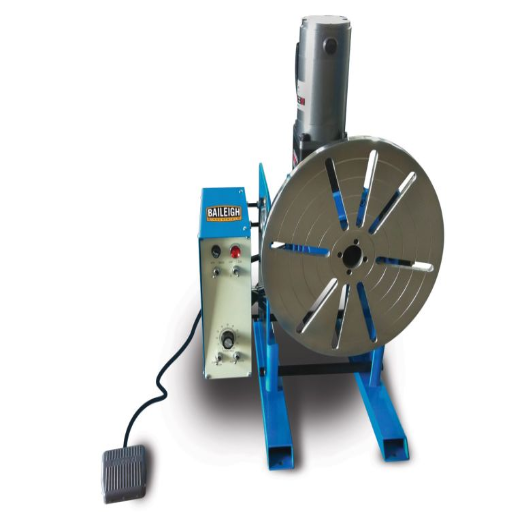
The proper welding positioner for a skill is based on the specific project criteria. First, consider the workpiece’s size and weight to select a positioner with the appropriate support and safety capabilities for rotation. After that, analyze the type of welding being carried out, as some positioners only work with a particular welding method, for example, TIG or MIG. Further, the adjustability and range of motion, including tilt and speed, for precise welds have to be considered. Last, check other equipment compatibility, such as welding manipulators and fixtures, to determine if the positioner can be used seamlessly within the workflow. With these considerations, using manipulative goals, a positioner that will improve quality and productivity can be selected.
Factors to Consider in Positioner Selection
You cannot ignore industrial specific features and innovations while selecting a welding positioner. Modern data indicates that automation potential is a core consideration for industries looking at productivity. Businesses are seeking more reliable and accurate welds. Such welds are attained when positioners are intelligent enough to be programmed and have robotic interfaces. The material’s durability, maintenance, and repair are also important. Dependable equipment reduces downtime and decreases operational costs in the long run. Positioners that withstand material gaps need less maintenance, which assures better dollar value of equipment. These considerations will help you choose a positioner that meets contemporary standards and improves efficiency.
Specific Welding Applications and Positioners
Welding positioners are utilized in industries such as pipe welding, tank fabrication, aerospace, automotive, and heavy equipment manufacturing.
| Parameter | Application | Positioner Type |
|---|---|---|
|
Pipe Weld |
Circular joints |
Rotating |
|
Tank Fabric |
Large cylinders |
Hydraulic |
|
Aerospace |
Precision parts |
3-axis |
|
Automotive |
Chassis assembly |
2-axis |
|
Heavy Equip |
Structural welds |
Customizable |
Tailstock Positioners vs. Headstock Positioners
Tailstock positioners hold the workpiece, while headstock positioners provide rotation.
| Parameter | Headstock | Tailstock |
|---|---|---|
|
Function |
Rotational power |
Stability support |
|
Location |
One end of the setup |
Opposite headstock |
|
Components |
Spindle, motor |
Adjustable support |
|
Use Case |
Rotation tasks |
Long workpieces |
|
L:D Ratio |
Any |
>3:1 |
|
Customizable |
Yes |
Yes |
|
Safety |
Locking devices |
Stability focus |
|
Applications |
Welding, assembly |
Welding, drilling |
What is the Role of Welding Positioners in Pipe Welding?
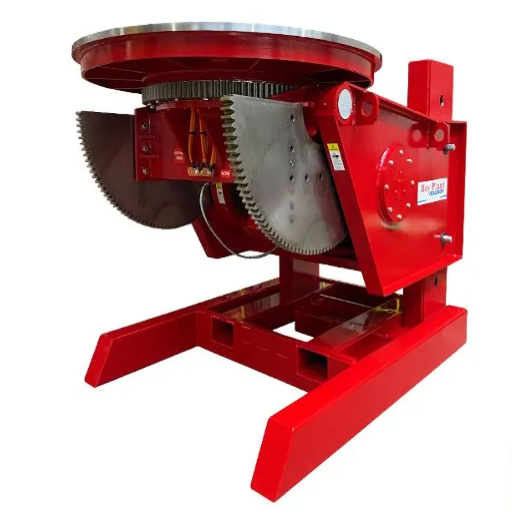
Positioners are critical in the pipe welding processes since they assist in the movement of the pipe to the position where the specific welding angle is required. Welding positioners prevent manual rotation and translation, which may lead to misalignment and inconsistent welds. This minimizes fatigue, enhances precision, and improves safety for the welder throughout the entire process of welding. Because positioners control the movement of the pipe, they also help decrease the number of defects in completed work, lower the amount of time taken for welding, and ultimately raise productivity.
Pipe Welding Positioner Overview
Pipe welding positioners are advantageous in industrial and manufacturing processes. They allow for high-quality welds by smooth rotation and alignment, which ensures minimal material waste. Moreover, in the case of welders, the ergonomic design of these devices greatly reduces fatigue due to physical strain over prolonged operations. In precision-sensitive sectors like oil, gas, or aerospace, these devices enable greater workflow efficiency while upholding stringent quality standards. Also, modern advanced automation and digital controls enable even better accuracy and repetitive precision.
Improving Weld Quality in Pipe Welding
Welding of pipes is crucial in several key industries, including construction, manufacturing, and energy. Improving weld quality in pipe welding requires attention to several factors. The first and often most important step is preparing the materials and cleaning the pipes by scrubbing them to eliminate grease, dirt, and any other contaminants that could compromise the weld. Also, it is critical to select the proper welding technique and filler material appropriate for the pipe’s material and its purpose. As noted earlier, modern welding positioners improve accuracy and dependability, especially for intricate multi-welds. Moreover, certifying and training welders regularly helps ensure they have all the relevant skills needed to tackle the challenges posed by industry standards. The result of adopting these practices is mounting evidence that businesses can improve the quality of their welds, reduce the number of defects, and increase the longevity of their projects.
Standard Welding Practices with Positioners
A positioner enables a precise alignment of workpieces so that welders can achieve consistent and uniform results in their welding processes. A wide array of rotary welding positioners offers significant ease when welding cylindrical objects since they guarantee smooth weld seams as a byproduct of the natural rotation. Moreover, tilt and turn positioners are popular with more complex geometrical shapes, such as angled and non-standard components. These shapes allow unrestricted access to hidden features that need to be welded but are otherwise difficult to access.
Maintaining the peak performance over time requires that regular maintenance checks, as well as the calibration of each welding positioner, are performed consistently. Regarding power capabilities, it is also essential to observe and respect operational and load-bearing thresholds to avoid equipment breakdown. Other than that, for more advanced systems, attachment of the positioners to other systems, such as robotic arms, can reduce the time required to perform repetitive tasks without sacrificing precision. Following these steps will ensure optimized workflow while guaranteeing high quality results in welding.
Reference Sources
-
- Process Simulation and Optimization of Arc Welding Robot Workstation Based on Digital Twin (Zhang et al., 2023)
- Key Findings:
- A system framework, based on a digital twin welding robot cell, is proposed and constructed to optimize the robotic collaboration process of the welding workstation with digital twin technology.
- An optimization method for the placement planning of the initial welding position of the robot base is proposed, with the goal of smooth operation of the robot arm joints.
- Methodology:
- The physical entity was digitally modeled in 3D. The twin welding robot operating posture process beats. Other data were updated in real time through a real-time interactive data drive to achieve real-time synchronization and faithful mapping of the virtual twin.
- Based on this digital twin framework, a moving arm robot welding example introduces the implementation and validation process of welding process optimization.
- Key Findings:
- Inverse kinematic control algorithm for a welding robot-positioner system to trace a 3D complex curve (My et al., 2019, pp. 319–323)
- Key Findings:
- A new inverse kinematics solution is proposed to generate the movement codes for a six-degree-of-freedom welding robot incorporated with a rotary positioner.
- The proposed algorithm increases the end-effector positioning and orientation accuracy and reduces the time required to teach a welding robot-positioner system.
- Methodology:
- The kinematic error is minimized, and the actual welding error is always controlled to be less than an allowable limit.
- The algorithm helps develop an offline CAD-based programming tool for robots when welding complex 3D paths.
- Key Findings:
- Top Welding Positioner Manufacturer And Supplier In China
- Process Simulation and Optimization of Arc Welding Robot Workstation Based on Digital Twin (Zhang et al., 2023)
Frequently Asked Questions (FAQs)
Q: What is a welding positioner, and how does it benefit a welder?
A: A welding positioner is a welding equipment designed to hold and manipulate workpieces during welding operations. It benefits a welder by allowing for better access to the weld pool and improving the welding quality, leading to a good weld.
Q: What are the different types of welding positioners available?
A: Various types of welding positioners are available, including 2-axis positioners, multi-axis positioners, and rotary positioners. Each type is designed for specific welding tasks and can enhance welding productivity.
Q: How do rotary welding positioners improve precision in welding?
A: Rotary welding positioners improve precision in welding by allowing the workpiece to be rotated during the process. This enables the welder to maintain a consistent angle and distance from the weld pool, resulting in higher-quality welding.
Q: Can I use welding positioners for both manual and automatic welding?
A: Yes, you can use manual and automatic welding positioners. They are designed to accommodate various welding jobs and enhance the efficiency of the welding process, whether it’s MIG welding, overhead welding, or vertical welding.
Q: What is the function of a headstock tailstock positioner?
A: A headstock tailstock positioner is a type of welding positioner that allows for the secure holding of workpieces at both ends, providing stability during welding. This setup is advantageous for larger or longer workpieces that require precise weld positioning.
Q: How do I choose the correct welding positioner for my projects?
A: When choosing a welding positioner, consider factors such as the type of welding you will be doing, the size and weight of your workpieces, and the desired level of precision. Evaluating these factors will help you select the proper positioner for your needs.
Q: What role do skyhook positioners play in welding?
A: Skyhook positioners are specialized welding positioners that allow for the suspension of workpieces in mid-air, providing optimal access for welding. This design is particularly beneficial for complex welding projects that require precision and flexibility.
Q: How can using welding positioners enhance productivity in a welding shop?
A: Welding positioners can enhance productivity by reducing the time it takes to set up and manipulate workpieces. They also allow for faster adjustments and repositioning, which can significantly streamline the welding process and improve overall efficiency.
Q: What is the importance of weld positioning in achieving quality welding?
A: Weld positioning is crucial in achieving quality welding. It directly affects the welder’s ability to access the weld pool and maintain a steady hand. Proper positioning ensures the weld is uniform and meets quality standards, leading to successful welding outcomes.


