
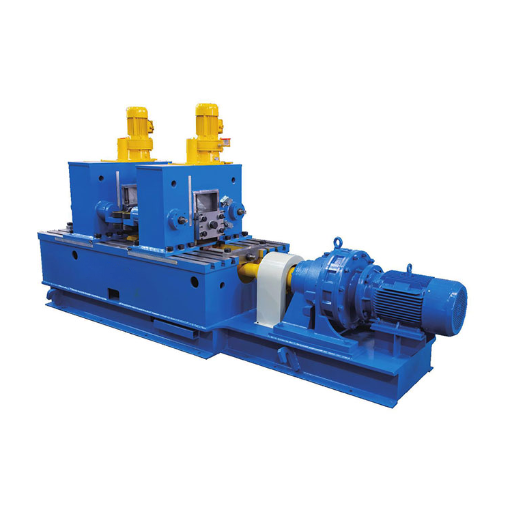
Like in any industrial fabrication and construction, precision and speed matter a lot. The machines which straighten H beams are important for maintaining the accuracy and structural soundness of the building parts and components. Understanding these machines and their workings, whether you are experienced in steel fabrication or a newcomer, will put you ahead of competition. In this article, we will highlight everything regarding H Beam Straightening Machines, their working principles, major advantages, and their role in construction projects. Prepare yourself to learn more about one of the most crucial pieces of tools!
What Is an H Beam Straightening Machine?
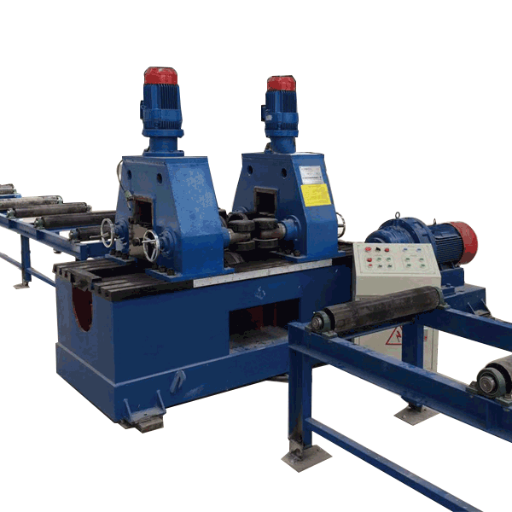
An H beam straightening machine applies to an industrial machine that ‘waves’ an H-shaped steel by removing any aberrations or bends in the beam adding precision in spinality, it does this with the help of hydraulic stringers that apply just the right amount of pressure; this focused tension helps round and align the cut thoroughly. Precision is important in construction and an H beam straightening machine smoothens out steel lined beams, prepping them for use without crippling confusion.
What Is The Function Of A beam Straightening Machine
With hydraulic pumps strung side by side in conjunction with rollers, any steel bend can be dealt with along an H beam from both sides with precision. A process initiates when a beam is enclosed in the set and passes through a series of rollers. Force is added in proportion to the bent parts so that straightening the beam is easy. Advanced algorithms that drill sensors to a machine have appreciation in helping maximize accuracy in repairs and minimizing adding flexible options in overhaul corrections.
What Are the Key Components of a Straightening Machine?
The key components of a straightening machine include rollers, a hydraulic system, sensors, control systems, a power source, and a frame structure.
| Component | Description |
|---|---|
| Rollers | Bend correction |
| Hydraulic system | Provides force |
| Sensors | Real-time monitoring |
| Control systems | Adjust operations |
| Power source | Energy supply |
Why Is a Flange Straightening Machine Essential in Beam Production?
Flange straightening machines are instrumental in maintaining the structural soundness and quality of beams in construction projects. During fabrication, beams undergo deformation due to residual stresses from welding, rolling, or other operations. If uncorrected, these imperfections pose potential safety risks in structural integrity.
To modern her, many straightening machines are equipped with advanced technologies, such as high-precision hydraulic or servo systems that are capable of real-time corrections within tighter tolerances of ±0.1 mm. Automating control systems with intelligent sensors can also detect and correct minor geometric misalignments in the flange which bolsters production consistency.
Recent industry data estimates that flange straightening machines can reduce overall production downtimes by 30%, raise output rates by 25%, and decrease material waste by 15%. These improvements not only reduce costs for the manufacturers, but also support sustainable production by aligning resource expenditure. Ultimately, these reliability and mini compliance with stringent industry standards such as ASTM and EN regulated standards.
How to Straighten H Beams Efficiently?
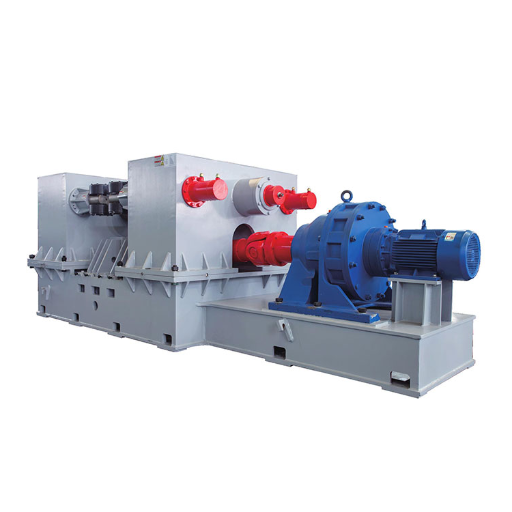
To straighten H beams efficiently, an H beam straightening machine is best suited for the job. These types of machinery are made to correct any bends or deformations with great accuracy. The first step is to fix the beam so it is accurately aligned and secured. Change the machine’s rollers and hydraulic systems so that controlled pressure is distributed evenly across the beam. Follow the instructions given by the manufacturer to calibrate settings for the beam’s size, fabrication grade, and classification. The equipment must be serviced regularly to guarantee efficiency and precision when carrying out tasks.
Steps to straighten H beams
- Secure the beam: Align the H beam precisely to the machine, so it can be held in place without any movements during the H beam cutting process.
- Adjust settings: Set the measurements of the rollers and pressure mechanisms in a way that they would take into consideration the material designation as well as the dimensions of the beam.
- Apply Pressure: Start applying uniform systematic pressure along the beam’s length for comprehensive correction of all the persisting bends.
- Monitor Progress: Confirm frequent checkups of the alignments so as to confirm that the beam is bending to the required straightening angle.
- Complete the Process: Carefully remove the beam after it has been straightened and inspect for any remaining marks which will ensure its accuracy.
What Equipment is Required for Beam Straightening?
Each type of beam requires a certain type of equipment to achieve the necessary level of accuracy needed to straighten them. Here are some machines and tools along with their descriptions:
- Hydraulic Presses: This kind of machine applies an immense amount of pressure over a small area—this is especially useful for controlling deformations. These machines have a lot of variability in terms of their size and scale. Older models were limited to 10 tons but newer ones can achieve forces ranging from 1000 tons, allowing for industrial grade metal beams. Their efficiency on smaller, detailed work is on the same level as larger projects, so they are very useful.
- Roller Straighteners: These machines straighten bent beams by passing them through a set of rollers which reshape them progressively. Almost all new models can process beams up to 20 feet long and guarantee precision through CNC (Computer Numerical Control) mounted tools which minimize human error.
- Heat Straightening Tools: This equipment is useful for materials that can be shaped by heat—for instance, metals—using induction heating systems or torches. These tools allow certain areas to be heated in a precise manner to soften the metal, which makes it easier to reshape. The exact temperature depends on the metal and its properties but strongly tends to fall between 1200 degrees to 1800 degrees fahrenheit.Alignment Frames: Commonly known as beam bending machines, alignment frames allow for the beam to be clamped and progressively adjusted. They can also cater to a variety of profiles I-beams, H beams and even custom shapes up to 36 inches on wider industrial applications.
- Measuring Instruments: Tools like laser alignment systems and dial gauges always need to precision when straightening an object as they measure accuracy los precision. Using lasers for aligning machines helps achieve precise measurements detecting discrepancies of 0.001 inches which aid the engineering designed final product achieve the set goals.
Investing in better quality set gear aids in automating the straightening procedure making the process seamless while providing consistent results and minimizing material wastage.
How to Maintain Straightening Speed?
- Ensure Equipment Maintenance: Unattended and serviced machinery is liable to wear and tear making them ineffective which in turn causes inefficient workflows.
- Use Skilled Operators: Properly trained professionals with known industry experience can help build value and systematically streamline workflows reducing lags in the process.
- Watch Material Selection: Quality of the material consistently ensures reducing the process to modifying streams and adjustments that require minimal interference.
Choosing the Right H Beam Straightening Machine
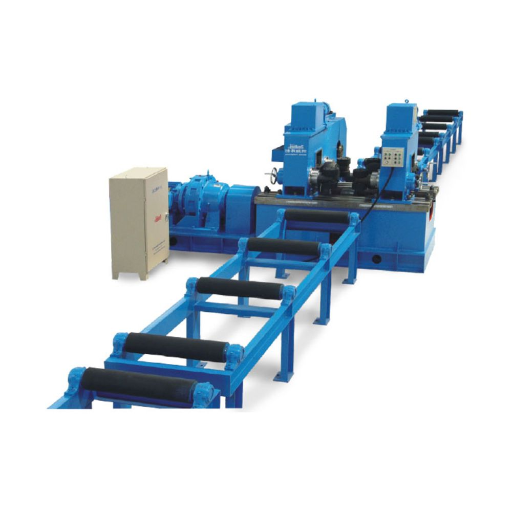
- Material Specifications: Confirm that the Machine will Work with the Size and Type of H Beams You Will Process.
- Straightening Force: Ensure Operational Competence Aligns with the Selected Equipment’s Efficiency-Centric Straightening Force.
- Levels of Automation: Analyze Workflow to Identify the Appropriateness of a Fully-Automatic, Semi-Automatic, or Manual Machine in Work Processes.
- Durability and Maintenance: Make Sure that the Machine Design is Sturdy to Ensure Its Longevity and Reliability While Having Minimal Maintenance Needs.
- Reputation of the Manufacturer: Ensure that the Customer Support is Reliable While the Manufacturer is Reputable so That Quality Issues Do Not Arise for the Machine Sets Termed for Purchase.
What Criteria Should a One Look for in a Machine Manufacturing?
Looking for a machine manufacturing involves scrutinies and understanding the focus of the partnership and the chances of achieving efficient outcomes. Here herewith are construction or factors the base estimation that can be drawn as per the recent trend data available in the market:
- Study the field of expertise as well as the innovatory tendencies: According to data, machinery manufacturers exhibit a tendency to optimize machine features if considerable funding is offered for R & D. An instance is cited in 2023 when investments of about 7% in the R&D budget led to more sophisticated solutions globally.
- Certifications and Compliance: Leading companies fully adhere to the ISO 9001 certification for quality management as well as the ISO 45001 certification on the safety of the workplace. This form of compliance boosts production and protects operations for the long term.
- After-Sales Support and Training: Research indicates that 65% of factory operators consider after-sales service as the most important criterion in selecting a machine manufacturer. Timely technical assistance and comprehensive training aid effective program execution.
- Sustainability Practices: Sustainable manufacturing is a requirement for a machine manufacturer, which 58% of buyers admit is a deal-breaker in a recent study.
- Competitive Pricing with Value: While cost captures attention first, value must be the second point of focus. Manufacturers who provided flexible pricing, such as installment payments or prolonged warranties, showed a 12% increase in buyer satisfaction according to a 2023 report.
Grounding it all, along with market data ensures businesses selecting a machine manufacturer have their operational functions, budget and future goals aligned.
How to Choose a Flange Straightening Machine?
Choosing a flange straightening machine requires additional considerations if you want to enhance efficiency and productivity within a given process. Throughout the industry observations in the year 2023, the following points have emerged:
- Machine Capacity and Range: Make Sure the machine you intend to implement can manage the dimensions and material form of your flanges. Take for instance, some industries deal with flanges ranging from 10 to and increased to 60 inches. These ranges allows diversity in the operations of various industries.
- Precision and Efficiency: Pay attention to the advanced systems that the machines use for alignment as they determine the accuracy of correction. Automated calibrating options are typical with modern designs, hence these machines reduce stranded time enhancing straightening accuracy by 15%. Such statistics were recently published in market reviews.
- Energy Efficiency: Costs of energy, without a doubt, contribute a lot towards the manufacturing costs. Recent publications have shown that machines with eco-friendly energy technologies such as servo motors and others reduce energy expenditure by 20%.
- Durability and Build Quality: With the application of high-quality raw materials comes a good build. Steel frames and parts that are wear-resistant have been proven to increase operational lifespans by 35% when compared to lower-grade alternatives.
- Technology Integration: The newest flange straightening machines come equipped with IoT (Internet of Things) capabilities, enabling real-time monitoring and remote diagnostic assessment. This feature enhances operational efficiency while reducing unplanned maintenance downtime by up to 25%.
- After-sales support and maintenance: Comprehensive manufacturer support that offers spare parts, training, and maintenance remains invaluable. As noted in 2023, 78% of businesses surveyed highlighted prioritizing manufacturers with robust after-sales service programs.
These features enable businesses to utilize real data and choose a flange straightening machine that meets their immediate needs and supports long-term growth plans.
What Are The Advantages Of Tailoring Your Straightening Machines?
Flange straightening machinery enables businesses to adjust their equipment to better suit set operational tasks and streamline workflows, which enhances efficiency and reduces costs. Tailored machines can be designed to work with specific materials or project sizes, thus reducing downtime and increasing productivity. Companies are reported to experience a 35% boost in production capacity when investing in custom machinery compared to standard-model machines.
Also, tailored automation systems foster improved accuracy and reliability by integrating modern technology like automated controls and monitoring systems based on artificial intelligence. An example is a 2023 study done by Industrial Machinery Insights that showed companies utilizing AI-assisted straightening machines saw a 25% decrease in material waste during processes. Customization also allows companies to improve safety and protective features by designing interfaces and fail-safe systems specific to the operational environment.
Moreover, tailored solutions enhance safety within the business because artificial intelligence systems can monitor operations while providing feedback in real time. This intelligent approach increases productivity and efficiency, allowing the machines to be scalable and adaptable as the business expands, thus giving a competitive advantage in the quickly evolving the manufacturing world.
Common Challenges in Beam Straightening
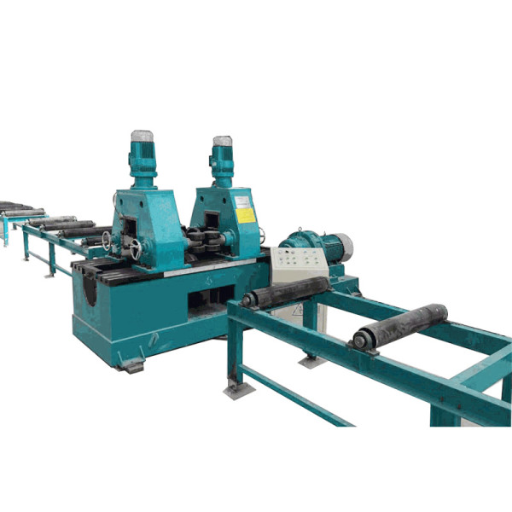
Straightening beams ‘s presents a number of difficulties which affects the productivity and precision. One important problem is precise alignment which can compromise structural strength. To some extent, the very nature of straightening the beam like difference in hardness or elasticity poses additional problems making the process more difficult to balance avoid over stressing the beam. Furthermore, unintentional heat distortion during straightening can result in unintended warping that demands skilled operators to ensure quality. Finally, maintaining a consistent level of beam performance different shapes and sizes is often difficult without advanced customization to equipment and methods.
How to Fix the Deformity in H Beams?
To focus over Modern methods and the Correct tools is the Best way to deal in Deforming of H beams. Latest trends within the industry noted the readiness of hydraulic straightening machines with computer systems for better precision. These machines have the capability to apply pressure at certain spots making it impossible to over stress or cause additional distortions.
Furthermore thermal correction techniques have infrared focusing on specific areas to untwist metals without altering the entire shape of its surroundings. For instance, data suggests that heating within the range of 600 to 800 \degree[]C is effective at managing temporally solidifying adjustments.
For bigger H beams or with more asymmetry, finite element analysis (FEA) is being adopted more frequently to forecast the reaction of the beam under specified loads. This technology provides straightening control optimally reducing the trial-and-error technique. Innovations like these have heavily improved and streamlined deformation handling, rendering the technique more accurate and efficient which in turn reduces costs and enhances quality in the final product.
What Are the Solutions for Beam Welding Issues?
While beam welding is one of the most productive methods of welding, it can cause overlapping problems like cracks, distortion, lack of fusion, and shallow penetration. To overcome these problems, a number of beam welding technologies have been developed and utilized:
- Preheating and Post-Weld Heat Treatment (PWHT): Preheating H beam lowers the risk of cracking due to thermal stress by easing temperature differentials. On the contrary, PWHT relieves the residual stresses while enhancing overall weld quality considerably. Research indicates that preheating temperatures lower than 200°C greatly helps in reducing cracking for thick-section beams.
- Enhanced Welding Methods: Advanced methods like laser welding, submerged arc welding (SAW), and hybrid laser-arc welding have escalated the standards of weld quality. For instance, laser welding provides deeper penetration with shallower heat-affected zones which minimizes distortion. One research study showed 40% fewer defects using hybrid laser-arc welding compared to traditional methods.
- Automation and Robotics: Human error is significantly reduced alongside more uniform welding quality due to automatic welding stations with precision sensors. AI and machine learning-based monitoring systems are capable of real-time adjustments to welding parameters. Industry reports show that automated systems enhance operational efficiency by 25% with a reduction of weld defects by 30%.
- Material Selection and Preparation: The selection of materials with homogenous mechanical properties and high quality increases the chances of successful welding. Ensuring the cleanup of materials such as beams from rust, oil, and other debris is vital for weld adherence which is referred to as surface preparation. Joint quality can be significantly enhanced using sandblasting or chemical cleaning methods.
- Finite Element Analysis (FEA): Sophisticated computational technologies like FEA model the welding operation and predict its possible distortions, stress concentrations, and heating. Simulations based on data allow operators to adjust parameters in advance of actually welding, which minimizes the need for trial runs. Some reports indicate that the implementation of FEA increases efficiency in the processes by about 15 percent while decreasing expensive inaccuracies.
How to Optimize Straightening Force?
Improving straightening force in welding procedures is central to minimizing any residual stresses and distortions that may affect the quality of the final product. A combination of material specifications, joint configuration, thermal profiles, external constraints, and many more need to be taken into consideration. Research shows that approach to straightening force combined with regulated heating and cooling cycles may improve distortion reduction by 30 percent.
Developing concurrent research emphasizes the need for optimization per material. An example can be seen in laser-thermal straightening where high strength steels are subjected to thermal tensioning, which allows a considerable increase in the material’s strightness without losing too much of its rigidity. Furthermore, there is increasing interest in laser-assisted/mechanical straightening systems where users report effectiveness increases up to 25% beyond conventional methods. By attaining extreme precision in heat application at critical stress zones, these systems achieve maximum effectiveness while maintaining minimum force application.
It is also becoming common practice to simultaneously use simulation tools and empirical testing. A 2023 report states that applying predictive modeling to the straightening process can decrease set-up time by around 20% and achieve more reliable results across different production cycles. Enhanced data-driven modifications and sophisticated mechanized tools enable manufacturers to fine-tune how straightening forces are applied for best results.
Future Trends in H Beam Production and Machinery
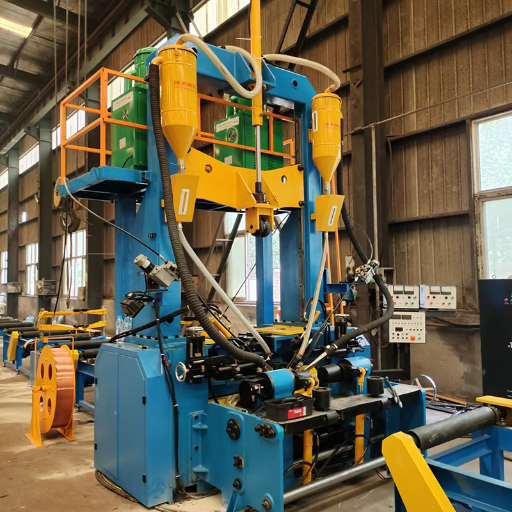
The production of machinery and H beams will be changed by Innovation in automation, AI technology, and sustainability. Implementation of “smart” manufacturing aided by artificial intelligence will allow monitoring and optimization in real time, leading to improvements in accuracy while minimizing waste. The implementation of “greener” production methods, energy saving machines, and recyclable materials will fulfill global targets for sustainability. In addition, predictive maintenance systems will improve machine reliability and reduce down time which in turn will increase productivity. All these trends will together improve the efficiency and environmental impact of H beam production.
In what ways is Beam Assembly being changed by Technology?
Technology has changed beam assembly processes quite a lot and therefore for the better. Adoption of robotics and automation alongside new technology ensures beam assembly lines are faster, more efficient, and less expensive. There is also a greater focus on precision which helps to consistently match a standardized shape and speed in production. New Statistics reveal that the steel industry can increase production with robotics and automation by thirty percent and lower errors as well.
Also, the use of Computer Numerical Control (CNC) machines makes the cutting, welding, and fabrication of beams more accurate. For instance, with CNC, accuracy is guaranteed within a 0.1mm tolerance, which improves fitment and decreases material waste. Industry leaders claim that such technologies have resulted in a reduction of material used by approximately 15% in beam manufacturing plants.
Moreover, the development of 3D modeling and digital twin technologies allows for the simulation and planning of assembly processes in greater detail. Adjustments that would need to be made on-site are significantly minimized, thus improving workflow. A report by MarketsandMarkets indicates that the smart manufacturing market will grow from $277.8 billion in 2023 to $372.4 billion in 2028, as green tech initiatives continue to drive the industry shift.
Alongside these innovations, the construction assembly processes becomes more resource-efficient while simultaneously working towards environmental sustainability by minimizing resource consumption and energy used during production.
H Beam Welding Updates Innovations H Beam Welding
In my view, automation and robotic welding are some of the more advanced innovators transforming H beam welding today. They aid in achieving better accuracy and reducing H human error. Also, modern technologies such as real-time tracking and AI inspection are capable of automatic weld verification and flaw detection during weld quality assurance processes. Moreover, new Ultra Fast Efficent High Power Laser Welding Robotics. These Streamlining Innovations sharpen Productivity and also Satisfy Return Problematic Scaling Sustaineable Productivity in Welding Industory
What Is The Impact Of Cnc On Beam Production Lines
CNC machines are vital in the beam production line as they help increase precision and efficiency of different sectors in the beam cutting production line. A CNC machine enables the crafting of beams through automated and precise cutting, drilling and welding. All the above processes considerably reduces manual errors and optimizes beam production by scrupulously meeting specifications therefore reducing material waste.
Recent research indicates an incredible rise in efficiency of about 30% with the incorporation of CNC machines into the manufacturing industry. In addition, with the aid of CNC technology, manufacturers are now able to customize beams to project requirements on a large scale, meaning that their dimensions and complex designs can be tailored accordingly. Moreover, real-time monitoring with feedback data aids during advanced CNC system utilization, providing insights that lead to reduced maintenance work and 20% less downtime.
Operators achieve quality results and require minimal technical CNC training due to soft user-friendly interfaces combined with CNC machinery: User experience and CNC technology work in perfect synergy. There is no question that meeting the construction and manufacturing industry’s need for flexibility, increased automation, eco efficiency, and beam customization according to the contract has made life easier in the accuracy, optimization, precision polishing, sustainable operation, and low resource consumption.
Reference sources
- Design and Analysis of Straightening Mechanism for Commercial Steel Bars – Academia.edu
Explores the design and components of straightening mechanisms, relevant to H beam straightening. - Manual for Heat Straightening, Heat Curving, and Cold Bending – FHWA
Provides guidelines on heat straightening and bending techniques for structural components. - Top Light-Duty H Beam Production Line Manufacturers and Suppliers in China
Frequently Asked Questions (FAQs)
Q: What is an H Beam Straightening Machine and how does it operate?
A: H beam straightening machine or h-beam flange straightener is meant to eliminate h beam distortion after welding. Its function is to provide substantial straightening force to adequately reshape the beams as to ensure essential stability and accuracy.
Q: Why is straightening critical in beam fabrication?
A: Straightening is critical in beam fabrication in order to assure structural reliability as well as design strategies bounded specifications. Timely and right reliance on straightening entails no future structural matters and enhanced efficiency on intended structural loads.
Q: How many types of h beam straightening machines are there?
A: There are different types of straightening machines for h-beams which include hydraulic beam straightening machines and mechanical straightening machines. Each type has differentiating advantages, for instance, hydraulic machines are fast in terms of straightening speed while mechanical machines are better for specific workpiece needs.
Q: What is the difference between a hydraulic beam straightening machine and a mechanical straightening machine?
A: The difference between the two machines is that a hydraulic beam straightening machine uses hydrostatic forces to put huge straightening forces, which results in large quantities of workpieces being quickly straightened. Whereas, a mechanical straightening machine performs straightening operation with user mechanical devices which is more convenient with small and simple workpieces.
Q: Where is an h-beam flange straightening machine positioned in relation to beam welding line?
A: An h-beam flange straightening machine usually positioned in an assembly welding straightening line, which somewhat bound h-beam assembly, welding and then straightening. This ensures that there is no downtime between steps, which improves productivity for the fabrication process.
Q: What Considerations Are Important for Selecting a Steel Straightening Machine?
A: When purchasing a steel straightening machine, it is critical to note the workpiece size, straightening force needed, speed in straightening, and how well it fits into the existing fabrication processes. It always pays to consult a trusted supplier to get the exact type of machine that satisfies your requirements.
Q: Will an h-beam Straightening Machine Work On Both H and I Beams?
A: As most h-beam straightening machines do h and I beams, about 70% of them come with adjustable features and clamps that can hold different beam profiles. All the same, it is advisable to confirm the specifications of the machine from the h-beams supplier.
Q: What is the function of a cutting machine in h-beam fabrication?
A: A cutting machine serves as the first part of an h-beam’s fabrication because it cuts steel into pre-defined sizes that need to be assembled. It is no surprise that manufacturers of cutting machines have introduced diverse models which make them more precise and efficient in a specific machine tool, changing towards the quality of the entire fabrication process.


