
The advancement in technology has led to significant changes in the industrial sector, including advancements in beam welding. The development of the automated beam welding line is a game-changing outcome, as it enables the fabrication and welding processes to be undertaken. Moreover, the automation system is designed to enhance precision, effectiveness, and capability, thereby providing a solution to the growing need for accelerating the manufacturing process without compromising quality. In the course of this work, we will examine how the Automatic Beam Welding Line is transforming the manufacturing industry, highlight some advantages, and analyze why, in the current rapidly evolving market, it is becoming increasingly indispensable.
Understanding Automatic Beam Welding Line
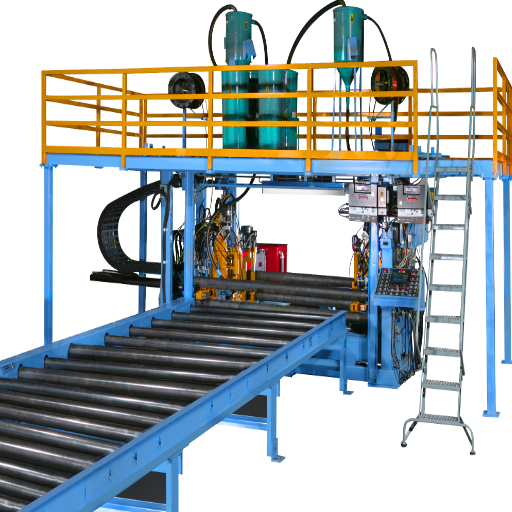
An Automatic Beam Welding Line is one of the most innovative solutions introduced as the primary method for producing steel beams, which are then used in the construction and manufacturing sectors. To achieve these functionalities, the company integrates sophisticated automation, enabling minimal human involvement in the general welding process. Such processes, which can enhance product quality, reduce production time, and lower labor costs, are designed to bypass several stages of production and achieve the desired level of product quality. With an accessible menu and stable performance of its functions, it is a multifunctional device for companies engaged in large-scale and high-quality fabrication activities.
What is an Automatic Beam Welding Line?
An automatic beam welding machine is a specialized system designed for the practical welding of steel construction beams. This system utilizes cutting-edge automation technologies, including robotics and sensors, to streamline time-, energy-, labor-, and material-intensive welding tasks. Unlike manual welding, the automation process allows for complete control of the welding operation. When welding is completed, the finish is subject to significant mechanical considerations, such as product design, which necessitate various modifications to be made after the welding is complete. Thus, this results in greater efficiency while simultaneously enhancing and smoothing production processes. A composite steel welding line with agility control, including beam tracking, adaptive arc welding, and multipass welding techniques, is capable of welding varying beam sizes and other complex requirements, making it the most common succeeding version for such steel fabrication facilities. The facilities are responsive to the customer’s economic constraints and are usually employed in the application of production systems that are more economically sensitive and performance-sensitive.
Types of Beam Welding Machines
- Gantry Welding Machines
Gantry Welding machines are designed for huge welding jobs, including the construction of ships and bridges. The interesting part is that these machines travel along a definite path, unlike some other types of robots.
- Column and Boom Welding Machines
This type of machine features a column that enables it to move up and down, and a boom that allows it to move horizontally. This functionality allows for convenience and versatility in welding tall structures of varying sizes.
- Robotic Beam Welding Systems
These systems have integrated robots, making them more accurate and versatile in their function. They can handle complex welding duties and are often utilized in automated production lines to achieve higher productivity.
- Horizontal Beam Welding Machines
The horizontal beam welding machine illustrated here is a purely horizontal beam welding machine used for crafting high-strength structural elements, such as I-beams and box girders.
- Portable Beam Welding Machines
Portable beam Welding machines are small and are made specifically for use in applications such as on-site welding. These machines can be easily dismantled and reassembled, allowing for movement to any location and providing convenience for various projects.
Key Components of a Beam Welding Line
The infrastructure of a specialized device, beam welding lines, and its constituent parts is a complex and interrelated system pivotal for the embodiment of structural beam welding, on account of the following components, for instance:
- Input Conveyor System
The input conveyor system ensures the smooth and step-by-step transfer of raw beams to the welding line. It holds the material in place to prevent damage and eliminate the necessity for re-welding.
- Welding Manipulators and Gantries
Welding torches and heads are railed along the pre-engineered course by titts and manipulators. And since they are modernized, substance weld material may not apply to every situation; thus, automated welding can be used instead of manual labor.
- Flux Feeding and Recovery Units
Flux feeding and recovery units are used in submerged arc welding to facilitate welding fluxing within the welding process, as well as flux that is otherwise left in excess to be used again.
- Positioners and Rotators
For holding and turning the beams in place at different positions, rosettes, positioners, and fittings are used. This ensures that equal welding quality is achieved in all sections of the beams.
- Output Conveyor System
The system design allows the finished beams to be removed from the welding zone, thereby enhancing the return on equipment time and reducing downtime between operations.
- Control Panels and Monitoring Systems
Advanced control panels, equipped with monitoring sensors and systems, have long replaced traditional control panels in beam welding lines. Such advanced systems enable operators to set real-time, data-driven inputs, such as speed, temperature, and alignment, which help optimize the process or facility for maximum production.
A proper combination of sub-assemblies enhances the performance of the beam welding line for blasting enormous quantities of the product, ensuring the robustness of the structures.
Benefits of Automatic Beam Welding
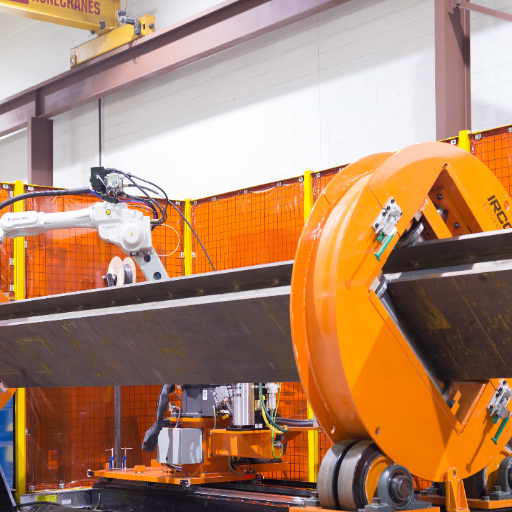
- Improved Efficiency
Increased the rate at which finished works are achieved in a project by reducing the level of physical human involvement in welding and also by removing redundant stages of the welding process.
- Consistent Quality
In welding operations, the application of robotic arms ensures that the weld will have zero variations at any given point. Eliminating the thought of structurally unstable or prone to collapse in the manufacturing process.
- Cost Savings
Robots do not get tired of working, and they never miss material requirements. Therefore, fewer human resources and material inputs would be necessary for manufacturing, but with the same results.
- Enhanced Safety
Health and Safety are also promoted since operators are not exposed to hazardous tasks, which further reduces the risk of workplace accidents.
- Scalability
Advanced technology, in the form of automatic beam welding, can fulfill the promises of scaled manufacturing, which is used in automated assembly systems employed by large industries.
Increased Efficiency in Production Lines
The integration of automated beam welding systems significantly boosts production capacity across various schemes. Given the recent emergence, the management and operation of such heavy equipment result in a lower probability of downtime and mistakes. These systems are capable of stress-free, high-speed welding, thus allowing for timely completion without deviating from the set dimensions. They work in such a fashion that no minute is wasted; hence, they maximize production, which in most cases is geared towards minimizing the operational costs of a business through competitive strategies. This harmonious blend of technological benefits and operational efficiency enables companies to thrive in challenging, competitive environments.
Precision and Consistency in Welding
One of the most critical factors for welders to adhere to is precision and quality, especially where precision is crucial. There are modern aspects in this era, such as welding machines and robots, that have revolutionized the industry. Such robotic welding systems are new and increasingly preferred. These systems utilize AI and real-time process control and monitoring technologies to ensure resistance along the weld geometry, thereby mitigating process and material waste and deviations. Through the adoption of this technology, a company not only maintains high quality but also increases production volume without overworking the staff.
Reducing Labor Intensity and Error Rates
Efforts into seamless welding solutions go a long way to cushion the problems of monotony in factories and clerical errors in manufacturing processes. Welding goes robotic; it means that companies’ use of their design skills and manual labor will diminish drastically, thus making the skilled hands occupied with innovative jobs one after another, as there can be no other work remaining in the company except the most sophisticated ones. In addition, these are controlled through well-devised numerical codes and inspection techniques, which can correct most of the errors that human beings create when welding, thereby delivering a more accurate and consistent welding process. This not only enhances the quality but also reduces the expenses that might be required to correct something or be wasted in some other way. The trend toward increasing demand for products is also reflected in the current improvement of welding techniques, which has prompted processing companies to seek more productive, quality-oriented, and customer-centric solutions.
Advancements in Welding Automation

The conversion from Concealment enterprise has shown significant evolutionary progress, bringing numerous benefits to the industry across all sectors of the business world. To start with, it brings about an increase in square measure productivity as it keeps the processing equipment working continuously and averaging a constant speed, leading to decreased idleness. The quality and precision are evident everywhere, as automated tools not only guarantee excellent quality but also reduce the number of failures, eliminating unnecessary repeat activity. In addition, they also offer workers safe spaces from harmful elements that can cause health issues. Therefore, by merging practical robotics and computer systems, the age-old, labour-intensive welding processes can be automated, making everything even more efficient.
Innovations in Automatic Welding Machines
- AI-Powered Welding Systems
Today, welding machines have adopted artificial intelligence (AI) technology to increase the size and thickness they can weld, particularly when options are limited, welding is possible with a few materials, and under specific conditions. AI will be given current speeds, averages, temperatures, and/or detection level sensitivity. These can tailor the process using real-time data, leveraging the already practiced skills of the parameters that define the process. Surveys of most industries that have used this technology have reported a reduction in defect rates of at least 30% in AI-enabled welding processes.
- Advanced Sensor Integration
Most modern welding machines now come complete with in-built advanced sensors that accelerate the monitoring of heat input, moisture, and the properties of the materials being welded. This technology enables the welding process to achieve a higher level of precision and enhances productivity, while also providing real-time monitoring of these sensors. Medical devices, for instance, are examined and found to agree with non-contact ultrasonic and laser sensing systems in improving weld quality by 25%.
- Collaborative Robotic Welding
In general, arc welding robots or cobots have made significant contributions to welding automation. With a focus on integration and rehabilitation, such robots work in tandem with humans and help manage the process to achieve the same high results without requiring extensive setup operations. Hence, it is possible to find information that shows that for medium and small enterprises, the use of cobots can increase welding work efficiency by up to 40%.
- Energy-Efficient Welding Solutions
In general, new, more effective technical tools designed to save energy are being introduced and incorporated into welding devices. Inverter technology systems, however, consume a considerably smaller amount of power, up to 60 percent less than transformer-based units, thereby reducing costs to livestock and carbon emissions.
- Hybrid Laser Arc Welding (HLAW)
Hybrid Laser Arc Welding technology allows the use of the advantages of two types of welding – laser and arc welding simultaneously, which enables deeper penetration into the material, increased welding speed, and significantly less material deformation. This technology has been applied on a larger scale in the automotive and shipbuilding industries following revelations that production rates were increased by up to 50% without compromising the quality of the materials.
Such developments characterize the rapid progress in the mechanization of welding procedures, especially when integrating different technologies from other industries, enabling each sector to become more efficient, reduce costs, and implement measures that are more conducive to environmental conservation.
The Role of Robotics in Beam Welding
Beam welding has been revolutionized by the advent of robotics, which has significantly enhanced accuracy, reproducibility, and speed in industrial settings. State-of-the-art robot installations, which rely on multiple sensors and effective AI programs, can easily perform complex welding operations with virtually no physical effort required from the operator. Such systems can study the properties of materials and adjust welding variables online, while also ensuring that the required quality is met, regardless of factors such as weather and execution cavity. A remarkable fact is that the rate of manufacturing quality increases by a factor of two when using robot welders in car production. In addition, machines have proven helpful in preventing job-related injuries by limiting workers’ exposure to extreme temperatures and radiation that often occur during welding.
Future Trends in Welding Automation
The development of welding automation in the years to come is expected to employ several cutting-edge technologies, including AI-powered robotization, machine learning and deep learning algorithms, as well as IoT technologies. In addition, with the expected 45% expansion of AI for welding over the next five years, this will enable the real-time analysis of more data to enhance welding parameters and achieve better timing. Another significant development worth mentioning is the utilization of collaborative robots, commonly known as cobots, which assist workers in performing more intricate welding operations, greatly enhancing capabilities in terms of safety and flexibility.
Additionally, the state-of-the-art applications of predicting maintenance using IoT detection devices offer the opportunity to predict when failures might occur and to observe the most effective way to prevent the process from overheating or becoming obsolete. With the help of state-of-the-art, most recent available extensive dataset analysis, welding parameters can be further improved for specific materials and geometries to enhance quality and reduce waste. These developmental trends suggest a shift from classical, traditional welding to more intelligent and environmentally friendly forms of industrial process management in welding.
Cost Efficiency and Productivity Gains

The introduction of superior welding technology in manufacturing significantly reduces costs and enhances efficiency. Primarily operated by automatic welders, these systems reduce work-related expenses, as a significant portion of manual work has been eliminated, while the techniques employed ensure consistency and reliability. Moreover, efficient energy usage facilitated by modern welding machines reduces production costs. The reduction in revamps and defects further minimizes material wastage and time, thereby helping manufacturers implement more efficient techniques and increase profits. This contributes to the specifics of how one should advance and what needs to be done in a given situation to achieve a more competitive outcome.
Reducing Material Wastage
Manufacturers are always keen on saving costs, but disregarding the environmental benefits in such endeavors can result in costly decisions for the earth. Developed methods, such as laser welding and friction stir welding, enable, moreover, enhancing the welds by creating higher accuracy and allowing for material savings. Technology enables the use of innovations such as simulation software and real-time monitoring systems to control online processes and predict failures, thereby preventing material loss during the production process. Specific industries utilizing these methods have demonstrated a reduction in consumption of up to 30 percent. Additionally, any malfunctions in the outlined process can be improved, allowing for the creation and recycling of facilities to be enhanced. Such methods of integrating innovations and technologies in the plant help reduce waste, improve environmental practices, and minimize other losses through the proper management of available resources.
Scalability of Automatic Beam Welding Lines
The capacity of an automated line for beam welding can expand greatly depending on the efficient lot sizes setup and the ability to change the production level within the lot cut. It appears to me that these systems have great potential and can be applied to projects of any volume. Being technology-equipped, they can be customized as sets of specific parameters, which minimizes the lengthening of the development process for cost-effective control systems in such production facilities. In other words, these machines are an exceptional, nearly perfect solution for industries that wish to expand their scope of work while improving the efficiency of their operations simultaneously.
Impact on Overall Project Costs
With the application of modular automation technologies, companies can achieve significant savings throughout the project’s life cycle. Studies indicate that many firms that utilize these sophisticated systems ultimately experience a decrease in operational and labor costs. These manual processes can be significantly reduced, and operations can be made more efficient, ultimately lowering overall costs in the long run. Moreover, the adaptability enabled by modular designs ensures that there is room for scaling up operations when necessary, without the associated rise in cost overhead, helping the company earn the highest possible revenue. There is even a cost efficiency rationale for organizations to utilize the system, despite the initial outlay for installation.
Comparing Automatic Beam Welding to Traditional Methods
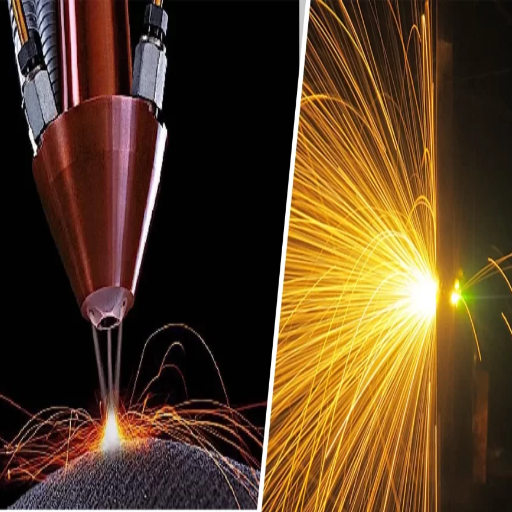
In comparison to traditional welding techniques, one of the primary reasons automatic beam welding is an attractive method of joining metals is due to the higher precision and reduced human involvement. Automated productivity programs are more effective in achieving high accuracy, which ensures that such joints are free of hash mark problems. Consequently, the time required to produce large quantities of pieces will be significantly shorter, as the automatic work continues with minimal downtime. It also decreases the cost of the task, as fewer people will be needed, which is typically higher with the automatic process, especially in the long run. Such methods are suitable when particular procedures must be followed and the use of machines is quite complex.
Labor Intensity and Workforce Implications
The labor dominance of the welding process in organizations and factories, which have been pre-booked for the use of semi-automated or fully mechanized methods, can be rather painful due to changes in technology application trends. The easier availability of robotic systems, fewer manual interventions, and, consequently, fewer calls for service providers to deliver highly skilled services such as welding, creates several possible reactions. Nevertheless, this does not involve a smaller workforce requirement but involves reskilling the existing workforce. Currently, gratifications seem to be focused on more complex aspects, such as programming, system maintenance, and robot operation, as well as other necessary tasks. In addition, there is an increasing inclination towards certification and courses to encourage automation, which is an indication that the workers are ready to embrace the new challenge. While the level of manual work decreases due to automation, the level of expertise of the employees becomes fundamental in managing robots and deriving maximum benefits from them.
Error Rates and Quality Control
For businesses that care about how effectively their internal systems execute functions, there is more attention given to error checking in the area of automation. Automated error-checking mechanisms in businesses are more important now than they were in previous settings. The use of additional internal auditing methodologies and tools, as well as machine learning and real-time analytics technologies, drives the strategy for managing error rates. And where such tools are available, predicting and fighting against downtime becomes easier; an improvement in functionality and product standard is achieved. Moreover, there is an indication that this trend is advancing, with a growing need for training that provides information on how to operate and utilize these systems, even in cases of deviations. Utilizing systems in conjunction with regulatory intervention, an approach is included for horses for courses with automation to provision for the mitigation of errors and enhance the automation process.
Scalability and Flexibility in Production
Today, the nature of manufacturing, especially in terms of the ability of industries to swiftly transition their products from one stage to another to meet market needs, has reached a new level. Another reason for this is the emergence of highly scalable, new-generation manufacturing and online production solutions, which are garnering significant attention. Whether short-term or long-term, these systems assist and facilitate mass customization without incurring additional costs or wasting time for companies whenever needed. Mechanical or IT development companies are sectors that often possess the tools that can be modified to improve adaptability and respond to new market demands. The flexibility of production lines also comes with the challenge of extensiveness, leading to two extremes: overuse of activity or inadequate use of resources. Such entities are also the most advantaged, as they can create integrated, customized processes in an environment that is constantly changing and, as a result, is also global.
Reference Sources
-
IEEE Xplore: Research on control of steel beam welding production line – Explores the automatic control processes for H-shaped steel beam welding production lines.
-
ScienceDirect: Digitalized automated welding systems for weld quality – Discusses advancements in adaptive intelligent welding systems with integrated quality control.
-
ResearchGate: Portable robotic system for steel H-beam welding – Details a robotic system designed for welding H-shaped steel beams.
Frequently Asked Questions (FAQs)
Q: What is an automatic beam welding line?
A: An automatic beam welding line is a sophisticated setup designed for the efficient welding of beams, such as H beams and PEB beams, utilizing automated processes to enhance production speed and quality. This system often integrates various welding technologies, including arc welding and plasma transferred arc, to cater to different fabrication needs.
Q: How does a welding automation system improve beam fabrication?
A: A welding automation system enhances beam fabrication by reducing manual labor, increasing precision, and maintaining consistent quality. These systems often use robotic welding machines and PLC controls to synchronize the welding process, enabling the manufacturing of high-quality welded beams with minimal human intervention.
Q: What types of beams can be welded using an automatic beam welding machine?
A: An automatic beam welding machine can weld various types of beams, including H beams, box beams, and PEB beams. These machines are designed to handle different thicknesses and configurations, making them versatile for a wide range of welding applications in construction and industrial projects.
Q: What is the role of a welding robot in a beam production line?
A: A welding robot in a beam production line automates the welding process, increasing efficiency and consistency. It can perform complex welding tasks with precision, reducing the risk of flange deformation and ensuring top-quality welds. The integration of such robots helps streamline production and minimize downtime.
Q: Can an automatic beam welding line include CNC drilling machines?
A: Yes, an automatic beam welding line can include CNC drilling machines. This integration enables the simultaneous drilling and welding of beams, optimizing the fabrication system by reducing processing time and enhancing the overall workflow of beam manufacturing.
Q: What are the advantages of using plasma welding in beam fabrication?
A: Plasma welding offers several advantages in beam fabrication, including the ability to create high-quality welds with minimal heat input, which reduces distortion and improves the integrity of the welded beams. Additionally, plasma welding is efficient and can be automated, making it ideal for use in an automatic beam welding line.
Q: How does a welding manipulator contribute to the welding process?
A: A welding manipulator enhances the welding process by providing precise control over the position and movement of the welding gun during operation. This capability enables consistent and accurate welds, particularly in complex beam configurations, ensuring that the final product meets stringent quality standards.
Q: What features should one look for in an H-beam welding machine?
A: When selecting an H beam welding machine, essential features to consider include automation capabilities, the range of welding technologies supported (such as laser welding and submerged arc welding), ease of operation (like a touch screen interface), and the machine’s ability to handle various beam thicknesses and types efficiently.
Q: What is the importance of using a welding rotator in beam welding?
A: A welding rotator is crucial in beam welding as it allows for the rotation of heavy beams during the welding process. This feature ensures that welders can easily access all areas of the beam, resulting in uniform welds and enhancing the overall quality of the finished product in a beam production line.


