
As with any other industry, the wind energy sector has numerous innovations and proficiencies to improve processes, such as correct quality and efficiency during wind tower fabrication. The painting and blasting rotator is one of the most significant improvements in the wind tower fabrication process. Besides having immense value in durability and performance, wind towers require careful coating and surface smoothing, which are best accomplished with a rotator. This guide will demonstrate the importance of painting blasting rotators in modern wind tower manufacturing and how their efficiencies overshadow drawbacks. Even as a newcomer in the wind fabrication industry, the information contained herein seeks to improve your tactics and approaches to fabrication.
What is a Blasting Rotator and How Does it Work?

A blasting rotator is a custom-made machine used in wind power generating towers manufacturing for rotating large cylindrical pieces, such as tower sections. It is used during surface finishing and coating processes. A blasting rotator is designed to provide uniform and precise exposure of workpieces to blasting machines, removing contaminants like rust, scale, and old coatings. The blasting rotator boosts the accuracy and efficiency of surface preparation by rotating the workpiece, which improves the level of blasting or surface preparation done to the workpiece. This also increases the precision of protective coatings, enhancing adhesion and durability.
Components of a Painting Rotator
Every painting rotator has many vital elements technologically integrated to enable it to operate with speed and precision:
- Rotating Arms: These are primary features of adjustment that secure the work applicant’s ensure steady rotation, which results in even coating and even deposition of paints or coatings.
- Control System: It offers outstanding customization options, letting the operator control the speed and direction of the rotation or set its timing for the best results.
- Motorized Drive: This component includes a robust motor that supplies the rotational torque necessary to rotate workpieces of varying sizes and weights.
- Fixture Clamp: It is similar to a mechanical chuck, gripping the workpiece to accurately secure it while ensuring absolute stillness during the painting operation.
- Base Frame: The entire frame is supported by a heavy base to prevent unnecessary shaking and absorb shocks, which guarantees its long life.
- Safety Features: New model painting rotators have added safety features, such as stop outline and overload protection, that secure workers during operations.
All these parts are designed to increase the quality and efficiency of industrial painting and coating applications.
Benefits of Using a Blasting Rotator in Production
- Enhanced Surface Preparation by Blasting Rotators – The blasting rotors guarantee that the workpiece surface is uniformly exposed to blasting media, ensuring thorough cleansing and optimal preparation for the subsequent coating or treatment.
- Improved Processing Efficiency—Blasting rotators optimize operating blasting efficiency by automating rotation and movement precision control, saving time on processing cycles and enhancing production volumes.
- Uniform Standards—Consistent blasting due to even rotation enables each workpiece to receive uniform treatment, which enhances quality assurance and produces workpieces with a high-quality finish.
- Reduced Expenses—Automated blasting reduces the amount of manual adjustment or repositioning of workpieces, which decreases the amount of personnel needed and the expenditures linked to employing personnel.
- Heightened Paradigm Shift for Safety—The risk around operators is decreased because of the integrated overload protection and emergency stop features, making the workspace safer and less accident-prone.
What to Consider When Choosing a Supplier for Blasting Rotators?

The following considerations are cardinal when selecting a supplier for blasting rotators:
- Product Quality – Make sure the supplier has the highest-quality rotators, built to last, and made specifically for your application. Check what certifications or standards their products have—if any.
- Experience and Reputation – Check what other clients have said about the supplier and look for their track record in the industry. A good supplier has reliable, reputable products and services.
- Customization Options—Determine if tailored-designed solutions meet your operational requirements. This level of customization can greatly enhance efficiency and results.
- After-Sales Support—Evaluate the technical support, maintenance service, and spare parts provided. Fast response after-sales support facilitates the resolution of issues quickly and reduces downtime.
- Cost-Effectiveness—Analyze the pricing of all suppliers while considering the quality of products and value-added services. Cost-efficient solutions cannot be accepted at the expense of reliability and performance.
Considering all these factors will enable you to choose a supplier who meets your operational needs without busting your budget.
Evaluating the Quality of Products
While gauging the quality of any product, it is critical to consider factors like durability, performance, and adherence to international policies. Durability is significant as it ensures that the product lasts for a long time without needing regular replacements, lowering cost over time. Performance should be evaluated on whether the product gives the results consistently as stated or required. In addition, checking whether the product is certified or passes checkmarks of accepted policies ensures that the product is safe and reliable. Customer reviews and ratings, which are available online through sites such as Google, are critical as they help the user understand other users’ perspectives concerning the product and therefore assist them in making the right choice.
Key Features to Look For in Blasting Rotators
- High Durability
When choosing blasting rotators, you need to look at models made with high-grade materials such as alloy steel and hardened steel. These materials ensure longevity with low upkeep due to their durability in extreme environments and heavy-duty work.
- Efficient Rotational Mechanism
Advanced systems capable of furnishing high torque with minimum friction possess smooth and accurate rotating mechanisms, which are necessary for optimal performance. These systems provide high energy savings and enhanced efficiency during operation due to their low effect on the economy and heavy fuel consumption.
- Load Capacity
Check that the blasting rotator can accommodate the required load for your specific tasks. Models with an extreme weight range or customizable load capacity greatly enhance operational flexibility.
- Ease of Maintenance
The maintenance-friendly perspective, with clear user manuals and spare parts available, conveniently saves time and cost. Furthermore, accessible components alongside self-lubricating parts save effort and expense thereafter.
- Safety Features
With dependable harnesses like overload protection and fail-safe braking systems, these rotators prevent accidents, making these features critical to workplace safety during operations.
Comparing Prices and Services from Different Manufacturers
When comparing the prices of different services from manufacturers, it is important to analyze cost, quality, delivery, and value-added features. Value is determined based on which manufacturer offers the optimal combination.
| Parameter | Description |
|---|---|
|
Price |
Base cost of products/services. |
|
Quality |
Durability and performance. |
|
Delivery |
Speed and reliability of shipping. |
|
Support |
After-sales and customer service. |
|
Features |
Unique offerings or add-ons. |
Types of Painting Rotators Available in the Market

- Manual Rotators
These work easily because they are quite cheap. These devices allow for the positioning and rotation of components by hand; thus, the user will have to do some handling. They are best in simple systems that are small in scale.
- Motorized Rotators
These types of rotators can be used in medium—to large-scale painting applications where consistent and thorough rotation of components is required. With motors equipped on these rotators, objects can be rotated automatically and with high precision.
- Self-Adjusting Rotators
With these kinds of rotators, the components of different sizes and weights can be handled in an efficient, flexible, and automated point of view. Moreover, these rotators can adapt to different job requirements and offer versatility.
- Heavy-Duty Rotators
This kind of rotator is designed for use on large, heavy-weight components. These robust systems aid in various demanding industrial applications while offering ultimate stability and consistent robust performance.
- Specialized Rotators
As the name implies, these rotators are tailor-made to suit some custom requirements for specialized tasks in a particular industry. These rotators aid in smooth and complex operations that would otherwise be difficult without these tailored systems.
Fixed vs Adjustable Rotators
Fixed rotators are best suited for consistent workpiece sizes, while adjustable rotators are best suited for varying diameters off a single axis.
| Feature | Fixed Rotators | Adjustable Rotators |
|---|---|---|
|
Flexibility |
Low |
High |
|
Adjustment |
None |
Manual |
|
Application |
Consistent sizes |
Varying sizes |
|
Setup Time |
Quick |
Moderate |
|
Cost |
Lower |
Higher |
Specialized Equipment for Different Applications
Custom machinery is designed for specific purposes, such as improving efficiency, safety, and productivity in agriculture, construction, manufacturing, warehousing, and other industry sectors.
| Industry | Equipment | Purpose |
|---|---|---|
|
Agriculture |
Telehandlers, Skid Steers |
Material handling |
|
Construction |
Boom Lifts, Cranes |
Heavy lifting |
|
Manufacturing |
Compressors, Mixers |
Production support |
|
Warehousing |
Forklifts, Pallet Jacks |
Storage & transport |
Choosing the Right Rotator for Your Production Line
Determining the most suitable production rotators for your production line depends on navigating multiple factors. Different designs test different sizes and weights of components, which greatly determines if a heavy-duty rotator, standard rotator, or any other type is needed. Moreover, considering the operations to be carried out, adjustable rotators are suited for greater flexibility, while fixed rotators are suited for less flexible uniform processes.
Another factor custom rotators must consider is interface functionality with the existing equipment, production flow, and assembly lines. Custom-designed solutions or specialized rotators are often required for shipbuilding and aerospace manufacturing. For long-term reliability, prioritize features of operation, maintenance, safety, and efficiency. Robust evaluation of these components guarantees optimum alignment with set production strategies to improve efficiency and productivity significantly.
How is a Blasting Rotator Used in Shot Blasting Processes?
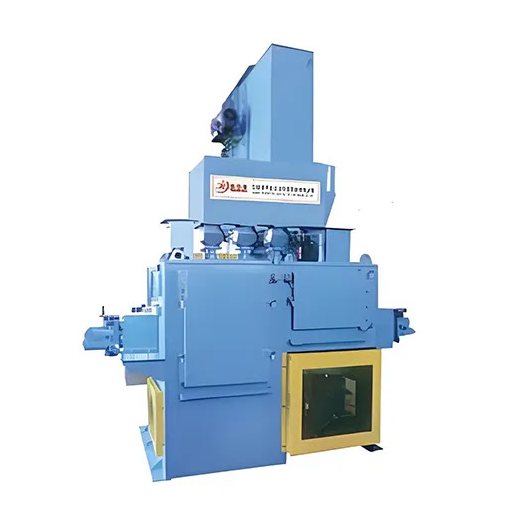
In shot blasting operations, a blasting rotator is used to hold and rotate workpieces to ensure uniform surface cleaning securely. During rotation, each side of the object receives tremendous abrasive attention that removes rust, scale, and other contaminants. The surface being processed is in constant motion owing to the blast rotator, which increases the effectiveness of the blasting operation, saves time, and guarantees smooth finishing of the surface quality. This tool is essential while working with heavier or irregularly shaped item,s since they are challenging to manage in terms of positioning during the process.
Overview of the Shot Blasting Technique
All the cleaning and surface modification processes that require tremendous abrasive grit particles to be thrust at very high speeds to wipe out dirt and prepare the surface for further coatings are called shot blasting. The application of shot blasting is most prominent in manufacturing industries, automotive workshops, and construction sites dealing with metal surfaces. The driving force behind shot blasting is compressed air. When targeted at dimensional abrasive media, rust, cured paints, dirt, and other unwanted materials are blasted off surfaces while the surfaces gain a finely improved texture and enhanced adhesion characteristics.
The new improvements in blasting techniques have included automation and precision controls, increasing productivity and result consistency. Adapting equipment like blast cabinets, rotary tables, and robotic arms allows proficiency with differing materials and geometric configurations. Moreover, compared to chemical cleaning processes, this method is more eco-friendly since it creates less waste and uses reclaimable abrasives.
Integrating Blasting Rotators in Surface Preparation
Blasting rotators improve the quality and productivity of the surface preparation operations. They accomplish uniform cleaning or finishing by enabling precise rotation and material exposure to the abrasive streams. Integration of these systems into industries assists in reducing manual handling, process times, and increasing the surface quality. Also, modern design improvements of rotators allow their effortless integration with automation systems, making them suitable for contemporary production lines. Because of the sophisticated shapes and high-volume demand in the aerospace, automotive, and construction sectors, these industries rely heavily on blasting rotators.
Best Practices for Blasting and Painting with Rotators
In order to achieve the best results with blasting and painting rotators, certain best practices need to be observed. First, confirm that workpieces are firmly secured onto the rotator so that no movement occurs. For complex geometries, an object to be blasted or coated must be precisely aligned with the rotator to apply the material evenly on all surfaces. Routine examination and cleaning of the rotator’s parts help maintain the equipment and improve its durability and performance.
Quality surfaces, such as a durable finish, must be correctly created, which is only possible if abrasive paints and materials are chosen optimally based on the surface type. These and other settings can help maintain even speed, covering all areas of the rotator’s path, so they reduce the impact on exhausts while achieving even application and wear. Furthermore, incorporating new machines or equipment for control can aid in better and more precise controls, making consistency easier in large batches of products. Following all safety instructions and regulations is necessary during blasting and painting to maintain the desired sustainability of the workflow.
Reference Sources
-
Environmentally Compliant Green Solution for Paint Removal – Investigates using green blasting techniques for paint removal.
-
Pressure-Sensitive Paint Measurements on a Rotor Disk Surface at High Speeds—This section discusses paint and surface blasting on rotors.
- Top Welding Rotator Manufacturer And Supplier In China
Frequently Asked Questions (FAQs)
Q: What are painting and blast rotators?
A: A painting and blast rotator is a specialized equipment used to rotate effectively and position vessels, tanks, and wind towers for painting and blasting operations, ensuring high-quality surface treatment.
Q: How does a welding rotator work in wind tower fabrication?
A: A welding rotator operates by turning and positioning the wind tower sections. It allows for efficient, controlled welding and assembly, enhancing productivity and precision during the fabrication process.
Q: Can the tower blasting and painting rotator be used for different types of tanks?
A: Yes, the tower blasting and painting rotator is versatile and can accommodate various tank types, including those used in the petrochemical and pipeline industries, by adjusting its load capacity and rotation settings.
Q: What advantages does an adjustable welding rotator offer?
A: An adjustable welding rotator provides flexibility to work with vessels or tanks of different sizes and weights, enabling precise turning and positioning for optimal welding angles and operational efficiency.
Q: Where are these rotators commonly used in China?
A: In China, painting and blasting rotators are commonly used in industries such as wind tower fabrication, container building, and sections of chemical engineering, where high-quality surface treatment is essential.
Q: What is the importance of using high-quality rotators?
A: Using high-quality rotators ensures durability, reliability, and safety during operations, reducing the risk of equipment failure and enhancing the overall efficiency of the blasting and painting processes.
Q: How do you select the right rotator for a specific project?
A: When selecting a rotator, consider factors such as the load capacity required, the size and type of vessel or tank, the project’s specific engineering needs, and your company’s quality standards.
Q: What is the role of rollers in the turning process of a painting rotator?
A: Rollers play a crucial role in turning by providing smooth movement and support for the vessels or tanks, allowing for seamless rotation and positioning during the blasting and painting operations.
Q: What safety measures should be taken when using a blasting painting rotator?
A: Safety measures include adhering to proper load limits, conducting regular maintenance checks, training operators on safe handling practices, and using protective gear to prevent accidents during operation.


