Creating a personalized welding table is one of the most satisfying DIY projects for metalworking enthusiasts and professionals alike. A strong, adaptable, and personalized work area can enhance the quality of your output and make your process more efficient, regardless of whether you are an expert welder or a beginner. The present article will walk you through the process of creating and building your perfect welding table, designed to meet your specific requirements. We will deal with the selection of materials, necessary features, and helpful hints, so nothing will be left out when it comes to building a fabrication table that is both durable and capable of sustaining your hobby. So, get ready to get your hands dirty and make your favorite welding setup come true!
Understanding the Basics of a Welding Table

What is a DIY Welding Table?
A DIY welding table is a personalized workstation that is built to suit the needs of welding and fabrication processes. It is a reliable, fireproof table that helps the welders to do their work easily and safely with great accuracy. Usually made from metal, like steel, this table can last a long time and gives the welder a good working surface that is hard to beat even with the high temperature and heavy-duty use involved.
The DIY welding tables can be made as per the individual need of the user, such as placing the clamps, making the slots, or even adding casters for making it mobile. Right materials, tools, and planning can make the process of making a DIY welding table not only cost-effective but also a gratifying one.
Benefits of Having a Fabrication Table
A fabrication table is an indispensable tool for metalworking or welding; they come with a multitude of benefits which improve the quality and rate of work. One of the most significant perks is that it allows one to cut, assemble, or weld the material to the exact dimensions specified, thus, giving the highest accuracy.
Key Advantages:
- ✓ Precision & Accuracy: Enables cutting, assembling, and welding materials to exact specifications
- ✓ Adjustable Fixtures: Heavy-duty fabrication tables feature modular components and robust clamping options
- ✓ Heat & Load Resistance: Designed to bear heavy loads and resist extreme temperatures
- ✓ Workflow Optimization: Orderly placement of tools and materials reduces equipment search time
- ✓ Increased Productivity: Professional setup leads to consistent delivery of high-quality results
The latest statistics also depict that there is a rise in demand for customized and portable fabrication tables which can suit the need of both professionals and hobbyists. A dedicated fabrication table in the work area eventually leads to increased productivity, a professional setup, and continuous delivery of high-quality results in any project.
Key Features of a Professional Grade Welding Table
When it comes to professional-grade welding tables, there are several aspects one should focus on in the light of the recent data as well as people’s preferences revealed through the online trends:
These features together make a professional-grade welding table that efficiently supports workflows, enhance productivity, and deal with precision across various applications. Online research and user feedback testify that such characteristics are among the most desired ones not only by professional welders but also by DIY enthusiasts.
Choosing the Right Materials for Your DIY Welding Table
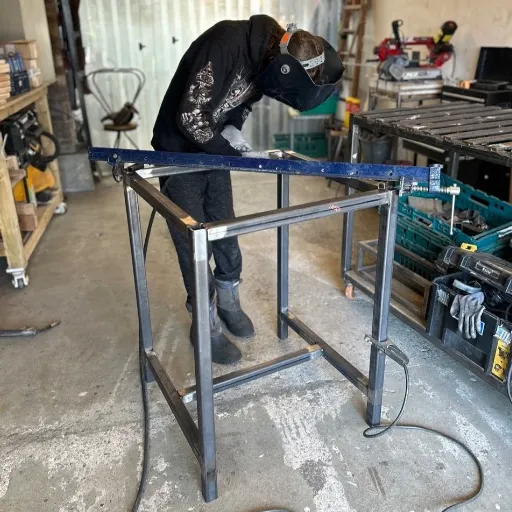
Types of Steel for Welding Tables
If you are really after the best steel for your welding table and are a do-it-yourselfer, mild steel and stainless steel are the two most popular choices, with each of them providing differing requirements and budgets.
Mild Steel
Characteristics:
- Most economical option
- Easy welding properties
- Sufficient durability for DIY projects
- Highly versatile and multifunctional
Best For: Budget-conscious DIYers and general-purpose applications
Stainless Steel
Characteristics:
- Complete rust and corrosion resistance
- Reduced maintenance requirements
- Prolonged lifespan
- Higher initial investment
Best For: Professional applications, outdoor use, and environments with environmental exposure concerns
According to the latest search data, mild steel is still the number one choice of the majority of DIYers because of its low price while stainless steel is mostly used in professional or outdoor applications where resistance to wear is needed. Assessing your project requirements and budget will guide you to the correct steel type to be used for your welding table.
Comparing Materials for Durability and Cost
It’s the same story when comparing materials for durability and cost; the ultimate choice is always determined by the end-use and surrounding factors. From the latest searches, it is noted that stainless steel continues to be the number one material for projects needing high durability and low maintenance, particularly in moist or extreme weather conditions.
💡 Material Selection Tips:
- Stainless Steel: Best durability-cost balance for heavy-duty and long-lasting use; higher initial cost compensated by durability and rust resistance
- Mild Steel: Popular choice for economical needs and less critical application areas; ideal for temporary projects or controlled environments
- Assessment Priority: Evaluate project extent and expected conditions to make the right choice
Surface Finishes and Their Importance
The surface finishes are an indispensable part of both the functionality and the aesthetics of metal materials, such as stainless steel and mild steel. A good surface finish can do much more – it can make the base material corrosion-resistant, reduce friction, and extend its life, thus making the application in harsh environments or high-stress conditions absolutely necessary.
For instance, polishing of stainless steel not only gives a beautiful reflection by resembling a mirror but also minimizes the dirt and bacteria build-up which is especially important in industries like food processing and healthcare.
| Finish Type | Characteristics | Applications |
|---|---|---|
| Polished | Mirror-like reflection, minimizes dirt and bacteria buildup | Food processing, healthcare |
| Brushed | Unique matte finish, highly scratch-resistant | Decorative applications, high-traffic areas |
| Powder Coating | Protection against UV exposure and moisture | Outdoor environments, harsh conditions |
As per the results of recent searches, the questions like “how to select the best surface finish” or “difference between brushed and polished finishes” have become quite popular. This shows the growing curiosity for knowing the practical sides of surface treatments. The decision-making process involves analyzing the working environment, the maintenance requirements, and the material’s purpose in order to guarantee that the performance as well as the aesthetic aspects are met properly.
Essential Tools for Building a DIY Welding Table

Must-Have Tools for Fabrication
The choice of fabrication tools is the most important factor determining the quality of your DIY welding table. The right tools will guarantee, among other things, the precision, efficiency, and safety of your entire operation. Here is a list of must-have tools to help you make an informed decision:
🔧 Welding Machine
The first and main piece of equipment. Choose MIG, TIG, or stick welding based on your abilities and project requirements.
⚙️ Angle Grinder
Three-in-one tool for cutting, grinding, and polishing metal. Essential for refining metal edges to perfection.
📏 Measuring Tools
Tape measures, squares, and calipers guarantee the accuracy of each cut and joint in fabrication.
🔩 Clamps
Necessary for fixing metal pieces in place during work, ensuring firmness of welds and better heat control.
✂️ Cutting Tools
Metal saw (handheld or powered) for cutting stock material like steel or aluminum to required dimensions.
🦺 Safety Gear
Welding helmet, gloves, safety spectacles, and flame-resistant clothing protect from sparks, UV rays, and debris.
🛠️ Workbench or Jig
A sturdy bench or movable jig provides the right conditions for accurate assembly and streamlined workflow.
The use of these tools together with knowledge of materials and surface finishes, such as choosing between brushed and polished finishes for your welding table, enables you to make your project functional as well as beautiful. The time spent in preparation leads to a DIY with impeccable quality that not only satisfies but also answers the trending user queries regarding the best practices in fabrication.
Safety Equipment for Welding Projects
Risk management and safety measures come first in any welding project, the use of proper equipment being one of the ways to do this which significantly cuts down on the risks that come with heat, sparks, and harmful UV rays.
⚠️ Critical Safety Equipment Checklist:
- ✓ Welding Helmets: Auto-darkening lenses protect eyes from intense light and flying debris
- ✓ Flame-Resistant Gloves & Clothing: Prevent burns from sparks and heat
- ✓ Steel-Toed Boots: Essential foot protection in the workshop
- ✓ Respirators or Fume Extractors: Minimize exposure to hazardous welding fumes
- ✓ Proper Ventilation: Ensure good airflow in the workspace for safety and efficiency
Traditionally, and based on the latest data from the search engine, common questions around welding safety have highlighted the importance of a comprehensive set of equipment. The use of these tools plus good ventilation in the workspace keeps the welders safe which solves one of the common concerns and also increases the project efficiency.
Clamping Tools and Their Uses
Clamping tools are very important in different industries as they serve to keep the materials fixed in the right position during cutting, welding, drilling, or assembling. Besides, they guarantee that the operations are carried out with precision, are safe, and are stable.
| Clamp Type | Best Applications | Key Features |
|---|---|---|
| Bar Clamps | Woodworking projects | Large surface coverage, strong grip |
| C-Clamps | Metalworking, smaller woodworking tasks | Flexible, versatile positioning |
| Spring Clamps | Lightweight, temporary tasks | Quick application, easy to use |
Adopting the right clamping tools, techniques and practices together, workers can increase the precision and efficiency in their work without material shifts thus making professional results possible in projects of any size.
Step-by-Step Guide to Assembling Your DIY Welding Table

Preparing Your Workspace
Before constructing your DIY welding table, the creation of a workspace that is both efficient and safe is of utmost importance.
📋 Workspace Preparation Checklist:
- Ventilation: Choose a location with good air circulation to eliminate dangerous welding fumes
- Fire Safety: Clear the area of flammable materials such as paper, fabrics, or chemicals
- Power Access: Ensure reliable power outlets that can safely handle welding equipment
- Tool Organization: Bring necessary tools (clamps, measuring devices, protective gear) within arm’s reach
- Work Surface: Select a robust, heat-resistant material like steel for durability and safety during high-temperature processes
According to the most recent data, queries about the best surfaces for a welding table are very common among users. Thoughtful preparation of the workspace will lead to the creation of a safer and more productive atmosphere for your project.
Measuring and Cutting Materials
To measureand cut materials for your projects, no element is more important than precision. The data provided by the latest search engine indicates common questions like, “Which tools are best for making precise cuts?” and “What is the right way to measure materials?”
Measuring Tools
- Tape measure for general measurements
- Combination square for angles
- Digital calipers for precision
These tools increase precision and reduce material wastage
Cutting Tools
- Circular saw for versatile cuts
- Miter saw for angled cuts
- Table saw for precision
- Plasma cutter for metals
Select based on material type and project needs
💡 Pro Tip:
Always double-check your measurements before cutting to reduce mistakes and make the most of your time. Confirming correctness at this stage will not only save time but also improve the quality and fit of the components of your project.
Assembling the Frame and Surface
After all parts have been carefully cut to size, the assembling of the frame and surface now needs the attention of skilled labor to ensure the structure will be strong and stable.
Assembly Steps:
- Position Frame Pieces: Place frame components according to the design plan, ensuring all joints are correctly positioned
- Secure the Frame: Fix with screws, bolts, or brackets depending on material and load-bearing requirements
- Wood: Use wood glue combined with screws for extra strength
- Metal: Welding or heavy-duty fasteners are more suitable
- Verify Sturdiness: Check frame stability before proceeding to surface mounting
- Mount Surface Material: Ensure surface is even and firmly attached to prevent movement over time
🔧 Best Practices for Smooth Assembly:
| Practice | Benefit |
|---|---|
| Prepare workspace and schedule tools | Ensures smooth, error-free process |
| Follow instructions or diagrams meticulously | Prevents costly mistakes |
| Work in well-lit, clean area | Improves precision and safety |
| Use clamps during assembly | Acts like an extra pair of hands for alignment |
| Pre-drill holes for screws | Prevents material splitting, especially in wood |
| Monitor work against plans regularly | Catches mistakes early, avoids rework |
From the analysis of search data, these best practices ensure the overall smoothness and error-free assembly, guaranteeing that the final product is of high quality.
Customization Options for Your Fabrication Table
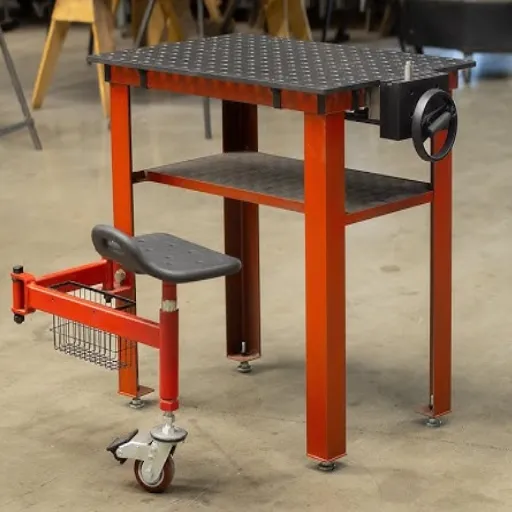
Adding Fixtures to Enhance Functionality
Fixtures, when applied correctly, can add functionality to the fabrication table and even make it a more significant part of the whole system. You can benefit from adding such fixtures as adjustable clamps and vises. Different materials can be firmly held in position during work, thus ensuring precision and safety.
🔩 Adjustable Clamps & Vises
Firmly holds materials in position during work, ensuring precision and safety across different material types
📐 T-Track Systems
Allows flexible setting of jigs and stops, ideal for repetitive tasks or complicated cuts
⚡ Power Strip Integration
Provides organized workspace with easy access to electricity for power tool operations
🧲 Tool Holders & Magnetic Strips
Keeps vital tools close and well-organized during work, reducing search time
📦 Detachable Storage Bins
Following latest trends, provides modular organization solutions for materials and small parts
🎯 Pegboards
Versatile storage solution that minimizes downtime and keeps workspace organized
The above upgrades do not only boost the efficiency of the workplace but also contribute to a decrease in the time taken to locate tools and materials; thus, they indirectly minimize downtime. The finishings of these fixtures not only allow for the fabrication table to be used in a variety of project types but also make the process less intimidating and more relaxed.
Incorporating Laser Cut Elements
Laser cut elements not only offer the precision of workmanship but also grant the maker versatility, hence their growing popularity in the fields of crafting and design. Moreover, the recent trends in search engine data show an ever-increasing interest in the usage of laser cutting for making, among other things, intricate decorations, custom signage, and even functional parts for machines.
Advantages of Laser Cutting:
- ✓High Accuracy: Allows for intricate and precise cuts across various materials
- ✓Versatile Materials: Works with wood, metal, acrylic, and more
- ✓Design Replication: Guarantees efficiency without compromising on quality
- ✓Creative Freedom: Provides substantial room for creativity in detailed projects
The incorporation of laser cut elements for the individuals or companies that need detailed and professional projects is a modern powerful tool.
Creating a DIY Fixture Table
Creating a DIY fixture table is not only a skilled but also a rewarding activity for the people that often do projects where the accuracy and stability are the main factors. One can define a fixture table as a robust workspace on which you can comfortably perform tasks like welding, woodworking, or assembling by clamping, holding, or positioning the materials securely.
🎯 Key Design Considerations:
- Laser-Cut Metal Plates: Use design ideas with laser-cut components for maximum usability and accuracy
- Prefabricated Grid Layouts: These guarantee repeatability and precision, key factors pointed out by modern creators
- Customization for Workflow: Tailor the fixture table according to specific project needs
- Robust Construction: Ensure stability for various tasks including welding, woodworking, and assembly
To meet the rising demand for DIY solutions and the maker culture, building your fixture table has become a common search, and it will customize your tools according to your project needs. Users can create a functional fixture table by following these methods which are often highlighted in DIY forums and guides.
Budget-Friendly Alternatives for Your Welding Table
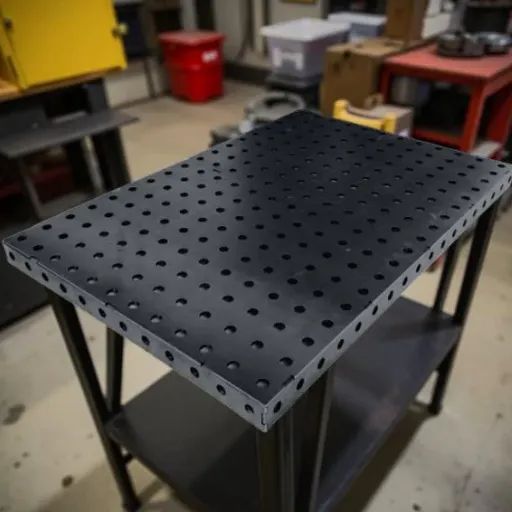
Finding Affordable Materials
One way to find materials that are less expensive for your welding table is to use steel that has been salvaged or metal sheets that have been repurposed from local scrapyards or recycling centers. These choices are usually much less expensive than buying new materials and can still be very strong and easy to use.
💰 Salvaged Steel
Source from local scrapyards or recycling centers for significantly lower costs while maintaining strength and usability
🔄 Repurposed Metal Sheets
Transform used metal sheets into functional table surfaces, offering excellent value without compromising quality
🌐 Online Marketplaces
Check Craigslist or Facebook Marketplace where construction materials are often sold at very low prices
If you use recycled or second-hand materials along with only a little new ones, you can get a welding table that is both budget-friendly and reliable, but not compromised in quality.
DIY Welding Table Kits: Pros and Cons
DIY welding table kits have their upsides and downsides, hence being a choice that attracts many but still a peculiar one for those who want to build their own welding setup.
✅ Pros of DIY Kits
- Convenience: Pre-cut materials and detailed instructions save significant time and effort
- Cost-Effective: Generally cheaper than purchasing ready-to-use welding tables
- Learning Experience: Provides hands-on assembly experience
- Tool Utilization: Makes use of tools you already own
❌ Cons of DIY Kits
- Limited Customization: Predetermined materials and design restrict personalization
- Skill Requirements: May need intermediate or advanced welding skills
- Space Constraints: May not fit specific workspace limitations
- Quality Concerns: Must critically assess material quality before purchase
⚖️ Final Verdict:
DIY welding table kits are a workable solution for budget yet quality-conscious consumers, but it is important to check if the given design corresponds to your needs before buying it.
Cost-Effective Solutions for Beginners
Affordability is usually the most important factor when looking for cheap solutions for beginners who want to buy welding table kits, but at the same time, the aspect of functionality cannot be overlooked either.
💵 Price Range Overview:
| Budget Level | Price Range | Features |
|---|---|---|
| Entry-Level | $150 – $300 | Basic size, standard materials, essential features |
| Mid-Range | $300 – $400 | Heavy-duty steel, clamping slots, improved stability |
| Premium | $400 – $500 | Extra features (adjustable legs, enhanced durability) |
💡 Smart Shopping Tips for Beginners:
- ✓ Consider Used/Refurbished Kits: Can bring about huge savings without sacrificing quality
- ✓ Check Customer Reviews: Highly rated reviews ensure good mix of quality and price
- ✓ Heavy-Duty Steel Kits: Most popular for beginners – both strong and not too expensive
- ✓ Proper Research: Helps make smarter decisions without exceeding budget
According to recent data from search engines, the entry-level DIY welding table kits typically cost between $150 and $500, with the price depending on several factors like table size, material quality, and extra features. Not only does proper research help beginners in making smarter decisions but it also allows them to not exceed their budget.
Frequently Asked Questions (FAQ)
❓ What exactly is a DIY welding table, and what steps are involved in assembling it?
A DIY welding table is an individually tailored working area that is meant for soldering and other related activities. The construction of your table will require a solid surface for the table, which in most cases is heavy-duty steel, and a support kit for the legs. The use of 16mm openings on the surface of the table allows one to have different types of fixtures and clamps to hold the workpieces firmly. Furthermore, it is advisable to invest in a professional-grade steel plate if you need a much longer-lasting table. If you are a beginner in the DIY project, you might consider watching a building video on YouTube for help. This approach will let you learn about the necessary accessories and steps involved in the making of a robust welding table.
❓ What will I do in order to make a welding table with the quality of a professional product?
Creating a professional-grade welding table is a process that requires nothing less than accuracy and good material. To begin with, the choice of the top has to be one solid steel plate that can handle both high temperatures and heavy loads. You may need CNC or laser cutting for an accurate table surface, which also reduces distortion when welding. Combining a fixture welding table design with slats and clamps will give you more options for your projects. Do not forget to use a template for repeatable cuts and with dimensions that depend on your space. A professional quality welding table you construct can greatly increase your productivity level and improve the quality of the projects you undertake.
❓ What items will I require to put together a DIY fab table kit?
Usually, a DIY fab table kit consists of the most important items like steel tubing to build the frame, the top plate, and leg kits that give it stability. Apart from these, you might also want to get such extras as clamps, fixtures, and a rib structure that will provide support for the table surface. If you are considering a more personalized method, you can opt for scrap metal or a DXF file that can be used to create laser-cut parts. This would make your assembly process much more straightforward and smooth. Depending on your level of experience, you could find tutorial videos on the Instructables platform beneficial for a guided assembly process.
❓ Is it possible to make use of a welding table for other DIY projects besides welding?
A welding table is no doubt multi-functional and can be used in so many other DIY projects apart from welding. The tough surface of the table is suitable for activities such as woodworking, metalworking, or it can even serve as an auxiliary workbench in your garage. Adding features similar to a cart would increase the table’s mobility, making it easy to relocate. You could set up the workspace for a different job by changing the fixtures and clamps. If you are a beginner then it would be very useful to go through a DIY process to tailor the table according to the needs ofyour project as this will greatly improve your experience overall.
❓ What features does a fixture welding table come with and what are their benefits?
A fixture welding table has a lot of benefits to offer to both hobbyist and pro welders. One of the main advantages is the potential for creating setups that are identical over and over again thus increasing precision and saving time in your projects. Particularly with 16mm holes, one can conveniently fix his materials for welding purposes using clamps and other types of holders. This unique feature also minimizes the risk of distortion during welding and at the same time assures the production of top-notch parts. In addition to that, a fixture table that is well-designed can support a variety of materials ranging from thin metal sheets to thick steel plates, which is why it is so versatile and suitable for many different applications.
Key Takeaways
🎯 Plan Carefully
Proper planning with the right materials, tools, and workspace preparation is essential for success
💪 Material Selection
Choose between mild steel for budget-friendly options or stainless steel for durability and longevity
🔧 Tool Investment
Quality tools and proper safety equipment are non-negotiable for professional results
🎨 Customize Wisely
Add fixtures, clamps, and organizational features to enhance functionality based on your specific needs
💰 Budget Options
Explore salvaged materials, DIY kits, and second-hand options to build quality tables affordably
🛡️ Safety First
Never compromise on safety equipment and proper ventilation in your workspace
Conclusion
Constructing a custom DIY welding table is not only a project but also an investment in your art that will bear fruits for many years. A seasoned professional or an eager beginner can take the custom-built welding table with precision, stability, and efficiency that will directly boost project outcome.
We have touched on practically every necessary aspect in our complete guide creating your perfect welding table—first knowing the main differences between mild steel and stainless steel, and then picking the right tools and safety gear, and finally applying welding techniques to assemble like a professional. We have also discussed customization options that can turn your welding table from a basic workstation to an all-purpose, multi-functional center for every aspect of your metalworking.
The most important element in a DIY welding table is careful planning and attention to detail. Evaluate properly your specific needs and requirements, and also the budget and space before starting to build. You can go for scrap from local scrapyards, buy a convenient DIY kit, or even order high-end parts for a professional setup. In every case the same basic rules hold for good construction: accuracy in measurements, use of quality materials, and commitment to safety.
While you venture this gratifying journey think that your welding table will be changing along with your skills and requirements. The holders, clamps, and organization systems that you are going to add today can be altered and increased tomorrow. What is very important is to establish a base that is strong, practical, and specifically designed to nurture your interest in metalworking. Hence, invite the tools to your place, tidy up the area, and prepare to create a welding table that will be a part of many successful projects for a long time.
Reference Sources
- 📚 Automotive Training Center
Welding Tables: A Comprehensive Guide – Explores features, types, and comparisons of welding and fabrication tables Source - 📚 Tulsa Welding School
How to Choose a Welding Table – Provides detailed guide on building and choosing DIY welding tables, including materials and design tips Source - 📚 Tulsa Welding School
Small Welding Projects Ideas for Beginners – Offers insights into simple DIY welding projects, including fabrication tables Source - welding projects guides