Welding has become one of the pillars of modern manufacturing and construction, which are directly influenced by the use of welding in many different sectors, like automotive and aerospace. Through the power of technology and the precision engineering needs, the knowledge of different types of welding processes has utterly become mandatory for both professionals and hobbyists. This article is the full guide for welding methods, and it will take you through the most common practices, their specific applications, and the benefits provided to certain projects by these processes. If you are an experienced welder or just a person interested in the craft, this summary will open up to you the valuable aspects of the fusion of metals that is both art and science. Continue reading to find out the welding techniques that are most appropriate for you and how they are still impacting the world around us.
Introduction to Welding Techniques
What is Welding?
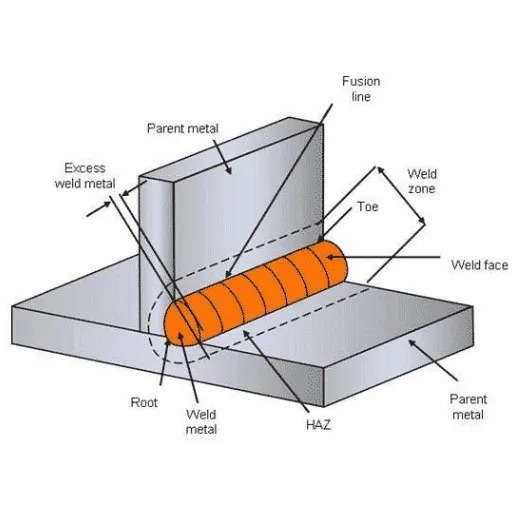
Welding is a process that joins materials, mainly metal or plastic, through melting and bringing together the parts with high heat and letting them cool down, resulting in fusion. Usually, a filler material is used which melts and creates a strong bond with the base metal. Welding has wide application areas like construction, automotive, aerospace and manufacturing because it can produce connections that are tough and reliable. Besides, contemporary welding methods rely on technically advanced tools such as automatic systems and precision control having better production rates and quality. No matter whether it is a minor repair or a huge industrial activity, welding continues to be a crucial skilled labor and technology in molding the present day world.
Importance of Welding in Various Industries
Welding is considered to be the heart of construction and advanced manufacturing—its presence is felt in almost every modern industry. In the near future, the growth of the global welding market will be huge according to recent data from a popular search engine, with a compound annual growth rate (CAGR) exceeding 4% from 2023 to 2028. The major factor behind this expansion is the increasing requirement for welded constructions in the building, automotive, and airplane sectors. To give an example, in the car manufacturing industry, welding not only guarantees the weight bearing capacity of cars but also promotes their weight saving designs for better mileage. The same applies in aviation where the use of welding is limited to high-precision and high-strength components made for aircraft and space exploration. The above examples show that welding is not to be left behind in the race for innovation, rather it keeps on advancing the quality and performance of the products.
Overview of Basic Welding Procedures
Welding procedures vary depending on the material, structure type, and application; however, there are some steps that are common to almost all welding processes. Proper preparation of the materials is always the first step that includes cleaning the surfaces and aligning the edges. Choosing the right welding method is another critical step, whether that be MIG (Metal Inert Gas), TIG (Tungsten Inert Gas), or Stick welding, the result will be strong and durable bonds as the weld is done in a proper manner. Then it is the welder’s turn to calibrate his/her equipment according to the type and thickness of the material, by determining the right amount of current, voltage, and electrode size.
Welding technology has been advancing featuring robotic and automated systems that have not only further refined basic procedures but also increased the precision and efficiency. Recently, by looking at the search engine data provided by, the number of searches for “automated welding systems” and “welding training programs” has been increasing steadily, representing the rising interest in both industrial welding improvement and skill acquisition. These trends indicate the necessity of constantly updating welding methods to keep pace with the requirements for next-generation applications in various industries.
Types of Welding Processes
Arc Welding: The Fundamentals
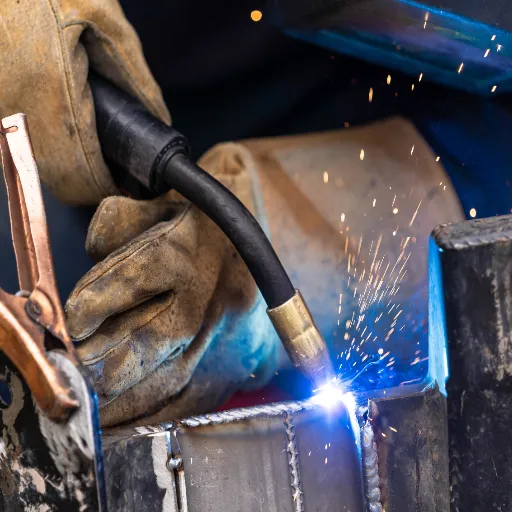
Arc welding is one of the most popular welding metallurgy processes that make use of an electric arc as the main source of heat to melt and join metals. Its versatility, efficiency, and capacity to work with different kinds of metals and thicknesses have made it the first choice among welders for a long time. Arc welding has found its applications widely and is commonly found in automotive manufacturing, construction, and shipbuilding industries.
The recent search engine data from has depicted that there is a growing interest in the terms “arc welding basics” and “arc welding equipment,” which means that not only the people but also the companies are becoming aware of the uptaking and the process that requires knowledge and tools. This scenario points out a necessity for skilled labor and training programs that are easy to access and thus would be able to support the industries that are dependent on the advanced welding techniques. The changing pattern of the data signifies the need for the incorporation of arc welding processes compatible with both educational and technological advancements which will in turn allow the industry to be innovative and at the same time build the skill pool.
MIG Welding: Gas Metal Arc Welding Explained
MIG welding, also called Gas Metal Arc Welding (GMAW), is one of the most widely used and versatile welding methods in different sectors. A continuous wire electrode goes through the welding gun and gets mixed with a shielding gas that keeps the area around the weld free from any contamination. The whole process is very quick and the results are clean, strong welds built on a variety of substances, like metals, aluminum, and stainless steel.
One of the most common questions asked about MIG welding is, “Why is it regarded as one of the simplest welding methods to learn?” Such a question is based on the recent data obtained from ‘s search engine. The answer to this inquiry would be its semi-automatic operation and easy handling of the equipment. Compared to other complex welding methods, MIG welding is not as much demanding regarding the maintenance of the arc and it also delivers a consistent bead with relatively little effort. All this makes the method suitable for novices and thus it has become a popular method of choice amongst home crafters and professional welders alike. Also, the trend of the development of welding equipment like those having auto-power adjustments and improved wire-feeding mechanisms continue to make the whole process even simpler and thus specializing the process to different skill levels.
TIG Welding: Gas Tungsten Arc Welding Overview
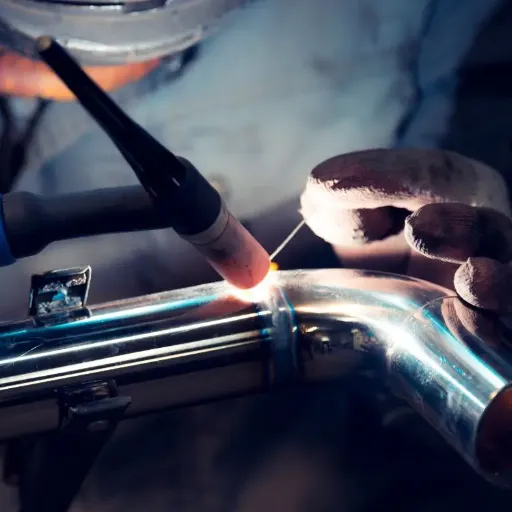
TIG welding, which is also known by its other name, Gas Tungsten Arc Welding (GTAW), is a very accurate and versatile welding method, which requires the use of a non-consumable tungsten electrode for producing the weld. TIG welding is recognized for its ability to develop clean, high-quality welds, and thus is very commonly used for delicate projects and materials, e.g., aluminum, stainless steel, and magnesium. The whole process provides the welder with remarkable control over the weld, thus being suited for the applications where fine detail and minimal spatter are required.
The data trends have shown that there is a significant number of searches related to “TIG welding techniques” and “best TIG welding practices”, which is an indication of the above-mentioned growing interested in mastering this method irrespective of the position of the welder, i.e., novice or experienced. The process has gained popularity due to its application in sectors such as aerospace, automotive, and art metalwork, among others. However, they do take greater skill and time comparable to other welding methods, yet the advances in TIG welding machinery such as foot pedal control, pulse settings, etc. have made it possible to weld more and more. Therefore, these innovations are giving the welders the ability to manage the heat with great accuracy thus, ensuring the results are consistent and perfect.
Choosing the Best Welding Process
Factors to Consider When Selecting a Welding Technique
The selection of a welding technique to a particular task necessitates a thorough evaluation of various aspects, thus ensuring that the outcome is not only effective but also of the highest quality. The type of metal which is to be welded is the most crucial element one has to consider. Taking TIG as an illustration, it would be the most appropriate choice for thin metals like aluminum or stainless steel or for very sensitive applications, while MIG or stick welding can be used for more durable and thicker metals. Furthermore, the welding environment or atmosphere is also a significant factor that needs to be considered; for instance, outdoors is a suitable place for stick welding because the process can endure wind and rain; whereas, bright indoor places where gas shielding is not easily interrupted are the best conditions for MIG welding.
Precision is another major consideration. When demanding high accuracy, tungsten inert gas cannot be surpassed in projects like aerospace components, while flux-cored arc welding is more productive for heavy-duty applications. Besides, budgetary limitations and availability of equipment can also be factors that affect the choice. MIG welding, for instance, is very popular because of its cost and speed, making it easier to work on large volumes and clean up the weld area afterward than with stick or TIG methods.
Operator skill level can sometimes dictate the choice of a corresponding process. Skilled welders might take advantage of the TIG process for difficult detailing; however, less experienced workers might be given the MIG option and in that case, it would be the right tool for them because of its forgiving nature. Thus, by evaluating the above-mentioned criteria and keeping abreast with innovations in welding technology, both the industry and the individual can make an informed choice on the most effective method for their exclusive requirements.
Comparison of Different Types of Welding
Welding skills differ not only by their range of use but also by the advantages and drawbacks they come with, hence, it is very important to be aware of the distinctions between them. As per the latest updates, TIG (Tungsten Inert Gas) welding depicts the utmost accuracy and control thus it holds the first position among the options for working and welding very thin materials as aluminum and stainless steel. Though it is said to have a long duration and be extremely difficult regarding the skills that are demanded to control it.
MIG (Metal Inert Gas) welding, on the other hand, is recognized for being the most user-friendly method yet producing strong welds for thick materials, thus requiring less proficiency indicating less skill mastery. MIG welding finds its largest application in the automobile, construction and other industries that value its rapidity and large-scale production ability. The less challenging aspect of learning MIG welding allows even beginners to weld, though it still may not impart the same sense of delicacy as TIG welding does.
Stick welding is known as a simple and cost-effective process that is mainly used in outdoor applications, and it continues to be a major player in such areas as the shipbuilding or pipeline industry, which cannot afford to stop welding even in bad conditions. One thing to note, however, is that even though the stick method is very versatile, it produces a lot of slag and has a higher tendency to create uneven welds when compared with MIG or TIG welding.
Amongst these processes, the choice will mainly depend on the requirements of the project, especially regarding the type of material, quality of weld, environmental conditions, and skill of the operator. Indirect but certain advancements in welding technology, such as automated systems and hybrid solutions, are constantly enabling the industries to come up with modern solutions tailored to meet their production demands effectively.
Understanding Welding Positions and Their Impact
The position of the welders directly relates to the factors of quality, difficulty, and efficiency of welding. Flat, horizontal, vertical, and overhead are the four main welding positions that are suitable for different purposes and applications. As per the recent studies, the number of searches indicates that people want to understand more about the intricacies involved in the other positions such as vertical and overhead welding which probably requires more skilled workers because of gravity’s interference with the molten weld pool resulting in either very small or large defects.
In order to offset such issues, many industries adopt technology such as positioners or angle rotators which give welders the ability to gain maximum control and precision. Moreover, trends involve a gradual but sure reliance on the usage of training programs and simulations to not only refine skills but also to adapt to the different positions’ demands. By simply linking the correct welding position to the task and at the same time taking advantage of the new technology in tools and training, it is then possible for operators to attain maximum efficiency as well as produce durable and high-quality results.
Welding Equipment and Safety Precautions

Essential Tools for Various Types of Welding
Welding tools may differ a lot according to the different types of welding techniques used but in general include equipment that is designed specially to ensure time-saving, accuracy, and safety. For the shielded metal arc welding (SMAW), which is also called stick welding, the main provisions are a welding power supply, electrodes, and a welding helmet to protect the eyes and face. For gas metal arc welding (GMAW), also known as MIG welding, the operator must have a wire feeder, a shielding gas cylinder, and a MIG torch. In contrast, gas tungsten arc welding (GTAW) or TIG welding utilizes a non-consumable tungsten electrode, shielding gas, and a foot pedal to control the current. In the case of plasma arc welding, besides the plasma torch, higher power sources are also critically required.
All these tools get combined to satisfy the different needs of the particular technique. It is a clear indication of the substantial movement towards more and more versatile and flexible solutions that the technological advancements, demonstrated by the recent trends in automated and portable equipment, have made. These innovations not only bring about high precision but also comply with the current safety standards thus, facilitating the welding process and making it safer and more accessible to various industries.
Safety Gear and Precautions for Welders
Welding safety is completely one hundred percent priority number one since the heat, sparks, toxic fumes, and ultraviolet radiation are very serious risks. Data from recent searches by show that there is an increase in the requirement of complex personal protective equipment (PPE) which is a combination of practicality and contemporary safety standards. A welding helmet with an auto-darkening lens, fire-resistant gloves, and a heavy-duty apron to guard against burning are the first and foremost things in a welder’s outfit. In addition, respirators, particularly powered-air purifying ones, are being more and more accepted in the welding community, mainly because of the awareness of the negative long-term health impacts of welding fumes.
However, the gear does not cover the entire precautions list that should be followed. It also covers well-ventilated workspaces, regular equipment maintenance, and proper welding techniques. The search interest has also uncovered automated solutions such as robotic welding systems which help in risk minimization by cutting down human exposure to dangerous conditions. This data shows a joint movement of the industry towards continually improving the safety practices, while at the same time, adopting the latest technologies for a safe and efficient work environment.
Typical Hazards in Welding and Their Prevention
Some of the most common hazards in welding that people search for in the latest search engine’s data include exposure to toxic fumes, electric shock, fire risks, and eye injuries caused by intense light or radiation. Such concerns point to the fact that the welding industry is increasingly becoming aware of workplace safety issues.
Key Safety Measures:
- Fume Control: Minimizing inhalation of harmful substances is a must and can be done by ensuring proper ventilation in the place or using fume extraction systems.
- Personal Protective Equipment: Basic personal protective equipment (PPE) like insulated gloves, flame-resistant clothing, and welding helmets with filtered lenses, very effectively eliminate the chances of burns, electric shocks, and eye damage.
- Equipment Inspection: Regularly inspecting welding equipment and cables for damages can help prevent electric accidents, while maintaining a clean workspace free of flammable materials will definitely reduce fire risks.
- Advanced Technologies: Advanced filtering masks and safer robotic welding systems are also gaining popularity as the technologies that enhance safety while increasing productivity.
Improving Welding Quality
Tips for Achieving a Good Weld
To get a good weld, you need to be very precise, do a lot of preparing beforehand and follow the proper techniques. First of all, metal surfaces should be cleaned thoroughly since rust, oil, and dirt are some of the contaminants that can be present and can weaken the weld. It is also very crucial to use the correct welding material and equipment for the job—choosing the right filler metal and setting the voltage and amperage as per the requirements can influence the quality of the weld to a large extent. The use of proper technique is also of great importance; by keeping the travel speed and electrode angle steady, it would be easier to make the welds look smooth and even. Besides that, working with good ventilation and exercising control over the hands will also help to a certain extent in improving the accuracy and lowering the imperfections.
The latest data shows that thicker materials should be pre-heated because this will stop the cracking by providing a controlled cooling of the material. Besides that, welding technology is at an advanced stage where new equipment like automated welding systems or tools with better temperature control is being used, and this is making the welds more reliable and of much better quality. The combination of traditional practices with innovative solutions is making life easier for the welders as they can then have the best finish which is also durable and clean.
Welding Speed and Its Importance
Weld penetration speed is among the main factors that determine the quality, efficiency, and durability of a welded joint. A very slow welding speed will cause high the heat input and consequently will lead to weakening of the base materials, increase distortion, or even cause defects such as porosity or burn-through, the whole process would then be wasted. On the contrary, if welding is done at a very high speed then it will lead to the death of the process, since the speed is too fast the fusion will be incomplete, penetration will be chopped off, and the weld edges will suffer from undercutting.
The most recent data indicates that the process of optimizing welding speed is all about finding the right balance that matches the material type, joint configuration, and welding process. There are very few advanced automated welding systems that can give the right speed control, guaranteeing consistency and lessening human error. Speed that has been properly calibrated does not only enhance the weld but by cutting back on rework and wastage, it also gives productivity an overall boost. Finally, it cannot be stressed enough that keeping the ideal welding speed is of utmost importance in order to successfully deliver high-quality results and at the same time meet project deadlines quickly and efficiently.
Quality Control Measures in Welding
Quality control in welding is one of the critical aspects of the process to ensure the safety, durability, and efficiency of the welded structures. The implementation of strong measures is a mixture of the inspections done before welding, during the process, and after the weld is finished. The pre-welding activities include checking the materials, setting up the equipment, and confirming that the welders have the required certifications for the given job. Consistent monitoring of the parameters like temperature, welding speed, and electrode integrity, during the welding process, is very important,-consistency in quality and the slow occurrence of defects can thus be ensured.
Non-destructive testing (NDT) methods like ultrasonic testing, X-ray radiography, and magnetic particle inspection have become the most popular ways for detecting internal or surface defects after welding has been done without compromising the structure. Automated welding inspection systems and AI-based defect detection are some of the advanced technologies that are currently receiving more and more acceptance because of their high precision and reduction of human oversight errors. As per the latest search data, the adoption of real-time monitoring systems and artificial intelligence for welding quality control is growing, showcasing their effectiveness in boosting productivity and ensuring compliance with industry standards.
Frequently Asked Questions
What is the best welding process for amateurs?
It is usually gas metal arc welding (GMAW), which is popularly known as MIG welding, that is regarded as the most suitable welding process for a beginner. This process is very easy to work with and it is usually characterized by great speed of welding. It is, therefore, more than appropriate for a novice to use. It consists of the usage of a wire electrode as a filler material and a shielding gas, which, together, dictating the process of making a weld that is clean and little cleanup required. In addition, MIG welding is not limited to a single type of material but can be done on different types of materials, e.g., aluminum and thin steel. SMAW and other people’s processes might be good too, but they would be requiring more skill.
What are the different welding methods?
Welding offers a variety of methods, different applications and materials requiring different ones among them. Among the different welding processes, the following main types can be mentioned: arc weld, gas weld, resistance weld, and solid-state weld. Among the different types of arc welding, the following methods are included: shielded metal arc welding, gas tungsten arc welding, and the last one being referred to as TIG welding. Each one has its own advantages, for instance, gas welding is becoming more and more popular in the field of pipe welding due to its easy handling. To familiarize yourself with these methods is crucial in order to make the best choice of the welding method for your projects.
What is the importance of welding positions in welding techniques?
Without a doubt, welding positions directly contribute to the success of a welding technique. The actual welding position—flat, horizontal, vertical, or overhead—greatly influences the weld quality. Every position brings its own difficulties, for instance, controlling the welding arch, and managing the heat affected zone. For example, vertical welding usually calls for slow welding speed to avoid saggy weld. Good education in welding positions is important for producing good welds in welding that is almost a complex project.
What is the process of arc welding?
The principle of arc welding is to get an electric arc going between an electrode and the workpiece thus generating enough heat to melt the base metal and fusing it together. fThere are so many methods arc welding. The arc can be non-consumable or consumable depending on the method. When the electrode touches the workpiece the arc will form itself and then retract a little after that. This method is being widely used in a variety of applications due to its effectiveness in the joining of different metals.
What are the uses of new-age welding techniques?
The advanced welding technologies like laser and friction welding are continuously occupying more ground in the industry where high precision and strength are the main requirements. These techniques are such that they allow not only welding of thick materials and complex shapes but at the same time their heating is so little that it would hardly be noticeable. A good example, among others, is that, in the automobile and aerospace industries laser welding is the most preferred due to its ability to make welds that are instant, strong, and clean at a very high speed. Besides, in the case of large-scale projects like ship construction where deep penetration is needed, submerged arc welding is the go-to method. Knowledge of advanced welding processes is a gateway to a wide range of opportunities in the field of welding.
What are the properties of good weld?
Good weld can be identified by the combination of strength, appearance, and integrity. Among the primary elements that build up a successful weld are proper heat input, melt-through, and correct welding technique. Correct welding current and a stable arc can lead to a stronger bond. Protective measures, e.g., use of flux, especially in processes like flux cored arc welding, are effective as they prevent weld contamination. It is also of paramount importance to check the weld for cracks and porosity as these may be the reasons for the weak weld.
Reference Sources
- Nuclear Regulatory Commission (NRC): A detailed document on welding and cutting processes, including techniques for adding filler metal and various welding methods. Link to source.
- Michigan Department of Transportation (MDOT): A field manual for structural welding, covering preheating, brazing, soldering, and other essential welding practices. Link to source.
- Pennsylvania Public Utility Commission (PUC): A presentation on welding terms and processes, including arc welding and tungsten electrode techniques. Link to source.