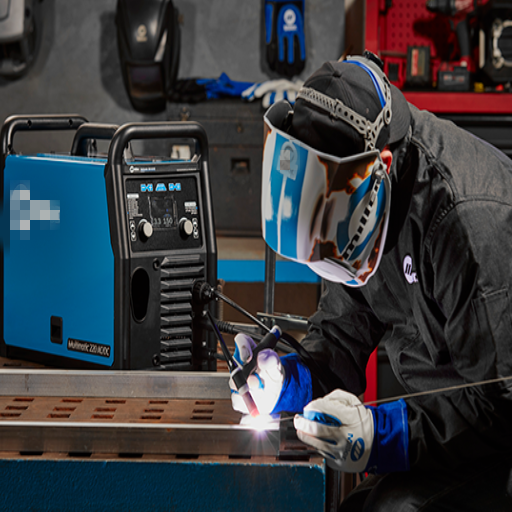
Whether a seasoned welder looking to further expand his skills or a beginner interested in mastering aluminum work, understanding all the little intricacies of working with this element is very important. This guide goes into great detail about the welding processes and equipment appropriate for aluminum welding-the matter justifiably belonging to one of the most versatile, lightweight, and corrosion-resistant metals. Through this article, you will have the ability to solve problems presented by the aluminum welding technique such as high thermal conductivity and oxide layer formation, while being able to confidently decide on the right method and equipment to weld something securely and durably, resulting in a chain of success for both novices and experts.
Understanding Aluminum Welding

What Is Aluminum Welding?
Metal welding in all its methods of joining aluminum and aluminum alloys is called aluminum welding. Since aluminum has certain properties – like very low melting point, high thermal conductivity, and an oxide layer that is quite tenacious- special approaches are employed in aluminum welding, unlike those used in welding metals such as steel. GTAW or TIG, GMAW or MIG, and resistance welding are the fame choices.
Industry Growth & Innovation
There is evidence to suggest that aluminum welding is still a growing demand within many industries like aerospace, automotive, and construction where lightweight metal is required for corrosion resistance. Through these advancements in techniques and technologies like pulsed MIG welding and filler materials, efforts are now being put in to overcome the typical problems of warping, porosity, and weak joint strength.
Advantages of Aluminum Welding
There are numerous advantages of aluminum welding that make it best suited for wide applications. It is very light and significantly reduces the weight of finished products, which is essential in the aerospace and automotive fields. Such a reduction would increase the overall fuel efficiency and lower greenhouse gas emissions in line with sustainable development goals of the world.
Corrosion Resistance
Inherent corrosion resistance makes aluminum ideal for construction structures exposed to harsh weathering conditions.
Advanced Techniques
Minimized welding heat input such as with pulsed MIG allows for less warping and porosity, yielding stronger joints.
Recent trends show a surge in the search about optimizing the aluminum welding process, especially with the robotic system and automated controls. These improvements increase productivity by assuring repeatable weld quality, thereby minimizing human error. Meanwhile, advanced filler materials that are specifically designed for aluminum applications bolster the joint’s strength and reduce defects, solving long-existing problems in this field.
Overall-the benefits combined with these advances will further cement aluminum welding as a go-to solution across manufacturing and construction industries.
Common Applications of Aluminum Welding
Because of the lightness, high strength-to-weight ratio, and great corrosion resistance properties, aluminum welding finds wide application in many areas. Aluminum alloys find their primary application in aerospace where aluminum welding is used in the construction of aircraft fuselages and wings, among other structural components that require durability yet need to be light for fuel efficiency purpose.
Aerospace
Aircraft fuselages, wings, structural components
Automotive
Lightweight vehicle frames, panels
Marine
Ships, hulls, offshore structures
Construction
Structural components, curtain walls, roofing
Renewable Energy
Solar panel frames, wind turbine structures
Electric Vehicles
Battery enclosures, lightweight support structures
Aluminum welding is employed within the automotive industry to fabricate lightweight frames and vehicle panels to facilitate energy efficiency and performance. In contrast, aluminum welding is used in the marine industry for corrosion resistance-welding services required in constructing ships, hulls, and offshore structures facing severe saltwater conditions. In the construction industry, aluminum welding finds further applications in fabricating structural members, curtain walls, and roofing systems that require strength, flexibility, and durability. A new set of industries implicated in using aluminum welding includes applications for renewable energy infrastructures, including solar panel framing and wind turbine structure in congruence with newer investments toward sustainable technologies.
Types of Welding Techniques for Aluminum

MIG Welding for Aluminum
Arguably one of the best methods for joining aluminum, especially for industrial and engineering applications, is MIG (Metal Inert Gas) welding. It uses a consumable wire electrode that melts, along with the base material, under the shelter of an inert shielding gas, usually argon or an argon-helium mix.
Current Market Trends
A recent spike in search interest for MIG welding methods may be attributed to their capacity to deliver superior quality, permanent welds on EV products such as battery enclosures and lightweight frames. Users generally want to know if MIG welding can be applied to aluminum materials that are thin, and the product is yes, so long as one makes certain adjustments in welding parameters like lowering voltage and wire feed speed. This versatility allows MIG welding to maintain the status of being the industry’s choice wherever aluminum must be processed with both precision and speed.
TIG Welding for Aluminum
TIG welding or welding using tungsten inert gas is generally considered as the best welding process for aluminum kinds of metals, being used only when welds must be of ultra-high quality or when particular attention is given to precision and appearance. The heat input in TIG welding can be precisely controlled using a non-consumable tungsten electrode and inert argon gas. This minimizes the chances of distortion or burn-through onto the lighter aluminum.
Expert Analysis: Trending data and search analysis reveal that users also query the suitability of TIG welding for intricate or thin aluminum work. To this, one can respond unambiguously in the affirmative. The TIG process excels in such cases, giving control over weld current and proper application of the filler material to ensure clean, defect-free welds. Such a process is often used for aerospace applications, EV components, and other premium manufacturing where weld integrity and perfect appearance are equally important.
Comparing MIG vs. TIG for Aluminum Projects
Determining whether to use MIG or TIG for aluminum projects is largely dependent upon the factors of precision, speed, cost, and more application-based considerations. Very recent data and industry insight turn the spotlight on MIG welding as a method suited for situations requiring faster welding completion times and are therefore usually used in mass production settings.
It is even more suited for thicker aluminum sections where time is key, yet decent weld quality is still required. The downside, of course, is the trade-off for less control and a greater likelihood of spatter. On the other hand, TIG, being slower, remains the finest choice where craftsmanship and intricate detail are key. This allows for very exact adjustments to heat and filler material, which is beneficial when working thin aluminum or something with a more complicated geometry. TIG tends to be favored in industries such as aerospace or food-processing, where weld objective appearance and structural integrity are of paramount importance.
Search trends have exhibited an increase in interest in hybrid solution applications involving both MIG and TIG, which can then be employed for variable component thickness or functional demands, thereby emphasizing each method’s great adaptability. At the end of the day, the choice between MIG and TIG must be made considering the particular technical needs and production aims of the aluminum welding project at hand.
Choosing the Right Welder for Aluminum

Features to Look for in an Aluminum Welder
Several features must be considered when selecting a welder to work on aluminum. Based on the most recent search trends from , welders of late have been sought out for their versatility, precision, and reliability to weld aluminum by professionals and hobbyists. Here are the features that one should primarily seek out:
AC/DC Ability
Aluminum materials often require welding with alternating currents that break the oxide layer on the material surface. As such, such a welder fitted with both AC and DC modes will provide the flexibility needed when working on materials of various types of project requirements.
Pulse Welding
Pulse welding allows the welder to control heat input, implementing the minimum amount of warping and burn-through of aluminum metals, especially through thin sections that undergo variable thickness processing. This feature bears the greatest priority for those who weld variable thicknesses.
Amperage and Duty Cycle
Generally, a welder with a high duty cycle can tolerate longer operations without overheating. High-duty cycle models with an adjustable amperage range are highly sought-after for aluminum welding projects that require a steady performance and consistent heat.
High-Frequency Start
High-frequency start will ensure a smooth arc start, which will be especially essential for TIG welding of aluminum. This feature is likely to be obtained only in works of great precision in which clean starting and stops are demanded.
Portability and Build Quality
A quick glance over search results brings to light the demand for lightweight designs that are at the same time sturdy, as portability gains a strong popularity criterion. In aluminum welding, a machine must withstand hard usage but must also be flexible enough to move around different working environments.
Spool Gun Compatibility
MIG aluminum welding is a frequent search term which hints at its importance in avoiding feeding problems with softer welding wires.
Expert Recommendation: By knowing these critical features in line with other recent data trends, users can be assured of making the correct choice while looking for the best welder for their aluminum projects. A welder carrying all the above features will greatly increase productivity and promises great welding outcomes.
Multi-Process Welders: Pros and Cons
✅ Pros
- Versatility
Multi-process welders are ingeniously designed to apply welding techniques, namely MIG, TIG, and Stick welding, and hence suitable for a broad range of projects and materials. - Cost Efficiency
By combing multi-processing functions into a single machine, it naturally reduces the initial investment costs than purchasing separate machines for the various welding methods. - Space-Saving
Since it combines all the functions into just one unit, it needs lesser space, and hence very handy in smaller workshops or home-based setups. - Convenience
Smooth process switching saves time and effort on transitions between welding techniques.
⚠️ Cons
- Performance in Compromising
Multi-process welders are versatile, but they might not perform best for specialized welding jobs. For example, for precision TIG welding or heavy-duty Stick welding, multitasking might be a compromise. - Learning Curve
For newcomers to welding, mastering more than one process through a single unit can be overwhelming, especially when it comes to setting customization. - Higher Maintenance Requirements
Having all those intricate components and combined functionalities usually ends up requiring more extensive upkeep, which could translate to higher maintenance bills in the long run. - Costs for Advanced Features
Top-level multi-process welders that have been fitted with the latest technologies and settings can proof to be very commercially demanding, thus compromising the initial saving due to consolidation.
Trend Insights
The latest search-engine analyses from have indicated that the phrase “best multi-process welders” has been constantly garnering interest, especially from hobbyists, DIY-ers, and small business owners. Hence, this trend above all implies that versatility and suitability are watched as an indispensable feature in welding equipment. The search results, however, do mention the “cost-performance trade-off” and occasionally “best models for aluminum welding,” showing a demand for precision and quality in regard to specialized materials. Weighing these pros and cons through performance reviews will guide a user towards a decision that fits their budget bearishness and project requirements arising out from their future practice.
Recommended MIG and TIG Welding Machines
MIG and TIG welcome a greater status in absolute performance, in absolute reliability, and in fair prices on recent search engine trends and user concerns, especially in cases of more specialized materials like aluminum.
🔥 MIG Welding Champion
Lincoln Electric Power MIG 210 MP
For receiving the highest ratings for its multi-process capability, pinpoint controls, and rock-solid construction. It is appropriate for B2B and home user applications: especially since the welding aluminum with the spool gun attachment.
⚡ TIG Welding Champion
Miller Diversion 180
On the TIG side of the forge, highly recommended by those who appreciate output quality and straightforward operating. This machine welds AC and DC: a bare minimum for aluminum and pretty much everything else, while keeping the design user-friendly through fairly intuitive controls.
Advanced Option
Everlast PowerTIG 255EXT: The new generation models like the Everlast PowerTIG 255EXT really shine with their inverter technology, which balances performance and portability.
They form the answer to the “performance vs. cost trade-off,” provide durability for both the hobbyist-level welding jobs, and industrial level output. When selecting their ideal welding machine, users should focus on evaluating their material requirements, power supply needs, and climax of project difficulty.
Emerging Technologies in Aluminum Welding

Welding Innovations
Developers continue to strive for welding machine innovations in different working environments to attain perfection with regard to precision, efficiency, and usability. Given the recent trends and data, there appears to be an emphasis on mounting AI and ML applications in welding systems.
🤖 AI-Powered Systems
An AI-powered welding system would be able to assess weld quality in real-time, dynamically modifying arc parameters for an optimal weld, and predict potential faults that would otherwise have hindered perfect welding and productivity.
🏭 Robotic Automation
Automated robotic welding systems are gaining popularity in industrial manufacturing, allowing for welding consistent with production-repetitive activity in large-scale operations.
🌐 IoT Integration
IoT features allow welding machines to be remotely monitored and diagnosed, providing detailed performance analytics and predictive maintenance alerts, thereby minimizing downtime and ensuring prolonged equipment lifespan.
⚡ Inverter Technology
The development of inverter technology makes machines smaller, more energy-efficient, and competent to be utilized in a variety of applications, from welding thin aluminum sheets to thick materials.
🥽 AR Training
AR technology in training processes allows welders working in AR goggles to simulate welding in various scenarios before the real project and enhance skill development and safety.
In addition, automated robotic welding systems are gaining popularity in industrial manufacturing, allowing for welding consistent with production-repetitive activity in large-scale operations. Another important trend is the inclusion of IoT features. With this, welding machines could be remotely monitored and diagnosed, further providing the user with detailed performance analytics and predictive maintenance alerts, thereby minimizing downtime and ensuring prolonged equipment lifespan. The development of inverter technology is another one. This makes machines smaller, more energy-efficient, and competent to be utilized in a variety of applications, from welding thin aluminum sheets to thick materials.
While these interfaces provide direct operational interactions, they are also harnessed with AR technology in training processes. Thus, welders working in AR goggles will be able to simulate welding in various scenarios before the real project and enhance skill development and safety. These advances depict the commitment toward addressing the field’s own historical concerns and those of present times and form a pathway toward smarts and adaptability in welding.
Function of Synergic MIG Technology
The synergic MIG welding technology marks the enormous breakthrough for precision, efficacy, and repeatability in the welding processes. This sophisticated system uses pre-programmed welding parameters which are, in turn, altered automatically depending on the welder’s input for material type, wire diameter, and shielding gas composition. By coordinating all aspects of the welding operation, synergic technology negates human error and guarantees that the process is carried out without deviation over prolonged periods.
Advanced Integration
The synergic MIG technology, therefore, when coupled with recent developments in AI-data processing and search analytics, the like used by the data engines of , really allow for dynamic adaptation to new material compositions and application requirements. Such an example would automatically altering weld settings using real-time search data about new industry materials or feedback information concerning common defects. This integration gives industry-leaders the edge in staying ahead of the trends and applying the cutting-edge will while adhering to strict quality standards.
The system further facilitates improved welding by reducing the time for setup and accomplishing considerable savings in the cost of power and input materials. Additionally, synergic MIG technology, when employed with modern data-driven insight, presents a sustainable solution for industries across the automotive, aerospace, and construction sectors to ensure better performance.
Future Outlooks in Aluminum Welding
The aluminum welding industry is positioned for unprecedented developments on the grounds of advancements in automation, AI, and green tech. The search trends shed light on notable attention toward adaptive welding systems linked with machine learning algorithms that adapt welding parameters in real-time with respect to the behavior of material and surrounding environment. These systems increase precision and repeatability while ensuring the consistent quality of welds even for complicated applications.
🌱 Sustainability Focus
Decreasing energy consumption and emissions during aluminum welding processes has become a priority alongside the global drive for sustainability. Promulgated solutions bring into play laser-based techniques and hybrid welding processes, such as friction stir welding in tandem with conventional processes, increasing efficiency while minimising waste.
🚗 Growing Applications
With increasing demands for lightweight and durable aluminum in electric vehicles and renewable energy sectors, its adoption grows exponentially.
On the other hand, decreasing energy consumption and emissions during aluminum welding processes has become a priority alongside the global drive for sustainability. Promulgated solutions bring into play laser-based techniques and hybrid welding processes, such as friction stir welding in tandem with conventional processes, increasing efficiency while minimising waste. With increasing demands for lightweight and durable aluminum in electric vehicles and renewable energy sectors, its adoption grows exponentially. In all, the future for aluminum welding is to be smart, green, and automated to meet the emerging standards of the industry and environment.
Practical Tips for Successful Aluminum Welding
Preparing Aluminum for Welding
Surface preparation is one of the basic requirements to obtain a high-quality aluminum weld. Aluminum surfaces are usually covered by an oxide layer of aluminum having a melting point of about 3,762°F (2,072°C), almost double of that of the base aluminum metal (1,220°F or 660°C). For welding, this oxide layer must be removed to avoid contamination and to provide suitable fusion.
🔧 Mechanical Cleaning
Cleaning of the aluminum may be done by mechanical means using wire brushes made of stainless steel.
🧪 Chemical Cleaning
Chemical cleaning with solvents like acetone or some degreasers.
⚠️ Critical Considerations
Another recent concern is cross-contamination from a foreign particulate matter that affects weld quality; a stainless steel wire brush used for aluminum cleaning must be reserved for aluminum cleaning only. Degreasing in itself is also a critical factor as oil, grease, or other contaminants could prove detrimental, resulting in porosity during welding.
Time-Sensitive: When employing these methods, welding should undoubtedly follow cleaning since aluminum can form oxide within a few minutes upon exposure to air. This is of utmost importance when weld integrity is questioned in areas such as aerospace or automotive manufacturing that require utmost precision.
Techniques That Help Develop Strong Welds
Strong welds take a bonding, a combination of preparation, skilled techniques, and equipment. As a first step, choosing the correct important welding method, such as GTAW (TIG welding), or GMAW (MIG welding), is crucial. Thin materials are generally welded better with TIG because of its accuracy, while thick sections are welded better with MIG for higher deposition rates.
Parameter Optimization
Recent data from search engine and industrial reports state that optimizing welding method parameters, such as current, voltage, travel speed, and shielding gas composition, can positively affect weld quality. Pure argon or mixtures of argon and helium prevent contamination and ensure uniform penetration. Also, use of technologies such as pulse welding minimizes heat distortion and offers better control over the weld pool thereby producing stronger joint strength.
Joint Design
Beveling edges or allowing small gaps encourages good penetration
Post-Weld Inspection
Non-destructive testing (NDT) to verify no defects appear
Joint design is equally important. By beveling edges or allowing a small gap in the joint, good penetration is encouraged so that weak welds are kept at bay. Post-weld examination and inspection, including non-destructive testing (NDT), must also be carried to verify that no defects appear that lessen the weld strength, such as cracks or inclusions.
Common Mistakes in Aluminum Welding
Welding aluminum, being a precise procedure, requires a thorough knowledge of the craft. Errors, even minor ones, can bring down the structural integrity of a weld.
❌ Inadequate Surface Cleaning
One of the common errors is inadequate cleaning of the aluminum surface. Aluminum has an oxide layer that has a higher melting point than the base metal. If this oxide layer is not removed by wire brushing or chemical cleaning, the welding process will result in poor fusion, and weak joints will evolve.
❌ Wrong Filler Material
Another common mistake is to use the wrong filler material: One must choose a filler alloy compatible with the mechanical properties and corrosion resistance required for the application. The most used filler metals such as 4043 or 5356 must, therefore, be chosen depending on weld strength and service conditions.
❌ Poor Heat Input Management
Heat input tends to be adversely managed during the welding process. Aluminum has very high thermal conductivity, which tends to dissipate heat very rapidly and also results in burn-through problems. Preheating may actually assist in handling the thermal gradient, but over-preheating may promote distortion of the material or grain growth, which again may adversely affect weld performance.
❌ Inconsistent Welding Speed
And then the final common causes of defects include an erratic welding speed that, too fast or too slow, commonly results in porosity and lack of penetration. Sticking to an even pace is recommended as this allows bead formation and limits entrapped gases.
These errors point out why welding must be done according to good practices and SOPs that are fast evolving with regard to specific technology and detailed data available on .
Frequently Asked Questions (FAQ)
Reference Sources
guide for stainless welding machine
🏫 Virginia Tech – Welding Simulations of Aluminum Alloy Joints by Finite Element Analysis
This study explores the welding process for aluminum alloy joints, including techniques and procedures, using finite element analysis.
🔬 Missouri University of Science and Technology – Friction Stir Spot Welding of Aluminum Alloys
This research focuses on friction stir spot welding, a technique for creating sound welds on aluminum materials, and discusses the equipment and conditions required.
📚 California State University, San Bernardino – The Development of a Curriculum for a College Course in Fabrication for Welders
This document includes detailed information on welding processes, including aluminum welding, as part of a curriculum for welders.