
Welding rollers, commonly called pipe and tank turning rolls, are significant assets in industrial manufacturing and fabrication. These devices add value in welding cylindrical shapes such as pipes, tanks, and pressure vessels by precision, streamlining, enhancing safety, and increasing efficiency during the entire process. Even if you are a novice in the industry, knowing the applications and capabilities of welding rollers can help advance your workflow.
This comprehensive guide will cover everything these essential tools offer—not just their function, but also how to choose the appropriate type, key distinguishing attributes, and advantages to operations. By the end, you will understand better why they are crucial for fabricating heavy cylindrical workpieces and the range of outcomes that optimal fabrication processes can yield.
What are Welding Rollers and How Do They Work?
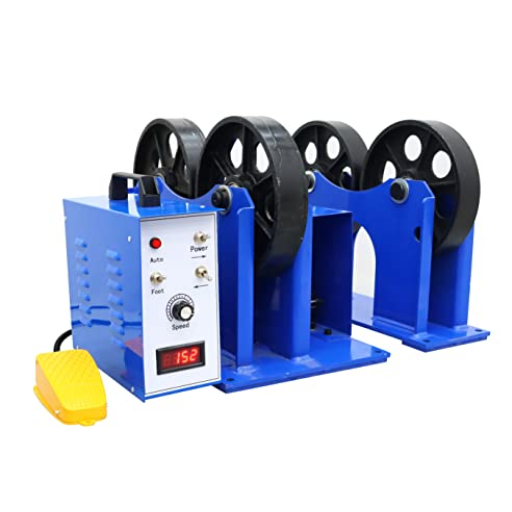
Welding or turning rollers are mechanical devices that support cylindrical workpieces and rotate them for optimal welding or fabrication. Welding turns the workpiece both through sets of wheels or rollers. The welders are ensured balanced access to each side of the cylindrical workpiece to make the welding even and precise. Welding rollers help smooth and automate the handling of big objects during the welding process, thus increasing efficiency, lowering human intervention, and ensuring better quality of the welded joints.
The Role of Pipe Rollers in Welding Operations
Pipe rollers are essential to modern welding because they provide precision, stability, and improve effectiveness. Pipe rollers are designed for small and large-diameter pipes made from metals like steel, aluminum, and other alloys. As a result of the firm control on the pipe and controlled rotation, these rollers reduce the extensive manual movement that workers have to do, hence lowering fatigue and errors. Moreover, the development of automated and motorized pipe rollers has made welding seamless and faster with the addition of robotic welding systems. This combination guarantees high-standard welds and helps increase productivity in the oil and gas, construction, and manufacturing industries.
How Adjustable Welding Rollers Enhance Productivity
An operator’s productivity can be multiplied with the use of adjustable welding rollers, as they can weld pipes of different shapes and diameters without changing the equipment multiple times. This flexibility enables the operator to manage various assignments within a limited time frame. Furthermore, the adjustable rollers facilitate precise alignment of workpieces, thus ensuring accuracy and consistency in welds, which helps reduce errors and material waste. When modern technologies like automated welding systems are used with adjustable welding rollers, workflows are streamlined, producing reliable outcomes in bulk for services like oil and gas, aerospace, and manufacturing. Their efficiency and simplicity of use position them as automatic facilitators of operational excellence.
Types of Welding Rollers Available in the Market
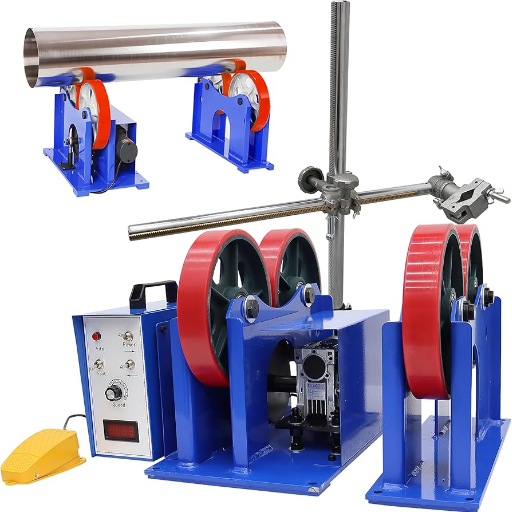
- Conventional Welding Rollers
Conventional welding rollers are basic and have fixed axles for standard welding processes. They are used in various industries because they can handle cylindrical workpieces.
- Self-Aligning Welding Rollers
Self-aligning rollers are designed to enhance precision since they automatically adjust to the workpiece size. They are useful in cases that require repetitive alignment during welding.
- Turning Roll Welding Rollers
Used in the piping, tank, and pressure vessel industries, turning rolls are ideal for uniform welds on the surface of large and heavy workpieces.
- Adjustable Welding Rollers
These versatile rollers offer various adjustable settings for both automatic and manual operations. They can be set to different workpiece dimensions for different welding tasks.
- Heavy-Duty Welding Rollers
These rollers can handle burdensome operations like shipbuilding and oil refinery equipment. Heavy duty rollers are built to withstand enormous industrial workloads.
Comparing Tank Turning Rolls and Pipe Rollers
Turning rolls are best suited for heavy and large-diameter tanks. Tank pipe rollers have a smaller range of optimal performance and are best suited for fast and low-weight capacities.
| Feature | Tank Rolls | Pipe Rollers |
|---|---|---|
|
Diameter |
Large (tanks) |
Small (pipes) |
|
Capacity |
High load |
Moderate load |
|
Speed |
Slower |
Faster |
|
Application |
Tanks, vessels |
Pipes, cylinders |
|
Precision |
Moderate |
High |
Features of Heavy-Duty Welding Rotators
- High Load Capacity
These powerful rotators are designed to handle exceptionally heavy workpieces and support loads in excess of several tons. They can be relied upon for demanding industrial applications.
- Variable Speed Control
Advanced precision speed control systems enable adjustment of rotary movement, guaranteeing the required performance accuracy in fencing and welding.
- Durable Construction
To make the construction reliable under extreme working conditions, rotators are made from bolt-grade materials, including alloy steel, which is hardened for resistance against wear.
- Adjustable Roller Centers
The spacing between rollers offers great flexibility, allowing effortless customization to suit specific workpiece dimensions and enhancing versatility in welding operations.
- Automation Compatibility
Efficiency, labor, and overall resource consumption can be significantly improved, as most heavy-duty welding rotators are built to integrate seamlessly with automated welding systems.
Choosing the Right Diameter for Your Project
Choosing the correct diameter for your welding rotator project is essential for effectiveness and accuracy. Be sure to weigh the workpiece’s weight and size and the type of welded material. Frequently welded or larger workpieces need rotators with higher roller diameters due to slip prevention and load balancing issues during rotation.
Also, the degree of automation in your welding processes and rotational speed should be considered for alignment with robotic systems. Following the latest recommendations from industry leaders and tailoring them to fit your specifications will allow you to determine the most productive diameter tailored to your project’s needs.
Comparing Welding Rollers with Similar Equipment
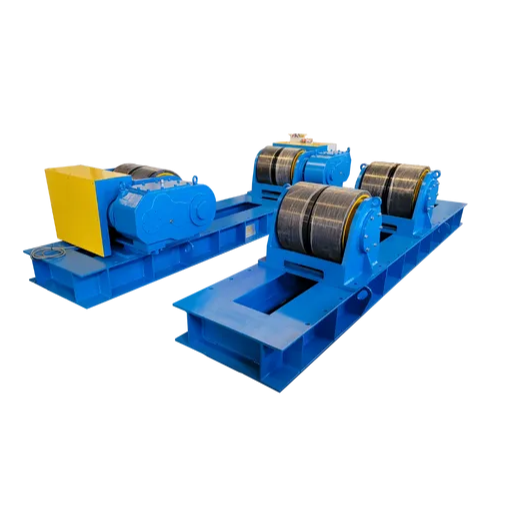
As the name suggests, welding rollers are used during rotating and supporting cylindrical workpieces, also known as ‘spindles’, which require precision, uniformity, and careful attention to detail. Unlike other roller types, like pipe rollers, which rotate workpieces, welding rollers can sustain extreme temperatures and heavy loads at the same time. Moreover, different rollers do not possess alignment and speed settings controls. Also, imparting welding in steel or any other material requires robust constructions because parts are subjected to tremendous strains; so reliable welding rollers are made from highly durable materials to withstand extreme conditions. As such, for purposes where consistent rotation and precision are necessary, welding rollers are ideal when compared to other devices that serve generic purposes.
Welding Positioners vs. Welding Rollers
Welding positioners offer accurate rotation and placement of different workpieces, while welding rollers specialize in rotating cylindrical pieces such as pipes and tanks.
| Feature | Positioners | Rollers |
|---|---|---|
|
Purpose |
Precise rotation |
Cylindrical rotation |
|
Application |
Varied shapes |
Pipes, tanks |
|
Flexibility |
High |
Moderate |
|
Load Capacity |
Moderate |
High |
|
Automation |
Advanced |
Basic |
The Advantages of Using Idler and Driver Rolls
Idler and driver rolls are key parts in welding and handling materials, and these parts have many advantages, five of which we will discuss below:
- Enhanced Control and Superior Stability
When these rolls are used, smoother movement of the workpiece can be maintained, ensuring great stability and rotational control, which leads to proper welding quality.
- Improved Load Distribution
The weight of the material is shared equally without creating undue force on the equipment, thus eliminating any chances of damaging the workpiece.
- Reduced Equipment Wear
Aiding in material movement minimizes friction and stress, which idler and driver rolls facilitate, thus prolonging the life of welders and other machinery.
- Greater Efficiency in Material Handling
Downtime and productivity are hindered in industrial settings, but idler and driver rolls can streamline and efficiently make those processes.
- Versatility in Applications
Adaptability marks idler and driver rolls because they can seamlessly be tailored to different sizes, weights, and shapes of materials.
These advantages also ensure that idler and driver rolls are useful additions to all types of welding setups while guaranteeing dependability and heightened productivity.
Understanding the Functionality of Pipe Stands
During industrial processes such as welding, cutting, or fabricating, pipe stands are necessary to help support, align, and stabilize pipes. As a very common piece of equipment found in most job sites, they aid in keeping pipes secure and in position, which is vital for productivity and safety.
Modern pipe stands are made to be adjustable to fit a notable range of pipe diameters and weights. For instance, heavy-duty models can bear loads of more than two thousand five hundred pounds, and they are suitable for massive industrial or construction projects. Furthermore, many pipe stands have rollers or casters, which aid in moving and fixing the position of a pipe during operations, effectively reducing the manual work and time required.
Apart from their functionality, the use of alloys and stainless steel in the making of pipe stands has greatly enhanced their resistance and durability to corrosion. This ensures their efficient usage even in extreme conditions. Pipe stands also come with added safety features such as locking mechanisms and other stability aids, which only shows their role in maintaining safety in the workplace.
Investing in good-quality pipe stands boosts productivity and efficiency and reduces pipe tear and wear, making it a cost-effective solution for long-term operations.
How to Select the Right Welding Roller for Your Project
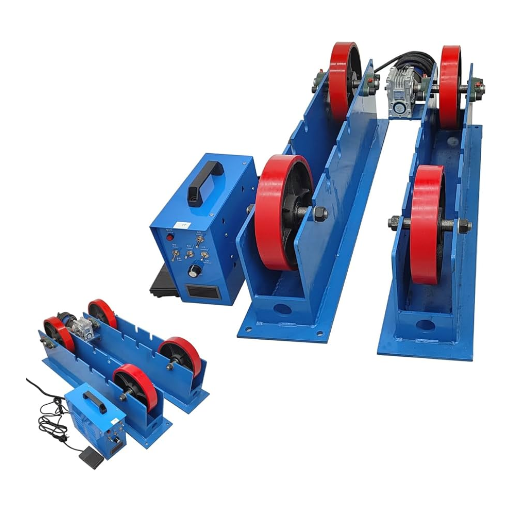
Selecting a welding roller for your project has many challenges, including customized design specifications, precision tracking within desired tolerances, and load-bearing capabilities. Determine the materials’ nature, weight, and size first to jump-start in the correct category. Identify the basic shapes to be welded, whether cylindrical or irregular. Be sure to choose rollers built for motion, exact placement, and controlled rotation.
Focus on round ring and cylinder surface roughness or finish because it significantly impacts grinding, machining, and fabricating. Adjustable height and speed settings are desirable to fine-tune the welding roller to the task. Operability is equal to all other machine tools of the welding device. Where adjustability permits flexibility and maximized productivity, fixed aspects define minimum requirements. Select a device made of strong materials, a support system, and other structural elements to keep the device weightless yet robust and safe from wear.
Lastly, check if the equipment limits the degree to which the user can be exposed to or controls the mechanical hazards, because a poorly engineered system can expose users to undue risk.
Factors Influencing Load Capacity of Welding Equipment
- Material Composition
Welding equipment is greatly impacted by the specific type and grade of the material used, as it has far greater welding equipment load capacity. Welding takes high-strength alloys or reinforced frameworks as they are more durable, improving performance significantly under extreme loads.
- Bracing configuration and Frame shape
Support frames and their geometry are also very important, as the construction of the equipment, including the frame shape and support structures, helps in the better functioning of the aid. Properly calibrated designs even out the mechanical stress of critical components contracted by braces.
- Motor Power and Usage
The motor power output impacts how far the equipment can be loaded. Heavyworks will require motors with higher torque and greater output efficiency to bear stress better and increase performance and yield.
- Roller size and hoses
Well-positioned and larger rollers will have increased capacity to load, support, and balance weight. The number of rollers affixed will also impact the distribution of heavy loads to increase overall stability.
- Outer loads correction factors
Conditioned externally, like weather, humidity, or even temperature, certain corrosive factors can affect the yield weld capability per the design unit strength of the equipment. Applying a proper coat of maintenance will significantly mitigate these impacts.
Identifying the Right Kind of Welding for Your Vessel
Focusing on the construction of your vessel, it is first essential to know all the requirements detailed in the blueprint so that the engineering and architectural design are done accurately. Selecting a vessel’s welding technique requires considering many factors, including MIG (Metal Inert Gas), TIG (Tungsten Inert Gas), and other forms of welding. Most commonly used for metals, MIG welding is the most efficient type of welding procedure for lightweight metals. In contrast, TIG is best for those vessels that require detailing at a finer scale, and high-grade thinner materials that withstand corrosion. For vessels of a ship’s hull (heavy-duty applications), such as industrial-sized, stick welding (shielded metal arc welding) is the most helpful since it accommodates rough environmental settings. Using newer welding technologies with proper training ensures the best strength, steadfastness, and efficiency in cost while constructing or repairing a vessel.
Reference Sources
- “Research on microstructure and properties of 3D plasma spray welding repair layer of continuous casting segmented rollers” (Li et al., 2023): This 2023 paper investigates repairing continuous casting rollers using 3D plasma spray welding. The methodology involves experimental testing with varying welding currents to analyze microstructure, hardness, abrasion resistance, and thermal stability. Key findings indicate that a 160 A welding current produces a more uniform layer with improved properties.
- “Gradient Structure Design and Welding-Hammering Hybrid Remanufacturing Process of Continuous Casting Rollers” (Zhang et al., 2022): This 2022 paper proposes a hybrid remanufacturing process for continuous casting rollers, combining welding and hammering. The methodology includes numerical simulation to analyze failure modes, gradient structure design, development of specialized equipment, and experimental optimization of process parameters. The key finding is a significant (100%) increase in roller service life compared to traditional methods.
- Top Welding Rotator Manufacturer And Supplier In China
Frequently Asked Questions (FAQs)
Q: What are adjustable pipe rollers used for in welding and turning?
A: Adjustable pipe rollers are essential tools used in welding turning to facilitate the manual welding process of cylindrical objects, ensuring they are positioned correctly for efficient welding.
Q: How do welding turning rolls improve the pipe welding process?
A: Welding turning rolls improve the pipe welding process by providing stable support and enabling the rotation of cylindrical workpieces. This allows for consistent and high-quality welds throughout the entire length of the pipe.
Q: What is the carrying capacity of adjustable pipe rollers?
A: The carrying capacity of adjustable pipe rollers varies depending on the model, but they are designed to accommodate a wide range of weights, making them suitable for various welding projects.
Q: Can adjustable pipe rollers be used for manual and automated welding?
A: Adjustable pipe rollers can be used for both manual and automated welding processes, providing flexibility in different welding applications.
Q: What materials are typically used to construct welding turning rolls?
A: Welding turning rolls are often constructed using polyurethane for the rollers, which provides durability and excellent grip, enhancing the efficiency of the welding process.
Q: How do I choose the right turning roll line for my welding project?
A: When choosing the right line of turning rolls for your welding project, consider factors like the diameter of the cylindrical workpiece, the weight it needs to support, and whether you need a single-drive or a dual-drive system for optimal rotation.
Q: What features should I look for in adjustable pipe rollers?
A: Look for features such as adjustable width, robust carrying capacity, quality of materials (like polyurethane), and the ability to accommodate the rotation of cylindrical objects smoothly.
Q: Are there specific adjustable pipe rollers designed for heavy-duty welding applications?
A: Yes, there are specific adjustable pipe rollers designed for heavy-duty welding applications that can handle larger diameters and heavier weights, ensuring stability and safety during the welding process.
Q: How do I maintain the adjustable pipe rollers to ensure longevity?
A: To maintain adjustable pipe rollers, regularly check for wear and tear, clean the rollers to remove debris, and lubricate moving parts to ensure smooth operation during the welding turning process.


