
In contemporary construction and structural design, steel is a core material to consider. From various forms of steel, H-beams, in particular, wide-flange beams, are selected for their multi-functionality and durability for good reason. There is no doubt that H-beams are used in the construction of tall buildings, bridges, and many industrial plants, as they are essential for increasing lifespan and providing architectural flexibility. This upper level of the study will focus primarily on H-beams, explaining the features that make them distinct from other construction materials, the specific advantages that come with their use, and an enumeration of the fields where H-beams are utilized. By the end of it all, you should understand what makes this type of component appealing to both professionals and laypeople.
What is H-Beam Steel?
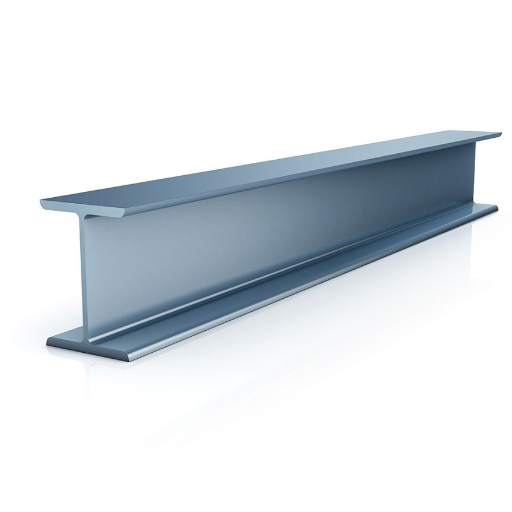
A H-beam is a structural member that has an H-shaped cross-section. This type of beam is primarily designed to carry heavy weights while also ensuring firmness and levelness. The flanges and web are equidistant and very stiff, thus increasing their strength and resistance against bending. Higher load-carrying capacities are possible when compared to other metal beam sections. This particular steel type is highly popular for various construction applications, including buildings, bridges, and mechanical supports. Also provided is the proper design for additional purposes by outsourcing industrial buildings.
Definition of H-Beam and Its Structure
An H-beam, also known as a wide flange beam, is a type of structural steel beam with a cross-section resembling the letter H. It is composed of horizontal flanges that connect to a solid web, which helps extend the strength of the segment. The web is often used to prevent shear forces from having a stronger bearing on the beam. Whereas moments or torque help the inward bending, causing the beam to develop curves when subjected to heavy construction work in buildings. One of its benefits is the constant cross-section of this beam, and the forces exerted by the web cross-flanges can be equal, which strengthens the section uniformly.
According to the most recent statistics available, a large number of H-shaped beams are used in the present-day construction field, and they have well-established their cost-effectiveness as well as adaptability. It is most commonly used in the construction of multi-storey buildings, the building of especially long-span structures, or extremely long frames, where the purpose involves supporting multiple design loads. Additionally, advancements in steel mending technology have enabled the production of shapes that were previously considered difficult or nearly impossible to achieve, including H-beam sections with customized dimensions, thereby enhancing performance in various applications. The perfect balance between durability and resource conservation in this case is sustainable construction.
Comparison with Other Beam Types
H-beams, I-beams, W-beams, S-beams, Box beams, and T-beams.
|
Parameter |
H-Beam |
I-Beam |
W-Beam |
S-Beam |
Box Beam |
T-Beam |
|---|---|---|---|---|---|---|
|
Shape |
H-shaped |
I-shaped |
Wide flange |
Standard flange |
Box-shaped |
T-shaped |
|
Load |
High |
Moderate |
High |
Moderate |
High torsion |
Moderate |
|
Weight |
Heavy |
Light |
Moderate |
Light |
Heavy |
Moderate |
|
Span |
Up to 330 ft |
33-100 ft |
Varies |
Small |
Short |
Short |
|
Flanges |
Wide, thick |
Narrow, thin |
Wide, parallel |
Tapered |
Enclosed |
Single flange |
|
Web |
Thick |
Thin |
Thick |
Tapered |
Enclosed |
Thin |
|
Use |
Large buildings |
Support columns |
Bridges |
Shipbuilding |
Cranes |
Concrete slabs |
|
Twist Resist |
Moderate |
Low |
Moderate |
Low |
High |
Low |
|
Versatility |
High |
Moderate |
High |
Low |
Low |
Moderate |
Specifications and Grades: ASTM A992, A36, and More
ASTM A992, A36, A572 GR 50, and their key properties.
|
Parameter |
ASTM A992 |
ASTM A36 |
A572 GR 50 |
|---|---|---|---|
|
Yield (ksi) |
≥50 |
≥36 |
≥50 |
|
Tensile (ksi) |
65 |
58–80 |
65 |
|
Elongation |
18–21% |
≥18% |
18% |
|
Carbon (%) |
≤0.23 |
~0.26 |
≤0.23 |
|
Weldability |
High |
Moderate |
High |
|
Seismic Use |
Yes |
Limited |
Yes |
|
Cost |
Moderate |
Low |
Moderate |
|
Applications |
High-rise, bridges |
General structures |
Bridges, frames |
Manufacturing Process of H-Beam Steel

The manufacturing of H-beams is a process that involves various specializations, and the objectives of design and architecture are rarely questioned. In this article, I aim to explore the magic that unfolds before our eyes during the transformation of raw materials. This turn of events will enhance the consumer’s confidence that the beams will meet the required level of tensile strength. This encompasses everything, from the careful selection of steel to the rolling techniques, and is not necessarily limited to the final result. Whether an architect, an engineer, or a layperson interested in the advancements in construction technology, there are many layers to the design process as they explore the indispensable use of H-beam steel in the industry.
Steel Production Techniques: Carbon Steel and Alloy Steel
Steel production techniques include Basic Oxygen Steelmaking (BOS), Electric Arc Furnace (EAF) steelmaking, Secondary Steelmaking, Casting, and advanced methods such as Electro-Slag Remelting (ESR) and Powder Metallurgy.
|
Parameter |
Carbon Steel |
Alloy Steel |
|---|---|---|
|
Main Element |
Iron + Carbon |
Iron + Alloys |
|
Strength |
Moderate |
High |
|
Corrosion |
Low |
High |
|
Cost |
Low |
High |
|
Weldability |
High |
Moderate |
|
Heat Treat |
Limited |
Extensive |
|
Applications |
Construction, tools |
Aerospace, machinery |
Quality Control in H-Beam Production
When it comes to H-beam production, quality control is considered a comprehensive activity aimed at ensuring that the product meets industry specifications and customer requirements. In real life, manufacturing involves cutting-edge technologies, such as automated laser measurement systems and ultrasonic or radiographic tests, to identify any faults in the steel profiles. Each H-beam must undergo an extensive verification procedure to ensure the accuracy of the measurements, weld adherence, and material homogeneity. Such tests are aimed at ascertaining that the steel has the right content of carbon, manganese, and other elements that would otherwise strengthen the structure.
Reducing waste by recycling and other measures, including the use of techniques. Nowadays, many enterprises are incorporating eco-friendly methods, including reducing and recycling waste, as well as mitigating greenhouse gases. Furthermore, coating the surfaces of the production with AI and machine learning is expected to give companies control over any possible defects and improve the alignment of instruments and equipment during the process, ultimately enhancing the quality of the output. These all depict a high degree of serviceability of innovations in addressing building challenges, whereby the sector is described in terms of the defined output.
Finishing Processes: Coated Steel and Galvanization
The usage of coated steel and galvanization contributes significantly to growth in the construction and manufacturing sectors. The durability of metal items is improved, the lifespan of the components prolonged, and the finished products more advanced. Galvanization involves bonding a cloud of molten zinc to steel or iron, which prevents rust and corrosion. This can be achieved through plating methods, such as hot dipping, wherein the metal is plunged into a 4500°F molten zinc bath, thereby forming a superior fence in contrast to the destruction around the coated surface.
Additionally, when it comes to couture steel, it is undoubtedly about applying different coatings, such as polymeric paints or other specially made paints, to provide an overcoating that enhances the aesthetic appearance and provides more protection to the steel. These coatings are designed for harsh conditions, such as adverse weather, high exposure to sunlight, and physical damage, making them suitable for any structural or artistic project.
This is commonly referred to as adding galvanizing to the metallic coating. It is claimed that this facilitates boosting the energy of the coated product and prolongs the shelf life of metalized products when used in extreme operational conditions.
Advantages of H-Beam Steel Over Other Beams

- Strength and Load-Bearing Capacity
The role played by H-beam steel in terms of strength is greater compared to other types of beams, as it has larger flanges and a thicker web. Hence, it is capable of bearing larger loads and longer spans.
- Versatility
The configuration and form of the H-beam section make it versatile for various construction applications, including buildings, bridges, and other industrial structures. The H-beam is also used for the erection of a structure, as it is very stable and has built-in safety factors.
- Cost-Efficiency
As seen also in its weight profiles and other components, the use of h-beams goes far in achieving weight and size efficiency, especially in large sizes of construction.
- Durability
There is also improved performance in terms of deflective behavior, as the flange depth is increased according to the L/H ratio of the flange. This increase is primarily due to the ductility of the over-stiffened H-section.
- Ease of Installation
This aspect also contributes to the ease of construction due to the uniform features of the H section, with no alternatives. Without any wrinkles on the edges of flanges, along with the decreased bending moments, the assembly time and labor costs were reduced.
Strength and Load-Bearing Capacity
Steel structures are known for their lateral stiffness owing to the fast and easy connections. Numerous prefabrication methodologies facilitate the rapid installation of steel structures. The good connectivity of each fabricated unit allows for a reduction in the number of gravity columns, and consequently, reduces the weight of the superstructure. It is also important to mention that there is no fear of change in the resistance or stiffness of the structure. This is particularly significant in tunneling projects, where ground movement can have a severe adverse effect on both the formwork and the reinforcement.
Cost-Effectiveness in Construction Projects
W-beams and I-beams can also offer excellent economy due to their strength properties and visual appeal, thus saving on project materials and allowing for efficient work to be done. According to the most recent reports, the currently available methods for manufacturing structural beams have resulted in lower costs for structural material supply, which is notably beneficial for large buildings. Additionally, the need for multiple structures to support the beams is reduced by the flexibility features, allowing the beams to span long distances, a cost-saving technique. All these characteristics are a perfect match for the need for H-beams, which, due to this feature, are utilized in construction more frequently, as they provide long-term savings within the limits of the required present-day building rules and codes, as well as those of safety.
Versatility in Design Applications
H-beams offer improved performance, with numerous benefits that can be accrued from this rolled steel design in various construction and engineering segments. The lowered weight and increased stiffness, combined with the ease of fabrication and customization of design features, render it suitable for varied applications. Here are five such areas in the designs where the I-sections perform exceptionally well:
- Residential Construction
- H-segments are one of the common materials used in residential projects to enable the construction of slab-to-slab connections, ensuring safety and rigidity.
- This material enables the construction of expansive spaces by reducing the number of columns and walls required to support loads.
- Bridges and Overpasses
- These are some of the structures that can benefit significantly from the design and construction of H-beams, given their considerable capacity to support bending and shear due to their substantial depth.
- They are built to withstand high traffic loads and years of corrosion, yet they remain intact.
- Industrial Buildings
- The roles of economics, efficiency, and design play a key influence when beams are used in a frame for a warehouse, factory, or other commercial buildings.
- These beams create vast open spaces that are ideal for specific manufacturing or storage purposes.
- High-Rise Buildings
- In the construction of tall buildings (e.g., skyscrapers and towers), H-beams are used to provide structural support for resisting lateral forces, which are often overlooked in design-based models.
- Furthermore, the extent to which they can handle large amounts of both vertical and horizontal loads has led to their incorporation in many other building projects in the city.
- Marine and Offshore Construction
- H-beams are also extensively used in constructing wharves, jetties, and offshore drilling rigs.
- Galvanized and stainless steel H-beams have features that resist rusting, allowing them to last longer in water bodies, for example.
Thanks to their outstanding functionality for meeting specific structural needs, the superiority of H-beams in design is truly admirable.
Applications of H-Beam Steel in Various Industries
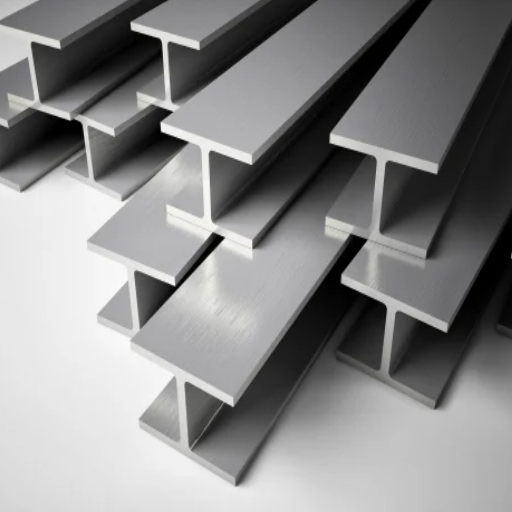
Given its high strength and resilience, H-beam steel is an essential element in several industries, including but not limited to:
- Construction Industry
- It is frequently employed in constructing skeleton structures, bridges, and other large-scale objects due to its characteristics that guarantee stability and support for heavy loads.
- Energy Sector
- The effectual construction of power plants, mainly due to the growing popularity of wind power mills and other premises, would not have been possible without structural improvements of this material.
- Transportation Infrastructure
- in the sphere of railways, motorways, and subways allows for the smooth and safe operation of those systems.
- Shipbuilding
- School and commuted buses, once they eliminated any kind of difference, shared with horse-drawn carriages and the other means of land transportation a similar degree of difference, not because of the same technological development, but because of the same type of transport work.
There are applicants, however, who need assistance with steering, special equipment to be taken inside or outside the bus, or other specific facilities, regardless of the particular route.
Residential and Commercial Construction
Steel H-beams are one of the most commonly used materials in both residential and commercial buildings, particularly in those that require quick and strong structures. Introduced as a type of steel structure almost a century ago, H-beams remain a modern and widely used design. Cantilever or -freely sticking out beams-, L-beams, floor-slab beams, and so on, are still unreasonable to install without auxiliary agents like H-beams due to their unfavourable rising patterns. This is why we find these sections, where numerous arches are installed and their span is infrared-limited only at the borders of the arches, except for the edges of all the beams and their sections. Building constructions cannot be considered complete without an H-beam, as this material is an essential element in the construction. This is such an excellent material that, even in front of the great idea of making an inconceivable evaluation in energy consumption of modern buildings, its use will indeed not be abolished.
Infrastructure Projects: Bridges and Industrial Facilities
The use of H-beams in large-scale projects, such as bridges and industrial buildings, reached new highs due to their high quality and huge capacity. The number of searches asking about the availability of “H-Beams for industrial purposes” is clearly on the rise, prompting the fact that the benefits of this material are gaining recognition. As far as the bridges are concerned, the high quality of H-beam design enables the structure to be stabilized even when it is subjected to peak loading or seismic action. For industrial buildings, it provides a strong foundation for the installation of equipment and heavy machines on the frames.
Why is H-beam steel becoming a preferred choice for infrastructure projects?
The reason people often use H-beam steel is that it has a very high strength-to-weight ratio, is quick and easy to assemble, and is environmentally friendly. The construction also employs a noble technique, as it requires the least amount of civil work, minimizing cost while maximizing performance, thereby accounting for both price and ecological parameters. With such properties, it is difficult to imagine H-beam steel not playing its role in the current wave of ambitious and enormous infrastructure development.
Specialty Uses in Engineering and Fabrication
H-beam steel is prized for its efficiency in various industries, including engineering and manufacturing. As many clients in construction companies seek their product, it is no wonder that it is used to supply numerous layouts for bridge construction, particularly for working on tall and large industrial structures, as well as building skyscrapers. The high carrying capacity of the material ensures that there are four amputations of high stress, for example, the support structures of buildings in earthquake zones. Additionally, constant changes in the shape of structures can be achieved by using H-Beam steel, making it highly suitable for applications in marine structures and offshore rigging. With increasing encouragement in the construction industry, its ease of reuse makes its use for sustainable purposes even more beneficial. It has been noted that many other applications of metal do not exhibit signs of decline in the foreseeable future.
Choosing the Right H-Beam Steel for Your Project

The appropriate H-beam steel plate can be selected for your work by first outlining the actual requirements, taking into account the installed load, ambient influences, and the customer’s demands. For instance, concerning projects developed in aggressive environments, such as operations closer to the coast or industrial areas, steel must be applied only to H-beam steels with higher corrosion resistance values. If shipping them is a problem, use those that are lightweight but can withstand the expected pressure levels. The other bottom line is that the dimensions should be related to the amount of power being transmitted by such a beam. Use reputable and cost-effective providers for all work to ensure that every detail meets both customer and industrial standards. An experienced engineer should be able to provide tailored suggestions and recommendations specific to your project.
Factors to Consider: Size, Load Capacity, and Material Grade
Key factors include size, load capacity, material grade, strength, corrosion resistance, machinability, and cost.
|
Parameter |
Size |
Load Capacity |
Material Grade |
|---|---|---|---|
|
Definition |
Dimensions |
Max weight support |
Steel composition |
|
Impact |
Affects fit |
Ensures safety |
Determines properties |
|
Key Factors |
Length, width |
Tensile strength |
Strength, corrosion |
|
Examples |
Beams, plates |
Bridges, buildings |
ASTM A36, A992 |
|
Cost |
Moderate |
High |
Varies by grade |
Common Mistakes in Selecting H-Beam Steel
Choosing a suitable H-beam and how it will play a role in avoiding drastic cost loss in the case of a structural default. Below are some mistakes that have happened:
- Overlooking Load Requirements
This is one of the most serious drawbacks, which is failing to identify and calculate the appropriate load that must be accomplished within the work. Should such an error occur and the beam is unable to hold the weight, it may cause the beam to collapse or work in a hazardous manner.
- Ignoring Material Grades
It is essential to note that not all types of H-beam steel are of the same quality. Inappropriate selection of the steel grade, often due to overlooking factors such as tensile strength, corrosion resistance, and ductility, can also lead to performance problems in the beams, especially in harsh environmental conditions.
- Improper Dimensions
In terms of sections, incorrect beams raising, that is to say, those which are too inadequate or excessively cumbersome, and thereby, inefficiencies are bound to transpire. Therefore, the effectively falling beams are too small to be used as a structural element, while the massive beams unnecessarily increase the costs.
- Lack of Certification
Integrating any unauthorized or inappropriate steel exposes the health and safety of the people in that vicinity and violates environmental laws. Thus, always ensure that only reputable sources are utilised when searching for H-beam steel that can be appropriately certified to standards, whether for the industry or local communities.
- Ignoring Environmental Conditions
It is essential to note that environmental factors, such as moisture or chemical exposure, can have a profound impact on the properties of steel. Picture beams not treated or with coatings that are inappropriate to the specific environmental conditions; that structure is bound to have corrosion and, finally, a complete breakdown.
- Overreliance on Cost Savings
Cost-effectiveness is an essential aspect of every construction project. Still, quite often a common mistake arises due to the Chinese whispers being told and related to cheap labor over quality. Opting for cheap, low-grade steel will provide economic benefits in terms of incurring the initial costs, but it will also bring forth higher maintenance costs and depreciation of PPE.
These common pitfalls are not difficult to overcome, and by effectively considering the actual requirements of a given task, one can ensure the best possible available H-beam steel, while also minimizing medium- and long-term project risks and expenditures.
Consultation with Structural Engineers
Seeking the advice of a construction engineer is necessary to make informed decisions in the market for H-beam steel columns. Through years of experience, I have found that whenever a job is terminated and the construction price calculation is complete, I always seek expert help. An experienced manager can help identify the project’s specific needs, select suitable materials, and ensure compliance with safety standards. It is for this reason that the construction industry has found it necessary to utilize consulting services to mitigate most of these high-potential risks in optimizing project design.
Reference Sources
-
University of California, Davis
Moment Of Inertia Of H Beam
This source discusses the material properties and calculations related to H-beam steel. -
Purdue University
Shear Design of Beams Shear Strength
A detailed academic document on the shear design and strength of beams, including H-beams. -
CiteSeerX (Pennsylvania State University)
Experimental Study on Beam-Column Connections of H-
This paper explores experimental studies on H-beam connections in structural applications. -
ResearchGate
The application and foreground of H-beam in steel structure
A research publication discussing the applications and advantages of H-beam steel in construction. -
American Council on Education (ACE)
5 Inertia Tips I Beam
This source provides insights into the structural properties and uses of I-beams, which are closely related to H-beams.
Frequently Asked Questions (FAQs)
Q: What is H beam steel?
A: H beam steel, also known as H-section steel, is a type of structural steel with a cross-section resembling the letter “H”. It is designed to provide high strength and stability for various construction applications. H beams are rolled using universal rolling mills and are widely used in buildings, bridges, and retaining walls due to their ability to resist bending.
Q: What are the key characteristics of H beams?
A: The key characteristics of H beams include their broad flanges, high strength-to-weight ratio, and excellent mechanical properties. These beams are designed to support heavy loads and are often used for structural purposes. They are available in various steel grades, including carbon steel and low-alloy steel, to meet specific project requirements.
Q: How is H beam steel produced?
A: H beam steel is produced by rolling a steel plate between the upper and lower horizontal rolls in a universal rolling mill. This process shapes the steel into the H profile, ensuring uniform dimensions and properties. After rolling, the beams may undergo additional methods, such as coating or galvanization, to enhance their durability and resistance to corrosion.
Q: What types of construction projects utilize H beams?
A: H beams are used in a variety of construction projects, including commercial buildings, industrial structures, bridges, and retaining walls. Their design allows them to support critical loads, making them a popular choice for structural applications where strength and stability are essential.
Q: What is the difference between H beams and W beams?
A: The main difference between H beams and W beams lies in their flange width and overall proportions. H-beams have wider flanges compared to W-beams, which typically have a more tapered shape. This difference in design affects their load-bearing capabilities and suitability for specific construction applications.
Q: What is the significance of the American Institute of Steel Construction (AISC) with H beams?
A: The American Institute of Steel Construction (AISC) sets the standards for the design, fabrication, and erection of steel structures, including H beams. Compliance with AISC standards ensures that H beams meet safety, performance, and quality requirements for structural purposes, contributing to the integrity of construction projects.
Q: What are some common types of steel used for H beams?
A: Common types of steel used for H beams include carbon steel, low-alloy steel, and stainless steel. Each type of steel has unique properties that make it suitable for different applications. For instance, stainless steel H beams offer enhanced corrosion resistance, while carbon steel beams provide excellent strength and affordability.
Q: How do mechanical properties affect the performance of H beams?
A: The mechanical properties of H beams, such as yield strength, tensile strength, and ductility, play a crucial role in their performance. These properties determine how well the beams can withstand loads, resist bending, and endure various environmental conditions during their service life.
Q: What are seamless steel pipes, and how do they relate to H beam steel?
A: Seamless steel pipes are manufactured without welded seams, providing uniform strength and durability. While they are not directly related to H-beam steel, both products are essential in structural applications. They are often used in conjunction with H-beams in construction projects that require high-quality steel components.


