
The welding industry is facing a dramatic transformation due to changes in automation and robotics. One of the most significant advancements in this sector is the robot arm welder – an innovative, performance-enhancing, and sturdy piece of equipment. This new technology not only expedites the procedure but also aims to minimize potential errors and associated workplace risks, which are rightly described in terms of resilience to hazards and failures. In this text, we will further discuss the history of robotic welding systems, examine the advantages of such equipment, and conclude that it will be a necessary tool for employees in any industry branch. We hope you enjoy this review, which discusses how these advanced machines are shaping the future of welding.
Understanding Robotic Welding
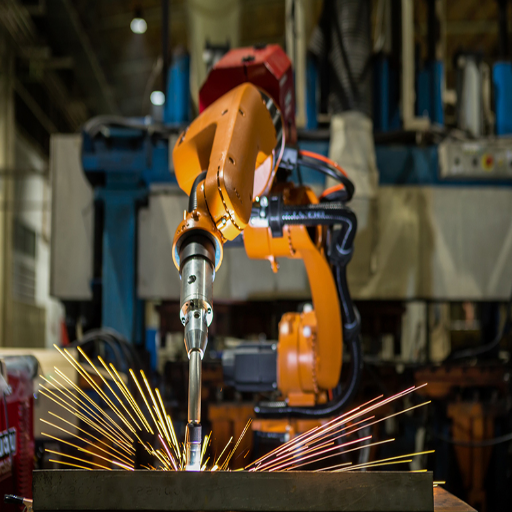
The technique of robotic welding involves the deployment of robots to control welding positions and parameters. It is carried out instead of human labor for the sake of full sovereignty or in combination with existing resources. These deployed robots are designed to endure continuous and accurate welding operations; hence, they are always regarded as ideal for such repetitive or mass production work. This technique is primarily used to reduce errors and increase efficiency in the automotive, aerospace, and manufacturing industries, among others.
What is a Robotic Welding System?
An evolution of automated procedures has advanced as a replacement for manual welding, encompassing welding processes in an automatic format. This includes the use of suitable welding systems, such as robotic arms and welding equipment, to achieve precision, speed, and consistent performance. Robotic welding systems combine machines such as sensors, robotic manipulators, and a controller, which work in conjunction with appropriate software. Therefore, the relevant modern systems can incorporate machine learning and vision systems. The last type of system utilizes laser sensors. The system involves various additional welding processes, including MIG, TIG, laser welding, and resistance welding, among others. This enables a variety of tasks to be performed. Typical robotic welding systems in such processes as automotive production and the aerospace industry, just to name a few, enhance efficiency and reduce errors associated with human activity. In addition, they possess the function of improving Web safety as well as increasing efficiency levels.
Types of Welding Robots
- Articulated Robots
Robots or multipurpose robotic manipulators with rotary joints are the most common type in industries that utilize welding. They are designed to provide flexibility and greater agility in any situation. They can perform various welding techniques like MIG, TIG, and arc welding. Especially in the automotive sector, these robots are favored entirely on the basis of their cost and degree of accuracy.
- Cartesian Robots
Cartesian handling robots, also known as Gantry Handling Systems, have three linear axes (X, Y, and Z) along which motion takes place. These are most suitable for the spot, arc, or MIG/MAG welding operations, which require a high level of precision and high repeatability. Their fundamental nature makes them cost-effective, and in most instances, they are used for applications such as laser and spot welding in the electronics and metal industries.
- SCARA Robots
For fast performance, “SCARA” (selective compliance assembly robot arm) robots are used most of the time in small-scale welding applications. The fact that their structure is compact and they move quickly means they are most effective in performing repetitive welding duties, especially in microwelding small electronics or highly intricate assemblies that require lightweight structural properties to be assembled with precision.
- Delta Robots
In contrast to traditional x-y type mechanisms, where the upper body carries the workspace above the table, Delta robots work in a table-top air mechanism. The pad instead carries the workspace at the bottom, above the table, whereas the limbs have the tool.
- Collaborative Robots (Cobots)
What are collaborative robots, or “Cobots” after all? Simply put, they are any robotics that can work well alongside humans, sans the risk of industrial accidents. They are often packed with sensors and safety gear that enable them to do piecework without posing a significant danger to the human worker. In recent years, Cobots have gained traction for high-variety, low-volume welding, especially in automated manufacturing environments with volatile production conditions.
Let’s now examine the significant types of welding robots and their unique applications.
Key Components of a Welding Robot
- Robotic Arm
One of the most fundamental organs of a welding robot is the robotic arm. It is modified to enable it to make reliable, specific movements required in welding processes. It allows the robot to assume elevated and complex poses while maintaining an exceptionally high level of accuracy.
- Controller
It shall be noted that the controller is the most significant component of a welding robot as it acts as the ‘brain’ of the system. It controls all inputs, follows the program, and issues commands to the poles, the welding head, or other mechanical components to make them adhere to the required operation.
- Welding Torch
The welding torch is the terminal point that exposes the welding arc or heat to the workpiece during welding. Both processes occur through the welding torch, which is manufactured to ensure similar quality in welding and designs for specific welding processes, such as MIG, TIG, and plasma welding.
- Power Supply
The power supply facilitates the generation of a welding arc and provides the necessary electrical energy. It is used to maintain the arc at a constant level for proper heat control.
- Sensors and Cameras
To enhance welding processes, sensors and cameras are utilized in the monitoring and feedback system. That is designed to help the robot identify changes in the item’s location and technical condition, and weld reliably.
Benefits of Robotic Welding
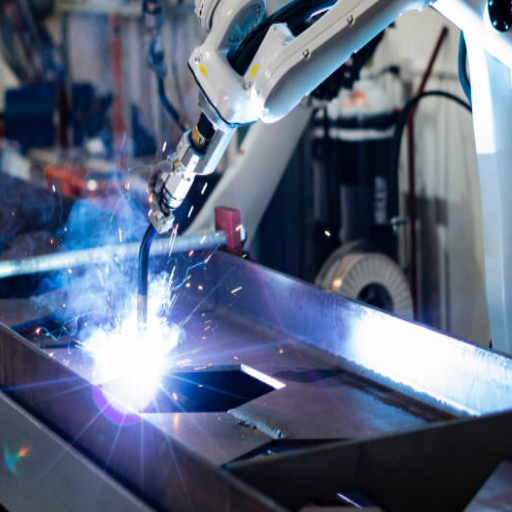
There are several benefits associated with robotic welding implementation, which elevate its value in many sectors:
- Improved Quality and Consistency
Robots have the unique advantage of delivering accurate and consistent welds, resulting in uniform quality across all components produced and minimizing manufacturing imperfections.
- Enhanced Productivity
Manual operations are significantly slower than automated systems; operating at higher speeds for longer shifts leads to a rise in performance and profits.
- Cost-Effectiveness
Robotic welding, which involves a reduction in the use of manual labor, in materials waste handling, and planned/unplanned repairs due to fewer welding errors, enables more effective operation of robotic welders in the long run.
- Worker Safety
As robots perform more hazardous tasks, the risks associated with human factors, such as exposure to fumes or heat, and the risks of burns or other injuries, are mitigated.
- Scalability
Robotic system encompasses integrated management techniques that are adjustable according to the needs of the operation in terms of scale, whether scaled down or up.
Enhanced Precision and Quality
When it comes to welding, nothing beats robotic welding. Their welding speed is breakneck, hence the time to produce a few pieces is less than the expected time. Furthermore, with the help of technologies such as AI and Machine Learning, they adjust online to achieve top-notch welding performance. This precision eliminates defects and reduces the need for subsequent treatment of the welded seam, thereby enhancing the physical properties of the joint. These robotic welding systems also provide a range of services, utilizing cameras and sensors for precise part alignment and repetitive work, even when addressing complex tasks. These transformations enable an above-average level of output in the production industries, which is further enhanced by an increase in product life, resulting in a heightened customer perception of the company’s product.
Cost-Effectiveness and Efficiency
Robotic welding equipment is widely promoted and exalted because it is highly efficient and cheap. Cost savings are achieved by reducing unskilled labor costs and material wastage, as these activities are delegated to the implementation team with precision. It is worth noting that the equipment may be rendered functional continuously without actually affecting the final output; these facts enable companies and manufacturers alike to work overtime to meet deadlines and accomplish tasks. This interplay between automation and the ability to stay updated through data ensures the company receives the lowest possible operational costs while providing the best quality products to the market.
Improved Workplace Safety
Elevated degrees of mechanization are admired not only for enhancing process efficiency but also because they play a crucial role in ensuring workplace security. This is in the sense that by assigning mechanical responsibilities, as well as repetitive tasks that are risky to staff, we are doing so. The lesser the confrontation with such dangers, regardless of whether it involves lifting, inhalation of chemical vapors, or close use of machines. There are notable cases, such as the manufacturing and construction sectors, where the introduction of computerized robots and other IoT-powered devices has helped reduce workplace injuries by as much as 20%. Furthermore, real-time monitoring technology provides safety managers with more effective information on dangerous situations and any risks or breaches. This enhances the methods and makes the work environment safer for users. It is these advances, along with measures for safety, that are an explicit leaning in the employment aspect. This goal is largely effective within occupational safety, health, and wellness programs, without compromising productivity rates.
Comparing Robotic Welding to Manual Welding
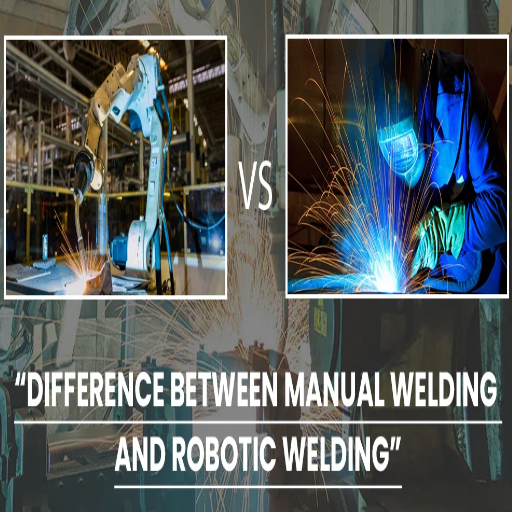
The efficiency, precision, and consistency of the robotic and manual welding processes are worlds apart. In that regard, robotic welding is unbeatable in constant repeat work involving high quantities, due to its reliable work outputs with minimal error. It is dear to all due to a satisfactory work performance record within a minimum time, as well as resource use. On the other hand, manual welding has even higher figures, as one can build just about anything due to the advances in welders that enable them to work with harder-to-weld materials, and even with designs that try to break the welding process. It is, however, less efficient and is subject to human errors more often than its mechanical counterpart. In conclusion, determining which type of welding to use depends on the project’s size, complexity, available funds, and other relevant factors that one considers when undertaking the project.
Quality and Speed Comparison
When considering automated welding and manual welding, one often concludes that high-quality results are achieved more quickly using automatic welding. Many robotic welders can operate at speeds of even three or four times faster than a welding operator, eliminating the time factor in most cases. This contributes to the quality parameters because there will be no errors associated with inaccuracy that cause welding inconsistencies.
On the other hand, manual welding, unlike the former, is slower but flexible in cases that require adjustability. When you have efficient welders, technical tasks and changes that occur unexpectedly are not problematic, unlike the case with robots. However, these benefits are often overshadowed by the fact that the maximum duration is required for task completion, and the prospects of committing mistakes due to tiredness and other human errors are high.
If we’re leaning more towards the area of volume and repetition, then we need a welding robot to perform efficiently and accurately in a very short amount of time. Nevertheless, workers might still be a better choice for specific projects, depending on potential changes in designs or the frequency of output.
Long-Term Cost Savings
For businesses, purchasing robotic welding systems can be a particularly important factor, especially for those involved in large-scale and continuous manufacturing processes. Very accurate, it is also certain that upfront costs for the purchase and installation of robotics are high. However, this results in lower operating costs due to increased production efficiency, fewer errors, and lower simple direct labour charges. Recent figures show that, in some industries where robotic welding systems, for instance, have been implemented, production costs have decreased by almost 30% in just a few years after the system was introduced. This is because they require little to no maintenance and consistently outperform humans.
In the case of manual welding, the approach is considered flexible, depending on the inconsistencies that come with it. Manual welding is costly in most cases, as it often involves open-ended conclusions, making it unsustainable in the long run due to the required skills, training, and the need for error correction. In addition, price is not the only determinant to be considered; businesses must be advanced enough to adopt this solution in production, while also aligning long-term production goals and operational needs. Therefore, combining robotic systems with these proven methods in areas where they can be applied, along with manual work for detailed tasks, often yields the best balance in terms of economic convenience and conformity to standards.
Applications of Robotic vs. Manual Welding
Robotic welding excels in speed, consistency, and safety for repetitive tasks, while manual welding offers flexibility and adaptability for complex or custom jobs.
|
Key Point |
Robotic Welding |
Manual Welding |
|---|---|---|
|
Speed |
High |
Moderate |
|
Consistency |
Excellent |
Variable |
|
Flexibility |
Limited |
High |
|
Safety |
Superior |
Moderate |
|
Cost |
High upfront |
Lower upfront |
Integrating Robotic Welding into Your Operations
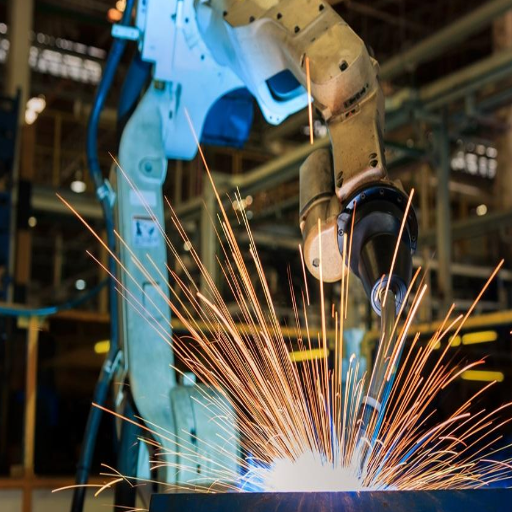
- Assess Your Needs
Examine the kind of welding jobs you undertake to assess whether the use of robotic welding fits with your goals for output. Consider the factors that can influence such decisions, including the frequency of repetitive actions and the quality of designs.
- Choose the Right Equipment
Select the most suitable robotic welding equipment that will contribute to your business. Ensure the models you choose have been successfully used by others, and the same will happen with you.
- Ensure Proper Training
Ensure that personnel or specific teams receive appropriate training to handle and monitor robot welders effectively.
- Start Small
Operational change does not only lie in one program, but in adopting a system that enables you to understand what and how to change, as well as the tools to use as change enablers.
- Monitor and Optimize
Do not let go of the audit process since the production process comes with speed, which can easily erode the quality of the output, which should not happen.
Implementing a robot welding procedure in parts can facilitate a practical and cost-effective transition.
Choosing the Right Welding Robot
A toolbox-sized robotic car has also been introduced, featuring five wheels and capable of operating on all three sides. Still, this type is seldom used because of its expense sodium textarea is controlled by this block element by which the sodium and the Ed block dimensions a block lie within a border of this block element called border Isotropy transform components that combined principle component analysis and that again performs rotate block translational transformation only without the non-linearity of the other binding types.
Collaborative Robots are taking over. With the growing demand for flexibility and user friendliness in industrial robots, there has been an increase, especially for robots that are less cumbersome than their human counterparts. When it comes to such setups, handling scalability while maintaining acceptable product values seems to be another opposing and challenging task. For this reason, choose a robot that is not only reliable but also places a strong emphasis on PM and training, as this is crucial for preventing revenue loss and maintaining consistent production procedures. With due regard to your business needs, marrying the latest technology with applicability will help ensure that your purchase is an investment. A welding robot, for instance, can measure constituents thinner with reduced security once the RP is fully operational.
Training Requirements for Operators
There is a need for specialized training for welding robot operators, both for safety reasons and to optimize the system’s use. They should always cover the foundation subjects, such as the basics of robotic welding systems, programming methods, and maintenance systems. They should also have gained extensive experience in various IT functions, such as controlling simulation software and similar applications.
A recent study suggests that incorporating modules on troubleshooting is crucial to prevent downtime caused by frequent technical issues. It is also essential to undertake practical work by incorporating everyday practices. One company’s stated learning procedure involves updating the system and software, which requires advanced learning among supervisors. It would also enhance employees’ training by providing resources such as video tutorials, handbooks, and expert training on the safe and efficient integration of robots into the organization’s daily activities. Such a cognitive process entails a separate part called the training.
Maintenance Needs for Robotic Welding Machines
To adequately maintain robotic welding machinery, it is necessary to take steps that ensure both the durability of the machine and its functionality, as well as to ensure safety during operation. Any timely maintenance act will include examination of essential components that could be wearing out to prevent unwanted breakdowns. Dust and other substances deposited on the robotic arm and other critical parts shall be removed; otherwise, there can be negative consequences to fine manipulation. Importantly, providing moving joints and mechanisms with the proper oils and greases is very effective in improving mechanical systems and minimizing failures among various equipment.
Aside from the use of the IoT sensors and AI techniques for predictive maintenance, performance monitoring can be carried out even more thoroughly. This is due to the technologies that facilitate real-time information flow, meaning most potential faults can be identified well in advance and solutions prepared for their maintenance. Additionally, updating the machine’s software whenever new updates are available from the fabricator is a good practice, as it ensures that the machine’s functionalities are compatible with the evolving welding methods, thereby enhancing its productivity. Above all, it is the convergence of regular maintenance and advanced technologies that prevents robotic welding systems from failing in any abusive environment and consequently makes them very resourceful.
Future Trends in Robotic Welding Technology
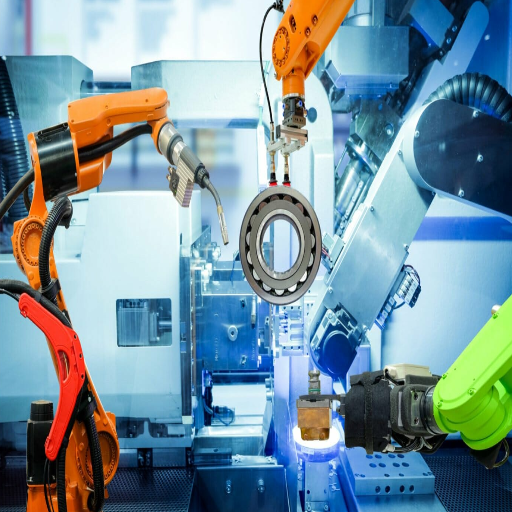
The growing trend in the world of robotic welding involves the usage of machine learning and artificial intelligence techniques to improve the precision and versatility. These algorithms enable robots to adjust the parameters specified for welding on the fly, thereby enhancing performance. The most convenient step is also the quickest application of such development: cooperative robots, also known as cobots. They can safely work with human operators, making it possible to automate any small and many medium-sized factories. Next, the rise of sensor-based technologies and data monitoring has helped drive the adoption of preventive maintenance solutions, further reducing system downtime and operating costs. By combining these ideas, the future of robotic metal welding is expected to be more intelligent, secure, and significantly more productive.
Innovations in AI and Machine Learning
The various sectors surrounding us are rapidly changing due to the advancements in artificial intelligence and machine learning technology. In particular, robotic welding is also undergoing transformation, thanks to the use of new state-of-the-art techniques that enhance work, increase efficiency, or redefine robot capabilities. Five such stage directions include:
- Advanced Computer Vision Algorithms
Powered by deep-learning computer vision, robots can identify, understand, and adapt to the diverse conditions of welding with enhanced precision capabilities. This reduces defects and raises the standard of welding.
- Real-Time Process Monitoring and Adjustment
Mitigating these damages, machine learning can be applied to observe robotically controlled welding processes as they occur through sensors capable of transmitting data in real-time. When flaws are detected immediately, adjustments are made during their onset, allowing for uniformity of work and reducing overreaction.
- Predictive Maintenance Systems
AI-based models and predictive maintenance leverage the machine’s historical and current data to anticipate potential breakdowns, enabling the application of AI to any component breakdown. This particular initiative is designed to help businesses minimize downtime and, in turn, enhance the durability of their robotic systems.
- Autonomous Path Optimization
Now, auto Programming has gained the ability to plan and correct welding path differences. Starting and finishing points, for instance, are helpful because they represent essentially correct programming conditions. This reduces downtime associated with reprogramming, enabling the fastest available welding power in an accurate arc welding process, even in the most demanding manufacturing configurations.
- Natural Language Processing for Programming
Due to the implementation of the NLP mechanism in programming, which enables employees to process texts themselves, it is responsible for the formal and structured interface. Through the interaction that demands results in spoken processing or word commands in programming languages, programming tasks have become much easier for programmers.
The Future of Welding Automation
The future of automation welding is inspiring, as it integrates AI and machine learning. And now we are talking about a possible future of robotics: self-organized robots capable of adapting to fluctuating workloads. This will enhance the possibilities of saving costs and achieving high precision. And NLP is another example of a tool that needs to be emphasized because it overwrites the existing underlying structure by making automation programming more accessible, thus leading to greater acceptance in organizations that appreciate efficiency.
Impact on the Industry
Multiple industries are expected to undergo a digital transformation shortly, as AI and automation are expected to be fully operational by 2022. The demand for AI-powered tools is also significant in the manufacturing, healthcare, and transportation sectors. More so, in the field of manufacturing. Take, for example, the self-optimization feature of robots. The self-optimization capability of robots is responsible for better results and lower error rates, which means that the manufacturing process will be more productive than it was in the past.
Furthermore, in the area of logistics, there is a specific function of machine learning that enables present-day improvements in travel costs and the timeliness of overdelivery. Additionally, tools like natural language processing help are also available, which makes the implementation of systems in the high-growth segment less cumbersome, leading small to medium-sized businesses into the field of mechanization. Such a transition not only enhances overall Industry performance but also stimulates the process of creative destruction through the impulse of innovation, which changes the existing Industrial structure globally.
Reference Sources
- Georgia Southern University: Unmanned Ground Vehicle and Robotic Arm Integration for Automated Welding – Discusses the integration of robotic arms with unmanned ground vehicles for welding.
- Southeast Technical College: Cobot Welder – MTS – Explains the use of robotic arms in welding education and industry.
- Tennessee Tech University: Mobile Robots for Manufacturing – Covers the evolution and application of robotic welding arms in manufacturing.
- PubMed Central (PMC): Research on the Digital Twin System of Welding Robots – Explores digital twin simulations for robotic welding arms.
- Idaho National Laboratory (INL): Robotic Welding and Inspection System – Details a robotic system with articulated arms for welding and inspection.
Frequently Asked Questions (FAQs)
Q: What is a robotic arm welding machine?
A: A robotic arm welding machine is an automated device that uses a robotic arm to perform welding tasks. These machines are designed to enhance efficiency and precision in various welding applications, including arc welding, TIG welding, and MIG welding. By automating the welding process, manufacturers can achieve consistent weld quality and reduce production time.
Q: How does robotic welding improve efficiency?
A: Robotic welding improves efficiency by automating the welding process, which significantly reduces the time taken to complete welding tasks. Industrial robots, such as robotic welding arms, can operate continuously without interruption, resulting in increased throughput in manufacturing environments. This automation enables the completion of complex welding tasks with high accuracy and repeatability.
Q: What types of welding can be performed by a robotic welding machine?
A: A robotic welding machine can perform various types of welding, including arc welding, TIG welding, MIG welding, and resistance spot welding. Each type of welding method has its unique benefits and applications, allowing these machines to be versatile in handling various welding projects across industries such as automotive and manufacturing.
Q: What are the components of a robotic welding system?
A: A robotic welding system typically consists of a robotic welder, a welding power source, a welding torch, and a control system. These components work together to perform the welding operation efficiently. Additionally, many systems include welding positioners to optimize the welding angle and improve access to the weld joint.
Q: How do I teach the robot to perform welding tasks?
A: To teach a robotic arm to perform welding tasks, operators can use programming software that allows them to create a welding program. This involves defining the welding path, parameters, and necessary adjustments for the specific project. Many modern robotic welding systems come with user-friendly interfaces that simplify the teaching process for operators, even those with limited programming experience.
Q: What are the safety considerations when using robotic welding machines?
A: Welding safety is paramount when using robotic machines. Operators should ensure that the work area is clear of obstacles and that safety barriers are in place to protect personnel from the welding arc and fumes. Additionally, proper training and awareness of the machine’s operation are essential. Regular maintenance checks can also help prevent accidents and ensure compliance with safety regulations.
Q: What are the benefits of using robotic welding in manufacturing?
A: The benefits of using robotic welding in manufacturing include increased production speed, improved weld quality, reduced labor costs, and enhanced workplace safety. By automating welding processes, companies can minimize human error and achieve a higher level of precision in their welding applications. This technology also allows for greater flexibility in handling various welding tasks.
Q: Can robotic welding machines be used for custom projects?
A: Yes, robotic welding machines can be programmed for custom projects. With advanced robotic welding systems, manufacturers can create customized welding programs tailored to the unique requirements of each project. This flexibility makes robotic welding suitable for a wide range of applications, from high-volume production to specialized custom welding jobs.
Q: What is the role of collaborative robots in welding?
A: Collaborative robots, or cobots, are designed to work alongside human welders, enhancing productivity without replacing them. These robots can assist with repetitive tasks, allowing human welders to focus on more complex operations. Cobots are particularly useful in environments where manual welding is still necessary, providing a synergistic approach to automate welding processes.


