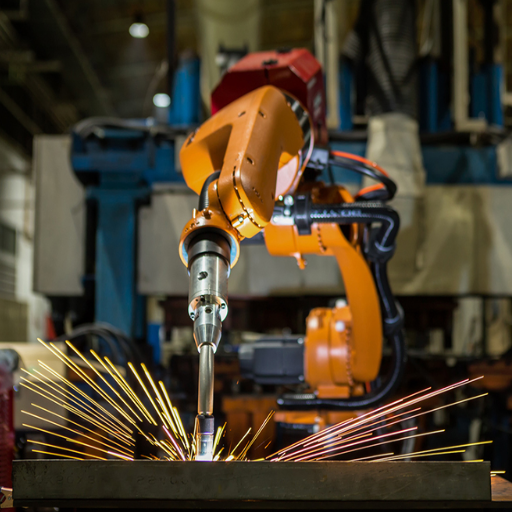
This is a welding industry transformation, an automated welding machine being on the very forefront of this transformation. In return for the integration of robotic automation at the cutting-edge, these machines are now reshaping the manner in which various industries carry out welding processes. So artistic manual work on precision and efficiency are past; automated welding, in all essence, is that disruptive technology. The article is out to discuss how the automated welding machine serves innovation, productivity enhancement, and adverse workforce shortages at the cost of absolute quality. This blog thus would take a deep insight into how robotics is setting the future standard of the industry, whether you are a seasoned professional or just a bit curious.
Understanding Automated Welding
What is Automated Welding?
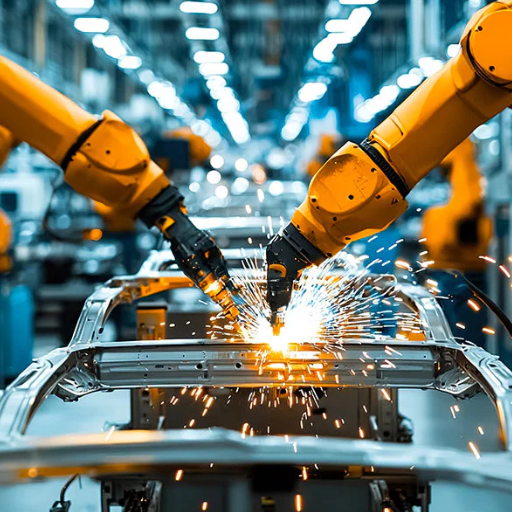
In automated welding, a very close to zero human guidance is exercised, by robots and machinery, to perform welding tasks. Upon implementation of advanced technologies like programmable logic controllers (PLC) and computer-aided design (CAD), the welding processes of an automated welding system are carried out with great precision and efficiency. These systems are used mostly in manufacturing industries in performing repetitive tasks holding complicated welds and final large production with the greatest standards of quality. Automated welding is of two types. Fully automated means the machines themselves control the whole process, and in semi-automated, human operators do some other tasks such as positioning or inspection. Through more applications of AI and Machine Learning, the automated welding process evolves further to enhance accuracy, speed, and flexibility in various applications in industry.
Key Components of an Automated Welding System
An automated welding system contains several integral components that work collaboratively to ensure efficient and precise operations. For examples spanning robotic systems and supporting machinery, review welding automation equipment from Aubrik and compare the proposed scope with the components listed below. A few of the major components are:
🤖 Robotic Arm
A component designed to carry out the welding task repetitively with high precision from predetermined programmed software, allowing it to follow any complicated welding path with ease.
⚡ Welding Power Source
The welding power supply needed to supply the electrical energy requisite for welding. It provides a controlled heat source, arc stability, and weld quality.
🔧 Wire Feeder
Required in processes where filler material is used for example in MIG welding. It feeds the filler material at a constant speed to the weld joint so that uniform welding conditions prevail.
👁️ Sensors and Vision Systems
Advanced sensors and vision systems function as a feedback system, monitoring and adjusting the process and verifying quality. Can detect errors such as joint misalignment or incomplete welds.
🧠 Controller and Software Integration
The brain of the welding system that uses software incorporating AI and machine learning algorithms to precisely coordinate all components and adapt to varying weld parameters.
🔄 Positioners and Fixtures
Holds the workpiece and moves it so that the welding positions remain consistent throughout the process. When evaluating welding positioners from RESIZE, request the model-specific load limits, fixture requirements and controller interface before selecting equipment for a robotic cell.
❄️ Cooling System
Chilling down overheating and making equipment survivable under round-the-clock operations.
🛡️ Safety Mechanisms
Assures operator safety and equipment protection during operation, including emergency stop buttons, shielding gases, and enclosures.
The recent advancements depict a sudden surge in the use of AI and IoT in automated welding systems. These technologies perform predictive maintenance perfectly, real-time monitoring, and customization to a higher degree that maximizes efficiencies and minimizes down time in industries. In this way, automated welding systems, with the very components and ensuing developments, are increasingly the hallmark of modern manufacturing.
Types of Automated Welding Machines
Automated welding machines can be classified into various types based on the needs of specific industries. Major types include:
💡 Innovation Highlight: With the integration of cutting-edge technologies such as AI and IoT, each type ensures predictive maintenance and remote operation, guaranteeing precision, consistency, and performance well optimized into various manufacturing processes.
Benefits of Robotic Welding
📈 Increased Efficiency and Productivity
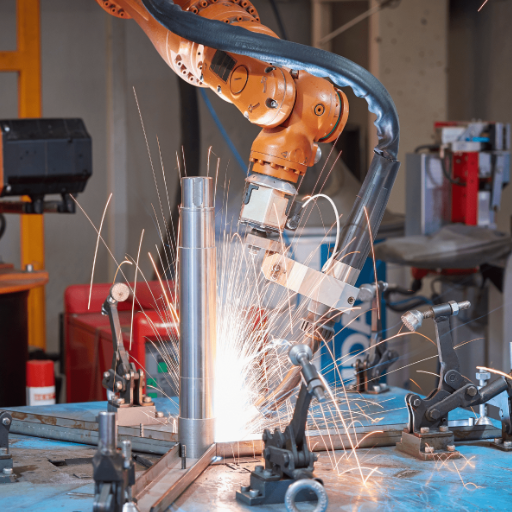
A product robotics-welding system is the epitome of efficiency and productivity, handling repetitive tasks quickly and with high precision. It minimizes human error implications in the repetitive-type processes and assures standardized weld quality. Recent reports suggest a further 30 percent increase in production rate, very minimal preparation time for robotic welding solutions. Administering real-time monitoring and process optimization would certainly ease the workflow being optimized with immense benefits to companies in confronting demand, downtime, and fast-moving industries.
🎯 Precision and Consistency in Weld Quality
Welding robotics provided consistency throughout the production, and these are advanced automated systems consisting of high-precision sensors and adaptive control algorithms to ensure consistent weld quality. These systems notice the variation in the material or alignment in all three Cartesian coordinate systems and respond immediately either by the method of compensation or rejection- never allowing a variation to get into the final weld. Combining machine learning also creates better predictive maintenance schedules and lowers defect rates by foreseeing and mitigating trouble before it actually occurs. This marriage of precise machinery and intelligent data use becomes a must for consistently perfect welds, no matter the application at hand.
💰 Cost Savings Over Time
Precision welding, combined with machine learning, identifies opportunities in cutting costs over time. Real-time adjustments, due to predictive maintenance, maximize savings from material waste, give away downtime, and prevent expensive luxury. With operational efficiency increasing by 30%, the star of cost reduction immediately begins to shine. To ensure that cost savings continue to increase, companies should constantly invest in training employees, improve workflows, and maintain state-of-the-art welding equipment and software, thereby guaranteeing that the improvement stays realized and sustained through time.
Technological Advancements in Welding Automation

Integration of AI in Welding Systems
The marrying of AI with welding systems has really brought about a revolution that emphasized unprecedented levels of efficacy and precision in manufacture. A welding system integrated with AI learns from real-time data input; hence, it is capable of adapting itself to evolving conditions so that weld quality is maximized. It can forecast the chances of a failure and either suggest corrective parameters or conduct welding on its own with just minimum human interventions.
How does AI actually assist with welding processes?
AI systems can analyze parts’ geometries, select suitable welding parameters, and assess joint integrity with an almost unattainable level of accuracy. These systems’ real-time data analysis lets them drastically reduce the probability of errors, minimize waste of materials, and cut down on production costs. The integration of AI in welding basically translates into enhanced productivity, along with maintaining very high quality standards, accounting even more so in the race of ever-evolving markets.
Robotics and Their Influence in Manufacturing and Welding
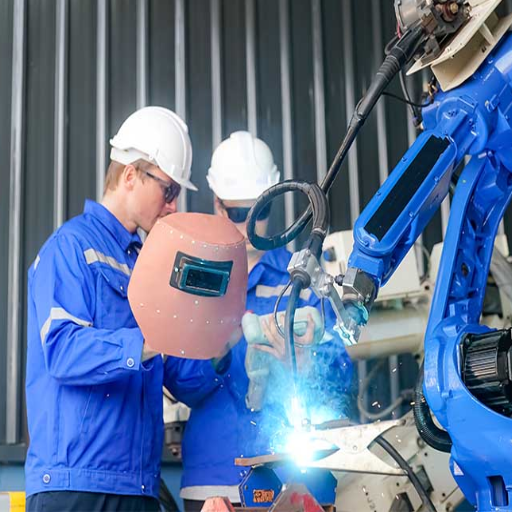
Industrial integration of robotics has changed traditional welding in huge leaps-amounting to improvements in productivity and quality. In an advanced setup bristling with sensors, the welding robots carry out repetitive operations with utter consistency, barring minimum error and just about no loss of time. Robotic welding is considered a boon for safety in the establishment since it takes care of typical dangers and risks human welders face. In systems that operate in real time, they continuously track and adaptively control to cope with changes in their environment, thus ensuring that the welds maintain absolute consistency and quality. Robotics contracts the duration of welding and gives rise to good quality welding; thus it must be considered as a must in all modern industries.
Emerging Trends in Welding Equipment Technology
Quickly changing with the infusion of new technology toward greater efficiency, accuracy, and sustainability, welding equipment has witnessed some key emerging trends:
- 🤖 AI and Machine Learning Integration: Systems for welders containing facilities for predictive maintenance, quality checks, and real-time adjustments of parameters during welding activities for better results.
- ⚡ Hybrid Empirical Welding Processes: These weldings fuse the parameters of different welding types like laser welding and arc welding for maximum speed and quality.
- 📱 Portable Welding Machines: Thanks to battery technology advancements, these machines are capable of working in the remotest locations, miles away from any set-up welding shop.
- 🌱 Green and Energy-Efficient Solutions: Development of systems that are least energy consuming and pursued to reduce emissions.
📊 Industry Insight: Search trends data reveals recent increases in searches for AI welding technology, hybrid laser welding, and portable welding machines, representing the industry’s attention to these emerging technologies and indicating the shift toward smarter, greener, and more versatile welding solutions.
Key Features to Consider When Selecting a Welding Machine
Key Specifications and Power Sources
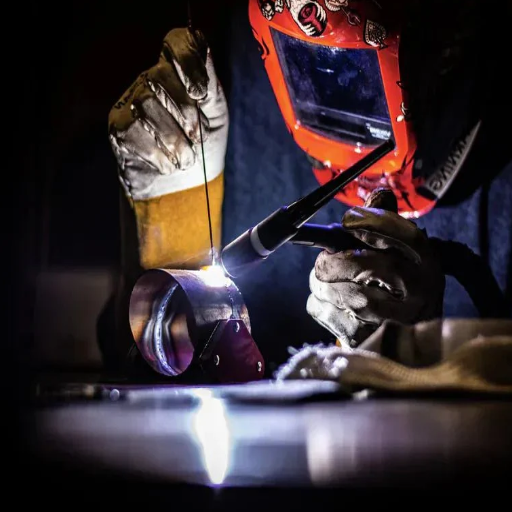
A few major specifications should be carefully considered to ensure that a welding machine fits your application. Key considerations include:
⚡ Power Source
Choose from AC or DC (or both) to suit different applications, with DC sources preferred for steady arcs and smooth weld appearance on steel materials.
🎒 Portability
High demand for portable welding machines that suit different working environments and applications.
🔬 Hybrid Laser Technology
Offers precise application and best efficiency, suited for automotive and aerospace applications requiring minimal material distortion.
🔧 Multi-Process Capability
Machines that permit different methods (MIG, TIG, stick welding) for versatility and multifunctional applications.
Automation Solutions for Specific Needs Evaluation
Evaluation of pertinent automation solutions with corresponding good tools and technologies to suit an application of precise needs includes the following factors:
- Scalability: It must serve your business needs as they grow
- Integration Options: Ability to operate with existing systems and workflows
- Cost-Efficiency: Looking at costs against potential savings in the long-run
- Application Type: Robotic welding systems for high-volume repetitive tasks versus cobots for smaller-scale operations
- Future-Proofing: Considering if cloud-based automation platforms can provide a greater scalability and real-time monitoring.
Welding Robots vs. Conventional Welders: An Analysis
Industry Applications of Automated Welding
🚗 Transforming the Automotive Sector
Automated welding has led this industry to revamp and reshape production efficiencies and accuracies. With thousands of parts in vehicles that require flawless assembly, welding robots have become a necessity for quality at a larger scale consistently. Automotive manufacturers witness a 25% reduction in production time through the use of automated welding, with error rates kept to a minimum. This allows for quicker assembly lines and safer vehicles. The sector is moving towards future innovations with automation which allows manufacturers to satisfy growing consumer demand and meet strict quality requirements.
✈️ Aerospace Welding Advancements
Aerospace welding further evolved, giving room to the creation of lighter yet stronger and more efficient aircraft. Laser and friction stir welds largely reduced material wastage while enhancing production accuracies. Such novel welding procedures stand to keep aircraft structure sound in applications involving light materials like titanium and aluminum. These welding procedures improve aerospace safety through accuracy improvements in design and enhancements in durability to adhere to the stringent quality requirements of this highly regulated industry. Considerable benefits in efficiency and structural performance will arise from in-depth studies into automated welding systems coupled with AI designs.
🏗️ Welding Automation in Construction
Welding automation is creating transformational waves through the construction inaugurations by way of efficiency improvement, cutting down labor costs, and raising the general standard of construction projects. Increasing attraction in robotic welding systems increment trends are towards modular construction and integration of machine learning. Such automations permit construction to upscale quickly and yet maintain a weld quality consistency for huge infrastructure projects. These sensors and autonomous controls entangle greater issues and even reduce instances of human errors while enforcing safety standards. Broad application of these technologies has begun as manufacturers iron out the wrinkles for a greater project time, improved safety, and less wastage in the industry.
Cost Analysis of Automated Welding Solutions
Initial Investment vs. Long-term Savings
Analyzing the cost dynamics surrounding automated welding solutions renders the initial investment high with respect to equipment purchase, installation, and system integration. However, data prove that these initial expenditures are balanced by long-term savings:
💸 Initial Costs
- Equipment purchase
- Installation expenses
- System integration
- Staff training
💰 Long-term Savings
- Reduced labor dependency
- Lower injury risks & insurance costs
- Less material wastage
- Fewer product defects
📊 Key Statistic
Studies suggest welding automation implementation yields up to a 30% decrease in total production costs after complete system implementation
Calculating ROI in Business
When calculating the return on investment (ROI) for welding automation, companies must weigh several important considerations. The formula for ROI is simple:
📋 ROI Example Case Study
Initial Investment: $100,000 in automated welding systems
Annual Savings: $250,000 from productivity and cost savings
Calculated ROI: 150% within the first year
Industry Performance: Production cycle time reduced by 40%, with corresponding increases to overall throughput by 35% across industries using advanced automation techniques.
Maintenance Costs and Considerations
Maintenance costs are a vital component in any manufacturing sector’s operational budget and deserve careful consideration to avoid wasteful expenditure. The field is shifting toward technology-based solutions with increasing queries around predictive maintenance tools and optimizing maintenance schedules.
🔧 Modern Maintenance Approach
Frequently Asked Questions
❓What advantages are offered to welding by robotic welding systems?
The list of advantages for robotic welding systems could be long. Some of the other benefits include weld quality and productivity. Basically, they tend to automate numerous applications of the welding process in order to make it faster and to make weldments with a precision that a human weldman cannot ensure. These robotic welders also double the output as they work nonstop through any given welding job; greatly cutting production time. Initiating an automation allows manufacturers to undertake high-volume manufacturing without compromising on weld seam quality. Robotic arms provide manufacturing advances in terms of flexibility since they can be reprogrammed easily to perform other welding operations.
❓ How does automating welding processes increase manufacturing capability?
❓ What equipment is employed in the automated welding process?
The welding equipment used for welding automation would include the arc welding robots, positioners, and laser welding systems. Robotic arc welding systems are most preferred because they give the best quality welds in the shortest period of time. Among the options available to the robotic system are the seam track, which assists in improving weld accuracy. Even further welding power source integration with wire feeders allows the use of different welding processes, including MIG, TIG, and GMAW. Such ability to switch between various welding processes makes them indispensable to modern-day manufacturing operations.
❓ How has automation enhanced productivity in welding operations?
Automation solutions generally enable enhancement of the productivity in welding operations by streamlining the entire welding process. Compared to manual welders, automated machines weld much faster with higher repeatability, which in turn improves production time. The systems may be programmed to perform a variety of welding jobs depending on the programming given to them without constantly monitoring them. With jobs once very labor-intensive being automated, a company can now shift its focus to productivity enhancement programs, which can shorten downtime. The result is a production environment that is more productive and currently responsive to market demands.
❓ How is robotic welding significant for mass production?
Reference Sources
- PTT – Will Welding Be Automated? The Role of Robotics and AI:
Explores the role of automation and AI in welding, discussing its impact on the industry and career opportunities.Link to source - PubMed Central – Sensor-Enabled Multi-Robot System for Automated Welding:
A research paper presenting the development of a multi-robot system for automated welding and in-process non-destructive evaluation (NDE).Link to source - U.S. Army – Weld Automation for Next Generation Combat Vehicles:
Details the introduction of robotic weld cells for combat vehicles, highlighting improved quality and performance.Link to source - guide for stainless welding machine