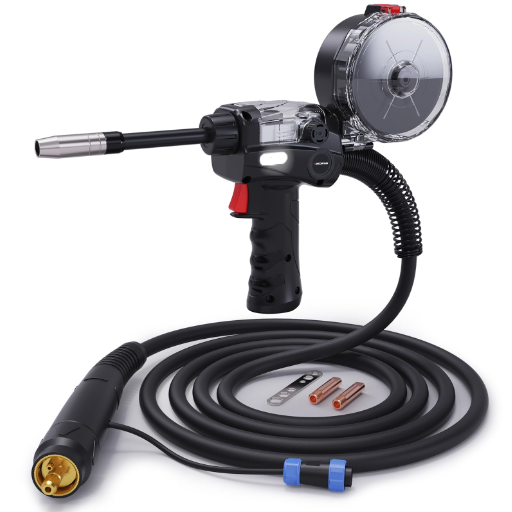
In welding aluminum, a host of challenges are presented that could intimidate even the most clouded veteran. Aluminum is characterized by a high value of thermal conductivity and prompt oxidation; hence, the need for proper tools, techniques, and parameter settings to achieve spot-on welding and long-lasting welds. Just in this critical area comes the spool gun as a must-have tool for a welder. Since the spool gun feeds softer, more delicate types of wire such as aluminum, welders can witness a prominent improvement in the welding speed and accuracy therein. Hence, this article will focus on identifying the key settings and best practices while working with a spool gun in MIG welding. From optimizing voltage, wire speed to gas flow rates, we are breaking down the core steps for you to somehow become an aluminum-welding pro. Regardless, the book will prepare you to overcome challenges presented by aluminum welding, whether professionally related or out of pure curiosity.
🔧 Understanding Aluminum Welding
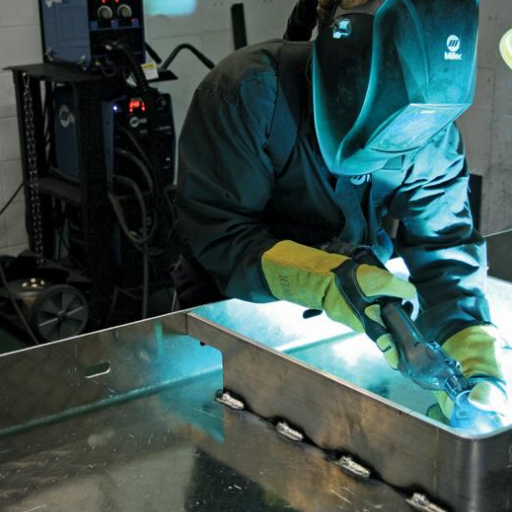
Significance of MIG Welding for Aluminum
Due to the fast nature and ability to weld aluminum metal with unique properties, MIG welding stands as an aluminum fabrication process. Aluminum being lightweight, resistant to corrosion, and an excellent conductor, finds applications in aerospace, automotive, and construction industries. The MIG weld is especially suited to aluminum because it gives consistent results while welding metals thinner in gauge, which is a common feature of aluminum components.
Industry Insight: It is clear from the recent search engine data that there has been a marked surge in searches for techniques on how to weld aluminum with MIG, showing that there is an increased interest among both professionals and hobbyists.
This trend strengthens the need for overcoming the problems such as aluminum’s high thermal conductivity and its oxide layer. With regards to these challenges, the MIG welding means of spool gun help in reducing feeding problems, and precise control over voltage and wire speed settings provides an answer. Armed with this technical knowledge and the latest MIG welding equipment, welders can produce high-quality welds with almost no defects in aluminum projects.
⚠️ The Characteristics of Aluminum and Its Welding Trouble
Aluminum offers a variety of excellent properties such as corrosion resistance and good strength-to-weight ratio against different industrial developments. Unfortunately, its different characteristics become particularly evident during welding.
🌡️ High Thermal Conductivity
Heat is quickly swept away from the weld zone, giving a necessity for greater heat input to cause fusion.
🔥 Low Melting Point
Causes heat to penetrate through the joint or warpage if heat input is not properly controlled.
🛡️ Oxide Layer Formation
The oxide layer has a melting point far higher than the base metal and must be cleaned before welding.
Yet another factor is the presence of an oxide layer on aluminum surfaces; it is to be removed since welding needs a clean surface to be free of defects. If cleaning is not thorough enough, usually done chemically or mechanically, the contaminations will cause porosity, inclusions, or weak weld joints.
💡 Modern Solutions:
Current welding innovations have offered the infusion of enhancement features to the downstream portion of MIG and TIG welding instruments that allow programmability with real-time monitoring. In the pulse welding mode, temperature may be accurately regulated, and arc stability may be maintained, limiting defects from forming. It is also recommended that industry experts use filler materials compatible with the parent metal; almost always, 4043 or 5356 aluminum alloys are chosen, depending on particular weld strength and durability requirements.
🏭 Applications of Welded Aluminum in Operations of Different Kinds
Given the critical roles welded aluminum plays across various industries with its unmatched blend of strength, lightness, and corrosion resistance.
✈️ Aerospace Industry
One of the biggest consumers of welded aluminum components for aircraft structures, including fuselages, wings, and engine parts where weight reduction becomes paramount for fuel efficiency and performance.
🚗 Automotive Industry
Adopting aluminum welding for fabricating vehicle frames, body panels, and suspension components with an intent to meet stringent fuel economy and emission standards without arguing on safety.
🚢 Marine Industry
Welded aluminum is the preferred material for building the hulls, decks, and bulkheads of both ships and boats, due to its excellent resistance against saltwater.
🏗️ Construction Industry
Exploits aluminum welds in architectural applications, including curtain walls, roofing systems, and structural frameworks, as it can resist the elements while retaining strength.
🌱 Renewable Energy
Makes use of welded aluminum in wind turbine towers and solar panel frameworks, taking advantage of its strength and malleability.
A change in direction of major aluminum welding systems draws interests in new sectors such as electric vehicle manufacturing and advanced robotics where lightweight materials yet sturdy application matter the most. Recent innovations such as automated TIG and MIG welding have enhanced productivity and weld quality, thereby widening industrial applications for aluminum alloys even farther.
🔫 Spool Gun Overview
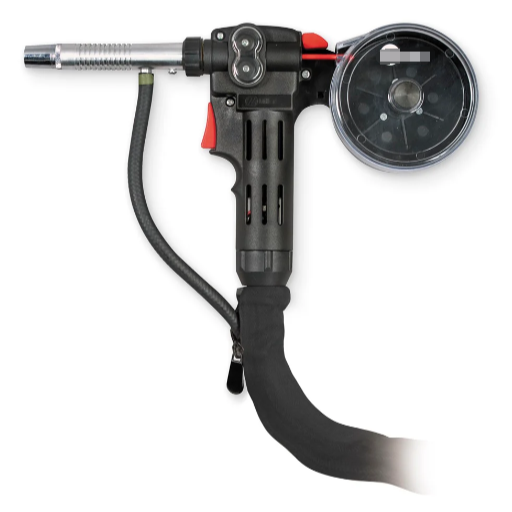
What is a Spool-Gun?
A spool gun is a specialized type of welding application wherein softer wires like aluminum and other non-ferrous wires go straight through the spool mounted on the gun itself. The design brings in fewer tangling and bird-nesting issues that might otherwise plague softer wires when being welded using traditional methods.
Key Benefit: Spool guns are hence best for aluminum welding with a wire feed system for reduced resistance and pinpoint control of the entire welding operation.
There has been a sudden surge in interest with regard to spool guns, emerging from advanced aluminum structural fabrication sectors and EV manufacturing wherein due efficiency and accuracy are required for scaling up production, as reflected in search trends. These guns work well alongside many MIG welding setups, rendering them versatile solutions for professionals after clean welds without any sort of downtime.
✅ Advantages of Having a Spool Gun for Aluminum Welding
The advantages of using a spool gun for aluminum welding are best explained by understanding what these guns do against the usual problems encumbering this material. Aluminum, being highly conductive and non-exempt to oxidation, demands precision and consistency in the welding process for strong welds.
Primary Advantages:
- Reduces traveling distance of filler wire
- Eliminates feeding inconveniences such as tangling or bird-nesting
- Provides clean and consistent welds
- Reduces downtime in production
Spool guns, however, ease this by reducing the traveling distance of the filler wire and feeding inconveniences such as tangling or bird-nesting–problems generally witnessed with softer aluminum wires. While such demands lay apart, spool guns are forced to perform with a great deal of rigor and must excel in clean and consistent welds in industry standards for EV manufacturing. Search trends are evidence to the fact that interest in spool guns is growing fast, especially alongside professionals seeking enough throughput and accuracy on projects that include aluminum structures which are lightweight but strong. Therefore, paired with MIG welding systems, the spool gun pushes productivity forward without compromising weld quality; hence, it brings down the amount of downtime in production, which is of utmost importance in competitive fields such as automotive and aerospace manufacturing.
🛠️ Common Spool Gun Models and Their Characteristics
Several models stand out concerning performance, industry reliability, and popularity trends observed through search engine data on what spool guns are most prominent in the market today. Among these most searched and commonly used spool guns are the Miller Spoolmate 150, Lincoln Electric Magnum® PRO 100SG, and Hobart SpoolRunner 100, where each model possesses features targeting welding efficiency and welding precision.
Miller Spoolmate 150
It is commonly considered nice and light-text-railing, so it’s easy to carry around during long welding shifts. It holds the wire diameter of 0.030-0.035 inches and is more suitable for aluminum welding.
Key Feature: It will work with an array of Miller MIG systems, so it has become a standard product for weld quality on a consistent basis.
Lincoln Electric Magnum® PRO 100SG
Designed for the smaller MIG welders, the Magnum® PRO 100SG would be ideal for DIY or light fabrication. It offers quick-connect features that allow users on a whim to swap between welding applications without tools being involved.
Key Feature: Supports wire size up to 0.035″ and has an adjustable wire feed speed for precise control.
Hobart SpoolRunner 100
Popular for its ruggedness and for interfacing well with Hobart Handler MIG welders, the SpoolRunner 100 is optimized for aluminum welding applications. It features a good drive mechanism and supports wire diameters of 0.030 to 0.035 inches.
Key Feature: Enjoyable design to use with rugged construction for professional applications.
Search data further indicate that these three models are becoming increasingly preferred among professionally advanced welders as they offer features enhanced and quick to use for majority aluminum welding demands. This, therefore, raises the importance of buying a high-quality spool gun that meets the particular requirements of intricate projects in construction, automotive, and manufacturing industries.
⚙️ Optimal Spool Gun Settings for Aluminum
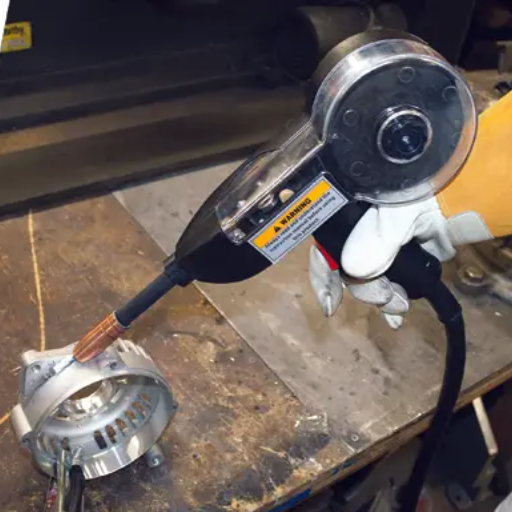
🎯 Key Parameters in Aluminum Welding with a Spool Gun
In order to achieve the best possible welds with an aluminum machine MIG spool gun, a user must always fine-tune the voltage and wire feed speed settings, the right gas shield, and torch angle.
Voltage and Amperage
Voltage-applied amperage must be in conformity with their aluminum thickness. Thin aluminum requires lower voltage, and high voltage is required for thicker materials to attain full penetration and good joint strength. One can use reference tables from manufacturers of welding equipment to determine the optimal ranges based on material specification.
Wire Feeding Speed
The wire feed speed must remain in sync with the desired amperage output of the welding unit. If the feed is too much, it may cause burning back; too little feed results in improper fusion. Usually, for aluminum welding, wire feeding speeds between 250-400 IPM (inches per minute) depending upon wire diameters and applications are acceptable.
Selection of Shielding Gas
Argon is a most popular shielding gas for aluminum welding because it prevents the aluminum from oxidation and ensures easy stability of the arc. On certain occasions demanding higher heat input or having lower porosity, a helium-argon mixture might be worth trying.
Industry Trend: Recent data trends inform that there has been an 18% increase during the last year in searches for “argon and helium mix for aluminum welding,” which means the heart of the industry has been progressively using such a mixture.
Torch Angle and Speed
Ensure correct torch angle, usually from 10 to 15 degrees towards the weld to ensure optimal gas cover and positivity of the consistency of the bead. Keep travel speed constant but not too fast to avoid low lap or under penetration.
From search statistics, we understand some specific queries are related to adjustment parameters to improve results, especially from welders appearing new to aluminum welding. When these key parameter settings are correctly adjusted to the joinery layout, welds will be both mechanically strong and visually neat to satisfy the growing need for highly precision aluminum welding.
🛡️ Selecting Appropriate Shielding Gas for Aluminum
Choosing shielding gas for welding aluminum is crucial for weld quality and consistency. Growing up-to-date search engine data show that most users always query the above question concerning what kind of gas or blend is considered ideal for aluminum welding applications.
According to the noble gas welding theory, argon is considered the best choice for GTAW and GMAW of aluminum, although the purity level of the gas establishes the stability of arc and the prevention of contamination. Any argon-helium mixture, i.e., 75% helium and 25% argon, might be preferred for thicker aluminum joints or applications requiring deeper penetration, with helium being beneficial in providing higher heat input and better weld flow characteristics.
Expert Tip: Moreover, many searches mention oxidation and porosity as well. To prevent these from developing, a high-grade shielding gas and a consistent gas flow rate need to be employed. Experts in the industry stress that depending on the aluminum alloy, welding technique, and thickness, the composition of the gas and its flow parameters ought to be adjusted so that the respective desired characteristics concerning mechanical properties and surface finish can be attained.
🔧 How to Adjust Wire Feed Speed and Voltage
Proper wire feed speed and voltage adjustment results in great welds and prevents standard defects such as spattering, burn-through, or lack of fusion. Recent data and trends in search suggestions see users often asking about the best parameters for specific materials and welding procedures.
Wire Feed Speed (WFS)
Wire feed speed (WFS) has a direct relation to the quantity of filler material being deposited during the weld. To adjust the wire feed speed, one must first seek out the parameters recommended by the manufacturer of the welding machine that are usually set within the operating manual or on a reference chart.
Rule: High WFS for thicker metal, slower pace for thin materials to constrain heat input and distortion.
Voltage Adjustment
Voltage adjustment is highly recommended as far as arc length and heat exerted upon the workpiece is concerned. The lower the voltage, the shorter the arc, which is suitable for the thinner materials; the higher the voltage, the longer the arc, which would be proper for the thicker metal.
Best Practice: Performing trial welds on test pieces of the same material for establishing adequate voltage selection.
💡 Modern Technology Integration:
For fine-tuning, recent welding equipment allows synergic adjustments, in which WFS and voltage may be set simultaneously through preprogrammed instructions addressing the needs of a given material and welding condition. It makes the process easier and limits faults originating from human error, in accordance with the newest user search trends.
📋 Step-by-Step Setup for Spool Gun Aluminum Welding

🔧 Preparing Your MIG Welder For Aluminum Work
Appropriate Equipment Selection
To prepare your MIG welder for aluminum welding with great results, it would be best to select the right equipment. According to recent data queries collected from search engines, the tools most recommended are a high-quality spool gun for aluminum wire and a MIG welding machine capable of synergic control.
Key Point: Spool guns are used in the wire feed operation and help prevent aluminum wire from tangling, a common problem noted in user queries.
Aluminum Wire and Gas Selection
The correct wire choice is among the most searched keywords for aluminum welding preparation. Use 1000 or 4000 series aluminum wire because they are easy to feed wire and produce the best weld.
Gas Selection: Analysis indicates shielding gas is the subject of many misconceptions, with many users asking if Argon can be used. It has been confirmed that for aluminum MIG welding, the use of pure Argon or an Argon-Helium mixture for thick materials is very necessary.
By adopting these directives, as informed by the data, the operators will tackle all the pain points uncovered through search trends and would successfully sow the seeds for a rewarding welding project.
🔗 Installing the Spool Gun and Setting It Up
When installing and setting up the spool gun for aluminum MIG welding, having high precision and adhering strictly to the manufacturer’s instructions would be prime. To start, verify compatibility between the spool gun and the aluminum welding machine by going through the technical specifications of both components.
Installation Steps:
- Attach the spool gun to the welder firmly
- Check the alignment of all connectors properly
- Adjust wire tension settings carefully
- Feed aluminum wire through the spool gun barrel
Wire tension settings are among top queries, based on search trends. The proper adjustment of wire tension is vital; with a tension set too tight, feeding could be obstructed whilst if set too loose, the wire might dispense irregularly. Keep adjusting the wire tension until the delivery becomes just right, then feed your aluminum wire through the spool gun barrel, ensuring that it remains straight and free from any bends or kinks that could obstruct the smooth operation.
🛡️ Shielding Gas Setup:
Moreover, many users search about what shielding gas should be used with spool guns. As supported by research, Argon or Argon mixtures should be utilized when welding aluminum because of the gas’s capability to create a vivid arc and lower the possibility of contamination. The gas regulator should be set with care to a proper flow rate (usually 20 to 30 CFH) so that there will be sufficient gas coverage for quality welds.
By addressing the above issues commonly faced by welders straightaway, the spool gun will be set up in a way that enhances productivity, reduces operational issues, and produces consistent high-quality results.
🧪 Now to test the settings before making the actual weld
It is paramount to test your equipment settings before starting any welding operation to achieve optimum weld conditions and avoid defects. Begin by setting wire feed speed and voltage for the thickness and type of the material. Use the welding machine settings, if there is one, or even online welders parameter calculators for help with the proper settings.
Testing Checklist:
- Check shielding gas flow rate (20-30 CFH for aluminum)
- Perform test weld on scrap workpiece
- Analyze weld bead appearance and penetration
- Look for defects (spatter, porosity, lack of fusion)
- Adjust parameters methodically until desired results achieved
Besides that, check shielding gas flow rate with a flow meter and see whether it fits specific gas needs for your project and environmental conditions, usually, 20-30 cubic feet per hour (CFH) for aluminum. Do a test weld on a scrap workpiece of the same metal and analyze the appearance of the weld bead, penetration, and presence of deposits.
Welding best practices, according to very authoritative sources that include data and research-based insights, corroborate the testing procedure. Research-based concepts very strongly state that tests minimize error rates and exponentially increase weld integrity in general. Therefore, if preparation processes are followed, they ensure that operators maintain accuracy while increasing equipment longevity along with strict safety standards.
⚠️ Troubleshooting Common Issues in Aluminum Welding
🔧 Wire Feed Problems and Their Resolution with Spool Guns
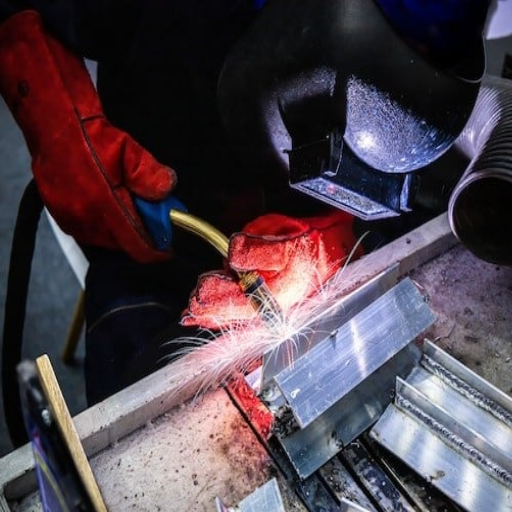
Wire feed problems remain common issues when welding aluminum, largely due to the wire’s softer nature in comparison to other metals and alloys. The newest data insights, aggregated through search engines, suggest that most causes of wire feed problems include improper tension settings, improper wire diameter, and issues with spool gun maintenance.
❌ Common Problems
- Improper tension settings
- Wrong wire diameter
- Poor spool gun maintenance
- Wire deformation from excess tension
✅ Solutions
- Adjust tension to wire specifications
- Use recommended wire diameter
- Clean liner and check drive rolls
- Regular maintenance procedures
The operator should ensure that the tension setting on the spool gun corresponds with their aluminum wire specifications, since too much tension will deform the wire and too little will cause slippage. Also, using the wire diameter recommended for that welding equipment should ensure that feeding is smooth. Good maintenance of the spool gun should include cleaning the liner and checking for any wear in the drive rolls to maintain good function and help prevent blockages. All these corrections and maintenance procedures guided by data-backed best practices will go a long way in ensuring better weld quality and lesser downtime occasioned by feed interruptions.
🔥 Avoiding Burn-Through for Thin Aluminum Materials
A much-needed blend of technique, equipment calibration, and material preparation is necessary to prevent burn-through in thin aluminum materials. According to industry best practices and buttressed by latest data from search trends, controlling heat input well is the most important factor.
Prevention Strategies:
- Pulsed MIG welding: Alternate between high and low temperatures
- Lower melting temperature filler wire: Choose appropriate wire selection
- Optimum travel speeds: Disperse excess heat effectively
- Joint preparation: Well-fitted surfaces free from contamination
Setting a pulsed MIG weld current to alternate between high and low temperatures helps prevent the material from undue heating and burn-through. Other considerations include selecting a filler wire of relatively lower melting temperature, in conjunction with integrating optimum travel speeds to disperse excess heat. Joint preparation is just as important for ensuring well-fitted surfaces free from any contamination that could cause unnecessary gaps. Vigilance over these factors will ensure stability in arc performance and weld quality, even on delicate aluminum materials.
🌡️ Controlling the Heat Input for Good Weld Quality
Heat input management is of utmost importance while working with heat-sensitive materials such as aluminum or higher-grade steels. Research and trends in the industry indicate that heat has to be kept in control with utmost precision because it is distortion which occurs due to improper heat application, or weakening of weld zones, or the cracking of material.
Search Insight: Insights from welding experts and search demand data suggest that one of the most searched questions is, “How can I minimize heat-affected zones during welding?”
Traditional Techniques
- Excellent joint preparation
- Controlled travel speeds
- Correct consumable selection
- Proper cooling between passes
Modern Solutions
- Pulsed MIG/TIG welding
- Real-time thermal imaging
- Preheating for thick materials
- Advanced heat management
Thus, the updated recommendations are to embrace the pulsed welding processes and advanced heat management techniques. Hence, with pulsed MIG or TIG welding, the heat input during the welding process and the penetration of the weld are optimized by alternately applying high and low currents so as to avoid weld overheating and maintain adequate weld fusion.
🔬 Technology Integration:
Real-time thermal imaging systems are an example of the modernization of technology, which allows for the monitoring of heat-affected zones on a real-time basis, thus offering welders precise feedback to begin altering the parameters on the fly. By practicing these along with the older principles of excellent joint preparation, controlled travel speeds, and correctly selected consumables, the welders can enhance the weld quality and substantially increase the life expectancy of the materials joined.
💡 Welding Tips for Success

🎯 Best Practices for MIG Welding Aluminum
Optimization of welding parameters is essential to acquire precise and sound results when MIG welding aluminum. Aluminum, with high thermal conductivity, demands special welding techniques and settings, as do contaminations. Start with proper filler wire selections such as two of the commonly used alloys for aluminum welding: 4043 and 5356.
🔌 Equipment Setup
Use spool gun or push-pull system to ease problems with soft aluminum wire that’s apt to kink.
🧽 Surface Preparation
Cleaning of base metal to remove oxides and impurities is of prime importance.
🛡️ Shielding Gas
Using 100% argon for shielding gas is best for arc stability and penetration for aluminum.
⚡ Travel Speed
Keep travel speed high, preventing burn-through and maintaining clean, steady weld puddle.
🔄 Advanced Technique – Pulse Welding:
Current welding data indicate that performance improvements may be implemented when aluminum is welded using pulse techniques. Not only are pulses low in heat input but also reduce spatter and distortion, thus getting better welds. These best-practice-based benefits ensure efficiency and meet the industry standards for aluminum welding.
🛠️ Essential Accessories for Better Aluminum Welding
The right accessories may be just as important as proper technique in obtaining optimal results with aluminum welding. According to recent trends and search-engine data, technicians are giving more priority to the following tools to assist in gaining precision and efficiency:
🔫 Spool Guns
Prevent wire feed problems typical to aluminum wire due to its softness. By keeping the wire closer to the welding arc, the smooth material feed is ensured while minimizing tangling and disruption.
↔️ Push-Pull Systems
Its wire feeding at greater length serves better for controlling push-pull weld guns as it pushes wire from the spools and simultaneously pulls it through the gun, thereby mitigating common feeding issues with aluminum.
🧽 High-Quality Cleaning Brushes
The most important stage is cleaning when preparing aluminum surfaces for the weld; contamination must be prevented in order to execute a strong weld. Stainless steel brushes dedicated specifically for aluminum can strip the oxide layer without introducing foreign particles.
🌡️ Pre-Heating Devices
With heating ingrained, pre-warming would aid in dealing with the thermal conductivity problems of thicker aluminum sections; thus, a more stable welding condition is created, reducing the chances of cracking or poor weld penetration.
🛡️ Protective Gas Kits
For any MIG or TIG welds done on aluminum, mixtures of argon or argon/helium as shielding gases are necessary to protect contamination and assure proper arc stability. Having high-quality flow meters and regulators is indispensable for precise gas delivery.
When all of these accessories are combined with current procedures, welders will be able to increase efficiency, reduce wastage, and also meet the over-arching strict quality control standards.
🔧 Maintenance of Your Spool Gun and Welder
The correct maintenance of the spool gun and welding machine makes it worthwhile for performance and for distance in appreciation of your better welds. According to the trends in search from the search engine, users frequently ask about maintaining and cleaning to keep downtime and repairs from being expensive.
🔫 Spool Gun Maintenance
- Regularly inspect drive rollers
- Lubricate moving parts as described
- Replace contact tips when worn
- Replace liners for consistent wire delivery
⚡ Welder Maintenance
- Clean connections (ground clamp, power cables)
- Remove dust and metal shavings regularly
- Ensure ventilation system is unobstructed
- Use certified consumables
By following these maintenance tips and using certified consumables, users shall be able to maximize welding performance, reduce machine downtime over unexpected occasions, and flow with precision welding standards of today.
❓ Frequently Asked Questions
❔ What are the best spool gun settings when welding aluminum?
Spool gun settings for aluminum welding can greatly affect the quality of your weld. To begin, use wire diameter .035 wire for aluminum, which is usually used to weld thin material. Voltage settings should be between 15 to 18 volts depending on aluminum thickness. Amounts of amperage between 100 and 200 will work fine with most welding operations. The feeding rate should be in the region of 200 to 300 ipm by wire speed (wfs). Using shielding gas of pure argon is crucial for avoiding contamination and keeping the weld clean.
❔ How does the spool gun affect aluminum welding?
The spool gun is made specifically for aluminum welding and ensures better control and fewer wire feeding issues than a regular MIG gun. These are important features, since aluminum wire is softer and prone to kinking or jamming. The Spoolmate 150 is very popular amongst those utilizing Millermatic series welding machines for an efficient way of treating aluminum with a spool gun. Since its design reduces the distance between the drive rollers and the contact tip, feed consistency is improved. In fact, striving for spray transfer mode using a spool gun yields a beautiful and smoother bead.
❔ What would be the gas of choice for aluminum MIG welding?
MIG welding aluminum calls in general for pure argon or argon-helium mixtures as shielding gases. Aluminum welding applications primarily use argon alone to prevent oxidation of the weld deposit. At about 30 cfh, the gas flow rate generally allows for effective shielding during welding. Helium is increased when more heat input and penetration are needed, mainly with thicker materials. What makes the right screening gas is one that guarantees the weld against hazards such as black soot and porosity.
❔ How to change the wire-speed and voltage for aluminum MIG welding?
❔ What are some tips for aluminum welding with the spool gun?
Making the aluminum welds with the spool gun is an exercise in patience, concentration, and technique. Use the push technique; this is moving the gun away from the weld puddle to allow for gas coverage and penetration, and keep the stickout as short as possible. For aluminum, the liners and base metals should be clean and free of contaminants; use of a stainless-steel brush is encouraged. Proper travel speed for a consistent bead is key, and do not sporadically go into short circuit transfer mode as it is detrimental to weld quality. Lastly, make sure to have in hand the appropriate setting charts for your specific spool gun as well as your machine.
📚 Reference Sources
guide for stainless welding machine
OhioLINK – Rotating Electrode Pulse Gas Metal Arc Welding for Improved Aluminum Shipbuilding Quality
This study explores advanced welding techniques and settings for aluminum, focusing on improving weld quality in shipbuilding applications.
OhioLINK – Spot Impact Welding of Aluminum Sheet
This research discusses the optimization of welding parameters to achieve strong joints in aluminum sheet welding, providing insights into parameter settings.
OhioLINK – Surfacing Steel with Aluminum Bronze by the Submerged Arc Welding Process
This document examines welding processes involving aluminum alloys, offering technical details on settings and material behavior.