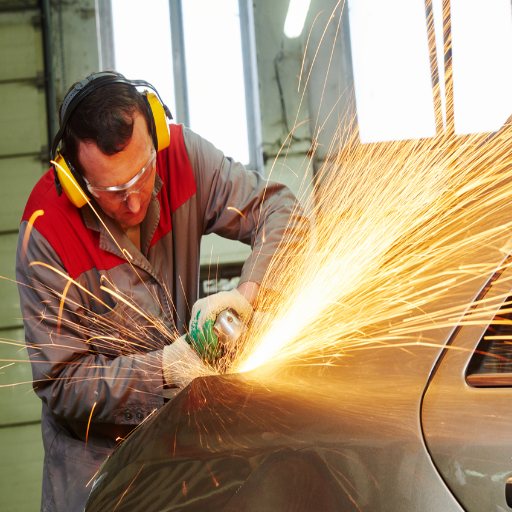
Welding has undergone a significant transformation, largely due to automation and advanced equipment. The Auto Welders have entered the scene, bringing labeling to the entire welding industry, as well as introducing measures of efficiency, precision, and versatility. The blog will therefore take you through some of the benefits that have emerged in bridging traditional welding with timely, machine-precision-based welding. Whether you are a professional in the field or just curious about the future of welding, this article will take you through the basic advantages, technological innovations, and the growing field of automation-based welding in present-day applications. Get ready to see how this technology has helped reduce racing production times and improve safety, thus making welding a more consistent process.
The Role and Responsibilities of an Auto Welder
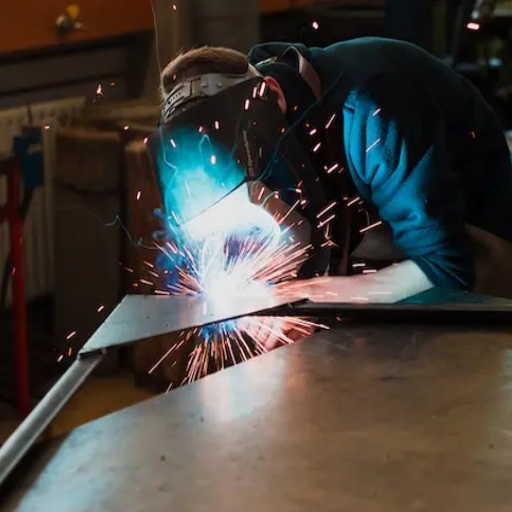
Understanding the Auto Welder’s Responsibilities
The auto welder operates the automated welding machinery for the joining of metal parts with sheer accuracy and agility. The job tends to cover stages in the setup of machines, the welding operation itself, and ensuring that the product meets the quality standards. They also inspect the equipment on a daily basis, troubleshoot problems, and carry out basic maintenance to keep the equipment running smoothly and efficiently. With the advancement of automation technology, highly skilled auto welders are increasingly in demand in programming robotic systems and comprehensions of technical schematics.
International data shows that with increased robotics application in industrial forma processes, demand for photograph welders is fast multiplying. Today, auto welders have become important, particularly for industries where accuracy and speed stand paramount: automotive, aerospace, construction, and some other sectors. The paradigm shift is due to AI and machine learning, which auto welders have to know how to work with alongside manual welding. To this end, the evolution calls for technically able welders to keep adapting to new challenges within their craft.
Essential Skills Required for Auto Welders
Auto welders today require a mix of technical and soft skills in the reactive, fast-changing industrial world. Knowledge and skill in welding processes, with MIG welding, TIG welding, arc welding, or others being most relevant for automotive welding and repair work, create a sound foundation on which to build. Understanding of materials science is necessary for welders, tailoring the standard techniques given different metal and alloy heat and stress reactions.
Key Technical Skills:
- Proficiency in MIG, TIG, and arc welding processes
- Understanding of materials science and metallurgy
- Basic computing skills for robotic equipment operation
- CAD (Computer-Aided Design) schematic interpretation
- Problem-solving and attention to detail
- AI and automated systems integration knowledge
With AI and automated systems being integrated, tech literacy is gaining pole position on the wish list. An auto welder should be competent in basic computing skills to operate robotic weld equipment and interpret CAD (Computer-Aided Design) schematics. Being good at solving problems and having an eye for detail are also vital traits since they are often required to ensure safety and durability in vehicle structures.
This newer research states that adaptivity and willingness to learn really have fast become among the most sought-after traits in the fitter trade. Due to the ever-changing nature of it all really-welding toolsets and technology must forever have avenues for further training and development. Stealing in popularity and appreciating the others are communication and teamwork-worthy welders who these days sometimes find themselves working with engineers, technicians, and other tradespeople. Ondoring these soft skills, the auto welder is kept up-to-date and enhanced through this ever-changing trade.
Typical Work Environment for Auto Welders
The auto welders spend their working hours in heavy machinery-laden environment joined by metallic materials. The setup includes automotive repair shops, manufacturing plants, and custom fabrication facilities. According to recent reports, many welding environments are of modern design with safety inculcated, with good ventilation systems, safety screens, and ready access to PPE, including helmets, gloves, and fire-rated clothing.
Verily, safety measures rank at the top in this work, with intense heat, glaring light, and hazards from various substances threatening safety.One may be standing or crouching for several hours in an enclosed area, repairing or fabricating items. There is a growing trend for auto welders to work less with emerging technologies per se, such as automated welding methods or augmented reality tools that boost precision while lessening physical effort.
However, those are very physically taxing jobs requiring an enormous amount of strength, dexterity, and attention to detail in processing, that may take one through an engaging yet demanding work environment.
Essential Tools and Techniques in Automatic Welding
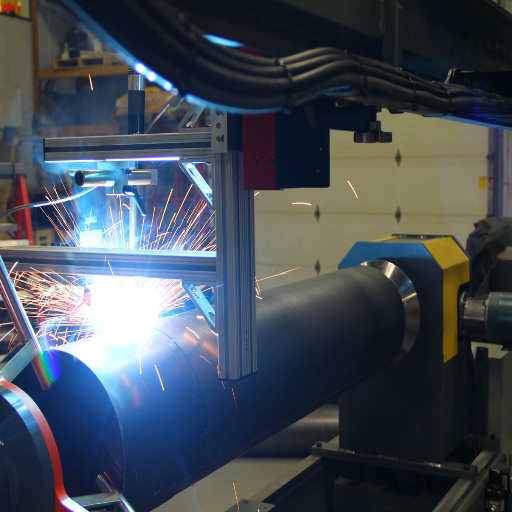
Overview of Automatic Welding Machines
These are automatic welding machines that simplify and enhance welding by automated technology for precise and uniform welding. These exist in many varieties such as robotic welders, CNC welding machines, and orbital welding units, among others, depending upon for which industrial application it is used. The more advanced automatic welding machines consist in the implementation of AI and machine learning algorithms so that these systems monitor in real-time and potentially adjust the welding process whenever needed for maximizing quality and efficiency.
🤖 Machine Types:
- Robotic welding arms
- CNC welding systems
- Orbital welding machines
- AI-powered monitoring systems
These machines are also equipped with high-speed sensors, excellent programming options, and interfaces that are very easy to learn. According to the latest data from search trends, industries such as automotive manufacturing, aerospace, and construction drive the demand for automatic welding systems.
One of the most asked queries includes, “How do automatic welding machines help improve production?” They answer by stating that their presence in the production chain greatly increases total productivity by reducing downtime, decreasing errors, and ensuring consistent weld quality. Lastly, although safety is another key factor, the presence of such machines ultimately helps reduce manual handling in risky environments and places them among the core necessities of any modern-day industrial process.
Key Parts of a Welding Machine: Nozzles and Guns
The nozzles and guns are the primary parts of a welding machine necessary for the welding process to proceed efficiently and precisely. The welding gun is the basic tool for delivering welding wire and shielding gas to the weld joint for easy fusion of materials. The nozzle is built to direct the shielding gas around the welding arc while protecting the weld from contamination and allowing for better weld formation.
Continued advancements in welding technology have slowly also seen improvements in nozzle and gun functionality. As per the latest industry sources, including insights from search trends, demand continues for nozzles made of durable, heat-resistant materials and welding guns designed with ergonomics in mind for prolonged operation. This uptake in performance reduces operator fatigue and helps to foster a quicker and more reliable welding procedure. The combination of the above with automated welding systems maximizes production potential, making nozzles and guns an absolute necessity to achieve quality results in the industrial applications.
Advanced Techniques in Automatic Welding
With advanced technologies and techniques, automatic welding has made behind-the-scenes changes to industry practices. One of the major advancements has been the laser welding in conjunction with monitoring systems powered by AI. These systems use data that flows to detect faults, adjust parameters, and make sure of the accuracy of the welds to base quality and consistency of output largely. Data-driven techniques also make predictive maintenance possible, cutting down down-time by recognizing potential issues before they develop into hard-hitting problems.
🔬 Innovation Highlights:
- AI-powered monitoring systems with real-time adjustments
- Predictive maintenance capabilities
- Hybrid welding (GMAW + laser combination)
- Machine learning optimization algorithms
Another revolutionary kind of welding incorporates hybrid welding; for example, gas metal arc welding (GMAW) is combined with laser welding. The technique combines the deep penetration offered by the laser welding technique, while GMAW acts quickly and is adaptable to industries where time and finesse are of prime importance. The other application of machine learning algorithms is the optimization of welding parameters, depending on factors like material type, thickness, and environmental considerations so that the welding solution is not generalized to all projects but rather tailor-made to every single one of them.
Implementing advanced techniques will help industries catch up with the ever-increasing need for cost-effective operations with a drop of utmost production and quality, influenced tremendously by innovation in automation and data analysis.
Safety Practices for Auto Welders
⚠
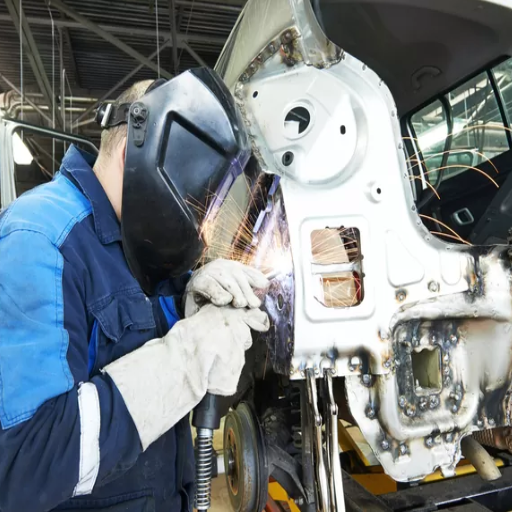
Importance of Safety Gear and Equipment
Safety equipment and safety gear play an important role in protecting auto welders from welding-related hazards. Welding involves intense heat, UV rays shining in one’s eyes, and fumes almost killing a welder in case of negligence. These safety steps would involve the welder donning an auto-darkening filter helmet, heat-resistant gloves, fire jackets, steel-toed boots, etc. to keep them away from burns, electric shocks, and physical injuries.
Essential Safety Equipment:
- Welding helmets with auto-darkening filters
- Heat-resistant gloves
- Fire-resistant jackets
- Steel-toed boots
- Respiratory protection systems
Increases and upsurges shown in the search trend for unsafe welding practices clearly portray the awareness campaign being generated toward safety measures. Keep good respiratory protection systems and ventilation facilities so that no one inhales toxic fumes. No welder should be compelled to forego the use of proper safety equipment along with regular training meant for giving the safest working environment and reduced incidents of workplace accidents.
Common Hazards in Automatic Welding
Though automatic welding increases productivity and precision, safety hazards that a worker has to tackle for his security still exist. Among the most common hazards are the damaging ultraviolet and infrared radiations that can either burn with severity or blind with time. These, alongside the generation of toxic fumes and particulates during the processes of automatic welding, can lead to respiratory maladies unless controls in the form of ventilation or respirators are employed. Also, mechanical hazards coming in the shape of moving parts from automated equipment may cause grave injuries when left unguarded.
The trends arising for drilling in the search data indicate a rising volume of interest in topics such as “automatic welding safety,” “robotic welding precautions,” and “fume extraction systems.” These suggest that great awareness has been created concerning the dangers inherent in automated welding processes and industries working together towards safer alternatives. Staying abreast with innovation keeps the workers informed about the best protections available and thus reduces risk to a great extent, fostering safer working conditions in the ever-changing world.
Best Practices for Safe Work Environments
Safe work environments within automated welding set-ups require the conjunction of best practices from industry expertise alongside data-trending support. Recent search trends identify a shift toward protective strategies involving the use of advanced fume extraction systems and prioritizing robotic welding precautions. This optimizes awareness of safety issues and, by extension, the adoption of proactive measures.
🛡️ Safety Best Practices:
- Install and maintain proper ventilation systems
- Conduct regular inspection and maintenance of robotic equipment
- Provide thorough training on automated machinery handling
- Ensure proper PPE usage at all times
- Implement emergency response procedures
By cementing safety procedures alongside emerging technological advancements and current insights, industries will be able to lay great foundations for guarding against risk and cultivating a work environment where safety takes the lead.
Current Trends in the Welding Industry
Advancements in Welding Technology
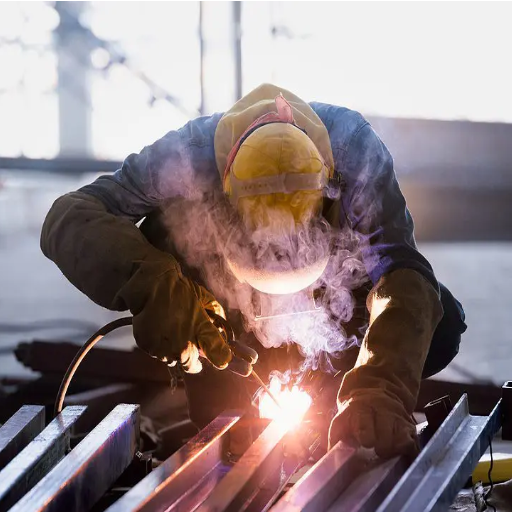
The welding sector has seen a plethora of innovations, with the implementation of all the cutting-edge technologies and practices. Welding is largely dominated by the use of robotics and automation since they contribute to higher precision, speeds, and efficiency. AI is now being fitted in welding machines so that an automated welding machine can interpret more complex welding patterns and react accordingly in real-time, reducing human errors and wastage of materials. Laser welding has, however, stepped in with its application in accuracy and cleanliness, particularly in the automotive and aerospace industries.
🤖 Robotics & AI Integration
Real-time pattern interpretation and automated adjustments
⚡ Laser Welding
Enhanced precision for automotive and aerospace applications
🔗 Hybrid Processes
Laser + arc welding combinations for optimal results
A hybrid welding process, such as laser combined with arc welding, marks another substantial development. It is a perfect marriage of two complimentary processes that bring deep penetration, which also welds quickly. There are parallel developments in filler materials and fluxes that enhance weld integrity, reducing the chances of defects or corrosion appearing during service.
With sustainability entering the limelight, these technologies are introduced to prevent committing pollution or wasting any materials. Thus, attention is made to dispose of the least amount of waste and emissions from power sources; hence, it has kept on introducing newer, more environment-friendly methods such as the FSW technique. When these methods complement AI and real-time data, the welding industry continues to innovate and evolve with modern-day manufacturing and construction.
Shifts in Demand for Auto Welding Services
🚗 Market Driving Forces:
- Electric vehicle (EV) manufacturing growth
- Lightweight material welding requirements
- Precision welding for aluminum and high-strength steel
- Sustainable manufacturing practices
The current trends, together with insights from search engine data, create the overall picture of increasing demand for auto welding services with rapid growth in electric vehicles (EV) and automotive repairs. Searches for topics like “EV welding techniques” and “auto frame welding repair” have grown considerably, thus suggesting a change in consumer focus due to an increase in EV adoption and more complex EV structures. The increased precision welding for lightweight materials like aluminum and high-strength steel has now been put on a higher priority due to these governments and manufacturers emphasizing sustainable practices. These changes put on display the gigantic relevance of advanced welding technology and skilled welders in meeting the new demands of the automotive industry and maintaining fast and efficient repair quality.
The Effect of Automation on the Welding Industry
Automation has changed and reshaped the welding industry in terms of production and precision. With automated welding tools such as robot arms or the new AI-driven technologies, there has been a tremendous escalation in production of both quantity and quality in recent years. Current trends and search data show a steady increase in search queries with the words “robotic welding” and “automated welding systems,” hence showing that there is more and more interest in the developments.
The increase in automation limits laborious operations and also addresses the shortage of skilled labor in the industry. Although automation needs a great deal of investment at the initial stage, it promises cost savings, improved safety, and lower production times in the long run, making more industries accept it with the passage of time. Still, as these technologies become widely accepted, there shall be a parallel need to upskill and train a specialized workforce to efficiently operate and maintain systems.
Choosing the Right Auto Welder or Equipment
Factors to Consider When Buying a Welding Machine
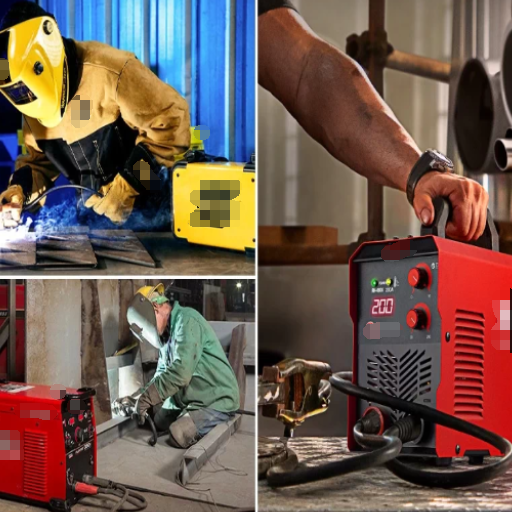
Several essential factors need to be considered when choosing a welding machine for your particular welding requirements. Some of the principal considerations include the following, according to recent search trends and insights:
🔧 Type of Welding Process
Propose MIG, TIG, Stick, or multiprocess welding. These handle various functions, with MIG welding generally being used for general purposes, TIG for precision, and Stick for outdoor or heavy-duty tasks.
📏 Material and Thickness
Consider the types of materials and their thickness to be welded. Different machines will suit different materials such as steel, aluminum, and stainless steel. Ensure that the amperage range of your welder will fit the applications you intend for it to be used.
⚡ Power Source
Is this an AC machine, DC, or combination? Check your power supply for compatibility. Some machines factor household power into their design; others may require industrial-grade voltage.
🎒 Portability and Size
For welding machines carried frequently to work sites, choose lightweight and portable models. For stationary projects, heavier and less movable machines may be ideal.
🛡️ Durability and Brand Unity
A brand that has advertised durability and reliability should be sought after. Customer reviews or even welders might prove the best source in finding something that truly lasts.
🖥️ Advanced Features
Generally, the newer the machine, the more probable it will maintain features such as digital display, auto settings, adjustable controls so as to make it easier to operate, or at least more precise.
💰 Budget and Cost Efficiency
While important to find a welding machine within budget, weigh also how cost-efficient it will be in maintenance, accessories, and power consumption.
Therefore, from their point of view, with proper evaluation of these factors and a look into the latest innovations, you should somehow be able to select a welding machine in accordance with your needs, all of which will carry out their tasks efficiently, accurately, and durably.
Understanding Lifetime Warranties and Guarantees
Lifetime warranties and guarantees aim to ensure customers’ absolute long-term satisfaction with quality and reliability. However, “lifetime” can bear vast different interpretations by the manufacturers and often conform to their expected functional life of the product or profitability in the market. Thus, before making a decision, one ought to examine the terms and conditions of the warranty, including whether it covers parts, labor, repairs, or replacements and any exclusions.
📋 What to Check in Warranties:
- Scope of coverage (parts, labor, repairs, replacements)
- Exclusions and limitations
- Claims procedure and requirements
- Maintenance requirements
- Definition of “lifetime” period
Recent data from trending search queries show a rise in consumer interest around such issues, and keywords searched include “true lifetime warranty,” “what’s covered,” and “how to claim a lifetime guarantee.” Maximizing the full worth of a lifetime warranty or guarantee will definitely minimize the cost of your purchase in the long run.
Tips for Selecting a Professional Auto Welder
Choosing a professional auto welder should basically rely on such considerations as skills, experience, and customer review to yield good quality. Begin by making sure that the welder is certified properly and trained in automotive welding. Such certifications as those from the AWS indicate a strong technical foundation. Search further and check to ensure that the welders have many years of experience in performing your kind of auto repair, whether it is structural frame welding or repairs for exhaust systems.
✅ Selection Criteria Checklist:
- Verify proper certifications (AWS, etc.)
- Check years of experience in your repair type
- Read customer reviews and testimonials
- Evaluate tools and equipment quality
- Ensure transparent pricing
- Confirm warranty offerings
Try reading through some testimonials and customer reviews: at some point, they may give you enough information to see whether or not you would consider the company reliable and fair in their fees. Tools and equipment in weldery matter since the welding technology employed with utmost brilliance makes all the difference in precision and durability of repairs. Moreover, look for them to be transparent about pricing and warranty so that there are no hidden extras accruing later on. With the tips given above and your research, you should surely be able to find an auto-welder meeting all your requirements.
Frequently Asked Questions
What is an automatic welder, and how does it function?
An automatic welder is an advanced welding machine, which has been designed to undertake welding jobs with minimal human intervention. The machine employs high-tech technology in controlling the welding process so as to maintain high quality and precision. Automatic welders are used to perform MIG, TIG, and flux-core welding processes. Programmable settings and automatic feeding of filler wire comprise features of these machines, thus providing more output with reduced labor costs. They find applications in manufacturing and assembly lines wherein utmost performance and reliability are desired.
What factors should one take into consideration before buying a welding machine?
There are a few considerations to evaluate before purchasing an automatic welder. Firstly, one should consider what type of welding one will be undertaking, whether MIG, TIG, or stick welding, as machines differ based on the process. Moreover, the electrical output and duty cycle of the machine should be suitable for the work one will be doing. Also, check the quality and reputation of the company: a better price usually means a better product; hence investing in an excellent product by a reputable company such as Miller can ensure better durability and performance. Other warranty options offered may also be looked into so that your investment remains protected for the lifetime.
How does an automated welding process increase efficiency?
Automated welding processes highly improve efficiency by shortening weld projects’ time and labor. In using automatic welders, manufacturers can realize high-speed production without losing any quality standard. Design-wise, these machines should be designed for continuous operation with little downtime, so they can be utilized in an extensive variety of industrial applications. Moreover, automatic welding machines produce fine and accurate seams that need very little rework, when necessary. This saves one money and time and hence being an excellent choice for the construction and manufacturing industries.
What are welding equipment types for different jobs?
MIG and TIG welders and plasma cutting machines are some of the welding equipment types available to suit various applications. Different welding machines have their benefits: MIG welders are fast and easy to use, whereas TIG welders provide better control and precision on thin metals. Additionally, stick welders serve outdoor activities very well since they function reliably in windy conditions. When choosing welding equipment, consider the specific materials being worked on, whether aluminum or steel, since the welding equipment will carry the greatest performance on these metals. They present several machines so you can pinpoint the one best suited for your particular welding need.
Why is a warranty important for an autowelder?
A warranty is significant for the purchase of any autowelder, as some assurance is given regarding the quality and durability of the machine. A good warranty protects you against defects in material or workmanship and therefore will serve you as feeling safe about your investment against those matters. Several well-known manufacturers offer an extended warranty of a few years-a great benefit for those who want to use the welder for industrial activity. This warranty will save you in repair and replacement costs, hence keeping your welding equipment operational throughout its lifetime. It would be better if you always checked for the particular term in the warranty for what is covered as well as any other limitation.
Reference Sources
- NASA Spinoff – Portable Welder: Discusses a low-cost, self-contained portable welding gun designed for thermoplastics, which can be relevant for automotive applications.
- CIA Reading Room – Semi-Automatic Welding Machines: Provides insights into hose-type, semi-automatic welders used for repair jobs and making seams, which are applicable in automotive welding.
- City of Newport News, Virginia – Automotive Welder Job Description: Details the role of an automotive welder, including skilled welding work, preventative maintenance, and mechanical repair for vehicles and heavy equipment.