Shielded Metal Arc Welding (SMAW), usually named stick welding, is a very versatile and popular welding method. When any welding with aluminum is concerned, SMAW is the one that presents the most difficult and arduous tasks, hence the specific skill required to obtain the strong and durable welds. Aluminum’s very high thermal conductivity and very fast oxidation rate necessitate very careful preparation and execution to avoid failure in welding projects. To be good at SMAW for aluminum, one needs to know the material’s characteristics, the right use of electrodes, and the best heat management techniques. The following text will delve into the main aspects of stick welding of aluminum and also give some useful hints to foster your welding expertise.
Understanding SMAW and Its Relevance to Aluminum

1
What is Shielded Metal Arc Welding (SMAW)?
SMAW, or Shielded Metal Arc Welding, is the process of welding through the arc that is formed between the electrode and the workpiece, the latter being melted. The molten metal is then engulfed in the atmosphere that is burning gases and is therefore protected from oxidation and contamination. The electrode’s coating melts away during welding and produces a gas that protects the weld from air contamination. The necessary equipment is straightforward, easily transportable, and can be applied for welding various metal types such as steel, stainless steel, and aluminum if the right preparations are made and the correct techniques applied, hence its widespread use in different sectors. Yet, it is still the most efficient welding method for outdoor conditions and the only one that can deal with bad weather and wind.
2
The Importance of Aluminum in Modern Welding
Aluminum is an essential material in welding even in modern times, thanks to its unparalleled property combinations and large-scale use in different industries. High-strength but low-weight, aluminum is the material of choice in the automotive, aerospace, construction, and marine sectors where weight saving without losing strength is the key. The property of aluminum making it corrosion resistant is robbing it of being the suitable metal for structures exposed to tough environments, i.e., bridges and ships. The industry will not have the alternative metal to copper in the case of electric and energy industries where conduction is important as aluminum has the highest thermal and electrical conductivity.
Aluminum’s pros are often counteracted by the downsides of welding it, i.e., thermal conductivity control and the oxide layer removal which melts at a higher temperature than the base metal. However, these hurdles have triggered the development in aluminum welding techniques, including the use of Tungsten Inert Gas (TIG) and Metal Inert Gas (MIG) welding, which allow the making of strong and precise welds. To further enhance weld quality while reducing defects, explorations of new technologies like pulsed MIG welding have made significant progress in the area of this adaptable metal welding.
3
Comparing SMAW with Other Welding Methods
Shielded Metal Arc Welding Known as SMAW and stick welding is the same still one method of welding most widely used because of simplicity, versatility, and low cost. For instance, when compared to other methods such as TIG and MIG welding, SMAW not only works efficiently in a variety of settings like outdoors and areas with poor conditions like rain or wind but also does not require such a high level of operator skill as TIG and meticulous preparation and thus is more forgiving than it and less equipped.
Nonetheless, compared to MIG welding, SMAW may not be the most advantageous from the viewpoint of speed and aesthetic quality. For instance, the use of MIG welding’s drip-free wire feeding boosts the rate of welding and at the same time allows fine welds that are appropriate for industrial applications where the main consideration is productivity. Besides, the utmost control over the welds when dealing with precision metals like aluminum and stainless steel is provided by TIG because of its non-consumable tungsten electrode and inert gas shielding.
Pulsed MIG and advancements in automated welding processes are among the developments that have expanded the ability of non-SMAW to the extent that they are even comparable to SMAW methods. The newer techniques offer precision and efficiency that are at least a little superior and yet, the accessibility and cost-effectiveness of SMAW keep its importance in repair work, construction, and small-scale projects alive. In short, the selection between SMAW and other welding methods is dependent on the particular requirements of the project such as the type of material, environment, accessibility, and the quality of the weld desired.
Types of Aluminum and Their Suitability for Welding

Common Types of Aluminum Used in Welding
Aluminum is a metal that has super flexibility and is mainly preferred in welding projects due to its wonderful features: being lightweight, having excellent resistance to corrosion and a high strength-to-weight ratio. The 1XXX, 3XXX, 5XXX, and 6XXX series are the most commonly used aluminum types in welding.
1XXX Series
Normally it is the grade of pure aluminium classified commercially with a very high resistance to corrosion and very good thermal conductivity. Its relatively low strength, though, makes it non-structural welds, hence, the heating is done gradually to avoid melting.
3XXX Series
One of its main characteristics is the presence of manganese in the 3XXX series, and it is also known for its good resistance to corrosion and moderate strength. Besides offering good roofing and siding materials, it is also used in chemical equipment.
5XXX Series
The main element in the 5XXX series is magnesium, which is one of its main as well as alloying elements. Its resulting properties are: higher strength, excellent corrosion resistance, and weldability. It is, thus, a very good choice for marine atmosphere, pressure vessels, and automotive parts.
6XXX Series
The combination of magnesium and silicon has resulted in this series being strong, resistant to corrosion, and versatile. However, the welding of this series calls for accuracy to prevent any cracking, but it is perfect for applications like bridges, pipelines, and industrial frames, which require the support of structures.
The characteristics of the aluminum series present will guide the welders in selecting what type of aluminum is suitable for the welding tasks they will perform. The particularities of the project on which the decision about the choice of aluminum will be made will also influence the project’s considerations, such as structural requirements, environmental exposure, and the required mechanical properties.
Challenges in Welding Different Aluminum Alloys
Welding aluminum alloys comes with a number of problems due mainly to the latter’s unique characteristics which are different from those of other metals. Firstly, aluminum melts easily and has high thermal conductivity; thus it can heat fast and also distributes heat very quickly around the welded area. Therefore, if the welders are not precise, burning through or improper fusion might occur. Moreover, the oxides layer on the surface of aluminum which melts at a much higher temperature than that of the base metal is a common factor making it difficult to weld and thus requiring proper cleaning or using methods like the DC medicated current (AC) tactic in TIG welding.
Alloy weld cracking is another major problem not only with aluminum but with welding in general. This is common with specifically the 2xxx and 7xxx series due, in turn, to their high sensitivity to thermal expansion and removability as well. Therefore, it is important to preheat and postheat aluminum properly, use the right filler, and practice the right techniques to keep cracking at bay. Furthermore, during welding, one is also likely to come across porosity due to hydrogen gas absorption and therefore, it is vital to working in a clean and dry environment being ensured during the welding process.
One of the most recent innovations is that modern welding technologies such as laser welding or friction stir welding can help to deal with some of these problems rather easily since they allow for more control thus producing fewer defects. The study of optimized filler materials and process parameters is also one of the factors that help expand the boundaries on which the successful welding of mixed aluminum alloys can be done. Even so, it is often said that one cannot manage a situation until he/she is properly trained in that field or at least follows best practices when it comes to welding aluminum which is no less complex than the issue of welding aluminum.
Choosing the Right Aluminum for Your Project
The selection of aluminum alloy will depend upon various factors characterizing the project but the most crucial ones are application, mechanical properties, corrosion resistance, and cost. A broad classification of aluminum alloys into wrought and cast types is made. Among the wrought alloys, 6061 or 7075, for example, have the characteristics of very good strength, excellent machinability, and super corrosion resistance, thus they are widely used in aerospace and structural applications. The use of cast aluminum alloys, on the other hand, is rare, and A356 is one of the examples of alloys used to manufacture parts that must be durable and able to take different complex shapes.
Consider the environmental conditions that your project will be facing. For example, saltwater might necessitate the use of either 5052 or 5083 alloys which are known to be the best in terms of corrosion resistance in the marine environment. If weight saving is the major factor, then the choice lies with either 2024 or 6061 which are both light and strong. Hence, it is better that along with all the above factors and professional help, you also take into consideration the detailed project requirements so that you can choose the aluminum alloy with the most favorable performance.
Equipment and Materials for Stick Welding Aluminum
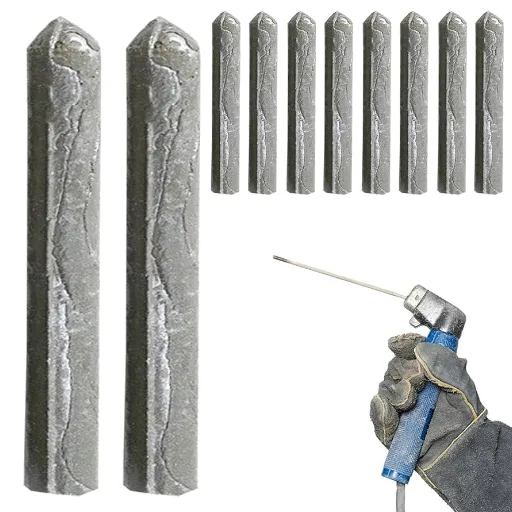
Essential Tools for SMAW Aluminum Welding
All the strong and dependable welds during the aluminum stick welding are made mainly by the right tools and equipment. Below is a list of the most important tools for aluminum welding via SMAW (Shielded Metal Arc Welding), which is further complemented by the most recent data insights:
A top-notch power source that can switch between AC and DC is the sine qua non, since AC helps to the maximum extent to break the oxide layers that usually appear on aluminum surfaces.
Always prefer stick electrodes that are specifically designed for aluminum, such as those made from the 4045 or 5356 alloys, which not only offer better quality but also are more compatible with aluminum materials.
An auto-darkening welding helmet guarantees protection and good visibility no matter the changing light conditions.
Stainless steel wire brushes and acetone are indispensable for cleaning and preparing the aluminum surface by getting rid of oxide layers and other contaminants that can inhibit the weld.
Strong clamps induce a steady and precisely aligned position of the pieces being welded, thus preventing distortions.
Gloves, aprons, and fire-resistant clothing serve as shields against burns, UV radiation, and projectiles falling on the welder’s body during the process.
Preheating aluminum is a great practice that prevents cracking and facilitates penetration of the weld. Propane torches are, for instance, great tools to use in this respect.
Having good ventilation or a fume extractor is a must to cope with the fumes generated while welding aluminum, thus creating a safe working environment.
The use of such tools, if well combined with technique and thorough preparation, allows one to produce strong, durable welds on the aluminum material whether it is for industrial, construction, or personal projects.
Choosing the Right Electrode for Stick Weld Aluminum
Picking an electrode is one of the major factors in stick welding aluminum and getting it right is a real plus. The go-to for the job is a rod made from aluminum, rod EH4043 or EH5356 being the most common. These electrodes are primarily targeted at aluminum and their compatibility with the majority of aluminum alloys is, therefore, their excellent quality. The E4043 electrode, for example, is characterized by its good nature, low cracking tendency, and nice-looking deposited bead, which makes it a candidate for general-purpose welding while E5356 provides both the higher strength and the better resistance to cracking needed for the more demanding projects.
There are a few factors to consider when picking an electrode: are the aluminum plates thick or thin, the alloy type, and what output do you expect regarding performance? Thinner aluminum parts usually need low-amperage settings and small-diameter rods to prevent burn-through while the opposite is true for thicker parts which should be large-diameter rods that can take the higher heat. Moreover, preheating the aluminum to remove impurities and to prevent porosity in the weld is a good technique to use with these electrodes.
Understanding Flux and Its Role in Aluminum Welding
Flux is a significant factor in the whole process of aluminum welding since it counteracts the material’s natural resistance to being joined which is due to the oxide layer covering its surface. The melting point of aluminum oxide is much higher than that of the base metal and this might impede proper bonding between the two during the welding process. The purpose of flux is to dissolve and eliminate this oxide layer so that the filler metal can stick to the base material just like it was never there in the first place. Besides, it also provides a barrier of protection during the application of heat so that re-oxidation is prevented.
Aluminum flux compositions have undergone changes over the years and in most cases, modern ones include chemical elements such as chlorides and fluorides which certainly work well with oxides in the sense that they break them down efficiently but leave little residue. The use of flux can greatly improve the quality of the joint, hence, it is unlikely that the common defects like inclusions or porosity occur very often. Still, it is necessary to clean thoroughly and get rid of all the residual flux after welding since otherwise, it might cause corrosion in the long run. It is the right flux selection based on your specific aluminum alloy and welding method that will lead to the best results in terms of both structural integrity and durability.
Techniques and Best Practices in SMAW Aluminum Welding

Preparation Steps for Successful Aluminum Welds
The main factor in using Shielded Metal Arc Welding (SMAW) to get perfect aluminum welds is a well-prepared foundation. The first step is to make the aluminum surface very clean through and through to get rid of the oxide layer, dirt, or grease, since these impurities can the welding process. Either a stainless steel wire brush for aluminum or chemical cleaners can be used, the latter being more gentle.
Following this, the next thing to do is to verify whether the aluminum alloy should be preheated or not and if so, to carry out preheating . Heating aluminium to 300 to 400 degrees Fahrenheit (150 to 200 degrees Celsius) mostly minimizes the occurrence of cracks and facilitates the penetration of the weld even better. However, overheating is still not a good practice as it leads to warping or other undesirable changes in the material.
Moreover, choosing the right electrode for the specific aluminum alloy is absolutely necessary. For example, depending on the alloy and the welding conditions, E4045 or E110X electrodes are the ones to be used. It is necessary to keep the proper storage conditions for the electrodes in order to avoid the risk of moisture absorption which causes welding defects.
Lastly, set the right current and polarity for the SMAW. In the case of aluminum, direct current electrode positive (DCEP) is commonly used to ensure proper heat distribution and good penetration. By following these steps very diligently, you will not only improve the weld quality but also the overall strength of the welded aluminum parts.
It has been confirmed by the most recent data that these preparation practices are effective in not only decreasing the occurrence of defects such as porosity but also in following the industry standards for producing aluminum welds that are strong and have high integrity over time.
Proper Techniques for Stick Welding Aluminum
The use of stick welding process for aluminum requires both technique and preparation to be able to create high-quality welds that will last a long time. The first thing you will want to do is thoroughly clean the aluminum surface using a stainless steel wire brush to get rid of the oxide layers and all kinds of other contaminants. Preheating aluminum to about 300 degrees Fahrenheit (149 Celsius) is considered an optional step, but it will help minimize thermal shock and increase penetration of the weld. Using the right electrode, for instance, an aluminum specific electrode (E4043), keeping a stable arc with short consistent arc-lengthness are some of the techniques to reduce the defects like porosity and cracking.
According to the most up-to-date research and confirmed data from search engine’s site, choosing the right amperage is one of the most important factors as it basically depends on the thickness of the material but it usually ranges from 60 to 120 amps for most cases. Furthermore, using direct current electrode positive (DCEP) makes sure that the weld joint gets the hottest and most penetrated part of the arc. As the welders increase their precision and keep in step with industry parameters, their welds of the modern aluminum kinds will be sure to be durable, consistent and up to the mark.
⚠️ Common Mistakes to Avoid in SMAW Aluminum Welding
SMAW aluminum welding methods all make the same mistakes and the errors come from the weld quality and result in structural problems. One such huge blunder is the insufficient cleaning of metal surfaces. Aluminum oxide, for instance, can exist above the melting point and thus if not removed, then the weld area will become weak and contamination could occur. And it is very common among welders that some would have the latest electrodes or the right type set for amperage but get stuck with poor penetration or excess spatter since these problems arise from that miscommunication.
Just as important as cleaning the metal surfaces correctly is to preheat the thick parts of the metal. Preheating to avoid rapid cooling of weld areas is not always practiced by aluminum welders, and this leads to brittle joints. In addition, lack of keeping a uniform travel speed and arc length often results in porosity and uneven bead). Fixing the speed of travel and the length of the arc often creates welders’ problems with porosity or uneven bead. Besides, it is common for welders to neglect keeping the humidity under control, which can allow moisture and hydrogen to enter the weld pool, creating cracks.
The continous following of welding parameters, cleanliness of the working surfaces, and control of environmental conditions are the surefire ways to avoid these mistakes and get quality aluminum welding. The latest industry practices, best found in updated welding manuals or reliable online sources like the American Welding Society, can help one avoid these common lapses and get the best possible results.
Innovative Approaches and Trends in Aluminum Welding
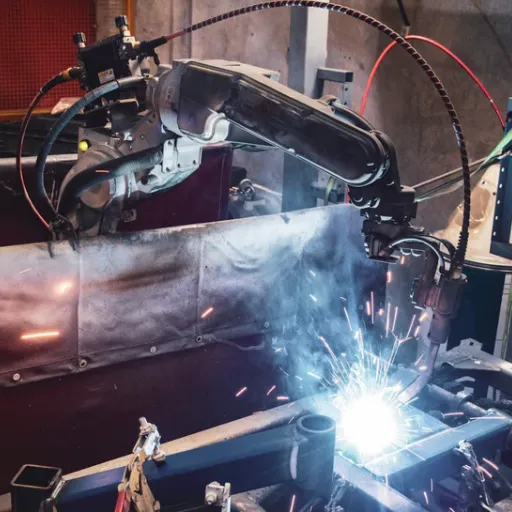
🚀 Emerging Technologies in Arc Welding Aluminum
The new technologies in arc welding for aluminum have made the process of welding aluminum more accurate and less time-consuming. As one of these technologies, the use of Artificial Intelligence (AI) and machine learning is totally changing the way welding is done. The AI machines can monitor and analyze data like heat and weld pool with the best sets of parameters to make sure every weld is high-quality and the same. Besides, techniques like Adaptive Pulse Technology that are considered to be advanced pulse welding are taking place to control the input of heat and to effect distortion in the case of aluminum being thin and heat-sensitive.
Laser-assisted arc welding is also winning as it gives more control over the welding zone and improves the penetration of the weld, resulting in stronger and more reliable joints. Besides, the hybrid technique is being developed and it combines arc welding with laser or friction stir welding, thus, is introducing new areas of efficiency and versatility in industrial applications. All these new technologies promise brighter days for the aluminum welding sector as it will offer more precision, less material wastage, and more adaptability in various manufacturing sectors.
📊 Industry Trends Influencing SMAW Aluminum Practices
The trend to which the manufacturers are increasingly paying attention and which is the most important one for SMAW (Shielded Metal Arc Welding) aluminum practices is the sustainability and environmental friendliness of the whole manufacturing process. The world is gradually becoming more and more aware of the need to reduce carbon footprints, hence, the manufacturers are on the lookout for ways that not only reduce the energy consumption and save material but also are not very difficult to adopt. The use of novel electrode coatings and filler materials developed for aluminum SMAW is going to reduce the energy consumption and waste in addition to merging the quality with the welding power. Moreover, the quality of such materials is known to be the main reason for their coming from the automotive and aerospace industries where the demand of material is light but strong at the same time. Consequently, such industries have led to a revival of SMAW as an accessible and effective method for aluminum welding. By using the latest advancements and following the trend in the industry, SMAW will continue to be one of the main techniques for aluminum fabrication.
Exploring Submerged Arc Welding for Aluminum Applications
In general, Submerged Arc Welding (SAW) is not a top or even a second choice for aluminum due to its intrinsic difficulties, which include high thermal conductivity of the material, and also the oxide layer on it which needs to be removed thoroughly before the welding process starts. However, innovations in the past few years have opened the path for the use of SAW in aluminum applications. The studies done on the matter show that using suitable fluxes and welding parameters, one can achieve a very good quality and an efficient weld with SAW on aluminum. Furthermore, the low thermal conductivity aluminum alloys are likely to be SAW-friendly, thus, the technique is going to be a real option for the specific industrial requirements. As the developments of rink tools and techniques continue, it might be possible for SAW to take part in large-scale aluminum projects more often, especially in those projects where long and continuous welds are required.
Frequently Asked Questions
❓ What is the best stick welding method for aluminum?
One of the stick welding methods that is most suitable for aluminum is that of taking the right precautions and getting the right aluminum stick electrodes for welding. These electrodes are special to aluminum and they are a very crucial factor in strong welds being made. Cleaning the aluminum surfaces first before the work begins and removing the oxide layer, which prevents the weld from being of good quality, are very essential. A proper arc length and a steady hand will help to get a consistent weld bead. In addition, controlling the heat input is very significant as aluminum is a very good heat conductor. Also, using a welding machine with the appropriate amperage settings will greatly facilitate the welding process.
❓ Which aluminum types are acceptable for stick welding?
Only certain types of aluminum are able to endure stick welding processes. As a rule of thumb, thick aluminum parts are more weldable than thin ones, since they can tolerate greater heat and still maintain their shape. Welding with alloys such as 4047 and 5356 is a common practice, as they are very compatible with the process. It is, however, necessary to consider that some kinds of aluminum may prove to be quite unyielding and create certain issues due to their high conductivity and propensity to be covered with an aluminum oxide layer. Therefore, it is necessary to study not only the properties of different aluminum types but also the whole area of their application so that welding operations are always successful.
❓ Welders, can you weld aluminum with a stick welding machine?
Yes, just not in the same way as one would with a MIG or TIG welder; nevertheless, one could still use stick welding equipment to weld aluminum if he/she possesses skills in special techniques and knows how to choose good materials. Stick welding of the aluminum metal produces aluminum alloy rod-like electrodes that make a strong bond and can be used for many applications. The downside though is the fact that stick welding or arc welding does not require a very precise level of operation as in TIG or MIG method hence it remains a good option for thicker aluminum sections. National setting of the stick welding machine and selection of the correct amperage is very important for getting a good quality weld.
❓ In what way does shielded metal arc welding operate with aluminum wire?
In the case of aluminum, shielded metal arc welding (SMAW) operates utilizing a consumable electrode with a coated flux. When you establish an arc, the electrode melts and joins with the aluminum workpiece while at the same time the flux creates a shield around it by producing a gas which keeps the area from contamination. This technique is especially advantageous when welding outdoors since the wind blows away other welding applications. However, the risk is there that the welding quality is directly influenced by the state of cleanliness of the aluminum surface. When you master the control of heat and puddle, success in welding is yours. SMAW is a trusty method for aluminum in industries requiring heavy-duty applications.
❓ The issues of stick-welding aluminum?
Multiple problems arise when trying to use stick welding for aluminum. The most difficult issue is the oxide layer that forms during the process, and the entire situation is even harder because this layer is very hard to remove. At the same time good adhesion, which is the basis for strong welds, has to be maintained. The main technical reason is the thermal conductivity of aluminum, which can lead to warping, and hence, if not properly treated, the warping would occur. Hence, it is better to be cautious, that is, to take the safe side, rather than risking the welding material being burnt through. Besides having the proper technical competence, the welder has to master the skill of maintaining the arc length constant in order to produce a good weld puddle. The moment one becomes aware of the obstacles he/she will definitely move forward in his/her welding skills and thus result in winning more.
Reference Sources
1
How to Weld Aluminum: The Beginner’s Guide
This guide discusses the use of SMAW for aluminum welding, noting its limitations and occasional applications.
2
Beginner’s Guide to Shielded Metal Arc Welding (SMAW)
This resource provides an overview of SMAW, including its techniques and applications, which can be relevant for aluminum welding.
3
Module 2 – Welding and Cutting Processes
This document from the U.S. Nuclear Regulatory Commission includes details on SMAW and its applications for aluminum and other metals.