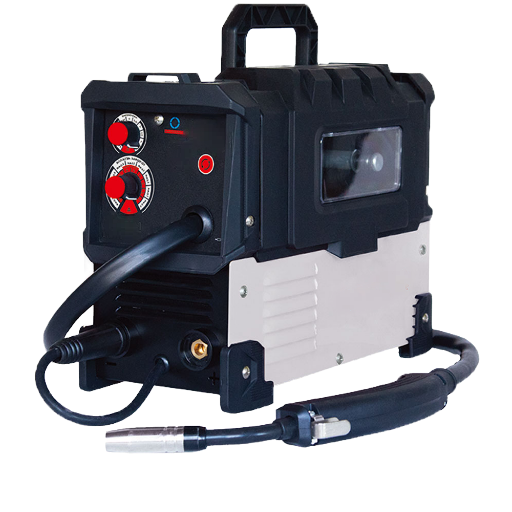
The method of welding has extreme importance in a multitude of industries ranging from building and construction to automotive repair and maintenance, and thus requires a certain amount of expertise and the right equipment, say a multiprocess welder, to really get excellent results. For both professionals and hobbyists, it can be hard to find a welder that caters to various project needs without compromising on performance or efficiency. This is where the multi-process welder really shines. Balancing its versatility with function and convenience, the multi-process welder offers its users the ability to proceed smoothly from one process to another, such as MIG to TIG to Stick welding. This article explores the benefits, use cases, and key considerations of multi-process welding solutions in great depth. Find here how choosing the right multiprocess welder can help boost productivity and provide a better finish in whatever task you undertake.
Understanding Multi-Process Welders
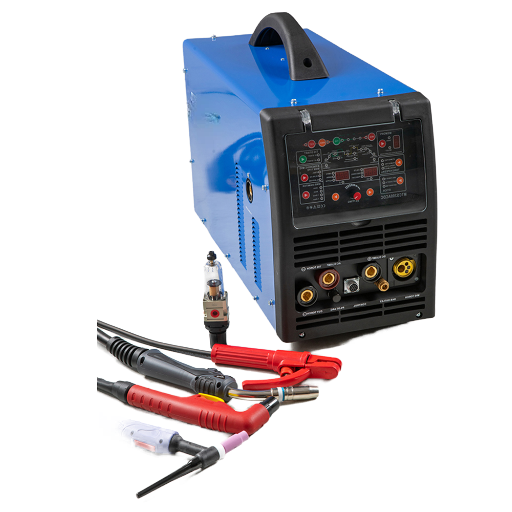
Almost all multi-process welders can perform MIG welding, TIG welding, and Stick welding, all in a single machine. This ability, combined with this flexibility,y enables it to serve an array of different applications, from industrial fabrication to the home project. Imagine the possibility of switching back and forth between welding methods on the go, allowing the convenience of not having a multitude of machines lying around-that certainly wins some time and floor space! A multi-process welding machine is especially helpful for those who aim for efficiency and adaptability. These welders combine the core functions of multiple machines into one, thereby simplifying numerous procedures, along with performance and quality.
What is a Multi-Process Welder?
Multi-process welders are multipurpose welding machines capable of several welding processes, such as Metal Inert Gas welding, Tungsten Inert Gas welding, Stick welding, and sometimes Flux-Cored welding. Given their versatility, they are an essential component with pros and cons for experts and hobbyists alike, as having a separate machine for every different kind of welding would be highly costly. The more recent multi-process welders are fitted with advanced inverter technology and digital control, giving them precision and efficiency, adaptability to materials, and the ability to weld various kinds. Their significance becomes apparent in environments that value space, cost-effectiveness, and operational flexibility. Working construction sites, making automotive repairs, or metal fabrication, these machines are crucial for quality welding with efficient workflow.
Types of Welding Processes
| Process | Key Features | Applications | Advantages | Limitations |
|---|---|---|---|---|
| MIG (GMAW) | Wire electrode, gas | Automotive, construction | Easy to learn, clean | Not for outdoor use |
| TIG (GTAW) | Tungsten electrode | Aerospace, electronics | Precise, high quality | Requires high skill |
| Stick (SMAW) | Consumable electrode | Construction, pipelines | Portable, versatile | Slower, slag removal |
| FCAW | Flux-cored wire | Shipbuilding, repair | Works outdoors | Produces smoke |
| SAW | Submerged arc welding | Heavy industries | Deep penetration | Limited to flat welds |
| Plasma Arc | Constricted arc | Electronics, aerospace | High precision | Expensive equipment |
| Gas Welding | Oxyacetylene flame | Repairs, fieldwork | Portable, versatile | Fire hazard |
| Thermit | Exothermic reaction | Railways, machinery | No power needed | High heat risks |
| Electron Beam | High-velocity beam | Aerospace, automotive | Precise, deep welds | High cost |
| Resistance | Electric resistance | Automotive, appliances | Pollution-free | Limited to thin metals |
Key Features of Multi-Process Welders
| Key Point | Details |
|---|---|
| Versatility | Supports MIG, TIG, Stick, and Flux-core welding |
| Cost-Effective | Saves money over buying separate machines |
| Space-Saving | Combines multiple machines into one |
| Ease of Use | Quick process switching, user-friendly controls |
| Applications | Suitable for various materials and thicknesses |
| Portability | Compact models available for on-site use |
| Power Output | Limited for heavy-duty industrial tasks |
| Durability | Reliable, but repairs can be costly |
| Target Users | Ideal for hobbyists, small shops, and light-duty tasks |
Benefits of Using a Multi-Process Welder
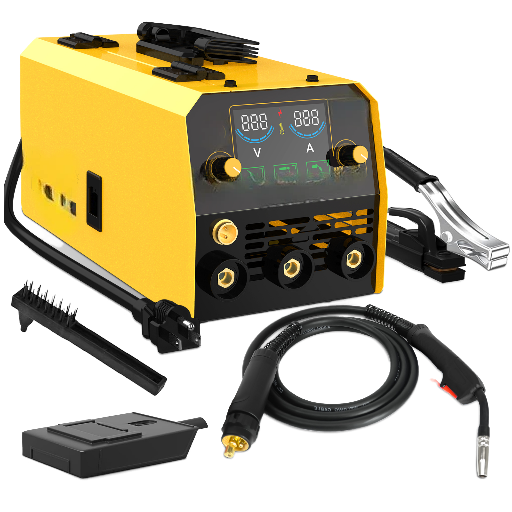
Versatility in Welding Applications
- MIG Welding: The process makes welding fast and precise on thin to medium-thick materials, while it is generally employed in automotive and fabrication with a multiprocess welder.
- TIG Welding: High-grade, clean welds are made for those processes that need precision, such as aerospace and artistic work.
- Stick Welding: Welding through rust, paint, or dirt, thus facilitating outdoor or repair work.
- Flux-Cored Welding: Welds thicker materials outside without needing shielding gas.
- Plasma Cutting: Allows proper cutting of several metals, thereby adding functions to fabrication and repair applications.
Cost-Effectiveness for Professionals
The right welding or cutting equipment makes for a significant investment toward cost-effectiveness. More modern machines with higher energy efficiency and reliability translate to reduced operational costs over time. Besides that, purchasing versatile equipment such as multipurpose units that support different welding styles will reduce the need for other equipment, so that this investment will pay off in the long run. Considering that durability and low maintenance costs are the other important parameters for ensuring that professionals can reduce their expenses on repairs and replacements while maintaining productivity and return on investment.
Enhanced Efficiency and Productivity
With the advanced technologies in place, one could optimize the workflows for enhanced industrial efficiency and productivity. Automation systems like CNC machines or robotic arms ensure that tasks get carried out with precision and consistency without human error or manual intervention. A manufacturer whose supply chain is streamlined and maintenance predictive keeps operations efficient by reducing durations of downtime and maintains continuous production. Another output is the increased productivity and enhanced quality of production when firms train their workers on the effective use of modern equipment.
Comparing Popular Multi-Process Welders
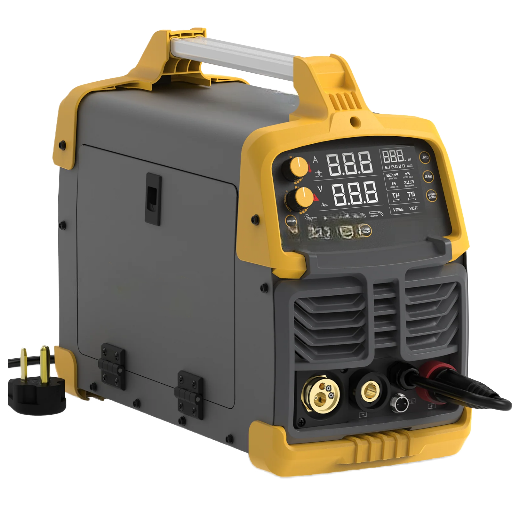
Multimatic® 255 vs. Multimatic® 235
| Key Point | Multimatic® 255 | Multimatic® 235 |
|---|---|---|
| Processes | MIG, Stick, TIG, Flux | MIG, Flux-cored |
| Pulsed MIG | Yes | No |
| TIG Capability | DC TIG, Pulsed TIG | Not available |
| Stick Welding | Yes | No |
| Input Voltage | 208-575V | 208-240V |
| Screen | 7-inch LCD | Basic interface |
| Weight | ~84 lbs | ~80 lbs |
| Spool Size | 12-inch compatible | 4-inch compatible |
| Price | Higher | Lower |
ESAB vs. PrimeWeld Models
| Parameter | ESAB | PrimeWeld |
|---|---|---|
| Durability | High | Moderate |
| Features | Advanced | Basic to Moderate |
| Price | Expensive | Affordable |
| Portability | Limited | High |
| Consumables | Costly | Affordable |
| Customer Support | Moderate | Excellent |
| Target Users | Professionals | Hobbyists |
| Power Options | Multi-Voltage | Multi-Voltage |
| Weight | Heavy | Lightweight |
| Warranty | Standard | Extended |
XMT® 450: A Comprehensive Review
Industrial projects require an array of welding power sources for uniquely differing welding safety measures; this is exactly where the XMT® 450 welding power source kicks in. One of the versatile welder power sources with multiple process applications includes MIG, TIG, or stick welding, depending on the requirements of the project. Being conferred with strength during construction, it is fit to withstand adverse working environments. It further allows one to have finer control of the arc, hence improving weld quality and effectiveness. Those who consider it to be a bit pricey consider it an investment, but in terms of long-term performance and efficiency, indeed it is worth it as an option for welders looking for a high-level performing system. It is, therefore, well-fitted for industries requiring precision and durability in their welding operations.
How to Choose the Right Multi-Process Welder
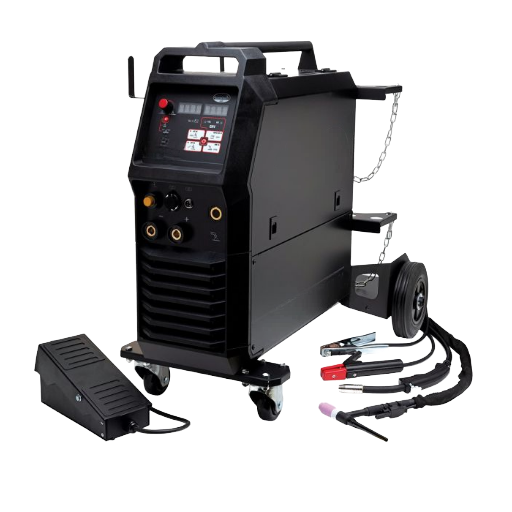
Factors to Consider When Buying
Power Options and Input Requirements
The welder in question should match the available power supply, voltage, and phase, including, to ensure that it functions without any issues.
Material Compatibility
Verify that the welder will be fit for the types of materials you will be working with, such as steel, aluminum, or stainless steel, so that it may optimally perform every operation of yours.
Duty Cycle
Look at the duty cycle of the welder; it describes how long the welding equipment can weld at a given amperage without overheating, especially for applications with high demands.
Portability and Weight
Determine the needed dimensions and weight of the welder if a degree of mobility is important while working or for your projects.
Advanced Features and Controls
Assess any interesting features such as pulse welding, intuitive digital interfaces, and memory settings, all of which can provide fine control and efficiency for more complex welding processes.
Recommended Models for Different Needs
Ideal for Hobbyists and DIY Enthusiasts
The Miller Multimatic 215 is a wonderful welding machine that is as versatile as it is user-friendly. Offering MIG, TIG, and Stick welding capabilities, this machine is compact and lightweight and excelled in the ease of setup, making it perfect for home projects or light repairs.
For Small Businesses and Light Fabrication
The Lincoln Electric Power MIG 210 MP can handle light industrial needs quite well. This machine is well-built and offers the three processes, so it has become the well-rounded choice for small-scale fabrication.
Industrial Heavy-Duty
The ESAB Rebel EMP 285ic is meant for industrial-grade and high-end applications. Across all welding processes, MIG, TIG, and Stick, it caters to multiprocess welding, precision, and durability in terms of handling heavy-duty material.
Designed for Portability and Field Work
Ideal for welders who require portability, the Multi-Handler is the perfect in-field solution. Compact and lightweight, great on performance, and produces a good-quality weld on the go!
Pro Tip: These machines are tailored to address specific needs, so you can find your multiprocess welder for welding requirements. Before making a choice, always consider your work requirements and budget.
Assessing Your Welding Projects
Whenever I check the attributes of my welding work, I first identify the materials and types of welding processes involved. I assess the magnitude of the work requiring welding. Do we talk about thick materials, or will thin materials suffice? What minimum weld strength is required? And in what environment will the welding be done? Price and portability of the welding machine would contrastly decide the type of welder well-suited for the work-life I am undertaking. Putting all these together will let me select a suitable multiprocess welder that will produce the best results.
Maintenance Tips for Multi-Process Welders
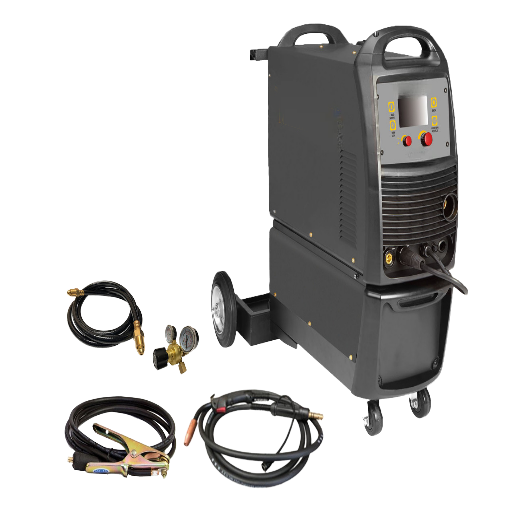
Routine Maintenance Practices
- Inspect and Clean Regularly: Check for dirt, dust, or debris accumulation on top of the welding machine. Use a soft brush or compressed air to clean the vents, maintaining proper airflow and keeping the machine from overheating.
- Check Cables and Connections: Observe power cords, cables, and connectors for anything that endangers their working ability, such as wear, fraying, or damage. Such parts need immediate replacement.
- Check Consumables: Keep an eye on electrodes, nozzles, and contact tips as they wear out. Replace all consumables once they are worn to maintain weld quality.
- Lubrication: Moving parts, if any, can be lightly lubricated for smooth operation based on the manufacturer’s recommendation.
- Test Safety Features: All safety features, such as thermal overload protection, should be tested to ensure they work correctly to guarantee safety during use.
- Manufacturer’s Guidelines: The user manual should be consulted for specific maintenance schedules and recommended practices for the particular welder model.
Common Issues and Troubleshooting
| Issue | Key Point | Solution |
|---|---|---|
| Arc Striking | Electrode | Clean & Adjust |
| Weak Welds | Compatibility | Inspect & Adjust |
| Overheating | Duty Cycle | Cool & Ventilate |
| Excess Spatter | Settings | Adjust & Align |
| Wire Feed Issues | Tension | Inspect & Fix |
| Porosity | Gas Flow | Maintain & Clean |
| Machine Not Starting | Connections | Check & Reset |
| Erratic Arc | Consumables | Replace & Secure |
| Weld Cracks | Preheat | Follow Guidelines |
| Excess Noise | Components | Inspect & Service |
Extending the Lifespan of Your Welder
- Regular Maintenance: Whenever possible, perform inspections and cleaning on the welder. Remove debris from inside, tighten loose elements, and check the integrity of wires and cables.
- Proper Storage: Store the machine in a dry, clean, and well-ventilated area, avoiding exposure to moisture or contaminants.
- Correct Usage: The welder should always be operated within its duty cycle to avoid overheating. Settings should always correspond to material specifications for user safety.
- Gas and Consumables: Always use proper shielding gas and change worn-out consumables as required for a stable and efficient operation.
- Ventilation and Cooling: Provide for good ventilation around the welding machine while in use. Employ cooling systems if needed to keep it running in well-balanced conditions.
Where to Buy Multi-Process Welders
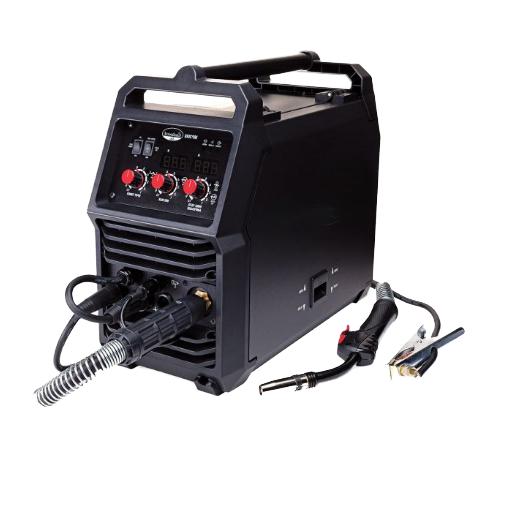
Top Online Retailers for Welders for Sale
When looking for welders online, it is essential to turn to trusted and established retailers that provide quality equipment and customer service. Below are some of the top online platforms as per the latest data and search trends:
Amazon
Amazon boasts an extensive range of welders from leading brands, fit-for-purpose across all skill levels and various applications. It has become quite popular among many purchasers for having detailed reviews and competitive prices. Also, Prime members are provided with immediate shipping options.
Home Depot
Known for keeping the widest variety of tools and equipment, Home Depot does keep welders for sale, including multiprocess-type welders, fused for MIG, an also for TIG welding. Its website is showcased with product descriptions, user reviews, and financing offers, making it a stop-and-go for professionals.
Welders Supply Company
This company, specialized in welding equipment, offers an exhaustive catalog of products, from standard equipment to highly technical machines. Welders Supply Company is also reputed for good customer service and technical know-how.
Cyberweld
Cyberweld aims to supply welding supplies of the best quality at competitive prices. They regularly reinvent their line of products with offers and packages suitable for amateur welders as well as industry experts.
Lowe’s
Lowe’s carries welders from top brands and boasts an easy-to-navigate online site. They also provide excellent customer service, including in-store pickup for those who want their equipment quickly.
Important Note: Before purchasing any welder from any web-based store, make sure to ask others for their opinions about it, compare the specifications, or check the warranty details to be certain that the machine fits well for your own needs.
Local Shops and Showrooms
Local shops and showrooms offer the opportunity to actually interact with welding equipment prior to purchasing it. The customer can examine machines physically, check out features in real-time, and possibly receive advice from store staff. Some shops also give a demonstration or let the prospective buyer try the equipment so as to be sure of its appeal to their own needs. Popular options include specialty welding supply stores and distributors like Airgas or Praxair that maintain a large inventory of machines and accessories. Confirm the stock before heading out to a local store so that time is not wasted and availability is assured.
Considerations for Buying Used Equipment
When purchasing used machines, one must ascertain their condition, functioning capabilities, and extent of safety. Examine the machine for any signs of use, damage, or missing parts. Quite often, there may be an opportunity to test its performance so that it ideally works as it should. Check its maintenance history and confirm that it conforms to the safety standards in effect. Also, inquire about the market value to ensure the price is fair and competitive. Buying from reputable sources or certified pre-owned programs ensures an added degree of reliability and support.
Frequently Asked Questions (FAQs)
A: A multi-process welder is, by all means, a great machine to have at your disposal for performing several welding processes, including MIG, TIG, stick, and flux-cored welding. This gives the user great flexibility, which he can employ in various welding jobs that one machine may encounter, making it the best choice for professionals and hobbyists alike.
A: Primarily, specialized welders tend to be designed for welding processes, whereas a multi-process welder can perform welding techniques. Hence, in a nutshell, a multi-process welding machine such as Miller® Multimatic® 235 can weld by MIG, TIG, and Stick, somewhat taking the best of both worlds of versatility and convenience.
A: A multi-process welder is capable of numerous welding processes, including MIG welding, TIG welding, and stick welding. More sophisticated models might also be capable of flux-cored welding and even plasma cutting, greatly expanding the scope of fabrication and repair work that can be performed.
A: The Miller Multimatic 215 is a well-known multi-process welder, prized for portability and ease of use. The Auto-Set™ technology quickly allows the user to set the machine for best performance. Since the machine flows through MIG, TIG, and stick welds, it is perfect for many welding jobs.
A: Yes, many multi-process welders, such as the Miller® Multimatic® 255, will work with a spool gun. This allows the user to weld aluminum wire, which is usually more difficult to weld on a standard MIG machine. Using a spool gun improves feeding consistency and reduces wire tangling.
A: The duty cycle of a multi-process welder will correspond to how long the machine will work for a given time period without overheating. For example, a welder rated at 200 amps may have a duty cycle of 30 percent at the said amperage. That means it can only weld for three minutes for every ten at full operational output. The compensation of the duty cycle is an essential factor for quality performance welds and to avoid damage to the machine.
A: When we talk about choosing a multi-process welding machine, the factors to consider would include what range of processes it accommodates (MIG, TIG, stick); what the input power requirement is (120V vs. 240V); portability issues; control options (otherwise, are there digital controls?); and any extras, such as a welding cart or an auto-darkening welding helmet. Machines like Everlast EMP 215IC offer an all-around welding package for various needs, including MIG and TIG capabilities.
A: Maintenance of a multi-process welder essentially involves cleaning the torch occasionally, checking gas flow and connections, inspecting cables for wear and tear, and ensuring that the input power supply is stable. Well acquainted with these, your very own maintenance regimen under the manufacturer’s guidelines will further extend the life of your welder and keep it working with ease across all welding processes.
Reference Sources
1. Partial Automated Multi-Pass-Welding for Thick Sheet Metal Connections
- Year of Publication: 2022 (Lauer et al., 2022)
- Authors: S. Lauer et al.
- Journal: Annals of Scientific Society for Assembly, Handling and Industrial Robotics 2021
- Key Findings and Methodologies: The research studies the partially automated multi-pass-welding system for thick sheet metal connections. An abstract is unavailable. However, from the title, it can be gathered that the study looks at automating welding passes in sequential steps, a process of multi-process welding, for the improvement of joining quality and efficiency when it comes to thick materials. The methodology probably dwells on designing automatic systems that can carry out these multiple welding passes.
2. Multi-component gases for construction and special steel arc welding and their fume formation rate (FFR) effect
- Publication Year: 2022 (Bjelajac et al., 2022)
- Authors: Edvard Bjelajac et al.
- Journal: Zavarivanje i zavarene konstrukcije
- Key Findings and Methodologies: The study examines how different multi-component gas mixtures affect fume formation rate during DC TIG welding of construction and special steels, including MIG/MAG, TIG, and laser welding. The authors argue that the right choice of welding process for a particular application considers productivity, weld quality, and welder’s health. Shielding gases have also been found to affect the productivity and quantity of welding fumes. The methodology was based on experimental procedures to analyze different mixtures of gases with their effect on the FFR for several industrial arc welding processes, including MIG and TIG.
3. Top H Beam Production Line Manufacturer and Supplier in China
Final Thoughts
Multi-process welders are such an incredible development that they spell versatility and efficiency for pros and hobbyists. These machines offer many welding options clustered into one spot, thus saving space and, eventually, money for the client. Multi-process welders keep the workflow steady and productive. From automotive repairs to construction or metal artistry, the right multi-process welder will really change how you enjoy welding and produce better results in all areas.