

The tools and techniques of welding have changed through the years and have given professionals-and even hobbyists-various options to fulfill their differing requirements. With all these different welding apparatus and methods, which do you go with for your project? This blog post goes inside the world of welding as it examines the nitty-gritty of welds, the role of welding machines, and the main differences between welding types. Some helpful guidance will assist you in making appropriate choices and will fill you in on the catchy science of the craft itself. Read on to discover the tools and methods that make modern welding work.
Introduction to Welding Equipment
What is Welding?
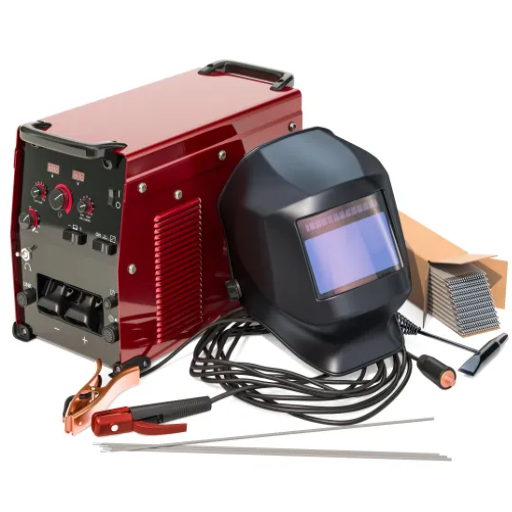
Welding is a fastening technique, blending metals, thermoplastics, or other fusibles-a process requiring heat to melt the parts so when cooled, these parts umbsted into a solid attached bond. Sometimes can be used synonyms with melting processes of metal pieces with some energy sources: from plain gas flames to electric arcs, high energy laser rays, friction, etc. The newest data from ‘s search engine suggest welding is very important in many sectors: construction, automotive manufacturing, and aerospace, to name just a few, to ensure structure and product endurance. Welders achieve ever-greater exactness, efficiency, and scalability through the modern welding technical advancement, thereby essential to engineering and fine craftsmanship.
Importance of Choosing The Right Welding Equipment
Selecting the correct type of welding equipment is an irrefrangible element of survival for any welding project from the perspective of quality and safety. Recent data from ‘s search engine showed that a proper use of equipment customized for the job would boost efficiency rates and cut down on erroneous works and wastage of materials. Ideally, these tools should facilitate the exact positioning and holding of the work piece, irrespective of whether in steel bridges, automotive maintenance, or aerospace components. TIG welding is preferred for delicate jobs with fine detail, whereas MIG welding is widely used in fabrication on the speed advantage. Therefore, investing in a specific type of equipment actually saves money later in terms of maintenance and downtime of operations. So, the choice of welding equipment remains the greatest guarantee to get high-class results while working within safety standards and industrial regulations.
Overview of Different Types of Welding Processes
Welding is a varied process consisting of several techniques catering to specific industrial or manufacturing demands. Each welding type carries with it characteristics different from each other and its own set of uses; choosing one suitable for certain uses depends on the environment, material being joined, and degree of precision being sought.
MIG (Metal Inert Gas) Welding
MIG welding or Gas Metal Arc Welding (GMAW) could well be regarded as the most common welding processes, continuously feeding wire electrode and shielding gas to secure a solid and clean weld. This kind of welding is best suited to operations requiring a high rate of speed and is being applied extensively in automobile construction and general manufacturing.
TIG (Tungsten Inert Gas) Welding
In TIG welding or Gas Tungsten Arc Welding (GTAW), we speak of welds of great precision and control. It welds, using a non-consumable tungsten electrode, a variety of metals, such as aluminum and stainless steel. The TIG welding is usually utilized in industries that require fine detail and clean aesthetics, i.e., aerospace and artistic metalworking.
Stick Welding (Shielded Metal Arc Welding – SMAW)
Stick welding stands in history among the oldest welding processes used and among the most determined. Commonly applied in the industrial fields of construction, maintenance, and repair, stick welding uses an arc from an electrode which is consumable and is coated in flux to create a weld. Simple enough even with a little bit of rust or dirt on the metal.
Flux-Cored Arc Welding (FCAW)
FCAW is similar to MIG welding. It uses a continuous self-shielding or gas-shielded wire as an electrode. Due to the fact the wire itself has flux to protect the weld area, this type of welding is advantageous for outdoor welding and areas under heavy wind conditions, situations in which the shielding gas could dissipate too quickly.
Plasma Arc Welding (PAW)
Plasma Arc Welding is a high precision process using ionized gas to create a highly concentrated arc. This advanced method of welding is generally implemented for intricate welds of the aerospace and electronics industries with minimum distortion.
💡 Key Insight:
Most welding processes are selected according to project type, material thickness, working environment, and required precision. Modern technologies and information generated from sources like ‘s search engine indicate that industries are increasingly using the blend of traditional welding techniques with automation and robotics to boost efficiency and precision. The understanding of those particular requirements of each project would grant welder and engineer the ability to pick and direct themselves about the most suitable choices to have the ultimate obtainable realization.
Types of Welding Machines

Arc Welding Machines
Arc welding machines lend their hallmark efficiency and adaptability to truly qualify as welding equipment. According to the latest report by, the welding units establish an electric arc between the electrode and the base material, melting the metals at the welding site. One very common question is: What makes arc welding machines adaptable to numerous industries? The very answer to it is adaptability: Arc welding machines are used to weld any material, many of them being types of steel; this equipment serves in the construction, automotive, and aeronautical industries. Also, due to technological advancement, enhancements such as automatic settings and precision control came about, rendering the welding machines reliable and easy to operate throughout various applications.
MIG Welding Machines
Why have MIG welding machines gained in popularity? This question is simple to answer, being due to their versatility, efficiency, and ease of use. They are the very good welding machines for beginner welders as well as professionals, who will regard them to afford a smoother welding experience over minimum time setup. These machines ensure efficiency in welding a wide range of metals including carbon steel, stainless steel, aluminum, and alloys, holding them indispensable in industries such as manufacturing, shipbuilding, and fixing automobile parts. Most recent statistics from ‘s search engine trends show a significant increase in search queries on “best MIG welding machines for beginners” and “automated MIG welding solutions,” clearly representing a growing interest from hobbyists and industries alike. Additional features, such as wire speed adjustability, digital displays, and advanced gas shielding mechanisms, push their adoption even further in ensuring precision and efficiency in an extensive variety of applications.
TIG Welding Machines
When precision and versatility come into play for clean and neat welding in the aerospace, automotive, and artistic metalworking industries respectively, TIG machines are appealing. Recent application of search engine trends for increased activity on queries like “What makes TIG welding better for intricate projects?” and “Which TIG welding machine is best for beginners?” TIG welding is preferred for producing high-quality, nice-looking welds with very little spatter. Hence, it employs a tungsten electrode with options for very fine heat and arc control, ideal for delicate and thin work. One is usually advised to choose machines that offer adjustable amperage controls, high-frequency start, and AC/DC operation to facilitate a smooth learning curve for most metals.
Detailed Look at Different Types of Welding

Stick Welding
Stick welding is one of the oldest methods and among the most employed for a variety of services. This involves welding where an electrode or stick coated with flux is used. When the electrode melts wire, flux coating generates a protective gas and slag to prevent weld contamination. The versatility of the procedure affords easy carrying out in outdoor locations and wide-scale projects under windy or unfavorable conditions.
Why is stick welding still widely used today?
Flux Cored Arc Welding
Semi-automatic or automatic arc welding procedure whereby a consumable electrode wire with a flux core is continuously supplied. The flux creates a shielding gas for the weld pool where the shielding gas is not always provided externally. In view of recent data collected from several sources within the industry, FCAW is well-liked mainly because of its efficiency and adaptability in areas like shipbuilding, manufacturing, and structural erection. It serves well in an outdoor environment or in windy conditions where shielding gas would be impractical. Also, because of its faster weld speeds and deeper penetration as compared to some other processes, it serves well in productivity applications requiring a high level of performance. Developments in consumables and equipment keep enhancing its popularity even further, suitable for high-quality applications needing execution under adverse conditions.
Submerged Arc Welding
Submerged Arc Welding (SAW) is a welding technique of high efficiency; this process uses a wire electrode and a protective granular flux over the deposited weld, fully covering the arc zone. The unique configuration of SAW reduces spatter, decreases fumes, and provides a very clean weld with deep penetration. Recent insights from the search engine data reveal that heavy processes such as in shipbuilding, construction of large-diameter pipelines, and pressure vessel fabrication are heavily reliant on SAW. With high deposition rates and consistent production of quality welds, it is selected wherever efficiency coupled with durability is needed. Further improvements in automation and flux formulations have made this process even more reliable to cater to modern industrial requirements.
Choosing the Right Welding Equipment
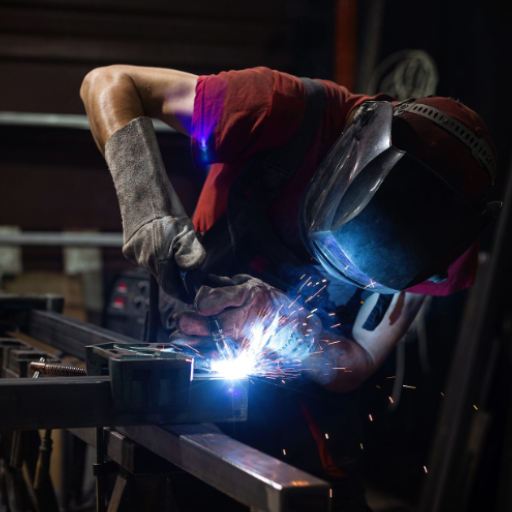
Factors to Consider When Selecting Welding Equipment
Choosing welding equipment involves a careful analysis of several factors for efficiency, quality, and suitability for particular working tasks. Major considerations are as follows:
- 1
Type of Welding Process
Come to determine which welding process fits your project-MIG, TIG, Stick, or Flux-Core welding. Each process has its array of advantages to further specialize for applications on materials’ basis, thickness, and grade of desirable weld. - 2
Material and Thickness Requirements
Considering the type of material weld will be performed upon is an important aspect (i.e., steel, aluminum, stainless steel) or thickness. It enables you to choose the machine capable of appropriate output power and thus suitable for the material. - 3
Portability and Work Environment
Decide if portability holds an edge in your work environment. Compact and lightweight machines are best for fieldwork, whereas large stationary machines suit industrial applications. - 4
Power Supply Availability
Check if your equipment has power supply requirements. Some machines can run on a standard household outlet, like 110V/120V, while some need a higher voltage of industrial power at 220V/240V, and some others can even generate their power while being off-grid. - 5
Automation and Technology Features
Many modern gluing and welding machines come touting great features: digital displays, programmable settings, and some even integrated with robotic systems. These provide welding high levels of precision, consistency, and efficiency. - 6
Budget and Cost Efficiency
Balance your budget with long-term cost efficiency. While cheap equipment may seem the cheaper alternative in the money spent, investment into quality equipment is one way of saving through low maintenance costs.
All these factors being conjoined with the specifications of your project will help you better choose welding equipment. Based on recent data from the ‘s search engine, automated welding systems and energy-efficient machines have seen a surge in interest in recent years, showing how the industry is soon to focus on sustainability and precision in welding technologies.
Best Practices for Different Welding Projects
In welding projects, it is important to adjust one’s working procedures to the traditional procedures of the industry as well as emergent trends researched by the industry. According to the current research data presented by the search engine of ‘, there seems to be an incipient increase in searches on welding sustainability and automation solutions. This shows a shift towards more environment-friendly and efficient choices.
🏗️
Structural Welding Projects
For large-scale structural work, automated welding should be the first choice as it ensures not only greater precision but also less wastage of materials, in line with the sustainability trend showcased in the search data.
🔧
Pipe Welding Projects
Energy-efficient machines, which have been searched for so frequently of late, have great significance at this particular site. They help ensure the organisaton controls energy consumption while registering consistent quality, which is key to the working of industrial applications.
🎨
Artistic and Decorative Welding
Portable, versatile welding equipment is ideal for artistic and decorative works. A rising interest in hybrid machines that can offer such flexibility by combining several welding methods also appears in search data.
By melding modern preferences with proven best practices, professionals can bear on productivity, environmental accomplishment, and the rapid evolution of the welding industry.
Safety Considerations for Welders

Essential Welding Helmets and Protective Gear
In welding, a high-quality helmet and other safety gear are the safest protectors against hazards. Online data of recent times reveal the trend that focuses on helmets carrying the auto darkening filter. The futuristic helmet changes the shade just as per the brightness of the incandescent welding arc; welding and welder safety are thus put into consideration. Results also show an increase in search for lightweight protective clothing made of flame retardant material for mobility and protection. When these are put together with sturdy gloves, heat-resistant apron, and stout boots, these newest protective gear designs meet all safety requirements and decrease the risk of burns, eye injuries, or harmful UV exposure. Quality welding protection gear always guarantees a safe weld.
Safety Tips for Beginners
- ⚠️
Wear Appropriate Protective Gear
In other words, first-rule-of-protection, always equip the certified PPE: welding helmets indeed with the proper shade, flame-proof clothing, safety gloves, and steel-toed boots. This is a protection against injuries by UV radiation burns or flying debris.
💨
Provide Proper Ventilation
Welding fumes can have poisonous chemicals in them. Thus, the gases generated must never be allowed to be inhaled by working always in a ventilated place or using high-pressure fume extractors that quickly remove toxic gases in welding. These gases-usually inhaled over a period until it leads to respiratory ailments.
🔍
Inspect Equipment Regularly
First and foremost, check the instrument and equipment for any faults or wear and tear before working on a project. The chances of an accident arising due to failing equipment are much higher with no added safety measures.
🔥
Put Fire Prevention Measures Into Practice
Fire extinguishers should always be within reach while the working area should be cleared of anything flammable. Poor control of fire hazards has been a major cause of too many welding accidents over the years.
📚
Educate Yourself on Welding
If a beginner, he would need to take some time familiarizing himself with applicable welding techniques and the functions of his equipment. Online tutorials and instructional training courses can be a good starting place to build safe practice from.If followed, these tips can help the beginner be an active participant in creating a working place that is safe and efficient, thereby disposing of unnecessary associated risks to their practice.
Welding Equipment Maintenance
Keeping clean is essential for welding equipment with regard to safety, performance, and equipment life. Having regular checks of all cables on-site, electrode holders, and connections helps signify any kind of wear and tear or any other potential issue which might result in an ultimate tool malfunction. Going by recent data, a lot of searching questions about how often welding equipment needs to be maintained can be seen on the Internet. Experts recommend a thorough check hard at work of looking for frayed wires and damaged insulation at least once a month. Another inspection should be for debris clogging any vent or filter.
Finish cleaning the welding machine after use so that dust and slag do not pile up is another commonly searched concern. Keeping in mind the recommendations, replace worn-out parts such as nozzles and contact tips at intervals to allow the competent function of the welding machine. Together with the manufacturer’s instructions about maintenance and storing of tools safely in a dry place will lessen the chances of breakages. Time invested in the preventive approach will save downtime; hence welding productivity is safe to be prioritized.
Frequently Asked Questions (FAQ)
❓ What are the types of welding machines offers?
Various types of welders are available, each being suitable for a particular type of work and material. Common types of machinery are: MIG welding machines; TIG welding machines; and stick welding machines. MIG welding or gas metal-arc welding, dusts a continuous wire feed and electric arc that melt the base metal. Hence it is for all sorts of metal. TIG welding or gas tungsten arc-welding uses one non-consumable tungsten electrode and shielding gas to weld very clean and precise welds, usually under stainless steel and aluminum. Stick-welding or shielded-metal-arc welding uses the consumable electrode, flux-coated, for welding most of the time where outdoor work or heavy-sheet work is involved.
🤔 How do I determine the welding equipment that’s appropriate for me?
Choosing your welding equipment is all about the specific process you intend to use, and the materials you’ll be working on. Welding thin materials is better planned out with a TIG welding machine for its precision in delicate work, while the heavy equipment repair would require a lot more efficiency from a MIG welding machine or a stick welder. The source of power for the welding equipment is also worthy of consideration, with certain processes having a higher welding power than others. Ranking one’s welding needs with the types of welding machines and their capabilities in mind will land you a perfect choice.
⚖️ What is the difference between MIG and TIG welding?
MIG welding or gas metal arc welding and TIG welding or gas tungsten arc welding are the more popular welding processes and are very different in both procedure and application. In MIG welding, a wire is continually fed as the electrode needing the shielding gas against contamination of the weld. This makes MIG welding faster and easier for beginners. On the other hand, TIG welding employs a non-consumable tungsten electrode and is considered more precise, and is typically used for welding stainless steel and other thinner materials. MIG makes its applications in construction or manufacturing as it is faster, whereas TIG is applied where good quality welds are required. These differences assist the welder in checking when to use which welding technique for his or her specific welding job.
🛡️ Which type of protective equipment should I require to wear while welding?
Depending on the nature of the welding work, different types of protective equipment are in use for safety. A welding helmet, gloves, and clothing provide protection against UV radiation, heat, and welding sparks. A welding helmet with auto darkening lenses comes first in the order of importance as safety equipment as it observes the scanty bright light radiation against the eyes. Therefore, in a secondary manner, flame-retardant clothing and leather gloves are worn to protect the skin from burns and injuries. Sometimes, these may not be enough, as in plasma arc welding or flux-cored welding, where a little extra care is warranted against fumes and particles. Always, safety first and then the type of protection for the welding of your choice.
🔧 What process uses a non-consumable tungsten electrode?
The welding process is called TIG welding or gas tungsten arc welding. Making the highest-grade quality welds, TIG welding is ideal for working with stainless steel and aluminum. The TIG welding process involves an electric arc generated between the tungsten electrode and the workpiece; while during this time, an inert gas, usually argon, is resealing the weld zone from any contamination. Thus, the welders get more control over the welding arc, best utilized for thin materials. In instances where the appearance and weld strength are of prime importance, TIG welding is carried out: for example, in the aviation and automotive industries.
Reference Sources
Ready to Start Your Welding Journey?
Whether you’re a beginner or professional, choosing the right welding equipment is the foundation of successful projects. Take time to assess your needs, prioritize safety, and invest in quality equipment that will serve you for years to come.
SourceDescriptionAccess

![Robot Welding Parameters [Traceable Window]](https://zhouxianggroup.com/wp-content/uploads/2026/10/robot-welding-parameters-blog-featured.png)


