
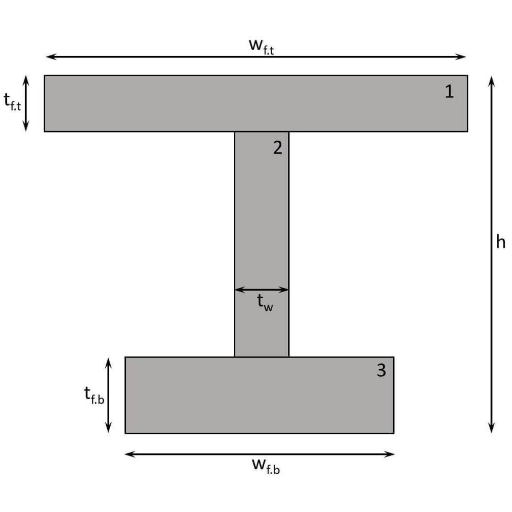
The moment of inertia is one of the important properties that need consideration while designing and analyzing structural members. In particular, the H-beams are a foundation of modern construction. This thorough guide goes over the moment of inertia concept of H-beams, describing definitions, calculation formulas, and builder resources. A field engineer, a student, or any other person who wishes to know structural mechanics have a way-by-step, crisp approach to deeply understand the subject and how to use it practically.
Understanding Moment of Inertia
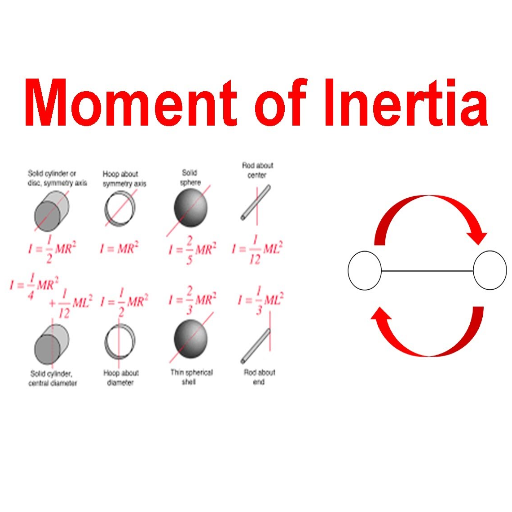
Definition of Moment of Inertia
Moment of inertia, usually denoted by I, is a primary physics and engineering term that denotes how much an object resists rotational motion about a particular axis. According to its geometrical configuration and distribution of mass, the greater distance of any portion of the body from the axis results in a greater moment of inertia.
Key Insight: In terms of civil engineering, moment of inertia is essentially the moment determining how an H beam will resist bending and deformation under applied loads. In other words, it is important for engineering and structural design based on stability and efficiency factors.
Importance in Structural Engineering
It is one structural engineering property that signifies resistance imposed by beams and structural members to bending and deflection. For the design of critical infrastructures, such as bridges, skyscrapers, and industrial frameworks, the property is required.
25%
Material savings achievable with I-shaped steel beams compared to conventional shapes (AISC standards)
30%
Increase in structural stiffness through optimized geometric designs using modern software (Institution of Structural Engineers)
Basic Theory of Beam Inertia
For beams, moments of inertia relate directly to structural design fundamentals, which define how the cross-sectional area distribution relative to the neutral axis influences stiffness and stability. Beams with higher moments of inertia would deflect less under heavier loads and hence perform better structurally.
H Beams and Their Applications
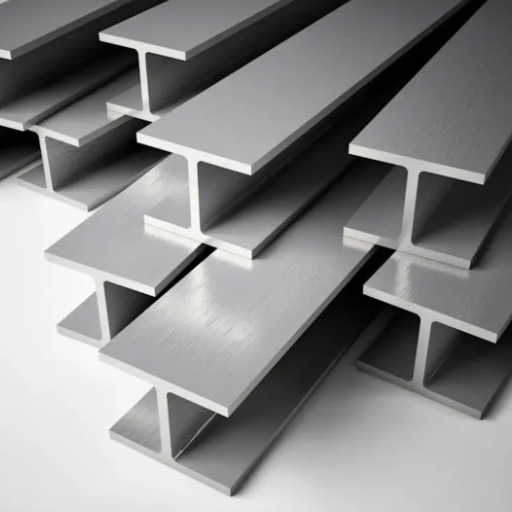
Definition and Features of H-Beams
H-beams are structural elements designed with an exceptional load-bearing capacity and with the best efficiency possible. Their name is on account of the H-shaped cross-section it has and the beams provide for the best strength by optimizing the distribution of material without the unnecessary weight that makes material very costly, therefore the beams have countless applications in construction and engineering.
Someof the Key Features of H-Beams:
- Parallel flanges: Constant thickness throughout the length of the beam
- Proportions for efficiency: Proper sizing of the web and flange to maximize structural efficiency
- Dimensions available: The width of the flange ordinarily goes from 100mm to 300mm
- Variable web thickness: 6mm to 60mm, based on application
- High-quality materials: This beam is manufactured from steel quality ASTM A992 or EN 10025 S355
Applications in Construction and Engineering
H-beams are found in a large assortment of constructions and engineering projects as they are one of the best for their structure and adaptability.
| Application Area | Benefits | Performance Improvement |
|---|---|---|
| Seismic Construction | Energy absorption and redirection | 30% improvement in earthquake resistance |
| Long-span Structures | Superior load-bearing capacity | Reduced deflection in warehouses and industrial plants |
| Prefabrication | Off-site manufacturing | Significant reduction in construction time |
| Environmental Applications | 90% recyclable steel content | 70% reduction in CO2 emissions vs. non-recycled steel |
H Beam vs. Other Beam Sections
| Beam Type | Key Advantages | Performance Difference |
|---|---|---|
| H Beams vs. I Beams | Wider, thicker flanges for better weight distribution | 20% higher weight-to-strength ratio |
| H Beams vs. T Beams | Axisymmetric shape enables multi-directional force distribution | Greater design freedom and durability |
| H Beams vs. Rectangular Beams | Optimized material usage | 15% reduction in material costs without strength compromise |
Calculating Moment of Inertia for H Beams
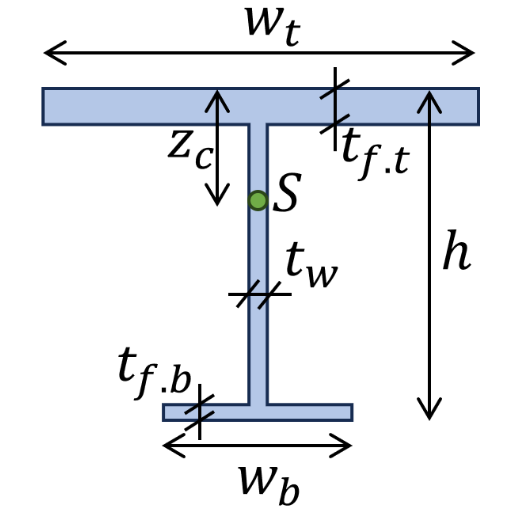
Moment of Inertia Formula for H Beams
Where:
b = width of the outer flange
h = total height of the H beam
b₁ = width of the web (inner section)
h₁ = height of the web (inner section)
Step-by-Step Calculation Process
1
Determine H Beam Dimensions
Identify key measurements including total height (H), flange width (b), flange thickness (t_f), web width (b₁), and web height (h₁).
Example dimensions:
- H = 300 mm
- b = 150 mm
- t_f = 10 mm
- b₁ = 8 mm
- h₁ = 280 mm
2
Calculate Cross-Sectional Area (A)
A = (2 × 150 × 10) + (8 × 280) = 5,240 mm²
3
Determine Moment of Inertia (I)
I ≈ 337.5 × 10⁶ – 146.7 × 10⁶ = 190.8 × 10⁶ mm⁴
4
Compute Section Modulus (Z)
5
Determine Load-Bearing Capacity
(Assuming σ_y = 250 MPa for steel)
M_max = 1.272 × 10⁶ × 250 = 318 kN·m
6
Apply Safety Factor
(Using safety factor of 1.5)
Safe Load Capacity = 318 / 1.5 ≈ 212 kN·m
Modern Calculation Tools
Modern engineering involves picture oblique software and online calculators for moment of inertia calculations. They receive geometric parameters, all at once administering accurate results.
Calculators software tools focus more on:
- Online Calculation: Fast Web-Tool Calculators Calculations
- Spreadsheet Software: Excel Templates with Formulas
- Engineering Software: AutoCAD, SolidWorks, STAAD.Pro
- Mobile software: Calculation software for the field
Factors Affecting Moment of Inertia
Dimensional Influence on Strength
The moment of inertia is directly linked to the various dimensions of H beams, viz flange width, web thickness, and overall depth. With knowledge of these relationships, engineers optimize the choice of beam for their application.
| Dimension | Impact on Strength | Typical Range | Performance Effect |
|---|---|---|---|
| Flange Width (b) | Lateral-torsional buckling resistance | 100-300 mm | 40% strength increase when doubled |
| Web Thickness (t) | Shear capacity improvement | 6-16 mm | Direct correlation with load capacity |
| Overall Depth (h) | Bending moment capacity | 100-900 mm | Higher depth = greater load capacity |
Axis of Rotation Considerations
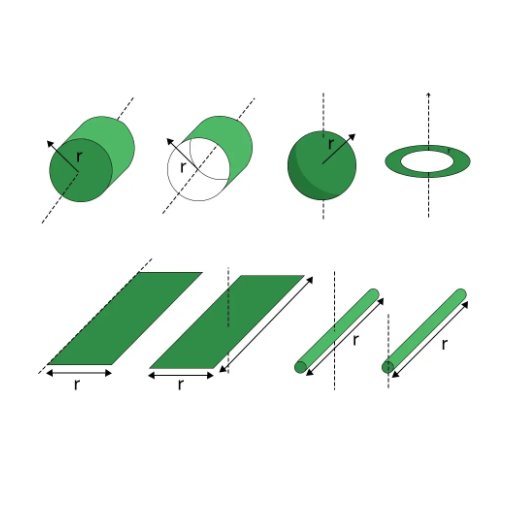
H beams usually have two main rotation axes-the strong axis which runs along the web and the weak axis which runs across the flange. The strong axis usually offers a greater moment of inertia and hence greater resistance to bending.
Design Recommendation: Take care of ensuring the height-to-width ratio is between 1.5 to 2.0 based on code specifications of Eurocode and AISC for better stability.
Section Comparison: Rectangular vs. Hollow
| Aspect | Rectangular Sections | Hollow Sections | Performance Difference |
|---|---|---|---|
| Strength & Stiffness | High bending resistance | Superior torsional resistance | 50% better torsion resistance (hollow) |
| Weight Efficiency | Solid, heavier construction | High strength-to-weight ratio | 30-40% material savings (hollow) |
| Environmental Resistance | Higher corrosion exposure | Reduced internal corrosion | 10-15% better cyclic load performance |
Practical Insights for Engineers

H Beam Selection Guidelines
Cost savings achievable with modern prefabricated H beams
Years of service life for weathering steel H beams (ASTM A588)
Material reduction possible with computational design assistance
Selection Criteria:
- Load Requirements: Axial, bending, torsional, and shear loads have to be checked.
- Material Grades: Choose correct steel grades-(A36, A992, EN10025 S275).
- Environment: For certain adverse environment, corrosion protection will have to be considered.
- Cost Efficiency: Initial cost of an expensive material may be outweighed by the long-term performance of the cheaper material.
- Design Tools: Design tools such as structural analysis software are used for optimization.
Common Challenges and Solutions
| Challenge | Impact | Solution | Expected Improvement |
|---|---|---|---|
| Corrosion | Reduced lifespan | Protective coatings, regular maintenance | 25% lifespan extension |
| Buckling | Structural failure | Proper modeling with software | 15% reduction in load-induced failures |
| Transportation | Logistical difficulties | Modular assembly techniques | 20% reduction in construction timelines |
| Cost Fluctuations | Budget overruns | Strategic bulk purchasing | 12% average material cost savings |
Industry Standards and Technical Considerations
Fostering safe, quality-building procedure with newly found standardization and technology:
- ASCE 7: Minimum loads for the design of buildings and structures
- International Building Code (IBC): Set of construction regulations
- BIM: Save up to 5-10% in costs, 7% in time
- LEED Certification: Energy savings of 20-30% in green buildings
- ASTM: Testing of materials and quality assurance.
Frequently Asked Questions
What do you mean by the moment of inertia of a beam?
The moment of inertia of a beam (second moment of area) relates to its resistance against bending and axial deformation. For H beams, this value depends upon the flange and web dimensions and is computed through certain formulas. It is important to note that this parameter is considered when studying beam deflection and stresses of a beam under a certain loading.
How to calculate moments of inertia of hollow beams?
By applying the second moment of area formula, consideration is given to the external and internal dimensions for finding the moment of inertia. Hence, the computation involves subtracting the moment of inertia of the inner section from that of the outer one. Online moment of inertia calculators provide quick and accurate computational help.
What is the formula for the moment of inertia?
Depending on the shape of the cross-section, various moment of inertia formulas are given. For rectangles, it is I = (b×h³)/12, where b is the base width and h is the height. H-beams are more complex, requiring consideration of flange and web geometry. A fast, accurate way to calculate a beam of practically any size is with a tool like SkyCiv Section Builder.
How can a moment of inertia calculator be of help?
A moment of inertia calculator quickly and accurately calculates beam inertia from the cross-section dimensions given. It can work with cross sections of different shapes, from rectangular to hollow sections, showing flexibility for engineering calculations. They save time, remove human-generated errors, and give credible results needed for structure analyses.
Why is it that moment of inertia becomes a pivotal consideration in the design of a beam?
The moment of inertia defines the resistance of a beam to bending. The larger the moment of inertia, the lesser the chance of bending; thus, more load with less deflections can be placed on the beam concerning stiffness requirement. Having a good grasp of the inertia of the beams enables engineers to take intelligent decisions on choosing materials and their dimensions as applicable to ensure probes are fully realized and make sure run through safety standards.
Reference Sources
Academic and Research References:
- Plastic Hinges and Inertia Forces in RC Beams Under Impact Loads – Analysis of inertia forces and bending moments in reinforced concrete beams
- Deflection of Beams of Varying Moments of Inertia – Methods for analyzing beam deflection with varying moments of inertia
- Inverse Solution for Reconstruction of Area-Moment-of-Inertia – Inverse problem approach using deflection data
- Effective Moment of Inertia for Hybrid Concrete Beams – Neuro-fuzzy model for hybrid concrete beam analysis
- Effective Moment of Inertia of Reinforced Medium Strength Concrete Beams – Investigation of medium-strength concrete applications


