

When it comes to welding, selection of the right machine for your individual project is a game-changer. Whether you have been welding for years or this is the first weld you are going to create, it is important to know about the various types of welding machines to attain precision, strength, and timely completion of any work. Different welding machines will have features and capabilities specific to a particular task or materials involved in that task. In this article, we will discuss the various welding machine types so that you can make an informed decision and choose the appropriate tool for your project. From MIG to TIG and every method in between, this article will teach you how to overcome welding challenges with ease.
Introduction to Welding Machines

What is called a welding machine?
A welding machine, welding apparatus, or welding instrument can join two or more pieces of metal or thermoplastics by the application of heat and pressure, or both. Such machines made today vary in types, each suitable for a welding method such as MIG (metal inert gas), TIG (tungsten inert gas), stick welding, etc. These machines produce a heat source, usually an electric arc, to melt the base materials and a filler material, which then cools to form a very strong permanent bond. Advanced welding machines now embrace such technology as inverter power sources, digital precise controls to help improve the accuracy and efficiency of the machine, and even in some instances, AI-assisted welding. Welding machines, being very versatile and powerful, form one of the core tools in the construction, automotive, aerospace, and manufacturing trade.
Importance of welding machine types
Understanding the types of welding machine becomes very important, as it will allow one to choose equal equipment for the job, guarantee safety, and obtain what one looks forward to in the application. Recent data from the search trend on s shows that more and more users are looking for assistance in choosing welding machines that are suitable for a certain material or project, like TIG for intricate aluminum welding or MIG for efficiency on thicker metals. This shows how important it is to be conscious of what machines are capable of. Knowing your machines will enable professionals to work quicker and more cost-effectively as well as to attain quality results; for example, a TIG machine is precise, whereas Stick welding is fast. This will help in the aspects of maintenance of machines and will extend their life, which eventually will be a great help to industries on which welding processes depend.
This is an overview of the welding process
Welding is of the essence in the manufacturing and construction industries for joining materials, mainly metals or thermoplastics, using heat or pressure, sometimes both. The processes heat and melt the joining ends of the pieces of metal while filling with another metal to form a strong joint after cooling. There are different kinds of welding processes like MIG welding, TIG welding, and Stick welding, all suited for different applications. These are all based on the level of precision, speed, and the demand of the materials used.
According to the latest search trends at , MIG welding is often considered the fastest welding for general applications, being fairly easy to do. Its versatility makes it a great option for almost all materials and thicknesses, garnering much use in the automotive, construction, and industrial manufacturing arenas. For applications requiring the utmost precision and clean results, TIG is always the ultimate option; thus, the choice of the welding method depends on the material, the project, ability to do work with high skills, and of course, the outcome.
Types of Welding Machines
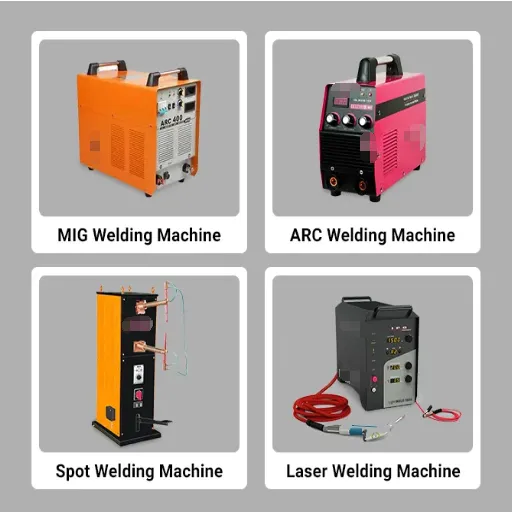
MIG welding machines
MIG welding machines find common application in the welding industry due to their efficiency and ease of learning. Continuous wire-feed and shielding gas application bring about a durable bonding suitable for several materials such as steel, aluminum, and stainless steel. Space-time searches tend to show that these machines are popular for automotive repair works, hobby works, and some light-to-medium level industrial fabrications due to their versatility in weld application and feature conversion in handling both thin and thick materials. Furthermore, technological advances have provided automatic features and multi-process features to help even professional welders and beginners.
Short overview of MIG welding
The MIG welding process, also termed Metal Inert Gas welding, ranks as one of the most popular welding methods due to the ease of usage, efficiency, and versatility. According to the latest data from ‘s search engine, people search so frequently for MIG welding as a one-stop solution to a variety of their welding needs. Because it can work with steel, aluminum, and stainless steel for repairs in automotive, construction, and manufacturing, the MIG weld is unmatched. In recent searches, the portable and cheap MIG welding machines are gaining acceptance among a wide market from hobbyists to small commercial scale operations. This still tells that MIG welding is the best choice for beginners as well as in a few professional settings due to the consistency of weld quality, welding speed, and relatively ease of operation.
Benefits of MIG welding machines
MIG welding machines carry certain advantages that make the crying need of several applications. Consistent weld quality is pertinent to a weld’s structural integrity and aesthetics and so is used in precision work-for example, auto repair, construction, and manufacturing industries. In the second place, MIG welding is quicker compared with other welding techniques; hence time-saving. Thirdly, its easy operation makes it easy for even novices to learn.
Recent data of ‘s search engine show the increasing attention being paid to portable and affordable MIG welding machines. This trend highlights the big market demand on the part of hobbyists and small-scale enterprises for cost-effective solutions that do not compromise on performance. The versatility and the ability of these machines to weld different materials of varying thickness open up many avenues of usage. Technological ingenuity alongside ease of operation account for the continued popularity of these machines across different skill levels and industries.
Choosing the Right Welding Machine
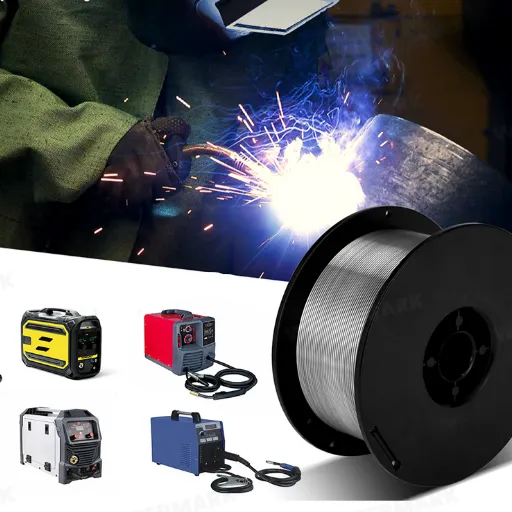
Some of the things to consider when selecting a welding machine include:
Welding Process
What welding process will you be applying primarily? These processes have their own advantages and are suited to different works. For instance, it is MIG weld perfect for the beginner and general application, whereas TIG weld is meant for precision work on thin materials.
Material Thickness and Type
Consider the kind of materials on which you intend to work. Some machines will be good for welding thick metals, while others are better for thin metals. On the other hand, some of them will work best for aluminum, while others will be for stainless steel.
Power Input
Check the power input available at your workspace. Some welders get used with a 110V outlet while some others require 220V. To shorten the running time, you must make sure that your welders work with the power supply available in your place.
Portability and Size
Some welding jobs require fixed welders while others involve the movement of one from one place to another. In view of this, end users must weigh their considerations. Lightweight and compact welders may need to be carried to any specific spot, while bulky ones could be fixed somewhere in the workshop.
Duty Cycle
The duty cycle describes the continuous welding the machine can use until it is so hot that it has to cool down. For long projects or industrial use, then the duty cycle must be high.
Skill Level
The beginners prefer ones that are easy to control with automated features, whereas for experienced welders the ones with advanced features for precision and versatility will be more desirable.
Budget and Brand
Investigate all the possibilities with your budget. Examine the reputed brands that are well accorded in quality and production. Reliable low-budget machines are also equipped with modern technologies offered by trustworthy brands.
This thorough evaluation of all these factors will help you acquire a welding machine most suited for both your needs and your skills. This style of work will result in efficient and quality output.
Matching welding machines to project requirements
Matching welding machines with a project calls for a sincere evaluation of the materials, joint configurations, and scale of production one is working with. For light work on thin sheet metal or aluminum, for example, MIG welders would be considered best for precision and handling. For thick materials and deep penetration work, namely with structural steel paper mill welding, gives the necessary strength and reliability.
The newest data derived from ‘s search engine stated that TIG welding machines are used for high-quality welds that need to be clean, particularly on stainless steel and non-ferrous metals. To achieve the best results when matching the demands of your particular project with what welding machines offer, a compact inverter type of machine is highly recommended for smaller projects. For heavy industrial applications and bigger projects, such machines doing MIG, TIG, and stick welding are ideal, offering excellent versatility and productivity.
Mistakes when choosing welding machines
Neglecting Project Requirements
Another biggest mistake is neglecting to consider the need for the welding machine that matches the project requirements. Choosing a machine because it is cheap or has a good name might end up with a machine that is weak or too powerful for the job it will be expected to meet. In this case, it becomes necessary to be keen on what the actual material to be welded is made of, its thickness, and what welding processes are going to be involved.
Ignoring Duty Cycle
Most workers never pay attention to the duty cycle of a welding machine, as it denotes the time in minutes during which the machine can work consecutively until it must cool down. It decreases production when one selects a welding machine of low duty cycle but wants to get a lot of work done with it.
Neglecting the Need for Portability
For those working in various locations or in remote locations, the portability of the machine is a must. A huge, heavy welder is impractical for site repairs or for works that need moving. A light and inverter-based one solves the problem but is often neglected.
Not Considering Power Availability
It is very important to examine the compatibility of the welding machine with the power source at your workplace. The consequence of purchasing a welding machine with a higher voltage requirement than that available would only be delays while time will be wasted trying to get additional equipment like power generators or converters.
Not Anticipating Future Needs
The manufacturers do not anticipate future needs for whatever project they are engaged in, thus limiting the choice of welding machine. A multi-process welder would guarantee flexibility and longevity thus securing him or herself against recurrent costs.
Lack of Research and Reviews
Most buyers do not take advantage of reviews, expert opinions, or ratings when choosing their welding machine. Such buyers rely too much on advertisements or incomplete information and, more often than not, these lead to poor decisions. Search engine like ‘s can become handy in comparing several models in one jiffy, reading customer reviews, and exploring expert opinions. Don’t just choose the first weld machine adhoc; invest your time for a thorough appraisal of features and ratings.
Avoiding these common mistakes will guarantee a welding machine that will meet both the demands of your project and the maximized efficiency of your investments.
Maintenance and Safety Considerations
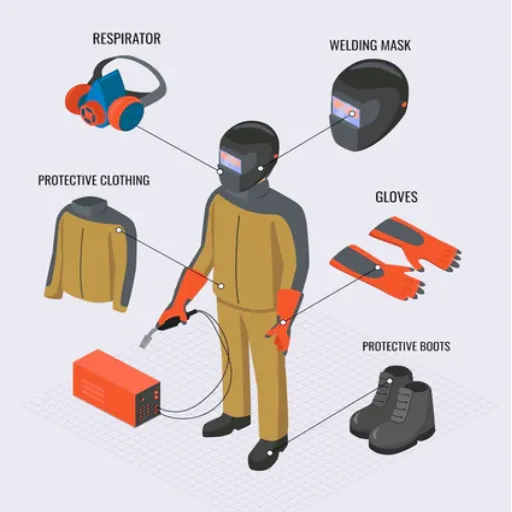
Regular maintenance tips for welding machines
To have a welding machine functioning reliably and for an increased life span, regular maintenance is carried out. Extracted from the search engine, below are some maintenance tips:
- Inspect and Clean Cables – Check frequently for wear or damage in power cables, welding leads, and ground clamps. Clean them to avoid problems that may arise from dirt, corrosion, or loose connections, thus ensuring a consistent delivery of power.
- Check Ventilation and Cooling Systems – Welding machines produce a lot of heat, so periodic checking for any dust build-up in ventilation vents and cooling fans must be done to make sure that overheating does not set in.
- Test Consumables – Test and check frequently of electrodes, nozzles, and contact tips. Replace any consumables wearing down or damaged to maintain good efficiency and avoid inconsistent welds.
- Keep Checks on Electrical Connections – Tighten loose connections and ensure that all electrical appliances are working well. Loose connections can bring about inconsistent supply of power or even damage to the machine.
- Lubricate Moving Parts – Moving parts must be lubricated for smooth operation, especially in wire feeders. Use the recommended lubricant by the manufacturer.
- Periodic Calibration of Settings – Over time, there is a slight change in settings on welding machines. The manufacturer guidelines should be referred to or the manufacturers contacted for proper recalibration in order to secure precision quality in your welds.
- Regular Software Upgrades – Update the firmware on any modern welding system controlled digitally to take full advantage of the latest performance and safety features.
Maintaining a welding machine scales down preventable breakdowns that disrupt its services and ensures unquestionable performance throughout.
Safety precautions for welding processes
Welding is a highly technical and potentially hazardous process involving rigid safety measures to protect workers and to keep a safe working environment. Based on the most recent data, the following safety measures must be taken without fail:
- Wear Appropriate Personal Protective Equipment (PPE) – Welding helmets with proper filter lenses must always be worn to protect the eyes from UV radiation and sparks. Acceptable gloves, flame-resistant clothing, and steel-toed boots must be considered.
- Ensure Proper Ventilation – Since welding fumes can have toxic substances, it is essential to have a suitable ventilation system in the work area. Utilize a local exhaust system or a fume extractor to lessen the exposure to harmful gases and fumes.
- Regularly Inspect the Equipment – Welding machines, cables, and connections are to be inspected from time to time, and any had wear and tear or malfunctions addressed. Faulty equipment can cause accidents, which include electrical hazards.
- Keep Fire Safety – Fire extinguishers must be handy, and all flammable materials must be cleared from the welding area. Fire-resistant blankets or barriers should be used to contain sparks or flying debris.
- Prevent Electrical Hazards – High-voltage equipment is used in welding. All connections must be properly grounded. Also, welding should not be done under wet conditions to save life from an electric shock.
- Training and Awareness – Workers must be trained on the correct use of welding tools and safety protocols. Safety training should be regularly updated to reflect by new practices or emerging risks.
- Handling of Compressed Gas – Cylinders must be stored upright and secured sufficiently to prevent tips. All rules governing the handling and use of compressed gases must be followed to avoid leakage or explosions.
Through following these safety precautions, the dangers that arise from welding processes are reduced to a significant degree while embedding the health and safety of all stakeholders in its network and promotion of a highly competent working environment.
Importance of training in welding safety
Welding safety training is imperative to decrease accidents at a workplace and secure the environment for every worker. As per recent data, welders who are not well trained are at very high risk of injuries from burns, electric shocks, or exposure to fumes. An all-around training procedure equips workers in regard to most essential safety practices — ranging from using personal protective equipment (PPE) to identifying hazards such as fire risks and toxic gases. Through training, welders also keep themselves updated on newer safety standards and technologies, such as improved ventilation systems or automatic welding equipment, thus reducing dangers even further. With comprehensive and continued training, teams are capable of working more efficiently, face fewer risks, and begin to build a culture in which safety integral to every activity on welding grounds.
Technological Advancements in Welding Machines
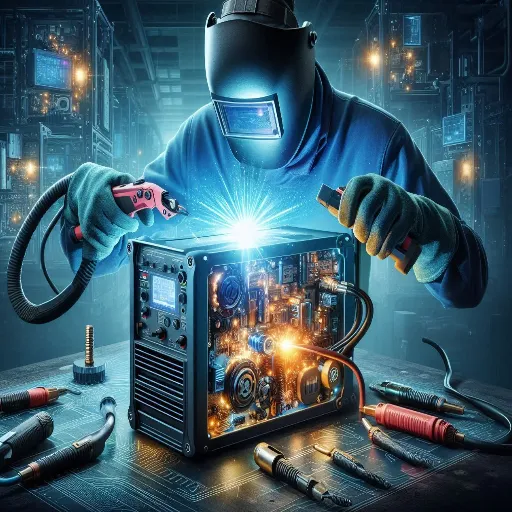
Modern welding trends
The welding industry has undergone remarkable technological changes and developments that allow for more precision and efficiency and, most importantly, safety. One of the most notable innovations is the increase in automated and robotic welding. Artificial intelligence (AI) and machine learning allow systems to carry out welds with much greater precision, reducing the chances of human error and increasing productivity. Hybrid welding processes have seen great developments, mainly in laser-arc hybrid welding, which takes advantage of the advantage of laser precision versus arc welding versatility for fairly different industrial applications.
On the other hand, IoT applications are being integrated into welding equipment. With such IoT-enabled devices, welders and supervisors can remotely control operations, analyze the data in real-time, and predict any potential equipment failure before it happens. On the materials front, filler metals and consumables now make for better solution quality, waste minimization, and provide solutions for an emerging type of lightweight materials, such as welding for high-strength alloys.
All these technologies pierce through the welding landscape, helping industries meet modern-day demands while respecting safety and sustainability.
How technology has augmented welding efficiency
The technology of welding processes and methodologies has drastically improved welding efficiency in all industries by means of automation and accuracy enhancement, besides saving a good deal of time. Robotic welding systems have been speeding up processes and cutting through repetition in that they could perform a given task faster with consistent accuracy than would be human hands; this ultimately yields a very high level of productivity. Moreover, real-time analysis and monitoring systems allow welders to detect inconsistencies in the welding process and set right any wrongs immediately so that errors and material wastage are minimized. This data integration, when spread across different projects through the cloud, enhances project coordination and resource allocation. Recent reports from search trends indicate increasing adoption of AI-powered welding solutions by businesses to strengthen quality standards while cutting down production costs. This transforming technological landscape is therefore becoming vital in meeting the demands of ever-higher output, safety, and sustainability.
Welding machine development: what the future holds
A big trend in welding machine development is the growing integration of artificial intelligence and machine-learning technologies. Such advancements make the machine self-optimizing in welding parameters in real-time and therefore more accurate and less wasteful of material. According to the latest data laying out in ‘s search engine, there is a wave of interest in automated systems that combine AI-driven defect detection with predictive maintenance capabilities, suggesting that companies are looking at solutions that improve welding quality while minimizing downtime and maintenance costs as a priority. Also, an increasing trend in the development of green technologies for the welders, in the sense of energy-efficient machines and sustainable materials, is being fueled by industries’ desire to meet the global sustainability agenda. Such trends mark the turns to intelligent, greener, and more efficient welding.
Frequently Asked Questions
What are the different types of welding machines?
There are several welding machines types under various applications. Most commonly, we have arc welding machines, MIG welding machines, and TIG welding machines. Each machine depends on a different welding process; for instance, the MIG welding will use a consumable wire electrode and is best suited for metal arc welding. TIG welding, on the other hand, uses a non-consumable tungsten electrode, thus suitable for precision works. Lastly, you have machines built for flux-cored arc welding and submerged arc welding, depending on the type of welding to be performed.
How do I choose the right welding machine for my project?
The welding machine you choose ultimately will mean success or failure for any welding project. Think of the type of welding you will be doing, e.g., MIG, TIG, and stick welding. Each machine has its own perks; for example, MIG welders are great for speed and easy to learn, whereas TIG welders are for precision working on thin materials. Other considerations include thickness and type of material you plan on welding; some machines are good to weld thicker metals, and some excel in thin metals. Another thing to look for in a machine is power supply and welding speeds required for different applications.
What welding process uses an electric arc?
The welding process that uses an electric arc is called arc welding. This procedure consists of forming an electric arc at high temperature between an electrode and a workpiece resulting in melting of materials and the parts joined together. There are many kinds of arc welding, such as stick welding or gas tungsten arc welding, each defined by the way in which the arc is generated and maintained, the sorts of electrodes used, shielding methods, and materials employed in the process. Arc welding is suitable for many welding applications because it may apply to almost any metal or alloy.
What is a MIG welding procedure and how does this differentiate from TIG welding?
MIG welding, or gas metal arc welding, consists of a continuously fed wire electrode with a shielding gas that protects the weld pool from contamination. The faster and easier of the two processes for beginners is MIG welding, whereas TIG welding uses a non-consumable tungsten electrode and demands the welder’s advanced skills and control. MIG welding is good for thicker materials and fast weld speed, whereas TIG is good for precision work and welding thin materials. Each has its own advantages; therefore, your selection should be governed by the specific needs of your project.
What is the importance of plasma arc welding in industrial applications?
Plasma arc welding is a highly specialized method that creates an intense and highly focused arc formation by using plasma torches. It is particularly useful for welding thin materials and offers very fine control during the welding process. Plasma arc welding machines are able to achieve very high welding speeds and are therefore extensively used in industries such as aerospace and automotive manufacturing. The high quality welds that this technique affords with minimal distortion make it suitable for precision applications. Its versatile application on various metals makes it an important modern manufacturing technique.
Reference Sources
- Different Types Of Welding: An Essential Guide – Lincoln Tech: Provides a comprehensive guide to various welding processes, including MIG, TIG, SMAW, and FCAW.
- Types of Welding Processes – New England Institute of Technology: Explains different welding techniques and their applications in various industries.
- What is Arc Welding? Your Complete Guide – Universal Technical Institute: Covers arc welding and its subtypes, such as MIG, TIG, stick, and flux-cored arc welding.

![Robot Welding Parameters [Traceable Window]](https://zhouxianggroup.com/wp-content/uploads/2026/10/robot-welding-parameters-blog-featured.png)


