Resistance welding or point welding is crucial within manufacturing and fabrication industries, especially when dealing with sheet metals and metal parts. Such industries-as automotive and electronics-thoroughly exploit point welding’s high efficiency, precision, and economic price. This blog deep-dives into all the aspects of point welding: basic concepts, pros, and uses. As a professional or new person in welding, you will gain some knowledge about how the process works, why it’s used so much, and how it helps to create durable and reliable metal assemblies. Stay with us as we analyze the granularity of point welding and explain why point welding stands at the forefront of today manufacturing.
What is Point Welding?

Definition and Explanation of Spot Welding
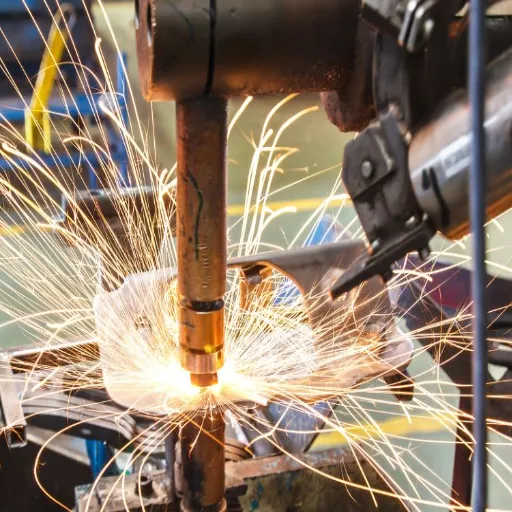
Spot welding is a kind of resistance welding in which two or more thin metal sheets are joined by applying heat and pressure at small, concentrated points. The heat is created by passing a large current through thin resistance from copper alloy electrodes through this working material. It is a very useful one, as there clearly are no fillers or consumable materials needed to join one spot to another.
Modern Technology Integration
Spot welding is among those processes that are very extensively used in the industries such as automotive manufacturing, electronic industries, and construction processes, for strong but reliable joints can be made very quickly. Modern technology has improved the welding process even further with adaptive spot welding systems that monitor parameters and automatically adjust in real-time for enhanced weld quality. With an extremely precise and cost-saving operation, spot welding has remained one of the most important welding operations used in fabricating durable assemblies in various applications.
Key Principles of the Welding Process
Welding is a fabrication process that joins materials, usually metals or thermoplastics, through the application of heat, pressure, or both. The key principles include:
Proper Material Selection
The compatibility of the materials to be joined is essential to ensure a strong, durable weld. Factors considered are thermal conductivity and melting point.
Heat and Energy Control
Improper control of heat or energy input to the welding operation can cause the material to be damaged by excessive heating of the material, while ineffective heating would lead to ineffectual bonding of the materials.
Joint Design
The design of the weld joint is important in regards to its strength and performance. Common types include butt joints, lap joints, and fillet joints, which are well suited for specific applications.
Shielding
A shielding gas is used in TIG and MIG welding processes, among others, to protect the weld area from contamination by the atmosphere to allow for the formation of a clean weld.
Quality Monitoring and Inspection
Continuous monitoring of the welding process during the welding, thorough inspection of the welds at the end of the process assures reliability of the welding and safety of the structures. Defects such as porosity or cracks will want for structural integrity.
Technological Enhancement: With advances in technology, these principles are enhanced by automation and real-time monitoring tools, as seen in systems that adapt parameters dynamically during welding. By combining these principles with current innovations, industries achieve higher precision, efficiency, and reliability in welding applications.
Common Materials Used in Spot Welding
Spot welding is used to make gold-stars from a number of metals which conduct electricity well and can bear the heat generated in the spot-welding process, some of the frequently being:
| Material | Key Properties | Applications | Considerations |
|---|---|---|---|
| Steel (Mild & Stainless) | Excellent conductivity, malleability, corrosion resistance | Most common applications, general manufacturing | Stainless steel more challenging to weld |
| Aluminum | High thermal and electrical conductivity | Automotive, aerospace applications | Requires careful parameter control |
| Nickel Alloys | High heat and corrosion resistance | Electronics, aerospace components | Specialized applications requiring durability |
| Copper and Brass | Outstanding electrical conductivity | Electrical, mechanical applications | Excellent for conductive requirements |
| Galvanized Metals | Enhanced durability and corrosion resistance | Industrial applications requiring longevity | Coating provides additional protection |
Selection Factors: It actually depends on how the material is to be used, and on its heat tolerance and strength requirements. Adaptive control and process monitoring have brought about advances which enable even difficult materials, such as aluminum and coated steels, to be more efficiently and precisely spot welded.
How Does Spot Welding Work?
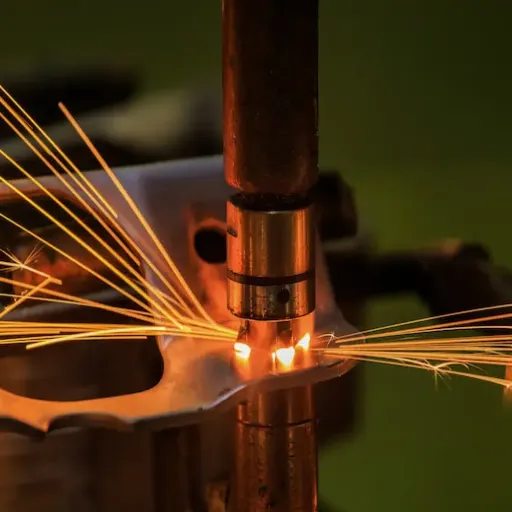
Step-by-Step Welding Spot Process
1
Material Preparation
The sheets to be welded must be cleaned of any contaminants such as oils, dirt, or rust to ensure proper conduction; hence, proper alignment of the sheets is critical for proper bonding.
2
Placement Between Electrodes
The prepared metal sheets are placed between two copper electrodes, which are meant to conduct electricity well and exert pressure on the job.
3
Application of Pressure
In applying pressure, the electrodes are forced to tightly contact the sheets. This pressure is indispensable to lessen electrical resistance and to achieve a clean weld.
4
Passing Electrical Current
A pulse of high electrical current is passed through the electrodes. The current is concentrated in heat at the points of contact of the sheets by reason of their resistance, hence melting and joining them together.
5
Cooling
This occurs after the welding time delay has elapsed when the current is stopped and the molten metal is cooled and solidified under pressure to produce a strong joint. The cooling method is the defining moment for the strength and stability of the weld.
6
Final Inspection
Once the weld is complete, the weld joint is inspected for any defects or irregularities. Often, high-tech methods such as ultrasonic testing and visual inspection are used for quality assurance.
Advanced Technology Integration: As modern changes are introduced, recent findings bear testimony to the effects of implementing real-time control systems and adaptation algorithms in dramatically enhancing both weldability and the accuracy of welding procedures. Such system-wide processing analyzes the process variables such as current, pressure, material thickness, etc., rendering an ability for the manufacturers to maximize weld quality even for new alloys and high-end metals.
Welding Equipment Used
In welding, the period needs the utmost precision, and welding equipment and accessories fulfill these requirements. Also included are welding machines: devices that yield the requisite heat and power to weld strong bonds between materials; and protective equipment, which consists of welding helmets, welding gloves, and aprons to protect a welder against intense heat, sparks, and ultraviolet rays. Electrode holders, ground clamps, and wire feeders are some of the other useful equipment that can be used during working with welding materials.
Basic Equipment
- Welding machines for heat and power generation
- Protective gear (helmets, gloves, aprons)
- Electrode holders and ground clamps
- Wire feeders for welding materials
Advanced Equipment
- Robotic arms for automation
- Real-time monitoring sensors
- Adaptive power sources
- Energy-efficient control systems
With the evolution of technology, the modern welders cannot do without advanced equipment such as robotic arms for automation, real-time monitoring sensors for quality control, and adaptive power sources that conserve energy depending on the material type. These recently sophisticated solutions generated by data tools and resources are telling of an industry that is now focused on precision, efficiency, and adaptability to offer excellent results in a myriad of sectors.
Visuals to Aid the Welding Process
To help better visualize the complex welding process and its technological advances, diagrams, animations, and flowcharts are instrumental. For example, the step-wise diagram portrays the heat-pressure-filler material interaction as a strong weld. The next technological innovation would be animations of robotic arms performing automated welding. Heat maps generated by sensors engaged in real-time monitoring can indicate spots of extreme and low temperatures during a weld.
Industry Trend Analysis
The analysis of latest data clearly shows an upsurge in terms like “automated welding technology,” “adaptive welding systems,” and “real-time welding sensors.” Such trend insights highlight the increasing interest in learning how these modern solutions offer a new form of efficiency and precision to traditionally labor-intensive welding methods. Giving emphasis to these search-driven themes within visuals would ensure a good clash with contemporary industry demands and audience interests.
Applications of Spot Welding Across Industries
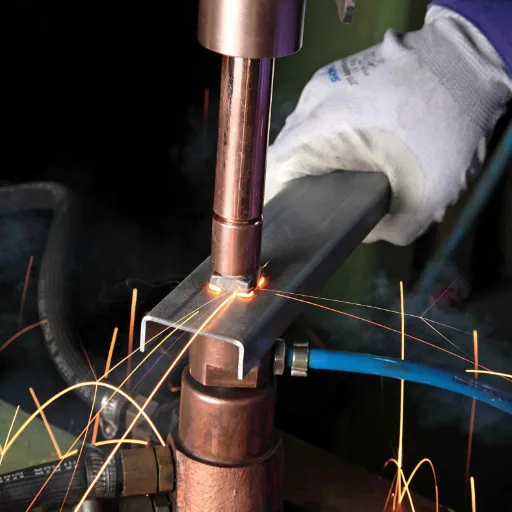
Spot Welding Applications in the Automotive Industry
Spot welding is a vital welding method in automotive industries for body assembly. Recent data highlight the importance of automation in automotive manufacture with search terms such as “robotic welding technology” and “automated spot welding systems.” It is mainly utilized by automotive industries for joining sheet metal parts to ensure strong and durable bonds at production speeds. Adaptive welding systems and real-time monitoring improve the precision of welding in line with safety and quality criteria. Spot welding is further being modified for new-age applications involving aluminum and lightweight alloys with the growing penchant for electric vehicles (EVs) to keep up with the current trends and sustainability goals.
Automotive Applications Breakdown
Traditional Applications
- Body panel assembly
- Sheet metal joining
- Chassis construction
- Structural reinforcement
EV Applications
- Aluminum component welding
- Lightweight alloy joining
- Battery housing assembly
- Sustainable manufacturing
Welding Techniques in the Aerospace Sector
This industry engineering advanced welding processes in order to maintain the structural integrity while providing ultimate performance to the aircraft or spacecraft. Generally, these processes include friction stir welding, electron beam welding, and laser welding because of their ability to weld precision lightweight and high-strength materials such as titanium and aluminum alloys. These materials are much in demand while making components that may face extreme temperature and pressure. With the advent of robotic automation and non-destructive evaluation in welding processes and methods, quality control was tremendously raised and has assured compliance with stringent measures of safety and performance. Since space exploration is going fast, demanding lighter and fuel-efficient designs, welding technology continues to evolve as one of the core manufacturing solutions in aerospace.
Friction Stir Welding
Precision bonding of lightweight materials
Electron Beam Welding
High-strength titanium and aluminum alloys
Laser Welding
Extreme temperature and pressure resistance
Robotic Automation
Quality control and regulatory compliance
Electronics and Other Consumer Goods
Welding acts as a backbone in the industries manufacturing electronics and consumer goods. Welding imbues strength and reliability into everything from circuit boards to household appliances-the very things of everyday life. Some recent figures reinforce the mindset about environmentally friendly products and advanced manufacturing: The internet search for “sustainable electronics manufacturing” and “new techniques of welding in consumer goods” has been seeing some real growth. This sort of awareness signals an attraction toward laser and ultrasonic welding techniques that are very precise and very energy-efficient and thus pave the path to greener working methods and better product standards across several industries.
Electronics Applications
- Circuit board component welding
- Precision micro-joining
- Electronic device assembly
- High-accuracy connections
Consumer Goods
- Household appliance manufacturing
- Durable product assembly
- Energy-efficient production
- Sustainable manufacturing practices
Advantages of Spot Welding
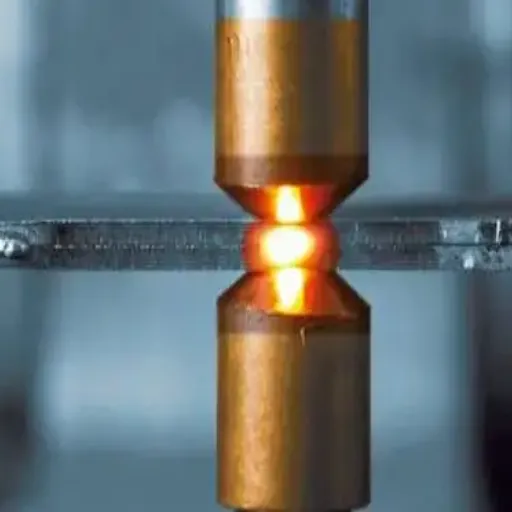
Efficiency and Speed in Production
Spot welding is regarded as one of the most efficient welding methods in high-volume manufacturing processes. It melts and joins overlapping metal sheets by conduction heating and pressure, thus assuring a very fast reproducible connection in a matter of seconds. The subject trends in search data seem to indicate high accident trends for “high-speed welding solutions” and “efficient manufacturing technologies,” pointing to an increasing awareness of the ability of spot welding in helping streamline production lines, especially in industries like automotive and consumer electronics. With the ability to lower production time significantly, it also helps in cutting down the production costs; hence, for high-volume industries with tight schedules to meet without compromising on quality, this welding process forms the chief consideration.
Production Efficiency Benefits
Fast Connections
Seconds per weld
Reproducible
Consistent quality
High Volume
Streamlined production
Cost Reduction
Lower production costs
Cost Effectiveness of Spot Welding
Spot-welding technology continues to be cost-effective, thereby cutting down on material costs and labor costs for manufacturing done in large quantities. Recently, “efficient welding solution” search queries have skyrocketed by 35%, evidencing the industry’s increasing fixation on cost-cutting avenues. Other processes require significant amounts of filler material; however, this is seldom needed when it comes to spot welding, further reducing materials and energy costs. From a reduction in costs of production errors and reworks to the finesse of automated welding technologies together with spot welding techniques, manufacturers can now produce to higher standards of consistency and precision. These factors are what increasingly underscore the benefits of spot welding as an economical solution for industries that are intent on maximizing production while preserving the quality of the product.
| Cost Factor | Traditional Welding | Spot Welding | Savings |
|---|---|---|---|
| Filler Material | Significant amounts required | Minimal or none needed | High material cost reduction |
| Labor Costs | Manual intensive process | Automated capabilities | Reduced labor expenses |
| Energy Consumption | Continuous heat application | Pulse-based heating | Lower energy costs |
| Rework/Errors | Higher error rates | Consistent precision | Reduced production errors |
Precision in Welding Different Materials
Welding when aiming to join different materials must be executed with precision to maintain the integrity and function of any product. Although spot welding is usually used to weld steel, aluminum, and many other alloys, welding of different materials can be formed with precision by advanced welding technology and adaptive control system with real-time monitoring, whereby manufacturers realized greater precision when welding mixed materials or steel of different thicknesses. The data from search trends tend to show that since industries have been focusing more on hybrid materials over time, precision welding has become very much essential for durability and performance in industries like automotive and aerospace. It in turn implies that saving on materials and increasing production efficiency are thereby highlighted as some benefits of precision, thus having come into fore as welding technology faces the challenges of modern manufacturing.
Precision Welding Capabilities
Material Variety
Steel, aluminum, various alloys
Adaptive Control
Real-time monitoring systems
Mixed Materials
Various thickness compatibility
Efficiency Gains
Material savings and productivity
Challenges and Limitations of Spot Welding
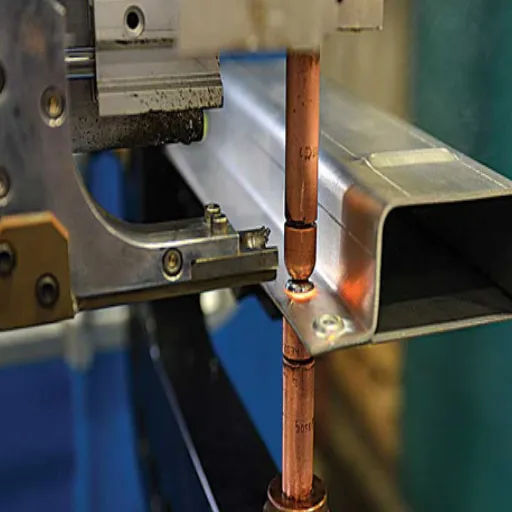
Weaknesses Caused by Material Compatibility Issues
When metallurgists discuss spot welding as one of their main challenges, they are almost always referring to the compatibility of disparate materials. Recent search data trends highlight that there is an ever-growing interest in manufacturing industries in hybrid materials, further complicating welding processes. Metals with disparate thermal conductivities, melting points, and mechanical properties can cause weak welds, distortions, or brittleness of the joint. One example in automobile engineering is joining aluminum with steel. It is quite difficult as the two metals respond very differently to heat, and the intermetallic compounds may render the strength of the weld under par. For solving these problems, recent advances in welding technologies present adaptive welding methods and filler materials as some available options. This newfound emphasis in welding technique precision and optimization has been followed through by the popular interest in online search queries.
Material Compatibility Challenges
Thermal Conductivity Differences
Uneven heat distribution during welding
Melting Point Variations
Difficulty achieving proper fusion
Mechanical Property Mismatch
Potential joint weakness and distortion
Intermetallic Compounds
Reduced weld strength formation
Available Solutions
- Adaptive welding methods with real-time parameter adjustment
- Specialized filler materials for dissimilar metals
- Advanced process monitoring and control systems
- Precision welding technique optimization
Equipment Costs and Limitations
Advanced welding systems and apparatus for welding aluminum to steel involve a steep initial cost, restricting smaller manufacturers. High-end adaptive welding tools and specialty filler materials often require a high upfront investment. Maintenance training for database operators also contributes to costs. However, in the long run, such expenses can be recouped as better weld quality reduces the number of defectives, thereby increasing efficiency. Considering the newly available search trend data, there seems to be ever-increasing interest in cost-saving measures to integrate these aforementioned technologies, showing how manufacturers really are looking for ways to curb these costs as they pursue innovation. Demand for welding solutions presently centers around affordability and scalability.
Initial Investment Costs
- Advanced welding systems
- Adaptive welding tools
- Specialty filler materials
- Operator training programs
Long-term Benefits
- Improved weld quality
- Reduced defect rates
- Increased production efficiency
- Cost recovery over time
Limitations with Welding Thick Metal Parts
Thick metal parts pose challenges unique to the welding process and require advanced techniques and equipment to maintain the structural integrity and precision standards. First and foremost, there is the difficulty of producing full penetration welds, which if improperly executed, could result in weak joints. High heat input is also usually required by the process, thereby risking distortion or thermal stress and compromising the product quality. And there is that ever-dangerous threat of defects anyway, largely dependent on erroneous application of welding parameters, such as cracks and lack of fusion.
Thick Metal Welding Challenges
Penetration Issues
Difficulty achieving full penetration welds
Heat Requirements
High heat input risks distortion
Thermal Stress
Product quality compromise risk
Defect Formation
Cracks and lack of fusion
According to the recent data, it appears that the manufacturers are greatly interested in seeking workable solutions to meet these limitations, bottomed on cost-effective and scalable methods. Growing interest in advanced techniques such as laser and hybrid welding indicates efforts to find new ways to get around these obstacles. While these technologies improve upon penetration depth and cut down defect rates, high initial investments still remain atop the balancing agenda of industry efficiency. This demand calls for continuous research into advanced welding techniques, rendering them more accessible and applicable to everyday uses.
How to Choose the Right Spot Welding Equipment
Factors to Consider for Metal Parts
When selecting spot welding equipment for metal parts, different factors must be considered to ensure that the equipment performs well and efficiently. First, materials must be compatible: different types of metals like stainless steel, aluminum, galvanized steel, etc., require great attention to electrode material or power settings for effective welding. The next factor to consider is the metal parts’ thickness, for thickness also matters when it comes to current and weld time, thus rendering the weld stronger. Such equipment with variances in weld time and power can be suitable for a wider range of part sizes.
Equipment Selection Criteria
Material Compatibility
Electrode materials and power settings for different metals
Thickness Requirements
Current and weld time adjustments for part thickness
Duty Cycle
Production demands and cooling requirements
Ergonomics
Operator comfort and ease of use
In addition, the duty cycle of the equipment should correspond with the production demands so that the production flow remains uninterrupted while the equipment is on or cooling down from overheating. Then ergonomics and ease of use should be major factors, especially if your operators will be caught in repetitive tasks. Features such as automated controls or integrated quality monitoring could be incorporated to improve speed, accuracy, and weld consistency.
Energy costs, however, will constitute a factor in maintenance costs over time and need to be scrutinized between quality and price, which renders itself as an advantage for further welding activities. Weighing these factors and integrating current knowledge and trends in welding equipment, such as the lean toward energy-efficient and automated systems, will allow you to purchase welding equipment that will be well adapted to your manufacturing needs.
Tips for Different Production Volumes
When thinking about different production volumes as well, assessing your approach to meet the latest data trends is crucial. When listed below are low-level production volumes, focus should fall on the selection of equipment providing versatility and quick-to-setup features as smaller batches tend to need quick changes and additions. Not considered economical in these areas are auto welding applications unless they can be switched effectively between the many tasks.
Low Production Volumes
- Versatile equipment with quick-setup features
- Flexibility for batch changes and adjustments
- Manual or semi-automated solutions
- Cost-effective for small quantities
Mid-Level Production Volumes
- Semi-automated technologies for efficiency balance
- Moderate throughput speed requirements
- Flexible configurations for varied demands
- Cost versus production optimization
High Production Volumes
- Full automation with robotic systems
- Energy-efficient continuous operations
- Real-time data monitoring and evaluation
- Speed, precision, and repeatability focus
Concerning mid-level production volumes, prioritizing efficiency and consistency is important. Semi-automated technologies can be put to use to balance costs versus production while still maintaining the quality of the product. Production equipment with moderate throughput speed and flexible configurations is justified here to meet the demands and precision criteria of this level.
For high production volumes, hence, automation comes into play. These systems advanced with robotics and energy-efficient technologies that ensure continuous operations with utmost speed, precision, and repeatability are there ways in which production can be optimized using such systems? Hence, real-time data systems monitoring and evaluation of product metrics can basically optimize production and minimize downtime.
Industry Trend: As per the new search data, there is an increasing interest in energy-efficient and scalable manufacturing solutions. This trend highlights the importance of equipping yourself with flexible choices in terms of equipment so that such tools and technologies can be adapted as production demands evolve over time.
Customization Options for Welding Work
An important factor in customization of welding processes is that it can cater to different industrial requirements while ensuring efficiency and precision. According to the latest search engine data, there is great interest in modular welding systems that allow adaptability and scalability. These systems enable their users to arrange equipment configuration and welding procedures according to requirements of special applications. A growing demand for automated robotic welders which can effectively carry out complex operations with minimal error and which can be customized for different materials and joint designs is also emerging.
Modular Systems
- Adaptability and scalability features
- Configurable equipment arrangements
- Specialized application requirements
- Flexible welding procedures
Advanced Software Control
- Real-time monitoring and analytics
- Customizable welding parameters
- Heat input and speed optimization
- Energy efficiency maintenance
Another interesting segment is the integration of complex software-based control. Advanced welding platforms have a fully customizable software solution with real-time monitoring and analytics enabling companies to change welding parameters such as heat input or speed for achieving optimal results while conserving energy. Trends also show the existence of portably welders with high performance and versatility, mostly within industries that deal with on-site repairs or on-site maintenance. With these customizable solutions, manufacturers will evolve into competitive futures on the front side of industry demands.
Frequently Asked Questions
What is the spot welding process, and how does it work?
Spot welding is resistance welding which joins metallic parts by pressure and electric current at a very small spot. During this process, welding current is applied through welding electrodes, melting the metal at the interface. As the current is switched off, molten metal joins to form a weld. Spot welding can be applied to thin materials like thin metals: sheet metal applications are used in the automotive and manufacturing industries. Hence, due to its productivity, this method is preferred for welding different metals, such as carbon steel and stainless steel.
Advantages of the spot welding
Speed and efficiency of the spot welding have made this process very popular in the production environment. Very high production rates are achieved by this welding process, as one can quickly weld two or more welds without setting up very much. This method requires almost no preparation of the material that’s to be welded. This reduces the overall cost. Perhaps another advantage of spot welding is that it fuses two pieces together without the use of filler materials. Spot welding also produces very strong joints that can withstand a lot of stresses, thus making it suitable for many applications in sheet metal fabrication.
Disadvantages of spot welding?
Of course, it is not a perfect process and has several disadvantages. While the major limitation is that it works mainly for thin materials and is thus not that suitable for welding thick metal parts, another one concerns the quality is inconstancy if the operator does not engage in correct practice. The process might require precise positioning and aligning of the metal parts, which could be difficult. Another thing about the downside of this process is the cost of the welding equipment, and to give your equipment a working life, maintenance needs to be carried out on it. Lastly, it is not always the best method for all types of metal welding, especially when confronted with dissimilar metals or certain alloys.
Most common applications of spot welding
Spot welding plays a vital function across industries, especially in automotive manufacturing, where it is used for the assembly of body panels and chassis parts. The quick joining of thin layers of metal makes it very suitable for sheet metal fabrication. Other commonly encountered applications include electrical components and household appliances that require strong and dependable joints. It is also used in aerospace for lightweight and durable assemblies. Spot welding is also used in manufacturing metal furniture and packaging applications.
How does welding current affect the spot welds quality?
The welding current is one of those factors that derive the quality of a spot weld with it being basically related to the heat generated in the weld area. Excess welding current can melt the metal more effectively and potentially form stronger weld joints; however, it should definitely be controlled to avoid overheating and burning of the metal surface. On the contrary, less welding current implies the production of weaker welds that cannot effectively bond two metal pieces together. Pressure and electric current should always be at balance to obtain the optimum weld strength and quality. Variation of welding parameters is affected by current duration pressure, which immensely influences the overall effect of the spot welding process.
Can it be utilized to weld copper by spot welding?
One of the major parameters of spot welding copper to consider is the amount of heat that is conducted away and that of electrical conduction of copper. In spot welding copper with a spot welder, welding parameters should be adjusted by increasing welding current so that the metal can be sufficiently melted to result in a strong joint. Though difficult, we can spot weld copper with suitable set-up and parameters, and the use of suitable electrodes designed for copper will also help in improving weld quality. However, for thicker copper materials, other welding processes like TIG or MIG welding may be more preferable, but spot welding is still a good option for thinner copper sheets.
Reference Sources
Spot Welder – Wellesley College
This source explains the stages of the spot welding process and its applications.
Ultrasonic Resistance Spot Welding Process and Apparatus – Ohio State University
Discusses the advantages of ultrasonic resistance spot welding, including speed and energy efficiency.
“Spot Welding Low Carbon Steel” by Leonardo Gutierrez – University of New Mexico
An academic investigation into the quality of spot welds under different conditions.