Manufacturers today are searching for every possible edge-accuracy, speed, and cost-effectiveness, and sheet-metal laser cutting technology delivers all three simultaneously. The dual pressures of lean production and customer impatience make that triple payoff more than a bonus; it’s almost a survival requirement. Conventional techniques can leave jagged edges, mountain extra waste, or take hours on a single prototype, while a modern laser head can hop from one decimal-sized cut to the next without breaking a sweat. Industry insiders now describe the approach as the magician who turned pennies into shiny watches, because designs that once cost entire R&D budgets suddenly appear in everyday assembly runs.
How Does a Laser Cutting Machine Work?
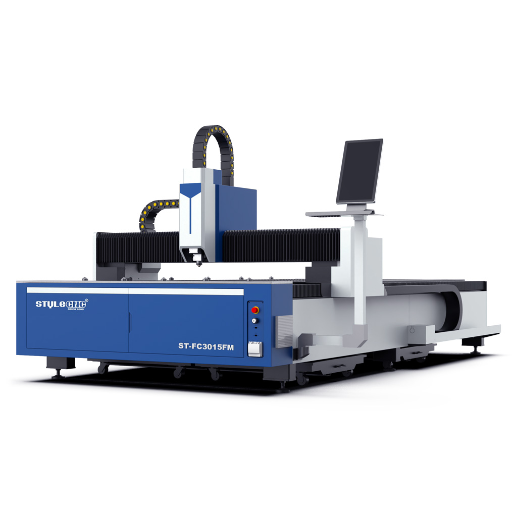
At the hardware level, a sheet-metal laser nests a tightly focused beam inside a marvel of modern optics and servo motors. The light hits the workpiece with enough intensity to melt or vaporize stray atoms, and a built-in nozzle jets oxygen, nitrogen, or plain shop air to sweep away the residue and cool the kerf. A networked computer charts the moves in real-time, adjusting exposure faster than a human blink. That choreography leaves edges almost mirror-smooth and shaves expensive metal off the scrap pile, so the machine pays for itself long before the warranty expires.
Understanding the Basics of Laser Cutting
Laser cutting sits at the intersection of precision and versatility, and its steady march into factory floors shows no sign of slowing. Sheet steel, engineering plastics, or oven-baked glass move under the beam, and a computer-generated path becomes the cutting edge of an aerospace bracket or a prototype cellphone housing moments later. A glance at automotive assembly hints at the technology at work: delicate pump flanges, laddered wire harness clips, even one-off race parts appear as if stamped but are borne from a narrow, light-based incision. Even cranes and curtain walls lean on the same device; millimeter-perfect ribs weave through structural steel while ornamental screens show off filigree patterns that would frustrate a hand-cutter before lunch.
Market analysts expect the segment that ships these machines, nearly appliance-sized gantries standing on their castors, to grow past $6 billion by 2030, a headline fueled by manufacturers chasing repetition speed and tolerances that blink. Fiber sources steal the spotlight inside that projection because fewer wasted watts become reflected energy, think copper or polished brass, and that translates to cleaner edges and lower kilowatt-hours per lamp-hour.
Hobbyists hover not far behind; a desktop model now sits beside the scroll saw in small Let-Me-Make-That Shops and fires through maple ply like butter. A wedding band engraved with a hex pattern, a cedar sign cut in three minutes, and a batch of name badges on Friday afternoon are all economic by-products of that relentless dot.
Because the work light behaves like a chiseling hammer and a metrologist, factories report less rework, less downtime, and—maybe most telling of all—less hand-wringing. Faster prototypes turn into faster products, which matters in a world that still confuses growing obsolete with being out of fashion.
The Role of Fiber Laser in Cutting Processes
In recent years, fiber lasers have quietly transformed industrial cutting floors, offering a blend of speed, focus, and adaptability that many technicians now regard as revolutionary. By housing the gain medium inside kilometers of specially treated glass, these lasers concentrate light with unusual sharpness, allowing operators to slice through mild steel or layered composites in seconds.
Energy bills also get a noticeable break. Typical fiber units turn roughly one-third of their incoming electricity into coherent radiation, which comfortably dwarfs the 10-20 percent range characteristic of older CO2 sources. Plant engineers appreciate the lower draw, and environmental auditors like the smaller carbon footprint that comes with it.
Durability might be the most understated selling point. Bunch the pump diodes and cooling circuits into a sealed box, and the system can outlast an employee, often racking up over 100,000 hours before a technician is even called. That sort of reliability shrinks preventive maintenance calendars and frees production lines for the profitable work they were built to handle. Precision is another hallmark; modern beam-shaping optics make kerfs slender enough for the aerospace or medical markets, where every gram and every dollar of scrap counts.
Automotive manufacturers routinely employ fiber lasers to slice through lightweight alloys, trimming vehicle mass and boosting fuel economy. Surgeons, conversely, lean on the same technology when crafting the fine mesh of a cardiac stent. That cross-sector versatility results from the laser source hitting motion and power commands blazingly fast and hovering over cut lines with microscopic rigor. Word on the shop floor is that productivity dents formerly sacred efficiency ceilings nearly every month.
Exploring the Laser Beam Technology
In the past decade, laser beam technology has experienced a remarkable leap forward, opening new pathways in aerospace and health care by boosting accuracy and user adaptability. Cutting-edge systems now incorporate advances such as steerable optics, ultrafast pulse trains, and multi-kilowatt sources. This allows engineers to tackle manufacturing puzzles that seemed intractable only a few years ago. Femtosecond lasers, for example, can carve delicate features into silicon wafers without leaving a trace of thermal damage, a capability that medical-device makers and microelectronics firms rely on daily.
Market analysts report that this momentum is not abstract; complex numbers back it up. By 2028, industry observers expect the global laser-processing sector to swell to roughly $6.8 billion, a jump fueled by manufacturers seeking cleaner, more precise cutting, drilling, and welding solutions. The rise of high-watt fiber lasers has been especially disruptive, letting metal shops slice through automotive steel and carbon-fiber laminates with unmatched speed while using a fraction of the gas and time older methods demanded.
A recent breakthrough couples artificial intelligence with laser apparatus, allowing equipment to recalibrate instantly while techniques such as additive manufacturing are underway. Such responsiveness locks in uniform quality and paves the way for hands-free operation across intricate production chains. The fusion of software smarts and light energy confirms that beam-tech remains, and keeps proving itself, an agile cornerstone of today’s most forward-looking manufacturing scenarios.
What Are the Benefits of Sheet Metal Laser Cutting?
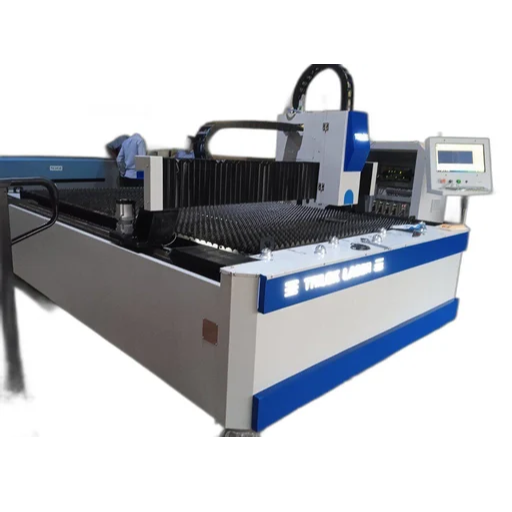
Some of the chief advantages that have promoted it to become one of the foremost manufacturing methods in modern days are as follows:
Precision and Accuracy: Laser cutting offers high accuracy, thus ensuring clean edges. The finishing, if ever required, becomes minimal.
Speed and Efficiency: The process is very fast, able to produce quantity on demand, and optimized for workflow.
Versatility: This can be used on different sheet metal thicknesses and materials, including steel, aluminum, and brass.
Reduced Waste: Because it is laser-precise, it keeps material wastage to an unusually low level, bringing down the cost.
Automation Potential: This can also be interfaced with CNC systems, achieving automated and repeatable accuracy in production.
Given the above, it is easy to see why sheet metal laser cutting is considered an imperious step in an industrial chain of operations requiring quality and timely delivery.
Advantages in Manufacturing and Production
In today’s factories, the laser beam has replaced the guillotine; punch presses now seem prehistoric. Sheet-metal laser cutting stays relevant because it marries speed with intelligence and refuses to be pigeonhole by any sector.
Tolerances hover around -0.1 millimetres and often flirt with -0.05; engravings run that tight and still look drawn rather than cut. Shops value that fidelity because it slashes the second-op bill nearly overnight.
A 2023 fiber unit, sleek and whisper-quiet, consumes half the power of its rangy CO₂ forebears and still clears 120 metres a minute on 1-millimetre stainless. The energy savings trickle straight to the bottom line, making controllers feel thrifty.
One benchtop setup can chew through rookie prototypes in the morning and swap lenses to plate 20-mm Inconel by supper without a major tear-down. That chameleon quality lets job shops promise tomorrow and deliver it.
Newer machines do not play favorites; mild steel, aluminium, polycarbonate, and even half-inch hardwood meet the same focus lens without drama. The cut widths stay slim, so customers do not misplace faith in the next part.
Eco-Conscious Production: Switch to laser tech, and manufacturers immediately notice less scrap on the shop floor. A new generation of cutters also consumes electricity, helping plants lower their overall carbon scores.
Swift Turnarounds: One click moves a CAD outline directly into the laser queue, and the machine cuts minutes later. That seamless hand-off shrinks lead times to a fraction of what older methods require.
These upgrades give aerospace, automotive, and consumer electronics hirers a repeatable edge of speed, sharpness, and greener bookkeeping. Cutting-edge meets everyday output, without apology.
Enhanced Accuracy and Precision
Modern laser cutting technology has brought about a revolution in manufacturing by providing the ultimate in accuracy and precision. With sophisticated laser optics and control systems, tolerances of almost ±0.001 inches can be used to reproduce designs at the minutest detail practically. This level of precision goes into industries such as aerospace and medical device manufacturing, wherein even the slightest deviation from performance would mean the risk of safety.
Automated systems have also evolved, thus increasing precision by reducing human involvement. Adaptive laser control modifies the intensity of the laser beam or focal point to account for differences in material type and thickness, keeping the ultimate results constant. In a similar vein, the use of high-density laser beams permits clean cutting devoid of any burrs that would otherwise call for further finishing processes.
Studies show that laser cutting also maintains uniformity through repetitive operations. For instance, manufacturers can realize consistent outcomes over large production runs, rendering the technology unfairly useful as a medium through which production can be scaled without sacrificing standards. Working at cutting speeds upward of 20 meters per minute for thin materials, laser cutting lends equal weight to speed and precision- the most significant drivers for efficiency in modern manufacturing workflows.
Cost-Effectiveness and Rapid Prototyping
Today, laser cutting is in great demand in the modern manufacturing due to its precision. It is a cost-efficient method with minimal material wastage and tooling requirements. Traditional manufacturing methods use expensive molds or dies for production, particularly in the prototyping stage. With laser cutting, however, these costs can be cut relatively small, as any changes in design can be incorporated soon without any tooling or setup charges.
In the next step, one can move far away along the prototyping phase by now designing and testing numerous design iterations within a reduced production time. Specific laser cutting machines also work cutting materials such as stainless steel, aluminum, and plastics, ranging from 0.5mm to 25mm thickness, thus offering versatility across industries. Moreover, according to some studies, one can achieve tolerances as low as ±0.1mm with laser cutting systems, therefore meeting the high accuracy requirements of both prototypes and final components.
The manufacturing industry data also suggests that laser cutting for prototyping has cut development time by 60%, thus quicker time to market for manufacturers with newer products. This leads to further savings and faster acceptance of design changes, so laser cutting is a priceless tool for innovation-driven industries.
Why Choose Sheet Metal Laser Cutting for Your Projects?
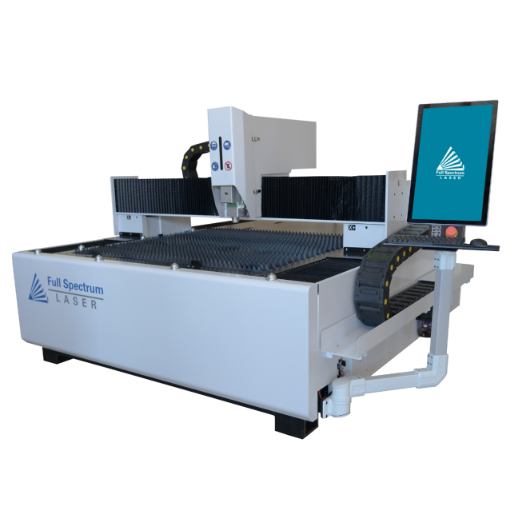
The advantages of the sheet metal laser cutting technique are endless, as it offers perfect precision, fast speed, and high versatility, covering a spectrum of projects. The utmost accurate cuts are ensured, allowing for finer details to be worked into designs and complex geometries with minimal wastage; thus, the process is time-efficient and makes for cost-effective manufacturing. Furthermore, any number of metals are seamlessly compatible with it and therefore come into use for various applications across different industries. Laser cutting is your viable and dependable solution if a project requires uniformity and quality throughout.
Suitability for Cutting Materials Like Aluminum and Steel
Laser cutting is perfect for applications concentrating on aluminum and steel, giving precise, efficient, and versatile solutions. Aluminum is very lightweight and corrosion resistant; however, cutting with conventional methods is difficult because it reflects light. However, the advent of modern laser technology- fiber lasers, in particular- has somewhat set this right by allowing clean and precise cuts without harming the integrity of the material.
However, steel is considered one of the more versatile materials for manufacturing and construction, making laser cutting very effective for both stainless and carbon steels. Stainless steels take advantage of the laser-cut clean edges without burr to make them attractive for interior applications such as kitchen appliances or architectural furnishing. In the case of carbon steel, which is appreciated for fine strength and durability, laser cutting offers some real benefits by cutting varying thicknesses with ease, from thin sheets to thick plates.
Recent figures show that these modern laser cutters can handle a sheet thickness of up to 30mm for steel and around 20mm for aluminum, depending on the power configuration of the laser. Laser cutting enjoys a cost advantage due to its precision at high speed over many other prior processes, including those in the automotive and aerospace industries. When integrated with CNC, laser cutting gives repeatable accuracy, which is quite an important attribute for these materials, especially in high-volume applications.
Handling Thick and Thin Materials
Laser cutting has been adapted for many thicknesses, creating various options to suit heavy and thin materials under precise conditions and at high speeds. Fiber lasers are better suited for thin materials below one millimeter in thickness. The intense energy density focuses on making a clean cut with very few heat-affected zones (HAZ); hence, carefully selected thin materials retain their structure without any internal stresses that can cause them to warp or distort.
Advanced laser configuration and immense powers, generally from 4kW to 12kW, are needed for cutting thick materials such as steel plates up to 30mm and aluminum up to 20mm. The speed at which cuts are being made on these thicker sheets varies with the type of material and power of laser; for instance, a 6kW laser will cut 25mm stainless steel at the rate of about 0.8 meters per minute, whereas for thinner sheets, cutting speed can be as high as about 15 meters per minute for 1mm material.
Modern-day laser cutters employ assist gases like oxygen, nitrogen, or compressed air to improve the quality and speed of cuts. For example, nitrogen gives the best cuts on oxide-free stainless steel, whereas oxygen speeds up the cutting of carbon steel by exothermic reaction. These laser cutting advancements allow industries to optimize production for various materials at high precision and standard quality, regardless of thickness.
Versatility in Working with Non-Metals Such as Wood and Plastic
Laser cutting takes great pride in its vast versatility when working with most non-metallic substances: wood and plastics. The extraordinary characteristics of laser cutting allow for finesse and precision in wood, ranging from furniture to decorative items and even artistic engravings. These cutting modes share a kerf width as narrow as 0.1 mm, perfect for detailed design work. Speed-wise, such slow cuts on thin wood with laser systems are generally rated higher than 35 mm/s; hence, high-speed production is assured.
Similarly, laser cutting offers a lot to acrylics. The procedure refreshes the edges to a soft polish, negating any further finishing requirements, a benefit greatly appreciated in signage production, for display cases, and prototype modeling. Very exact cuts, with ±0.1 mm tolerances, can be achieved on acrylic sheets up to 20 mm thick. Another critical technology advancement is CO₂ lasers dedicated to non-metals and imparting minimum heat-affected zones to avoid warping or discoloration of a material.
The laser cutting adaptability for non-metals makes it applicable in various fields, making it an efficient and dependable solution for precision production. This ability grows continuously by leaps and bounds, making it very important in both industrial and creative fields.
How to Maintain Your Metal Laser Cutting Machine?
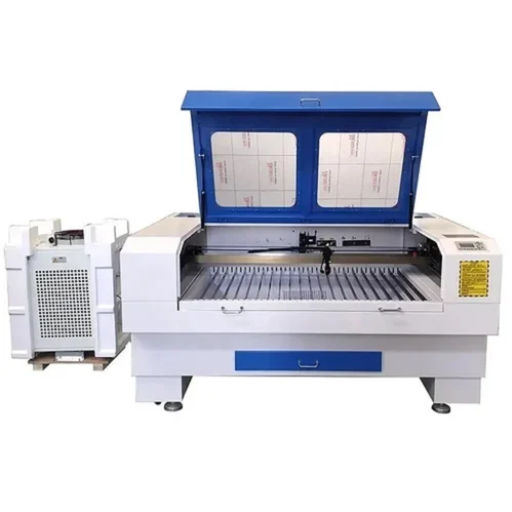
Dust the optical surfaces at least once a week. Tiny particles on lenses or mirrors can bend the beam in ways you won’t notice until the cut goes wrong. Use only the cleaning fluid and cloths the manufacturer flags as safe for that optical path.
Coolant circuits are the machine’s bloodstream. Check hoses for pinholes, verify that chillers kick on at their setpoint, and top off the reservoir before it dips below the sight glass. A single chip from overheating can eclipse the cost of a year’s worth of maintenance.
Consumables such as nozzles or filter media wear like brake pads. Walk the machine once a shift, looking for chipping edges, frayed belts, or punctured sieves, and swap them out before they ruin an expensive component.
Lubricate sliding rails and spindle bearings quarterly. A thin film of high-temperature grease keeps parts from galling and lets heavy assemblies glide instead of grinding.
Eye the calibration grid every month. Even submillimeter drift slices the profit margin off precision jobs, so realign optics and update the software homing tables on schedule.
A tidy workspace absorbs sparks and excuses less contamination. Sweep up swarf, wipe down enclosures, and empty fume extractors before residue hardens into tomorrow morning’s project.
The manufacturer publishes a recommended maintenance calendar for good reason. Follow it, log each task, and let the record speak if warranty questions arise.
Diligent upkeep preserves cutting sharpness, extends component life, and avoids the panic of unexpected downtime. Servicing the tool in one afternoon is cheaper than scrambling to meet a blown deadline in one hour.
Essential Maintenance Tips for Optimal Performance
Inspect and Replace Worn Parts: Tasking a technician or a shop foreman with a routine walk-around shows evidence of worn belts, scratched mirrors, or pitted lenses. Many operators are surprised to find that even a single frayed belt can suck up twenty percent of the mechanic’s potential. Changing such a part at first sight hardly feels urgent, yet that minor swap forestalls one costly snowball of damage.
Calibrate the Laser System: Craftsmanship rests on sharp alignment; nothing nudges it off-line faster than a neglected laser rail. Engineers writing for trade journals routinely cite fifteen to thirty percent accuracy losses when the beam wanders. A calibration cycle once a month, sometimes sooner if the brand insists, keeps the cuts true and the invoices tidy.
Maintain Proper Cooling Systems: Heat is a cruel rule-maker, as is baking optics and frying circuit boards long before the operator notices a problem. University-backed measurements show that lasers pampered with fresh coolant and spotless fins shrug off almost every overheating alarm. Simple chores, such as checking fluid levels and hosing out dust, keep that insurance working.
Software Updates and Optimization: Code, whether in a milling brain or a notebook app, stagnates when it leaves the factory. Field tests pin performance gains of ten to fifteen percent squarely on housekeeping updates that patch bugs or widen hardware elbows. Loading the latest firmware once a quarter, then peering into preferences for cleanup, earns the operator peace of mind.
Monitor Power and Usage Levels: Numbers on a display may look abstract until an accountant notices the power bill. Studies in electrical engineering papers reveal that equipment running at its sweet spot wattage consumes fifteen percent less juice and spares the budget a noticeable ache. Logging the draw after setup and adjusting to the flat curve is fast math with slow, satisfying savings.
Dust and particulate buildup steadily erode optical precision and, over time, invite mechanical failure. Unobstructed air and exhaust passages are non-negotiable, yet an untidy workspace frequently undermines reliability. Industry observations suggest that foreign material accounts for nearly 30 percent of the service calls logged against high-performance laser hardware.
Regular housekeeping and a forward-looking maintenance routine will keep throughput high, shrink the interruptions, and allow every component of the laser system to work near its original design capacity.
Regular Operation Checks and Software Updates
Regular operation checks are necessary to ensure the reliability and longevity of the laser system. Routine checks can also detect wear and tear early. One might consider inconsistency in laser output and misalignment. If ignored, such minor defects may lead to big problems. Preventive maintenance has been shown to reduce equipment failure rates by as much as 45%, emphasizing the importance of regular checks.
Similarly, updating your system software is necessary for its optimal performance. Updates occasionally fix bugs, provide better features, and upgrade security to protect your laser system from vulnerabilities. This way, some latest laser systems might gain even 20% efficiency due to firmware optimization through updates. Regular scheduling of these updates further elevates their functionalities while maintaining harmonization with other tools and components of your workflow.
The intersection of operational checks with software updates constitutes a proactive maintenance regimen for your laser system. This minimizes downtime while maximizing operational value and prolonging service life.
Dealing with Common Issues and Troubleshooting
For common issues and troubleshooting, I always check the system’s connections to ensure everything is aligned correctly and securely in place. If the problem persists, I may need to look through the system logs for error messages indicating an issue. Always refer to the user manual and technical resources continuously, and check for firmware updates frequently. The next step is to contact technical support immediately to resolve the issue quickly and efficiently. The key is to stay organized throughout the process to ensure faster troubleshooting and minimal downtime.
What Are the Key Components of a Sheet Metal Laser Cutting System?
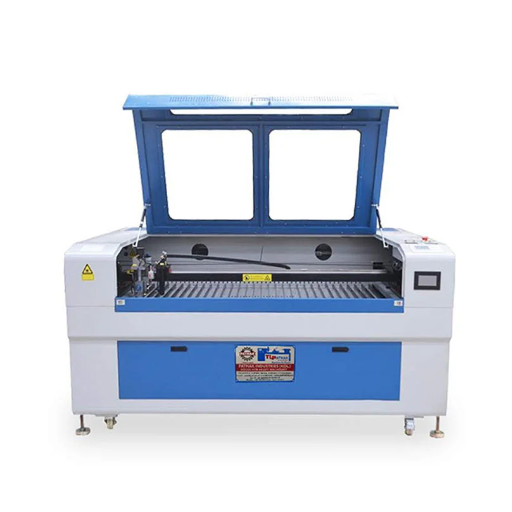
Modern laser-cutting rigs are built around half a dozen main assemblies that work together with surprising quietness. In most shops, the electric or fiber-driven Laser Source sits like a small bedside box, pumping massive power straight to a fiber strand or mirror loop.
Attached to the end of that beam path, a Cutting Head swivels and ducks, housing precision lenses or metal mirrors that size the spot down to a pinprick, sometimes smaller than a human hair. That head never moves independently- the CNC Controller lays out the cut, churning G-code into servo commands almost before the operator blinks.
Most operators rarely think about the Gas Supply System, yet the trickle of nitrogen or oxygen under pressure closes the gap between a clean edge and a blown kerf. Heavy steel rests on a Worktable that seems pedestrian at first glance, but its honeycomb grid balances weight while letting molten chips spill straight through.
By the time sparks die, the idling Exhaust system is already yanking smoke and fume away from bare hands and breathing zones, leaving white-proof paper under the plate spotless. Miss even one link in that chain, and the job bogs down, so builders treat every component like the entire machine.
Understanding the Machine and Its Parts
A brief digest of contemporary laser-cutting machinery reveals the following operational fundamentals.
Laser Resonator is the nucleus of the device where photons collide and multiply. Light ricochets within its mirrored chamber until it bursts like a razor-sharp beam.
The Beam Delivery System is a cluster of mirrors and lenses that routes the newly minted photon torrent straight to the work surface. Slight adjustments allow the light to behave as a scalpel rather than a flood.
A Motion System is a set of motors and rails choreographing the head or the material along a programmed path. Every curve in a digital design translates to an identical motion on the shop floor.
Assist-Gas Systems stream of oxygen, nitrogen, or filtered air that rushes in as the beam bites. The gases cool the cut and sweep away molten debris, often dictating final edge quality.
Control Panel touchscreen hub from which operators dial in speed, power, and feedrate while watching real-time diagnostics. A few keystrokes calibrate the machine for stainless steel, then for acrylic, with virtually no downtime.
These subsystems deliver speed, precision, and repeatability. They can handle artwork in one moment and structural steel in the next. Their seamless interplay turns theoretical designs into tangible parts on an industrial timetable.
The Importance of Laser Power and Efficiency
Sheet Metal Laser Cutting Machine – CO2, Fiber, and YAG laser machines.
|
Key Point |
Details |
|---|---|
|
Machine Type |
CO2, Fiber, YAG |
|
Power Range |
500W-20,000W |
|
Material |
Metal Sheets |
|
Cut Thickness |
Up to 30mm |
|
Speed |
High-Precision |
|
Maintenance |
Low for Fiber |
|
Efficiency |
Energy-Saving |
|
Life Cycle |
Long Durability |
|
Applications |
Industrial Use |
We may look into laser power and efficiency when discussing laser cutters, as they govern the performance of a laser cutting machine. The cutting activity includes dealing with stuff that is very thick and dense, along with precision and speed. The laser can also cut through various materials, including metals, plastics, and composites. Efficiency is, therefore, concerned with the operational cost of the machine and the energy it consumes. The more it knows, the less it can draw from power; consequently, the laser cannot provide much heat, which could mean more durability and less wear to the machine components.
When choosing a laser cutter, it will be imperative to consider whether the power will keep up with the machine’s efficiency. Laser machines using optimized power and cutting-edge energy-saving technologies will return good cutting and lower operational costs. Higher laser efficiency will enhance productivity by minimizing downtime and maintenance. Thus, a high-powered but highly efficient laser cutter should be selected for dependable operation and to accomplish project requirements effectively.
Role of Software in CNC Laser Cutting
Machine software is used for CNC laser cutting, ensuring precision, efficiency, and operation. Powerful CAD and CAM software allow users to design complicated patterns, import their files, and convert them into machine-readable instructions. The most recent software also provides nesting chess, arranging patterns creatively to minimize materials and nearly eliminate waste. Also, with fewer software, one could survey the working units in real time and adjust the cutting path to ensure accuracy. The modern software system has further integrated automation features into it, thus speeding up workflows and creating interoperability with various file formats through intelligent path optimization, thereby minimizing errors. The right software minimizes manual intervention, enhances productivity, and completes multiple cutting projects.
Reference Sources
Overview of Laser Technology in Mechanical Manufacturing
Cutting Techniques in Decommissioning Projects
Water-Jet-Guided Laser Cutting of Inconel 718
Frequently Asked Questions (FAQs)
Q: What is a laser cutter, and how does it work when cutting sheet metal?
A: A laser cutter is a machine that uses a focused beam of light, or laser, to cut through materials, including sheet metal. It works by concentrating high-energy light onto the material’s surface, melting or vaporizing it to create precise cuts. This process is ideal for cutting intricate designs and maintaining tight tolerances.
Q: What types of lasers are commonly used for cutting sheet metal?
A: The most common lasers used for cutting sheet metal are CO2, fiber, and crystal. Each type has advantages, such as high power and compatibility with various materials, including metals and non-metals.
Q: Why is fiber laser cutting preferred for certain metal parts?
A: Fiber laser cutting is preferred for metal parts due to its high power and efficiency. It is especially suitable for cutting thick metals and offers faster processing than other lasers. Fiber lasers also provide high-quality laser cuts and are ideal for small-scale manufacturing.
Q: Can a laser cutter be used to cut non-metals?
A: Yes, a laser cutter can be used for cutting non-metals, such as leather and glass fibers, and metals. The choice of laser and machine settings will depend on the material’s properties to ensure clean and precise cuts.
Q: What materials can a CO2 laser cut, and is it suitable for cutting intricate designs?
A: A CO2 laser can cut various materials, including wood, acrylic, and certain metals like aluminum. It is suitable for cutting intricate designs due to its precision and ability to maintain tight tolerances.
Q: How does the power level, such as 1kW, affect the cutting capabilities of a laser cutter?
A: A laser cutter’s power level, such as 1kW, directly impacts its cutting capabilities. Higher power levels allow for faster cutting speeds and the ability to cut through thicker materials, while lower power levels are ideal for thinner materials and detailed work.
Q: What role do inert gases play in the laser cutting process?
A: Inert gases like nitrogen and argon are used in laser cutting to prevent oxidation and improve cutting quality. They help to achieve smoother edges and prevent the material from burning or reacting with the air during cutting.
Q: Is it possible to cut aluminum with a laser cutter, and what should be considered?
A: Yes, it is possible to cut aluminum with a laser cutter, but due to aluminum’s reflective properties, specific machine settings and considerations are required. A high-quality laser, such as a fiber laser, is often recommended to ensure precise and clean cuts.
Q: Are laser cutters compatible with materials like titanium, and what are the challenges?
A: Laser cutters are compatible with materials like titanium, but cutting such metals can be challenging due to their toughness and heat conductivity. A high-power, high-quality laser is required to achieve the desired results without compromising the material’s properties.
Q: What factors should be considered before cutting thick metals with a laser cutter?
A: Before intending to cut thick metals with a laser cutter, factors to consider include the type of laser, power level, cooling system, and material thickness. High-power lasers, such as fiber lasers, are ideal for cutting thick metals efficiently and precisely.