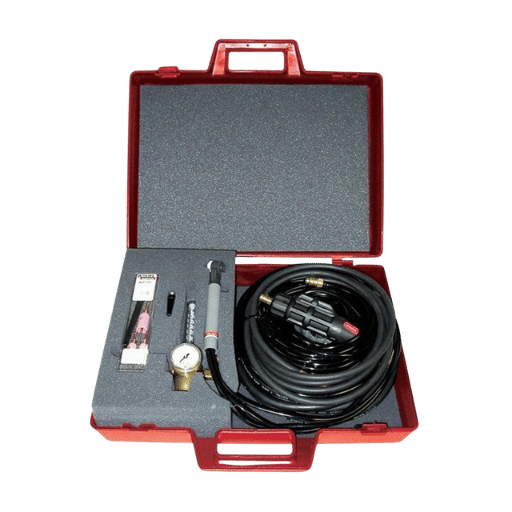
TIG welding is an accurate and versatile specialization in metalworking; it has serious followers and practitioners on both sides of the Atlantic. From individuals refining their skills or making a living with welding to total beginners aiming to embark on the journey, the proper equipment and knowledge are crucial for completing a given project. This article will dissect and examine the essential TIG welding kit, including all equipment and tools worth focusing on as you progress toward perfection.
What is Included in a TIG Welding Starter Kit?
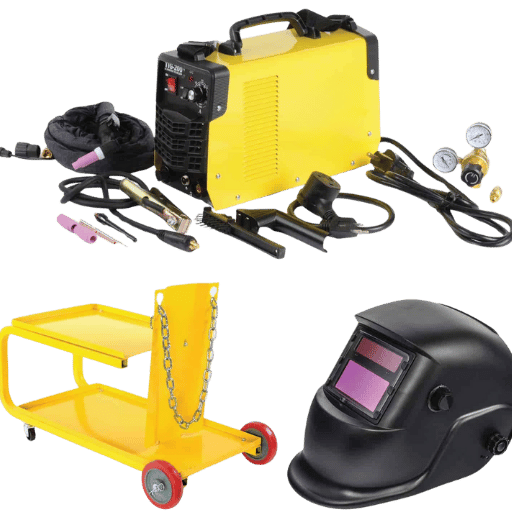
Essential Components Checklist
- TIG Welding Machine: The focal point for precision and control.
- Tungsten Electrodes: Creating the arc for welding, fired depending on the type and size of the material.
- Welding Torch: A Handheld device that passes the arc and the shielding gas to the welding face.
- Shielding Gas and Regulator: Usually, Argon is used here to prevent contamination.
- Filler Rods: Metal rods that are put into the weld pool to form a powerful bond.
- Personal Protective Equipment (PPE): Considerations of safety, including welding helmets, gloves, and protective clothing.
- Ground Clamp and Cables: They are essential for completing the electrical circuit during welding.
Understanding Each Component
TIG Torch
By directing the welding arc with pinpoint accuracy over the workpiece, the torch gives welders some control over heat and weld placement.
Shielding Gas and Regulator
Argon gas is discharged from the torch nozzle, setting up a protective barrier around the weld. Welding is undesirable since it oxidizes and contaminates the weld.
Filler Rods
Inserted manually into the weld pool to create strong, durable bonds between metal pieces.
Personal Protective Equipment (PPE)
Protects from heat, UV radiation, and sparks. Proper PPE is essential to prevent burns and other injuries, especially for professional welders.
Ground Clamp
Completes the electrical circuit, ensuring smooth current flow and stability throughout welding.
Welding Tools You Can’t Miss
Welding Helmet
The welding helmet would protect a welder’s eyes and face from the very harmful UV rays, spark showers, and other heat. Auto-darkening helps provide good visibility during work.
Wire Brush
To clean the metal surface, ensuring it is free of contamination for welding.
Clamp or Vice
Used to hold pieces of metal firmly during welding to ensure the precision and safety of welders.
Angle Grinder
This tool cuts, grinds, and prepares metal surfaces for welding.
Measuring Tools
These include tape measures and squares to accurately measure dimensions and ensure proper alignment.
Understanding Welding Rods and Tungsten
Welding Rods: The Filler Material
Welding rods, or filler rods, are materials utilized during welding to join two base metals. Upon doping, they will be selected based on the welding processes, the properties of the base metals, and the weld character. For example, in Shielded Metal Arc Welding (SMAW), the electrodes are coated with flux to stabilize the arc and to prevent oxidation.
Popular Welding Rod Types:
- E6010: Perfect for deep penetration
- E7018: Best for low hydrogen applications that require good resistance to cracking
Tungsten: The Heart of TIG Welding
In TIG welding, tungsten is preferred for its high melting point and ability to withstand severe heat, resulting in fine, high-quality, precision joints. Tungsten electrodes are classified by their current composition and identified by color-coded tips.
Tungsten Electrode Types:
- Pure Tungsten (Green Tip): Used for welding aluminum
- Thoriated Tungsten (Red Tip): Primarily employed for steel, given its easier arc-starting capability.
- Ceriated or Lanthanated Tungsten: Offers better performance with comparatively lower environmental risk, hence gaining popularity in the industry.
⚠️ Important: Proper storage of welding rods and tungsten is a necessary condition to prevent contaminants from affecting them. Hence, they need to be stored in dry, controlled environments. By selecting appropriate materials and ensuring handling to the highest standards, welders can achieve the highest degree of consistent, dependable welding results.
What Are the Types of TIG Welders Suitable for Beginners?
The Advantages of Using a Starter Kit
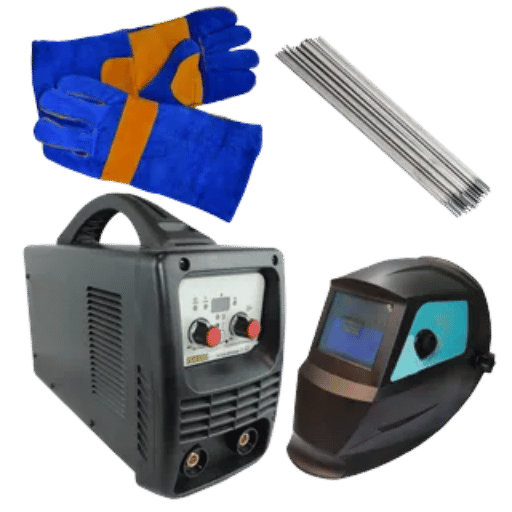
TIG welding starter kits are a comprehensive, economical solution for beginners in this field. For example, the kits could include a TIG welder, a welding torch, tungsten electrodes, filler rods, and sometimes safety equipment such as gloves and a welding helmet. This circumvents the confusing task of choosing compatible tools and materials, intending to get one started as soon as possible.
💰 Cost Savings
Data suggests that initial investments could be reduced by 20 percent if equipment is bundled into a starter kit, making it an attractive option for hobbyists or for someone stepping into a professional career in welding.
Key Benefits of Starter Kits:
- The components are designed to be easy to work with for beginners, with features such as adjustable amperage controls and pre-installed settings.
- Simplifies learning by providing a complete toolset to finish simple projects.
- It puts an end to any potential delays caused by missing equipment.
- Most of these kits are manufactured by good brands; hence, the quality and durability are guaranteed.
- Establishes a solid welding base with as few complications and as much efficiency as possible.
Exploring TIG Welding vs. MIG Welding
| Parameter | TIG Welding | MIG Welding |
|---|---|---|
| Electrode | Non-consumable | Consumable |
| Filler Material | Optional, manual | Automatic, required |
| Shielding Gas | Pure Argon | Argon + CO₂ |
| Material Suitability | Thin materials | Thick materials |
| Weld Speed | Slow | Fast |
| Ease of Use | Difficult | Easy |
| Aesthetics | High | Moderate |
| Strength | Strong | Moderate |
| Cost | High | Low |
| Skill Required | High | Low |
| Applications | Precision work | High production |
How to Use a TIG Welding Starter Kit?
Step-by-Step Guide for Beginners
1Read the Manual
Carefully review the instruction manual for attaching your welding starter kit to familiarize yourself with the tools, components, and safety issues.
2Set Up the Equipment
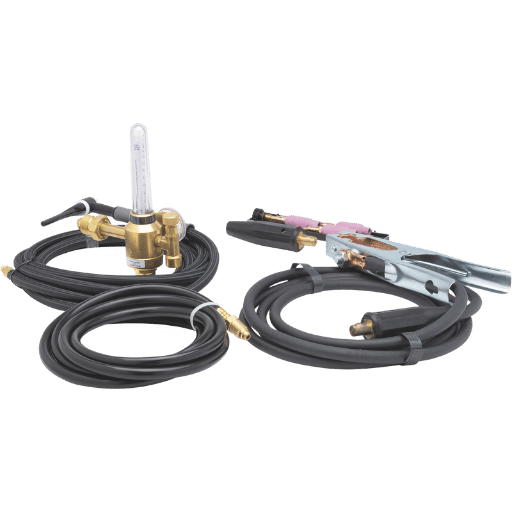
Assemble the torch, electrode, shielding gas, and other components as per the instructions supplied. Check that all are firmly connected and that the welding machine is set on the required settings suitable for your material and project.
3Prepare the Workspace
Clean and prepare the surface by ensuring it is free of dust, grease, and rust. Work on a sturdy, well-ventilated surface to enhance safety. Also, protect yourself by wearing all necessary gear, such as gloves, a welding helmet, and a welding jacket.
4Select and Install the Electrode
Choose the right tungsten electrode for your material and the correct diameter. Sharpen your electrode, then install it in the torch and ensure the correct stick-out length.
5Adjust the Shielding Gas
Connect the gas supply and set the flow to ensure adequate coverage. Make sure the gas being used is suitable for TIG welding-an example would be pure argon.
6Practice on Scrap Materials
Before engaging in your project, practice striking the arc and making welds on scrap pieces of the same material. This practice will help you get comfortable with heat and movement control.
7Start Welding
Step on the foot pedal or use any other available control to start welding. Maintain a steady hand and a uniform travel speed, keeping the torch at a consistent angle and distance from the material.
8Inspect the Weld
After the cleanup, allow the weld to cool and inspect it for a strong, consistent appearance to ensure quality. Finish the job by cleaning the area and properly disconnecting the equipment.
💡 Pro Tip: Beginners can safely and effectively initiate TIG welding and develop the foundational skills necessary for more advanced projects by following this procedure.
Common TIG Welding Mistakes to Avoid
❌ Contaminated Tungsten
One of the more common TIG welding errors is that of contaminated tungsten. If the tungsten accidentally comes into contact with the molten weld pool or nearby material, contamination is likely to occur. Any contamination causes arc instability and, eventually, adversely affects weld quality. Always maintain good torch angles and adapt to movements that cause the tungsten to touch the weld pool unconsciously.
❌ Incorrect Shielding Gas Flow
Setting improper flow rates or using the wrong shielding gas can diminish weld quality. Insufficient shielding gas flow results in atmospheric contamination, while over-flowing may cause turbulence that eventually introduces impurities. In any case, ensure that pure argon or argon-based mixtures are used, with flow rates between 15-20 cubic feet per hour (CFH), though this may vary with the specific material and joint types at hand.
❌ Improper Heat Input
Using too much or insufficient heat is a critical welding mistake that weakens the weld. Overheating the material can warp it, cause burn-through, and result in a poor weld profile—lack of heat leads to poor penetration. Always use the amperage setting appropriate to the thickness to ensure metals are truly fused without distortion.
❌ Neglecting Joint Preparation
Another standard error welders make is failing to clean and prepare the joint surface. Dirt, grease, rust, or oxidation on the metal can cause contamination, which builds porosity in the weld or results in weak bonds. Clean your material first with a wire brush or appropriate chemical cleaners for the type of metal you’re working with.
❌ Incorrect Filler Rod Selection
Incorrect selection of the filler rod for the base material will cause welding defects. Cracking, uneven profiles, or a lack of fusion can result. Always check whether the filler material is compatible with the base metal in question using material compatibility charts as a reference.
❌ Torch Angle and Distance Errors
Continuing the torch angle and distance is essential for consistent results. Deviations in torch position (15 degrees from vertical is typical) cause uneven heating and inconsistent weld-bead formation. Also, keep the tungsten too close or too far from the material, as this interferes with the arc.
❌ Skipping Post-Weld Cleaning
Skipping post-weld cleaning treatments would affect the longevity and appearance of any project. Residual oxides, flux, or spatter should be removed to improve corrosion resistance and achieve a good finish, especially when welding stainless steel or aluminum.
✅ Key Takeaway: By learning about and addressing these common issues, welders can significantly improve TIG welding quality and reliability, resulting in strong, accurate, and durable welds across many applications.
Tips for Welding with Aluminum and Steel
Welding Aluminum
Aluminum, being a light, highly conductive metal, requires careful heat control because of its low melting point. The surface must be cleaned to remove oxide before welding, since aluminum oxide melts at a much higher temperature than the base metal itself. This prevents contamination and allows the weld to penetrate evenly.
Recommended Shielding Gas for Aluminum:
Argon or an argon-helium mix for optimal results
Welding Steel
The heat input must be controlled during welding steel, particularly with high-carbon steels, which may crack if overheated or cooled too quickly. Pre-heating, therefore, helps minimise thermal stresses and prevent the material from warping. Use a filler that closely matches the steel grade to ensure the weld’s mechanical properties are as desired.
Recommended Shielding Gas for Steel:
Argon-Carbon dioxide mixture to attain the best arc stability and weld profile
Advanced Techniques
- Pulse TIG Welding: Provides better control over the heat given during transitioning between aluminum and steel
- Equipment Maintenance: Consistent maintenance of the equipment plays a vital role in welding, so that one can perform at a professional level
- Calibration: Regular inspections of consumables, torches, and contact tips provide maximum performance with welding machines calibrated to allow for control of amperage and voltage
What Are the Best Projects for a New Welder?
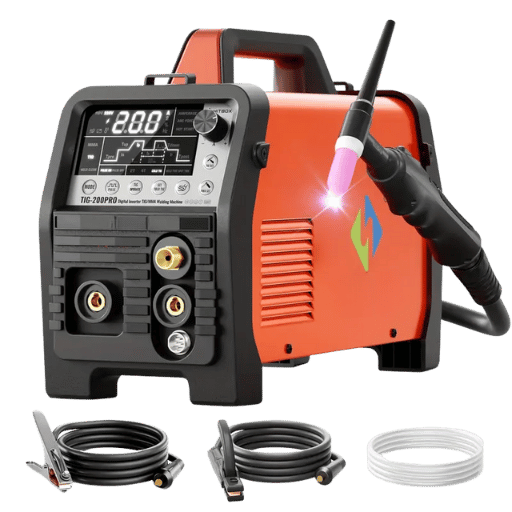
Simple Welding Projects to Start With
The choice of beginner projects allows welders to practice foundational skills and gain confidence. Here is a list of superb suggestions for beginner projects, along with some practical insights into the requirements:
1. Welding a Metal Tool Box
The project entails welding sheet metal to form a simple, very functional storage box. A beginner would practice straight-line cuts and tack welding on a corner joint, something done in many other projects. Mild steel-like metals are recommended because they are easy to work with and inexpensive.
2. Building a Welding Table
It serves two purposes: a welding table for workshop setup and an excellent project for new welders. The job involves welding square tubing or square angle iron to make a rigid frame, offering the welder the opportunity to practice consistent bead placement and structural welding. One can also install a flat and even welding surface on the top using a heavy steel plate.
3. Creating Custom Wall Art
In case you fancy a more artistic project, metallic wall art is just the thing to combine creativity and welding! Working with scraps, rods, or maybe horseshoes to make decorative designs-the job will get you started in welding. The project usually involves welding curved or irregular edges, sharpening your accuracy and technique.
4. Fabricating a Simple Garden Trellis
Metal rod trellises make excellent projects for the beginner welder. It consists of a geometric or grid-like pattern with the MIG welding process used to join the intersection points. This can help build skills for working with thinner metals without losing sight of alignment.
5. Constructing a Basic Hose Reel
The hose reel can be made with round metal stock or pipes to form the cylindrical spool and its supporting frame. It builds concepts around circular welding, working on curved surfaces, and ensuring structural stability, all within an easy-to-follow project.
💡 Benefits: These projects are cheap, require only a bare minimum of materials, and are fundamental for core skills training in welding, proper joint preparation, heat application, and bead consistency. Also, they provide something valuable and tangible that will give budding welders a sense of pride and motivation.
Using a TIG Torch for Precision Projects
Tungsten Inert Gas welding is prized for its precision and versatility and can be used on anything that demands detail and accuracy. TIG welding uses a non-consumable tungsten electrode, which allows precise control of the weld pool and cleaner, more precise welds. TIG welding is excellent for aluminum, stainless steel, thin materials, and when keeping burn-through to a minimum is vital for making a sound joint.
Technical Specifications:
- Capable of welding at five amps for very delicate work
- Up to 200 amps for welding thicker material
- Highest-purity shielding gases: Argon or an Argon-Helium mixture helps clean arc and weld surfaces
Pulse welding makes a modern TIG well-suited for castings in aerospace, automotive, and art fabrication, where low heat input and deformation are required.
Consistency and good technique are the very core of accommodating industrial-level TIG welding. This essentially means proper torch angles, travel speeds, and filler addition. Other advanced TIG welders might feature high-frequency start, foot control, or even hand control to increase precision and adaptability during complex welds. Given the level of control and finesse available with TIG welding, it remains one of the most skilled, yet rewarding, methods when precision is paramount.
Understanding the Role of Shield Gas in Projects
Shield gas plays a vital role in achieving high-quality welds by preventing atmospheric contamination of the weld pool. Argon, helium, or a mixture of the two may be chosen, depending on the material and process used in pro environments.
Gas Selection Guide:
- Argon: Standard gas for TIG welding, forming smooth, clean welds
- Helium: Penetrates well, transferring heat sufficiently to weld thicker materials
- Argon-CO2 Mixtures: Used in MIG welding, depending on transfer modes, but can also reduce spatter
Shield gas choice, therefore, affects arc stability, heat input, weld quality, and, ultimately, weld characteristics. According to industry sources, poor selection of shield gas leads to porosity, irregular weld-bead profiles, and other defects that compromise structural integrity.
⚠️ Flow Rate Guidelines:
A typical recommendation for flow rates ranges from 15 to 30 CFH, depending on the job. Too much flow might cause turbulence and draw in contaminants. Too little may not adequately protect the weld area. Ensuring proper coverage is one factor that affects the maintenance of the weld’s physical and aesthetic qualities.
With advancements in gas-mixing technology, welders now have a much broader choice in fine-tuning their gas mixtures to adapt to and improve efficiency across various project needs. Yet another cause to emphasize the place of shield gas in welding excellence.
How to Maintain and Care for Your Welding Kit?
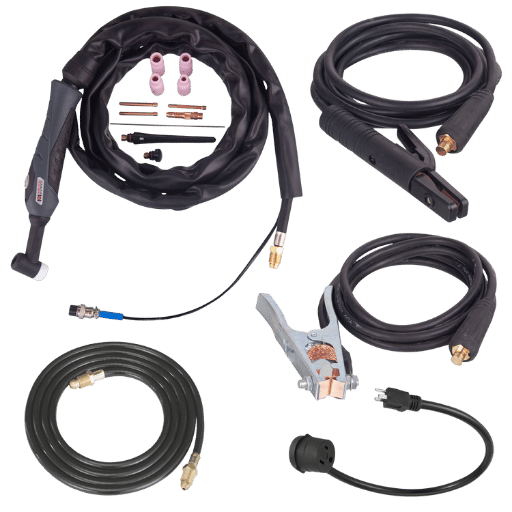
Regular Upkeep of Welding Tools
A consistent regimen must be undertaken to maintain the welding tools. Maintaining your tools extends their life and ensures safety and reliable operation.
🧹 Cleaning
Clean your welding tools after every use to prevent debris and residue from accumulating, which can adversely affect their performance.
🔍 Inspection
Check your tools regularly for any signs of wear or damage, such as frayed cables and cracked components, and replace these parts immediately.
📦 Storage
Keep the welding tools in a dry, orderly place so that moisture or other environmental factors do not cause rust or corrosion.
🔧 Consumables
Ensure consumables, such as electrodes and nozzles, are replaced regularly for optimal performance.
Ensuring Longevity of Your Welding Machine
- Routine Cleaning: Ensure the exterior and vent areas are cleaned regularly to prevent dust and dirt from accumulating, which, over time, may cause overheating or operational issues.
- Inspect Cables and Connections: Examine cables and connections regularly for damage, wear, or looseness, and address any issues immediately.
- Avoid Overloading: Use the machine within its recommended duty cycle to prevent overheating and damage internally.
- Store Properly: Always store the machine in a dry and clean environment, avoiding moisture contact that may cause corrosion.
- Perform Regular Maintenance: Always follow the manufacturer’s maintenance schedule, including timely replacement of worn parts and inspection of internal components.
Replacing and Storing TIG Accessories
Proper replacement and storage of TIG welding accessories are necessary to perform at their best and to ensure a longer lifespan.
Replacement Guidelines
- Check consumable parts, such as tungsten electrodes, collets, and gas lenses, for wear and damage
- Replace if they show any signs of cracks or deformation, or if they have worn beyond acceptable limits
- Always use high-quality accessories recommended by the equipment manufacturer to ensure compatibility and performance
Storage Best Practices
- Keep tungsten electrodes in a clean, dry container to avoid contamination and oxidation
- Place accessories such as nozzles and cups in a storage box with compartments
- Keep the accessories away from plant moisture, dust, and sunlight, as these may bring corrosion and material deterioration
✅ Result: Following such guidelines results in minimal downtime, longer life for tools, and always High-Quality Welds from TIG welding professionals. These things are regularly monitored and standardized to improve operational flow and create a safer work environment.
Frequently Asked Questions (FAQs)
Q: What is included in a TIG welding starter kit?
A: The price of a TIG welding starter kit differs widely depending on the brand and features included. Basic kits can start at around $150, whereas perfect kits include additional TIG accessories and cost above $500.
Q: Are portable TIG welding kits available for beginners?
A: Yes, portable TIG welding kits are indeed available for beginners. These kits are easy to use—just weld anywhere, including at work —and they include everything required for TIG welding.
Q: Can I use a TIG welding starter kit with a MIG welder?
A: While a MIG welder does something other than a TIG welding starter kit, you can definitely have value from owning both. They both specialize in differing techniques that, once studied and practiced, can open the door to a broader range of welding applications.
Q: What should I look for in a TIG torch starter pack?
A: When buying a TIG torch starter pack, one should consider things like the type of torch, what welding machines it is compatible with, and what accessories are included. A high-quality torch will improve your ability to achieve acceptable welds.
Q: What should be the Welding experience to use a TIG Welding Starter Kit?
A: You may need some welding experience; however, many TIG welding starter kits are geared towards beginners who usually have manuals with them to describe how to carry out some basic welding operations.
Q: Any one-kit solutions for TIG welding?
A: Yes, there are TIG welding starter kits that generally include everything that one would want to begin TIG welding. The kits typically combine the essentials and accessories needed for convenience.
Q: Does the power supply have anything to do with a TIG welding starter kit?
A: The power supply is crucial for TIG welding, and in many cases, TIG starter kits run off a 110V outlet, making them perfect for home use. So, if your kit requires 220V power and you live in a country that uses 110V outlets, it will be an incompatibility issue.
Q: What are some recommended brands for TIG welding starter kits?
A: Among those recommended are Miller, Lincoln Electric, and Eastwood for quality TIG welding starter kits. These companies usually offer good equipment and good customer support.
Q: Will TIG kits really affect welding performance?
A: Yes, TIG accessory kits improve welding work as they contain tools and supplies designed to aid efficiency and precision. Along with your starter kit, investing in a good accessory kit will provide better results.
Q: How much does a TIG welding starter kit cost?
A: The price of a TIG welding starter kit differs widely depending on the brand and features included. Basic kits can start at around $150, whereas perfect kits include additional TIG accessories and cost above $500.
Reference Sources
- Collegiate Continuing Education Welding Tool Kit and PPE – A tool and PPE requisite list for welding, including TIG welding, is described here in detail.
- What Tools Does a New Welder Need? | Southern Careers Institute (SCI) – This blog explains the must-have tools for beginning welders to build a TIG welding toolkit.
- Welding
- welding machine buying guides