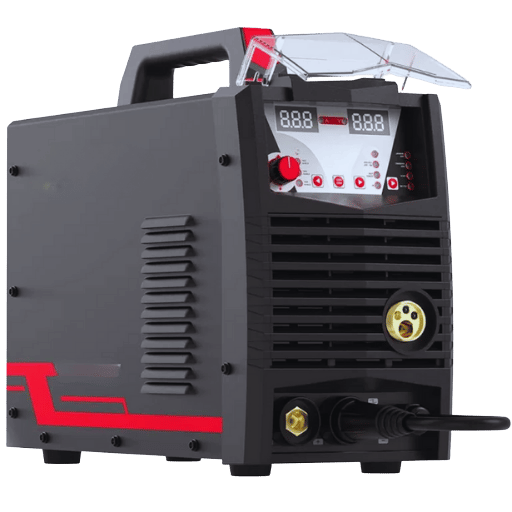
Embarking on a journey of welding can be a mix of good and bad feelings, especially if one has to choose among the different machines. For the novices, the perfect solution is to look for a welder that is easy to operate, versatile, and reliable, as such a machine will help them develop confidence and learn the basic skills in no time.
This manual is crafted to ease the process of making a decision by dissecting the main characteristics of welding machines meant for beginners and presenting the insights that are useful for the inexperienced ones. It is up to you if you are going to look for a small gadget for home projects or a multipurpose instrument for mastering skills of professionals; this guide will provide you with the necessary information to select wisely and start your journey to welding victory.
What are the Best Welding Machines for Beginners?
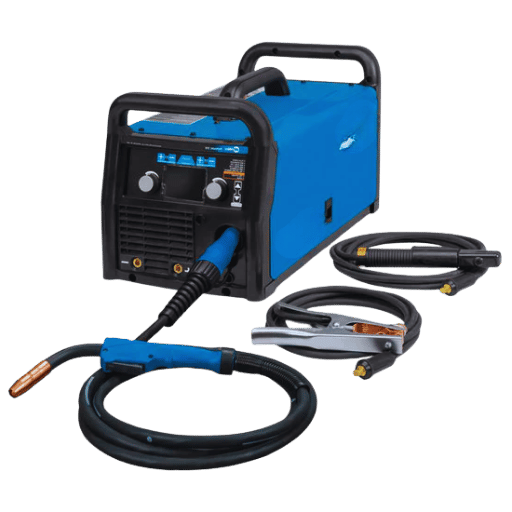
The machines that are best suited for beginners are those that have an easy interface, are dependable, and can be used for different applications. Here are three leading choices:
1
Hobart Handler 140
Considered user-friendly and effective, the Hobart Handler 140 is a compact and portable MIG welder, which is powered by the usual 115V home electrical system, thus accessible to domestic users, allows welding of mild steel, stainless steel as well as aluminum.
2
Lincoln Electric K2185-1 Handy MIG Welder
It has significantly become popular among recreational users and beginners alike because of its ease of use, industry-leading welding machine reliability, and decent quality output. However, winning the heart of the masses out there remains affordable.
3
YESWELDER Digital MIG-205DS
Offering versatility for novices experimenting with various welding techniques, this machine combines MIG, TIG, and stick welding all in one. For learners, it is a great all in one machine, set up is easy and the use of digital control makes it simple.
Key Takeaway: These devices maintain a balance between complex features and ease of use and aid novice welders in gaining self-motivation and honing their capabilities. Always factor in elements such as electrical needs, device construction, and finances in order to determine which welding device fulfills your requirements best.
Understanding the Different Types of Welders
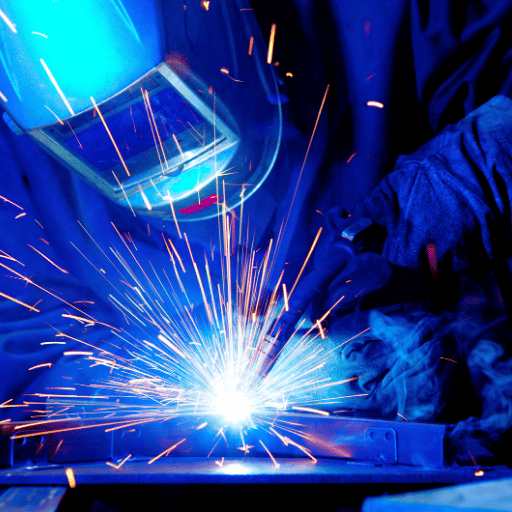
Welding involves various techniques to join metals, each suited for specific applications, materials, and skill levels.
Key Features to Look for in a Beginner-Friendly Welder
- Ease of Use
The controls and settings should be basic and automatic, especially for novices. Beginners should be able to physically concentrate on the fundamentals of welding, not on intricate settings.
- Portability
The elementary welder should be light and compact, especially to the students, as the device should be carried around for practice and smaller welding jobs.
- Safety Features
The above risks should be reduced by features like automatic thermal overload, also features such as welding lead insulation, as well as automatic shutdown and thermal overload safety, should be included.
- Versatility
Welder versatility, comprising different welding processes, MIG and Stick, for instance, brings adaptation and allows a more nuanced exploration of different techniques for a beginner. Welding, more than any other craft, requires a mastery of versatility to perform different procedures and work on different materials.
- Durability
A seamless and dependable design guarantees that the equipment is capable of enduring consistent use, allowing users to acquire skills more easily and without long interruptions from maintenance.
- Cost-Effectiveness
Basic welding equipment is often affordable and provides beginners with the core functions necessary without unnecessary extras, giving a sensible starting point to welding.
- Power Options
The benefit of a machine having dual voltage compatibility (120V/240V) is that it can work with a regular home power socket as well as industrial power sources.
- Comprehensive Accessories
A beginner welder should have a starter kit that contains a welding mask, gloves, and other requisite tools so that welding can be done right away.
Comparing MIG, TIG, and Stick Welders for Beginners
Among the three welding techniques, MIG welding is most accessible to novices, offering the lightest learning barrier and greatest ease of use as learning welding techniques. The ease and versatility of the use of MIG welding is commendable, as downloading the software is the most tedious activity, coming to literally minutes of paying less than 20 dollars a month.
Wielding the most advanced welding apparatus, and achieving the finesse of a sculptor, with the level of patience and controlled precision a surgeon inspires, while requiring a fierce amount of skill toward is the gold standard of welding. Thus, it is advisable to refrain from employing it until one has mastered the welding of varying metals.
Stick welding, on the other hand, is straightforward and cost-effective, but it can be challenging to master for beginners due to its splatter and the need to maintain a consistent arc length.
Bottom Line: MIG welders provide the best starting point for learning thanks to their user-friendly operation and adaptability.
How to Choose the Right Welder for Your First Welding Projects?
Assessing Your Welding Needs and Goals
Identifying the types of materials and the associated thicknesses of those materials that you`ll be working on will greatly assist you in the selection of the right welder for your first projects. MIG welders, for instance, are used on thin to medium metals, whilst stick welders are more suited to thicker materials.
Factors to Consider:
- Power availability—which welders require more power than stick welders
- The options available in the pricing
- The different kinds of materials used and their thickness criteria
- Whether user-friendliness in future adaptability is more of a priority
The Importance of Amperage and Duty Cycle in a Beginner Welder
When purchasing an entry-level welding machine, amperage and duty cycle are very important considerations. Amperage determines the capacity of the machine regarding the thickness of the materials that can be welded. Higher amperage allows welding of thicker metals, and lower amperage allows welding of thinner materials, which is ideal for beginners since overheating and damage to the material are kept to a minimum.
Important Note: The percentage of the duty cycle indicates how long the welder can operate continuously before necessitating a cooldown period. A machine with a moderate duty cycle (20-30% at its rated amperage) is frequently more than enough for a beginner welder with hobbyist or light industrial use. Providing both factors promotes constant function and avoids downtime in the welding projects, which simplifies the learning process.
Finding a Welder that Matches Your Budget
Focusing on capabilities other than the lowest price is vital, particularly when working on the more affordable MIG welders. This is the reason I focus on value. Ascertain the type of welding to be done so that the appropriate types of machines can be chosen.
Budget-Friendly Tips:
- For smaller scope work, often referred to as ‘occasional work’, an entry point MIG welder or stick welder often provides the best trade-off between price and usability.
- Always check trade-in options
- Always check model options with warranty and confirm
- Make sure the reviews confirm the model’s usability
- Look at the price of welding safety equipment and accessories. These accessories also include the flux core protective gear.
Is a MIG Welder the Best Choice for Beginners?
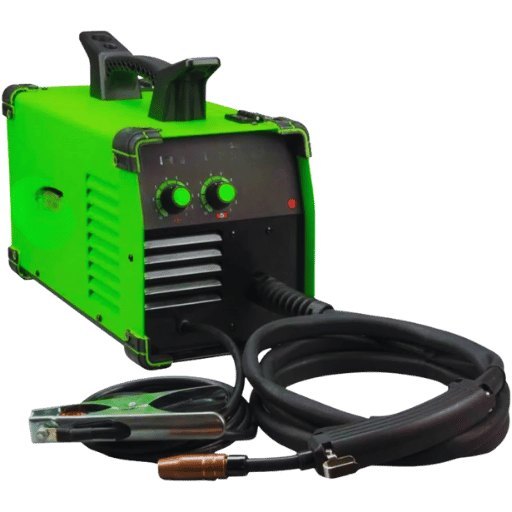
Advantages of MIG Welding for Beginners
✓ Ease of Use
As a welding method, MIG welding is acknowledged as one of the easier methods to learn because, unlike TIG or stick welding, MIG welding does not need as much manual control. The feeder wire does a lot of the work, which enables students to concentrate on perfecting their skills.
✓ Versatility
A significant advantage of the MIG welding machine is its capability to weld different metals, ranging from mild and stainless steel and even aluminum. This feature proves its pragmatism on different projects.
✓ Speed
MIG welding machines are noted for their high welding speeds, and thus, they enable the user to work quickly than any other method, especially TIG welding.
✓ Cleaner Welds
MIG welding, with appropriate shielding gas, creates spatterless and cleaner welds gas which reduces post-weld cleaning and increases the quality of the finished product.
✓ Continuous Welding
Welding for wire electrodes can be done without stopping, which is advantageous, especially, those at the beginning stage of long seams or large projects.
✓ Cost-Effective for Entry-Level
MIG welding machines, for starters, can be bought at a low cost, with numerous entry-level systems available at a low price with great quality.
✓ Widely Available Resources
Because of its popularity, there is an abundance of online tutorials, guides, and community forums available that assist the starters to improve their skills almost instantly.
Understanding the Role of Shielding Gas in MIG Welding
The shielding gas in MIG welding is important and necessary because it prevents the molten weld pool from getting contaminated by the atmosphere, which is one of the possible causes for weakening the weld. It creates an inert or semi-inert atmosphere around the welding arc, which cuts off the oxidation and other chemical reactions that are usually caused by the presence of oxygen, nitrogen, or hydrogen in the air.
Among the frequently employed shielding gases, one can find argon, carbon dioxide, or a combination of both, the choice of which depends on the type of material to be welded and the required characteristics of the weld. The right shielding gas chosen and controlled accurately is vital for the weld to be of good quality, stable, and strong.
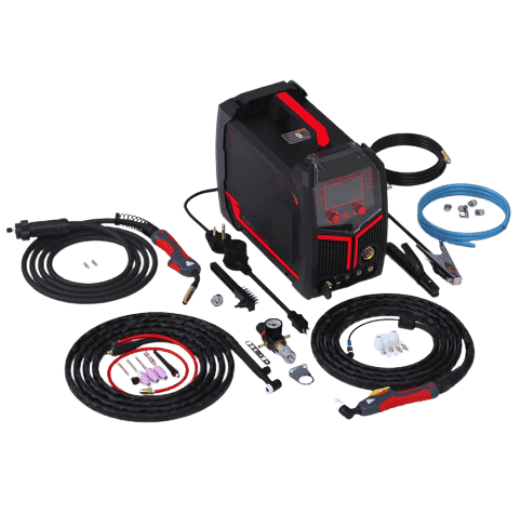
Exploring the Flexibility of a Multiprocess Welder
A multiprocess welder provides unparalleled convenience by integrating MIG, TIG, Stick, and flux-core welding systems into a single device, thus saving both space and money while enhancing versatility.
What Should You Know About Stick Welding as a Beginner?
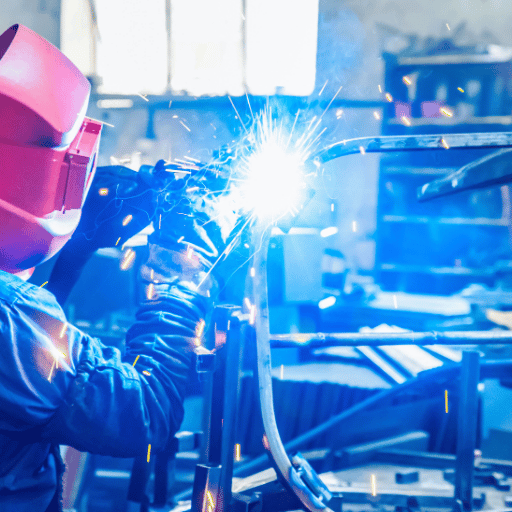
Introduction to Stick Welding and Its Applications
Stick welding or Shielded Metal Arc Welding (SMAW) is one of the most popular welding methods, not only for professionals but for newcomers as well. It employs a flux-covered consumable electrode to produce an electric arc, which melts and joins the metals.
Consequently, this procedure is widely applicable in the fabrication, maintenance, and industrial sectors because of its versatility in processing materials such as steel, stainless steel, and cast iron. Stick welding is highly popular among novice welders because it is relatively simple to learn, portable, and performs quite well outdoors and in unregulated environments.
Choosing the Right Electrode for Stick Welding
When selecting an electrode for stick welding, consider three primary factors:
1
Material Type
Make sure that the electrode corresponds with the material being welded, even when using the stick welding machine for various materials. For instance, use for steel, while for stainless steel. The electrode needs to be matched to the base material for welding to ensure base and weld metal fusion. While using flux core wire, it is equally imperative to match the electrode to the metal being welded.
2
Position of Welding
Electrodes are available for all the welding head positions; be it flat, horizontal, vertical, or overhead. For broader use, the welding electrodes E6013 or E7018 can be used.
3
Strength Requirements
It is crucial that the electrode welded to the base metal has equally jointed tensile strength or has more tensile strength than the base metal. For example, E7018 is used for structural applications due to the trait of high tensile strength offered.
Select an electrode that meets these criteria while also considering the specific welding environment and desired finish. Always refer to the manufacturer’s guidelines for optimal performance.
Tips for Mastering Stick Welding Techniques
- Demonstrate Correct Electrode Angle: For improved accuracy, the angle of the electrode should be held steady at around 10-15 degrees from the vertical line in order to achieve the expected cohesion of the weld bead.
- Control Travel Speed: Practice consistent travel speeds to avoid defects such as undercutting or excess spatter, noting that if the speed is too slow, the bead will too wide, whereas if too fast, the bead will be undersealed.
- Master Arc Length: For improved penetration and cleaner welds, minimize spatter, and ultra-fine electro arc welds.
- Monitor Your Welding Position: Change the welding position to as needed for the type of joint and the electrode being used, while also maintaining a posture that favors optimum comfort.
- Preheat When Necessary: By simply preheating certain metals like high carbon steel, the weld and the area around the weld will be protected from a high likelihood of cracking, and like metals will stick better.
- Practice Proper Striking Techniques: To avoid excessive sticking, make sure to smooth the touch of the electrode with the surface.
- Clean the Base Metal: Make sure that the base metal has no grease, under, or rust reduced to enhance the weld quality and reduce contamination.
- Comply with Proper Amperage Instructions: Adjust the current as per the electrode manufacturer’s guidelines according to the metal thickness and electrode dimension; to avoid flaws in the puddle and in the welds, electrode stability is crucial.
- Inspect Between Passes: For every layer in multi-pass welding, examine and clean the layer for defects and slag before continuing to the next layer.
- Engage with the Activity Frequently: For the welding skill to develop, it is essential to implement constant practice to stick welding, in order for the welder to adapt to various situations and materials easily.
How Can Inverter Technology Benefit Beginner Welders?
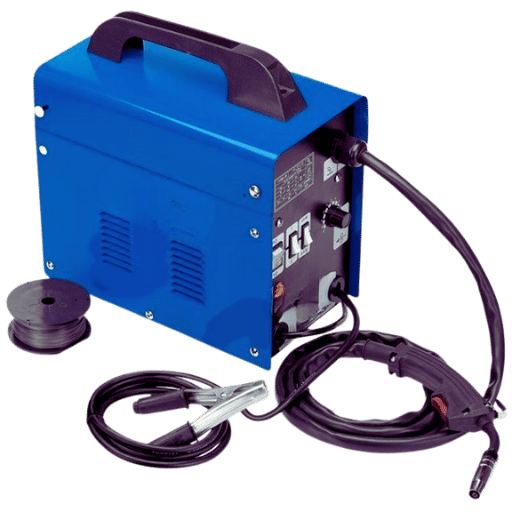
Exploring the Advantages of Inverter Welders
Inverter welders are small and light and as such can be easily transported and are perfect for work in remote areas or locations that are difficult to access.
These machines use far less power than traditional welders, which use transformers and thus help save energy and are more environmentally friendly.
These advanced machines enable welders to set the amperage and voltage for better control, thus ensuring accuracy when welding different materials and thicknesses of varying complexity.
Inverter welders are capable of supporting different welding processes such as TIG welding, MIG welding, and even stick welding, thus are very versatile for different applications.
Even at low amperage, these machines provide consistent and stable arcs, which are especially useful for welding thin materials.
Most of the components of modern inverter welders are lightweight and, as such, result in less wear and tear, which decreases the maintenance requirement over time.
Features such as thermal overload protection and voltage fluctuation protection on built-in inverter welders enhance user safety and, even more critically, keep the user safe from injuries while stick welding.
For a baby welder, they wield machines due to the simple functionalities, less weight, and sophisticated technological advancements regarding features.
They might be expensive to purchase, but the inverter welders are far more economical over time due to their efficiency and lack of need for heavy maintenance.
Comparing Inverter Welders with Traditional Welding Machines
Inverter welders are lightweight, energy-efficient, and versatile, while traditional welders are durable, reliable, and better suited for heavy-duty tasks.
Best Practices for Using an Inverter Welder
- Use the Correct Settings:
Amperage is paired with voltage for precision to balance overheating. Apply the user manual for set parameters.
- Select the Right Electrodes:
Electrodes can be matched per application for optimum best on application performance and arc stability.
- Ensure Proper Ventilation:
Gas overheating and lack of gas can be caused by… using the welder for flux core welding without substantial air is an example of fuming.
- Regular Maintenance:
Sweeping fume is critical. Proper cables can be utilized for the welder.
- Use Personal Protective Equipment (PPE):
To foster a safe working environment, s/he must put on relevant items in protective clothing, which includes a welding helmet, glove,s and fireproof clothing.
- Work Within the Duty Cycle:
Avoiding internal damage means monitoring and working within the cycle of duties being suggested.
- Check Connections:
Ensure that all cables and seams remain intact and insulated prior to commencing any welding activity.
By following these practices, you can maximize the efficiency, safety, and lifespan of your inverter welder.
Frequently Asked Questions (FAQs)
Reference Sources
- Gas tungsten arc welding is one of the different welding processes that can be utilized for high-quality welds.
- Top H Beam Production Line Manufacturer and Supplier in China
- Tulsa Welding School: What Is the Best Welder for Beginners?
The article goes into detail about why MIG welders are always at the top among good ones for beginners, telling about their simplicity, semi-automatic operation, and cleanest welds.