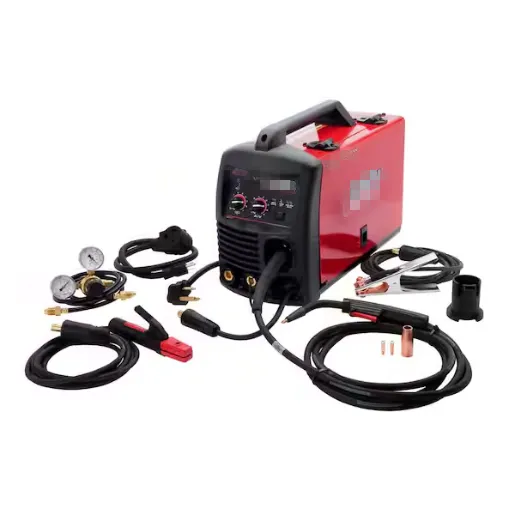
With an expert touch, welding can be beautiful—perfect because of the right kind of equipment, or so can result in a substandard or mishandled job. MIG welders are renowned for being versatile and friendly enough for both amateurs and professional welding craftspeople. Nowadays, the hardest part really lays in choosing the best machine for your needs; so here’s where this guide will come in handy.
In This Guide: Whether you’re into automotive repairs, metal fabrication, or doing the odd hobby, we’ll take you through the most reliable MIG welders that are out in the market at this moment. This all-encompassing guide will focus on power and performance, portability and price, and so on, down to very important characteristics, pros, and cons that would give you all the knowledge required in making an informed decision.
Understanding MIG Welding
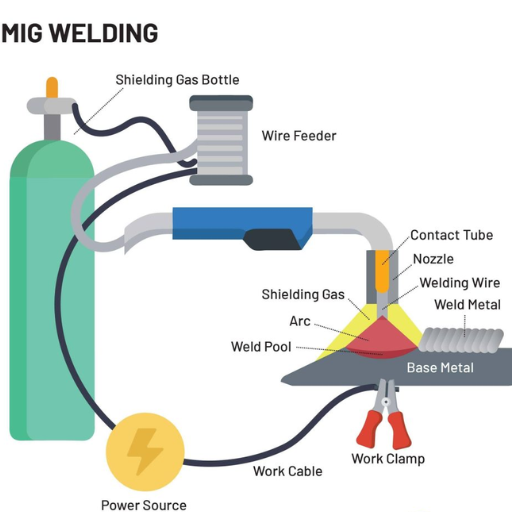
What is MIG Welding?
More often than not, Metal Inert Gas welding is considered an acceptably versatile welding with many processes in different fields such as automotive, construction, manufacturing, etc. A filler wire is fed in the form of a continuous solid wire electrode through a welding gun; the filler wire then melts to serve the purpose of welding. The weld pool rests in a protective shield from atmospheric contact using inert or semi-inert gases like argon, carbon dioxide, or a mixture of both. This results in a clean, strong joint.
✓ Why MIG Welding is Popular
- User-Friendly: Preferred process for both professionals and amateurs
- Speed & Efficiency: Fast welding process with minimal interruptions
- Versatility: Works with steel, stainless steel, and aluminum
How MIG Welding Works
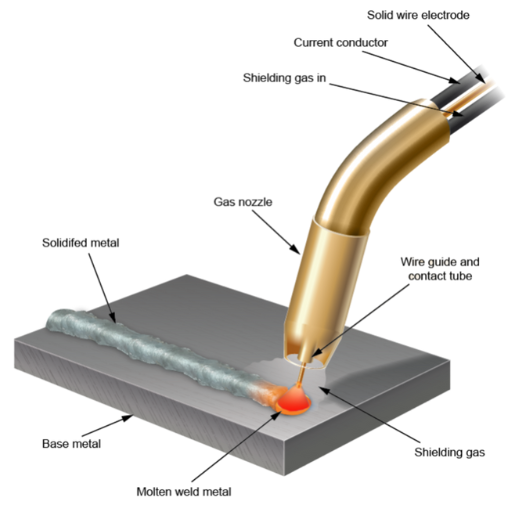
Metal Inert Gas welding or MIG welding feeds a continuous wire electrode through the welding gun, along with ejecting inert gas to shield the weld from contamination. The wire melts when it touches the welding arc created by an electrical current passing through the wire. It causes the base metals to melt and join together to form a strong and clean joint.
🔍 The Role of Gas Shielding
The inert gas, usually argon, or a mixture of argon and CO2 will form an almost invisible shield against upward diffusion of oxygen and moisture from the air into the weld, thus keeping weld porosity and weak spots from occurring and preventing corrosion later. This precision, efficiency, and ability to weld different metals have made MIG welding one of the world’s most searched and employed welding methods.
Advantages of Using a MIG Welder
MIG welding (Gas Metal Arc Welding or GMAW) provides several advantages that allow pipeline welders to prefer it over the traditional methods. Industry search trend data lately shows how the ease of using the process and its versatility stand as the two main reasons for this steady increase.
⚡ Speed & Efficiency
Strong and quick welds require little interruption time during welding
🔧 Versatility
Works with mild steel, stainless steel, and aluminum
✨ Quality Results
Clean and consistently good welds with less distortion
The general precision, lesser material wastage, and high weld quality make the MIG welders worth investing in. User-friendly, even for novices, the equipment has a fairly quick learning curve compared to other welding techniques such as TIG or stick welding. It is the perfect kind of welding for industrial, automotive, and home uses; hence skilled professionals and enthusiastic hobbyists alike have their needs addressed.
Key Features of MIG Welders
Power and Amperage
Usually, MIG welders extend an amperage range of power levels designed to attract users working on varying thicknesses and materials. Amperage does much to decide weld penetration and its strength, having high settings being applied to thick sheets of metal, whereas weak ones to a low setting.
📊 Amperage Guidelines
| Amperage Range | Best For |
|---|---|
| 30-100 amps | Small repairs and thin materials |
| 100-150 amps | Home projects and medium-duty work |
| 150-200+ amps | Industrial-grade projects and thick metals |
Good amp settings are an accessory in combination with the right choice of material and thickness, which results in beautiful and clean welds.
Flux-Cored vs. Gas-Shielded MIG Welding
The processes flux-cored and gas-shielded MIG welding differ from each other, and what will work better for one application may not be the choice for another, depending on environmental conditions, and, therefore, expected results. The main reason for differences is the wire type; the first uses a hollow wire filled with flux, while the other uses a solid wire that requires external shielding gas.
💡 Pro Tip: Knowledge of your particular requirement and working conditions should lead to a judgment, stating which method will best suit your welding tasks. DIYers and professionals alike are given an option between flux-cored welding for the sake of versatility and outdoor welding, or gas-shielded welding, which is mostly concerned with the aesthetic beauty of precise and clean welds.
Portability and Design Considerations
The welding set-up and portability are among the principal factors that determine the method of choice based on the requirements of the project. According to recent search data, an increasing number of searchers have shown interest in welding tools that are lightweight and flexible enough for different work environments.
✅ Portable Welders
- ✓ Lightweight and compact
- ✓ Ideal for job site mobility
- ✓ Often support flux-core option
- ✓ Perfect for small shops
⚙️ Stationary Systems
- ✓ Require external gas supply
- ✓ More equipment needed
- ✓ Offer precision and stability
- ✓ Best for dedicated workshops
Comparative Analysis of Top-Rated MIG Welders
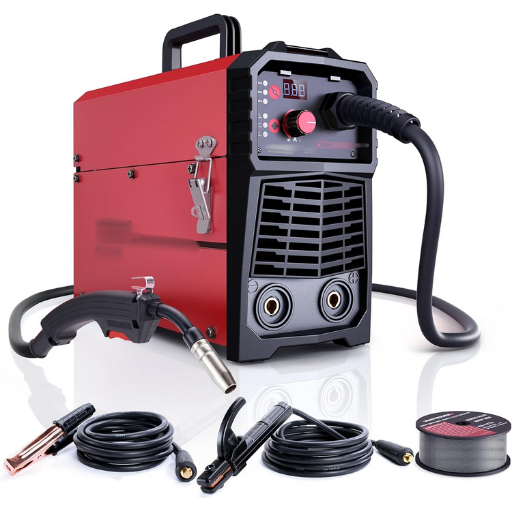
Best for Beginner MIG Welding
It is a wise choice to go for a plain operating and dependable MIG welder when it comes to learning a craft. Based on the current trends and search engine data, here are the top picks for beginners:
🥇 Hobart Handler 140
Voltage: 115V
Usage: Home projects
Features: Multiple settings
Level: Beginner-friendly
Simple to operate, cheap, and dependable. It works on normal current of 115 volts and comes with several settings useful for the student welder to experiment with various materials and thicknesses.
🥈 Forney Easy Weld 261
Design: Small and light
Operation: Simplest interface
Portability: Highly portable
Effort: Minimum required
Ideal for someone who wants a really portable device they can operate with minimum effort. Perfect for completing the learning stage satisfactorily with good results.
Best Portable MIG Welder
🏆 Editor’s Choice: Hobart Handler 140
| Weight | 57 pounds |
| Voltage Control | 5-position selector |
| Compatible Metals | Mild steel, aluminum, stainless steel |
| User Level | Beginners to experts |
The machine offered a wonderful blend of performance and portability, making it perfect for use by beginners and expert welders alike. The 5-position voltage control selector guarantees precise arc performance, ensuring clean and consistent welds on a variety of metals. It easily comes with you to a jobsite or woodworking shop but retains adequate capacity. The Hobart Handler 140 has always been very much appreciated for its sturdy nature, efficacy, and ease of use.
Best Budget MIG Welder
💰 Best Value: Forney Easy Weld 140 MP
Key Specifications:
- Weight: 24.81 pounds
- Capabilities: MIG, TIG, and stick welding
- Voltage: 120V
- Max Thickness: 1/4 inch mild steel
- Controls: Simple panel for voltage and wire feed speed
This machine has many capabilities and is offered to beginners and DIYers at an agreeable price. The Forney Easy Weld 140 MP is not just simply a budget option, but a machine that is also versatile and easy to use, making it quite adequate for home projects and small repairs.
In-Depth Reviews of Best MIG Welding Machines
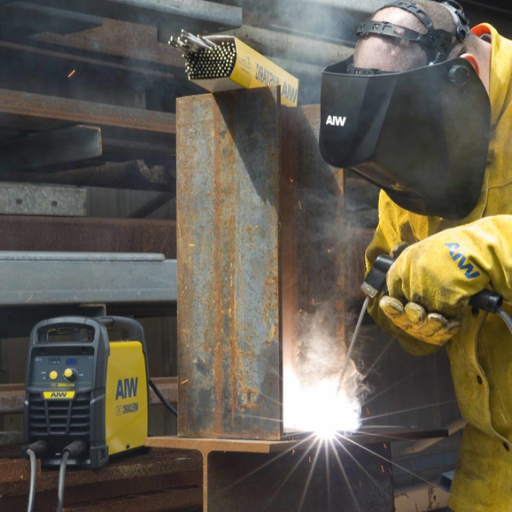
YesWelder MIG-250 Review
Technical Specifications
| Welding Modes | MIG, Stick, and TIG |
| Voltage Compatibility | 110V/220V dual voltage |
| Maximum Current | 250 amps |
| Max Metal Thickness | 1/2 inch |
✨ Key Features
Synergic Control
Automatically adjusts voltage and wire feed speed settings for easy operation
Digital Display
Incorporated for additional convenience when fine-tuning parameters
Overload Protection
Ensures durability and safety in prolonged use
📝 Verdict
The YesWelder MIG-250 is one of the incredible welding machines for both beginners and experienced welders. Whether for smaller home projects or professional work, it presents tremendous value in this price range. The ability to weld with strength, combined with its versatility and feature set, make this one of the best contenders in today’s least expensive MIG welders.
Lincoln Electric SP-140T Review
The Lincoln Electric SP-140T is a compact—and far-reaching—MIG welder for novices and expert welders alike. Intuition-graced controls and a robust design bestow upon the welder reliable performance in light-to-medium-duty welding work.
Capabilities
Power Supply
120V household
Compatible Metals
Mild steel, stainless steel, aluminum
Max Thickness
5/16-inch on mild steel
🎯 Standout Features
- Wire feed system that glides smoothly, preventing wire kinks
- Delivers an even welding pattern throughout
- Manifold adjustable options for voltage and wire speed
- Great for home repairs, bodyshops, and minor fabrication
⚠️ Considerations
While praised for its range of applications and ease of use, the SP-140T may limit a welder that desires heavy industrial jobs. It’s perfect for light welding applications wherein the machine will provide service-flawless and prompt-quality—a reputation Lincoln has maintained for decades.
📝 Verdict
Up to date information reveals the Lincoln Electric SP-140T to be one of the most searched-for and recommended choices in the same category, especially for those who wage an even feel between portability and power. Users on online forums and product review columns often praise it as being well worth their dollar.
Hobart Handler 140 Review
The Hobart Handler 140 is among the most versatile and user-friendly welders of its class, thereby catering to both the beginners and experienced welders. It is highly praised for being capable of working on many types of materials such as mild steel, stainless steel, and aluminum at a maximum of 140 amps.
Product Overview
| Maximum Amperage | 140 amps |
| Power Compatibility | Standard 115V household |
| Ideal For | Home-based projects and light-duty industrial |
| User Level | Beginners to experienced welders |
⭐ User Highlights
Smooth & Consistent Arc
Easy Setup
Strong Wire Feeding
❓ Is the Hobart Handler 140 Worth the Price?
According to recent search engine data, the answer is a definite YES for those who want a good balance between economy and competent performance.
📝 Verdict
It is completely adequate for medium-duty tasks, small high-intensity works, or standard Hobart welding operator jobs. In comparison to its price, it offers very good value and, as such, is among the leading contestants in the mid-range welding market.
Pricing Tiers and Performance Metrics
Understanding the Cost of MIG Welders
Looking at the price of a MIG welder, the cost will be determined by different factors, the most notable being the set of features the machine has to offer, to the brand name under which it is sold.
📊 2023 Buyer Trends
Search analytics generated for 2023 claim that buyers demand welders with:
- Durability: Long-lasting construction
- Ease of Use: Intuitive controls and setup
- Performance: Excellent results on different materials
- Value: Best features for the price point
Also, price and buyer satisfaction highly depend on brand reputation, availability of replacement parts, and after-sales support.
Performance Metrics Across Various Models
Analyzing the different welder models regarding their performance metrics reveals certain essential features considered critical by the user regarding satisfaction. According to search data, models granting arc stability, good energy consumption, and ease of use with both beginner and professional skill level attain maximum demand.
⚡ Inverter-Type Models
- ✓ Lighter weight
- ✓ Energy efficient
- ✓ Growing popularity
- ✓ Modern technology
🔧 Transformer-Type Models
- ✓ Known for sturdiness
- ✓ Loyal user base
- ✓ Heavy-duty work
- ✓ Traditional reliability
🎯 Most Demanded Features
When it comes to highly demanded features, customers seem to prefer welders that boast:
- Adaptability across different metals (aluminum, steel, alloys)
- Ease of use for all skill levels
- Solid build quality for longevity
- Professional results under different applications
Value for Money: Best Bang for Your Buck
Based on recent data from search engine trends, when determining what welder has the best value for money, a few factors stand out. Regularly customers search for models that can easily combine low cost with performance.
🏆 Key Features Dominating Search Queries
⚡ Dual Voltage
110V and 220V compatibility
🔧 Multi-Process
MIG, TIG, and stick welding
👌 Easy Operation
Intuitive controls
Reviews usually comment that these welders are capable of a broad range of tasks, from typical DIY jobs to more demanding professional projects, without costing too much. So, the better value welders are those which are able to meet the customers’ needs with a comprehensive guarantee, good customer service, and reliability that has been tested by history.
Choosing the Right MIG Welder for Your Needs
Welding Projects: Home Use vs. Professional
Whenever choosing the right MIG welder, understanding what one wants, on whether projects are for home application or professional use, is crucial.
📈 Search Trends Insight: Looking into recent search trends, it is apparent that welders offering a good compromise between functionality, endurance, and price are preferred by potential buyers, whereas many have been searching for welders that do offer enough support for later more complex projects.
Skill Levels: From Beginners to Advanced Welders
Analyzing the latest search data, one finds welders at different skill levels seeking specific features tailored to their expertise.
🌱 Beginner Level
What They Want:
- Lightweight and user-friendly machines
- Intuitive controls
- Safety features
- Reliability over complexity
Recommended: Hobart Handler 140, Forney Easy Weld 140 FC-i
🔧 Intermediate Level
What They Want:
- Versatile machines
- Works with various materials and thicknesses
- Pre-set modes with user fine-tuning options
- Room for skill development
Recommended: Lincoln Electric Power MIG 210 MP
⚡ Advanced Level
What They Want:
- High-performance welders
- Latest technological advancements
- Perfect pulse settings
- Multi-process capabilities
Recommended: Fronius TransSteel 2200
🎯 Industry Insight
Trends in search will dictate the necessity for a much clearer product segmentation for addressing welders’ ever-changing needs as they evolve in skill. Manufacturers and retailers would do well picking out types and classifying their products with precision in their promotion efforts, meeting user expectations and fully furnishing satisfaction across diverse skill levels.
Final Recommendations
🎓 Expert Guidance Summary
For Beginners
Choose devices that prioritize user-friendliness and flexibility, with features that help you learn the basics confidently.
Example: Lincoln Electric Power MIG 210 MP
For Advanced Users
Demand robust high-performance tools equipped with cutting-edge techniques, multi-process options, and fine precision adjustments.
Example: Fronius TransSteel 2200
Bottom Line: Manufacturers and retailers would do well picking out types and classifying their products with precision in their promotion efforts, meeting user expectations and fully furnishing satisfaction across diverse skill levels.
Frequently Asked Questions
❓ How does a MIG welding machine work?
The wire electrode is continuously fed by the machine through the welding gun while a shielding gas is flowing simultaneously. This prevents contamination of the weld pool and hence clean welds are produced. The machine may be varied to different amp settings so that it can work on all thicknesses of steel, even the thin metal sheets. MIG welders are known for being user-friendly and faster in welding, which tends to be preferred by many welders whenever they do welding for any projects either at home or at work. It is important to understand the working mechanism of a MIG welding machine if one intends to obtain the best results.
❓ What are the advantages of using a portable MIG welder?
Advantages of portability in MIG welders include the very fact that the equipment needs to be moved often. These welders are lightweight and small to fit into various job sites or projects. There is a wide variety of machines, with many portable ones supporting both MIG and flux-core welding, thereby making these welders versatile tools. In addition, they may offer features such as carrying handles and compact designs—all perfect for small shops or welding on the go. Besides, it’s also an inexpensive solution for hobbyists and pros who generally pay less for these types of welders.
❓ What is the difference between MIG and TIG welding?
| Aspect | MIG Welding | TIG Welding |
| Wire Feed | Continuous and automatic | Manual filler rod feeding |
| Speed | Quicker | Slower, more precise |
| Best For | Thicker materials, production work | Thinner metals, complex welding |
| Skill Level | Easier for beginners | Requires more skill |
| Control | Less precision required | High precision control |
Since the wire feed in MIG welding is continuous and faster, it is suitable for thicker metals and fabrication. TIG welding, on the contrary, provides greater precision, manual feeding of the filler rod being necessary while also controlling the electric arc and shielding gas for application upon thinner metals and complicated welds. With the difference in hand, welders will decide on a welding style for their job.
❓ When considering a budget MIG welder, what attributes ought I look for?
✓ Essential Features Checklist
- Amp Output: Variabilities in amp settings for different metal thicknesses
- Ease of Use: User-friendly controls and setup process
- Included Accessories: Welding helmet, clamps, and wire brush
- Reliability: Check user reviews and professional ratings
- Versatility: Ability to weld with both gas and flux-core wire
- Performance: Adequate performance for long-term use
In all, a pocket-friendly MIG welder is expected to weld with both gas and flux-core wire so it’s a win-win situation in terms of service and price.
📚 Reference Sources
Environmental and economic analyses of TIG, MIG, MAG and SMAW welding processes
Published by MDPI, this study compares the environmental and economic impacts of various welding processes, including MIG welding, providing insights into its efficiency and applications.
Optimization of MIG welding parameters for improving strength of welded joints
Available on CORE, this research focuses on optimizing MIG welding parameters to enhance the strength and quality of welded joints, offering valuable technical insights.
Metal inert gas (MIG) welding process: A study of effect of welding parameters
Published on ScienceDirect, this article examines the effects of welding parameters on the MIG welding process, highlighting its advantages and technical considerations.