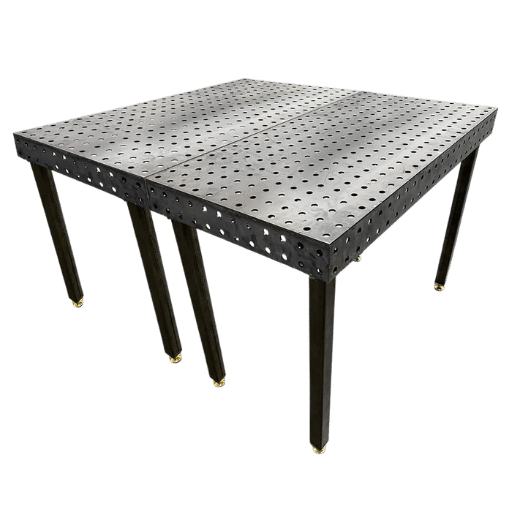
When it comes to productivity and accuracy in metal fabrication, choosing a welding table is a matter of utmost importance for the fabricator of any caliber. A suitable welding table is not merely a working surface; it is a foundational tool that ensures the project is completed with stability, accuracy, and efficiency. This guide will cover everything from must-have features to a comparative study of top products on the market. Whether you are an experienced fabricator or a hobbyist, this article will help you bypass the clutter and identify the welding table that checks all boxes for your particular requirement.
What Makes a Durable Welding Table Essential?

A welding table ought to be sturdy, as welding operations require a stable, secure working surface. It is the strength of such a table that prevents warping under high heat or heavy loads, ensuring exactitude and consistency in your work. Generally, top materials are steel or cast iron for longevity and superior resistance to damage. By reducing setup time, a heavy-duty welding table can be used with jigs, clamps, and other accessories to securely hold a workpiece. A good welding table will be durable; investing in one reduces maintenance time and cost, decreases accidents, and increases the quality of your welding projects.
Understanding the Importance of a Strong Fixture
The fixture must be firm enough — such as a bolted assembly — to allow for precision machining, welding, or assembly. This rigging holds the workpiece firmly so it cannot move relative to the styling, preventing any supposed misalignment that would hurt accuracy or cause a defect. A good fixture reduces vibration, ensuring consistent positioning and thereby improving the overall quality of the finished product. In addition, it provides the operator with safety, reducing the risk of unintentional slippage or displacement during operation.
How Does Steel Construction Enhance Table Longevity?
Steel construction increases table longevity with strength, durability, and resistance to wear and tear. A blow cannot easily dent steel, suffer damage under heavy loads, or lose adhesion due to weather, moisture, and temperature variations. An undiminished structural integrity prevents deformation in the chair or table over the years, which is why steel is a good choice when long-term performance and reliability are expected.
Key Features of a Robust Welder’s Table
- ✓ Durable Material: A heavy-duty welding table is usually made of high-quality steel so that it can endure heat, weight, and impacts.
- ✓ Flat and Stable Surface: It must allow the grinding and other preparatory operations on welding to go on smoothly on a flat and level working surface.
- ✓ Adjustable Height: The benefit of adjusting height is that it allows the user to work with less strain and increases productivity.
- ✓ Tool Storage: The table may have additional storage such as hooks/shelves to keep welding tools and accessories within reach.
- ✓ Clamping Options: Slots or holes with which to place clamps for supporting workpieces securely during welding are built into the table.
- ✓ Heat Resistance: The table should be capable of withstanding very high temperatures without warping or degrading.
- ✓ Mobility: Tables that have lockable and castor wheels are very flexible since they can be moved around with ease and locked in place when required.
How to Choose the Right Weld Tables for Your Needs?
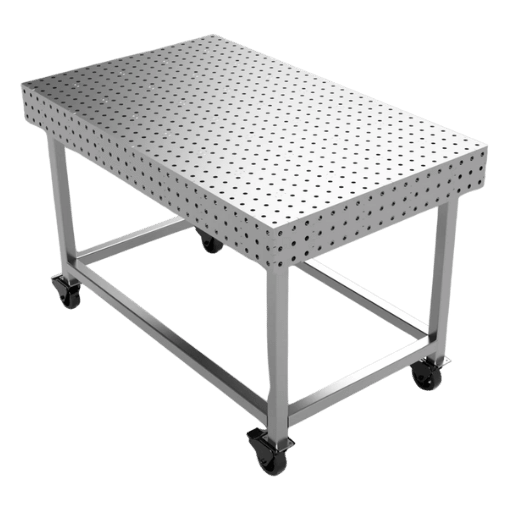
Essential Features to Look for in Workbench
- Load Capacity: To ensure the workbench can accommodate the weight of heavy tools, machines, or materials without compromising stability, load capacity is a critical parameter. Modern-day industrial heavy-duty workbenches generally support loads ranging from 1,000 to 10,000 pounds.
- Material Durability: Work surfaces made of stainless steel, solid wood, or composite-reinforced materials ensure durability. In particular, stainless steel is corrosion-resistant, while hardwood surfaces such as oak or maple are best for handling impact work in a fabrication environment.
- Adjustability: A height-adjustable workbench helps reduce back and shoulder strain when used for extended hours. Though pneumatic or electric height adjustment mechanisms have become increasingly popular in industrial environments, there are several cheaper alternatives for selecting bench height on demand.
- Integrated Storage: Many designs include built-in storage options, such as drawers, cabinets, or pegboards, thereby improving the organization and accessibility of tools and components.
- Electrical Integration: Workbenches fitted with power strips, USB charging ports, and other features, along with cable/wire management, can make work more efficient, especially when assembling or repairing electronic gadgets.
- Surface Finish: Selected finishes, such as anti-static coatings or oil-resistant coatings, are appropriate for special applications. For example, anti-static surfaces are used when handling sensitive electronics to prevent electrostatic discharge (ESD) damage.
Comparing Fixture Tables: What Fits Your Workshop?
Fixture tables come in different designs, materials, and configurations. Hence, it is essential to tailor your selection to your workshop’s needs. Here are some crucial points to consider:
The Role of Adjustable and Portable Options
Adjustable, portable fixture tables are indispensable in workshops, especially in environments where flexibility and adaptability are the norm. The legs can be height-adjusted, or the table may be modular so users can put together workbenches to accommodate whatever spatial or project demands they want. In industries such as automotive repair, aerospace manufacturing, and metal fabrication, these tables enable fine operations to be performed with less fatigue and greater precision.
Portable goods, often equipped with locking casters, are designed to be sleek, lightweight, and strong. Such designs facilitate smooth workflow transitions as one moves between departments. For small- to medium-sized workshops, this mobility enhances efficient use of space: tables can be pushed farther out of the way when not in use or repositioned for a different task. Data show that companies with mobile workstations experience higher efficiency because they spend less time preparing or reconfiguring their setups; at the same time, a growing number of portable stations feature internal storage cupboards, keeping tools and materials organized even when the table is moved.
💡 Pro Tip: The flexibility of workstations will help a workshop maximize operational efficiency, prepare for a wider variety of projects, reduce downtime, and eliminate the need for so many fixed workstations.
What Are the Advantages of a Precision Welding Table?
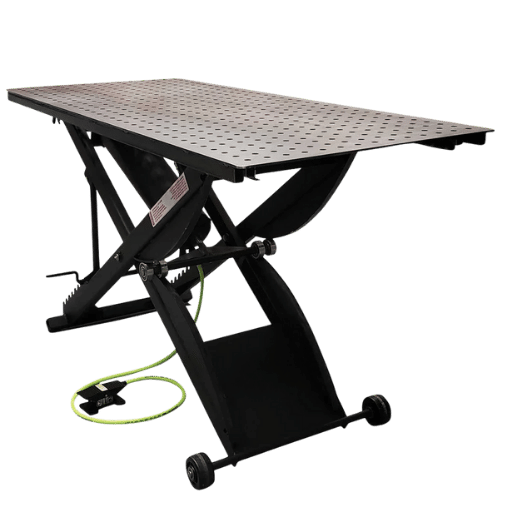
Ensuring Flatness and Alignment in Your Setup
Precision welding tables are designed to provide a perfectly flat and reliable surface. Hence, they ensure perfect alignment for the welding process. Usually, they are made from premium steel or cast iron and carefully machined to provide tolerances of ±0.001 inches per foot with a practically near-perfect flatness standard. This precision is essential when assembling components with extremely tight tolerances, as minor deviations can cause alignment issues and ultimately compromise the structural strength of the final product.
In addition, nearly all welding tables today feature modular hole and slot patterns that provide varying fixture setups while maintaining precise positioning, manufactured according to the Siegmund principle. Also, grid layouts following industry standards, such as 16mm or 28mm bore holes, further optimize the placement and usability of tools. By implementing these features, manufacturers reduce welding deformation and need fewer steps to perform complex setups that would otherwise take much time.
By nitriding or other surface treatments, tables achieve greater durability and wear resistance, offering a long life, even when applied heavily. When used with clamping tools and positioning stabilizers, the best welding tables are often considered a great blessing for industries ranging from the aerospace sector to vehicle manufacturing.
How Fixturing Improves Fabrication Accuracy
Fixturing is indispensable, as it helps make fabrication more accurate by providing the required stability, reducing variability, and enabling alignment with utmost precision during manufacture. Some modern modular-type fixturing systems, such as those from Certiflat, allow users to create innumerable arrangements based on the possible part geometry and size — this certainly helps in planning production workflows. An engineering analysis report highlights how automation can ensure a level of fixturing that can increase production accuracy by up to 30% by eliminating inconsistencies caused by manual adjustments.
The other purpose of a fixture is to reduce thermal distortion; during welding or cutting, distortion may occur due to improper part holding or uneven force distribution. The fixtures themselves have precision-ground surfaces and advanced-material construction; these maintain a variance of less than 0.001 inch across large assemblies, as demanded by the aerospace and automotive trades. The integration of fixturing with CAD/CAM systems improves accuracy by enabling pre-production planning and testing. These engineering considerations highlight the importance of fixturing systems for high fabrication accuracy.
The Impact of a Plasma Cut Top on Precision
Plasma cutting technology has revolutionized precision in metal fabrication by using hot ionized gas to produce clean cuts. If done correctly, plasma-cut tops can enhance precision by eliminating thermal distortion, often a problem in conventional cutting. The modern plasma cutting system can maintain tolerances as close as ±0.01 inches, which is required in the aerospace, automotive, and manufacturing industries, where accuracy is a high priority.
The advanced CNC integration enables highly optimized cutting paths and repeatability along various components. This level of precision reduces waste material and improves repeatability in the final product, enabling high-quality TIG welds. Plasma cutting, due to its versatility, can be applied to a wide variety of materials, including steel, aluminum, and alloys, thereby solidifying its importance in industries that stress precision.
Can Shop Tables Enhance Fabrication Efficiency?
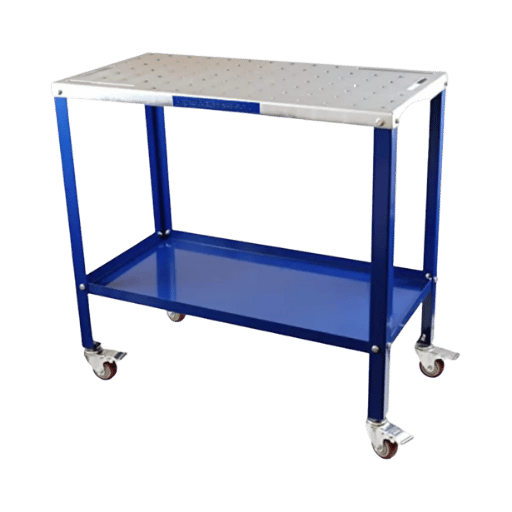
The Influence of Tool Compatibility on Efficiency
Tool compatibility enhances the efficient execution of operations by reducing the time spent waiting for processes. When tools and machinery work in harmony and are designed accordingly, they save on setup time and require no tweaking. This promotes smooth workflow and enhances productivity. In addition, tools help maintain accuracy, minimize material errors, and thus reduce scrap or rework. Therefore, a good place to start in improving efficiency and speeding up fabrication processes is by focusing on tool compatibility.
Maximizing Fabricator Output with the Right Table
Selecting the right fabrication table will enable greater productivity and precision in the process. A good fabrication table is the basis for an efficient workflow, so it stands on immovable ground, free from inaccuracy and adaptation during manufacturing. Modular designs and integrated grids, which are flexible designs, are highly suitable for versatile setups adaptable to different project needs. Welding tables with perforated grids; one type is particularly beneficial, offering the option to clamp so welds are extremely well aligned and of the highest quality for general welding.
Durability is the next factor. The use of heavy-duty materials such as steel or cast iron gives resistance against wear and tear, effectively increasing the operational lifespan of the tables. Cementing ergonomic efficiency into adjustable-height tables helps keep muscle fatigue at bay during long shift hours. According to studies, performing tasks at an ergonomic workstation can reduce physical strain by up to 30%, thereby significantly improving productivity and worker welfare.
Fabrication tables have, in recent days, taken advantage of technology, modernizing in the realms of automated positioning systems and compatibility with CAD-machine tools. These advancements make work easier and less prone to human error. A well-chosen fabrication table investment, selected in tandem with project requirements, directly translates into increased throughput while maintaining consistent quality standards.
Is a Cart or Fixed Table Better for Beginner Welders?

Advantages of a Mobile Welding Cart
A mobile welding cart offers versatility and convenience for entry-level welders. Its portability allows the welder to easily move between worksites, enabling them to work at various locations without a fixed setup. To maximize utility, these mobile carts are equipped with cleverly designed storage compartments to safely hold welding tools, including torches, helmets, and consumables, so that all necessary items are always within arm’s reach.
Industry statistics show that the use of mobile carts will enhance workflows by nearly 30%, primarily by reducing time spent fetching tools or repositioning equipment. Most designs also securely fasten gas cylinders to minimize the risk of incidents during movement or operation. Further, some mobile carts, with their height-adjustability, ensure a balanced working setup for operators, thereby enhancing productivity.
Furthermore, they’re usually constructed from materials such as steel or reinforced aluminum to ensure durability and longevity. For starters, this investment offers a cost-effective yet versatile solution to support skill development alongside a professional setup that can be enhanced as their expertise grows.
Getting Started with Harbor Freight Welding Tables
Harbor Freight welding tables are excellent entry points for professionals and enthusiasts seeking to enhance their workspaces’ organization and welding precision. These work tables were designed with versatility in mind, featuring adjustable surfaces and built-in clamps for maximum flexibility with any project, all held together with reinforced steel for ultimate strength. Most tables come with perforated tops or slots for easier clamping, allowing various types of projects to be dotted about more easily.
The multipurpose 30 x 20 welding table stands out among other variations, weighing 350 pounds and capable of light to medium-duty assignments. It offers adjustable-height settings, enhancing comfort and reducing strain during longer work hours. It boasts foldable legs, meaning it can be folded and stored anytime —an essential feature for smaller workshops or projects that need to be taken on the go.
Another factor considered necessary for precision is the stability and leveling of the weld face of some of these models. Accuracy on intricate tasks is achieved with a flat working surface that maintains consistent results. Equipping your tables with cheap clamps and accessories from Harbor Freight will give you a bigger toolkit on a small budget.
When buying one, consider your welding needs, the materials you typically work with, and your space constraints. Harbor Freight welding tables are among the least expensive tables available, are sturdy enough to grow with your ability, and functional enough to be of value in each welding setup.
Considerations for Beginners Choosing Their First Workbench
When choosing the first workbench, beginners must always focus on a few primary considerations, including the ability to support tubing and, of course, the specification of their requirements and the table’s performance. Critical considerations are as follows:
- Size: Compact units work best for smaller spaces, as maximizing efficiency is of utmost priority without compromising stability. Most entry-level workbenches are 30 to 48 inches wide, which should suffice for hobbyist projects and small-scale welding.
- Material: Steel tops for workbenches are recommended because they resist heat, impact, and wear; in contrast, MDF or wood tops may not be suitable for heavy-duty use.
- Weight Capacity: A model weighing around 1,000 pounds will be handy for handling large materials or for more prolonged use.
- Mobility and Adjustability: Folding or wheeled workbenches offer the needed flexibility to modify working or storing areas. Worktables with adjustable heights can reduce strain and improve ergonomics.
- Storage Features: Choose a workbench with built-in storage, such as pegboards or shelves, to keep tools and accessories organized and easily accessible.
Frequently Asked Questions (FAQs)
Ready to Transform Your Welding Workspace?
With the insights from this exhaustive guide, you should surely know how to choose a welding table suited to your fabrication needs, budget, and workspace. Whether you are a seasoned maestro or just embarking on your welding voyage, this table will serve as a lynchpin for all fine work and increased productivity for years to come.
Reference Sources
- How to Choose a Welding Table – This guide, produced by Tulsa Welding School, provides insights on choosing the right welding table based on size, material, and functionality.
- Welding Tables: A Complete Guide – This article describes several kinds of welding tables, their characteristics, and applications, as published by Automotive Training Center.
- Welding
- Welding Machine Buying Guides