Stick welding also called Shielded Metal Arc Welding (SMAW), and is among the least difficult and most widely used methods of welding. Whether you are an amateur who wants to get some practice or a professional master who just wants to learn again, stick welding is the way to go and it will open doors for you in many fields like construction, repair, and manufacturing. This guide aims at making the heavy and tricky process of stick welding easier for you through the provision of techniques, applications, and equipment already talked about in the first paragraph. By the end of the guide, you will have not only the knowledge to start or improve your welding career but also the skill to do perfectly and professionally. Let us then strike the arc and unveil the reasons that make stick welding one of the essential tools every welder should have.
Introduction to Stick Welding
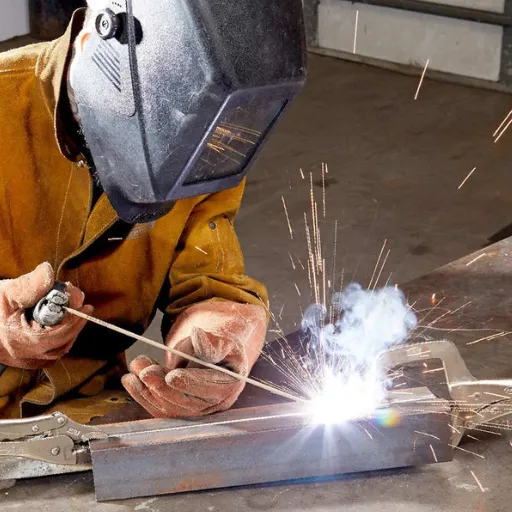
What is Stick Welding?
Stick welding, which is also referred to as Shielded Metal Arc Welding (SMAW) in the industrial terminology, is a manual arc welding method that the melting of the electrode with the flux coating used area to create the weld. The weld is formed through the arc that is established between the electrode and the metal to be welded. The melting of the two-party, the electrode, and the metal, creates a very strong union. The electrode’s coating is a vital factor because it produces both the shielding gas and the slag that protect the weld pool from air contamination, therefore, the weld being neat and strong. Stick welding is very much adaptable and this is the reason it can be used with such a diverse range of metals like iron, steel, and aluminum. Due to its portability, simplicity, and power to work in the open or under bad weather, the process is widely practiced in construction, shipbuilding, and repair activities. The method continues to be the preferred one not only for the professionals but also for the amateurs because of its dependability and versatility.
History of Stick Welding
Stick welding, or Shielded Metal Arc Welding (SMAW), has a long time back story that goes to the late 19th and early 20th centuries. The first step was the Russian inventor Nikolay Slavyanov who in 1888 invented the consumable electrode followed by the Swedish engineer Oscar Kjellberg who in 1904 further developed it. The development of coated electrodes made by Kjellberg was nothing short of revolutionary as it positively impacted the quality and stability of the welding process.
By the end of the first decade of the 20th century, stick welding was so firmly rooted in the manufacturing field that it couldn’t be swapped for any other technique; mainly it was the ship and bridge buildings among the industrial sectors which made the most of it. Also, the portability and ability to weld in different positions made stick welding the method of choice during World War II, when quick and reliable repair and fabrication work were already necessary.
Still, stick welding is one of the essential techniques in the present-day welding technology and the fact that it has slowly but surely been developing and modern materials being compatible is the reason for this. It has come a long way with innovations in electrode coatings and design of equipment, and the construction, manufacturing, and maintenance industries among others are the ones that benefit from its relevance. Its staying power as a welding technique bears witness to the issue of its strength, versatility, and continuous demand in both the old and new applications.
Basic Principles of Welding
Welding is a method that makes metals or thermoplastics join together with heat and/or pressure, making a strong bond. The melting of base materials to their point of fusion to form a joint along with the use of sometimes a filler metal is the basic principle of welding. Materials used, method of welding, source of energy and conditions at work are some of the main factors that affect the welding process.
Therefore, modern welding techniques resort to brilliant technologies for their efficiency and precision. One example is that the mingling of automated systems and laser-based methods has allowed for greater precision and uniformity in welding. Also, one must be knowledgeable in metallurgy, material properties, and safety regulations for the success in the welding process. Through continuous innovations and the application of data-based strategies like the use of real-time monitoring systems, welding has maintained its position as a crucial process in the industries such as construction, automotive, and aerospace.
Understanding Stick Welding Techniques

Manual Metal Arc Welding (SMAW)
Manual Metal Arc Welding, or SMAW, is a widely spread welding procedure which makes use of the melting of a consumable electrode surrounded with a protective material to create a weld. When power is supplied, a fiery arc is established among the electrode and the workpiece, thus melting both the electrode and the work material to form a solid joining. The shielding of the weld zone from impurities is done by the flux covering which generates gaseous shield and slag.
The all-time advanced welding technologies have not replaced SMAW. Instead, the process continues being embraced because of its flexibility, easy operation, and low costs. It can be seen in use all over the globe in sectors, such as construction, shipbuilding, and repair work, since no costly devices are needed and its application is efficient even outdoors. Recent trends that were uncovered through search-data analysis indicate the growing preference for SMAW due to its capability to manage different kinds of materials and also hard to reach positions, for instance, the overhead or vertical welds. The popularity of the process is further enhanced by the availability of training sessions and materials, which makes mastering this skill easier for the welders.
Welding Positions and Their Importance
Welding positions constitute one of the main factors influencing the welding quality and durability. The four basic welding positions are flat, horizontal, vertical, and overhead, which are categorized based on their difficulty level among others. The flat position is among the most demanding due to it being less labor-intensive and more accurate; however, vertical and overhead positions require more skills and are less time-consuming; they are handy in the case of complicated structures or repairs done in the immediate vicinity.
According to the most recent insights from search data, interest in welding positions has notably increased, especially in vertical and overhead, due to their pivotal role in industries namely construction, shipbuilding and pipeline laying. Hence, professionals rely on search trends to seek support in managing such positions which in turn requires mastery of advanced techniques and consistent practice. This serves as a proof that versatile welding skills are increasingly considered as a critical factor for the success of both industrially diverse challenges and the attainment of optimal results.
Choosing the Right Welding Rod
Selecting the proper welding rod not only leads to desirable welds but also satisfies the particular requirements of the project. Recent search engine data from showed that the main area where experts need help the most is selecting the welding rod appropriate to the base metal and the welding position. Material compatibility, ultimate strength, and working conditions are among the criteria that should play a role in the selection process. For instance, E6010 and E7018 are the most widely used rods by welders, since they cater to a plethora of positions and conditions. The deep penetration that E6010 delivers is a plus, as it renders this rod perfect for vertical and overhead welding; on the contrary, the smooth finish delivered by E7018 is the reason why it is mostly chosen for the applications in which strength is of primary concern. By considering all these variables along with the particular project, one can always expect strong, trustworthy, and efficient joints.
Advantages and Disadvantages of Stick Welding
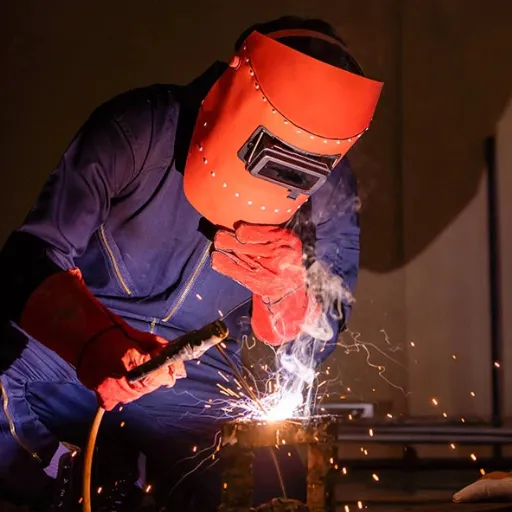
Advantages of Stick Welding
Stick welding, also known as Shielded Metal Arc Welding (SMAW), is a highly beneficial welding process with a wide range of applications, and hence it has been increasingly adopted in various industries. The major pro of this technology is its applicability; the process is usable under extreme conditions, such as outside and windy ones, without any gas protection requirement. The small and portable equipment, which is also reasonably priced compared to other welding methods, provides the flexibility to work on remote or on-site projects. Stick welding is a process that can be applied to a variety of metals, such as steel, cast iron, and all kinds of alloys, thus becoming an excellent choice for repair and maintenance works. Moreover, it allows the joining of metal in various positions or configurations flat, horizontal, vertical, and overhead—which consequently increases its adaptability to different projects. All these reasons make the choice of stick welding continually popular in both professional and DIY applications.
Key Advantages:
- Versatile – works in outdoor and windy conditions
- Portable and affordable equipment
- Compatible with various materials (steel, cast iron, alloys)
- Works in all welding positions
- No shielding gas required
- Ideal for remote or on-site projects
Disadvantages of Stick Welding
Stick welding, despite its versatility and popularity, has a couple of disadvantages that need to be weighted. The main disadvantage is that there is an enormous amount of slag formed during the welding process which means that one will need to spend more time cleaning and preparing the area after the weld is done. In other words, it might affect the overall project time if it is a really big one. A thing that can also be referred to as a drawback is its weld quality that is lower than that of advanced techniques like TIG or MIG welding; porosity and cracking are some of the defects that may result from poor execution of stick welding. In addition, stick welding is associated with a large amount of fume and spatter generation which may lead to health and safety concerns for welders who are already using protective equipment but still working in the area with poor ventilation. It might be that the heat produced by stick welding would quickly ignite or burn through thin materials; hence, it is not the best method for thin materials. All these factors combined make stick welding less suitable for projects that require high precision or an aesthetically excellent product as the end result.
Key Disadvantages:
- Produces significant slag requiring cleanup
- Lower weld quality compared to TIG or MIG
- Generates fumes and spatter
- Not suitable for thin materials
- Potential for porosity and cracking
- Less precise than advanced welding methods
When to Use Stick Welding
Stick welding or shielded metal arc welding (SMAW) is a method that is most advantageous in conditions where portability and variability are the main factors. It is a very good practice to use stick welding for the joining of heavier materials like steel and cast iron, and outdoors where the welding of remote locations is the other reason you might not use the other methods. Due to the fact that it is uncomplicated and has minimum equipment demands, stick welding is beneficial for on-site repairs, construction, and heavy industrial applications. Moreover, stick welding can work very well in windy or damp places where there is a risk of contamination for other welding processes because of the factors associated with that. But then again, as in the case of stick welding being the process of choice in the durable projects, it is not the right one for the tasks that require high precision or good finishes as already mentioned.
Stick Welding Equipment and Setup
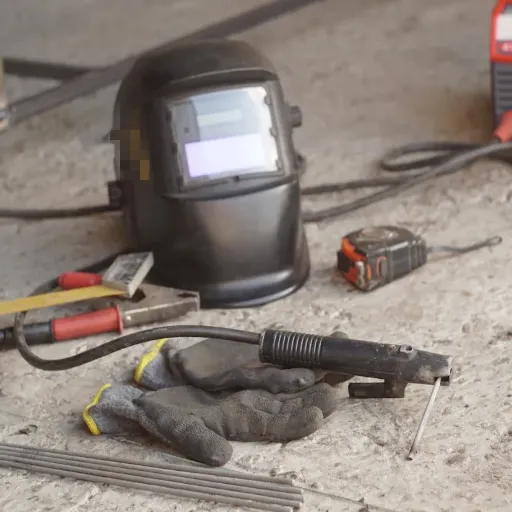
Basic Stick Welding Gear
Stick welding not only requires excellent skill but also a lot of equipment that are very good to tease out good results. The main piece of machinery is a stick welding machine of high quality, typically called a welder, which is the power source for the whole procedure. Usually, these machines are designed to handle different levels of amperage according to the size of the electrode and the type of material the electrode is made of. Besides the machine, the welding electrodes or rods are of great importance, with a selection according to the type of material being welded and the finish required. A strong electrode holder that holds the electrode tightly and a reliable ground clamp that provides a proper electrical circuit are also necessary for this procedure.
In the same line, safety gear is a must when it comes to the setup of stick welding. Among others, an auto-darkening welding helmet for eye and face shielding against electric arcs, fire-resistant gloves for hand protection, and long-sleeve welding shirts to cover the body against flames and heat are included in this category. Besides, a wire brush or chisel hammer are other tools that help with slag removal after welding, thus, producing clean and precise results. The combination of these basic tools enables the welders to perform their activities efficiently while securing the workplaces in diverse conditions.
Essential Equipment Checklist:
- Stick welding machine (welder)
- Welding electrodes/rods
- Electrode holder
- Ground clamp
- Auto-darkening welding helmet
- Fire-resistant gloves
- Long-sleeve welding shirt
- Wire brush or chisel hammer
Your Welder Setup
In attending to the proper welder setup, you are assured of the first-class output but at the same time, as a safety precaution, the entire process will be safer. Identify first what welding method to be done ASPHALT, TIG, or stick welding for example; this will determine the adjustments to the equipment and the materials that will be required. Also, make sure that the working area is clean, dry, and well-ventilated to prevent accidents and improve visibility. The first step in making the connection is to plug the welder into the appropriate power supply according to the manufacturer’s instructions. Then, inspect the connections again, especially the ground clamp and the electrode holder or wire feeder.
Ensure you use the correct wire or electrode for the metal, and adjust the welder voltage and amperage based on the thickness and type of metal you are working with. Generally, welders come with a chart or guide that can facilitate this process. Besides, gas supply, if needed, check that it is flowing at the right rate and that no leaks have occurred. Always practice on a scrap part for setup tuning before you carry out the actual work on your project. To let more people take advantage of it, refer to the welder’s manual and browse the Internet for project-specific advice from reliable sources.
Stick Electrodes Knowledge
The stick electrodes or rods are the basic components of the shielded metal arc welding (SMAW) process. The flux-coated rods serve as the atmospheric barrier over the weld area and, simultaneously, the arc’s stabilizer.
In order to choose the best stick electrode for your welding applications the factors such as the kind and thickness of the base metal, the tensile strength required, and the welding position must be considered. E6013, for instance, is an electrode that people commonly know and use as it has the characteristic of being versatile in different welding applications and E7018, on the other hand, is very strong and so it is most often used in low-hydrogen environments and applications. The latest search trends research shows that users frequently inquire about how to match electrode classifications with certain metals; consequently, having a thorough understanding of these designations is very important.
With the right electrode, reference to welding charts, manuals, and reputable online tutorials, even beginners can yield top-notch results. Always keep the electrodes dry and store them in a proper manner as moisture could result in poor performance and weld integrity being compromised.
Common Welding Applications
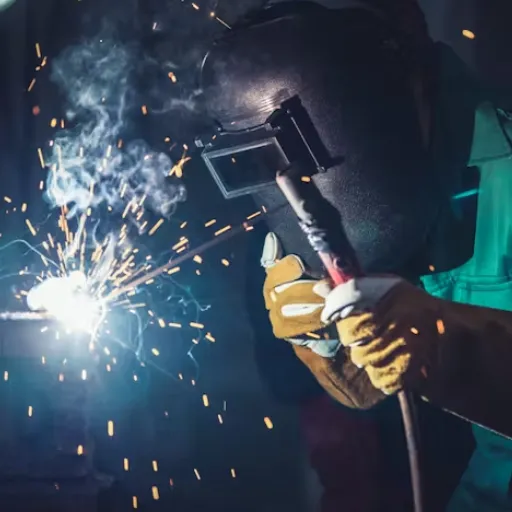
Industries That Use Stick Welding
Stick welding, also known as Shielded Metal Arc Welding (SMAW), has been recognized for its versatile and economical aspects in different industries that use it widely. The construction industry, for instance, depends majorly on stick welding for erecting steel frameworks, piping, and bridges. Moreover, the oil and gas industry have also the same vision, benefiting from the welding technique’s reliability to weld and maintain pipelines in the field. Not to mention the manufacturing sector, which takes advantage of stick welding for broken parts and making all sorts of machines and equipment. The agriculture and farming industry as well, based on stick welding for their repairing operation on tools, machines, and constructing buildings. Overall, stick welding continues to demonstrate its effectiveness in the aforementioned major industries and, besides the versatility, it does so without sacrificing its durability and strength.
Fabrication and Repair Work
Fabrication and repair work are still the major fields wherein the stick welding process demonstrates its versatility and reliability to the fullest. The latest statistics indicate that there is an upward trend in searching the Internet for the phrases “best stick welding techniques for repair” and “welding solutions for outdoor fabrication”, which spotlights the need for real-world applications that are practical. The stick welding process is still very much part of the construction and mending of structures, including frameworks, pipelines, tools, and machines devoted to the farming and industrial sector. Its power to prevail under tough conditions, even on the surfaces of rusted or painted materials, keeps it in the good books for both large-scale construction and small-scale repair projects. Stick welding, whether keeping up agricultural machinery or mending heavy industrial parts, gives a trustworthy solution throughout such varied scenarios.
Welding Cast Iron and Other Metals
Welding cast iron and other metals very often leads to peculiar challenges that are primarily due to the differing compositions and characteristics. One such case is that of cast iron which, due to its high carbon content, is very likely to crack if proper precautions are not taken during and after the welding process. One of the best practices for welding cast iron is to do preheating of the workpiece to reduce thermal stress and enhance the strength of the weld. The use of electrodes that belong to specific categories such as nickel-based or cast iron-electrodes is also another way to ensure compatibility and achieve desired outcomes.
When joining metals via welding, compatibility issues can arise if proper filler metal is not selected based on the lowest probability compatibility regions. Stainless steel electrodes are popularly used in such cases because they provide good ductility and strength which aids in joining the two metals. In addition, if stringent cleaning of the metal surfaces is combined with cooling rate control, weld quality gets a boost. The use of these techniques, combined with proper implementation, guarantees that strong and reliable bonds are established when dealing with or welding cast iron to other metal types.
Frequently Asked Questions (FAQ)
What are the advantages of stick welding?
Stick welding, which is also termed as manual metal arc welding (MMAW), boasts a good number of pros which makes it one of the most preferred ways of doing welding in different sectors and applications. To start with, it is a very simple method, teaching the skill easily, and thus, it becomes the first choice of a newbie. Stick welding besides that does not need gases for shielding which makes the process less expensive in a way. In addition, the process is very site-specific and can be applied to a list of metals like cast iron and steel among others. And also, stick welding machines are not machines at all since they are light and easy to move such that one can weld at any place no matter how remote it is. Lastly, it gives deep heating which in turn leads to strong welding in a majority of the welding places.
What are the disadvantages of stick welding?
Stick welding, even with its bright side, still has its dark side that one should not ignore. The most important among others is that it gives off fumes which are a health hazard if no vent is provided. Furthermore the stability of the arc can be disturbed by gusts of wind or drafts thus rendering it unfit for outdoor welding unless proper measures are taken. In addition, the thickness of the material being welded is limited by the diameter of the electrode. But then again, improper technique can cause such problems as arc burns or weak welds and thus training and experience are of essence. Last but not least, the necessity of slag removal after welding can be tedious and thus it can affect the overall efficiency of manufacturing jobs.
How does the stick welding process work?
To put it simply, the stick welding process takes the connotation of are work being done with the help of a stick electrode. So there is an electric arc made between the stick electrode and base metal. This arc produces heat of such high temperature that it is enough to melt both the base metal and the electrode forming a deluge of molten metal that later solidifies to develop a strong joint. The welding professional has to keep the right distance between the work pieces to assure the flowing of melted metal into the joint and a strong arc all through the welding operation. Stick electrodes come with a coating of materials like clay or lime which provides not only arc stability but also the generation of shielding gases needed to keep the weld pool from getting contaminated by outside sources. The procedure can be carried out with alternating current (AC) or direct current (DC) which dictates the changes in the performance and the appropriateness for various materials. All in all, stick welding is a versatile and efficient approach for several welding situations.
What is the history of stick welding?
The roots of stick welding go as far back as the 1800s when an inventor named Sir Humphry Davy introduced the carbon arc welding process. This was the very first step towards what would later be called stick welding. The 1920s brought about the first introduction of a burning electrode in welding techniques which significantly altered the path of welding advances. Throughout the years, stick welding continued to be the most recommended arc method due to its merits and extensive use in the industrial sector. The new development in the electrode line has resulted in the making of superior electrodes bringing forth deeper fusion and better resistance to arc fluctuations. Therefore, it is no surprise that stick welding is one of the preferred methods for welding jobs, particularly in building and maintenance.
What equipment do I need for stick welding?
To begin with, the most important item that is crucial in stick welding is a stick welder, which can either be AC or DC type based on the job’s needs. Secondly, stick electrodes that will work with the metal of your project will be required. If you want, you can choose the electrode size to be the same as the thickness of the material to get the best results. By the way, using welding helmets and gloves are some of the protective gear needed to avoid the risks of burns and inhalation of smoke. Moreover, sturdy work surface and clamps will help a lot in keeping the metal steady while welding. A brush or chipping hammer to prepare the weld area after welding is also part of the equipment that you will need.