Welding, no doubt, brings together metals; it is a skill that not only opens up ways for great careers in different industries but also establishes them. Whether it is building skyscrapers, fixing crucial infrastructure, or working on delicate art pieces, welding is the main character in various sectors. But, if you don’t have the training or qualifications, what are the ways to start a welding career? The post will tell about how you can learn to weld on the job and become a skilled worker. It will guide you through the journey of getting involved in the profession by providing hands-on experience and sharing tips for finding apprenticeship programs along the way. This comprehensive approach offers everything you need to become a successful welder and gain a solid education in this adaptable and sought-after trade. Join us to learn how to convert your passion into mastery and your talents into a long-lasting career.
Introduction to On-the-Job Welding Training
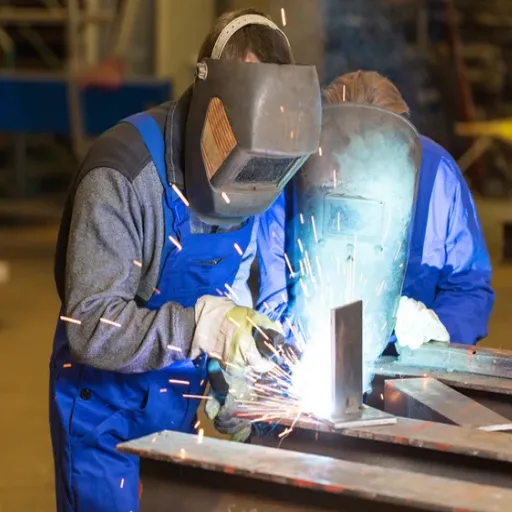
Understanding the Importance of Hands-On Learning
Hands-on learning is the essential component for anyone wanting to become a welding master since it gives students the chance to work with their theoretical knowledge in a practical way. Current searching evidence from the internet indicates that the keywords “welding jobs close to me” and “welding apprenticeships” have gained a large number of searches, thus reflecting the increasing interest in the industry’s demand for training through proper practicing. Studies have demonstrated that the practitioners of hands-on learning are much more capable of mastering the skills and gaining the necessary problem-solving abilities as opposed to those relying solely on classroom training. The professionals working directly with the trainee welders on the projects are not only polishing their skills but also character traits confidence and versatility which are necessary for the person’s further successful career in this widely spread…
Overview of Career Opportunities in the Welding Industry
The welding industry has plenty of different kinds of jobs available for people with the necessary skills, and it is also possible to work in different sectors such as building, making things, the sky, cars, and even art. If we look at the latest search data, then it might be said that welding is one of the most wanted skilled trades, in the future, the need for skilled welders is going to increase because of infrastructure projects and the demand for specific kinds of manufacturing. Positions start at inexperienced workers like welder fabricators or machine operators and go all the way up to more considered positions such as welding inspectors, robotic welding technicians, and welding engineers. Moreover, some of the professionals opt for self-employment through opening their own welding businesses. There are many benefits of specific welding areas such as underwater welding and pipe welding, these being especially profitable due to their intricacy and the skills required thus the higher payment.
What to Expect from a Welding Job
A welding job is a mixture of manual work, technical know-how and creating solutions. The current data from search trends show that people who are searching for information on welding careers are very curious to know about job security, salary potential and qualifications needed. Welders will definitely have their competencies demanded continuously in the construction sector, manufacturing, automobile, and sometimes even the aircraft industry. The scope of practice for welders ranges from entry-level to professional employment, which includes such specialized areas as industrial pipeline welding or the aerospace component assembly.
In the US, the average salary for welders is nearly $48,000 a year, however, this amount could go up considerably with certifications or specialization in such areas as underwater welding where the income could be over $100,000 annually. The majority of welding jobs require working in different surroundings, such as factory floors, outdoor site, and depending on the job, may also involve traveling to the project’s location. Carefulness is one of the main qualities of successful welders along with the ability to read blueprints and the knowledge of safety rules which together help them craft products with high tensions. If the future professionals are to face the physical side of the job, consisting of long hours, standing, and lifting heavy materials, they will find the tangible results and career potential very motivating.
Welding Programs and Schools
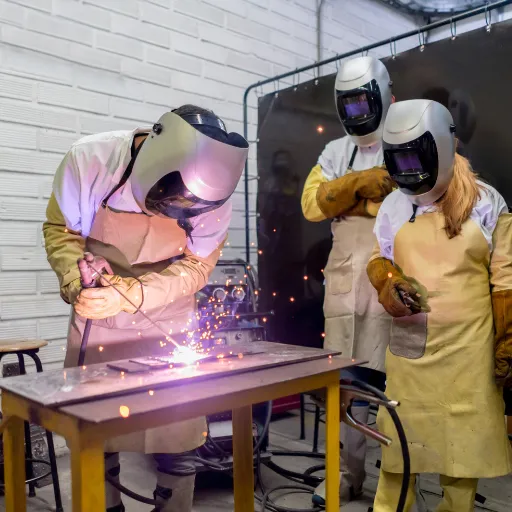
Choosing the Right Welding School
The selection of an appropriate welding school is not just another step but a decisive one toward an effective career in this area. It is of utmost importance to consider the schools that have accredited programs, while checking the possibilities, as that would be the guarantee that the syllabus is updated according to the industry conditions. Investigate the various kinds of certificates given after the end of the program, such as Certified Welder (CW) or certificates through the American Welding Society (AWS), which are universally acknowledged and appreciated by employers. Another point to look into is the presence of practical training and modern machinery because practical experience is the best way to acquire the welding skill.
Moreover, very much like the schools, employers, and apprenticeships, schools that are connected with strong ties often have better job placement opportunities. Besides, location, tuition fees, and financial assistance are also significant factors to consider when making your decision. As per ‘s latest findings, it is the programs that focus on in-depth training in advanced welding techniques, such as TIG or MIG welding, which can be termed as the most sought after. Once these aspects are meticulously evaluated and matched up with one’s personal objectives, future welders are able to spot a program that fits perfectly with their career objectives.
Types of Welding Courses Available
The latest information from ‘s search tool indicates that welding courses fall into different major groups, depending on the skills and the techniques used in the industry. The courses generally consist of the following:
- Basic Welding Courses: Aimed at novices, these classes teach safety measures, basic skills, and common processes such as Shielded Metal Arc Welding (SMAW) through an introduction.
- MIG Welding (Gas Metal Arc Welding): The specialization of the MIG welding course will prepare the students to work the thicker metal materials, using a continuous solid wire electrode. This area is very much in demand among the manufacturing and construction industries.
- TIG Welding (Gas Tungsten Arc Welding): The precision level of TIG is so high that, through its courses, the students will eventually learn to work with both surgical stainless steel and non-ferrous metals. Besides, the medical, aerospace, automotive, and artistic industries are particularly in demand of such courses.
- Pipe Welding and Fitting: The curriculum in these further programs focuses on good practice in welding pipe systems and shapes, which itself is a skill needed in several industries like, oil and gas, plumbing, and construction.
- Certification Preparation Courses: These courses are not only helpful to the students in obtaining certifications from the American Welding Society (AWS) but also serve as a boost for their employability and career development.
Having said that today’s welding technologies and their respective specialized demands have opened up channels through which the individuals can pick courses according to both, the market needs as well as their own career aspirations.
Financial Aid Options for Welding Students
A welding education comes with a heavy price tag but at the same time there are numerous options available in the form of financial aid which can help lighten the burden for the students. The federal aid programs like FAFSA (Free Application for Federal Student Aid) are the ones that allow grants, loans, and work-study to the students who are eligible thus making it easier for the students to take up the welding training. Besides that, the American Welding Society (AWS) is one of the many organizations that offer scholarships for welding students, which could be very helpful to the applicants who plan to work in the welding industry.
The students enrolled in trade and technical schools, including the ones in welding programs, can also benefit from grants or tuition assistance programs funded by the state. Vocational schools and community colleges in most cases have devoted financial aid offices that help students discover and secure funding options. In addition to that, there are sometimes private organizations or employers who provide either scholarships or tuition reimbursement for education in skilled trades which in fact also shows the demand for the skilled welders. Hence, the welding students will not only have to dig deep into their pockets or banks for tuition fees if they avail all the options along with scholarships and grants and keeping themselves informed about the deadlines. They will eventually become part of a prosperous industry by being educated.
Apprenticeship Opportunities in Welding
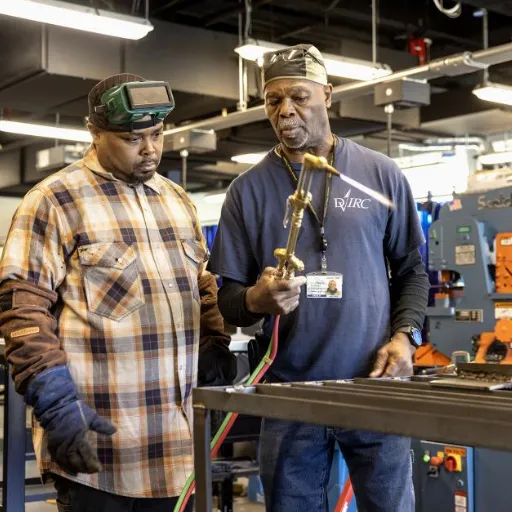
Apprenticeship Benefits
The welding apprenticeship is a very practical and well-organized mechanism leading to the acquisition of industry-specific skills with a constant income. Latest statistics determined that these apprenticeships are still a low-cost alternative to the traditional education system as they are mostly associated with little or no tuition expenses at all. The hands-on training under skilled professionals is the main advantage through which the apprentices gain technical mastery and also develop their problem-solving skills. Furthermore, the network of contacts created during apprenticeship not only remains but also leads to job placement in the same field if the worker decides to leave. The ever-increasing need for professional welders in construction and manufacturing industries makes the apprenticeships a sure way to obtain an edge over the competition and hence secure a long-term career.
Welding Apprenticeships
Welding apprenticeships can be found only as a result of a logical and strategic approach that combines on-line resources and local industry connections. Make use of job search engines such as Indeed, Glassdoor, and LinkedIn to find apprenticeship postings in your vicinity. To narrow down your search, you can use different filters like the area, the kind of job, and the level of experience. The internet can also be very helpful—just try looking up things like “welding apprenticeships near me” or “entry-level welding programs in [city of your choice]” for finding the openings near you. Many community colleges, vocational schools, and labor unions have apprenticeship programs, and it would be beneficial to either check their websites or contact them to get information about available options. The American Welding Society (AWS) also maintains a database of training and apprenticeships related to welding that can be searched. Besides physical industry networking, attending local trade shows or joining professional organizations are great ways to uncover apprenticeship vacancies and make the necessary connections too. By utilizing these different resources together, you will be able to boost the possibility of obtaining an extremely advantageous welding apprenticeship.
Aptitudes You’ll Acquire During an Apprenticeship
Welding apprenticeship entails mastering a great number of skills that are necessary for one to be successful in the field. Among the other skills, welding of different kinds like MIG, TIG, and stick gets to be the most important one and must be learned since they are the most used in the various industries. Moreover, one will be able to interpret technical blueprints and schematics which will help him/her in making accurate welds according to the specs. Safety is always a matter of great concern in the industry and sound knowledge of safety rules and protocols is one main thing that every apprentice will be taught; thus making it sure that the person is able to use welding equipment in a safe manner and that the person is also able to deal with potentially dangerous materials properly.
On top of this, apprentices are very often trained in metallurgy, which means they get to know how different metals behave, their physical and chemical properties, and their response to heat and pressure treatment. Time management and teamwork are skills that one will have to work on too as usually, one is involved in a project done by a group of professionals with a strict deadline. Having the most advanced technologies and supporting professionals with huge experience all around, a welding apprenticeship means getting prepared with the technical part of the job as well as the professional work habits that make one ready for the more complex roles in the industry.
Essential Skills for Successful Welders
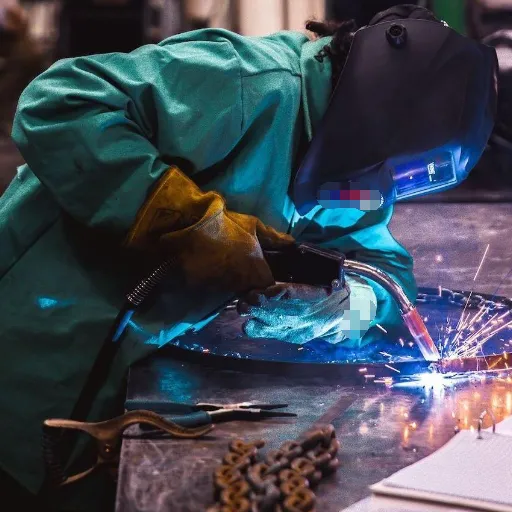
Key Fabrication Skills for Welders
Welders must have both technical and interpersonal skills to perform their trade successfully. Precision and nitpicking are very important, securing welds that are strong and conforming to the highest standards of beauty and safety. The knowledge of blueprints and technical drawings is imperative because it helps the welder to see the end product in his mind and to work to the very specific details. The whole thing is manual dexterity and hand-eye coordination, and these are very important for using welding tools and even working in tight or complex spaces. Moreover, a welder’s mathematics skills should be at the top level, as they will have to compute dimensions and materials very accurately.
Moreover, safety awareness is very important, as welding is always associated with high temperatures, sparks, and risky materials. Besides the technical skills, the application of good communication, and teamwork is especially when working on large projects. Welders combined these skills with continuous learning of advanced techniques and tools to keep themselves available and to meet the challenges of modern fabrication projects.
Understanding Different Welding Processes
Welding steps are not all the same, but each one is unique and designed to address materials, applications, and project needs specifically. The major welding techniques include the shielded metal arc welding (SMAW), gas tungsten arc welding (GTAW, or TIG), gas metal arc welding (GMAW, or MIG), and flux-cored arc welding (FCAW). SMAW, in the main, known as stick welding, is non-dangerous while at the same time is versatile and can be used for a good number of construction and repair work. TIG welding, on the contrary, is the process by which one gets the best quality when precisely done, as it makes the welds immaculate and, therefore, very suitable for delicate works with either stainless steel or non-ferrous metals. In short, MIG welding is the best in terms of speed and efficiency while FCAW is good mainly due to atmospheric conditions outdoors and windy environments.
Reports indicate that the majority of welding processes’ queries focus on the comparison of TIG and MIG and that the latter is prevailing in both professional and hobbyist contexts reflecting their popularity. Modern advancements such as automation and hybrid welding methods are also trending topics suggesting that there is a rising interest in technologies like robotic welding systems and laser-based techniques. However, the selection of the process is one of the dilemmas that every welder has to face sooner or later. Therefore, to make the right selection, a welder should have an expert’s understanding of each process’s advantages and limitations.
Developing Expert Welding Techniques
Expert welding techniques development requires a continuous amendment of advances happening in the field and persistent practice. Novelties in welding techniques that have drawn a lot of interest currently include mastering precision, proper safety gear, and metallurgy basics understanding for the purposes of welding outcomes improvement. A welder who wants an upskill will divide into sections the whole process of Getting rid of/ No stopping the heat control, No stopping the arc length and making joint preparation properly. Learning through professional training courses, checking out welding simulation tools, and practicing modern methods like pulsed MIG or TIG welding can further deepen one’s expertise. Theoretical knowledge combined with hands-on experience absolutely guarantees skilled workmanship of the highest standard and best results in all kinds of welding applications.
Certification and Industry Standards
Importance of AWS Certification
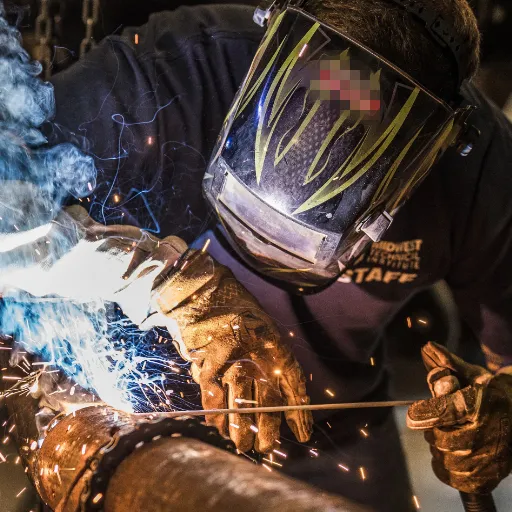
The AWS (American Welding Society) Certification is widely regarded as a necessary qualification for the specialists of the welding sector. This is because it provides a common expert and skill-based competency level. Just like in construction, manufacturing, and energy, welding is a basic process and having the AWS certification spell out the fact that the welders are already living up to the high industry-requirements and will produce no less than a standard product. AnUp-to-date data showed that more and more employers are definitely on the lookout for AWS-certified individuals for the simple reason of the trust and credibility associated with such qualification. The employee’s fate in the job market is immutably uplifted by certification and, in addition, the hottest career opportunities and highest salaries are opened to him. Furthermore, the certification is a competitive advantage in a transforming field that is being constantly influenced by technology and new industry practices.
How to Become an AWS Student
Becoming an AWS (American Welding Society) student takes a plan that consists of acquiring basic knowledge, and then establishing skills in the area of welding, step-by-step. The most recent data from the search engine shows that people who want to become part of the AWS programs should first find out about the types of certifications and training offered. Recognizing the right AWS certification is the first step, for example, Certified Welder (CW), Certified Welding Inspector (CWI), or special programs focused on particular areas in welding.
Then, they should look for accredited schools or programs that are governed by AWS standards. There are a lot of colleges, trade schools, and technical training centers offering AWS-recognized coursework and their students get the hands-on experience required for the certification exam. Moreover, registering through the AWS website as a student member is beneficial for the individual since he/she can access immensely useful resources such as scholarships, study materials, networking opportunities, and the latest news in welding.
And finally, being consistent with training, studying for exams, and participating in workshops or seminars that are available will guarantee that the students are well-equipped for their certifications. Discipline along with the roadmap provided by AWS can enable the aspirant welders to reach their professional dreams and be the noticeable ones in the competitive industry.
Maintaining Your Credentials in the Welding Field
The importance of welding credentials cannot be emphasized enough in terms of their role in keeping the professional updated and competitive in a rapidly changing industry. The most recent data and insights reveal that AWS and similar organizations, besides giving certifications, also ask for regular renewals of such credentials as a proof that the welders are still up to the mark in the industry and complying with the safety rules. This usually means retesting after a certain period, showing work experience, or taking part in an approved training program. Being updated with these requirements not only shows the company’s dedication to quality and professionalism but also the individual’s. Moreover, being up to date with technology such as new welding machines, robots, and materials opens up new avenues. Online access to various resources, welding simulators, and industry forums can all help strengthen one’s skill and keep one’s credentials active.
Frequently Asked Questions
What are the benefits of hands-on welding training?
Hands-on welding training is very valuable for aspiring welders since it offers the opportunity to learn in a real-world situation through the acquisition of practical skills. Programs that provide this kind of training usually come with the chance for the trainees to work using the equipment and materials that are accepted as the industry standard. This kind of the experience is going to be very beneficial since it is going to make the students ready for different job roles in the welding industry. The understanding of the processes and techniques of welding, which is the case when one undergoes hands-on training, will eventually result in a degree of competency that is higher than the others on the job market. Many employers acknowledge the welding program with a focus on hands-on practice as being directly connected with the performance of the employee, hence giving preference to such candidates.
How can I find student resources for welding certification?
Welding certification student resources can be found by visiting local welding schools and training programs which make the search easy. A lot of schools offer extensive support in the training process along with a highly qualified staff, and online classes for drilling and familiarizing the student with hands-on learning. In addition, the AWS Foundation, and other agencies like it, provide scholarships and grants as a means of financially assisting students. These resources from the Bureau of Labor Statistics can help you understand the career paths and job opportunities in the welding industry. Also, don’t forget to ask questions at the financial aid office regarding the FAFSA and other similar options for welding education funding.
What is the significance of welding processes in a welding career?
Knowing welding processes inside out is a must for anyone who wants to build a career in welding. There are a lot of different ways of welding like MIG, TIG, or stick welding, and each is suitable for varied usages like structural welding and metal fabrication. A welder with a good command of these processes not only acquires an additional skill but also opens up a range of career opportunities in sectors where demand is great. In the end, getting the proper training is the first step towards that, and many welding training programs do just that – teaching these key processes, so students are equipped with the skills needed to thrive. Furthermore, learning welding processes well can mean a specialized career path in fabrication or repair work, thus promoting the growth of a welder’s career.
What apprenticeship opportunities are available for aspiring welders?
Aspiring welders can choose to undertake apprenticeships as they are a great source of hands-on experience and, at the same time, the earning is also there. A number of companies have formalized apprenticeship programs characterized by a blend of on-the-go training and teaching, and this way, the practical as well as the theoretical skills of the individuals are developed. As a part of the apprenticeship, the students will be taught by the professional welding experts and will be able to obtain the industry-standard certifications after completing the program. The teaching in these programs would mainly be the specialized welding techniques and blueprints reading which are critical for the students’ career growth. Moreover, apprenticeships can easily turn into permanent roles in different sectors, thus is a win-win for those who want to make a career in the welding domain.
How do online courses fit into a welding training program?
Online courses are an important addition to the welding training program because they give students the option of learning in a way that is convenient for them, plus they help boost the training offered at the school. The online aspect of the theoretical content in the welding programs is covered by a number of technical schools, which makes it easier for students to understand the major topics such as safety, maintenance standards, and wedding techniques. For example, online courses can be used as a supplement to hands-on training and also as a way to control in which skills the students become adept at, which will in turn allow them to prepare for professional certifications that are necessary for career growth in the welding business. Integration of online courses into training can help students develop a versatile skill set that is up to par with the industry’s requirements.
Reference Sources
Forming Hartford Union High School’s Welding Curriculum to Meet Local Industries’ Needs
This study discusses how welding training programs are tailored to meet the practical needs of local industries, emphasizing hands-on learning.
The Development of a Student Competency Task List for the Welding Program at New Horizons Technical Center
Focuses on preparing students for the job market by aligning welding training with industry requirements, highlighting the importance of practical skills.
A Study to Determine the Material to Be Included in a Reference Book for Welders and Fabricators
Explores the balance between theoretical knowledge and hands-on training in welding, providing insights into effective learning methods.