Welding is a necessity in a variety of industries, the most popular of which are construction and manufacture, automobile and artistic projects with metal. For beginners in welding, the choice of the right procedure can be both a thrill and a problem. Stick welding and MIG welding, the two most popular techniques, each have their own pros and cons which makes it very important to be aware of their distinctions. The purpose of this piece is to unveil the main differences between these two practices, thus enabling you to decide which one is more suitable for your project or skill level. If you are a newbie wanting to understand the basics or an advanced welder who is reviewing the options, this guide will provide you with the tips on the advantages, uses and subtleties of stick versus MIG welding.
Introduction to Welding Techniques
The Significance of the Correct Welding Process Selection
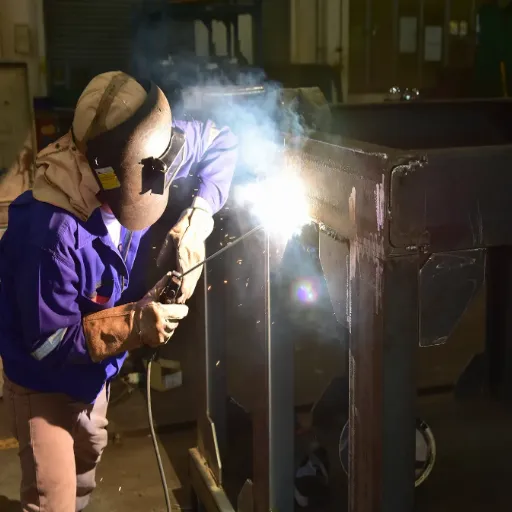
The selection of the correct welding process is paramount for the realization of the best possible outcome in any project. No matter if it is industrial construction, automotive repair, or metal art, the welding method is a decisive factor in the quality, and longevity, as well as the productivity of the final product. For example, stick welding is an excellent choice for outdoor or less controlled environments due to its great versatility and strong performance, hence it becomes an option for heavy-duty projects or repairs in an extreme scenario. Conversely, MIG welding is a great option for its accuracy and speed, especially when applied to thinner metals and in the case of projects requiring a neat and shiny surface.
Recent statistics indicate that the searches for “MIG vs. stick welding” continue to increase, which shows that there are more and more people wanting to know the right procedure for their project. The same trend signifies that there is growing awareness of professionals and amateurs alike about the importance of customizing the welding technique according to the material, environment, and similar requirements. Welders can make informed decisions based on the evaluation of factors such as cost, skill level, and desired outcome which in turn will not only boost their efficiency but also signficantly extend the durability of their work.
Comparison of Stick Welding and MIG Welding
Stick Welding (SMAW)
Often considered as Shielded Metal Arc Welding (SMAW), stick welding is one of the oldest and most versatile welding techniques. This method uses a coated electrode that generates an electric arc melting the flux and uniting the parts. Consistency of this procedure is liked especially for its ability to work efficiently in all circumstances like outdoors and during rain. Stick welding is mainly used for thicker materials which is why it finds its way in heavy construction and repair work applications. Still, it carries the challenge of requiring a skilled welder as the manual operation of the arc and electrode is usually needed.
MIG Welding (GMAW)
MIG welding, or Gas Metal Arc Welding (GMAW), is a partly-automated method that makes use of a constantly supplied wire electrode and a shielding gas that makes it possible to produce clean, quick welds. It is very popular among both inexperienced and experienced welders, and it is often associated with good quality and a clean process. Its widespread adoption in the auto industry for repairs, fabrications, and close-tolerance projects is mainly due to the fact that it suits these applications the best. However, one downside to MIG is that it can’t be used in uncontrolled environments, since the shielding gas can be easily affected by wind or draft.
The latest search data indicates that there has been a considerable rise in the interest towards MIG welding over stick welding, perhaps because it is more friendly to hobbyists and inexperienced welders. The search terms “beginner’s best MIG welder” and “MIG welding new to the trade” support the idea of a larger group of people attracted to the hobby with less teaching required. On the other hand, related searches for stick welding often deal with its advantages regarding strength and versatility, as evidenced by queries like “stick welding for outdoor repairs” and “stick vs. MIG for construction.” This leads to the conclusion that although stick welding is still good under tough conditions, MIG welding has already taken over the sector in terms of modernity and efficiency for the kind of projects where accuracy is the determining factor. Thus, the eventual choice between them will be set right by the project requirements and the environment in which welding is to occur.
Target Audience: Professionals and Hobbyists
The most commonly asked question, which is often posed by professionals as well as amateurs, is, “What is the best welding method for starters?” The latest data of ‘s search engine suggests that MIG welding is frequently pointed out as the best option for novices. The main cause for this is the immense level of operator skill required for stick welding, during which not only the complicated technique but also a thorough cleaning process is involved. Initially, in fact, the operator would have to possess less technical skill for MIG welding which would allow the beginner to devote all his energy to the mastering of his technique without the extra burden of dealing with the flux or keeping an arc in difficult conditions. On the other hand, stick welding is still more popular among those who want to have the option of using the technique in various ways, especially outdoors or on the site of the project where conditions are less controlled. Ultimately, the decision between the two methods will depend on the beginner’s consideration of their project requirements, location, and availability of equipment.
In-Depth Overview of Stick Welding
Stick Welding Through the Ages
The stick welding technique, also known to many as Shielded Metal Arc Welding (SMAW) method, has been around since the 1800s. In 1888, Nikolai Slavyanov was the first to perform this method he got the weld done with a consumable electrode. The use of coated electrodes in 1907 by Oscar Kjellberg was the first move that later paved the way for the establishment of the modern technique of metal joining through arc welding. Kjellberg’s input, therefore, made the welding process more reliable, and the general quality of the weld increased. Stick welding became popular gradually and slowly due to its simplicity, portability, and above all, the effectiveness in metal joining.
In the modern world, stick welding remains a preferred technique in the construction business, maintenance and even in some industrial processes. Its versatility with metals, including but not limited to, steel, cast iron, and stainless steel, is one of the main advantages. Furthermore, the development of better electrode coatings and modern welding machines has made the whole process continuous in terms of accuracy and efficiency, thus, contributing a lot to the steady global production of metal products where it still plays a major role.
Stick Welding Process Explained
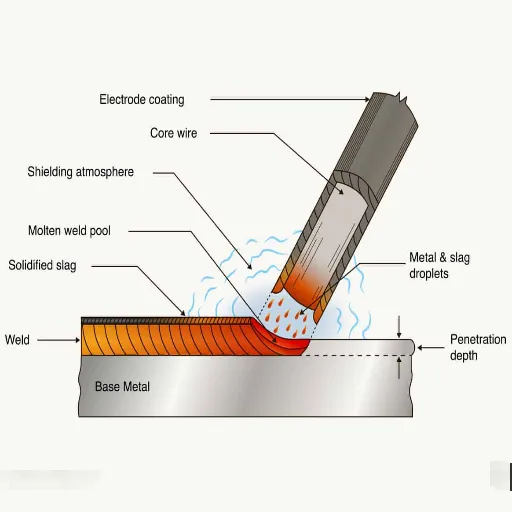
Stick welding, equivalently called Shielded Metal Arc Welding (SMAW) method, operates by electric arc generation between the flux-covered filling rod and the workpiece. The procedure starts when the welder touches the tip of the electrode to the work surface, thus producing a very hot arc that melts not only the electrode tip but also the metal’s surface. The liquid substances unite to create a weld pool which hardens to be a strong bond.
Stick Welding Applied Most Often
Stick welding also known as Shielded Metal Arc Welding (SMAW) is a widely accepted method in the metal joining and fabrication industry owing to its reliability and versatility. The construction industry mainly uses this technique for the erection of steel framework, bridges, and pipelines where the criteria of strength and durability are of utmost importance. Moreover, the stick welding process is still, in some cases, considered the best option in the field of shipbuilding and repair because of its compatibility with the outdoors and less-than-ideal conditions such as windy or damp areas. In the case of heavy equipment maintenance and repair—especially in agriculture, mining, and transportation—this method is also the one extensively used.
Anecdotal evidence suggests that stick welding techniques are becoming more common in small home workshops and fabrication businesses mainly because portable equipment is now affordable. The ability to weld different kinds of materials mainly including carbon steel, stainless steel, and cast iron also adds to the diverse range of tasks that stick welding can perform, hence it being widely used in various applications. And according to Plus’s most recent search data, there has been a rise in the number of queries about stick welding as a means of facilitating various renewable energy projects like wind tower assembly and repair, indicating the technology’s continuous integration into modern industries.
In-Depth Overview of MIG Welding
MIG Welding’s History
MIG welding, also referred to as Metal Inert Gas welding, was first developed in the 1940s, than eventually being called Gas Metal Arc Welding (GMAW). At first, it was intended mainly to weld non-ferrous metals like magnesium and aluminum; however, it turned out to be a rapid and easy task for the workers which made the technique revolutionary. Precision and speed were the main concerns in the sectors of aerospace and automobile manufacturing, hence these industries were the first to adopt this method. In the end, technological innovations made MIG welding a global practice, thus opening up new possibilities in different materials and industries.
The Working Principle of MIG Welding
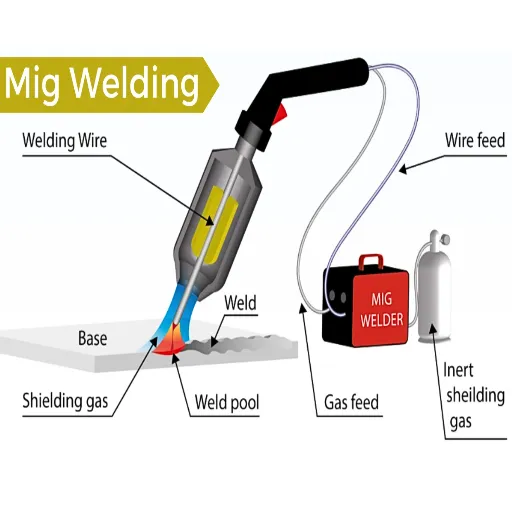
MIG welding creates a bond by generating an electric arc between the wire electrode which is non-consumable and the piece of metal that is being welded, melting the metals to their melting point hence fusing them together. A protective gas, typically argon, CO2 or their mixture, is taken in the process to guard the weld pool from external impurities leading to a weld that is clean and strong. The wire electrode that is consumed is the carrier of current and filler material, which not only makes operation easy but also ensures smooth conduction with very little post-weld cleaning.
As per the latest data from ‘s search engine, a large number of people are asking about the suitability of MIG welding for lightweight materials and special applications such as renewable energy projects. Undoubtedly, MIG welding is versatile enough to work with light alloys like aluminum and thin steels as long as the right wire, settings, and gas are chosen. For example, the electric vehicle manufacturing sector is leaning towards MIG welding more and more as it requires accuracy and speed in the assembly of light but strong parts. On the other hand, renewable energy solutions often rely on MIG welding for solar panel frame assembly where precision and quality are most important. These patterns confirm the versatility of MIG welding and its increasing area of application in the development of contemporary industries.
MIG Welding’s Common Uses
MIG welding still plays an important part in many industries these days, owing to its versatility and quality-producing characteristics. Recent statistics indicate that the automotive industry is among the top users of MIG welding, as it is a major process for building frames, platforms, and body parts making strong but light constructions that are a key factor for improving fuel efficiency. The aerospace sector is another area where MIG welding is frequently used, especially joining light metals like aluminum that require precision and long-lasting bonds.
Furthermore, MIG welding is applied in the construction industry for making strong structural frameworks and metal installations outdoors, thus providing both strength and durability. The demand in the renewable energy sector for MIG welding is rising especially for wind turbine parts and solar panel mounts to be the quickest and most adaptable welding method among modern industries. Essentially, the need for superior, sustainable manufacturing processes driven by innovation and environmental considerations makes MIG welding one of the most preferred welding techniques in the emerging fields.
Pros and Cons of Stick Welding and MIG Welding
Cost-Effectiveness of Each Method
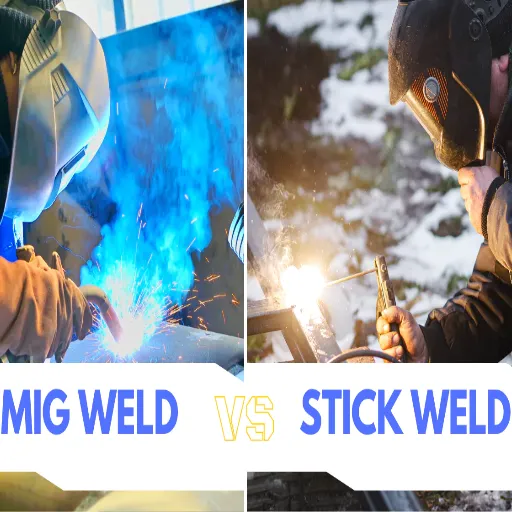
The analysis which is needed in order to arrive at a conclusion about the cost-effectiveness of stick welding and MIG welding is rather intricate. There are several factors such as the initial purchase of equipment, the price of consumables, and the overall productivity, etc. that must be taken into consideration. For small-scale projects or repairs, stick welding certainly is the one that gives the most benefits in terms of cost-effectiveness as it is generally considered to be the most economical method in such situations with the very low initial investment directly required and the fact that managment of gas is not necessary. In addition, the prices of the electrodes for stick welding are usually lower and they come in smaller packages making them a suitable option for rare users.
MIG welding, in contrast, is initially more expensive but it also becomes more economical in the future for mass production or major projects. The wire and the shielding gas which are the consumables might result in a higher recurring cost in comparison with the cost of stick welding electrodes, but the faster precision welding and less post-welding cleaning are the factors that usually offset these costs in the industry. Besides, the progress in robotic MIG systems is intended to improve the efficiency of production, thus making it very possible to provide the large manufacturers with the cost-effectiveness they require as MIG machines are less expensive to buy than stick welding machines.
Ultimately, the choice of stick welding or MIG welding is typically dictated by the scope and nature of the work. For example, in the rare maintenance, outdoor applications, or similar situations, stick welding is the most economically feasible option. On the contrary, in the sectors where urgency, accuracy, and the possibility to expand the production are valued, MIG welding is the long-term winning choice of cost-effectiveness.
Skill Level Required for Stick and MIG Welding
When the skill level needed for a particular method of welding is the point of comparison, stick welding and MIG welding show really different requirements. Stick welding operation that is controlled by the operator generally requires a very high level of skill and a lot of experience. The operator must be able to control the angles of the electrodes, the length of the arc, and the molten weld pool, especially when the job is of a different position or the conditions are difficult and outside the expertise of the welder. Due to this, beginners often have to deal with a very steep learning curve.
As opposed to that, MIG welding is seen as a method that is more accessible to novice welders. Continuous wire feed and shielding gas are the two things that make the process so much simpler and thus it is possible for the less experienced welders to get the same results, that is, good quality, clean welds, with no difficulty. The latest search trends indicate that “how to start MIG welding” inquiries have increased significantly, which is a clear sign of its attraction to the hobbyists and the first-timers. Nonetheless, even though it is quite easy to get started with, still the mastering of advanced MIG techniques for detailed applications is a dedicated learning process that involves a lot of effort, thus, ease of entry coexists with the possibility of skill development.
Versatility and Performance in Different Conditions
MIG welding is a popular technique because of its ability to work with different materials and it can actually weld steel, aluminum, and stainless steel among others. The versatility of this process makesthe performing of such applications in positive instances like automotive repairs, construction sites, and DIY crafts. Additionally, MIG welding is very effective in a controlled environment like a workshop where external factors such as drafts are reduced to a minimum. In outdoor applications, however, shielding gas would still need to be used in order to safeguard the weld from the weather.
As per the most recent information from ‘s search engine, one of the hottest queries people ask about MIG welding is, “Is it possible to do effective outdoor MIG welding?” Although the trend with MIG welding is that it is best suited for indoor environments, the development of portable welders and flux-cored wire options has made the practice of MIG welding outdoors more common. The use of flux-cored wires makes it possible to do away with the external shielding gas requirement, which greatly facilitates the welding operation in the presence of winds or less-than-ideal conditions. The continuous development of such technologies is what makes MIG welding suitable for all kinds of environments, hence the worlds of hobbyists and professionals can easily overlap.
Key Differences Between Stick Welding and MIG Welding
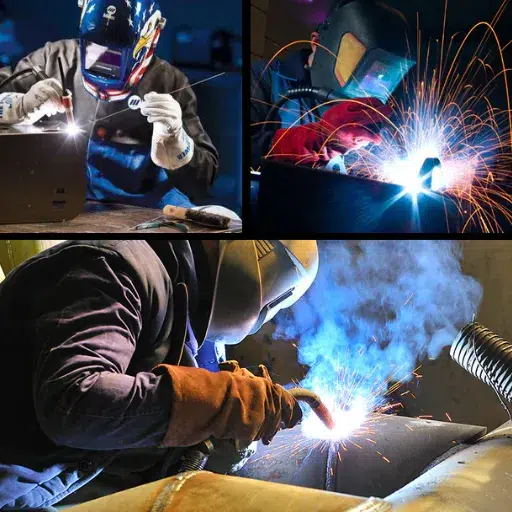
Cost Comparison: Stick vs MIG
The cost of stick welding versus MIG welding reveals several factors among the costs, the equipment, the consumables and the operational costs. Also, stick welding, which is known as SMAW or Shielded Metal Arc Welding, asks for less money to be paid in advance generally. The gear is easier to operate, more affordable and more mobile. Also, the electrodes used in stick welding are usually less expensive and can be kept for a quite long time without special conditions of storage.
MIG welding, on the contrary, is an expensive process right from the start due to the fact that a machine for MIG welding, gas tanks for shielding, and wire feeders must be purchased. The shielding gases, like argon or CO2, increase the cost of operations making MIG welding a more time-consuming and costly process. On the other hand, MIG welding is usually more productive and efficient than the materials are more or less wasted, this can be the reason, and the costs can be considered as offset in situations of high-volume or repetitive work.
Ultimately, stick welding is still the most economical option for minor works, repairs or outdoor activities due to the low prices of the apparatus and consumables. Besides, MIG welding is more likely to be the method of choice in places where precision, speed and clean welds are demanded even though it has higher operating costs. In many cases, the choice has to be made according to project size, environment and budget available.
Ease of Use: A Comparison of Techniques
In terms of easiness to use between stick welding and MIG welding, the selection depends primarily on the operator’s skills and the requirements of the project. Stick welding is a more difficult welding technique initially but it is the one more forgiving when it comes to working under less-than-perfect conditions such as outdoors or metal that is rusty or dirty. It requires fewer tools and accessories which simplifies the setup making it easier for beginners or those in remote areas.
On the other hand, MIG welding is always praised for its ease of operation, especially for novices, since it is a continuous wire feed operation that simplifies the process. As per the recent insights drawn from the data from the search engine, queries like “easiest welding technique” and “best welding for beginners” often bring MIG welding to the forefront because of the neatness and precision of the results. But this ease is counterbalanced by the need for a more controlled environment and a stable power source to get going on the best possible results.
After all, MIG welding is often the first choice due to its simplicity and neatness but stick welding is the technique that is still applied frequently due to its adaptability in various environments. The choice of these processes is mainly based on the user’s skill level, work environment, and project’s specific needs.
Required Equipment for Each Method
| Equipment Category | MIG Welding | Stick Welding |
|---|---|---|
| Primary Equipment | MIG welder, wire electrode spool, welding gun | Stick welding machine, electrode rods |
| Shielding | Gas cylinder (argon or argon/CO2 mixture) | Flux coating on electrode (no gas needed) |
| Additional Components | Welding nozzle, power source | Grounding clamp |
| Safety Gear | Welding helmet, gloves, protective clothing | Welding helmet, gloves |
| Environment Needs | Stable indoor environment, wind-free | Adaptable to outdoor/remote areas |
MIG welding usually requires MIG welder as the main piece of equipment, along with a spool of wire electrode, gas cylinder (which is normally filled with argon or argon/CO2 mixture for shielding), welding nozzle and power source. In addition, the safety of the operator is guaranteed by dependable welding helmets, gloves, and protective clothing which are also the basically necessary items. MIG welding is mostly dependent on a stable indoor atmosphere and can be affected by wind which is one of the outside factors that can tamper with the shielding gas.
On the other hand, stick welding needs to have fewer components hence it is a more portable and adaptable choice for outdoor or remote areas. The key equipment consists of a stick welding machine, electrode rods, and a robust clamp for grounding. Just like MIG welding, safety gear such as a welding helmet and gloves are compulsory. However, MIG welding does not have to depend on a gas cylinder because the flux coating on the electrode creates the necessary protection against contamination. Thus, stick welding is more adaptable in uncontrolled environments.
Specific Applications: Where Each Method Excels
MIG Welding Applications
- Automotive repair and manufacturing
- Metal fabrication projects
- Home-based fabrication tasks
- Projects requiring clean welds
- Applications where speed is important
- Aesthetic-focused metalwork
Stick Welding Applications
- Heavy construction projects
- Shipbuilding and repair
- Outdoor welding in harsh conditions
- Rusty or painted surfaces
- Repair work in adverse weather
- Heavy-duty industrial applications
MIG welding is the first in line when it comes to offering precision and efficiency so it is first among the preferred methods in the industries like automotive repair where clean welds and less spatter are necessary. The latest updates on the data indicate that besides being used for metal projects online MIG welding is mostly used for manufacturing and home-based fabrication tasks that are concerned with aesthetics and speed.
On the other hand, stick welding is the champion’s choice in criteria of demanding environments. It is extremely common in the metal trades, outside the construction industry, shipbuilding, and repair work, where the hardest jobs, like rusted or painted surfaces, are done. This method’s reliability in outdoor or harsh conditions, including adverse weather, makes it indispensable for heavy-duty applications. The latest studies confirm stick welding’s popularity in durability over finish quality.
Frequently Asked Questions (FAQ)
What is stick welding, and how does it stack against MIG welding?
Stick welding, or in other words, the shielded metal arc welding (SMAW), applies a stick electrode to form an arc between the electrode and the metal subject to welding. On the other hand, MIG welding operates by the use of a continuous feed of MIG wire along with inert gas to shield the weld from contamination. Speaking of the comparison of the welding processes, stick welding gives the biggest benefit outdoor projects, where its versatility and wind resistance come into play. Meanwhile, MIG welding brings to the table a super-clean finish and necessitates a faster welding process, thus it is viable for thin sheets of material. Each of the methods has its owb pros and cons and their selection is always about the particular welding tasks assigned.
What are the advantages and disadvantages of stick welding as opposed to MIG welding?
Stick welding has outright advantages such as being capable of working in almost any environment including windy places, besides, more often than not, it is used for welding thicker metals. On the negative side, it produces more slag and requires considerably more cleaning than MIG welding. On the other side, MIG welding is all about cleanliness, speed and just the right amount of gas shielding for a practically no-cleanup-needed situation. Another point in favor of MIG welding is that, it is not only easier but also more pleasant for beginners to work with thin materials. When all is said and done, the pros and cons of each type of welding depend really on the specific applications and materials being used.
Is the strength of a stick weld greater compared to that of a MIG weld?
When it comes to the comparison of welding techniques in terms of strength, there is no way to make a statement about stick welding being stronger than MIG without first considering the application context. Stick welding has the ability to penetrate thicker materials due to its concentrated arc. MIG welding, however, can produce very strong connections even when the thicknesses of the joined materials vary greatly, provided that the right solid wire and shielding gas are used. The longevity of a weld is influenced by many different factors, such as the type of metal, the welding procedure, and the skill of the welder, etc. So, it may be correct to say that stick welding is the winner in some cases, but still, MIG welding offers strong bonding in most situations.
How does the welding process differ between stick and MIG welding?
The welding process for stick and MIG welding differs drastically in terms of setup and implementation. A stick welder that consumes an electrode is used in stick welding to melt the electrode. On the contrary, MIG welding through a welding gun feeds a continuous supply of MIG wire. Due to the melting of the electrode, stick welding produces more smoke and sparks than MIG welding, which produces a cleaner arc with less spatter. Besides that, MIG welding generally requires a gas supply for protecting the weld; however, stick welding relies on the slag produced during the welding cycle for protection. Getting the hang of these differences is essential for picking the right method according to your project specifications.
What equipment is needed for stick welding vs. MIG welding?
A stick welder, either of a simple AC or a DC type, along with the requisite stick electrodes (welding rods), is the basic equipment for the stick welding process. Protective gear, a welding helmet, and gloves are also part of the essential accessories. An opposite case applies to the MIG process where MIG wire is fed through a welding gun along with MIG machine that requires a gas tank for shielding gas and a welding gun. In both types of welding, safety equipment is a necessity, however, the exact gear may differ depending on the welding method. Knowing what equipment is required for each method is one of the keys to obtaining successful welding.
Can you use MIG welding for thicker metals the same like stick welding?
MIG welding is applicable on thicker materials; however, it would necessitate the use of specific techniques and possibly along with the adjustment of the equipment. To take an example, the application of a dual shield flux core wire can make the MIG process for thicker materials better and by doing so it will be giving the penetration ability as well. On the contrary, stick welding is normally more effective for heavy-duty applications as it can easily penetrate thick metals. To put it differently, MIG welding is versatile and can be adopted for the thicker materials, yet stick welding is still the first choice for most professional welders when it comes to heavy metal applications.
Reference Sources
| Source Title | Description |
|---|---|
| Welding Terms – Pennsylvania Public Utility Commission | This document provides detailed explanations of welding methods, including stick (SMAW) and MIG (GMAW) welding. |
| RUReadyND – Career Profile | A career-focused resource that outlines the differences between stick, MIG, and TIG welding. |
| Manufacturing Welding and Metal Fabrication Pathway – Oklahoma CareerTech | This document includes basic methods and equipment for stick, MIG, and TIG welding. |